

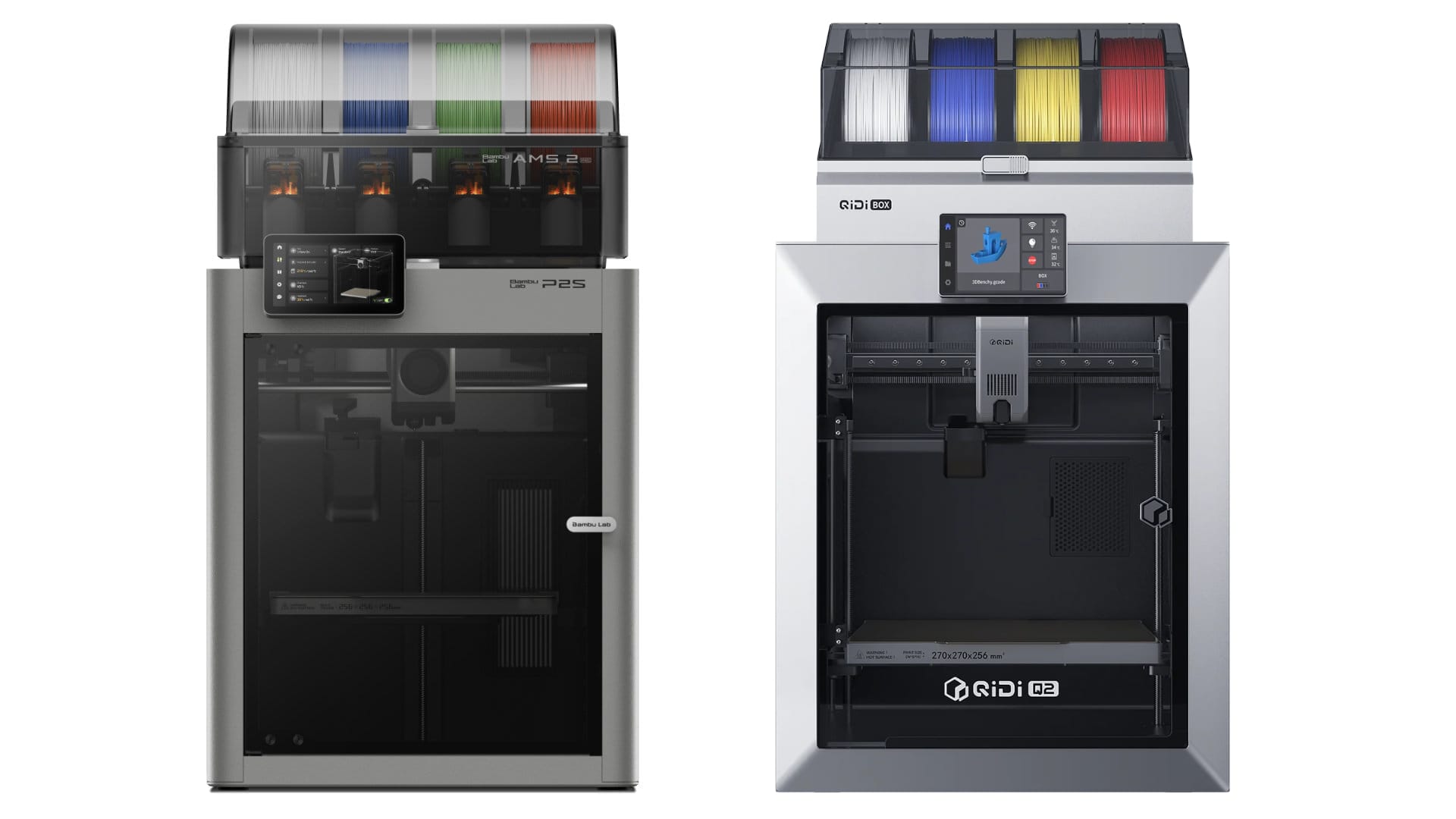
3D printers are one of the few pieces of technology in the last 30 years that are as revolutionary as they were pitched. It is easy to miss that fact, in part because 3D printing itself is a dorky little habit that produces a lot of embarrassing trinkets with visible layer lines, a technology that launched a thousand Iron Man cosplay masks. But the quality and speed of these machines improves yearly, and you can get a fantastic printer that handles multiple colors for less than $600 dollars and even cheaper if you go with eBay or know someone who is moving at just the right time. Access to a 3D printer can be a great way to repair an existing device, replace something you would otherwise buy commercially, or create something that the commercial market would never provide you.
3d printing some bull shit
— Chris Person (@papapishu.bsky.social) 2026-02-16T23:51:12.488Z
I have been 3D printing more than usual. I do not own a printer, in part because I live in New York City and anything that takes up that much space must be considered with the gravity of adopting an animal. I probably would have caved at this point if I did not have something debatably better: a local community space that has a few 3D printers. If you live in a place where space is at a premium and do not have a weird friend who does this for fun, this is an underrated way to do it. It is also a great excuse to get involved in your local community space, which in turn could lead you to other forms of mutual aid, learning and skill sharing that can benefit you. Though it comes with the many pitfalls of communal property, a shared printer, when properly maintained and loved, can be a unifying force.
For a long time I’ve wanted another air purifier for my home. I am slightly allergic to dust mites and so air quality is a source of concern. The perennial pick for air purifiers is the Coway Mighty, a perfectly OK purifier that has been the eternal go-to for Wirecutter since well before COVID. I have one, it’s mostly fine, although at its top speed it’s far too loud for me and it’s very much a non-smart home device. I could theoretically just get another used air purifier — there’s no shortage of ones that people and governments bought during the peak of the pandemic, and you can often find them on Facebook marketplace and government surplus sites. But that is neither fun nor interesting, and lord knows I love a little project. What’s more, the technology to create air purifiers has gotten far more interesting over the last few years.
The OG Corsi-Rosenthal "duct tape some filters to a fan" box. It's the savior of Canadians, Californians, and the immunocompromised.
A side effect of COVID was a rapid development of DIY filtration, and in particular the rise of what was known as the Corsi-Rosenthal Box. It was developed during the pandemic by Jim Rosenthal and Richard Corsi when the demand for HEPA filters wildly exceeded its supply. The idea behind a Corsi-Rosenthal Box was to use a lower rated and often cheaper filter, usually a MERV 13 furnace filter, instead of something like a much finer HEPA filter, then simply push more air through it. The increased number of air changes often meant that the CR box outperformed commercial units in basic efficiency. Having a commercial product trounced by a bunch of furnace filters duct taped to a box fan is exceedingly funny, and even funnier when RTings confirmed the findings a few years ago. CR boxes also have become fantastically useful in areas experiencing or downwind of the effects of fires, as the materials required to make them are far less demanding.
If you look this up on YouTube the other top thumbnail is a very angry guy mad about this video.
The original box consisted of a big box fan and five five furnace filters arranged into a weird ugly cube, but new variations have popped up over the years. Development of CR boxes rapidly increased during the pandemic, eventually plateauing as the market saturated, but I have followed their development doggedly as the increase in efficacy and overall lower cost of the filter was generally appealing to me. Because they use standard furnace filters, often but not always a Filtrete one that can be bought fairly cheaply, they are not beholden to the same vendor lock-in. Corsi-Rosenthal boxes would take various sizes and shapes, but my favorites have been thinner designs that often involve PC case fans. This design ethos has led to DIY and prebuilt kits from vendors like Clean Air Kits, Northbox Systems, Nukkit appearing on the market.
I don't have that kinda money but I will admit it's pretty goth.
For a while I’ve wanted a Nukit Tempest (a model that has since been updated to the Nukit Tempest Pro) because it’s deeply goth looking, simple, and made of black metal. It reminds me of my PC case made by Sliger minus the PC and with a couple of furnace filters slapped in. Unfortunately, Aftermath does not have the kind of money where I can drop that much cash on a badass and niche air purifier, particularly when I can get something used for cheaper. Fortunately, my hacking space just recently got a couple of working printers again, and I’d seen a few similar designs pop up over the years.
Ok it’s coming along gonna be a whole spool job
— Chris Person (@papapishu.bsky.social) 2026-03-28T19:33:34.145Z
I would like to stress that I am not an expert when it comes to the physics of airflow. I would love us to have the kind of testing facilities that would allow me to conduct rigorous testing outside of running a filter with simple air sensors in a room. I have nothing but respect for the people who do that kind of dedicated testing, and I dislike overstating the case for anything. However, I have seen enough results of similar designs to know how five fan, two filter design configurations tend to perform, and how much power the fans often consume. There’s an entire ecosystem of people who make purifiers like this, as well as fume extractors, desktop filters of various shapes, and activated charcoal filters for VOCs. I found a design by a user named Neuroocean that looked not dissimilar to the kits offered by Nukit and Clean Air kits, and started firing off prints on an old but reliable Utilimaker printer. Piece by piece, it came together.
You can print all sorts of goofy stuff.
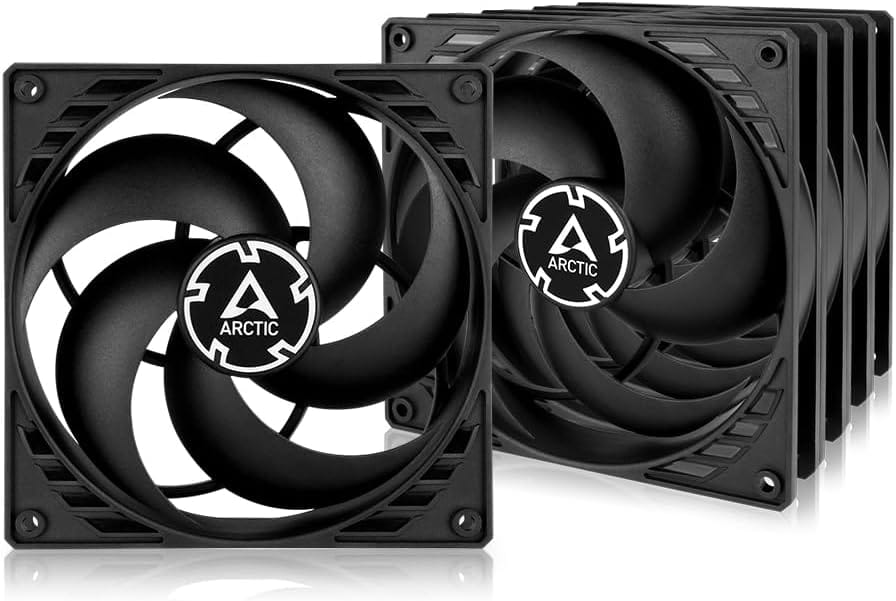
Despite computers being expensive for no good reason now, PC case fans have never been more competitive. While Noctua still remains the premium choice when it comes to noise, the budget competition has gotten brutal with Arctic’s fans reigning as the Everyman’s Noctua, and the P14 PST being fantastic for this purpose. You can get a five pack of very solid 140mm case fans for about 40 dollars. Case fans are meant to operate continuously, quietly, and maintain a solid amount of pressure, which makes them wonderful for the specific task of making an energy-efficient air purifier. They come in standardized sizes, making experimentation with various fan combinations easy. 4-pin PC fans are often controlled by PWM, or Pulse Wave Modulation, allowing you to modulate the speed. The standardization of this connection means that there’s no shortage of fan controllers out there cheap on Amazon (I got one that can be powered by either USB-C or a DC jack power adapter), and there are a few ways to control fan speed using an ESP32, the ubiquitous wifi microcontroller beloved by open source hackers everywhere. This is the perfect project for people who love to fiddle with Home Assistant, the local and open source smart home controller beloved by tinkerers. Down the line I would love to get immensely granular and find a way to automate the devices exact fan speed in response to Home Assistant sensor inputs, but in the immediate I have decided I’m going to simply have it turn on and off using a cheap smart home outlet switch.
Every day I would walk over to the community space, print off a new part for my purifier, say hi to the people hanging out, and walk home, returning when the print was done. Slowly but surely, the thing came together. The purifier is not small, it takes 14x20x1 inch filters, and so it took over a week of pleasant walks and more than a whole spool of PLA, which I more than compensated for by doing a Microcenter run. It added a nice rhythm to my day, a little task to do before or after I got my coffee, made more pleasant with the sudden eruption of spring weather. Because the printer we had was older it uses a glass bed, something basically no printers use now, but it causes whatever part of the print is touching the bottom to have a reflective, glasslike sheen.
3D printing is so fun.
— Chris Person (@papapishu.bsky.social) 2026-03-31T00:58:14.979Z
The purifier is not without its quirks that could use improvement. The hardware it uses to attach the panels together, the top/bottom done in segments of two and the sides done in segments of three, are 3D printed nuts which can be a bear to wrench on. I had to use pliers, but luckily once they are on they’re meant to stay on. Likewise, the screws that came with the PC fans are not perfect for the job; you’re better off using other hardware, but I ended up using screw extraction pliers to get it on there just fine. The device itself is also a remix of an older design, and the front fans have extremely tall pillars that seem leftover and not to serve a purpose. Getting the filter into it is also more of a hassle than I assumed it would be. These filters aren’t replaced that often, but an easier way to slide it in would be ideal. Luckily, the free and open nature of 3D printing means that any potential flaws in performance or usability are fixable. If you want to change something, just do it – fire a test print off and share that remixed model with the rest of the world. That is the beauty of how printing works; you are never beholden to the whims of a company, and if you have the files you are in control.
Air filter complete and 3D printed, shockingly low noise, powered by Arctic p14 pc case fans, MERV-13 furnace filter from Costco and runs on USB-C
— Chris Person (@papapishu.bsky.social) 2026-04-06T04:55:03.390Z
The printed purifier took a few hours to assemble ambiently while watching cartoons. Once completed it was handsome despite definitely being some 3D printed nonsense. The little tower is unobtrusive and unassuming. I tend to leave it on at a low setting unless I’m cleaning, and it ranges from being barely audible white noise to as loud as a PC while playing Cyberpunk in 4k, which is still far quieter than my other air purifier, which I can hear from the other room when it’s going full blast. But though I enjoy the purifier, and breathing deep of the clean headache-free air, it makes me happier than if I’d simply purchased one used. This purifier is the kind of project I savor, one that brings me closer to my community and teaches a skill. It has inched me closer and closer to the inevitability of having a printer in my home, which you will no doubt read about. After all, if I can 3D print an air filter, what can’t I print?


