

I grew up playing games that don’t exist anymore. I collected buttercup petals and tailored clothes in the whimsical Pixie Hollow; I roller skated and applied makeup in the glamorous shopathon Bratz: Rock Angelz; I cared for a beautiful mare in the dreamy Bella Sara. These magical little worlds I delighted in prancing through are now lost to time, preserved only by fond memories.
In a literal sense, the MMOs of my childhood are dead, their servers permanently shut down. Like any other obsolete console game, you can technically find Bratz: Rock Angelz secondhand online, but it, too, is forever out of production. But when I say that these games don’t exist anymore, I really mean culturally.
Games are doomed by femininity. Across media, genres marketed toward women are deemed lesser than their masculine counterparts: romance novels are trashy, chick flicks are shallow, and pop idols are embarrassing. It’s no coincidence that historical game preservation efforts largely overlook titles designed for young girls, erasing them from the game design canon and contemporary conversation.
Rachel Weil is the founder of FEMICOM Museum, a digital and physical archive that preserves and celebrates games targeted toward a young female audience. Weil founded FEMICOM Museum to bridge the gendered gap in games preservation. Weil tells me, “If historic girl games are lost, if they go unpreserved, how could any game developer draw inspiration from them the way they do from series like Super Mario Bros. and Metroid?”
It’s no secret that the games industry is a boys’ club. As Tracey Lien explains in the article “No girls allowed,” the games industry’s inclination toward men and boys came from early marketing practices. In the 1970s, games were advertised toward two audiences based on their hardware: arcade games targeted adults in bars, and home console games targeted families. After the crash in the 80s, Nintendo revived the games industry by marketing the new NES as a toy rather than technology—specifically, a toy for young boys. As Game Boy players matured, so too did games marketing, and soon most games were advertised toward teenage boys, increasingly through violence and the sexualization of women (take Tomb Raider, for instance).
Meanwhile, a smaller movement of games marketed toward girls, spearheaded by titles like 1996’s Barbie Fashion Designer, popped up. Since game consoles were marketed toward boys, girl games mostly took the form of CD-ROMs (like Disney Princess: Enchanted Journey, my favorite childhood game that nobody’s ever heard of).
In our present day, the “video games are for boys” stereotype that began in the 80s still persists, despite the considerable presence of women and other gender-marginalized people in the industry. Games that were marketed toward boys by default became the canon of game studies, while games marketed toward girls were lost to obscurity.
I studied game design in university, where I sometimes found critical discussions to be suffocating. All of our lessons revolved around games like Bioshock and Portal — titles my male peers apparently grew up playing — and while I did end up loving Portal, there wasn’t any space left to talk about the games that made me want to become a developer in the first place. When I learned programming, my skills were built on the foundation of conventionally masculine genres: it was easier for me to make a platformer and a first-person shooter than it was to make a dress-up game. That’s not just because of a university program. If you want to learn game design on your own, you’ll be hard-pressed to find a tutorial online that doesn’t tell you to start with the “basics” — making a character move and attack. But these are only the basics for a certain kind of game.
Terry Ross is a game designer who makes videos about girly games, or games in traditionally feminine genres like fashion games and visual novels, on the YouTube channel Cute Games Club. Ross points to a lack of diverse resources online as a major barrier for many aspiring game designers.
“The people who want to make platformers, they get to start right away,” says Ross. “The people who want to make pet sims have to become more [programmatically] advanced in order to actually do what they want to do. The solution is giving people the tools to start exactly where they want to start.”
But even those who overcome the hurdle of exclusivity emerge on the other side to face an industry that dismisses their work without even bothering to play it.
“People connect cute games to bad game design,” says Jenny Jiao Hsia, creator of the 2025 roleplaying game Consume Me. While Consume Me released to award-winning critical reception, it never breached the mainstream in games culture — which Jiao Hsia suspects is at least in part because of the game’s cutesy, feminine design.
“I get this feeling that some people who look at [Consume Me] are like, ‘I’m gonna dismiss this because I have an idea what these games are like and I don’t like them. They’re not real games.’”
The legacy of 90s and 2000s girl games wasn’t so much forgotten as it was buried. The majority of these games have unrefined, repetitive mechanics, and fail to challenge or offer new ideas in the design space.
“Historically, these IP games are burdened with small development budgets and the expectation that the brand will sell the title, not the gameplay,” Rachel Weil tells me. “Thus we get the same minigame collection that has been reskinned over and over since 1991.”
While boy games have always been vehicles for innovation, girl games were treated like chores.
“I found that many game developers working at larger studios in the 1990s and 2000s were not only indifferent toward but embarrassed to ‘have to’ work on girls’ IP titles,” says Weil. “That’s a shame for them and for us. How lovely it would be for women revisiting a beloved franchise from their childhoods, perhaps gaming with their children, to discover lovingly-crafted design details and writing from fellow enthusiasts!”
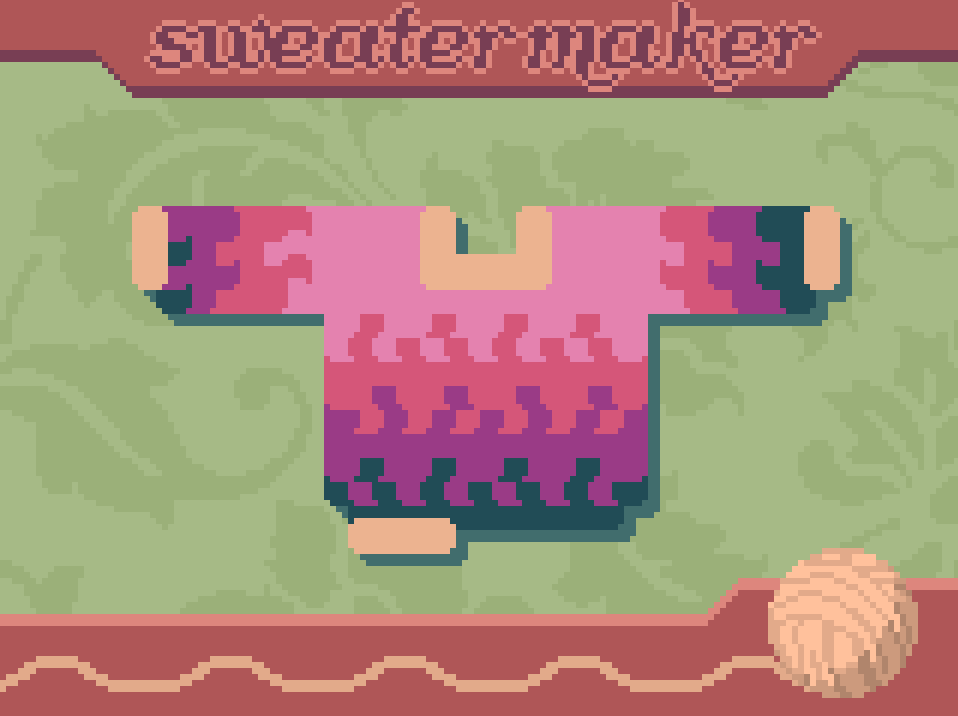
Traditionally feminine activities and aesthetics are a wellspring of untapped potential in video games. In Consume Me, your strategy is informed by a collection of cute outfits that offer various stat boosts. Terry Ross’s Sweatermaker is a crafting game inspired by the real process of knitting. We need more games that earnestly explore femininities with considered and interesting design; more games that create fantasies of magic and love rather than power, more games that radically reject the reputation of video games as hypermasculine.

This week on Aftermath, we’re celebrating Woke 2. What does that mean? Pieces that dig into the origins of woke—not the empty, sanitized version peddled by companies, but actual culture created by people—as well as communities that are already charting a course to a bolder, better future where we can all just be chill to one another.


