

Fun fact: for all the stereotypes Americans have about the dangers of Australian wildlife, few of the most stereotypical creatures present any kind of threat to the average person living their average life here. Sharks, snakes, emus–most of us don't see those killers on a daily basis, because we live in cities and they (mostly) don't. For urban-dwelling Australians, the biggest danger to our health and happiness is instead the most unlikely nemesis: the magpie.
A bird that for most of the year gets by looking cool and eating leftover chips, and which has a unique, beautiful call (above), the Australian magpie is much bigger than most other magpies you might be familiar with, depending where you are in the world (another fun fact: Australian magpies aren't Corvids like most others, they're Artamidae). But it's not their stature that makes them a danger. No, it's their swoop.
Magpies have been living alongside humans in Australia for tens of thousands of years, from indigenous inhabitants to the first European settlements of the 18th century and beyond, and for 8-9 months every year we get along just fine. I say that because, for the other months, a small percentage of the birds become highly aggressive during breeding season, and will spend the springtime months trying to injure, or even peck the eyes out of, every human that walks, runs or rides their bike past a tree that has a magpie nest in it.
Here's an example of what I'm talking about:
Magpies may engage in an escalating series of behaviours to drive off intruders. Least threatening are alarm calls and distant swoops, where birds fly within several metres from behind and perch nearby. Next in intensity are close swoops, where a magpie will swoop in from behind or the side and audibly "snap" their beaks or even peck or bite at the face, neck, ears or eyes. More rarely, a bird may dive-bomb and strike the intruder's (usually a cyclist's) head with its chest. A magpie may rarely attack by landing on the ground in front of a person and lurching up and landing on the victim's chest and pecking at the face and eyes.
For decades Australians have tried all kinds of things to deter these strikes, or at least mitigate the damage. As kids, I remember we were told to try drawing eyes (or sticking giant googly eyes) on the back of our bike helmets, because there was a theory that a magpie wouldn't swoop you if it thought you were watching it.
It doesn't work:
What about travelling at speed past a magpie's nest, hoping you can simply outrun it?
Doesn't work:
These are funny videos, and let me tell you, seeing this shit happen in real life is just as funny, and because this is happening to them and not to you, you can laugh.
But when it's happening to you? Jesus Christ. These things are a terror. The whooshing sound of their approach and the clacking of their beak or claws, coming out of nowhere (they only ever swoop from behind) is like a shark attack on land, and as someone who lives near a lot of magpies, I can attest to how eager they are to claw and bite at any exposed skin they can get their beaks on. Example: last year I was swooped while riding to the post office and the bird bit me so hard and fast that it split the top of my ear open; it hurt like hell, but the biggest danger was that when you're riding a bike you don't see or hear these things coming and then CLACK, suddenly there's a part of your ear missing, and you get so startled that you come very close to crashing your bike and doing much more serious damage.
The only thing I've found that helps is to cover your helmet with zip ties, like this. It doesn't stop magpies from swooping you (how would they know what a zip tie was, they still don't know what bikes are), but it will at least afford a little protection by keeping them at wingtip's distance, and make sure they only swoop you once, and not repeatedly:
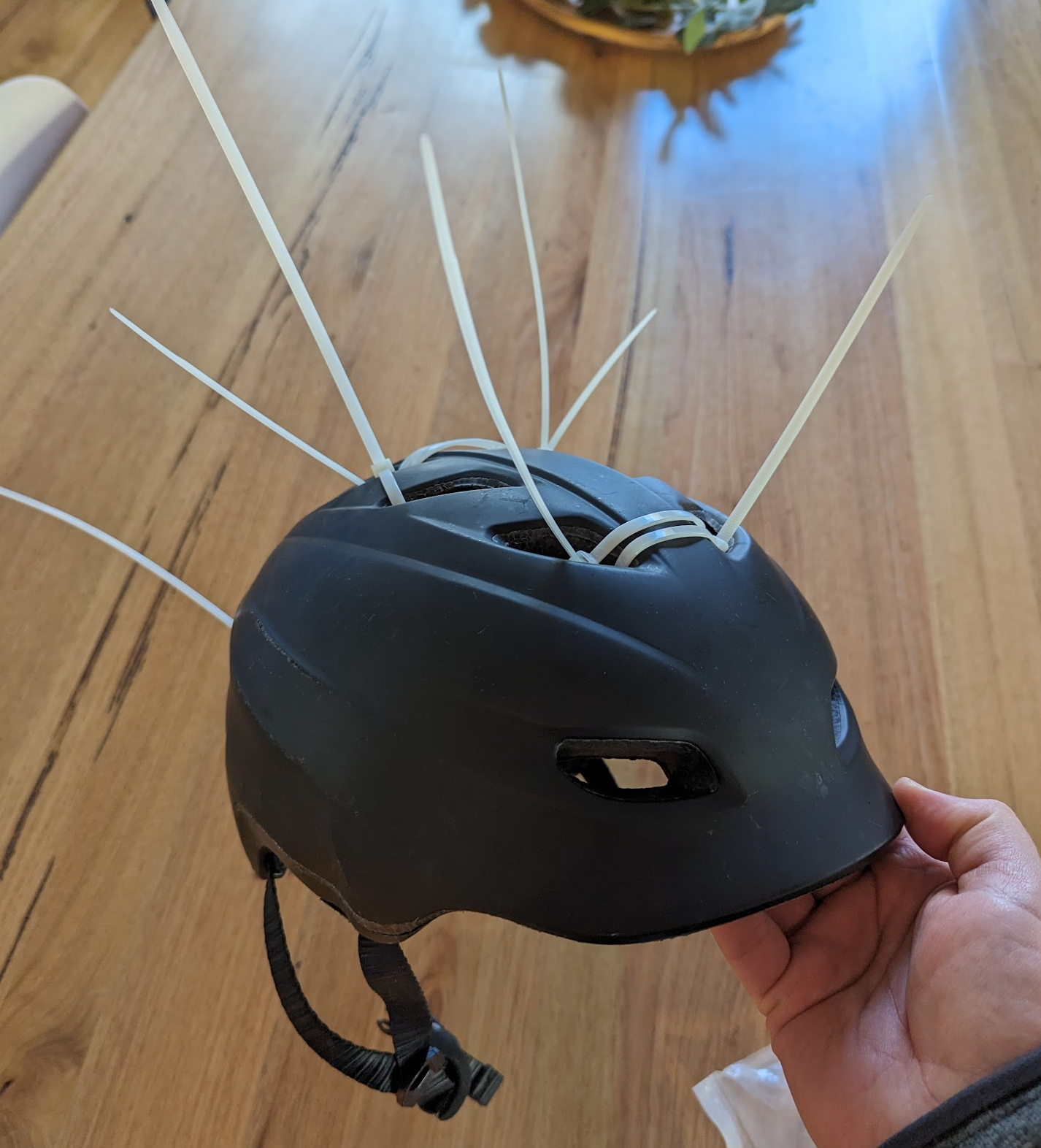
All that, donning my armour like Theoden at Helm's Deep, just so I can ride to the shops to buy some milk! Gah, I hate these fuckin birds! And yet for all my past, despite all my hatred for magpies--or, perhaps, because of it–this month I have been learning to live as one of them, to try to understand their ways and what drives them.
All of which is a very long-winded way of saying I've been playing Pie In The Sky, and it's been great.
A game where you control a murderous magpie, instead of being its victim, Pie in the Sky has the energy of a weird PS2 game and the structure of an early Tony Hawk Pro Skater, dropping you into various, deeply Australian scenarios and asking you to collect letters, prank workers and, most importantly, swoop people.
Pie in the Sky is a largely frustrating thing to play, in that the magpie's controls (especially its swooping boost) are, much like the bird, fast and untamed, and the lo-fi look gets so lo-fi in points that it can be tough to distinguish features in a level or, more importantly, notice good jokes. For a game built on precision controls and stringing moves together to build combos (ala THPS), it can be pretty annoying.
But it's still a pleasure to be around. The interaction with these levels is just the excuse to indulge in some Australiana, an invitation I'm more than happy to indulge in. I particularly loved the opening level, a homage to Australia's particular brand of suburban dystopia, though the coffee-obsessed Melbourne stage was also a highlight.
I will never forgive these birds IRL. But for a few weeks I have, at least, been able to appreciate where they're coming from. If I could have that much flying through the sky, knocking bins over and terrorising AFL fans, I'd probably be an asshole of a bird as well.
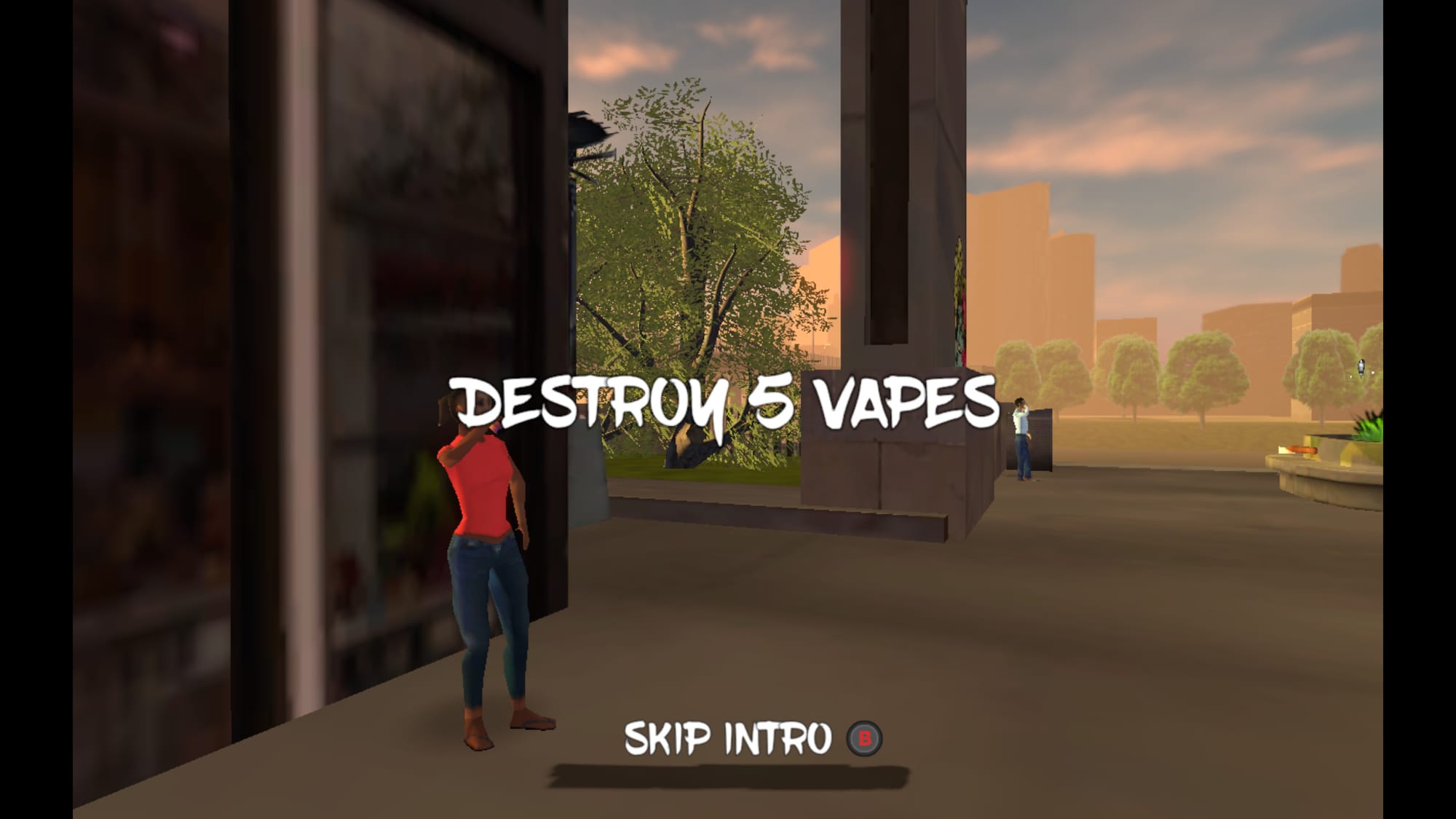
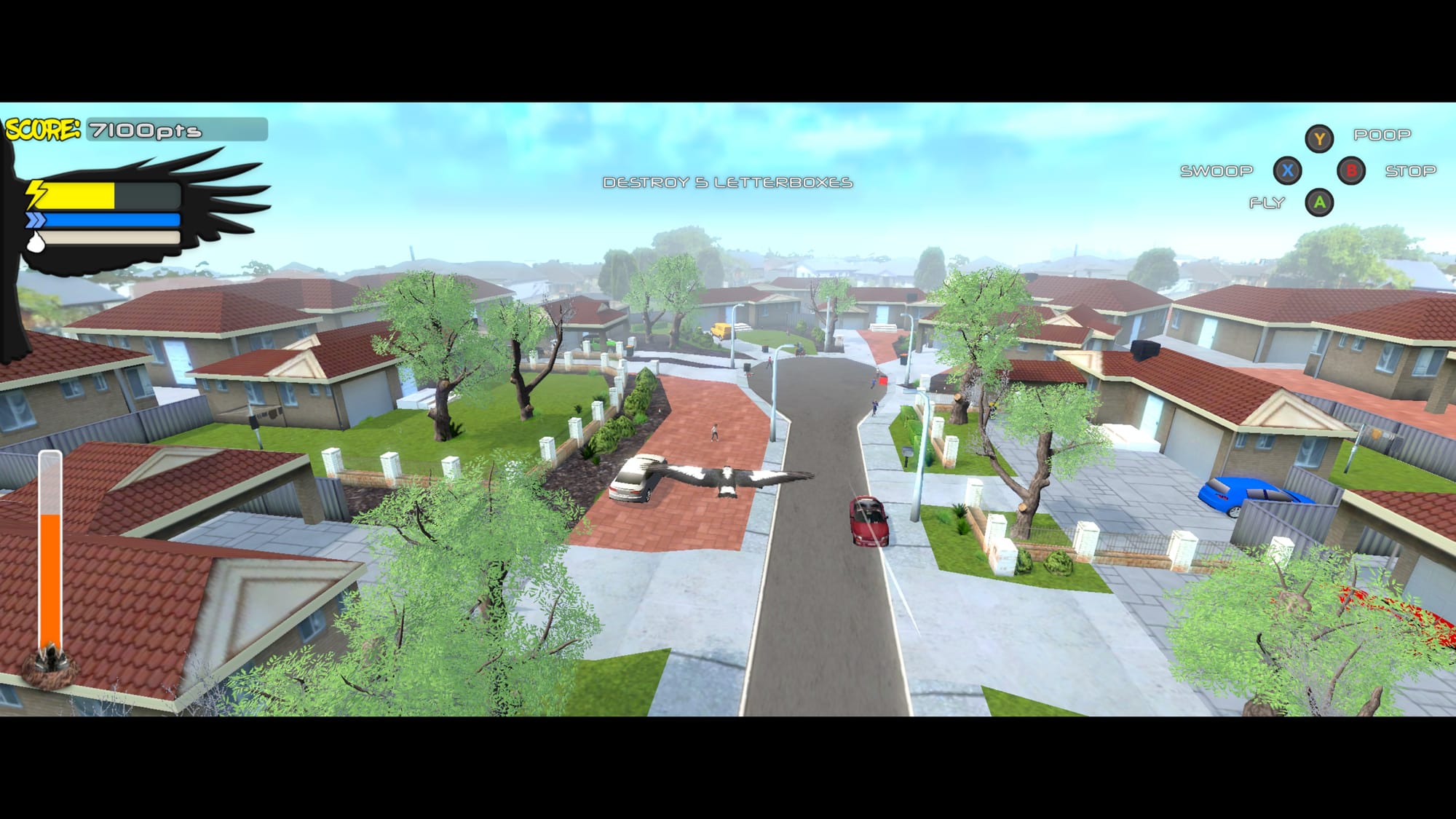
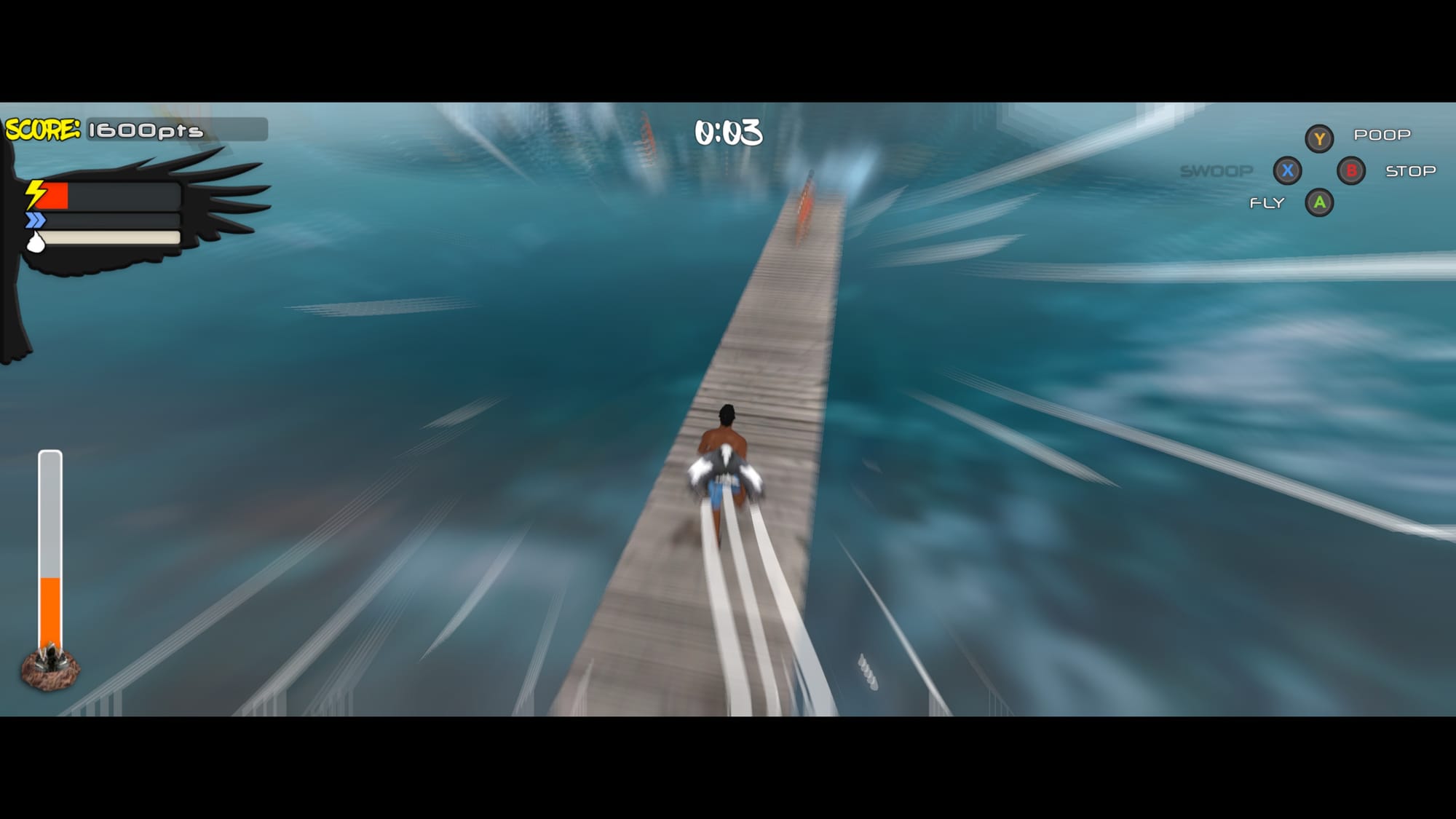
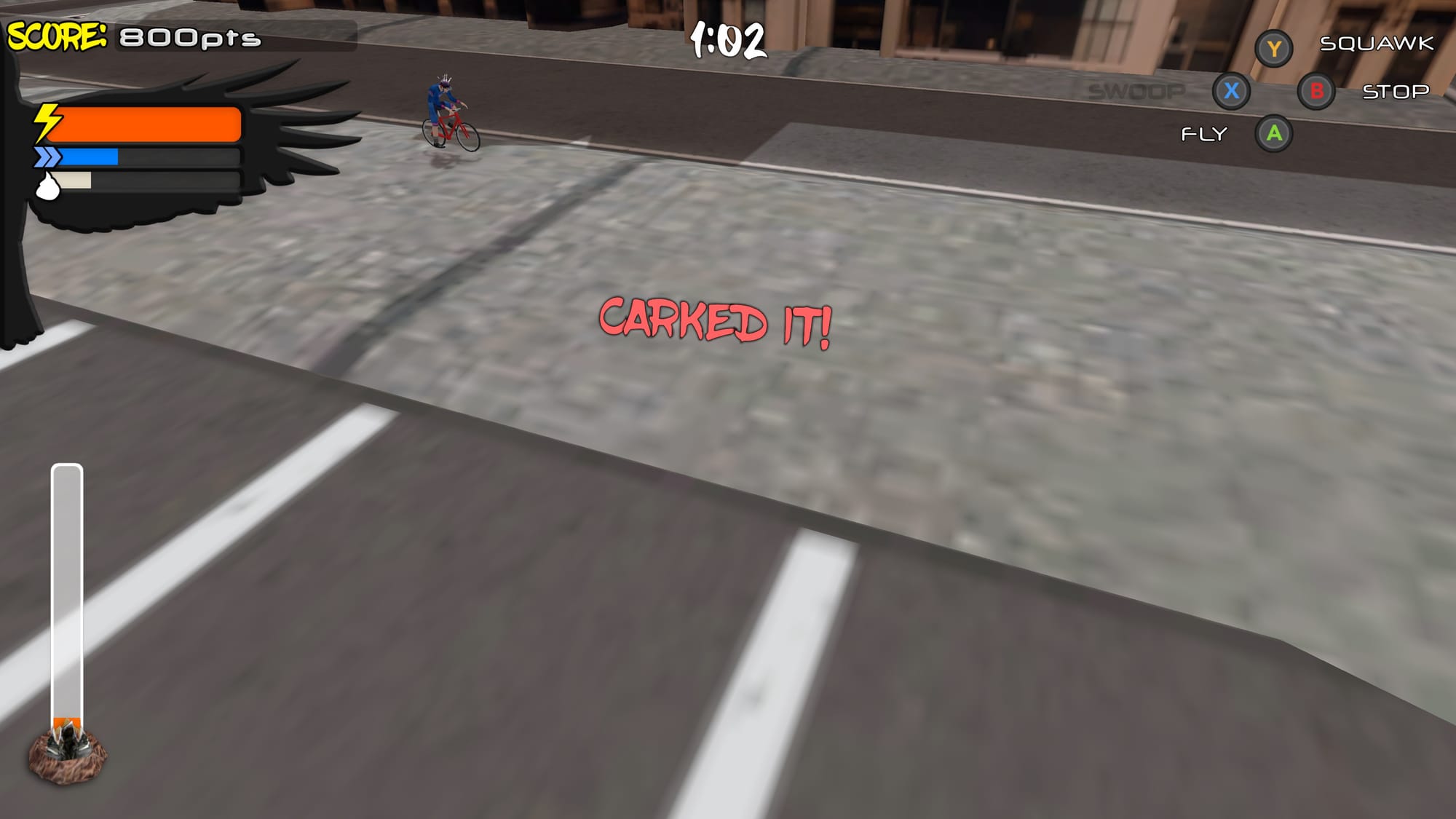
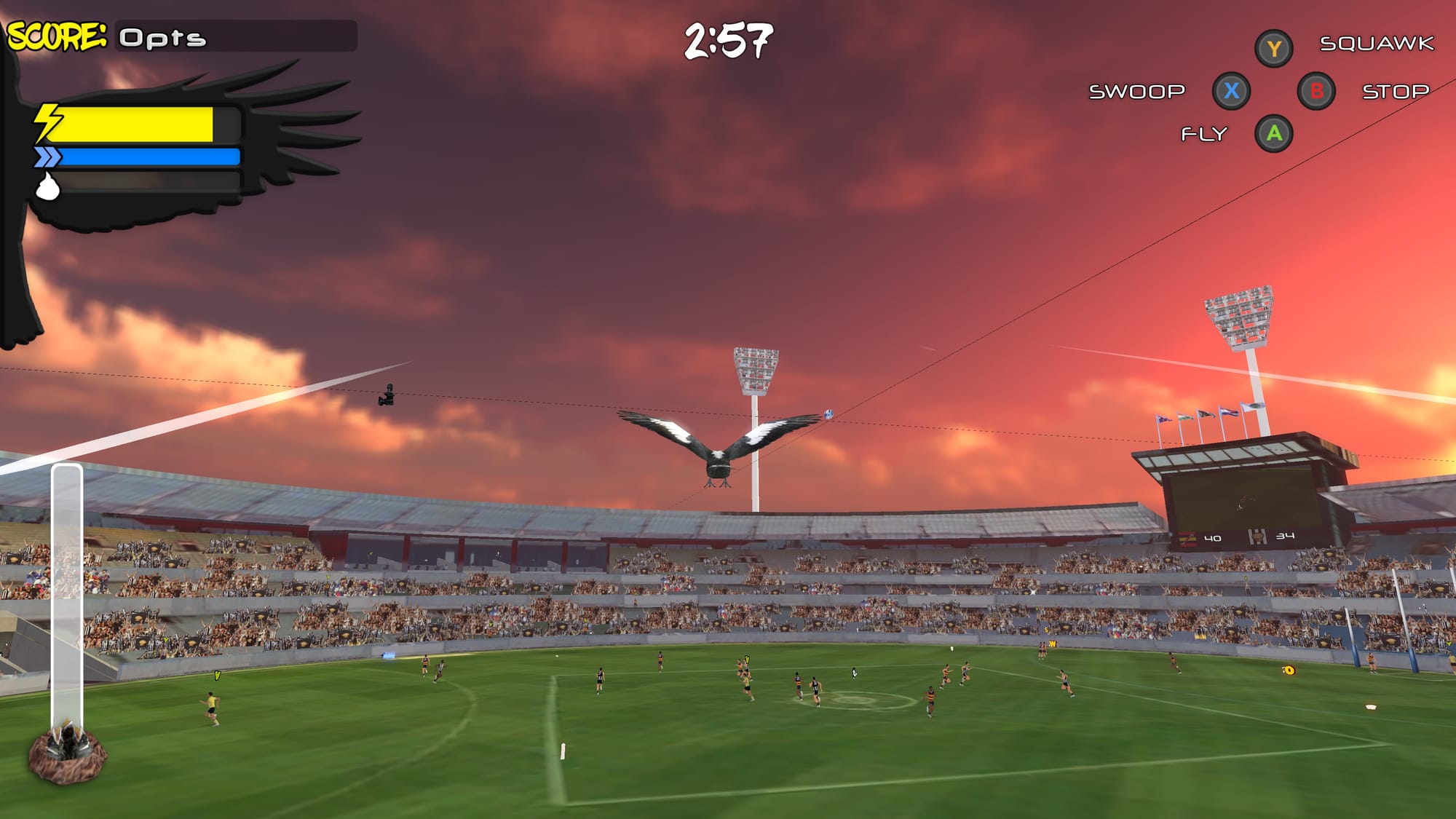
Seeing 'CARKED IT' (aka, 'YOU DIED') in a video game felt bizarrely patriotic


