

During the famous ending of Michelangelo Antonioni's 1962 film L'eclisse, the film’s two young protagonists disappear from the movie. The camera moves around to different spots in the area of Rome we have seen them occupy at various points throughout–buildings, construction sites, parks, roads and bus stops–but without them present. The frame feels strangely empty and sterile, like the meaning has been scrubbed from the film. The soundtrack becomes increasingly discordant. Random people we haven't seen before glance around anxiously at things off frame, as if something is about to happen. But it never does, and night falls. Whatever this unease we feel–alienation, nuclear anxiety–it overwhelms everything around it, and it cannot be expressed in words.
The mid 20th century modern post-war period brought about an increasing sense of alienation and dread that a lot of art of the time, like L'eclisse, tapped into. Looking at those unsettling Roman streets, you can feel a strange sort of connection to something happening in this very moment: the 2020s internet phenomenon known as "liminal horror," and particularly The Backrooms.
The original, anonymously-authored 2019 4chan meme post The Backrooms comes from sets this fictional space up as something you might randomly get sucked into if you're unlucky enough to stumble upon a fissure in the world around you. When you do, you "noclip" out of our reality, just like in a video game when your character's collision with an object or wall fails. You then end up in some sort of purgatory: an infinite void zone filled with yellow wallpaper and carpeting that looks like the back of a furniture store from the 90s. The contours of this zone are completely unpredictable, there also are monsters wandering them, and there may or may not be any real way to escape.
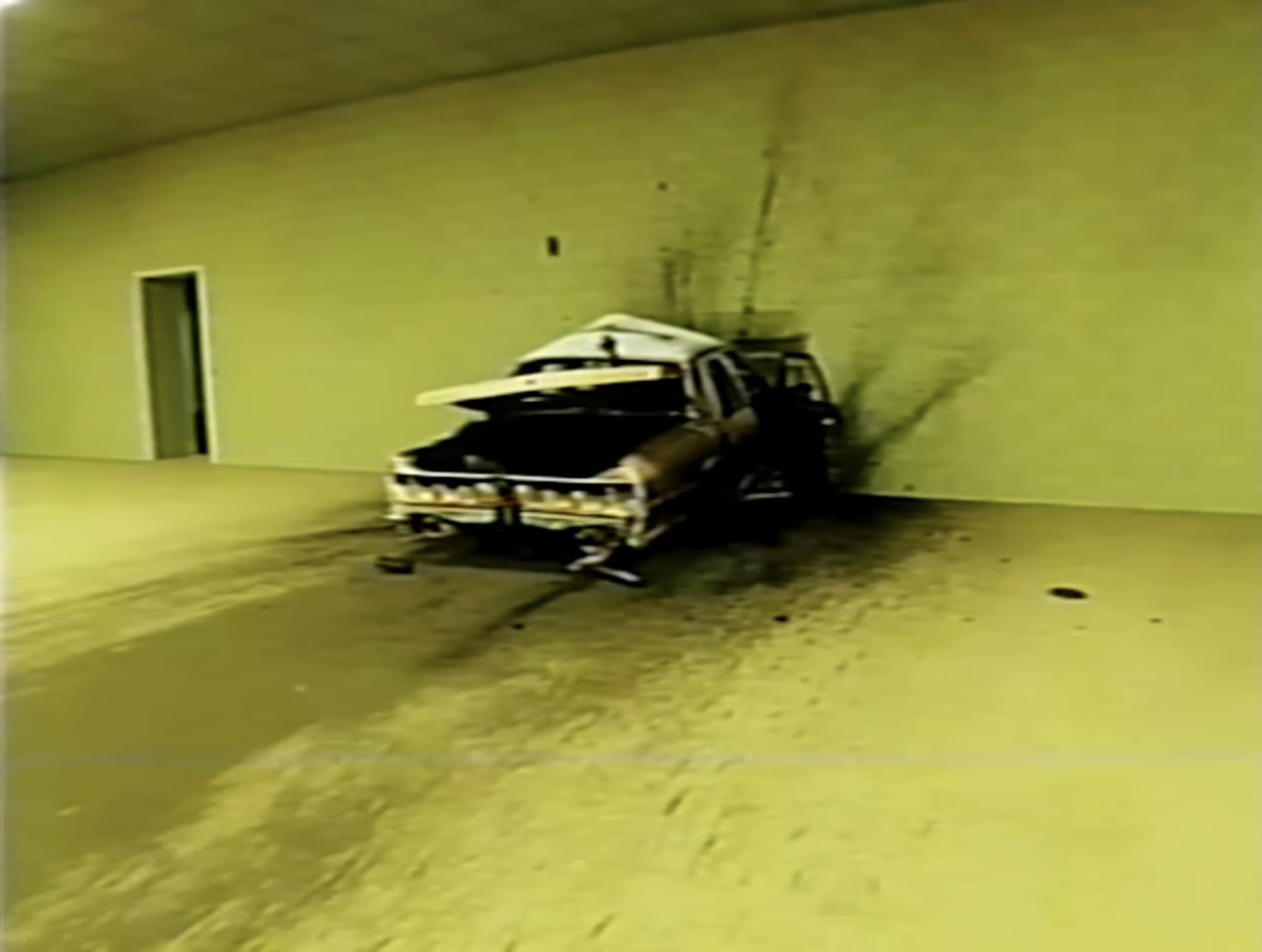
This meme image came out of a larger phenomena of liminal spaces–the everyday, mundane transitional places in our man-made environments. They are the hallways, the atriums, the lobbies, the waiting rooms where we move from one space to the next. There is also a distinct feeling of lost nostalgia to these spaces. Search for “liminal spaces” online and you'll frequently see images of children's play rooms, playground structures, swimming pools, hotels, or old shopping malls. Games like Dreamcore or POOLS heavily utilize these kinds of spaces for their own subgenre of horror; while these spaces are often associated with leisure and fun, they turn into a blank slate when any trace of playfulness is removed. The blurry VHS aesthetic these often get paired with makes them feel like a memory passed on of an era (usually the 90s) that no longer exists, removed of people and meaning: a past we can no longer return to.
To me, it's impossible to separate this phenomenon from the slightly earlier one of dead mall exploration videos, embodied online by Dan Bell's Dead Mall Series. You can also see it in the dissociative, chopped-up vibrations of pop culture past that’s present in earlier Vaporwave music, most famously Macintosh Plus (aka Vektroid)’s 2011 album Floral Shoppe. These are native internet cultural phenomena born from information overload, trying to grapple with and recontextualize the endless amount of waste left behind by consumer society of the not-so-distant past. The tropes of noclipping out of the world, and of large halls stalked by scary monsters, are also clearly taken from the world of video games, particularly indie horror games.
All of this makes The Backrooms and liminal horror a compelling sci-fi premise, because they work with this strange feeling of nostalgic unease you can experience seeing images of these spaces. But like many forms of art native to the internet, the premise often diverges into a shallow background vibe for cheap spooks, or it falls face first down the rabbit hole of generating endless labyrinthine lore details for the sake of it. This makes it hard to examine what comes out of this space as art that might try to say something specific, rather than just memery intended for highly insular communities. The critical and audience failure of 2018’s Slender Man film, an adaptation of the popular Slender Man internet horror meme, perhaps only just added to the sentiment that these internet- driven art projects, especially ones so collaboratively conceptualized as The Backrooms, might not ever effectively translate over to a traditional mass-market movie without losing a bunch in the process.
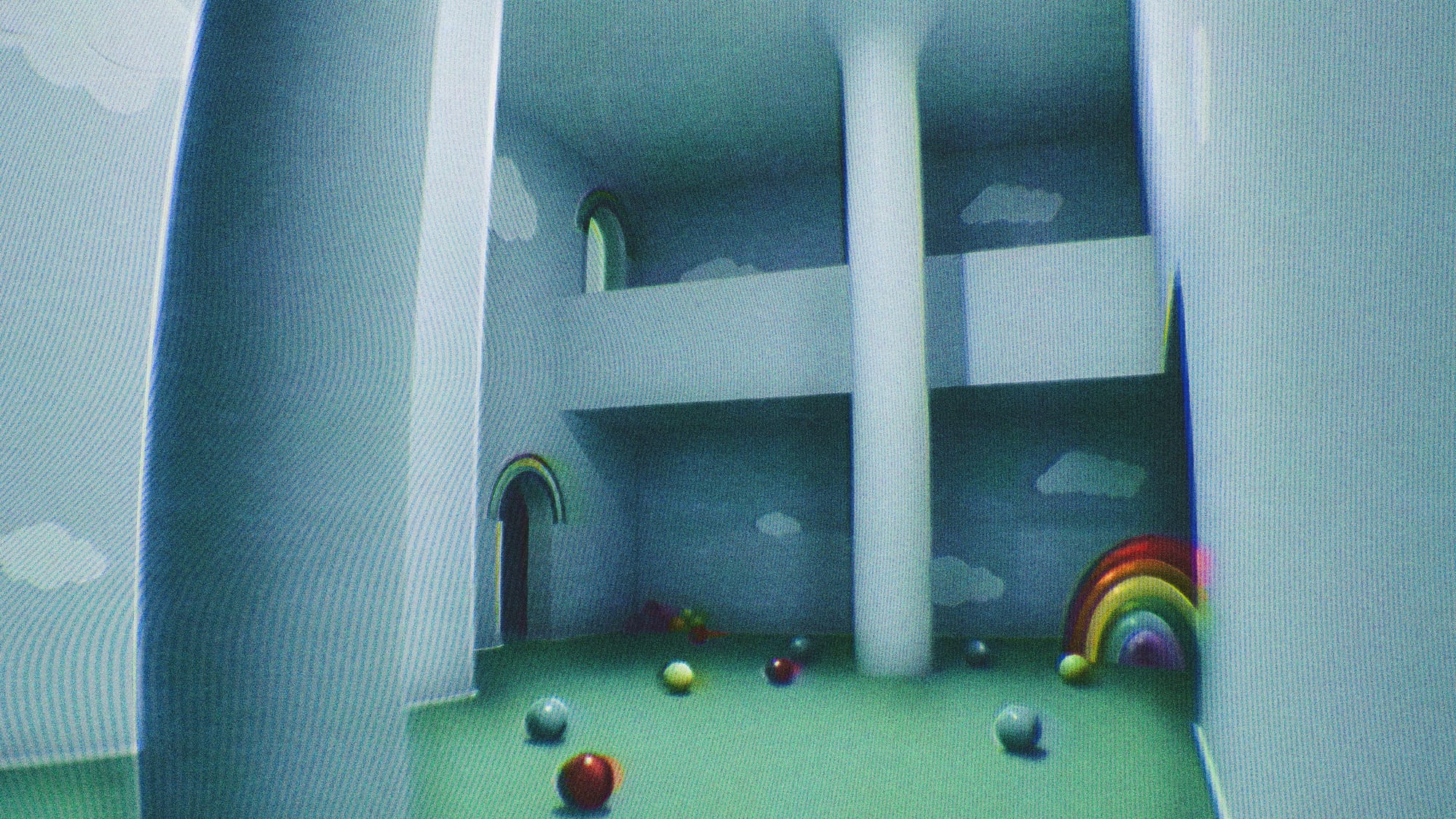
Enter twenty year old Kane Parsons (aka Kane Pixels)'s Backrooms YouTube series and the A24-released film adaptation, also directed by Parsons. The series and film do exist to please audiences clambering for new lore about a world originally conjured by a 4chan post, but Parsons adds a lot of his own spin. The film opts for a, to be honest, not particularly well-realized character study in a bid for more mainstream accessibility, while the series prefers to keep things more cryptic. But both at least seem to be genuinely interested in grappling with what this meme might represent in a broader cultural sense.
The YouTube series nonlinearly traces a bunch of different characters' interactions with this space. Much of what they encounter happened in the 90s, from found footage of unwitting innocents who happened to be carrying cameras with them when they got thrown into The Backrooms, to employees of a scientific research institute called The Async Corporation who are trying to study the contours of this space. The YouTube series seems most interested in the space as a main character, unlike the film, and the videos exploring it in greater detail are where the series is at its peak. Nearly all of this series’ reality is convincingly modeled in Blender and 'filmed' with Adobe After Effects by Parsons himself, an impressive technical feat.
What Parsons' series gets right more than anything, though, is open-endedness: The Backrooms are almost an empty container for so many anxieties we have about both the recent past and the present. They're reminiscent of dream spaces, where you might find new hidden rooms in your old childhood home. The found footage videos feel like urban exploration videos of abandoned places the cameraperson is not supposed to be in. The monsters you see are similar to anomalies you might see in ghost hunting tv shows, often presented in grainy footage. The mysterious supernatural ways the space operates feels like The Zone from the novel Roadside Picnic and the Stalker film and game adaptations. Like The Zone, The Backrooms might serve as a pathway to some kind of profound scientific or spiritual realization, or they might more likely just be a place to waste your time and get lost forever. This also speaks to the isolation of life on the internet, where we're increasingly inundated with endless heaps of meaningless information and it’s easy to lose yourself down various rabbit holes.
But what's really distinct about The Backrooms from other supernatural spaces is they look so deeply mundane, and so man-made. Parsons said in a recent interview with horror producer/director James Wan for A24 that, to him, The Backrooms represent mediocrity. People falling through space into this zone could just embody a feeling of being stuck in general, in dead end corporate office jobs and suburban sprawl. Nineties media was inundated with stories capturing the inherent alienation of corporate office spaces–from Office Space to The Matrix–, which makes it a fruitful period of time for The Backrooms series and movie to be set in. In our present, it echoes a culture that feels so utterly stuck inside nostalgia for corporate products of the past that it can only seemingly endlessly reproduce more of what's already existed, to diminishing returns. So in The Backrooms we have this big garbage dump, this hoarder's house for the entire world's population just spat out incoherently and haphazardly. It's deeply grotesque but also deeply bland, the end result of a culture that creates massive amounts of pointless waste. And it feels totally alien and inhuman as a result.
I distinctly remember the fields around where I grew up in rural Ohio in the 90s as a child suddenly being taken over in the 00s with strangely half-formed, cookie cutter housing complexes that seemed to endlessly reproduce like cancerous cells. I would often wonder who was living in these places while driving by. Generation Z grew up in the moment of these spaces overtaking everything, cheaply constructed and sitting there half-occupied. And now everything, including the internet, with its nonsense algorithms and oceans of AI-generated slop, increasingly resembles them. The existence of The Backrooms feel like the obvious reflection of this reality.
But what stuck with me most throughout the series might be embodied by a memorable, mysterious-sounding jingle called "Still Life," composed by Parsons. It repeats throughout the video Found Footage #3, and can be heard in the Backrooms movie. Rather than being dark and brooding, it's strangely whimsical and feels like a mockery of the sorts of optimistic corporate jingles found in old tv commercials.
Similarly, other music in the series–especially the music associated with the Async Corporation–calls to mind the melancholy analog synth tones you'd hear in old corporate informational videos, and are similar in feel to the work of beloved electronic music duo Boards of Canada. Given the concurrent release date of this movie and Boards of Canada’s new album Inferno, of which the track “The Word Becomes Flesh” plays over the credits of Backrooms, it feels intentional. These tunes don’t really match how hostile or scary The Backrooms can be. They instead signal that maybe there is not an inherent morality to these spaces; they’re more a result of what gets spat out when this kind of corporate faux optimism that's choked our world turns to waste and mutates into something beyond our comprehension. The seeming blandness and indifference is what makes The Backrooms feel so disturbing.
Like L'eclisse's intuitive recognition of a fracturing reality that was about to take place in the 60s, there is maybe an unconscious recognition in liminal horror that there is something out there in these man-made spaces that we can’t understand. But it must all eventually mutate into something else; we must inevitably be able to pass through this one space to whatever new inconceivable reality awaits, because being able to pass through is what makes any of these spaces actually liminal in the first place.
At this moment, Parsons’s Backrooms film looks to be a major hit. Its success could help bring forth more fleshed out artistic explorations to other novel products of highly insular, self-eating online meme culture. The compelling underlying themes of Backrooms and liminal horror could lead to substantive larger conversations about our current cultural stasis, the toxic nature of nostalgia, and the endless waste generated by capitalism. Or maybe it will all just end up a new setting for another passing horror fad, instantly subsumed by mainstream market forces, another way to monetize the rot, and we’ll be lost wandering the halls for a long time to come. Certainly this McDonald’s ad set in The Backrooms suggests the latter. Time will tell.


