

When Luke wrote about a new frontier in AI Slop deserving a new distinction produced by one Darren Aronofsky, I sardonically responded in the Aftermath Slack, saying, “Good to know Darren Aronofsky is still a hack.” Luke, of course, linked to the director’s history of copying other people’s work, but I’m still full of piss and vinegar after being reminded of Aronofsky’s past artistic faux pas. So allow me to shed some light on why anime fans in particular don’t fuck with Aronofsky and his egregious aping of legendary Japanese anime director Satoshi Kon.
The phenomenon of a Hollywood director referencing another work isn’t unique to Aronofsky. After all, what is The Matrix if not the Wachowskis being forever indebted to Mamoru Oshii’s take on Ghost in the Shell? The cool factor of Quentin Tarantino’s Kill Bill without Toshiya Fujita’s Lady Snowblood serving as the blueprint? Or the existence of Christopher Nolan’s gravity-defying hotel fight scene and cracked-mirror sequences in Inception had Kon’s final film, Paprika, not done it first. It’s cool to see how a creative found inspiration from other works.
The difference between copying and paying homage is a precarious one that can shift depending on how you slept the night before. For me, the general rule of thumb is that recreating a cool scene from an older work is above board so long as you’re telling a different story. While there are arguments to be had about where each of the above-mentioned cases sits on the copying and homage scale, they’re all negligible in my book when compared to Aronofsky’s “hack fuck” brand of homage to Kon.
Aronofsky has made no secret of his influence from directors like Akira Kurosawa, Spike Lee, and Kon. However, his influence from Kon gestures toward a creative who is aware that anime isn’t as popular in the West, so he’ll steal it before anyone can notice. To his credit, Aronofsky says as much in the documentary Satoshi Kon: The Illusionist. In it, Aronofsky recalls how the two met at a tempura restaurant after the release of his 1998 movie, Pi. Afterwards, Aronofsky says he saw Kon’s 1998 film Perfect Blue while in the script process for his upcoming film Requiem for a Dream, starring Jennifer Connelly and Jared Leto. The film’s trailer famously recreates an emotional moment between its leads in a bathtub, which Aronofsky provides some backstory for in the documentary.
“I think I was looking for a scene to kind of get the internal mindset of Jennifer Connelly’s character, Marion, and probably at the same time, I saw Perfect Blue,” Aronofsky said. “I remember writing to Satoshi in Japan saying, ‘Hey, would you mind if I use one of your shots as an homage to you, but it would help this moment in my film?’”
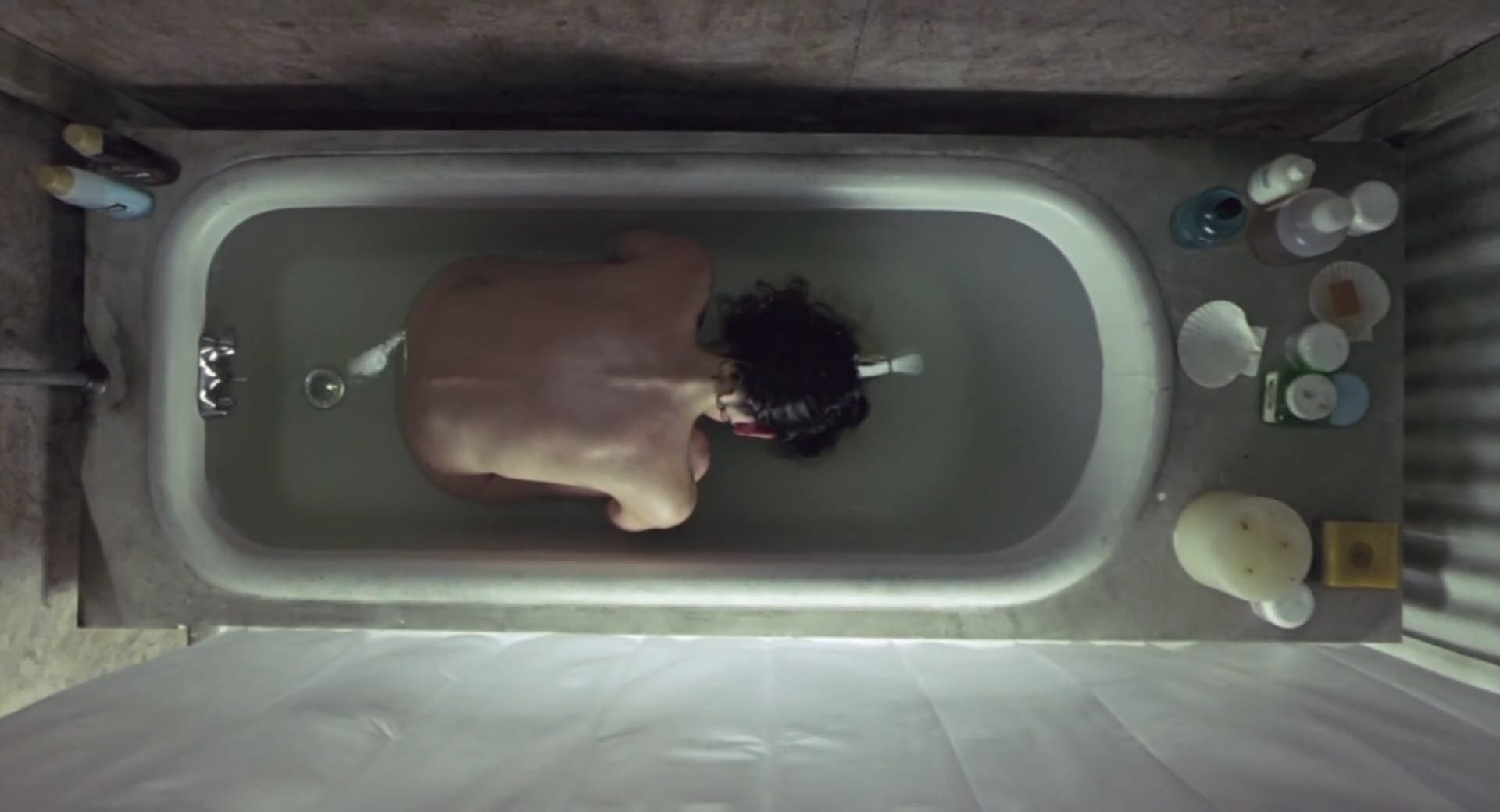
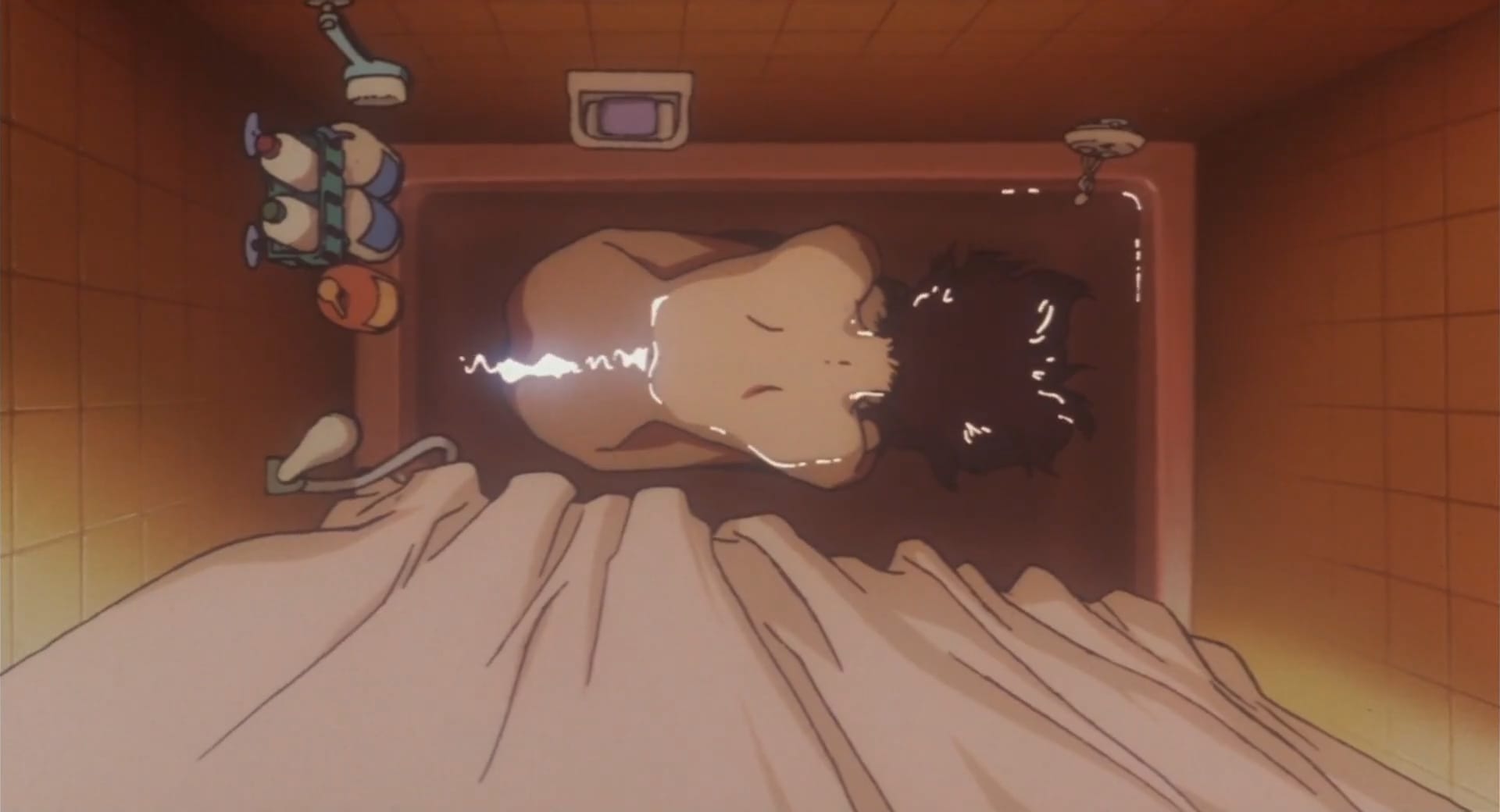
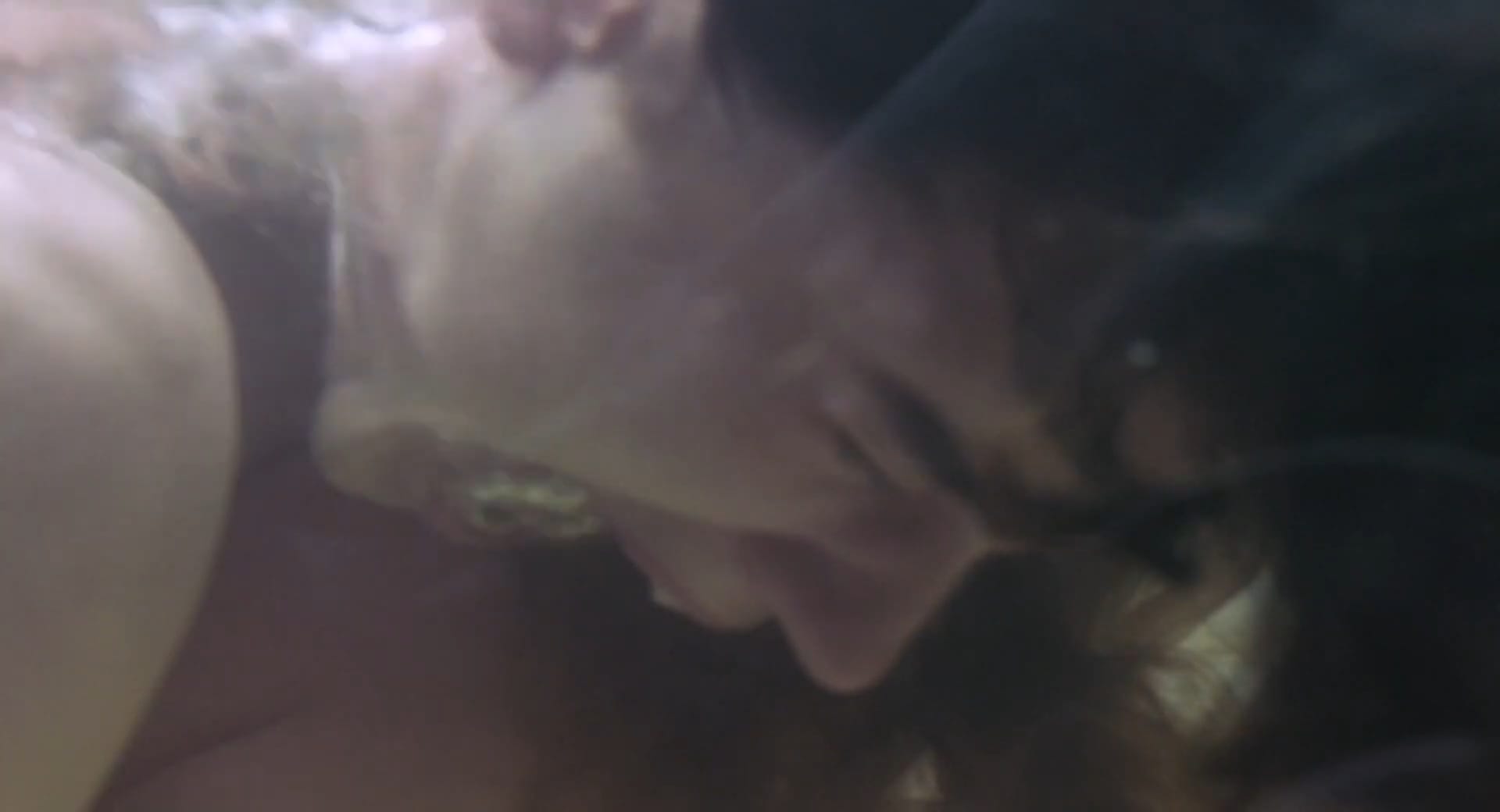
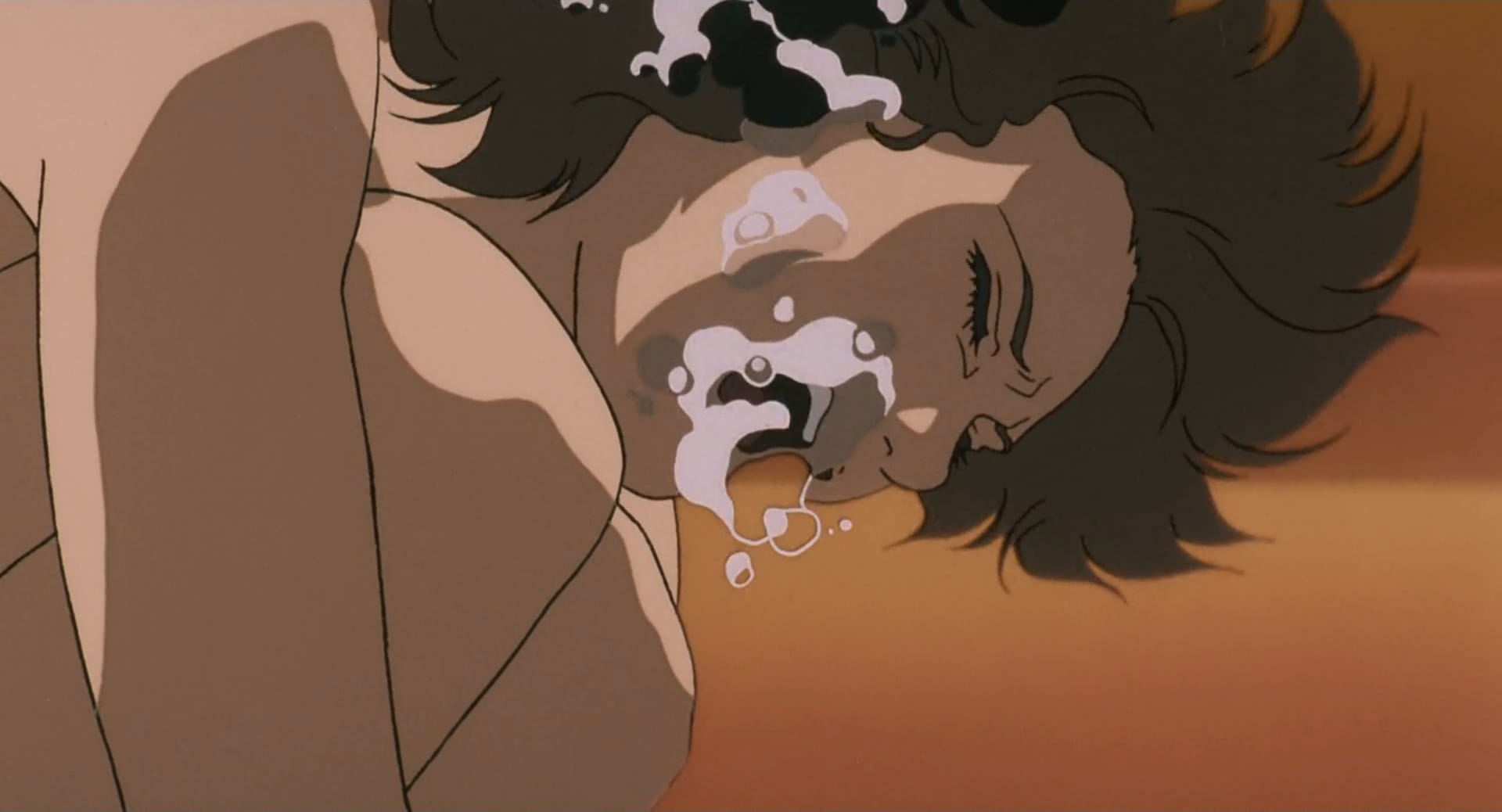
(Images: Madhouse/Artisan Entertainment)
As Aronofsky recounts, Kon was “flattered,” “fine,” and “generous” in allowing Aronofsky to pay homage to Perfect Blue. This is why Connelly’s scene in Requiem for a Dream shows her submerged in a bathtub, shouting under the water’s surface, just as Junko Iwao as Mima Kirigoe does in Perfect Blue. Aronofsky went on to say that they’d eventually link up again in Japan, where Kon had told him he was “very proud” of the homage. But that’s just Aronofsky’s account of what happened in a 2021 documentary following Kon’s death in 2011. Kon’s living account of the events, however, is a very different story entirely.
Satoshi Kon talks about how Requiem for a Dream took from his film Perfect Blue (1997) pic.twitter.com/apBQtPoY0W
— Animation Obsessive (@ani_obsessive) January 30, 2026
In an old TV interview snippet that went viral on Twitter shortly after Aronofsky's AI show hit the internet, Kon broke out a VHS player to showcase the similarities between Requiem for a Dream and Perfect Blue. While yes, Kon did say the two got to speak when Aronofsky came to visit, his signing off on the homage was news to him. During his frame-by-frame comparison of the two films, Kon states that Aronofsky “used these two cut scenes, the same angle and pose and everything,” and when Kon asked him about it, Aronofsky said it was an homage. Kon and whoever else in attendance immediately laughed when he used a baton with a pointed finger to point at himself when he reiterated that it was an homage to him before diving into the real problem with Aronofsky's homage using his work as a storyboard and reaping the benefits.
“As a side note, last year I was on the same flight as Jennifer Connelly,” Kon said. “She was in first class with her entire family; I was in business class.”
While Kon concedes that the stories are pretty different, Requiem for a Dream does feature its older lead wearing a red dress while hallucinating characters spilling out of her TV screen. This prompted the interviewer to say that the detail sounds very similar to other parts of Perfect Blue, to the point of overlap.
“Overlaps or a ripoff?” Kon countered. “But when I asked him, he said it was an homage. I learned a lot.”
A peek into Satoshi Kon's storyboarding for Paprika (2006), dir. Satoshi Kon, Madhouse pic.twitter.com/W23Ey49pEu
— Animation Obsessive (@ani_obsessive) May 6, 2025
Charitably speaking, looking back, we could chalk this all up to a discussion lost in translation where Aronofsky assumed he got an enthusiastically ironclad go-ahead from Kon when Kon didn’t seem aware this all was happening until after the fact. But all of that gets muddled when you consider he didn’t just do this once. He did it twice.
The second time was in his 2010 film, Black Swan. In it, Aronofsky would go from a visual homage to blatant copying, lifting the plot of a ballerina afraid of losing her dying spotlight in an obsessive battle over identity and image, right into Perfect Blue’s whole fucking flow. In an interview with Dazed in 2017, Perfect Blue producer Masao Maruyama even said that before Aronofsky made Black Swan, he approached Maruyama and Kon about remaking Perfect Blue entirely.
“I met with [Aronofsky] alongside Kon,” Maruyama told Dazed. “It wouldn’t have been a problem with an adaptation; we thought that a director of that status could have adapted the film and done it in his own way and that would have been fine. But I think that Aronofsky’s Black Swan, including the similarities it has to Perfect Blue, is a very interesting film.”
Like Requiem for a Dream, Black Swan also took home a bunch of awards, but as far as I’m concerned, that’s all stolen valor. Unlike Kon being able to speak for himself about Requiem for a Dream being a ripoff of Perfect Blue, there’s no gotcha interview clip of him calling out Aronofsky for ripping off his work, because the director passed away from pancreatic cancer a year after Black Swan’s release. In his wake is a fifth unfinished feature film anime, Dreaming Machine, that, in retrospect, I’m glad I never saw the light of day because Aronofsky wouldn’t have it as something to strip for parts to elevate his meandering slew of films as of late.
So you can forgive me for the lack of surprise that Aronofsky would throw his producer money at slop when he clearly already didn’t give that much of a fuck about it with Kon’s works. Once a lame, always a lame.


