

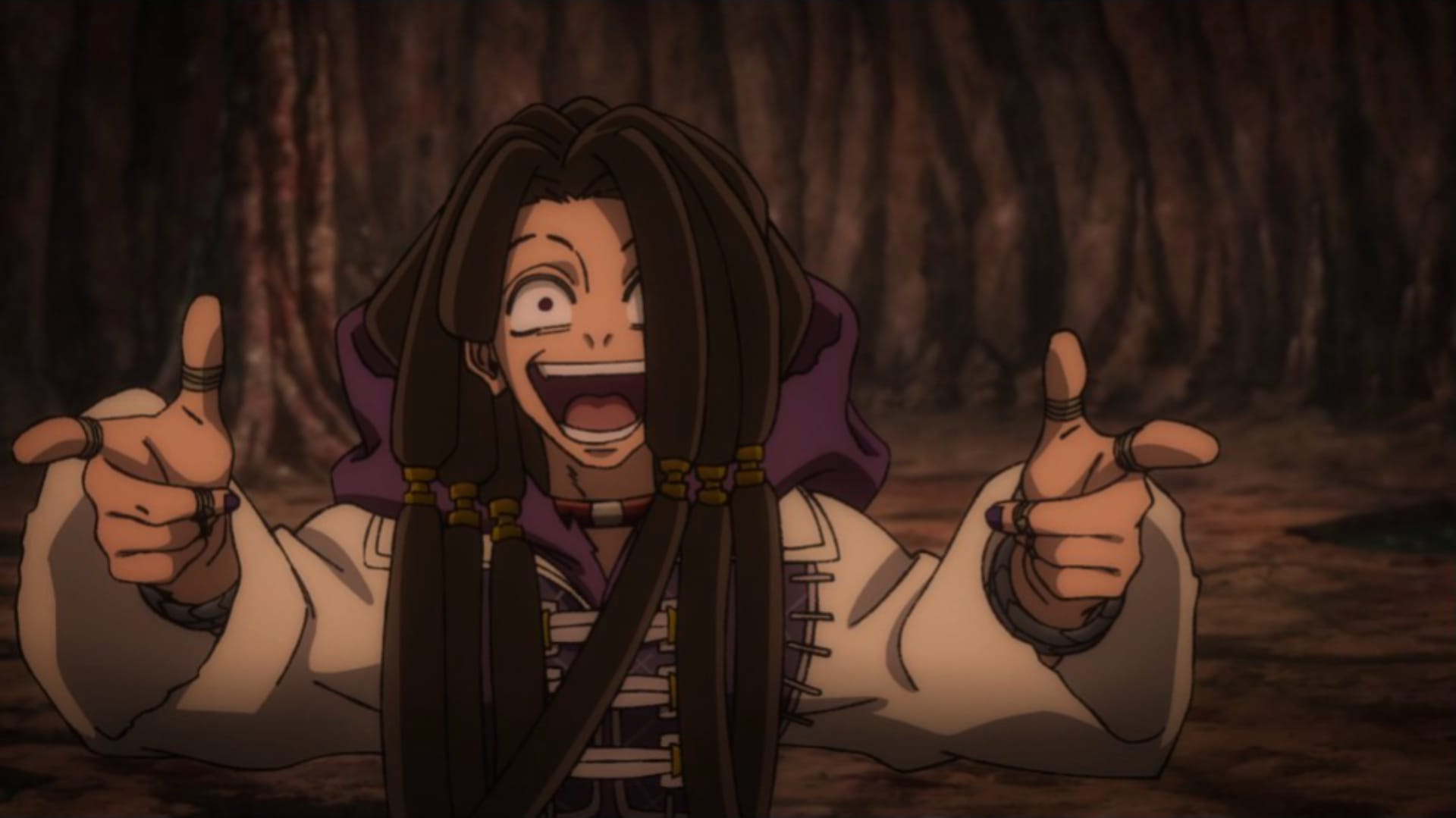
Voice Actor Zeno Robinson has achieved a Black nerd milestone that even Black anime fans thought might never come to pass: playing an honest-to-God Black character in an anime as Jabber in Gachiakuta. It’s a notable accomplishment in the voice acting sphere that’s made it harder and harder for Black actors to succeed.
Back in 2022, I spoke with A.J. Beckles, Kimberley Anne Campbell, Zeno Robinson, and Anairis Quiñones—four Black voice actors whose stars were rising across anime series like My Hero Academia, Fire Force, and The Promised Neverland. Even as their careers gained momentum, they were candid about how much harder it had been for them to break into the anime industry because they were Black. Weathering racist backlash whenever their casting was announced, the pressure to contort their voices into what people thought an anime character “should” sound like, and the painful process of unlearning the idea that their blackness was a liability, were common denominators of voice acting while being Black. But the numerator keeping them going was the responsibility they felt to bring representation behind the mic and leave the door wider for those who come after.
Four years later, Robinson and his contemporaries, have become household names as the newest generation of voice actors in big marquee shows Robinson says that while the industry has made followed through on structural progress in hiring more people of color in roles, it still often feels like the burden falls on individual actors like himself to keep pushing that boulder uphill.
Of course, there are many people at work pushing diversity and representation into the animation space. Of them, Robinson shouted out Your Friendly Neighborhood Spider-Man's showrunner, Jeff Trammel, on Disney+, where Robinson plays a Black Harry Osborne with fresh braids, and the incomparable Colman Domingo plays a wave-check-ready Norman Osborne. Though the series had its premiere marred with the likes of Hudson Thames, the voice of Peter Parker in Marvel’s What If series, in a Collider interview, voicing his “biggest fear” that the show “was that it was gonna be annoying and woke.” While he’d follow up his offbeat comment with praise, lauding the show as “awesome” and “well written,” the burden fell upon Trammel, as it often does with Black people put in a situation where they should otherwise be celebrated for their achievements, to maintain an air of professionalism while also framing Thames’ comments as well-intentioned and misspoken.
Robinson feels blessed and honored to work with Trammel, a creator who first made his claim to fame with the Cartoon Network show Craig of the Creek. The cartoon which ran for seven years before getting cancelled in 2022 in the wave of Warner Bros. animation purge, with its final episodes later airing in January 2025. Trammel now has a second season of Spider-Man in the wings. But while Spider-Man has the Disney machine behind it to keep it going, Robinson feels like animation and anime as a whole are in a bit of a dry spell, with little push for diversity behind the mic and on screen. Robinson says this lack of momentum mirrors a broader political climate in which DEI is treated as a manufactured threat, and that the fallout has affected the creative industry as well, making it more risk‑averse.
“The projects that are there have been amazing and great, and I’m fortunate to be able to work on cool things still, but I think companies aren’t making a lot of things and thus not making new stories. I also think, as DEI has kind of become this big spooky word, and programs that helped underrepresented creators are disappearing, the fight sort of starts over and becomes harder to get feet in the door and be seen,” Robinson said. “There are definitely really cool things still happening, but honestly, the truth is that everything’s a bit slow right now. I think the pendulum always swings back and forth, and it’s just swinging the other way this time around.”
While Robinson wouldn’t say companies aren’t actively hiring Black people in the industry, the space is in a completely different place than it was a couple of years ago, when it felt more experimental and progressive, with bigger, riskier swings. Now, everybody’s a little more reserved with the industry being a little slower with making and greenlighting projects, and by proxy, fewer work opportunities for everyone. Black folks in particular have been impacted, unless they’re auditioning for works clearly influenced by Black culture, like Sony’s recently released animated film, Goat, starring Stranger Things standout Caleb McLaughlin.
The only alternative route is for folks to do what industry leaders like Tyler Perry purport to do, by making their own things for Black audiences to enjoy. Black, queer filmmaker Cheyenne Ewulu did this with her crowd-funded workplace comedy series, The Comic Shop, which Robinson stars in. So has storyboard artist Kiana Khansmith with her animated web series, I Don’t Want To Be A Magical Girl. Both projects provide proof of power that there’s a desire for Black voices in the space and an audience for them.
Although it’s become harder for voice actors—especially actors of color—to find their footing in the industry lately, one bright spot that’s made the long-beleaguered Black representation in anime feel genuinely exhilarating is Gachiakuta. Unlike the days when fans had to squint for scraps of representation in characters like Piccolo from Dragon Ball Z, Gachiakuta wears its Black cultural influences openly, from its worldbuilding to its cast.
@jerrysenju ♬ Gachiakuta Beat - Dominican Follo
Creator Kei Urana has been vocal about wanting the series to reflect the real world, even going so far as to hold its Japanese stage play accountable after fan backlash, urging producers to cast Black actors for fan‑favorite Jabber. And in the dub, Robinson has been on a tear, bringing villain Jabber to life with an unapologetically Black performance that’s become a major draw for viewers—a rare feat in an era when the old subs‑versus‑dubs debate somehow still rages on in 2026, despite how strong the show already is on its own merits.
When he first read Gachiakuta and saw Jabber on the page, Robinson told me his reaction was essentially, “A Black dude in this manga? Heck yeah.” Figuring that’s how a lot of fans felt too, his goal in the dub, he said, was to lean into that—embracing the cultural threads woven throughout the series and making that presence unmistakable rather than muted.
The Zankalings flocking as one 🥹 https://t.co/kVPXJOuKvk pic.twitter.com/nYq7WexaYY
— Corey Wilder 🎙🍉 - Is the NUMBAH ONE Enjin Fan 🤓 (@WilderCorey) February 16, 2026
“I see people try to do that with Yoruichi, like, ‘Oh, Yoruichi actually might be Southeast Asian or Indian,’” Robinson said. “What it can feel like is whenever Black people sort of see themselves in a character, there will be people who will try to see that character as anything other than black, which can feel a little racist.”
Robinson wanted to cut through that noise and make sure there was no question in the English dub over Jabber’s Black identity. He wanted Jabber’s Blackness to feel intentional, grounded, and undeniable in every line he and the dubbing team took to enrich Jabber with the exaggerated swagger of a Black teen, as it were, from the way he talks, freestyles, and disses Gachiakuta’s protagonists.
It’s one thing to voice a character people casually accept as Black, but it’s entirely different—and far more rewarding—for Robinson to play a character who is unmistakably Black or clearly shaped by Black culture.
“Someone just sent me a Katsucon video of a crowd of people singing the Jabber rap in the middle of a group of cosplaying Jabbers, and I felt myself sort of getting a bit emotional about it,” he said. “The rap was something I heavily contributed in making [and] our version of it that has sort of taken on this life of its own, ingrained not just in the culture of Black people, but the culture of Gachiakuta [and] how it's received in the world. To see so many Black people embrace that was really heartwarming for me.”
wow. I’m speechless yall. Yall gon make me shed a thug tear!! 🥲
— zeno: hajime kashimo 💙⚡️ (@childishgamzeno) February 17, 2026
it’s just…wildly crazy to see this many people singing something I helped write. A hood classic!! I wish I was there to do it with yall!! Gotta run it back next time I’m there!! 🙏🏾 https://t.co/Ot5epk3EUn
Unfortunately, as was the case four years ago, the loudest racists online still make it their mission to harass Black fans for simply enjoying seeing themselves represented in anime. Sometimes it’s friendly fire, like the guy who briefly became Twitter’s main character for accusing Robinson of lacking an “afro heart”—whatever that’s supposed to mean—only for the phrase to immediately become a meme that he, Beckles, Quiñones, and the rest of Black Twitter gleefully roasted.
have yall seen this?? I appear to be missing mine, I ONLY got the skin part pic.twitter.com/mph4qBqeZE
— zeno: hajime kashimo 💙⚡️ (@childishgamzeno) August 27, 2025
But the more insidious detractors are the ones who try to gatekeep anime from Black fans altogether, despite Black audiences playing a massive role in pushing the medium into the mainstream. One moment that crystallizes how absurd the backlash can get was in 2024 when a young fan drew Okarun as Black because Beckles voices him in Dan Da Dan, only to be swarmed by chuds furious that a harmless piece of fan art was somehow “insulting” to the Japanese creators. Beckles changed his profile picture to the fan’s drawing in solidarity, which only made the trolls angrier. It’s a perfect snapshot of how representation in anime, whether in Gachiakuta or Dan Da Dan, still brings out the worst in people who have nothing better to do than police who get to enjoy a medium that’s made for everyone.
I ended up doing them :3 pic.twitter.com/Oe8LlrJKGu
— 𝗟𝘆𝗻𝗻 🐡 comms closed (sorry guys) (@Lynn6Thorex) December 1, 2024
The last time we spoke, Robinson told me that if he saw a hateful remark aimed at himself or other Black folks in the voiceover community, he’d clap back. He’s since learned to be more intentional about where he puts his energy. It’s not because he’s lost the smoke, but because he’s realized there are healthier, more productive ways to respond when racists start chirping on the timeline—especially since a lot of them are financially incentivised to engagement farm on Twitter nowadays.
“It’s not that my fire for speaking out and being outspoken against what’s wrong has died down in any capacity. I think anyone who knows me knows that. I think now I’m at a place where I’m trying to figure out how to best channel that fire, instead of aiming it at everything I find wrong with the world, and I look up, and I’ve been in the trenches for like 3 hours,” he said. “I want to find better, more effective, and impactful ways to use my voice. I want to still be the person who isn’t afraid to speak up; I just want to do so more intentionally and effectively.”
As Robinson puts it, there will always be people who refuse to understand him, no matter how patient or levelheaded he tries to be. So instead of burning energy arguing with them, he’d rather pour that effort back into becoming a better artist and leading by example in ways that actually matter. Still, the notion that race shouldn’t be a factor in voice acting is one Robinson finds funny because it’s always the topic of conversation, good or bad, whenever he gets announced for a new role that’s a problem Black folks face more often than not than other ethnicities.
“Turn up the volume!!”
— zeno: hajime kashimo 💙⚡️ (@childishgamzeno) February 19, 2026
PRAISE. GOD.
I am supremely blessed to be able to announce that I voice the English Dub of HAJIME KASHIMO in JUJUTSU KAISEN!!!
Anyone who knows me knows, I’ve been wanting to be in this show for literal YEARSSSS. Day 1 JJK truther 🙏🏾
I’m giving it 100% pic.twitter.com/hNYisCwrwC
“I think it’s antithetical to the idea that my race doesn't matter. I think it does matter, and that's okay. What should matter more than my race is the quality of the art that I produce, or that I am able to sort of play X, Y, Z character.” Robinson said. “For Black voice actors, I want to say now is the best time because there's simply more of us now,” he continued. “I live in a time when I can be confused with A.J. Beckles because there is another prominent black voice actor working on major properties. So, as humorous as that is, I'll always see it as a blessing because it means we're starting to become less tokenized and we're starting to become more homogenized within the industry.”
Likewise, other Black voice actors—Gabe Kunda, Corey Wilder, Shara Kirby, Kimoy Lee, Amber May, Kevin D. Thelwell—are steadily building their résumés, chipping away at the barriers Robinson once felt he and his contemporaries had to shoulder alone. But the challenge of voice acting while Black has shifted in 2026. Now, instead of the herculean task of breaking into the industry being the sole hurdle, they have to navigate being public figures—whether they want to be or not—while also fighting to maintain space for themselves in a landscape where their presence and race are constantly politicized and scrutinized.
“[It’s] because I am a Black man, and my race is so evident. I live in a world that forces me to be political because of how the world views people of color and Black people,” Robinson said, adding that this barrier isn’t exclusive to being Black in voice acting but being Black in 2026.
“The challenge for all of us is existing in a world where our race is being looked at more critically,” he said. “You will get the racist comments. Your race will be looked at under a magnifying glass at some point in your career. It does not matter how much you don't want that to happen. If you're Black, that is the thing that will most likely happen at least once.”
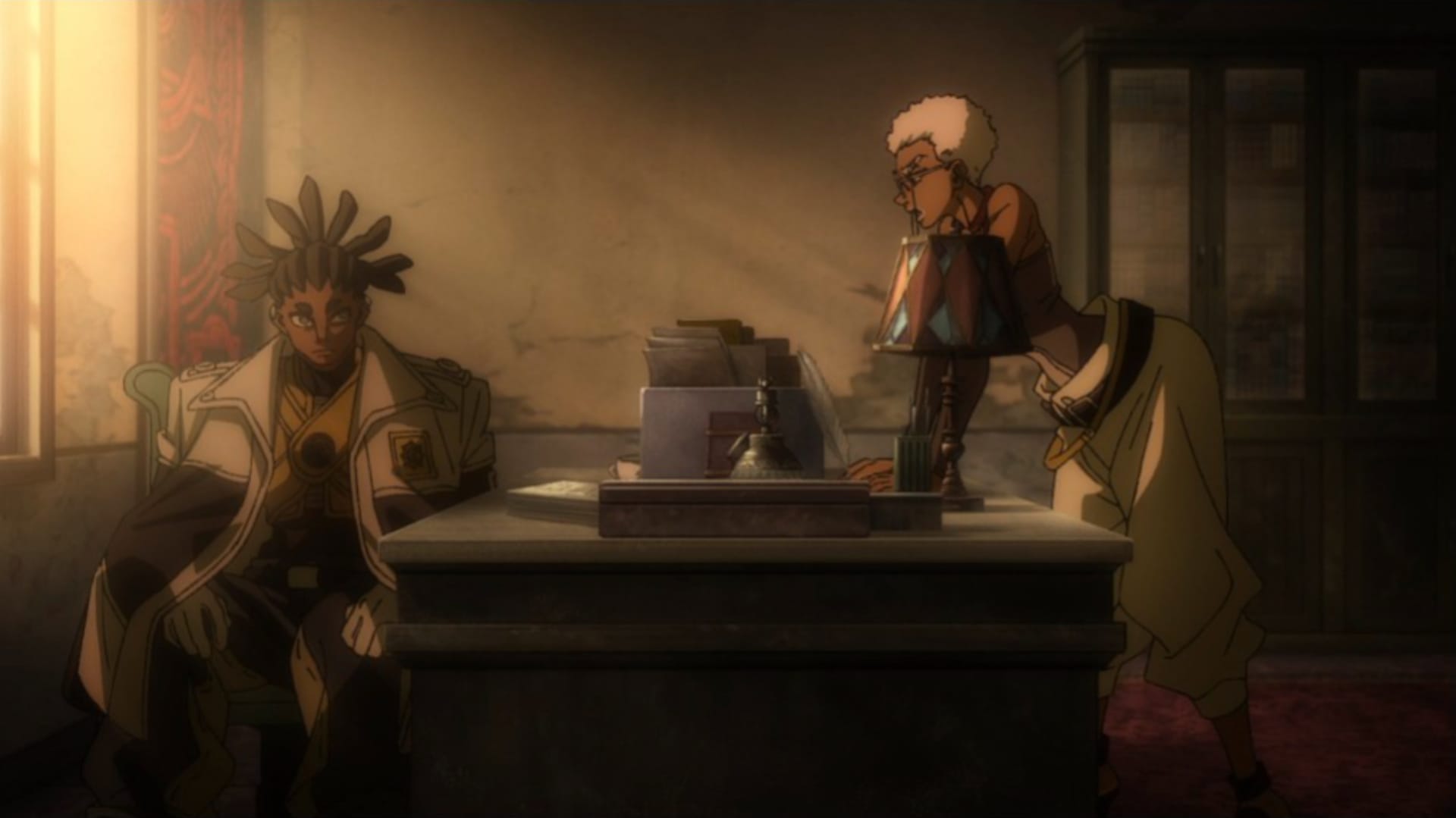
In the end, Robinson feels that Black voice actors are still navigating many of the same obstacles he faced years ago—only now the pressure has intensified. The political climate has made conversations about race and representation even more fraught, and with so little work being produced, every opportunity comes with heightened scrutiny for Black performers trying to build a name for themselves in a predominantly white industry. As he puts it, the biggest hurdles remain access and scale, but the slowdown across animation means there simply isn’t much happening for anyone right now. All he and his peers can do, he says, is keep pushing forward, keep growing as artists, and persevere through a landscape that hasn’t gotten easier, just tighter.
“The industry has to embrace art again, and artistic voices and integrity again, but in the meantime, individual artists and more indie studios are picking up the torch. So many shows and projects about other cultures have been cancelled or ended prematurely. I think what really needs to happen in the next 5-10 years is a return to making art, and creating opportunities for the artists to make that art, which gives us as artists more diverse worlds to play in.”


