

Genndy Tartakovsky is a creative whose reputation precedes him. Ever since getting his foot in the door on the 1993 Hanna-Barbera show 2 Stupid Dogs, he's become a household name in animation as the director and creator of Dexter's Laboratory, The Powerpuff Girls, Samurai Jack, Star Wars: Clone Wars, the Hotel Transylvania movies, and his latest and most dudes rock series, Primal. Primal's elevator pitch is that of a bespoke shower thought: What if a caveman named Spear teamed up with a dinosaur named Fang and went on an adventure that’d tickle the brains of folks who remember Deadliest Warrior?
Primal ran for two seasons before Spear died. Now, it’s poised to return for a new season on Adult Swim, with an even wilder premise to crank the series to 11: What if the caveman were a zombie now? Speaking with Tartakovsky, this new, pulpier direction was born from his undying belief that he ended the show too early and still had more story to tell, despite operating in a world where original animation is bottlenecked by the safer option of adding more legacy sequels and franchises to streamers.
“I spent 20 episodes trying to build the character relationship and the stories for everyone to fall in love with, and then it was over,” Tartakovsky said. “But then I realized, no, there’s still more that feels fresh. I think it was a joke at first like, ‘Maybe he’s a zombie’ because we’re talking about how to bring him back. And then I was like, ‘Wait a second. No, no, no, no, this is really good.’”
Whenever jokes turn into creative roadmaps for Tartakovsky, he puts his instincts to the test to see if they’re correct. Literally bringing Primal back to life after a premature end involved writing down 10 story ideas for how it could happen and where the story could go from there.
“I wrote them down so quick, which always means it’s ripe,” Tartakovsky said. “It’s ripe for creativity and storytelling, and as soon as the idea that [Spear] is trying to find life through death, that was it. That sealed the deal.”
Crafting a show that’s built on trusting its audience—especially in an era when streaming’s binge model leads to directives from on high for writers to craft dialogue where characters announce what they’re doing and why to keep viewers abreast while they drift back to their phones, a habit Genndy Tartakovsky admits he routinely scolds his daughter for—is its own evolutionary challenge. Primal wagers everything on the belief that viewers will follow its story through serene atmosphere, gnarly action, and evocative micro‑expressions alone. For a series anchored in intentionally minimalist dialogue of “unga‑bungas” and “graaawrs,” supported by a techno‑tribal score by Tyler Bates and Joanne Higginbottom, achieving clarity without compromise is a balancing act.
“The challenge of doing something like this is you can't rely on dialogue to tell the audience what is happening. You really gotta watch it, and sometimes when I'm doing the storyboard, [I] get lost in the abstraction, because I'm just doing drawings and these five drawings in a row are supposed to communicate an idea to you that's clear, without doubt,” he said. “If you're in the weeds too much, they become an abstraction, and you start tripping. Like, ‘Oh my god, nothing is making sense, I don't know what I'm doing. Are these five shots gonna make you feel that?’ That doubt is probably the hardest thing to get over.”
Fortunately, having tenure on cartoons like Samurai Jack makes telling stories without long stretches of dialogue a creative exercise Tartakovsky enjoys. Whenever his brain starts to overanalyze, he takes a little break, comes back, and powers through.
There are a few existing episodes Tartakovsky loves for different reasons. Episodes like “A Cold Death” are a reckoning for Spear and Fang, with someone’s death feeding someone’s life, as a herd of woolly mammoths hunts them down to avenge an elder whose pelt kept the pair warm in the harsh winter—a theme that’d serve as a big part of its first season. Or “Rage of the Ape-Men,” an episode so brutal yet so nice for how uncharacteristically peaceful it starts before diving into the worst brutality the show’s ever done by its climax. Or “Shadow of Fate,” which sees a complex love triangle of sorts where Fang finds a mate who wants to kill Spear, her “first familial love.” Still, all that effort can be lost if someone pulls out their phone, a scenario Tartakovsky says is even worse for an animator, who recounted a time when his daughter pulled out her phone while they were watching a movie together and things got “boring.”
“If she were watching Primal, she’d be lost for sure. But that’s the way people watch nowadays. They’ll get on their phone for a few minutes, and then come back to the movie, and it’s frustrating,” Tartakovsky said, noting how much work everyone from catering to lighting behind the scenes helped make live-action films work, only for audiences to flippantly dismiss it to look down at their phones.
“For animation, it’s even worse because we’re hand drawing everything so specifically,” he said. “But what can you do? It is what it is. My hope is that Primal means something at the end of the day, and it inspires people.”
Given Tartakovsky’s reputation as an elder statesman of modern animation—and the recent perception that decades-old passion projects like his infamously raunchy Fritz the Cat flavored dog comedy, Fixed, can get greenlit on the strength of his name alone—you’d assume he’s operating in a rarefied space where instinct alone can move mountains to get newer dream projects like Black Knight, which he opted to release test footage of online to drum up hype for a story he hopes to tell urgently tell in theaters. The animation sees a 14th century knight operating a 20-foot-tall black suit of armor “using ropes, pulleys, and levers” and a gigantic sword to fight a slender, (relatively) diminutive ninja armed with her kusarigama. Tldr: yet another effortless “dudes rock” premise. Tartakovsky hopes Black Knight can garner the same level of bombast as Demon Slayer and KPop Demon Hunters have had in cinemas, but for Western animation. However, he’s quick to push back on the idea that his past accolades are enough to get works greenlit, especially if they’re original.
“My name is not enough. It’s not my reality where I walk into a room and go, ‘I wanna make this!’ and they go, ‘Yes, Genndy. Great!’ and we all cheer and hug each other. It’s still a business, and there’s still fear and doubt in something new.”
Although Tartakovsky has garnered enough faith and experience in the realm of TV that he could walk into a room and, at least, get a project in development pretty easily in comparison to his colleagues, the entertainment industry is a harder sell in the realm of original animated films.
“If I pitch Hotel Transylvania 4, 5, or 6, it’s easier to get greenlit because ‘Oh yeah, we get this. We know this. We know you’re responsible, so there’s no questions,’” Tartakovsky said in the tone of supposed producer execs. “When you do something different, then it’s, ‘Who’s this for? How much is this gonna cost?’ It’s not art first. It’s business first.”
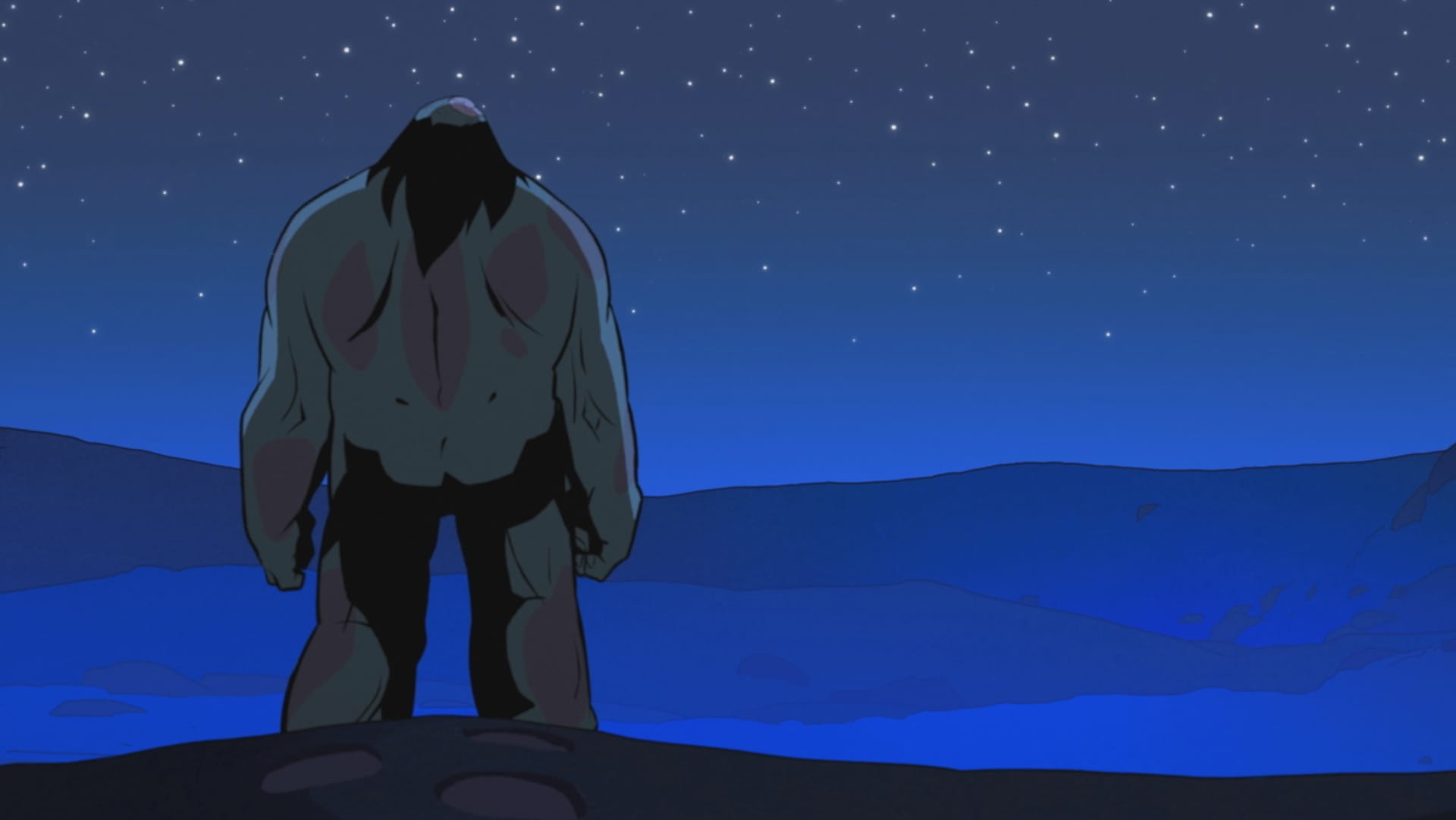
Tartakovsky says it's especially complicated for bigwig business execs to greenlight original animated features, in part because studios are making fewer and fewer movies theatrically. In an era defined by legacy sequels and franchise building, Tartakovsky hopes the animation industry shifts to allow bold, original concepts to spearhead the media's direction in the next decade.
“I don’t want the world to be IP-driven with just twos and threes,” Tartakovsky said. “Before Zootopia 2, there was Zootopia. Before Toy Story one through five, there was one Toy Story. Despicable Me: all these things were original and inspired giant, multi-billion-dollar franchises. So why have we given up on those [originals]?”
If anything, Tartakovsky believes animation shouldn’t be chasing a new Toy Story or a new SpongeBob as another drop in its IP catalog for streaming, but as a new, original project that can stand shoulder to shoulder with the giants of the past. An instinct, Tartakovsky says, that seems to have disappeared in the industry, supplanted by the instinct to take an old book or movie, redo it, and call it a day.
“Personally, I want originals,” he said. “That’s what I like to see. It’s more interesting to me. If you have a good original, sure, of course I’ll go see a second one.”
Still, the first hurdle of getting an original animation geared toward adults off the ground is that to be successful, they should be violent, crass, or sensual. All of which dovetails to “the bigger question” that Tartakovsky’s eyes lit up when I asked whether he thinks studios don’t give audiences enough credit for being open to animation as an artform stigmatized as something exclusively for kids
“If you look at streaming adult animation and a normal network, it’s huge. From The Simpsons through Rick and Morty, Primal, and everything else. It’s very broad and successful. Fox has a whole block of adult animated cartoons so there’s a giant audience there. There’s a big, successful audience on Adult Swim, Hulu, and Netflix has a whole wing devoted to adult animation,” he said. “Then you go to features, there’s zero. Zero animated films are being made for that audience.”
He continued: “That’s the whole question with Black Knight: Where’s the audience? I would point to all of this success like a lot of comedy and action breaking through, but there is an audience. You go to Demon Slayer and KPop Demon Hunter, and that’s something different. There’s an audience, huge success.”
For Tartakovsky, the argument is that while Demon Slayer is based on a TV show, it still has an audience coming out to theaters, which is a testament to the thirst for that kind of animation. And, should Black Knight make even half of its success for Sony Animation, it’s a shoo-in to be a success. But even if it doesn’t, an audience for animation of its ilk is there, and it’s growing every year, so it’s only a matter of time before a studio makes an original, commercial adult animated feature film that everyone will go see.
“I’m trying to be the first to do that, and it’s difficult to be the first,” Tartakovsky said.
“Everything is to try something new and have a different vibe. Primal is different than Samurai Jack, and Black Knight is trying to do its own thing. Creatively, it’s exciting, and it’s for a different audience that we’re trying to reach to see if that audience is even there on a big feature scale. That’s every project that I do but at this point in my career, I’m trying to do a different vibe. A different energy.”
Granted, like Cowboy Bebop creator Shinichirō Watanabe’s newest work, Lazarus, Tartakovsky acknowledged that Primal and Black Knight—while both endeavoring for their own vibes—harbor a resemblance in tone and energy that audiences will connect to his most well-known work, Samurai Jack, by proxy of it being of his. Still, he strives to make something different from the last thing he’s made.
“The last thing I want to do is 3 more seasons of Primal that’s exactly the same, with another idea,” Tartakovsky said, using aliens as an example of where that could’ve ramped up should he have stuck with making a story for the sake of making it.
And with Black Knight on the back burner (for now), Tartakovsky hopes Primal’s third season embodies his vision for what original animation can offer.
“Egotistically and selfishly, I hope Primal is a huge success, and it would prove you could do different stories and not have it necessarily be considered a cult, artistic experiment. It’s mainstream.”
While the show exists as the last of a dying breed of shows that anchor themselves on liminal dialogue, Tartakovsky likened Primal to what the television versions of action epics like Sisu and Mad Max: Fury Road offer viewers, a different experience that’s so unique any proponent for AI won’t have legs to stand on.
“The more unique that we can make things, the more it makes it anti-AI. It makes it AI-proof,” Tartakovsky said. “AI can copy, but can it create something truly original? We wanna push human creativity to a level where it can’t be copied. And that means doing original things, pushing boundaries, and trying different things. That’s where I hope it goes, and I hope Primal is a big part of that.”
Correction, 1/5/26--An earlier version of this article misstated the title of the inspiration for Fixed.


