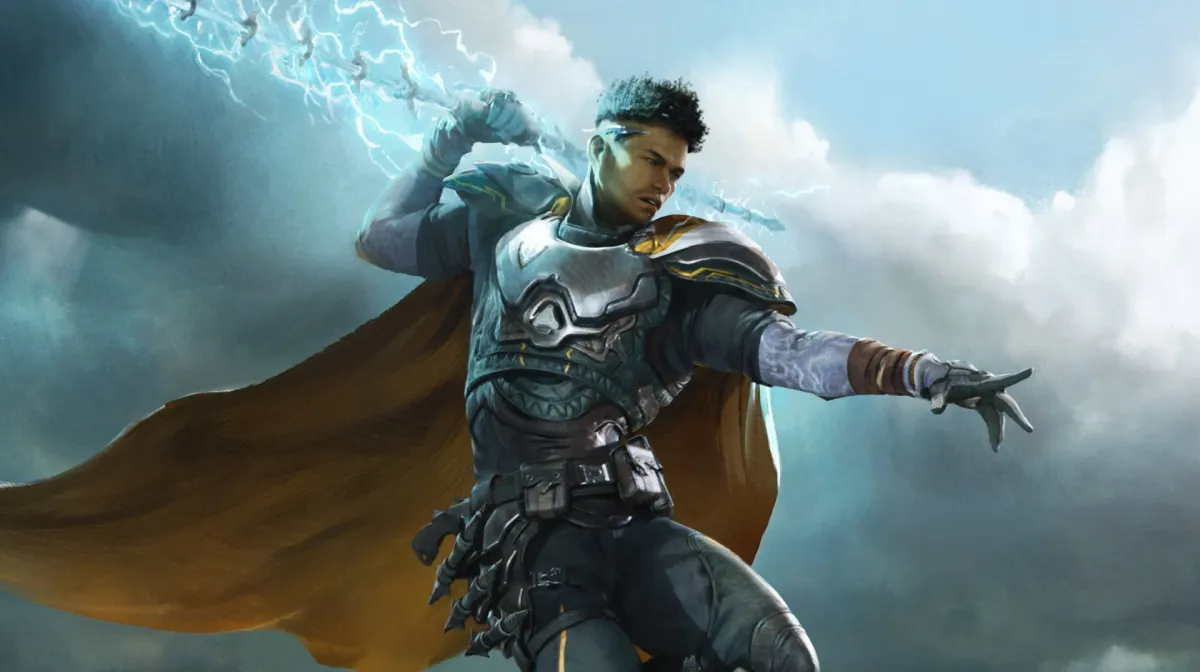

Highguard, the “raid shooter” from ex-Titanfall and Apex Legends devs that went live in January, is shutting down on March 12, which is next week. The game lasted less than two months, speedrunning its rise and fall at such a blistering pace that you could be forgiven for thinking it never really took off at all. Cause of death? Hubris on the part of studio leadership paired with an unwillingness to recognize that times have changed.
I’ve written previously about how Highguard emerged from a post-announcement period of silence into the grinning shark mouth of an internet eager to tear it to shreds. Some of that was out of developer Wildlight’s control; opportunistic sloptubers spend every second of their miserable existences looking for the next Concord, and Highguard’s mix of live-service trend chasing, Game Awards show closing, and diverse cast showcasing created ideal conditions for a feeding frenzy. The game pulled great numbers on day one thanks to the same impulse that drives people to rubberneck, but it could never escape the aforementioned reputational quagmire — nor its own pervasive mid-ness. Players exited in droves.
Wildlight proceeded to lay off most of Highguard’s development team just two weeks after release, at which point Game File reported that Chinese giant Tencent had secretly funded the game — an odd state of affairs considering that Tencent has openly invested in many Western studios and projects. In late February, Bloomberg followed that up with a report that Tencent had pulled funding from the project, robbing it of airspace necessary to pull out of its nosedive.
But the problems that ultimately led to Highguard’s downfall began to rear their heads even before release. Leadership’s dedication to secrecy, born of a desire to emulate Apex Legends’ 2019 shadow drop, prevented the studio from publicly testing the game and smoothing over its rough edges, according to Bloomberg:
One solution may have been to open the game up to the outside world to start building a community and garnering feedback from a wider audience — a process that had helped other multiplayer games, such as Arc Raiders and Battlefield 6, find success. But whenever that notion came up at Wildlight, leadership nixed it. They wanted to recreate what had worked with Apex Legends, which had been kept secret until it was announced and launched at the same time.
This pattern persisted even after Highguard was announced during The Game Awards, and the online slop avalanche began — doubly a shame because Wildlight was founded on some interesting ideas, like a studio-wide profit sharing program, and generally treated its employees well. But leadership resolutely failed to stick the landing:
People who worked at Wildlight described the studio as a healthy, collaborative, transparent environment that made many of them love working there — at least until the final two months. At that point, they said, morale began to tank, and there were no straight answers about what success would look like, leading staff to grumble that they might be approaching things the wrong way.
Eleventh-hour inflexibility would ultimately sink the whole project:
When asked what they thought went wrong, several former Wildlight developers used the word “hubris” — a belief by the company’s leadership that they could emulate what had worked in the past with Apex Legends, no matter how much the gaming landscape had changed since then. After all, they’d made one of last decade’s biggest hits.
Versions of this story have played out repeatedly across the video game industry, albeit maybe not quite so catastrophically — and perhaps with fewer slavering hyenas waiting to turn the corpse into content. Still, the central refrain of “But we made Game X” or “But we are Studio Y” from leadership has set studios as beloved as BioWare on the path to destruction, while only a vanishingly small number, like CD Projekt Red, have managed to make it back.
In an industry of constant change whose foundations might be cracked beyond repair, there’s no room for hubris, especially when hundreds of jobs are on the line. The usual suspects are celebrating today, but in ascribing Highguard’s failure to bottom-of-the-barrel culture war concerns, they’ve once again missed the mark (not that they were ever trying to hit it in the first place). Talented people poured years of their lives into something that could’ve been great under the right, potentially achievable conditions. Instead, all their hard work is now swirling the drain. That’s nothing to cheer about; that’s a tragedy.
Recommended
 Luke Plunkett