

Having forgotten all about it (it was first announced years ago!), some news coming out of CES this week reminded me that Sony and Honda have teamed up on a new electric vehicle that, for the purposes of this blog, has some PlayStation stuff in it. And the news very quickly reminded me of why I'd forgotten all about the car in the first place.
The electric vehicle market is a cut-throat space; the emergence of a bunch of Chinese brands in recent years, the difficulties many established manufacturers have had switching their cars from combustion engines to electric motors and a hostile political climate have all worked together to create the most tumultuous auto market in decades.
In 2026 you can't just put out an electric car and expect people to buy it; you need to give them very good reasons to consider your offering ahead of the multitude of fantastic options already out there, particularly from Chinese and European labels. Which is why Sony and Honda's big CES press conference, showing off the production model of their Afeela joint venture (now called the Afeela 1), was so disappointing.
Actually, disappointing might be the wrong word, because that would imply I had any kind of expectations for this vehicle in the first place. But it looked blergh when I first saw it in 2023, and it still looks blergh now in 2026, only now it has a ton of better and cheaper cars to compete with.
What makes it blergh? Let's start with the styling! Which is subjective, I know, but I don't think it's a huge stretch to say the Afeela looks bland, or to point out it looks like Lucid made a cheap, taxi version of the Air. Because EVs don't have huge engines at the front, and because they're supposed to be from the future, many companies have got wild with their styling (look at Kia and Hyundai), whereas the Afeela just looks like a...car.
Moving on to more objective faults, let's look at the Afeela's numbers. Now I know, numbers with a car aren't everything, but with an EV they kinda are, because an electric vehicle's range and charge speed are much more important figures for your daily experience than, say, a combustion engine's economy. To check out the specs for the Afeela 1, you can visit the car's website, select to build your own order and be met with, uh:
Sensors: 40 UNITS
Computing Power: 800 TOPS
Tesla Supercharging Network: 25,000+
AFEELA Intelligent Drive (Level 2+ ADAS)
AFEELA Personal Agent
Media Bar (External Information Display)
Immersive 3D Map
Immersive Entertainment Selection
Customizable Theme
Spatial Sound System
5G Connectivity
That's nearly all stuff that every EV (actually, nearly every car) on the market just has, and is so basic and taken-for-granted that nobody even bothers looking up the specifics. Teslas have had self-driving for years, most EVs let you change their "theme" to some extent and almost every modern car rolling off a factory floor has some kind of voice assistant. A car's specs page should be where the important stuff goes, and with an EV that's its range, its battery size, its speed, its charging speed (as in, how long it would take you to charge from 10-80% on the road), its trunk size and maybe some other stuff like whether it has any V2L or V2G capability (meaning your car's battery can power appliances with the former and your whole house with the latter).
With the Afeela 1 you've gotta go digging to find most of that, which is never a good sign. And yup, you've gotta dig for a reason: most of the Afeela's specs are very, very bad by 2026 standards when you consider that this car is going to cost over $90,000. Some examples: it'll do "up to" 300 miles on a charge, which means it will actually do less in the real world, in a market where Teslas and Polestars are now routinely doing over 400 miles (or over 500 in a Polestar 3 if you drive as carefully as possible). Its maximum charge rate at a public fast-charger is 150kw; the Kia EV6 could do almost double that back in 2021. And its acceleration speed--again, not a huge deal, but something buyers do absolutely consider--hasn't even been announced yet, implying that either the pre-production model on stage at CES was very pre-production, or that it's going to be slow.
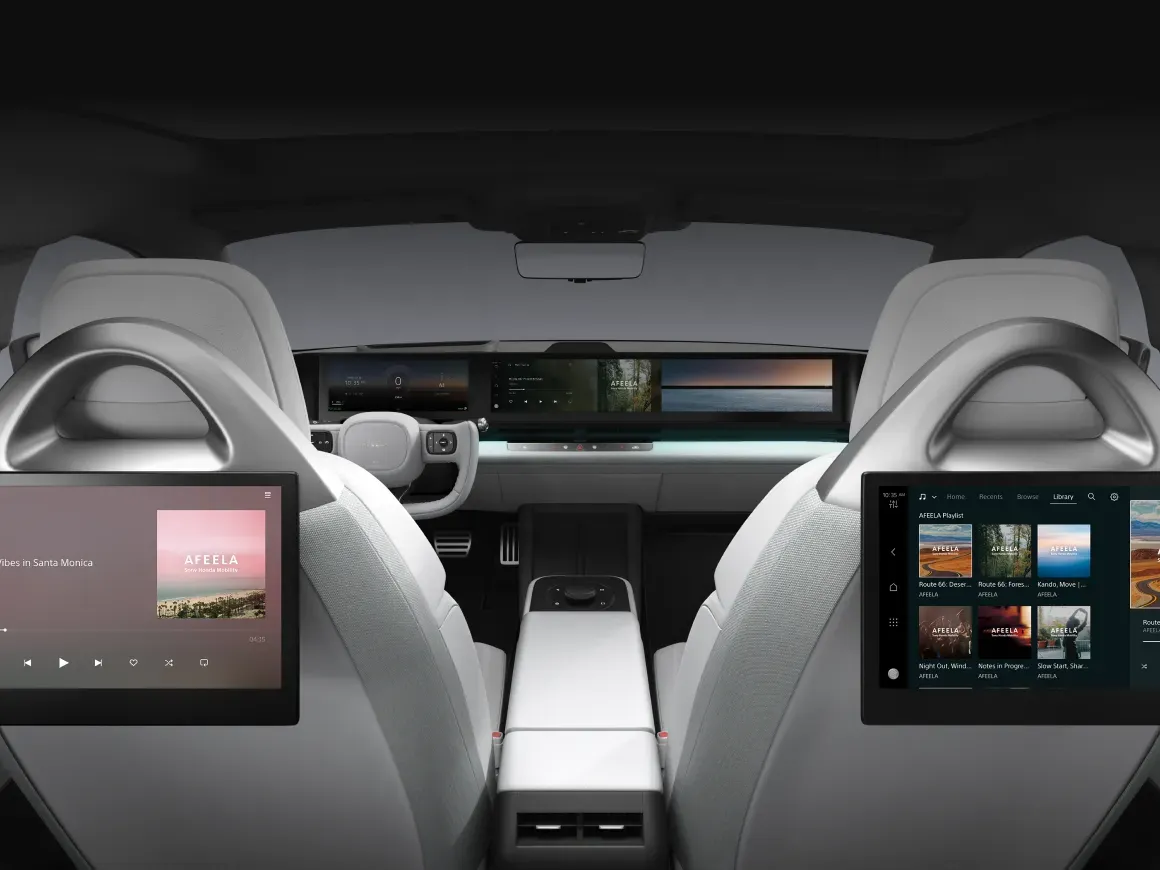
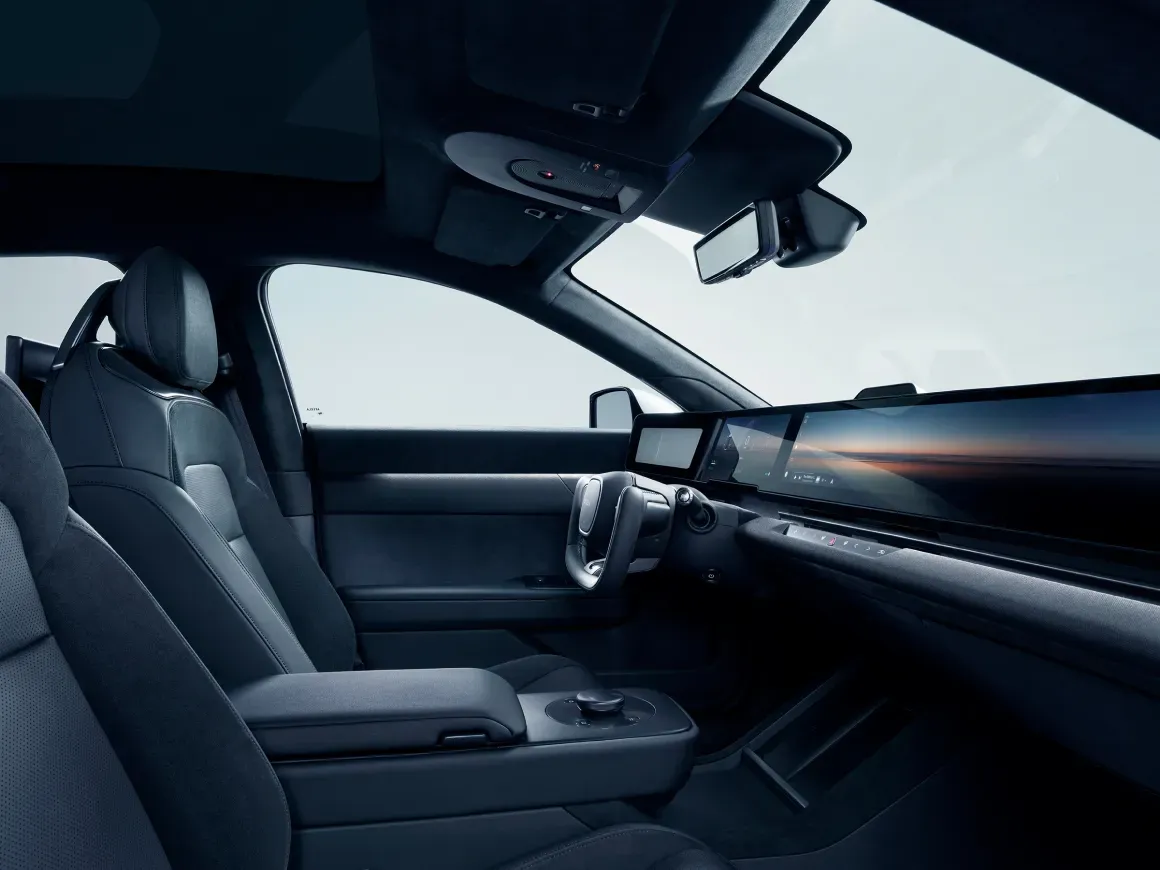
The two rear screens in the Afeela 1 are the most logical place to be using the PlayStation connectivity (L), while the car's yoke steering wheel (R) won't be to many people's liking
So does it have anything going for it? I dunno, it depends on how much you like the idea of playing PlayStation games in your car, something the Afeela 1 will do via a Remote Play app for the car's infotainment system and rear screens. It also depends on how much you like the idea of a yoke steering wheel. Oh, and if you live in California or not, because that's the only state in the US from which you can order one of these cars at the moment.
But man, I look at this car and I see almost nothing that sets it out from the pack. The Afeela afeelas boring, in the same way so many other electric vehicles from established manufacturers--Japanese ones especially--do, where companies lacking either the commitment or the experience to really lean into the segment end up making cars that provide no reason to hate them, but none to love or buy them either.
I just don't see who this car is for. For under $90k in the US you can get a premium EV like a Porsche Macan, Audi S6 Sportback e-tron, Polestar 4, Lucid Air or BMW i4 (or i5), all of which crush the Afeela in terms of specs and inclusions (not to mention prestige). Even if it were $30k cheaper it would still struggle against cars like the Tesla Model Y and Kia EV5.
It's such a dated, forgettable vehicle that about the only time I ever see anyone talking about the Afeela is when, like this week, the PlayStation stuff is mentioned. To which my counter would be: if you're looking to throw $90k at an electric car, you can get a much better one than this for that money, and have enough left over to toss a Steam Deck or PlayStation Portal in the back seat while you're at it.


