

I have too many art supplies. I acquired them hastily in 2020 when I decided I wanted to learn to draw and paint. I bought myself watercolors, gouache, and wax pastel crayons. Paintbrushes of all different sizes, and the sketchbooks that are piled up in my closet. I bought them all from a messy, independent art store in the town I lived in—overconsumption, to be sure, but I told myself it was in support of a place I loved.
When I moved from Massachusetts to Connecticut two years ago, I packed everything into a single box. I put it into a corner deep in my new office's closet. A see you soon, not a goodbye. Drawing and painting—which had been a consistent creative outlet—fell by the wayside as we settled into our new life. After we pulled up the carpet and installed new floors, after work slowed down, after all the other boxes in the closet were emptied. Then, my dog got diagnosed with lymphoma. We drove hours each week to bring him to chemotherapy appointments. Any desire to paint was shoved into the closet with the box of art supplies, and I closed the door when he died a few months later. (Sealed it shut, actually, when the next family trauma happened weeks after his death.)
Art may have been a good thing, something I could work through my pain with, but everything was too much to bear. I didn't want to feel joy, or creativity, or freedom. Just pain. It took years before I contemplated taking a chisel to that door. The desire came back, but there was fear, too: How do I even get to that box? (A pile of Squishmallows, vacuum sealed into Pokémon jerky, required some dealing with. I put them there when our new puppy's shark teeth poked holes in them.) What do I do when I get there? Do I even know how to draw anymore? Always a problem for another day.
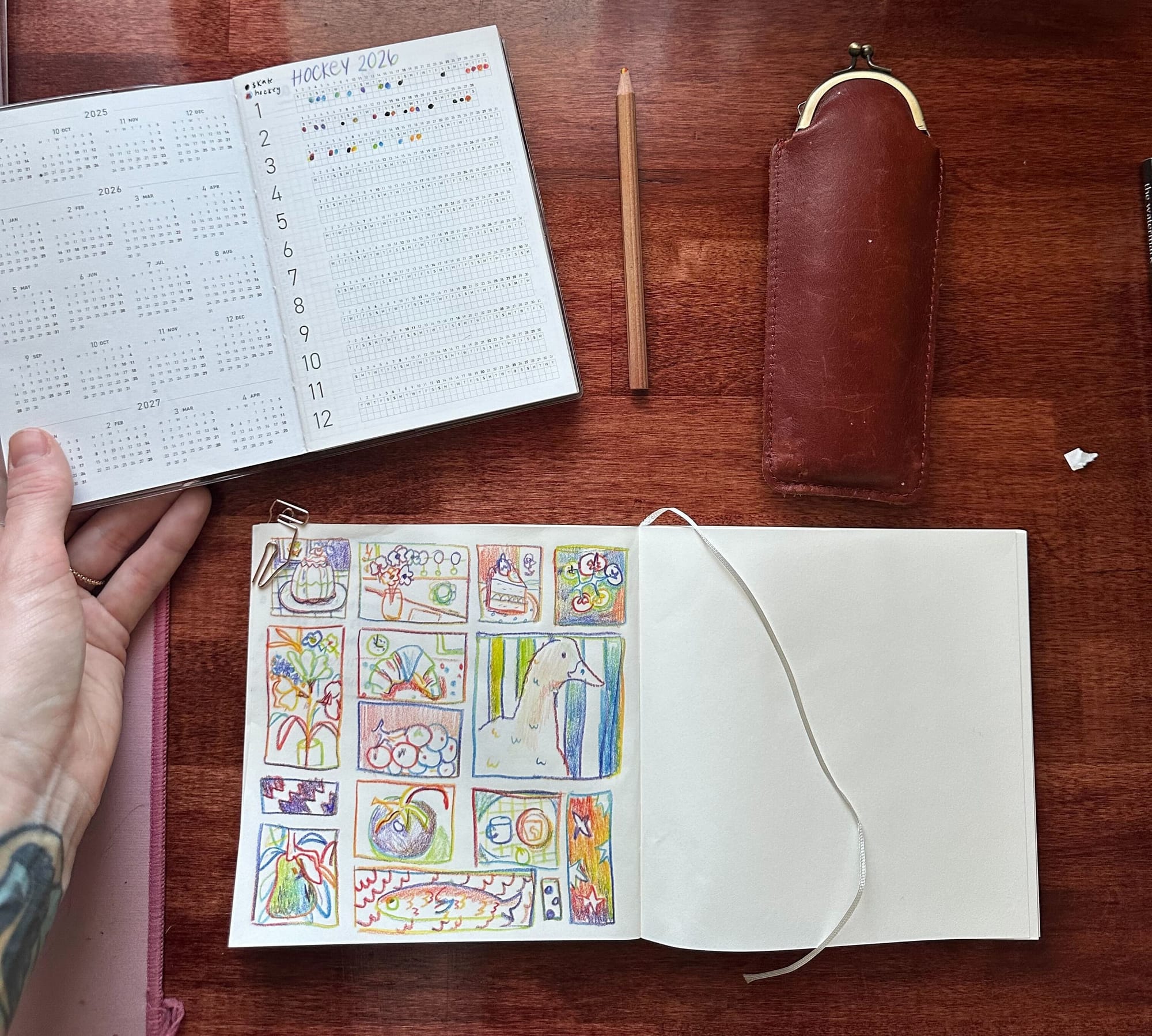
But then I found my rainbow pencil. It was in a drawer by my desk. I have no idea where or when I got it. It's got no branding at all, just a core of seven colors of swirled pigments and wax inside an otherwise unremarkable pencil. I opened my planner, which had otherwise been abandoned, and starting making lines. I scribbled just to see the colors change. I used it at different angles to see how it changed what colors came out, pointing it straight up from the paper to use all seven colors at once.
That was January, and I started using it every day. I actually used my planner to mark down the days in which I played hockey; the rainbow pencil made the otherwise boring page as joyful as I feel on the ice. I doodled in the empty spaces of the weekly schedule pages. I could do art again, if only just a little. I picked up another pen, one that's always been a favorite of mine for drawing, and drew some flowers. I used the rainbow pencil to draw the oranges I was about to eat, friends' bouquets posted to Instagram. I let my nephew scribble with it my sketchbook, pulled from the closet shelves, then drew over it with a black pen.
The rainbow pencil is everything I love about art: playing with colors, messy doodling, drawing without care. It made art easy. Soon, I pushed the Squishmallows aside—now with a second puppy, they'll remain there for a bit long—and got out the cardboard box with art supplies. I spent an afternoon sorting through everything and placing them in drawers and on a cart in my office. And I use it all now, even the gouache paints that scare me. I found a new love for wax pastel crayons, because they are nearly as joyful as my rainbow pencil, but they blend. I even carry a tiny sketchbook on me again, tucked into my purse with the black Fudenosuke Brush Pen I love so much. Now that I think of it, I think I'll get a second rainbow pencil to live beside it, so I can carry its delight with me wherever I go.
This week on Aftermath, we’re celebrating Woke 2. What does that mean? Pieces that dig into the origins of woke—not the empty, sanitized version peddled by companies, but actual culture created by people—as well as communities that are already charting a course to a bolder, better future where we can all just be chill to one another.


