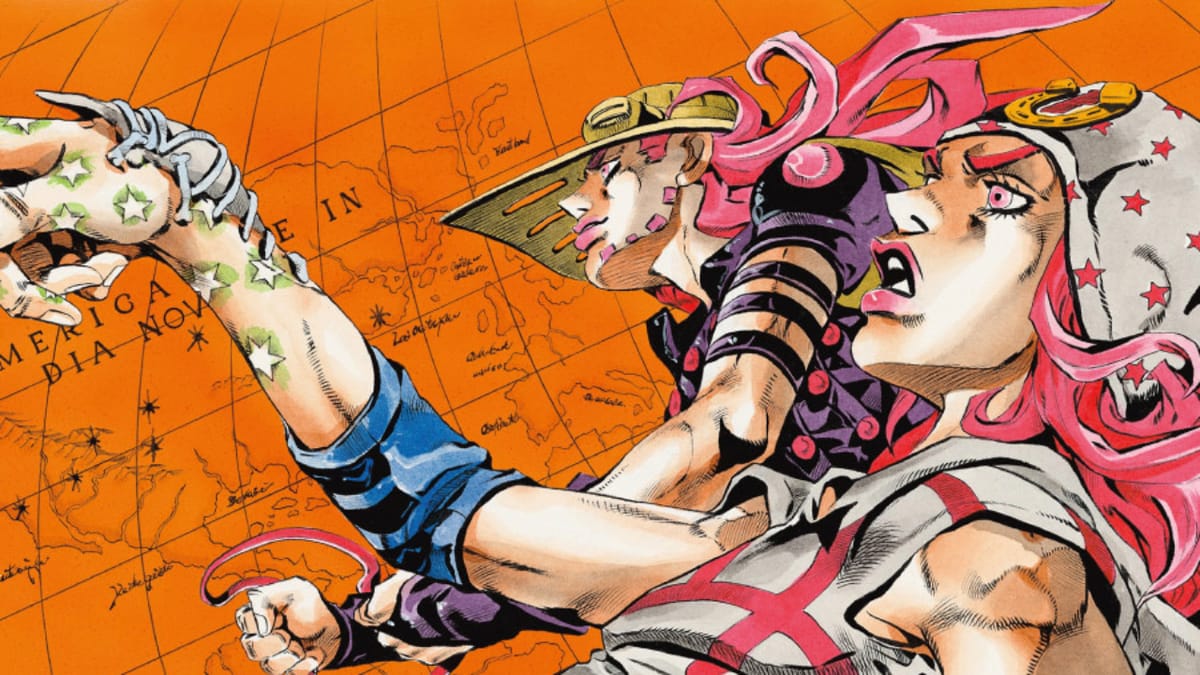

The first episode of Jojo’s Bizarre Adventure: Steel Ball Run, the long-awaited new season of an anime series that rules to watch but that you’ll sound like a crazy person if you try to describe, premiered on March 19. Until this week, nobody had any idea when episode two would air. Now they do, but they are, in broad strokes, even more confused. Netflix’s strategy here is beyond bizarre; it’s baffling.
Netflix’s statement on Steel Ball Run’s future, intended to appease fans, reads as follows:
Thank you for all the incredible support for Steel Ball Run JoJo’s Bizarre Adventure. The series is currently in production and will be available for everyone to enjoy. We are planning a split‑cour release across the entire run of episodes. The next cour (2nd Stage) will begin streaming in fall 2026 on Netflix, with one new episode released each week. This release schedule is part of our original plan and reflects the wishes of the production committee. Your passion and enthusiasm mean a great deal to everyone involved in the preparation. We appreciate your patience and continued support as we work to bring you the 2nd Stage.
So basically, Netflix released the one (admittedly super-sized) episode in March, and then there won’t be any more until fall, at which point we’ll get weekly episodes—until 2nd Stage ends… after a number of episodes that’s yet to be publicly stated. This will presumably be followed by a 3rd Stage in the future. Whether it will be released as a single larger episode, in batches, or weekly is unknown.
It’s a doubly frustrating state of affairs because the previous JoJo’s season, Stone Ocean, is widely considered to have suffered under Netflix’s heavy yet clumsy-handed rule, with the streaming service insisting on doling out episodes in binge-friendly batches. This despite previous seasons’ success in a weekly format, which facilitated regular community discussions of episodes, as well as a cycle of anticipation and gratification between episodes.
In the late 2010s and early 2020s, the modern version of JoJo’s Bizarre Adventure exploded in popularity to the point that it became one of the biggest anime going in the West—an improbable second act for a series that began, as a manga, back in 1987. Many blame a subsequent lapse in audience enthusiasm on Netflix’s Stone Ocean batch release strategy. Aftermath’s resident otaku, Isaiah Colbert, wrote presciently about this for Kotaku back in 2022, just after Stone Ocean had wrapped up its run:
Netflix releasing Stone Ocean under its binge model is tantamount to the Marvel Cinematic Universe midnight-releasing the entirety of its phase three films on Disney+ with only a handful of social media posts promoting it. While it’s nice to have all of its episodes readily available all at once, it stifled any excitement for its “monster of the week” formula. Fights used to be something I could recollect with ease to friends by naming the villain and their stand power. But Stone Ocean’s binge-watching release transformed its once-memorable villains and stand powers into an amalgam of forgettable blokes.
Other anime have been thriving this year as their weekly episodes generate discussions and theories among fans amid hype for next week’s episode, “Bleach Mondays” and “Chainsaw Man Tuesdays” being prime examples. “JoJo Fridays,” JJBA’s own fan-designated day of fanfare which gained popularity with its prior season, Golden Wind, used to be when fans would partake in their own online merriment with the show, but that too has become a thing of the past under Netflix’s release model.
I can attest to this dynamic myself, albeit more on the manga side of things. I read several shonen manga every week, and whether they’re sputtering out in slow motion (Jujutsu Kaisen, both times) or reaching new heights so regularly that I’m dreading the day their creators finally fuck it up (Kagurabachi), discussions on subreddits and social media lend the whole thing a communal vibe. Individual fights—heck, individual blows in individual fights—get put under the microscope and take on greater significance. Themes and callbacks are plucked from a sprawl of arcs like diamonds from so much rough, dusted off, and recontextualized in pivotal moments.
These are not complicated stories, but they are often long. It helps to have thousands of others along for each leg of the ride. Yes, this can sometimes be annoying—Jujutsu Kaisen fans are so bad at understanding their favorite series that there’s a whole meme about it—but experiencing the piecemeal rollout of a nailbiting fight alongside a critical mass of fans is like being inside an arena; the excitement and adrenaline are palpable.
Moreover, I am one of the people who fell off watching Stone Ocean, in part because of Life, but also because the show’s wonky release schedule provided Life ample opportunities to get in the way. To be honest I still haven’t finished it, but (what I thought was) Steel Ball Run’s impending domination of my socials nearly convinced me to resubscribe to Netflix and mop up the remainder. Now I guess I’ll just wait until later this year? Better than paying the Netflix toll for any longer than I have to.
All this in mind, it’s good to hear that Netflix has decided to embrace a weekly release schedule for Steel Ball Run—you know, sort of. But why couldn’t it have simply promoted March’s premiere as a teaser or sneak peek? Why build it up like it was the beginning of a regular season? Why not tell fans in advance whether subsequent episodes would be released weekly or in batches? Why not give them an idea of how far apart future Stages will be? Why not even let them know when episode two was coming right after episode one aired, like the lion’s share of other shows throughout history have done? Especially considering that this specific fandom has been burned before—and has spent years talking about it.
It’s important to keep in mind that anime with this kind of production pedigree is hard to make, with workers on other series paying the often-physical price. These things take time, and if nothing else, Netflix is giving Steel Ball Run ample runway. But basic communication, especially when you’re a multibillion dollar streaming empire, shouldn’t be so difficult! While a middle ground between batches and weekly episodes isn’t exactly what JoJo’s fans asked for, it’s at least a compromise. But if you look at the response online, very few are fully satisfied. At best, they’re wary of how Netflix will approach weekly releases and the longer-term split model. At worst, they’re expecting a disastrous mishandling that will forever tarnish the series’ shine.
This all could have been avoided! Unfortunately, tech giants have demonstrated time and time again that their enormous feet are good for pretty much just one thing: stepping in it.
Recommended
 Isaiah Colbert