

Every new season of anime always asks the beleagured adult anime fan to sort the wheat from the chaff, or the new josei from the glut of shonen isekai slop. As the most Nana-pilled blogger you’ll ever have the pleasure to read, this is my burden each season. Josei is to shojo what seinen is to shonen; it's an adult-oriented genre marketed primarily toward older women rather than men. Likewise, their narratives leave a helluva lot more to stew on with their heavier themes than your ragamuffin anime. While I don’t often get my josei prayers answered, this year's crop of anime has yielded promising fruits through a new Crunchyroll show I’ve been digging called Journal With Witch.
Journal With Witch, originally created by Tomoko Yamashita and animated by studio Shuka, is a drama set at a deeply emotional point in the lives of two women. The first is Makio, a relatively successful 35-year-old author whose relationship with her sister, Minori, was so toxic that they cut off all ties. That decision rears its ugly head in the worst possible way when Makio is called in to identify the bodies of her sister and her husband, who died in a car accident. Although Makio doesn’t appear at any stage of the grieving cycle after identifying her sister, that act leads to a sudden reunion with the other woman at the center of this story: Asa, her 15-year-old niece, whom she hasn’t seen in years. Their tragic meeting triggers a new relationship between the two, as they wrestle with mourning the loss and figuring out how to continue together, making up for what the other lacks to get there.
What’s got me so geeked about Journal With Witch isn’t the big sads in store from its premise but how it showcases its two heroines’ mourning without ever letting the story collapse into agonizing wallowing. This tonal balance is lampshaded with pretty stark clarity from its opening scene.
Rather than opening with their first meeting, the show jumps to some unknown point in the future of their relationship. Here, we see Makio clanking away at her littered desk, writing, while Asa hums a tune nearby as she does the dishes. Makio interrupts Asa with a deadpan request for her to sing a different Justin Bieber bop, prompting Asa to belt out the first syllables of “Baby” before the story abruptly snaps back to the beginning. It’s a cute, disarming moment that makes the show’s thesis plain. This anime is just as much about the relationship these two forge together as it is about how they cope with the death that inadvertently casts them into each other’s orbit.
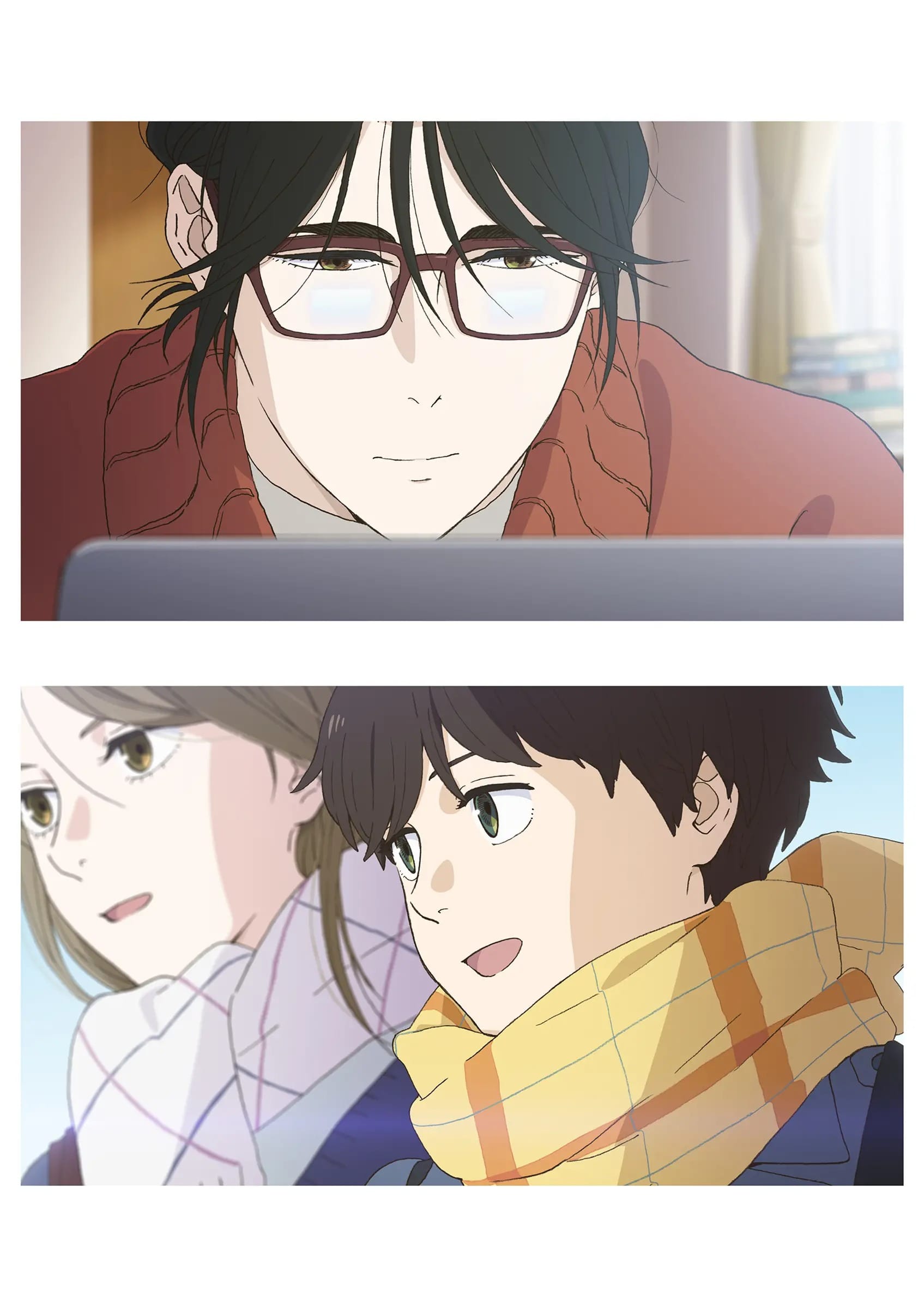
This framing also clarifies who these women are at the outset by giving viewers a peek at where they’ll ultimately wind up in their relationship. Asa, for instance, is a girl who just wants to graduate middle school without being labeled as “the girl whose parents died.” Makio, on the other hand, is an isolated writer who—at least as far as she’ll admit—feels nothing upon hearing that her sister and brother‑in‑law passed away, on account of their relationship having been FUBAR for years. Yet Makio never projects her own hard feelings toward her sister onto Asa. Instead, she allows her niece to feel her emotions, however big or small they may be, treating them as wholly her own and never something to be ashamed of.
Throughout the show, Journal With Witch traces how Makio and Asa gradually become a safe harbor for each other, even though both arrive in this new arrangement carrying their own emotional baggage. Makio, for instance, routinely offers Asa blunt, matter‑of‑fact guidance—an unexpected role for someone who’s otherwise shy and who never loved Asa’s mother. Makio suggests that Asa journal her feelings in a diary with full confidence that Makio will never read what she writes. Journal With Witch also grounds their collective healing in the mundanity of routine as they re-establish a new normal: low‑effort meals, slow walks, and long conversations about the finer points of literary techniques can work as a way to cope with loss.
While it's too early to see what impact Asa has on Makio, who is still guarded around her toxic sister’s child, it’ll surely be a watershed moment for both of them whenever they grow close enough to cross that bridge.
My only wish is that the rest of the anime seasons in 2026, save for Science Saru’s Jaadugar: A Witch in Mongolia, bring about a resurgence of josei in the anime landscape. Lord knows we could use a few fewer stories about bombast and more about pensive reflections on the human condition and the relationships we make and leave behind. And from the few episodes I’ve seen of Journal With Witch, it's starting to feel like the josei era is so back.


