
Bundled in a thick jacket and scarf to ward off Chicago’s chilly fall winds, congressional candidate Kat Abughazaleh, 26, approaches an outdoor podium. At a mid-November arraignment, she has just pleaded not guilty to federal charges raised against her and five other protesters of interfering with US Immigration and Customs Enforcement operations in Broadview, Illinois. If convicted, she could face years in prison on counts of conspiracy and intimidation. “This case is not a 'conspiracy,'” she says to gathered media. “It is a political prosecution to silence dissent.” Now she needs to win on election day and in court – which, among other things, makes her fundraising efforts more urgent than ever. Time to play some video games.
Just a few days later, on November 16, Abughazaleh is in her apartment, streaming Five Nights At Freddy’s – a game she has never played – to hundreds of concurrent viewers across Twitch and YouTube. She’s taken to streaming multiple times per week since September, following an experimental period in which she and her campaign staff tested its viability as a fundraising tool. The results were more than satisfactory: As the FNAF broadcast progresses, the campaign inches ever closer to having raised $100,000 through livestreams alone. By the end of the night, they pass that milestone.
Abughazaleh attempts to surveil the game’s titular pizza restaurant while interacting with chat. One viewer asks how she’d support small businesses like, if it existed, Freddy Fazbear’s Pizza. She replies with a platform that includes taxing the wealthy and lowering taxes for the working class as her eyes dart nervously around the screen. Two of her campaign staff, her producer Asha Buerk and her field director Andre Martin – who are sitting off screen, just a few feet away – give her shit.
The mounting in-game tension is clearly getting to her; she notes that where Freddy Fazbear’s Pizza, specifically, is concerned, she would simply “set [it] on fire.”
"We need to be actually supporting small businesses, putting a cost of living exemption for people's personal taxes– oh my god, guys, this is awful," she blurts.
Not long after, Foxy, one of FNAF’s nefarious animatrons, bursts into Abughazaleh’s in-game command center, prematurely ending her playthrough. She yelps in surprise, eliciting laughter both from chat and those in the room with her.
Witnessing this scene, it’s easy to forget the gravity of the moment surrounding it. In some ways, that’s by design.
"Running for office is the most rewarding thing I've ever done, but it's also the most exhausting thing I've ever done,” Abughazaleh told Aftermath while taking a moment to relax on her couch after wrapping up the stream. “It can be grueling at times. People go into running for office excited and wanting to make the world better, but then get worn down by how exhausting it can be. And so a lot of our events are things that bring me joy, that I want to share with other people. We did this punk night that was one of the most fun nights of my life; we had local punk bands come, and it was a night of defiance and community. We've had board game nights. Video games are something I enjoy doing. So it's just another aspect of that."
"There's no more whiplash going from post-arraignment press conference to Five Nights At Freddy's livestream than there is just living in America right now."
But these sorts of juxtapositions, Abughazaleh thinks, also come part and parcel with living under – and fighting – authoritarianism.
"There's no more whiplash going from post-arraignment press conference to Five Nights At Freddy's livestream than there is just living in America right now,” she said. “When we would protest at Broadview on Fridays, Thursday night you would have this tightening in your chest. While driving, you could feel the pepper spray in your lungs, even though it obviously wasn't there. I would always do my laundry on Thursdays so I could strip my clothes off when I got home to make sure I have something that's not covered in tear gas. I would sit there folding laundry on my floor being like 'This is so mundane while all the rest of this is happening.' That is more profound whiplash than anything else. For me, if you can't find joy during fascism, you don't have anything.”
Called It
Abughazaleh and her team, a full-time staff of nine, decided to start streaming because they thought it’d be preferable to an especially loathsome facet of campaigning: call time. In short, a candidate directly calls prospective donors in an effort to talk them through goals and, ultimately, convince them to make – or increase – a monetary contribution. This method can be more effective than one-size-fits-all emails or calls, but it’s also arduous and time consuming – not to mention alienating to non-wealthy donors.
"We did a big recap and looked at our [livestream] numbers as opposed to call time, but also specifically what stream segments were good, which were bad,” Buerk told Aftermath. “We got a lot of positive feedback from our audience and from constituents of not only how good a tool it was for soliciting donations, but for community connection and constituent connection as well."
Call time, Buerk said, is also only really an effective use of time if people are donating the maximum amount, which is $7,000 from an individual.
"You have to know rich people,” said Abughazaleh. "That's not me or most of the people that support us. To those who have and can do that, we appreciate you, but we don't want to make that our only base. That means you're depending only on the people who can afford that to make a change in the world. ... You also have to have those [phone] numbers in the first place – or buy lists, and there's no guarantee those lists will work."
"How do you get those lists?” Buerk added. “It's usually people selling donor data, which we don't do."
Buerk said that Abughazaleh’s donors were the kinds of people who’d kick in hundreds of dollars, not thousands, and as a result, call time was not exactly pulling in money hand over fist.
“In the best of times, we would get $600 an hour [from call time],” Buerk said. “The stream has obviously crushed that. Today we raised $12,000."
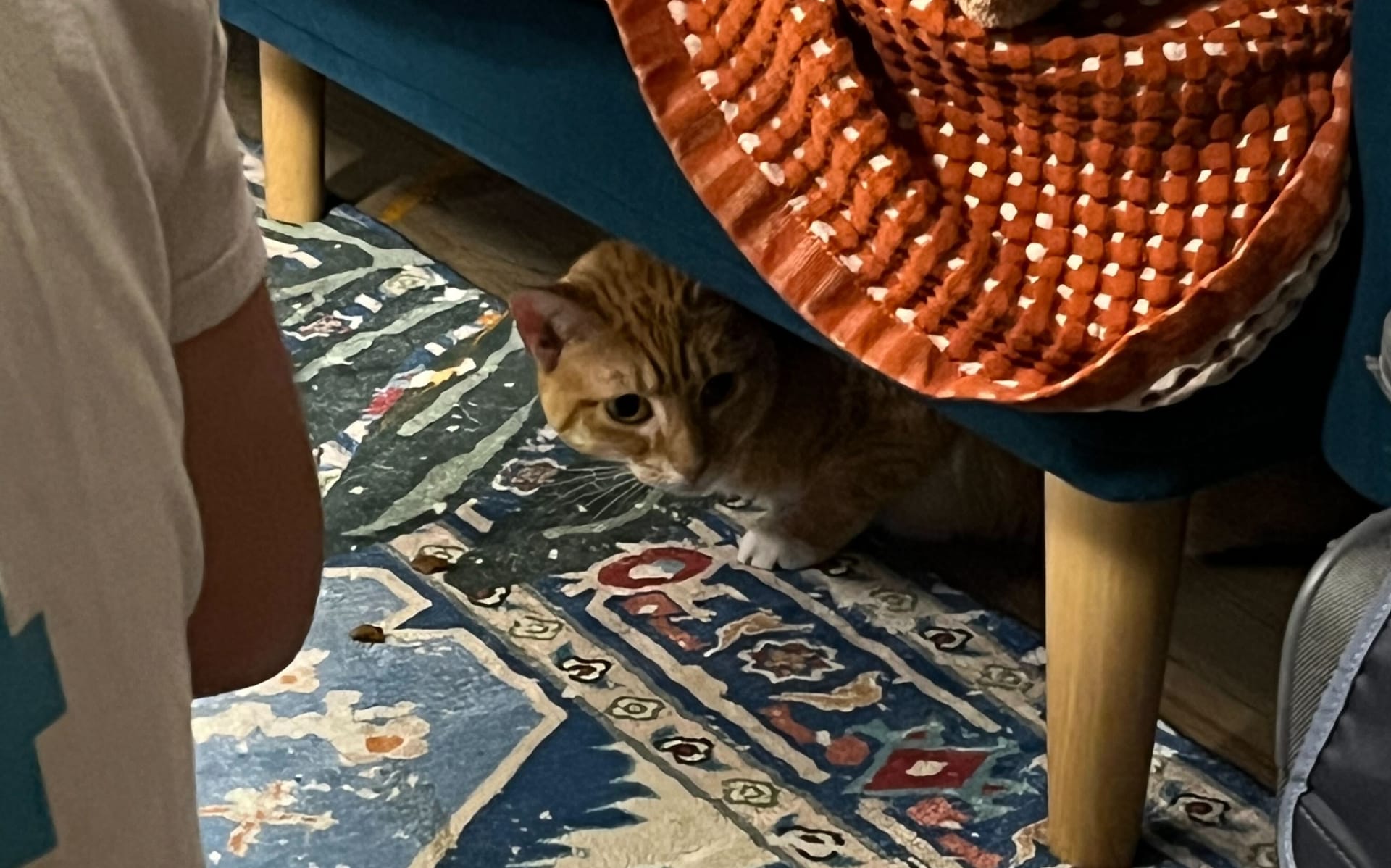
The FNAF stream lasted two hours and, thanks to a simple offer of a sticker featuring Abughazaleh’s cat for anyone who donated $10 or more, performed as well as 20 hours of call time. Even during lower-yield streams – the floor, so far, has proven to be $2,000 during a single broadcast – that’s still far preferable a fraction of the money for double, triple, or quadruple the work.
"Kat is busy at events,” said Buerk. “Kat is dealing with a lot of really insane, horrible things. She doesn't have time to be calling people and trying to convince them to donate for 40 hours a week."
Streams aren’t easy to do right. While representative Alexandria Ocasio-Cortez famously pulled a record-breaking number of viewers to a star-studded Among Us stream back in 2020, other politicians before and after have tried and failed miserably. Bernie Sanders and Donald Trump both launched Twitch channels in 2019, but neither engaged with Twitch as a platform or community, instead mostly airing rallies or leaning on campaign staff to host broadcasts. Kamala Harris’ Twitch channel, which launched last year to little fanfare, succumbed to the same issue. Most embarrassingly, disgraced ex-rep Matt Gaetz once streamed to six viewers.
"Kat is dealing with a lot of really insane, horrible things. She doesn't have time to be calling people and trying to convince them to donate for 40 hours a week."
In recent times, some politicians have demonstrated greater savvy where streaming is concerned, though they’ve pivoted away from trying to maintain their own channels. Trump’s 2024 stream with Adin Ross, Kick’s king of snivelling suck ups, peaked at over 580,000 concurrent viewers. Tim Walz and AOC played Crazy Taxi. Bernie learned what a Vtuber is. And of course, NYC mayor-elect Zohran Mamdani spent a day hanging out with Hasan “HasanAbi” Piker, which Andrew Cuomo tried to use against him to basically no effect.
“[Streaming] has certainly not been used as a [political] fundraising tool like this pretty much ever,” said Abughazaleh.
The idea for regular streams came straight from Abughazaleh, no stranger to social media herself, having made her name as a journalist who – in addition to publishing more traditional work at publications like Media Matters and Mother Jones – watched and roasted a frankly incredible amount of Fox News on TikTok. She parlayed this into videos about the far right more broadly, as well as advocacy for Palestinians at last year’s Democratic National Convention. She owes the successful execution of her streaming plan, however, to a younger-than-average campaign team, with the effort headed up by Buerk, a college student who was “horrified” by rising authoritarianism and decided to walk into Abughazaleh’s office and submit a resume. After stints in call time management and policy, Buerk gave herself a crash course in Open Broadcaster Software (OBS).
"I mentioned this idea, and Andre really pushed for it and then gave Asha the tools and ability to just devote time and resources [to learning how to stream],” said Abughazaleh. “It was a big risk; to not do four weeks of call time is a risk on any campaign, but we took it, and it was worth it."
Martin’s political background is much more traditional: An organizer who was feeling “demoralized” after experiences that included working with the Harris-Walz team and, perhaps most dispiriting of all, John Fetterman’s campaign, he made a promise to himself that he’d only assist politicians who practiced what they preached. An organizer friend recommended Abughazaleh, and the rest is (recent) history.
“[Streaming] has certainly not been used as a [political] fundraising tool like this pretty much ever.”
According to Martin, Abughazaleh’s streaming setup – which includes professional-looking ring lights and a tripod light off to the side, as well as just, like, some lamps – cost the campaign just $160.
“We're very lucky,” Martin told Aftermath. “We have a very online section of our volunteer base, and the campaign staff is young enough that some of them have natively already streamed. Getting them to explain it to those of us who hadn't was very helpful in building something from scratch."
Despite doing an admirable job of replicating the look and feel of your standard, down-to-earth Twitch stream, Abughazaleh is not just some Twitch streamer.
"We have FEC rules we have to contend with,” said Martin. “We have to go through Act Blue, which was not built to ever be part of a stream."
This means those who donate have to click out to another page and provide personal info like their occupation and employer. Twitch viewers, who are used to simply pressing a button and receiving a near-instant reaction from their favorite streamer, are not accustomed to this. So far, however, it hasn’t impeded the campaign’s efforts.
"Being able to still raise this much while going to another website and then inputting information that isn't already there is... I'm really impressed with how it's gone,” said Abughazaleh.
But convincing people to open their wallets while riding a wave of novelty is one thing; keeping the money flowing is another.
"It's very easy for streams to become rote, and while that's good for a certain audience of people, we're a congressional campaign, so it's important that we keep streams engaging and push the meta beyond just 'play video game, react to thing,'” said Buerk. “Obviously you saw us playing video games tonight, but we always need to make sure that there's some form of additional element to keep the streams exciting. So we do higher-level production streams. The most recent goal stream we did was, chat raised $7,000, and so Kat built a Lego set on stream. We also produced a Hot Ones-[inspired] stream where we wrote down a bunch of questions, had the questions on stream, and Kat tried 38 hot sauces."
"I did really well on most of them,” Abughazaleh added. “I just wanted that on the record."
Of ICE And Indictments
But a larger question looms over Abughazaleh’s social-media-savvy efforts: Will an extremely-online campaign convince voters in her district to spend one day at the polls instead of five nights at Freddy’s? Especially for a young candidate who moved to Chicago relatively recently?
Abughazaleh would be more concerned if that’s all she and her campaign were doing.
“For getting the word out, [being] online is great, but it doesn't necessarily translate to votes,” she said. “I think we've seen this in other campaigns, especially by young people, where that translation just doesn't happen. So from day one, we have been translating that online support into tangible actions that people are taking in preparation for election day. For our kickoff event, for instance, people found out about it online, and I asked them to come not with monetary donations, but with pads and tampons, which we were donating to Chicago's Period Collective. And sure enough, we hit max capacity. ... That was an early predecessor to all these things we're doing on the campaign, whether it's asking for people to donate to our mutual aid hub at the campaign office or knocking doors, petitioning, doing phone banking, donating coats, [or] a blood drive for Halloween and a bone marrow registry drive as well."
"The stream is just another part of that,” she continued. “It used to be that the internet wasn't real life, and now it's not that the internet is real life; they're just both components that exist at the same time.”
This approach has actually led to less donation money overall than competing campaigns, Abughazaleh said, but more support. Roughly four months from the March 2026 primary, polls show that Abughazaleh is tied with another candidate, Daniel Biss, for first. In relatively little time, she’s managed to make a major impact.
"We have less [money] than most people, and that's because we're a grassroots campaign, and we aren't supported by rich people,” Abughazaleh said. “Doesn't matter how much money you donate, though; that only translates to one vote."
"For getting the word out, [being] online is great, but it doesn't necessarily translate to votes."
In this regard, Abughazaleh has been both encouraged and inspired by the success of another young, progressive politician: Zohran Mamdani, NYC’s soon-to-be mayor who’s already a global celebrity. His campaign, similarly, married consistent pro-working class messaging with an entertaining but calculated social media presence and local events, like a gargantuan city-wide scavenger hunt.
"When he won his primary, I posted something like 'Huge night for grassroots progressives with ethnic last names,'" Abughazaleh said. “I feel stronger knowing that Zohran has led the way for a lot of us. It's scary to be doing so many experimental things with your own campaign, but then to see other people trying their own things as well as prove that they can work – and that you don't have to sell out in this way or that way to win an election – is so inspiring to me."
But also, she added: "We were planning a scavenger hunt for months, and then he did it, and I was like ‘Everyone's gonna think I copied him.’"
One of Abughazaleh’s ground-level efforts has made national news, albeit not for the reasons she initially expected. Though she’s not outwardly sweating the federal indictment that followed anti-ICE protests in Broadview too much – one which, notably, targeted other Democratic politicians and candidates as well – it has materially impacted the lives of herself and her campaign staff.
"We – not just me, but people – are trying to do the things that matter, and that means standing up for people. Right now that means you might get beaten up by ICE or a masked man that you're not even sure works for the government,” said Abughazaleh. "We now have legal expenses on top of campaign expenses, but being a candidate at Broadview means I'm not going to go bankrupt. We're able to use those expenses for the other as well. So really now I'm just running the campaign like I would, except now we also go to hearings sometimes. ... And I can't leave the continental United States."
Martin, who was among those charged alongside Abughazaleh, has clearance to visit Puerto Rico due to family ties.
“I got permission to go to one island,” he said dryly.
Yesterday, I pleaded not guilty to the charges that Trump’s DOJ has hit me with in federal court. This administration is targeting me because they can see that I’ve spoken out against them and will continue to stand up to them.
— Kat Abughazaleh (@katmabu.bsky.social) 2025-11-13T21:27:47.349Z
But just because Abughazaleh and her staff can joke about a grim situation doesn’t mean it’s not weighing on them. Few understand this dichotomy better than Ben Collins, aka Tim Onion, CEO of The Onion and Abughazaleh’s partner.
"I'm not one of those people who do the thing where they track each other on their iPhones,” Collins told Aftermath. “It's disgusting and weird behavior, but it was necessary when she went to Broadview. The day she got thrown to the ground [by an ICE agent], I was in LA for work, and I was up from 2 AM onward just trying to make sure she got home."
"It's really hard, because [ICE has] everything,” he added. “They have all the weapons, they have all the power, and they seem to literally get off on it. And there's a reason they target her over and over again."
But this is precisely why Abughazaleh decided to run in the first place – and why Collins, who was in a legal battle with Alex Jones over The Onion’s attempt to buy Infowars at the time, did nothing to stand in her way.
"When we saw there was no one in government standing up for everyone we knew and loved [in the months following the presidential election], Kat was like 'I think I should do it,'” Collins said. “I think a person with as much on his plate [as me] – I was actively in a legal fight with the world's most insane person [Alex Jones] – would typically say 'Alright, yeah, maybe in a couple years or something.' But she's uniquely equipped to deal with these people. I think you see it out there: Everyone is following her lead. All these other candidates went to Broadview because of her. She helped amplify what is a clear human rights injustice going on there, both inside and outside that facility. ... So in those few months after [the presidential election] where no one was stepping up, when she told me she wanted to run, I was like 'OK, let's fucking do it.'"
"[ICE has] all the weapons, they have all the power, and they seem to literally get off on it. And there's a reason they target her over and over again."
Now, facing down a second, even less anticipated legal battle, Collins – like Abughazaleh – can at least find some humor in it: “It'd be scarier if she did anything wrong, certainly, but it'd be scarier if they spelled her name right in the indictment," he said.
All Abughazaleh can do is meet the moment with the seriousness it deserves, which is both as much as she can muster and none whatsoever. During the mid-November FNAF stream, she made the kind of wager characteristic of someone with nothing left to lose: “If we raise $20,000 in one stream, I will read a paragraph from my One Direction fan fiction that I published in middle school.”
She didn’t quite hit the goal that night, but there’s always next time.
Recommended
 Nathan Grayson