

Kensuke Ushio, composer for anime works like Devilman Crybaby, Dan Da Dan, and Ping Pong The Animation, has earned a strong reputation for sonic excellence among anime aficionados. But when the Chainsaw Man composer first read Tatsuki Fujimoto’s lauded Shonen Jump series, his reaction was a common refrain for anyone who read the series: “I fell in love with it, but at the same time I also thought, this is insane.” As the battle-tested connective tissue for for the tonal ping pong between heartbreak and action of the TV series, pressure was on for Ushio to cook up a soundtrack as musically insane enough to underscore its first theatrical film, Chainsaw Man – The Movie: Reze Arc. It's safe to say Ushio cooked up yet another generational banger—this time of the peak emotional damage variety.
Chainsaw Man – The Movie: Reze Arc might go down as one of, if not the, anime film of 2025. The film, which adapts arguably the manga’s most devastating arc, is a literal battle for one’s heart. More specifically, hero Denji is caught in his first brush with genuine love with an enigmatic and explosive manic pixie dream girl, Reze, while keeping his heart from getting ripped from his chest in a cataclysmic battle with the Bomb Devil. For Chainsaw Man – The Movie: Reze Arc, the score’s identity owes a lot to Chainsaw Man manga author Fujimoto’s unbridled love of cinema. Appropriately, its genre-blending score further enriches the first theatrical movie for the series. Just in time for the film's home video arrival, I spoke with Ushio to ask him how he orchestrated the remarkably moving score for Chainsaw Man – The Movie: Reze Arc.
Isaiah Colbert: Chainsaw Man – The Movie: Reze Arc introduces a tonal shift in Chainsaw Man’s story. One that’s more romantic and tragic. How did you approach scoring this film differently from the TV series? Were there sonic motifs or textures you deliberately abandoned or accentuated?
Kensuke Ushio: For the movie, I wanted to use a full orchestra extensively. From the very beginning, even during the production of the TV series, we all talked about how the Reze Arc might become a movie. If we were going to make the Reze Arc into a movie, I thought it would be best to use a large orchestra in an environment capable of properly reproducing everything from soft to loud sounds, using good speakers. The overall planning for the entire Chainsaw Man franchise has been done to a certain extent, so for this film, I consciously decided to use a large orchestra.
IC: Are you a fan of the Chainsaw Man manga yourself? If so, what aspects of it resonate with you as its anime series composer? How does it compare to other series you’ve scored in terms of how it invites musical interpretation?
KU: I knew about Chainsaw Man. That being said, in Japan, sometimes they run campaigns (on manga sites, etc.) where the first three chapters of a manga are free… So I only initially read through those. I didn’t properly read the entire story until after I got the offer as composer. After reading, I fell in love with it, but at the same time I also thought, this is insane. Like when the characters start discussing “killing Denji off,” (a line that also comes up in the Arc), or how every girl Denji falls in love with tries to kill him, or turning the page to find tons of people dead. I thought it was such a mess. But that’s what I found so appealing, and I decided to make that kind of chaos, which isn’t found in other works, the core concept of my compositions. Ideas like this, born directly from the source material, really felt unique to this work.
劇場版『#チェンソーマン レゼ篇』
— kensuke ushio (@agraph) September 19, 2025
サントラ
"summer's end"
発売中&配信中です。
なんとギターは全面的に田渕ひさこさん @__hisako にご参加頂いております。
最高かよ… https://t.co/vifveoA0uy
IC: Were you given access to early cuts or storyboards of the film to guide your scoring, or did you work from mood briefs and thematic direction alone when composing its original soundtrack?
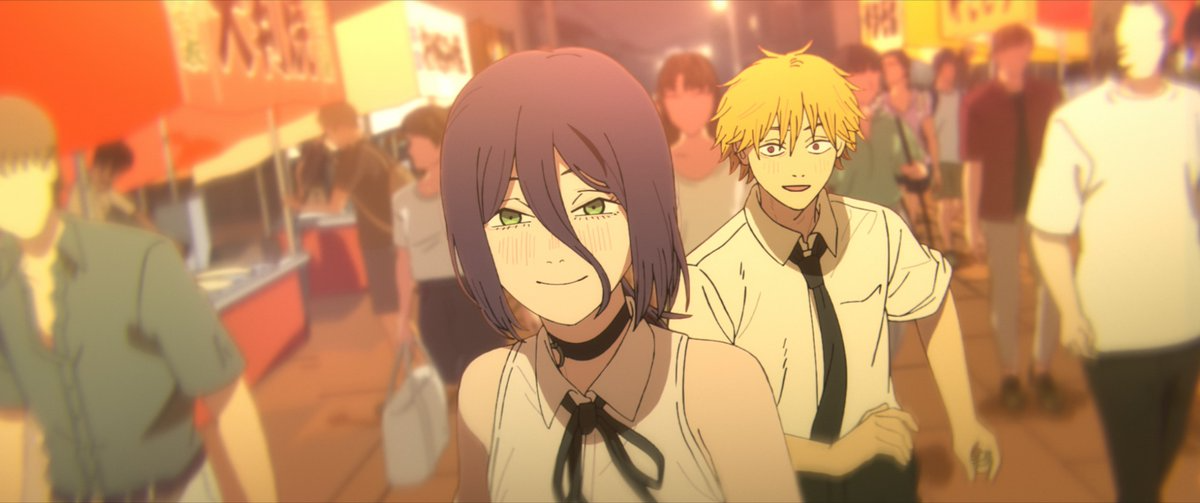
KU: In the earliest stages, I composed music using materials like storyboards and what are called “setting documents” —things like, “the character has this kind of face,” “we’ll use these colors,” or “this is the final look we’re aiming for.” I also worked on the music alongside the script. Partway through, a rough cut version comes in, so I watch that and then refine things further. This time, the sound director was Mr. [Yasushi] Nagura, a colleague I’ve worked with on projects like A Silent Voice and Liz and the Blue Bird. He understands my character and work as a composer well, so he gave me plenty of freedom and breathing room, which, thanks to that, made me able to compose freely.
IC: How does your process shift when you’re composing with visual materials versus prompts? Do you find that one approach opens up more unexpected, creatively rich possibilities than the other?
KU: It isn’t so much a matter of artistic sensibility and process as it is a professional skill issue. Specifically, when someone says something like, “The music should start here in the footage and develop from here,” the length they are referring to is the footage’s duration—not four bars or eight bars—so it’s completely non-musical. So then, you end up having to fit music into spaces like three bars, one beat, and 0.5 seconds. When creating purely from imagination, I can work in musical units. But film scoring—matching sound to film—is a job that involves tackling these impossible demands, and that’s really the fundamental difference. Film scoring is tough in that sense, yet conversely, scales like three measures, one beat, and 0.5 seconds are timeframes I'd never conceive of myself, so in that way, it feels creative. But at the same time, I think it's an incredibly difficult process.
— kensuke ushio (@agraph) December 4, 2025
IC: The anime series is known for its fragmented, industrial sound that’s equal parts jagged and visceral in short bursts. In contrast, how did the film’s format and pacing influence your compositional choices?
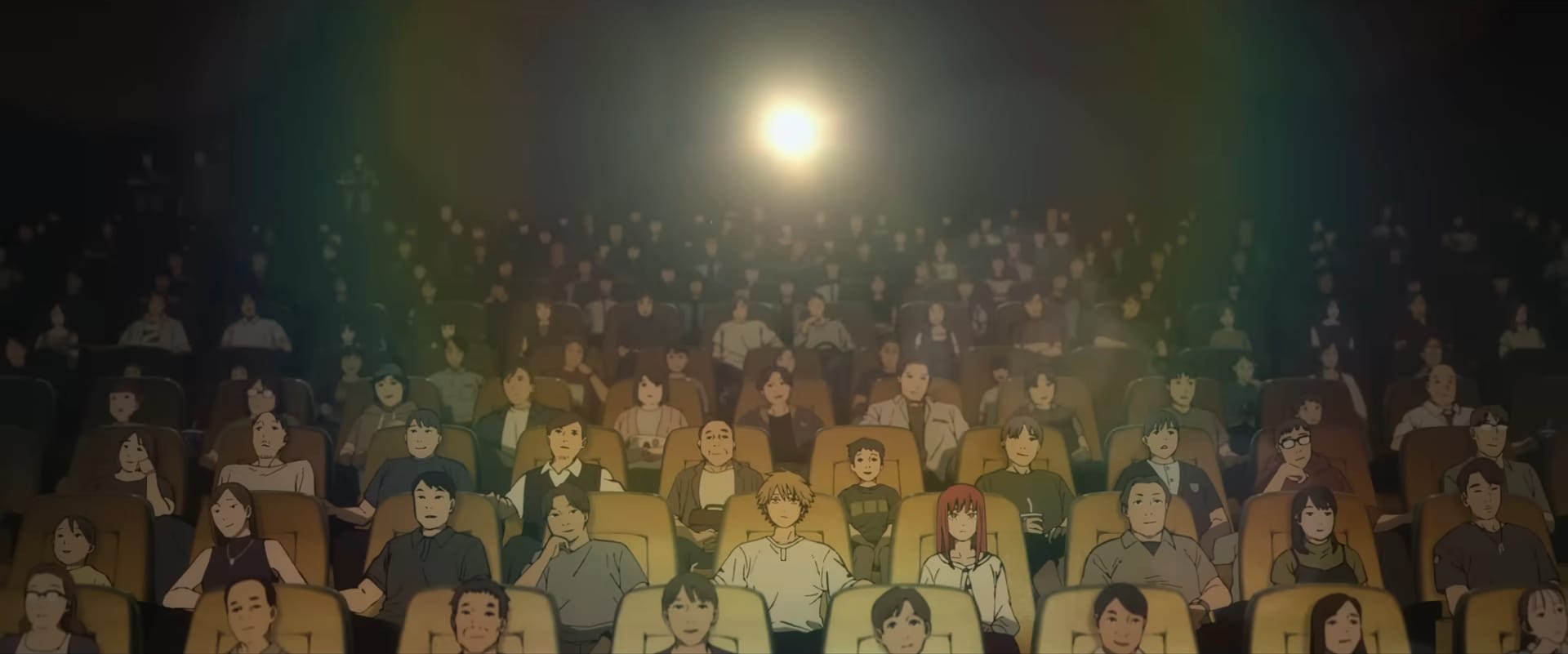
KU: That’s a tough question. This film, Chainsaw Man: The Movie – Reze Arc, is a 100-minute work. That means the story has to unfold at a pretty brisk pace. Now, this might stray a bit from your question's intent, but the music in the film has the function of making 5 minutes feel like 10, or 7 minutes feel like 3. So, for example, I compose each piece thinking about things like, “Let's make it feel like a slow date with Makima-san,” or “Let's make the battle feel like it ends in an instant.” The film's overall structure starts with a boy-meets-girl introduction, builds to a grand epic battle, and culminates in a poignant ending. We crafted it to feel like climbing a hill, gradually building momentum. That's a major difference from the TV series.
Also, I’m usually a dance music artist, and last year I performed live with Chainsaw Man tracks. The feeling of keeping audiences dancing nonstop to Chainsaw Man tracks in nightclubs across Europe and Japan has really influenced how I structure the music, especially in the latter half. That aspect might be particularly special this time around.
IC: Did the longer runtime allow for more thematic development or restraint to underscore scenes?
KU: There are two perspectives here—a broad one and a detailed one. Broadly speaking, if a 100-minute film had a new melody every second or minute, it would become overwhelming. So we used a technique called a leitmotif, where one melody is reused in various ways; that's how we approached it. But on the other hand, the final battle scene is essentially one long battle throughout the latter half. You know how DJs who only play big hits get annoying, right? So for that part, I aimed for restraint, or rather, structured it with a mix of pace and tension.
IC: Is there a particular track from the Chainsaw Man – The Movie: Reze Arc score you feel most emotionally attached to? What about its structure, instrumentation, or context makes it resonate with you personally?
KU: It’s not quite the same as having sentimental attachment, but if we're talking personal taste, there's a song called “slow summer eve” (Track 13). That piano tone… how to describe it? Like an old music practice room with dust dancing in the setting sun...I've loved upright pianos with that kind of tone forever, since I was a kid... I've spent all this time honing my craft just to achieve that tone and that kind of phrasing. So, I think it's wonderful that a song like that came to be in a movie loved by so many people.
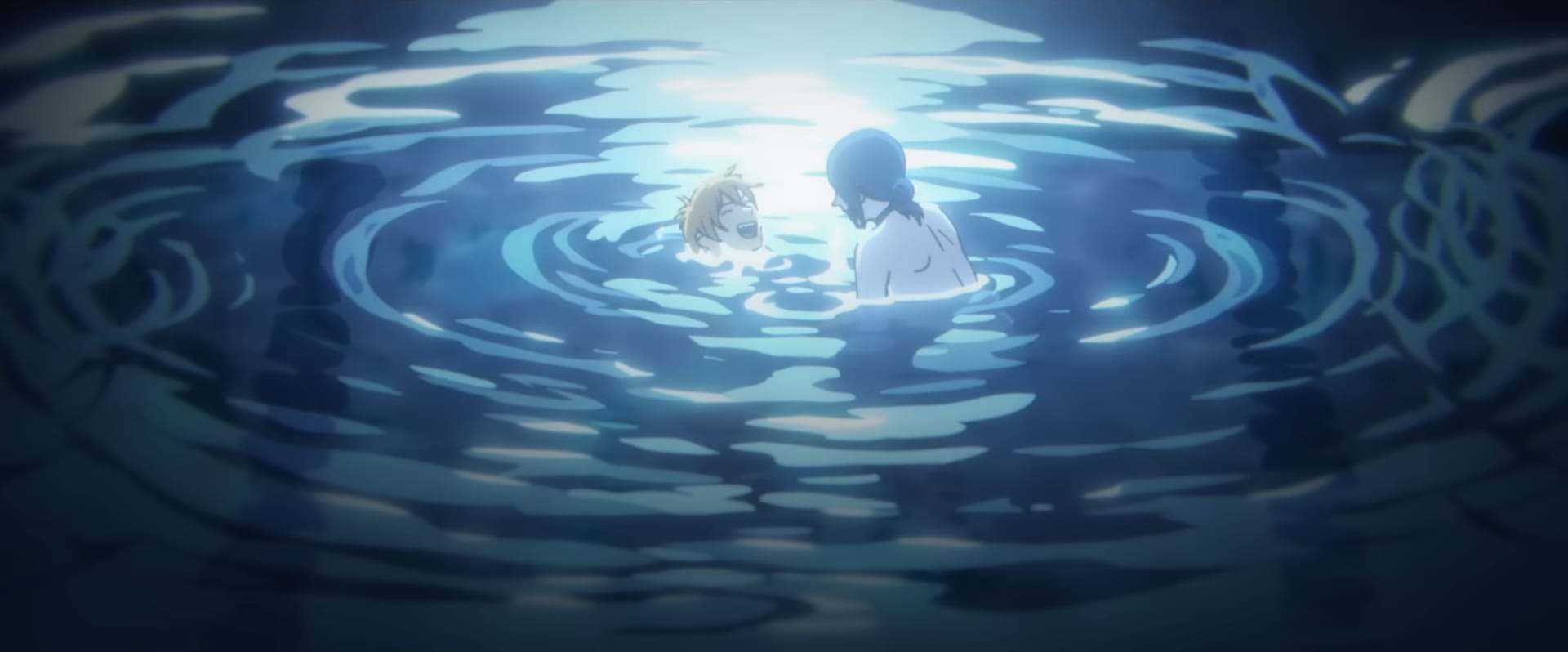
IC: “In the Pool” stands out as the longest track on the Chainsaw Man – The Movie: Reze Arc album, and arguably one of its most emotionally charged. It carries this dreamlike quality that’s romantic and suspended in time with its strings and piano riffs—yet there’s a subtle menace that creeps in toward the end. It later reprises in “In the Sea,” echoing the emotional fallout of Reze and Denji. How did you arrive at that particular piano motif—one that feels equally romantic and haunting? Was it born from the visual rhythm of the scene from the film or manga, a thematic suggestion, or something more intuitive in your creative process?
KU: By the time we made the teaser trailer announcing the upcoming Reze Arc film at the end of 2023’s JUMP FESTA, this song and the song “Reze” (Track 28) had already been completed. While discussing which track to use for the teaser, we decided the song that would eventually become “in the pool” had a theme that was too deep and heavy to use effectively in a teaser, it was too profound for that purpose. So, we chose “Reze” instead, as it sounded more beautiful and light. However, both Director [Tatsuya] Yoshihara and I absolutely loved the song that inspired “in the pool.” We kept saying until the very end that we wanted to use this one for the teaser, so we absolutely wanted to use that song in the film. Director Yoshihara and I called the song that became “in the pool” “our song” (laughs).
At that stage, there was still no script, no storyboards, no structure—nothing. The track was made intuitively, thinking about the character of Reze.
Your observation about “in the pool” becoming increasingly unsettling towards the end is spot on. While “in the pool” starts with a bittersweet melody like “boy meets girl,” towards the end, it incorporates chords reminiscent of late Romantic composers, or perhaps modern Russia. It has a melancholic resonance, like longing for home, structured so that Reze's background creeps up on you. Nice catch.
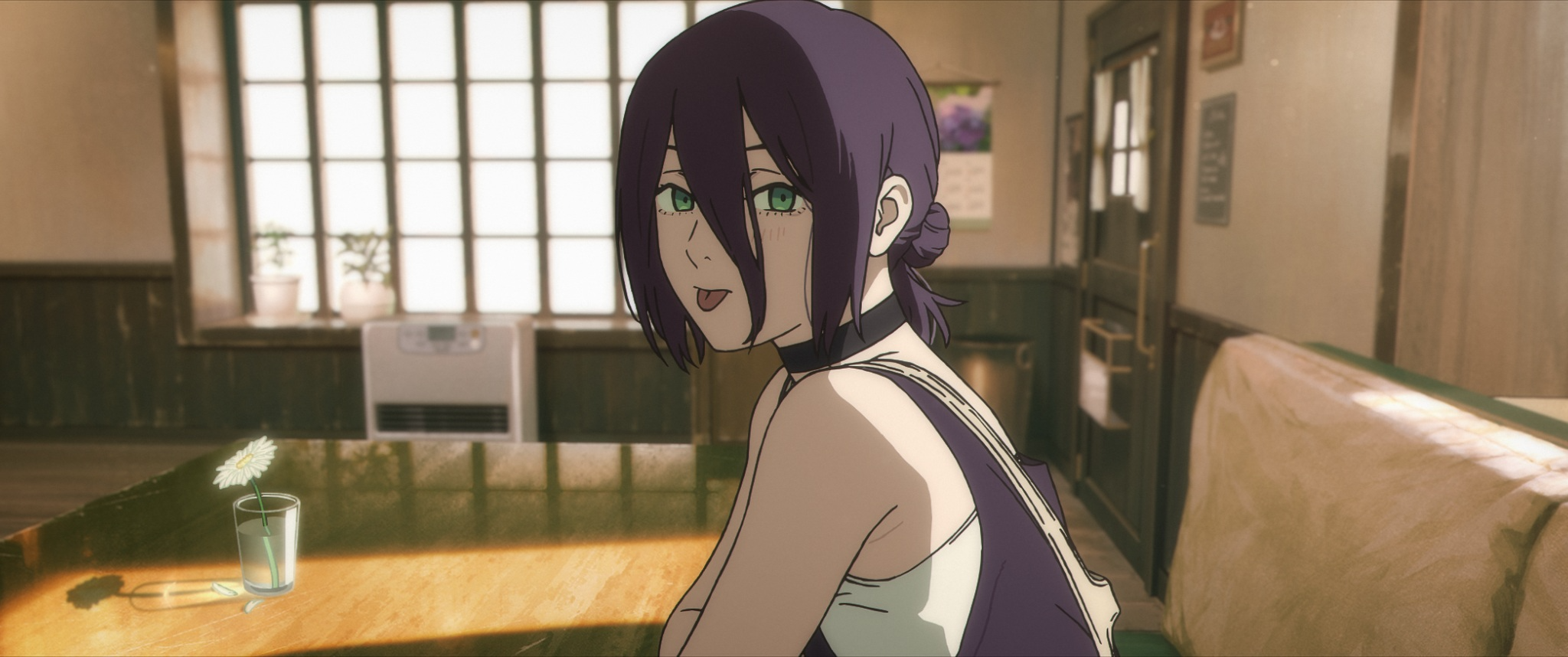
IC: Reze herself is elusive, seductive, and ultimately lethal, but MAPPA redoubled its animation efforts to make her cuteness shine the brightest through Denji’s eyes. For her eponymous track, what word or mood were you going for to embody her as a character?
KU: As I mentioned, that melody was already formed at a very early stage. But it developed into the final “Reze” song roughly during the middle to latter stage of music production. I wanted to create a sense of Reze's lethality, or rather... a melancholy feeling. So, I incorporated a lot of sounds like faint, raspy noises—almost like sounds before they become sounds—using instruments like the violin. Me, the orchestrator, and the violinist worked together, using the violin to layer in sounds where the bow barely touches the strings. We recorded many layers of these sounds, things that seemed like they might vanish away. I think that really became a defining element in shaping her.
IC: Track 12, “Jane Slept in the Church,” is the only spoken word piece on the album. It's stark, unaccompanied, and deeply unsettling. It mirrors a moment from both the manga and anime where Reze sings in Russian while strangling an assassin, evoking a kind of No Country for Old Men with how quiet, intimate, and lethal the scene is. What led you to strip away all instrumentation and let the voice stand alone? Was it about amplifying the psychological tension, honoring the manga’s eerie stillness, or something else entirely? What did that sonic choice enunciate to you about Reze’s character or the emotional architecture of the scene as its composer?
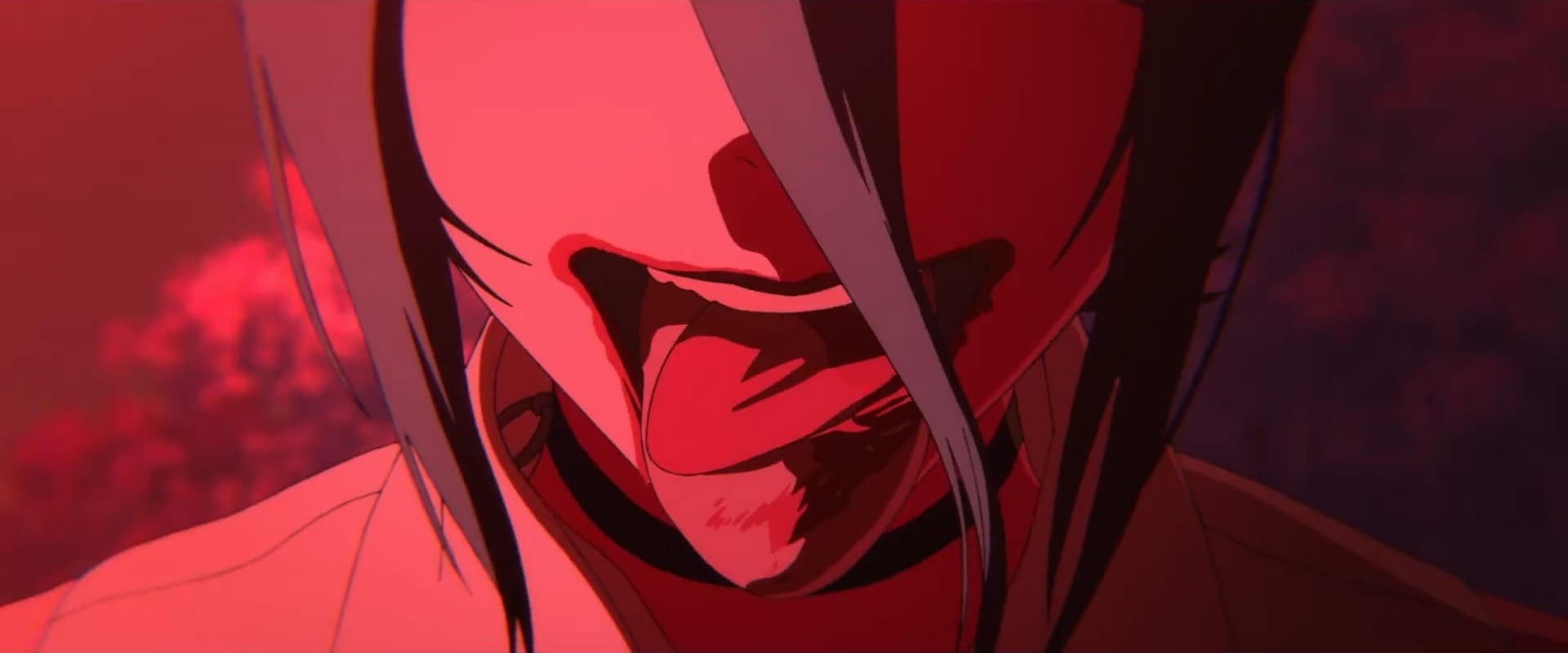
KU: Abstractly speaking, that scene is where Reze comes into close-up. So, the camera and the microphone are right in front of her, incredibly close. You can even hear her own lip noise. If you're going to hear her singing with bated breath, I thought it would be better without any instruments. There's a man named Michel Chion, who is both a film music composer and a leading authority on film music studies. In terms of what he calls “the possible forms of film music,” that scene features “music playing within the film itself.” You can't just add accompaniment to that, can you?
IC: How does scoring anime differ from your solo or band projects? Do you find it to be a collaborative extension of your voice, or does it demand a different kind of authorship in instrumentation?
KU: Creating film scores is vastly different from solo or band work—it feels like a completely different genre, a completely different profession. I'm the type who spends five or even ten years on a single solo track... but with film scores, you have to create something in just a day or two. It's like the difference between a sprint and a marathon. Also, the goal of film scoring isn't to make great music; it's to make a great film. That aspect is completely different from the obsessive focus I have in my solo work. So, film scoring isn't about expanding my own musicality.
My solo work involves years and years of meticulous research into various new areas, making it closer to research and development. It feels like taking the insights gained there—specifically things like synthesizer sounds, microphone techniques, compositional methods—things I researched and developed myself—and applying them to the soundtrack. It's like broadly applying the R&D from my solo work to film scores.
On the other hand, I think it's a very positive spiral when someone who is both a film composer and an artist incorporates things they've tried in film music into their own work. I have that desire too, but I haven't done it yet.
IC: Has your work in scoring anime, especially high-profile works like A Silent Voice, Devilman Crybaby, Dan Da Dan, and Chainsaw Man, shaped your career trajectory in ways you didn’t expect? Or do you see it as a core path to your personal music-making?
KU: It’s not necessarily the core of my work. I just happened to be making music when someone asked, “Why don't you try making a soundtrack?” It sounded fun, so I did it. I don't think soundtrack production will ever become the core of my music. However, I couldn't write orchestral scores on my own. But as the leader of the production team, I can create large-scale pieces like “in the pool” at that scale. Since I work in electronic music, if I'd been working solo, I never would have learned how to create such large orchestral arrangements. There's that unexpected acquisition of skills.
IC: When the credits roll on Chainsaw Man – The Movie: Reze Arc, your music will linger with audiences as they sit and reflect on the film before leaving the theater. What do you hope audiences carry with them after hearing your score throughout the movie? Is there a feeling, rhythm, or silence you hope stays with them long after the film ends?
KU: Whether I'm working solo or on film scores, I basically create music without lyrics. I want to make music that transcends words. So, to be specific, there's nothing I want you to take away within the realm of words. However, I can tell that you all are feeling something, because I'm receiving so much feedback right now, and I'm really happy about that.


