

Life is a perpetual performance, a ceaseless carousel of masks we rotate through depending on who’s in the room, while the truest version of ourselves only surfaces in the moments no one bothers to watch. Inside the crucible of GKids’ kabuki drama film Kokuho, the question “Which me am I going to be today?” takes on a sharp edge. When an actor’s goalpost shifts from entertaining crowds to becoming the greatest, that question stops being rhetorical and becomes a matter of artistic survival: creating the perfect mask to spite the performer's true face.
Adapted from former kabuki stage assistant–turned–novelist Shuichi Yoshida and directed with operatic precision by Sang‑il Lee, Kokuho traces the rise of Kikuo Tachibana (Ryo Yoshizawa), a lifelong outsider wrestling with imposter syndrome that calcified long before he ever graced the stage. His childhood unfolds like a conveyor belt of catastrophe: a family claimed by the bomb disease in the wake of the atomic blast in Nagasaki; an adoptive father and yakuza patriarch gunned down before his eyes; and a youth spent drifting from household to household, never once feeling rooted in any place to call home.
Everything shifts when he’s taken in by the legendary kabuki performer Hanjiro Hanai (Ken Watanabe), who, alongside Hanai’s prodigy son Shunseki Ogaki (Ryusei Yokohama), molds the pair into an onnagata dual act. Under Hanai’s strict and demanding tutelage, kabuki becomes both a sanctuary and a cut-throat testing ground where Kikuo’s all‑consuming obsession to perfect his art reshapes his life and identity as he chases the impossible dream of becoming a living, breathing national treasure on stage.
We meet Kikuo as a blank canvas of a human being who’s hungry, diligent, and terrifyingly receptive to instruction. But the more he absorbs, the more the cracks begin to show. He’s a performer so dedicated to his craft that he often forgets how to act like a human being.
As an onnagata, Kikuo is molded, bruised, and sculpted into a vessel of beauty so captivating that audiences far and wide pack music halls to see him perform, all while his own self-identity is treated as malleable clay to use or be disregarded. And the film traces his evolution in an operatic sweep from a 1964 child apprentice to an emerging performer in the 70s, to a virtuoso in the 80s, and through all the setbacks trailing into the 2010s. All the while, Kokuho threads the iconic roles Kikup inhabits, from the Two Lions, The Love Suicides, and The Heron Maiden, not as mere performances, but as a living epochal beat in his life where his art and identity blur into one another.
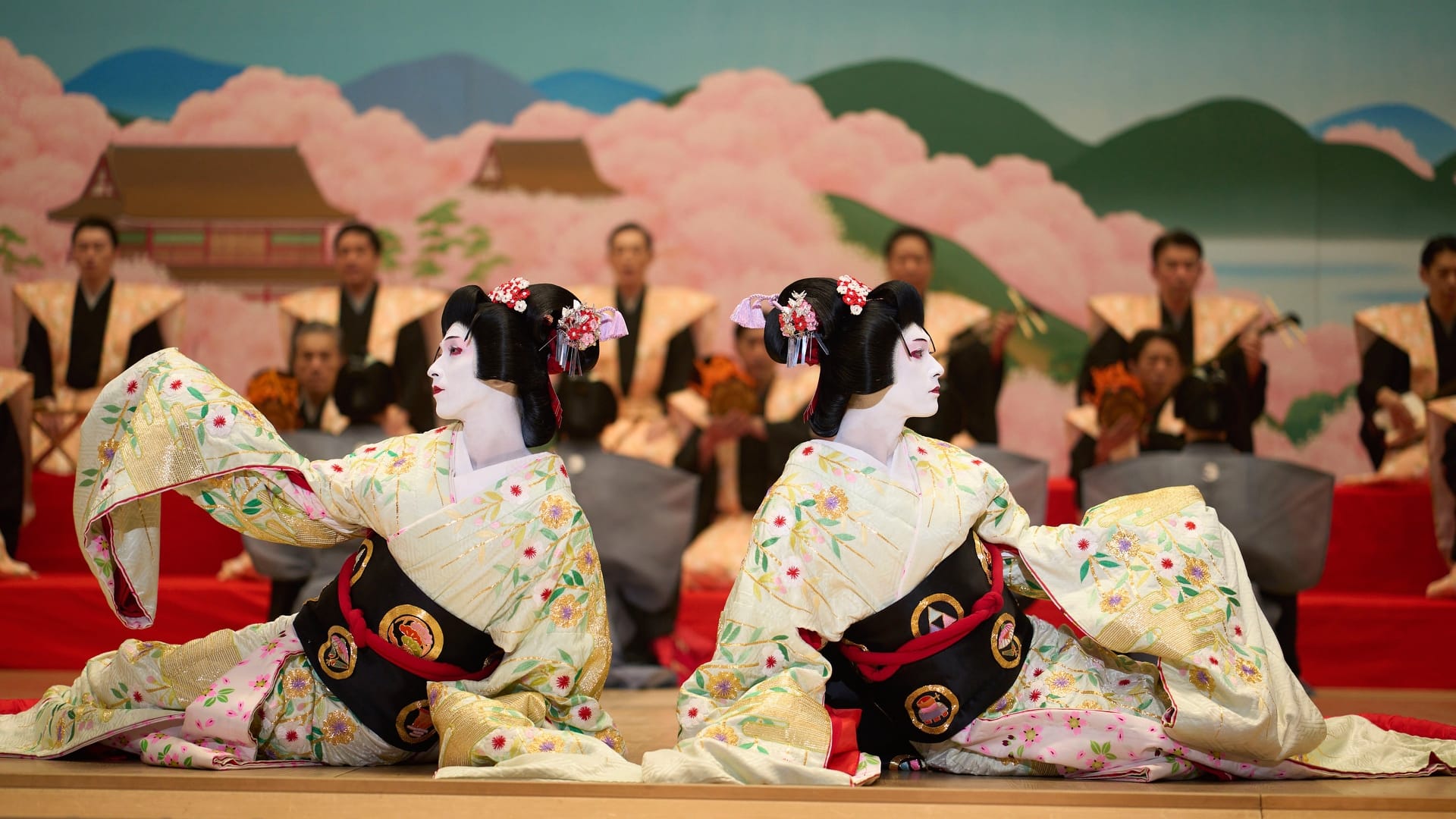
For Kikuo, the answer to the existential question “Which me am I going to be today?” never needs to be voiced. It's carved into the mirco-expressions he can’t quite suppress—the smirk he swallows when praise is lauded his way at a rival’s expense; the way his body recoils, sweat stippling his brow, as his mentor hurls cutlery to punish a falsetto that isn’t convincingly feminine and heartwrenching enough; the frozen mask he wears long after the curtains fall, as if the performance refuses to release him. Beneath the facade burns an insatiable flame, one that won’t rest until he’s the singular figure audiences and peers look to—a performer who answers the existential question a thousand times over, even if the pursuit consumes him whole, no matter how many bridges he incinerates.
Kabuki, like football, is a game of inches. A pose held one millimeter out of place, a fan flicked a beat out of step with a shamisen or taiko drum, or a breath that betrays performative strain with one’s own exhaustion become margins where greatness is either forged forever in the history books or lost to time. Or at least, that’s the pressure Kikuo places on himself. And Kokuho revels in showcasing how the kayfabe of performance and one’s own story bleeds into their art. Some sequences blur into a dreamlike mirage, where the boundary between performer and role dissolves. Others are grounded in the grit of rehearsal rooms where humiliation and bruises, both physical and emotional, are as common as a round of applause.
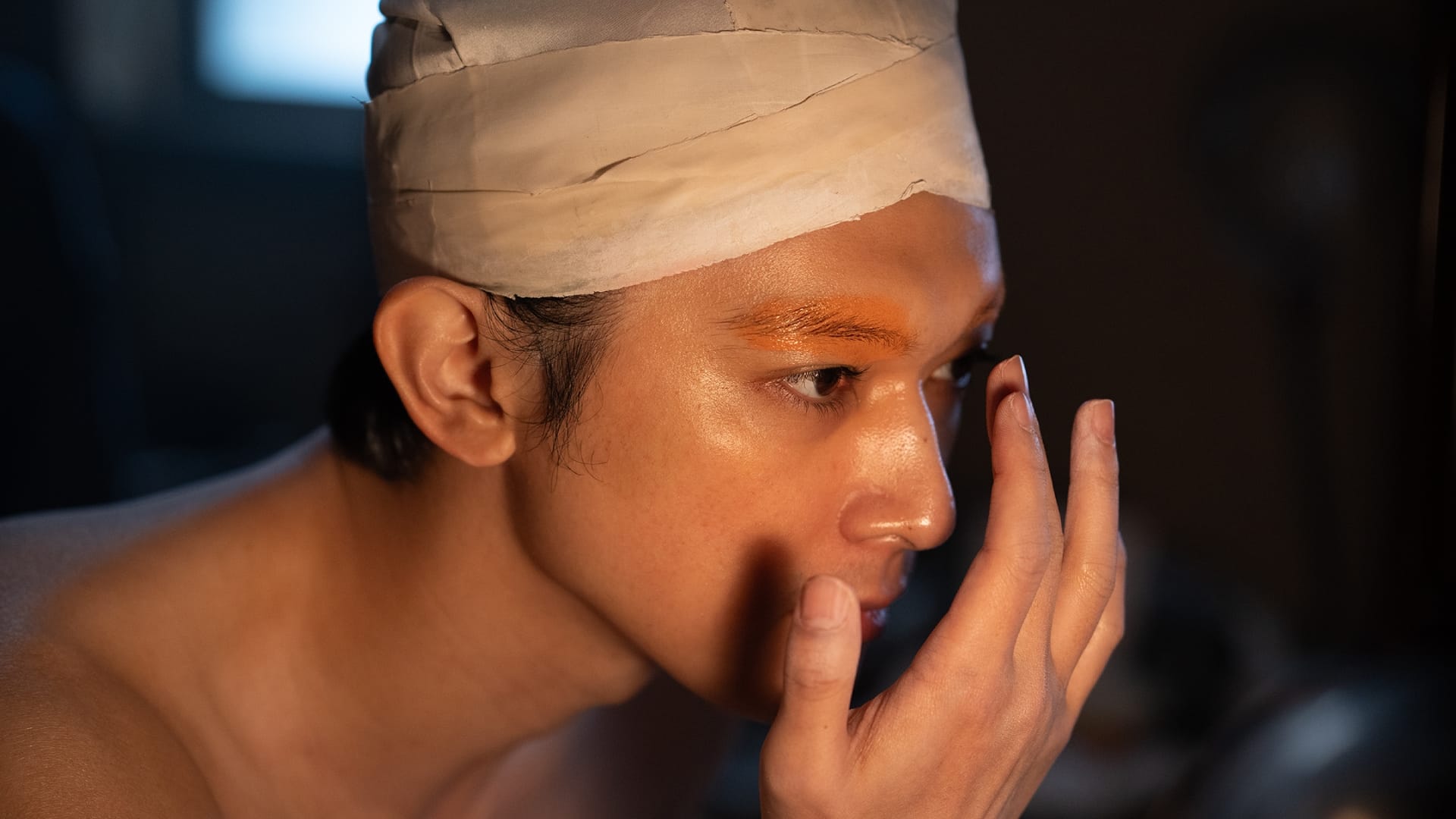
Where Kokuho sings is in its resounding understanding that an actor, regardless of their latent talent or hard work, is only as great as the stage they perform on. Here, Yoshizawa and Yokohama deliver moving performances, as Kikuo and Shunseki pour their hearts out in whatever venue will have them over the course of their rising and plateauing careers.
From sold‑out historical theaters where the air hums with reverence, to seedy hotel lounges veiled in cigarette smoke, to luncheon halls where half‑attentive diners treat their art as ambiance, every venue becomes another step toward glory hell‑bent on pitting the two brothers against each other—and with each climb, they deliver a stirring, heartbreaking performance as they struggle not to totally eclipse one another’s hard‑won sliver of limelight.

The film’s just‑shy‑of‑three‑hour runtime is visually decadent, deliciously messy in both its staged and unstaged melodrama, and utterly gripping from first frame to last. What unspools between its opening and closing credits is an exhaustively engrossing tangle of criss‑crossing loyalties—childhood friends, lovers, rivals, found family, and Kikuo himself—woven into a lattice of perceived slights, bruised pride, and emotional wipeouts that would leave the Corleones spinning. Each of the film’s time jumps lands like a small act of violence, flinging viewers four, six, sometimes eight years ahead, slow‑cooking resentment until it curdles into tragedy, only for the film to lift the lid, let the steam hiss out, and bring everything back to a boil. And yet, watching Kikuo’s bishōnen body dragged across the proverbial glass of this saga never feels overlong even when you’re certain the peak of his tragedy has already passed, only to discover there’s still an hour and change of thread left to pull through the loom. The hanging question mutates from “Who am I going to be today?” to “Who are people insisting I am?” as Kikuo’s willingness to answer both—clawing his way up every rung, no matter who he has to shoulder‑check aside—turns feral in the most riveting way imaginable.
Kokuho stands as an utterly gorgeous, resplendent, emotionally thunderous epic about the cost of perfecting one’s art, the brutality baked into tradition, and the impossible contortion act of performing both loyalty and selfhood at once. And in its final stretch, all that pent‑up passion avalanches forward as it barrels toward its climax, erupting in a full‑body reckoning that is nothing short of soul‑rattling.
Correction 1/26/26, 3:35 pm: The review has been updated to the correct spelling of the protagonist's name.


