
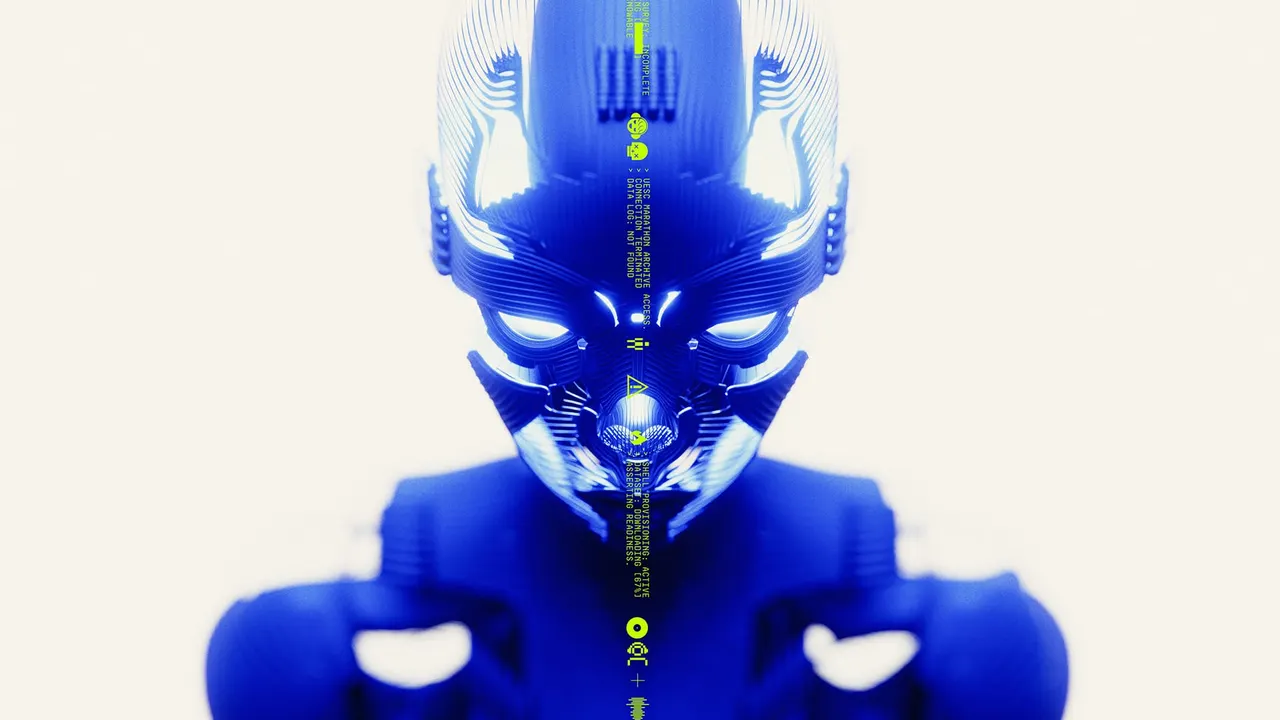
Marathon has taken over the office here at Aftermath. It's a game for sickos, and if we are anything, we are sickos. I haven't seen anything like it since we started this company; people here keep talking about it, are always playing together, we've even got a great Marathon community going on in our Discord.
Sadly I have not been quite as swept up, but just because I'm not playing Marathon doesn't mean I can't love it, for any of many reasons: its blinding visual identity, sure, as well as the general premise that despite the boardroom-driven roots in the decision to set Bungie to work on a multiplayer-only extraction shooter, Marathon is actually a game for very specific people to go very hard on. I respect that deeply.
What I love most about Marathon, though, is its soundtrack, which I simply cannot stop listening to. Even divorced from the game as it is for me, blaring through my desktop speakers on an almost daily basis, it's a fantastic (double) album in its own right, a collection of haunting space bangers that I've been playing all month long, despite the fact I have no other personal attachment to the game or each track's place in it.
Then again, maybe I'm not divorced from the game. When I see the cover art every time I click play in Apple Music, and then for the entire time the albums are playing, I'm thinking about Marathon. About its typography, its colour palette, its sound effects, its menus. And I don't even play the game, I'm just thinking about it while some music plays. What kind of audio sensory witchcraft is this?
Having not been this moved by a video game soundtrack since Black Flag and Mirror's Edge (funnily enough, another lightning-fast first-person game whose soundtrack was an electronic masterpiece), and wanting to talk about it with everyone I could find to talk to, I thought who better to talk about it with than the person who made it, composer and musician Ryan Lott, and the audio director for the game it came from, Chase Combs.
Hey guys, thanks so much for taking the time to chat with us. Let's start at the start: at what point in Marathon's development did you come on board?
Ryan Lott: I have no idea how far into the process I was invited in because games take years and years to develop and I'm honestly not sure how much was in the works before I joined the conversation. But I know that there was no gameplay to see yet. It was all concept art and narrative and lore, but that was plenty to get me going, especially given how inspiring it all was.
Chase Combs: There were early music ideas that predated me, but I didn’t want something too conventional and expected. We needed to do something different—something that would subvert expectations. I knew I wanted to take a less traditional approach and find ways to blur the line between score and sound.
So Ryan, by the time you came onboard, how much were you able to shape things? Was it a case of Bungie already having a clear vision for the soundtrack in place, and you were going to execute on that, or were you able to take a look at what they were cooking and give your own input?
Ryan Lott: Right from the jump, Chase on behalf of Bungie was extremely open to hearing what I wanted to do, what I thought would be possible, and what I thought would be worth exploring. And for me, the opportunity to discover in the creative process is a nonnegotiable. I'm not interested in coming into a project to solve a math equation that has one right answer, that everybody knows but haven't found yet. I'm really only interested in discovering unknown truths, unexplored possibilities, and the kind of world building that Marathon needed was the perfect opportunity to work those sort of muscles and to have that kind of experience.Throughout the creative process, I got great feedback from my partners at Spider Farm, who did all of the implementation and figuring out the mechanics of how all of this music was going to function. And so I also owe them my gratitude for helping me discover a lot of things I'm really, really happy with in the score that maybe I wouldn't have were it not for their feedback and their encouragement. The whole process was a joy because there was a ton of trust, and because I was liberated from the burden of having to figure out how it was all going to work in the game. Spider Farm was a great collaborator, essential for keeping me in the purely creative headspace.
From your side of that, Chase, how did things go bringing Ryan into the fold for the first time, introducing him to the game's vision?
Chase Combs: I’m not a composer, so in our first phone call with Ryan, we talked about tone, texture, and emotion. He immediately got the concept, and we were already vibing from the jump, throwing references back and forth of contemporary scores and artists we felt nailed that approach. About 10 seconds into an early draft of “Code Race,” which was the second piece he’d submitted, I had a massive shit-eating grin because I knew we had something special.
Ryan, you've obviously worked across all kinds of moods and genres in your work, but I've never heard anything of yours that goes this hard before. What was it about Marathon that had you coming up with a score that's so crunchy? And were there any other inspirations for the soundtrack you can point to?
Ryan: I've wanted to make music like this for a long time. One of the things that drew me to the project was the opportunity to express myself with these kinds of colors and sounds, which no other project has given me yet.
Chase: Probably 15 or 20 minutes of our first phone call was spent chatting about the then-new Bjork podcast where she broke down her discography. That evolved into my love of the late Jóhann Jóhannsson’s work on Sicario and Arrival, which were huge sources of inspiration when we were thinking about the soundscape we wanted for the game. The role of music in those films is so cool, and it creates an amazing level of tension and mood.
There's a point in a making-of video for the soundtrack (above) where Ryan, you say that a big idea you had was to turn the human voice into an instrument. How exactly did you do that? How did you strip a voice back, what part exactly did you determine was the shell or the soul that you would keep and loop?
Ryan: Whether I'm scoring or writing a song, I often begin by designing simple instruments from various sound sources. In the case of Marathon, I did some design using fragments of the human voice. What I look for, whether it's a cello performance, a voice or anything else, is the emotion trapped inside the sound that persists even through extensive manipulation. Because our brains are so attuned to the human voice, it is exceptionally fertile ground for pushing those manipulations further and further while still maintaining a sense of its origin.
How do you both think the soundtrack has been received since its full release? I know anecdotally I see a LOT of people talking about how they're listening to it as an album (well, double album), almost entirely divorced from any playtime or interest in Marathon, which seems...well, is that a good thing, do you think? I don't see that very often when it comes to video game soundtracks, normally they're playing off someone's love for the game/series.
Ryan: I don't spend much time in the comments section of videos or anything like that. But I have heard from friends that it has received a lot of positive reception, which is amazing. It's what you want, right? You want it to hit. And I'm glad that it is. Coming from outside the gaming world, I entered this process with some trepidation, knowing I was working in the shadows of game composers and potentially up against precedent and expectation. From the outset, I tried to ignore those thoughts and just create what I thought would be extremely beautiful, rad, and visceral. And then just hope for the best. So to hear that it's being received well, it's great. It means a lot. And I am very thankful.
Chase: Seeing the reception to the score has been overwhelming. Marathon does not have a conventional score. So, seeing the community and media response to some of the earliest glimpses we’ve shared of the score Ryan created has been incredible. What Ryan delivered has inspired the community and become a core part of Marathon’s sonic branding and identity. The number of remixes people have shared with me, and the number of questions about a soundtrack or vinyl release, is unlike anything I’ve experienced before in my career.
Ryan, you've spoken about your instruments and samples in marketing content in the lead-up to the game's release, but if you could name a single thing you got to make for the game, whether it’s some haunting vocals or a particular beat, what would you say was your favourite?
Ryan: Other than the human voice, one of the primary sound sources is my upright piano. There's no piano on the score, per se. But there's a lot of piano on the score. I prepare my piano with a lot of different types of materials, meaning I stick a bunch of stuff in the piano to change its sound. Metals, papers, plastics, and putty (like poster tack) stuck to the strings in various places to alter the sound's envelope, including its color, tuning, and overall shape. I did a rather thorough preparation of my piano in advance of working on Marathon, knowing that I would use it as a sound source. And one of the things I did early on was record myself doing a bunch of rhythmic improvisations. Those improvisations were then cut up and converted into sort of tempo synching loops and granular ideas that I could build on for the score. So, weirdly, the piano was actually a starting point for many of the cues on the soundtrack.
I also want to give a shout out to my favorite piece of music technology in I don't know how long. And it is the Osmose MPE synthesizer made by Expressive E. This synth, its expressive capabilities and the sounds I designed in its engine were absolutely essential for creating the score, enabling me to be expressive, get emotional, and improvise extensively within it. I just can't say enough about this particular instrument. Absolutely bananas amazing.


