

For a lot of anime fans, the whole “shonen meets romance” thing has either felt played out or treated like an afterthought. Still, as an enjoyer of both shonen and romance, Crunchyroll’s new anime series MarriageToxin has the promise of being a breath of fresh air to the concept—a show that cares about its love stories just as much as its fight scenes. I got to chat with the show’s director, Motonobu Hori, over email to ask how Bones Film approached adapting a manga that, in my heart of hearts, feels poised to push romance back into the shonen spotlight in a major way.
MarriageToxin, originally written by Joumyaku with art by Mizuki Yoda, is basically what you’d get if Hitch and Naruto did a fusion dance. And honestly, that comparison isn’t even a stretch—Joumyaku has said the whole idea started because she wondered how the Aburame clan in Naruto even dated, let alone found love, given the inherent ick of their bug powers.
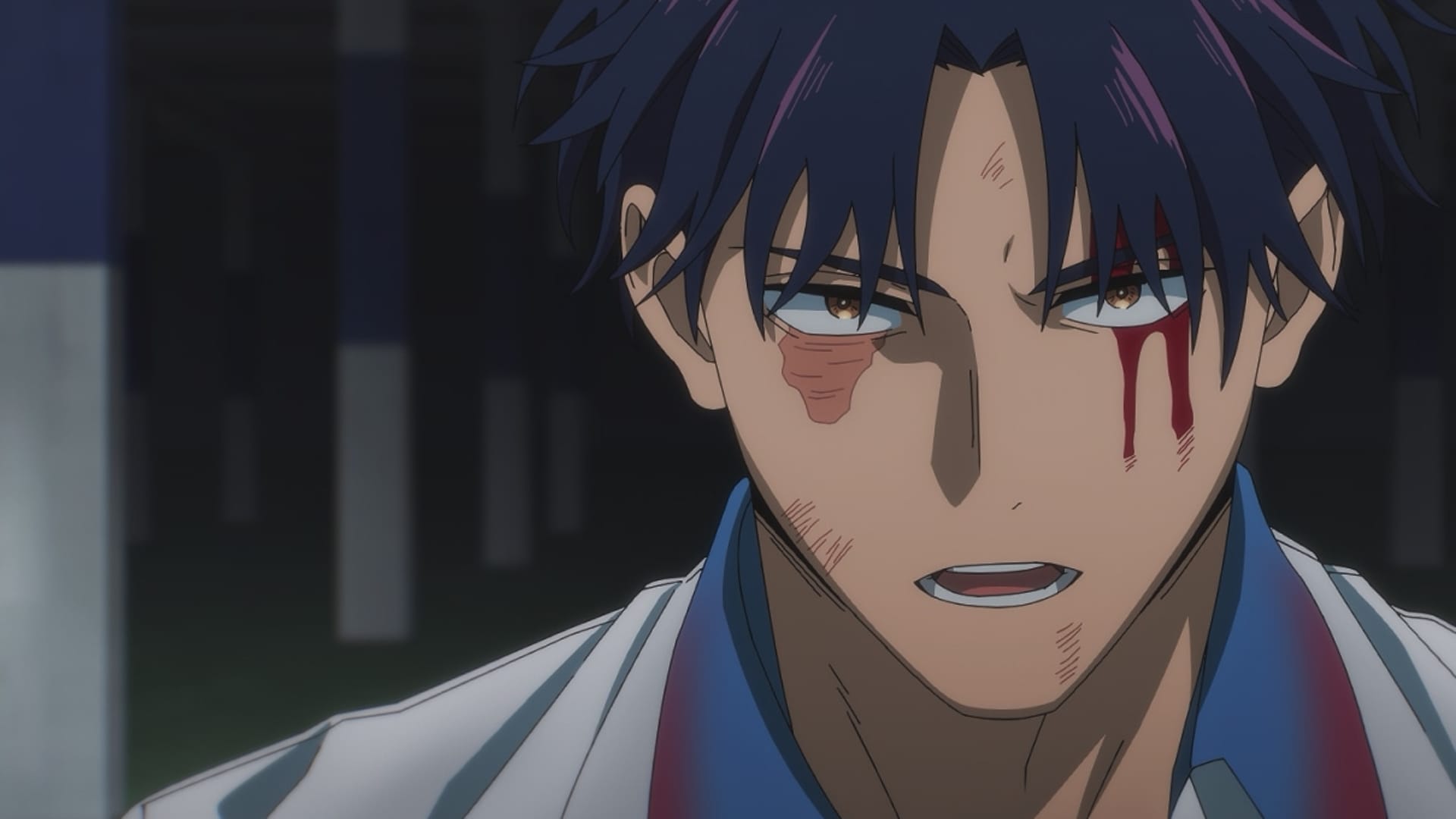
The series follows Hikaru Gero, a skilled hitman from one of the Big Five assassin families, each with their own supernatural specialties. Gero’s familial forte is poisons. Each clan stays powerful by expanding the family tree, so when Gero’s younger queer sister, Akari, gets pushed into an arranged marriage to keep the bloodline going, he steps in to take her place. What starts out as a duty out of obligation quickly becomes his own mission: to find a partner he genuinely wants to build a life with.

Luckily, the mild-mannered assassin boy’s journey to navigate his love life isn’t done all alone. Enter Mei Kinosaki, a cross-dressing marriage “swindler” who basically becomes his romance coach. What follows is a story wild with battles against assassins and meet-cute dates with eligible bachelorettes as Gero sorts out what true love looks like for someone raised in a world where killing comes easier than flirting.
When Hori first received an offer to direct MarriageToxin, he read the manga. His honest impression was that Joumyaku and Yoda’s ongoing series was “truly wild and chaotic.”
“It felt like a comedy skit that takes themes from classic Jump manga and mixes in elements from all over the place, and I found that really entertaining. Another distinctive aspect is that the protagonist’s goal is marriage hunting, and he’s an adult man at that. Not a boy, not a high schooler or middle schooler—having what’s essentially a seinen manga protagonist felt refreshing,” Hori said.
Hori also felt the series had elements reminiscent of parodies of earlier works, especially in its action sequences. Having peeked ahead on the manga myself, witnessing subsequent arcs where Tekken’s resident bear fighter basically waltzed into frame to throw hands for a couple of chapters, and Gero was air-dropped in the middle of Die Hard, Hori’s not off in the slightest. MarriageToxin doesn’t care about lanes; it just swerves into whatever feels fun, delivering madcap action sequences on par with Sakamoto Days.
“When you’re around middle school age, you can still believe that maybe you could fire a Kamehameha—I certainly did,” Hori said. “But this manga, I felt, is aimed at people who know full well that kind of thing will never happen. It’s a matter of sophistication, I suppose.”

Pedantically, MarriageToxin is a shonen harem series. Of course, a shonen manga with the promise of being a unique blend of high-energy action and sincere romance isn’t altogether novel, especially in a post-Dan Da Dan world. But rather than draw a direct connection to Dan Da Dan, which ultimately has its shojo charm limited to the nostalgic realm of high school rom-coms, Hori remembered being struck by the apt comparison in the MarriageToxin’s planning document, which described the series as “A Reiwa-era City Hunter.”
At a distance, their narrative arcs are similar enough, with a new heroine appearing each episode, a relationship budding between her and the protagonist, but Gero is a far cry from City Hunter’s lecherous hero. Compared to City Hunter, Hori says MarriageToxin never feels uncomfortable because Gero is a genuinely likable protagonist.
“Ryo Saeba is very forward and uninhibited with women, but Gero in this series is extremely shy—practically the opposite. On top of that, he’s a character who naturally embodies a modern sense of social awareness,” he said.

Similar to how Witch Watch found success in being a self-parody of the overture of the Shonen Jump in a comedic package, MarriageToxin also finds its success by parodying the genre’s rom-com tropes while deftly avoiding the pitfalls that would give modern audiences the ick.
“Quite a bit of time has passed since social awareness became a priority, and for today’s young readers, these values are simply the norm they’ve grown up with. Because of that, when an overly brash or inconsiderate character appears, it can actually be jarring. But in this series, those aspects are handled very naturally, so readers can take it all in without any sense of dissonance,” Hori said. “That’s what makes it feel so current, and it’s the aspect that made me think, ‘This is the future of manga.’”

Hori’s background as a director is in grounded, realistic series. However, MarriageToxin’s particular blend of fitsticuffs and butterflies is no biggie to Hori because according to him, he’s cracked the code. The secret ingredient behind romance and fighting is communication.
“For example, each technique a character unleashes comes packed with backstory—this technique carries this particular drama, tied to the character’s past, their training, who taught it to them—and they ‘release’ it,” Hori said. “Then the person on the receiving end starts having flashbacks too, saying ‘I have my own circumstances,’ and counters with their own technique,”
“That’s how these exchanges unfold. So I see this as a form of communication,” he continued. “Jump manga in particular may take the shape of combat, but at its core, I feel it’s really about communication. With this series as well, I don’t really feel a major difference between the romance scenes and the battle scenes. The means are different, but in terms of both being acts of communication, I think they’re fundamentally the same.”
When it comes to Gero’s eligible bachelorettes, Hori had a harder time picking a favorite.
“When I first read the source material, the character I thought ‘I really like her’ was Arashiyama. She’s bright and very charming,” Hori said. “But once you’re actually in production, you end up thinking deeply about each character, and you inevitably develop affection for all of them. You start to appreciate what makes each one special. It might be a safe answer, but that’s how it is.”

One quality of MarriageToxin that manga readers swear by is that, despite the series appearing heteronormative on the surface, it is also inherently queer. After all, its entire premise kicks into gear as Gero safeguards Akari’s relationship and her autonomy as a queer person—a core theme in the manga that reflects the reality that same-sex marriage is still not recognized in Japan. The series also features a prominent cross-dressing character in Kinosaki, who is refreshingly never turned into the target of a tired joke.
Tamifull had always said she wanted the How Do We Relationship to coincide with an ending where gay marriage would be legalized in Japan. While that's yet to come to pass, it's nice to see the girls dressed up for the occasion. https://t.co/W0fCxGV2le https://t.co/63kN5feLpQ pic.twitter.com/TbfOxlD6JH
— Isaiah D. Colbert is on Bluesky (@ShinEyeZehUhh) April 6, 2026
As a married man himself, Hori believes that MarriageToxin’s praise as a Shonen Jump series that mirrors the realities of its queer audience isn't because it loudly proclaims its themes with the same bombast of its action sequences; it’s because it doesn’t make a big fuss over all.
“When you consider getting married in today’s world, at some point you ask yourself, ‘Why am I getting married?’ There are certainly things you gain from marriage, and there are many aspects that enrich your life experience. But those are things you can only really understand after actually being married,” Hori said. “So even if I tried to explain it to my past self, I think all I’d be able to say is, ‘You won’t know until you try.’ At the same time, I completely understand the feeling of questioning marriage. I went through that myself.”
With this mindset, Hori says that a marriage theme in the modern era will naturally tend to consider relationships in different forms, whether they are same-sex marriages or relationships that don’t fit neatly into the heteronormative framework.

“With this series as well, I felt those elements were woven in very naturally,” he said. “They’re not forced in to make some strong statement—they exist with the sensibility that ‘if you’re going to make marriage your theme, this kind of diversity is simply a given.’ They’re present without drawing undue attention to themselves.”
“Gero himself doesn’t treat any of it as something special—he accepts it all very naturally. I think the way it’s portrayed is very well done, and there’s nothing that feels forced or artificial. If anything, I think the very act of portraying these things as ‘simply being there’ is itself a message,” Hori continued. “Not making a big deal out of it, not treating it as something extraordinary, but presenting it as one of many options that naturally exist. The fact that it’s depicted as something as natural as turning on a faucet and having water come out—I think that’s a really good thing.”
Every anime adaptation comes with the challenge of meeting fans' expectations. An anime adaptation can’t settle for treating its source material as a storyboard for its animation, and also can’t mail it in with a work that essentially acts as a slideshow of manga panels. This is doubly true of shonen manga beloved for their action—a pressure point Hori felt throughout the production of MarriageToxin.
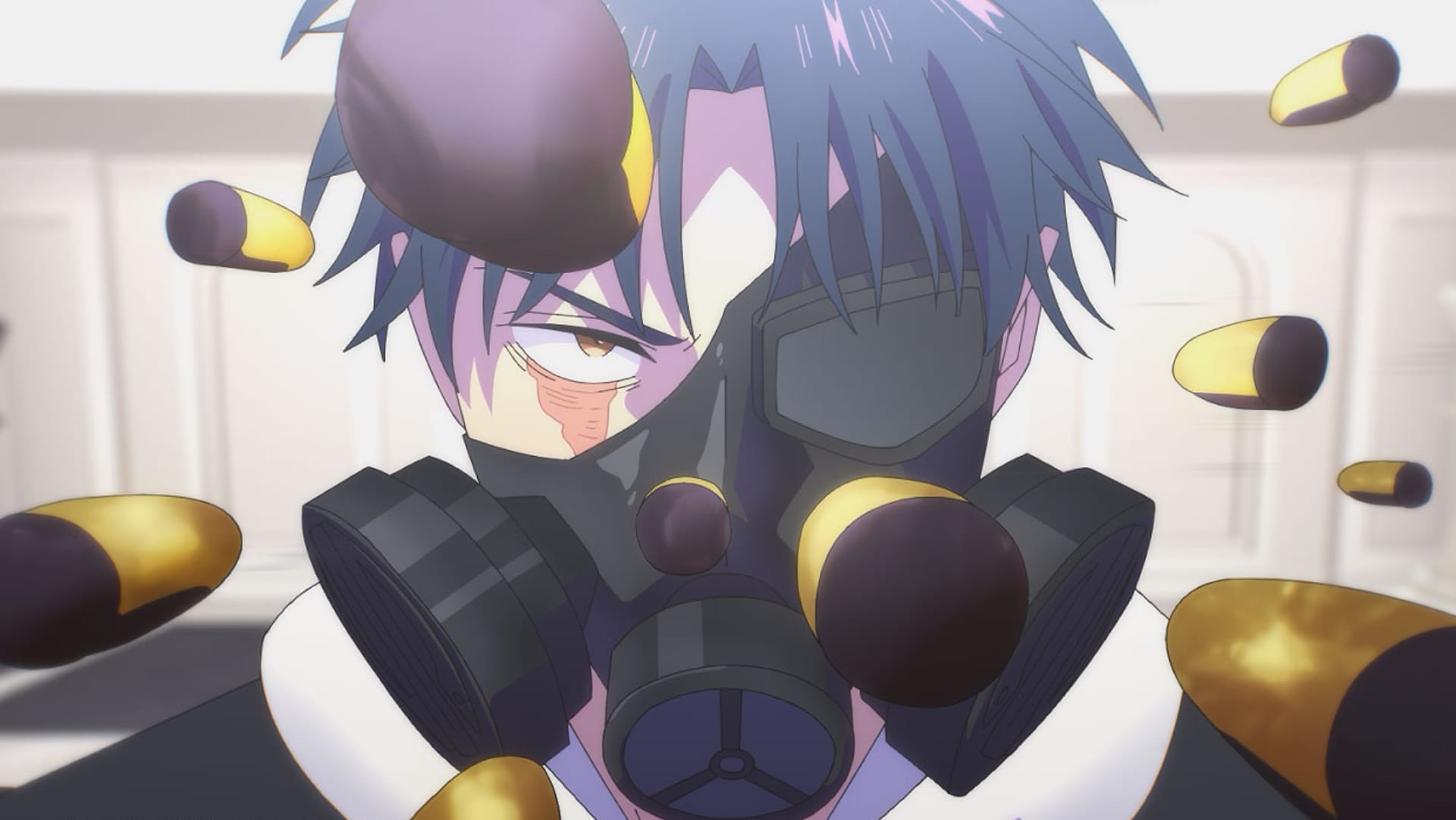
“The sheer volume is immense. It’s action almost the entire time—it feels like about 80% of the show is fighting. It’s essentially nonstop combat. The only moments without action are the brief scenes before an episode’s arc begins, like meeting a client, and once an episode’s arc kicks in, the action just keeps going. I’ve worked on plenty of high-calorie productions at Bones, but even among those, this one is in an extremely intense category,” Hori said.
“On top of that, our policy is to ‘animate it exactly as readers imagined it,’ which is itself a kind of risk in a way. Honestly, part of me wants to get away with as little movement as possible… but as a viewer, you want action to really move, right? So we’re deliberately taking that risk and rising to the challenge,” Hori continued. “I’ll admit I had some anxiety—like, ‘Even for Bones, can we really handle this much action?’ and ‘Will we actually be able to assemble enough staff?’
Thankfully, Hori is no stranger to directing an anime. A look at his bona fides shows got some notches in his belt, having served as the on-site director for Shinichiro Watanabe’s slept-on, uber-prescient music anime, Carole & Tuesday, and as a director on Bones’ cyberpunk Crunchyroll series, Metallic Rouge. Granted, rather than feeling like he’s put his own artistic visions front and center, having started his directorial career at Bones, he’s felt his know-how as the person “refining the ideas of supervisors and original creators” is the know-how he brings to realizing MarriageToxin as an anime.
Of course, even with the talented animators at Bones Film, who excel at shows like Gachiakuta, My Hero Academia: Vigilantes, and Hiromu Arakawa’s Daemons of the Shadow Realm, Hori still aimed to set Bones Film apart from its contemporaries by improving quality, maintaining smooth production, and releasing cohesive work that elevates adaptations while understanding that resources are especially limited for serialized shows. His secret ingredient for adapting MarriageToxin was color.
“Animation involves an enormous amount of drawing, and no matter how much you talk about wanting incredible animation, it doesn’t happen if there aren’t people actually doing the work. But with color, the effort required is the same regardless of what color you paint. That’s precisely why the right combination of colors can dramatically elevate a work’s impression,” Hori said.
“Some productions recently have started bringing in dedicated color script specialists, but I’m also mindful that this can potentially encroach on the roles of the existing color design and art direction staff. Of course, bringing in a specialist will make things look great, but I also have a strong desire to build things together with the team already on the floor and have everyone share in the sense of accomplishment,” he continued.
“Serialized productions have a marathon-like, physically demanding aspect to them, and introducing too many new elements can throw the production floor into confusion,” he said . “That’s why I try to update the approach to color and color philosophy while implementing it in a way that doesn’t burden or frustrate the team. I feel like the know-how for striking that balance has been gradually building up over time.”
It also didn’t hurt that Bones Film worked in close collaboration with Joumyaku and Yoda, who, Hori says, attended every single script meeting without fail, consulting with the crew on handling the nuances of expression and making changes to more effectively realize the manga in a new medium.
While Hori acknowledged that the manga itself references other Shonen Jump works quite a bit, he didn’t deign to attempt to reference any specific work himself in directing the show. Instead, he aimed to “evoke the energy of classic action anime that lives in viewers’ memories.” However, when I asked him if he found any inspiration outside of the medium while directing the series, his response was as “dude’s rock” as it gets.
“As for inspiration for that wild, chaotic feel, I did look a bit at Indian cinema like RRR. Those films have this incredibly serious visual intensity, yet what’s actually happening is completely outrageous and absurd,” Hori said. “That gap—doing absolutely wild things with a dead-serious presentation—is something I wanted to incorporate a bit of, and it’s something I’ve been conscious of.”
Hori joked that the legacy MarriageToxin might leave as a shonen is predicated on the assumption that Bones Film ends up making an anime good enough to even leave a legacy.
“We’re still in the middle of production, so even I’m only half-convinced at this point,” Hori laughed.

While a marriage-seeking assassin is an unconventional premise by Shonen Jump standards, even if Bones Film excels with the romantic themes, action, and queer elements of MarriageToxin, Hori noted that there are similar works, like Patalliro, that Japanese audiences might compare it to, stating, “Oh, that’s been done before.”
Still, he thinks Bones Film has a dark horse on its hands with MarriageToxin.
“What makes this work interesting is that rather than being some niche, art-house piece, it’s aiming to be straightforward, enjoyable entertainment,” he said. “If an entertainment work that naturally incorporates these unconventional elements can be completed to a high standard, be enjoyed by everyone, and become popular—that carries real significance.”
MarriageToxin premieres on Crunchyroll on April 7.


