

It’s been 58 years since Meiko Kaji started her career as an actress, 53 years since she changed the perception of a female heroine in Lady Snowblood, 45 years since she first arrived in New York City. This time she visits as part of a career retrospective celebration hosted by Japan Society, which serendipitously took place a week before she marks her 79th year on Earth. Like the protagonist in Satoshi Kon’s Millennium Actress, looking back on it all, Kaji tells me she’s just as stubborn and ambitious to continue to star in new projects that move her, even though she’d never dreamed of becoming an actor in the first place.
“I was actually scouted off the street, and that was my beginnings as an actor, so I wouldn’t say that it was of my own will,” Kaji said over Zoom. “There was at no point did I—when I was younger—want to become an actor, or was I even interested in becoming an actor.”
Only after she was scouted did Kaji, still known by her real name, Masako Ota, become interested in thinking about what it meant to become an actress. That time was through a trial by fire.
“I was starting from not even a place of zero. I was starting from like, negative one. I didn’t understand a single thing about acting or the film industry,” she said. “Not only that, I didn’t know what I didn’t know, so I couldn’t ask questions.”
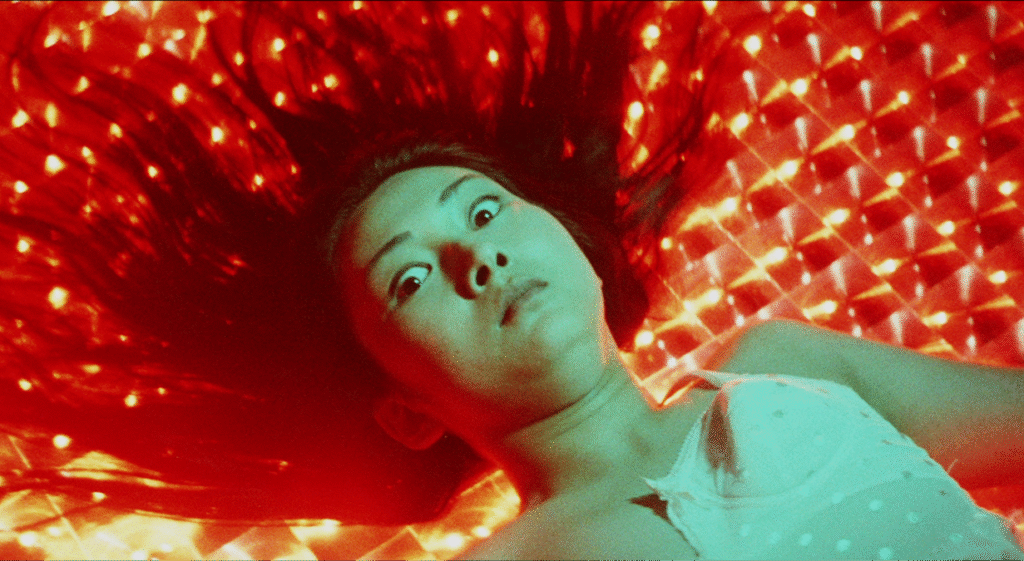
Once Kaji entered the studio system—a place governed by strict rules about what kind of actor you were allowed to become, and churning out two films a week across its own theaters in the hopes of producing 8 films a month—she found herself cast in seven productions during her first year. Tested across genres and relied upon to help keep the studio afloat, she began to question whether the life of an actress was truly hers to claim.
“I have to say, I became quite numb to the process. It wasn't even that I thought I was struggling. It was just something that I had to do,” she said. “So I really never thought about my own desires or my own will. And if I were to go up to a higher-up or a director and say, ‘This is the kind of thing I want to do’ or ‘This is what I don't want to do,’ they would just look at me and say, ‘Well, quit and try your luck elsewhere.’ But I did know that anything that was put in front of me, I would go for it.”
Kaji is careful not to romanticize the grind she survived; she knows the cost of those early years too well. But she also believes those early struggles can teach more than they take, especially for young actors thumbing through her filmography.
“These films last forever, and if you wanted to go back and watch them today, you could. So, oftentimes, there are people that are very young in their teens and twenties that show up to set and say, ‘Let me do any work here. ‘I want to become an actor,’ and ‘Let me just observe on set,’” she said. “What I tell these young people is to watch my early films. That they should see that my acting in these films is such a disappointment that perhaps it'll give them some kind of confidence to go their own way with their career as an actor.”
Finding her role in cinema
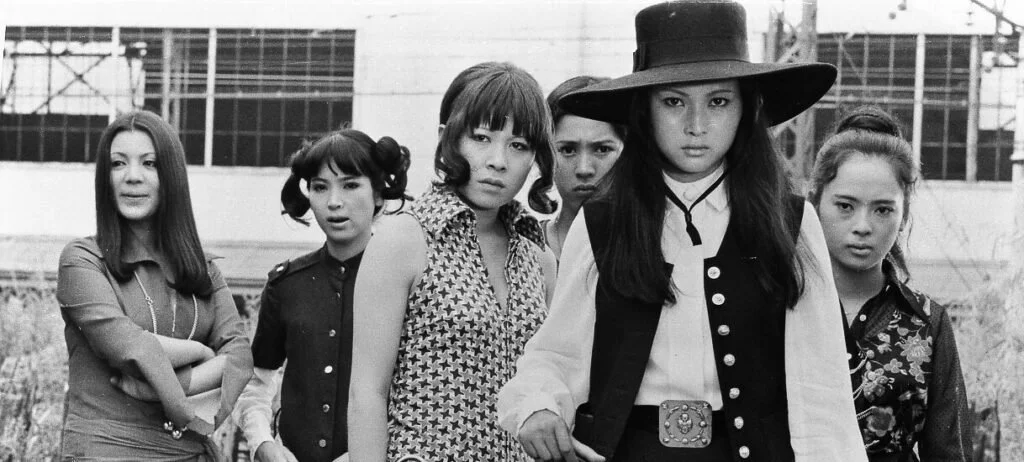
Over time, Kaji—both actress and occasional singer—carved out her niche by playing a constellation of outlaw heroines across ninkyo eiga, pinky-violence films, yakuza dramas, and arthouse films, giving voice to women who lived defiantly on society’s margins. Her roles include the vengeful Nami "Scorpion" Matsushima in Shunya Ito’s The Female Prisoner Scorpion series, ex-con Nami “the Red Cherry Blossom” Higuchi in Kazuhiko Yamaguchi’s Wandering Ginza Butterfly, and most famously, the incandescent Yuki from Toshiya Fujita’s live-action adaptation of Kazuo Kamimura’s namesake manga, Lady Snowblood.
When I asked whether her early filmography reflected the woman she was behind the scenes, Kaji admitted that some of those roles did mirror a certain rebellious spirit. Her refusal to fail and not easily crumble under pressure, even if it meant quite literally delivering a knock-out performance in a single take.
“There was a film that I was in that was about a wartime story, where there were a lot of young university students who were appearing in it, and also many people who were in the army, and the director looked at me and said, ‘Do you see that soldier right there who has the glasses on?’
And I said, ‘Sure.’ He said, ‘We have one take to do this. Can you go up to him and punch him so hard that his glasses fly off his face?’ It wasn't like I was confident that I could do it, but I knew that I had to give it my best try. So, I did the take. I punched him, and his glasses flew off his face, and it was as if I passed the test,” she said.
Addressing the Tarantino in the room
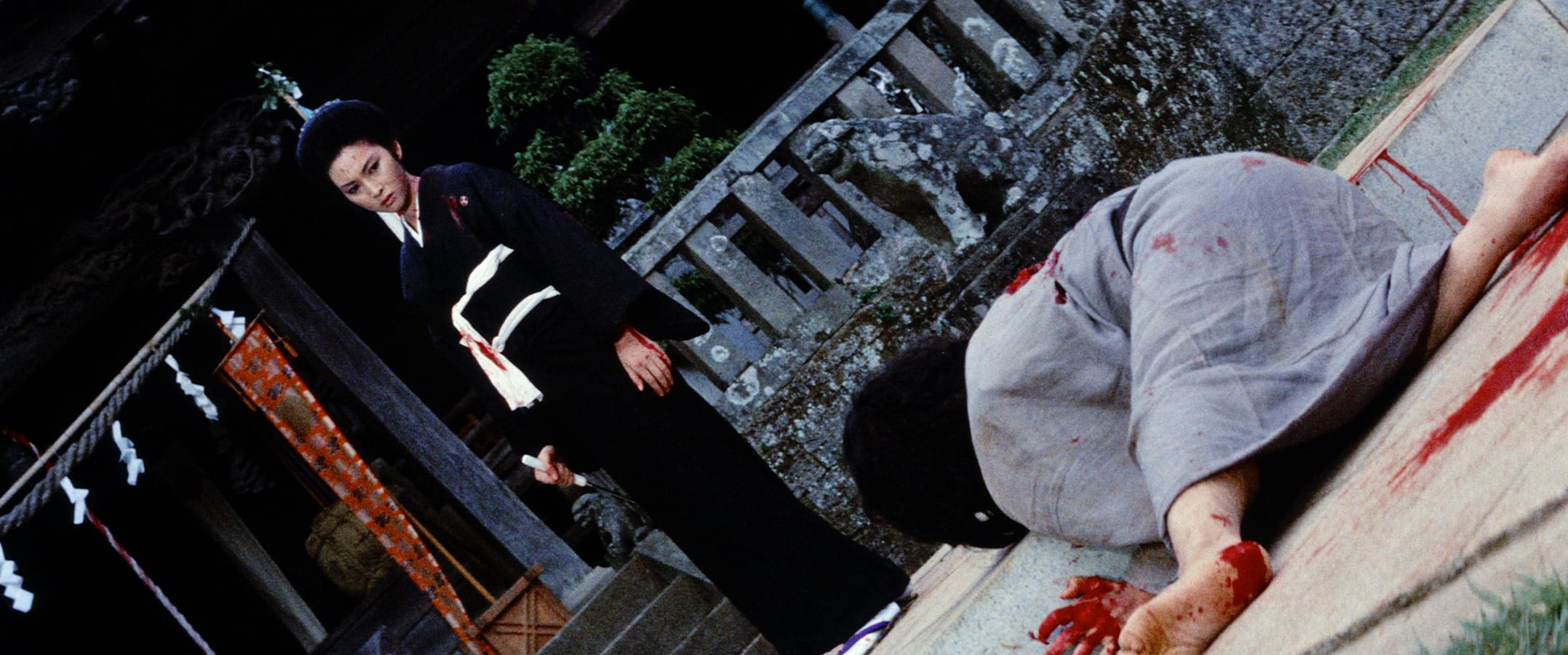
It’s impossible not to talk about Kaji’s career without invoking Lady Snowblood in a meaningful way. After all, it's a movie in her filmography whose aftershocks still pulse through pop culture in animated works like Blue Eye Samurai, video games like Ghost of Yotei, and anime like Jujutsu Kaisen. It’s also a film most likely to spark an “Um, actually” correction online because many Western viewers first encountered its style filtered through Quentin Tarantino’s Kill Bill.
Depending on your level of generosity, Kill Bill either pays homage to or outright lifts the entire flow of Lady Snowblood. And while her fans have spent years defending her legacy in the comments, Kaji tells me she holds no hard feelings about any of it. Quite the opposite. She considers Kill Bill a complete homage to Lady Snowblood.
“When I met Tarantino, I thought of him as such a wonderful person. He told me that his method is to take the good parts from all the films he likes and steal them. When he said that with such honesty, I actually found it quite courageous and confident,” Kaji said.
“He told me that, with Japanese film, he was aware of the artistry and the beauty of films from directors who worked at Shochiku, people like director Keisuke Kinoshita, for instance—the kinds of films that are slow and quiet. But he said he recognized that he could never make films like that,” Kaji said. “I was struck by his honesty, and I certainly never felt like it was an unpleasant experience to hear him speak so honestly, so I would definitely never call him a thief.”
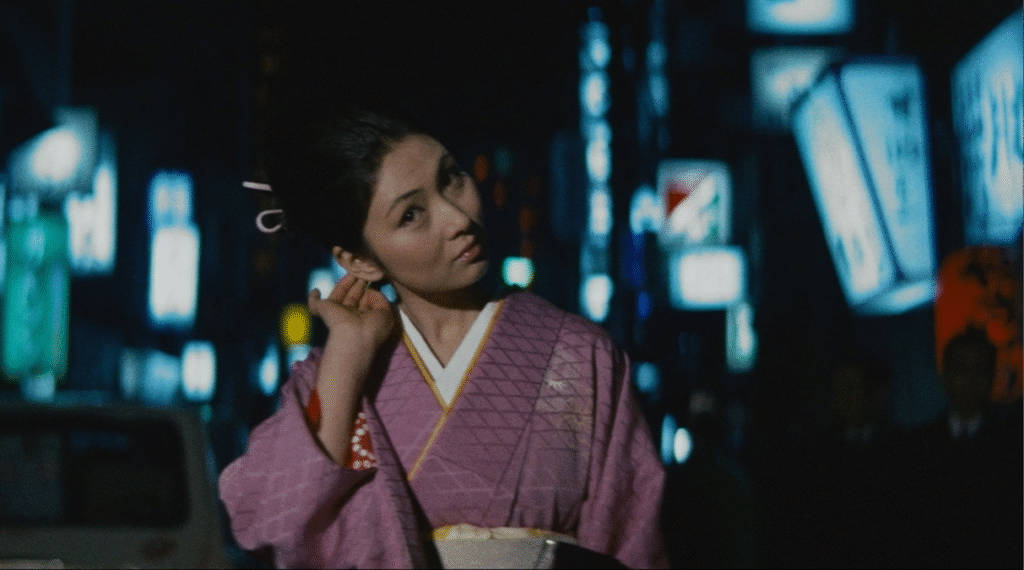
While she was on a television show with some of the Japanese actors from Kill Bill, Kaji recounted hearing a set story about a monitor playing Lady Snowblood, “basically the entire time that they were working” and how Tarantino would point to the screen and say, “That is what I want to make, and you as actors have to act accordingly.”
While promoting Kill Bill Japan, Kaji recalled meeting Uma Thurman and Lucy Liu in a full-circle moment she never expected. Excluding Lady Snowblood, Kaji had long viewed her earlier films as lessons in what not to do as an actor, yet here were two Hollywood stars admitting they'd watched an early performance of hers“to the point that they were completely tired of it,” as a sacred artifact to shape their own work.
Hearing that her Lady Snowblood performance had become a hallowed touchstone made her genuinely happy. It proved her hard work had carried the film into an immortal afterlife of homage and influence. That's the kind of pride most actors would spend the rest of their careers chasing. She managed to do it in her seventeenth film.
Finding Masako Ota in Meiko Kaji
When a single role becomes as mythic as Lady Snowblood or Female Prisoner Scorpion, it can cast a long shadow, eclipsing the full breadth of an artist who has worked as hard to make a name for herself as Kaji has for the past sixty years. Especially when those halcyon days of her career were a pressure cooker.
A very special visit from legendary actor Meiko Kaji! ✨
— Criterion Collection (@Criterion) March 31, 2026
Catch an ongoing retrospective celebrating her work at Japan Society in New York through April 4, or see her in person at Beyond Fest's Chicago edition this weekend for a screening of LADY SNOWBLOOD. pic.twitter.com/4WWGFxjvSl
She laughs now at how her early career was pure “take whatever you can get,” yet those very roles ended up feeling like winning the lottery in retrospect.
“Honestly, when I was younger, I kind of hated walking down the street and being called Scorpion all the time because of that role,” Kaji said. “But as I got older, I continued to learn how the roles of Female Prisoner Scorpion and Lady Snowblood are actually such treasures to me.”
ニューヨークに着きました!
— 梶芽衣子公式 (@meikokajioffice) March 28, 2026
ジャパンソサエティー、これより梶芽衣子特集、始動です!!
I arrived NY! At the Japan Society, the Meiko Kaji retrospective kicks off now! pic.twitter.com/ckv8g64Le5
What began as a career fueled by pure survival on an off chance scouting eventually has aged into an answer to all those questions she never felt she knew enough to ask at the start of her storied career. As she continued acting, Kaji developed a sense of gratitude for how she learned the craft of acting. Now Kaji sees how the directors and staff made magic in a crucible to immortalize a young woman doing the best she could with what she had.
“It's very difficult to make films that can endure the test of time,” she said. “And so it's an honor for me to play those roles, and there's really nothing more that I could wish for.”
And that hunger hasn’t dimmed with age—if anything, it’s sharper now than it ever was.
“When I chose to go down this line of work, I talked to my father, and he told me that when a person enters into a society as a working person, their first job is something that is meant to be taken very seriously, and that through your work in this job and through the years that you attempt to do it, you will find meaning,” Kaji said. “Now that I've had a 61-year career, I think back on my career, and I'm not sure if I was able to take it as seriously as my father had told me to. But I do think it was a success, and I'm very satisfied.”
"I’m full of life because as you know, a Scorpion never dies" https://t.co/iyYx2NRCxy pic.twitter.com/u2OWSHM1Uz
— k (@funfairevening) March 30, 2026
It’s easy for movie fans to define Meiko Kaji by her stillness, the steely gaze, the quiet intensity of her presence, which has shaped cinema’s visual language, proof enough that she’s always had the makings of an actor. After nearly sixty years, she’s answered that question for herself, thanks not to the myth of Meiko Kaji but to the stubborn ambition of Masako Ota.
“I always have a person that's behind me, kind of pushing me, and that is myself,” she said. “I'm in constant battle with myself. If I find myself being a little lazy, there's that person behind me who says, ‘What are you doing? You still have so much more to do,’ and ‘You have so much more to learn.’ I can't go against myself.”
#MeikoKaji singing “Shuru No Hana” (Flower of Carnage) at @js_film_nyc #梶芽衣子 #修羅の花 #修羅雪姫 #ladysnowblood #killbill pic.twitter.com/Bd1Ew1ISCj
— David Powers (@flexmagnificent) March 29, 2026
Even with all the motion her name carries in cinema, Kaji doesn’t look at the future in terms of big roles or small ones. She’s interested in whatever feels new, whatever keeps her moving. Even if she’s been more active in her singing career as of late, that doesn’t mean she’s ready to call it quits as an actor.
“I want to go for any film role that's offered to me that's interesting, with the intention of creating yet another role that feels like a treasure to me, just as those previous roles have been,” Kaji said.


