

This morning, The New York Times provocatively declared “good riddance?” to the MetroCard, New York City’s transit pass that has been in use since 1994. The MTA, NYC’s transit authority, has been rolling out a new system, OMNY, which you can pay with your phone or by tapping a card rather than swiping. No one would disagree that the rollout has been a disaster, but New Yorkers are torn on whether OMNY represents a brave new technofuture or the death of a small piece of the city’s soul. I am in the latter camp, in large part because the OMNY card machine sucks.
And look, I get that you aren’t supposed to need the machine; you’re supposed to connect OMNY to your phone or bank account and never have to refill it again. The classism here is obvious–what if you don’t have a smart phone or a bank account?–which is why I appreciate that an OMNY card can also be filled with cash like a MetroCard. That is the only way I personally have used it: While the MetroCard is still accepted until the end of the year, I was forced to convert to the OMNY card a few months ago when the last MetroCard machines finally vanished from every station in my neighborhood. I am old and contrary and do not want to pay for anything using my phone, and I was also turned off enough by horror stories of glitchy OMNY cards to refuse to give it access to my bank account, so I shove my wrinkled dollars and random coins into the new machine and then live with the mystery–which the MTA might fix–of never knowing how much money is on my card when I use it, because the new OMNY gates don’t show your balance the way the MetroCard reader did.
This means I am frequently confronted with the OMNY machine. The OMNY system is designed by Cubic Transportation Systems, which administers several cities’ transit and also dabbles in military contracts and surveillance (another good reason, especially these days, to put cash on your card). It’s a squat machine with a giant touch screen, and if you ask me the whole thing looks like a scrunched-up face, like it’s a little disgusted that you’d dare to use it. It has a silver case accented with dull gray plastic, with tiny cutouts for your coins and credit card but, in its favor, a very obvious area where you tap your OMNY card to start the interaction. I don’t know why the machine is so small; in the stations near me, single OMNY machines huddle in the cavernous spaces where multiple MetroCard machines once stood, looking outmatched and adrift. It is easy enough to use, when it’s working–I have frequently encountered machines that aren’t taking payments–but as I get used to it, its blank, undifferentiated surface sometimes leaves me casting around for where I need to interact with it as if I’ve never used a transit fare machine before, when I have lived in this city for over 20 years and feel like I need to make a big show of that fact as I wave my hands around the OMNY machine in angry bafflement. Using it is perfunctory and commonplace, but it does–or is supposed to–translate your money into public transit rides.
Contrast that to the MetroCard machine, designed by Antenna. The New York Times pointed out that the MetroCard machine got an exhibit in the Museum of Modern Art in 2011, and I can see why. The MetroCard machine takes great pains to make its affordances obvious: color-coded areas for your money, card, and change. It’s got raised surfaces and big rounded edges; dated, sure, and a little reminiscent of a kid’s toy, but all of it guides your eyes and hands through the process of using the machine. Unlike the OMNY machine, it wants you to use it; its size and bright colors grab your attention and draw you to it in the station. And look, all of us know the pain of endlessly poking at a non-responsive touch screen, a problem I have not yet had with an OMNY machine, either because the OMNY screens are better or because millions of New Yorkers’ grubby hands haven’t broken them yet. And I’ll acknowledge that all of us know the frustration of facing a row of broken MetroCard machines when we’re trying to get somewhere. But the MetroCard machine is cheerful and welcoming and distinct. It looks robust, like a functional public object should. You’re walking here, it seems to declare. Let’s walk here together.
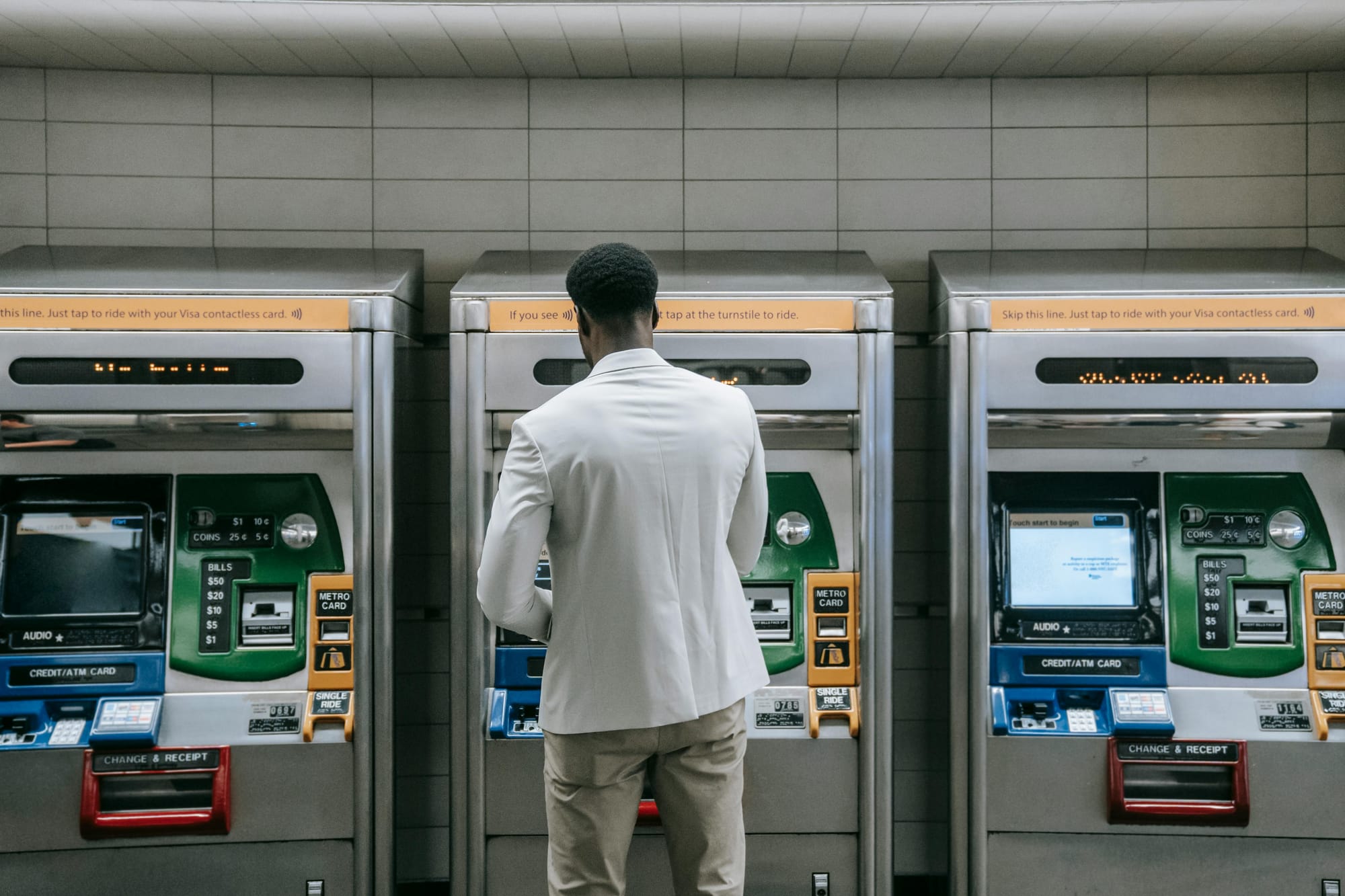
The OMNY machine does not want to walk with you. The OMNY machine looks like some mixup with its secretary reduced it to mingling among the masses and it just wants to hide in a corner of the station reading The Wall Street Journal on its phone until someone from corporate comes to pick it up in a car. It doesn’t want to be an object; it wants you to have done all this online, but it’s been reluctantly conscripted into existing in the physical world with you. It wants to downplay its nature as a machine and be as seamless an item as possible between you and the lonely, weightless Tronscape of cyberspace. But don’t we live that way enough?
This weekend a friend and I went to the New York Transit Museum, which currently features a farewell exhibit for the MetroCard. We strolled the cases of old MetroCards saying “I remember this one!” and reminiscing about when we used to use tokens (which I also clung to until the last possible moment), and the experience did remind me that New York is a city of change. It frequently demands you move out of your comfort zone, leaving behind apartments, friends, and favorite haunts as the city transforms and the world spins on. But the one constant in my time in New York has been being in New York: not on my phone or on the internet, but in the physical city with its chaos and bustle and opportunity. The MetroCard machine was a machine for the real world, a gateway to touch and interaction and weight. The OMNY machine, despite being a transit machine, just seems to want me to stay home.
I’ll admit the OMNY card itself is a step up from the flimsy, losable MetroCard, and that tapping is easier than swiping, if so far not terribly less error-prone. (A personal quibble: the OMNY card does not fit in my wallet as neatly as my MetroCard given its girth, making it annoying to take out and put away.) I’m sure the MetroCard will slowly fade from my vocabulary, and that I’ll get used to the OMNY card and its bullshit machines. But this adaptation will take a piece of my soul with it, as so much change in the city has. You will never be my real dad, OMNY card machine, and I will never love you.


