

Sensei Sergio moves with purpose, instructing people to follow plans that were clearly laid out well in advance. He appears to be listening to no one and yet is aware of everyone. If the resistance is a sprawling organism, then he is its lungs, bringing with him a steady cadence of oxygen, a rhythmic expulsion of the chaos that can poison. He makes no proclamations. He is simply about The Work.
As Slate’s Sam Adams wrote in this consideration of actor Benicio del Toro’s performance in One Battle After Another for the New York Film Critics’ Circle awards:
In the midst of a story about would-be revolutionaries agitating for sudden change, Sergio embodies the opposite - not acquiescence, but methodical, sustained resistance. Unlike the French 75's headline-grabbing pyrotechnics or the Christmas Adventurers Club's sinister cabal, Sergio's "Latino Harriet Tubman situation" has no name, no manifesto or underground lair, just a wide-spreading network of people waiting for their moment to do the right thing.
In a little over a month, One Battle After Another will be recognized across a dozen Oscar categories, including a nomination for del Toro’s Sensei Sergio. That the film, which follows resistance movements and revolutionaries of all sorts, could garner such nominations and be considered a favorite to win many of the awards it’s up for, feels significant in a moment of American history when citizens log on to social media every day to see normal damn people enduring a sustained campaign of violence from an unaccountable secret police force roving their streets and abducting and murdering their neighbors. They are also seeing people who look like them learn to not just fight back with whistles and marches and costumes, but protect one another.
In an entertainment landscape dominated by efforts to exploit intellectual property in increasingly shallow ways, a work that speaks to this moment so vividly feels like something that shouldn’t happen, at least from a major Hollywood studio.
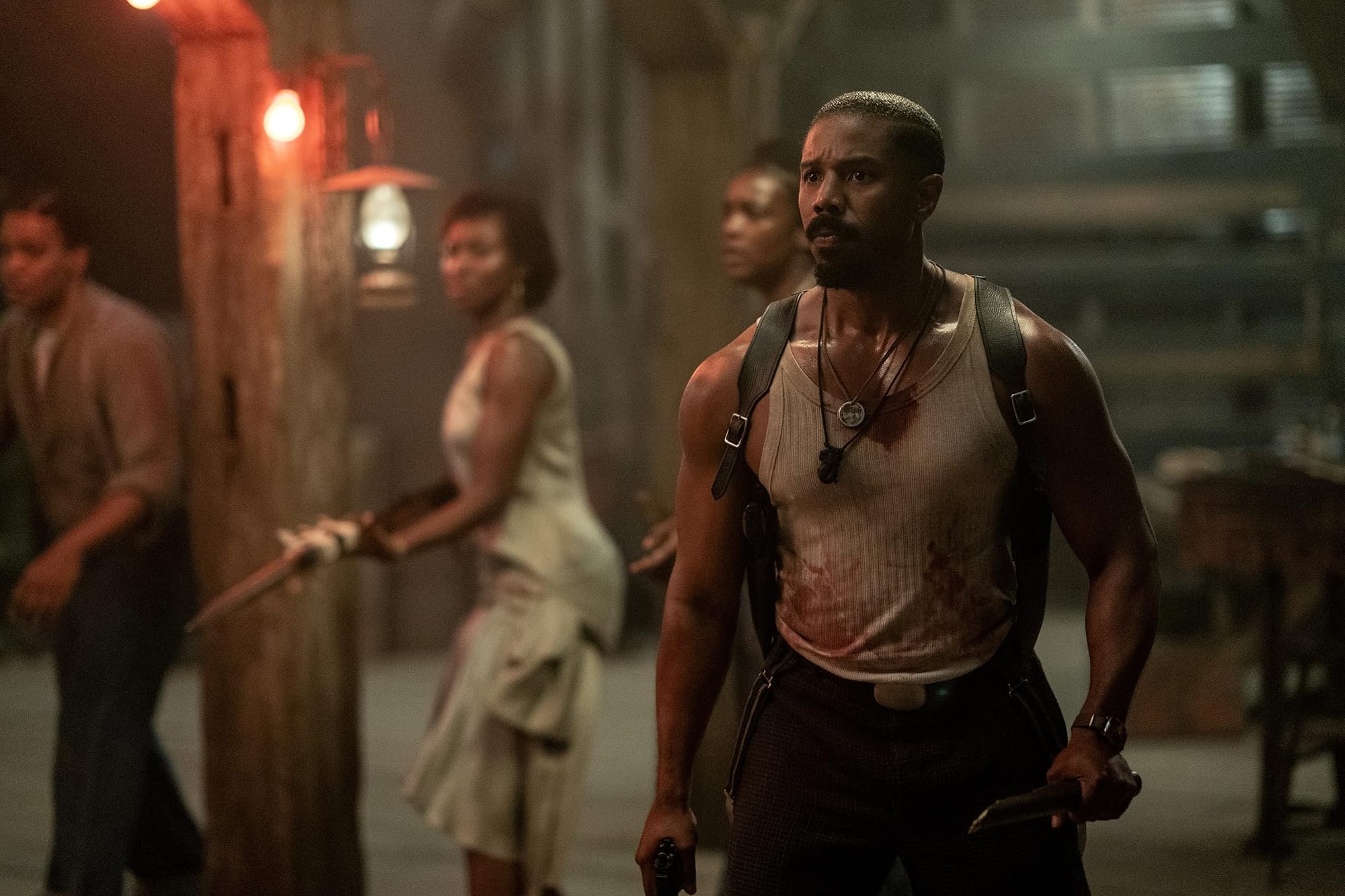
But here’s the strange part: One Battle After Another is not the only one. Many of this year’s Oscar nominations are uniquely concerned with resistance. Sinners, which leads the pack with 16 nominations, explores this in a multitude of ways outside the direct political confrontation of One Battle After Another. In his layered Mississippi fable, writer-director Ryan Coogler frames the marginalized’s efforts to make a space for themselves to make merry, make music, and make love with one another to be an important part of the work itself. In a move that garnered undue criticism, Coogler underlined this theme by negotiating that the ownership of the film fully revert to him after 25 years — which led trade publications to spend weeks undercutting the film’s financial success, expressing open pessimism at Sinners’ ultimate profitability. Sixteen Oscar nominations later, it is effectively the success story of the year.
And these are just the two most-nominated films. Meditations on resistance can be seen all over the ballot. The Secret Agent, Kleber Mendonça Filho’s daring, deeply humane thriller, makes a surprising and sudden pivot from tense cat-and-mouse game to a moving rumination on how remembering the stories of those who stood up to authoritarian regimes — win, lose, or draw — is also part of The Work. Frankenstein, Guillermo del Toro’s loving rendition of Mary Shelley’s gothic classic, depicts a creature coming of age (and rage) in opposition to a creator who embodies the worst of masculinity, all ego and power and no responsibility. Jafar Panahi, the Iranian filmmaker whose entire career has effectively been an ongoing campaign of cinema-as-resistance, has once again been nominated for an award he may not be able to accept. His film It Was Just an Accident is a tragicomic dilemma about whether or not one can move on after the fight is over and you have survived — as did those who oppressed you.
Award shows are statements. A work recognized by an institution with industry clout sets the bounds of what is acceptable and worthy of recognition within that industry. An award can be a bar to clear or a standard to rail against. It’s what a majority of luminaries are comfortable saying represents them, their field, and the potential of their craft. These are political concerns first — “political” in the intra-group dynamic sense — and artistic ones second.
It’s notable, then, when a nearly century-old institution like the Academy of Motion Picture Arts and Sciences nominates a slate of films that are openly working through ideas of resistance and revolution. And it’s meaningful that those movies aren’t just symbolic nominations, but favored to win big.
In some ways, you can read resistance into most art. The word is synonymous with conflict, after all, a fundamental aspect of storytelling. Something is demanded of a protagonist. The protagonist says no. Basic Joseph Campbell stuff. Hero's journey, and all that.
Or maybe the audience expects a certain structure, or presentation. And the filmmaker, like If I Had Legs, I'd Kick You director Mary Bronstein, says no. You will not see the face of protagonist Linda's (Rose Byrne, up for Best Actress) daughter, but you will hear her constantly, see her tiny limbs suggesting the complete, needy child just out of frame. You will be uncomfortable in this visual tension, and perhaps experience anxiety. An anxiety that might reflect Linda's, her face frequently in extreme close-up, another voice that should be present, her husband's, also frustratingly off-screen. Doesn't it make you want to scream?
The difference between conflict of an elemental sort and resistance as a device is entirely subjective. And that's the point: If you feel, as I do, that there's something in the air, that the films represented in the 98th Academy Awards represent ideas of resistance in a powerfully coherent way – odds are that this is because of the moment we are living in, informed by the ways in which our individual readings align.
I do not, in other words, believe that Hollywood is Resistance HQ. What it is, is an institution: one with easily identifiable incentives and a clearly-mapped power structure that artists must navigate – or subvert – in order to get their work out into the world.
Reactionary pundits are often quick to assert some kind of liberal agenda at work, which is a funny thing to say about such a system. Sure, famous people are fond of taking liberal positions in public, but the place exists to make money, and studios are no more noble than tech companies (and increasingly, they are tech companies). They are not in the business of revolution.
People come to ideas, come to push against the weight of institutions, in their own individual ways. The work that results from that – how a filmmaker works with or against the studio system, the circumstances of its production and distribution, the attitudes, beliefs, and inflections of the many hands that touch even the smallest films on their way to the screen – can then inform the audience's individual struggles against institutions, towards self-determination and actualization. The gears of industry that all commercial art forms must survive are cold and uninterested in rupturing the status quo, but creative industries still require people, and those people are more often than not still legible at the end of the process. That's why a person can still connect with a film Hollywood chooses to produce or celebrate, even as Hollywood, the industry, is only concerned with furthering its own relevance and mindshare. The connection we can form with a film – and, more importantly, with each other in our appreciation of a film – , has real value, as does any medium that helps people find each other and have conversations that bring them closer together.
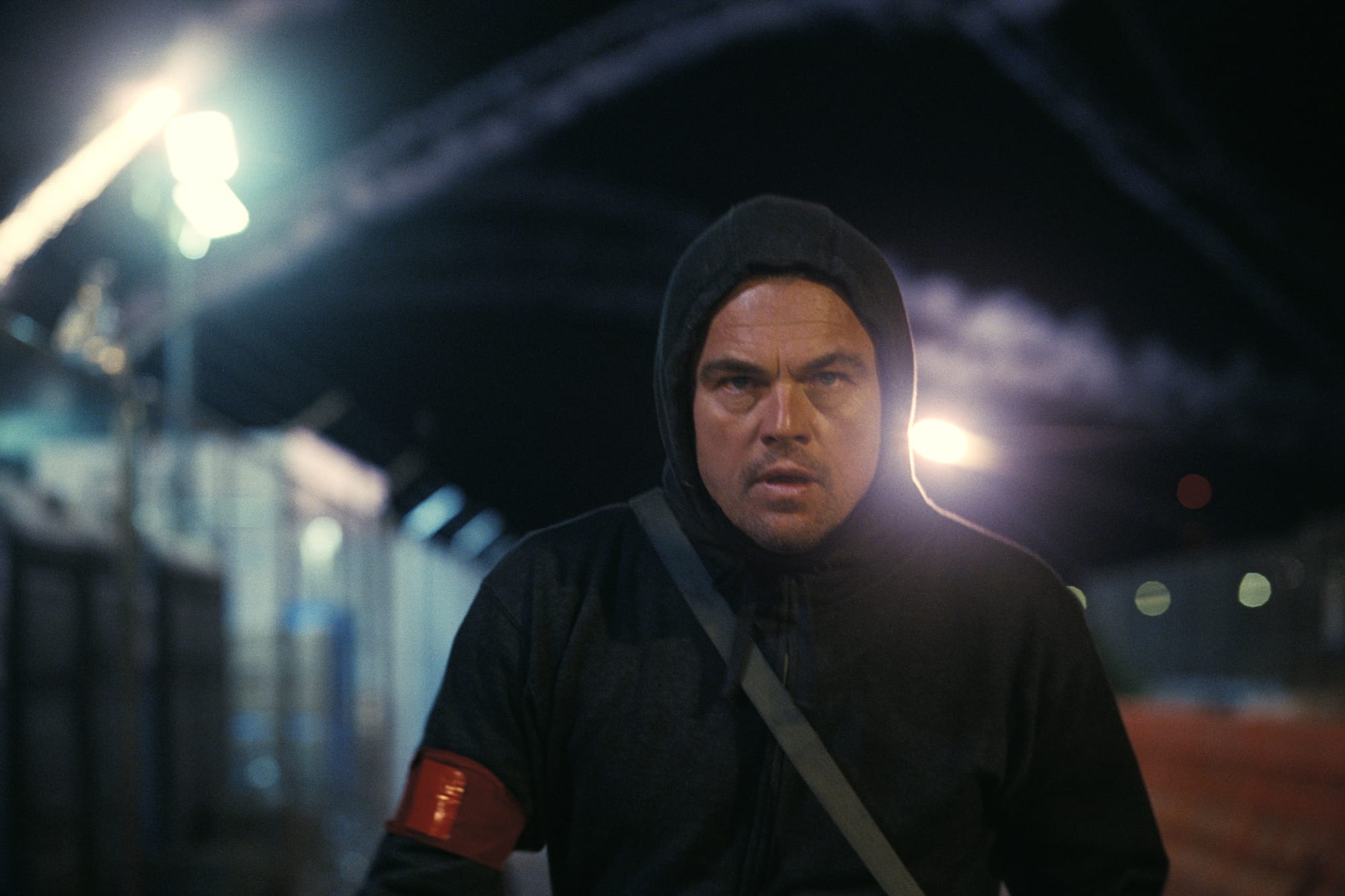
There are limits to this. About an hour into One Battle After Another, there's a moment that illustrates the hazards of being satisfied with art about resistance and revolution. Bob Ferguson (Leonardo DiCaprio), is in hiding with his daughter in Northern California, sixteen years after the implosion of his revolutionary group, the French 75. He is paranoid and frequently stoned out of his mind, self-medicating his way through a life off the grid in order to give his daughter a chance at a relatively normal life. He lights up and puts on The Battle of Algiers, the ur-text when it comes to films about resistance and revolution, influencing everything from Red Dawn to Children of Men to Andor.
This is the state that he's in when the State arrives at his doorstep, finally catching up to him after his many years as a ghost. For the rest of the film, Bob must learn the ways in which the struggle has moved on and evolved without him. This is played for comedy, in frustrated conversations with Comrade Josh or his obliviousness to the elaborate plans Sensei Sergio is executing right in front of him. Bob is out of step with his movement, but the movement is there for him. Waiting for him to catch up and figure out how the fight has changed, while he was busy getting high and being content with stories about people getting involved, believing his part in the struggle over.
Those movies are also a good way to talk a little bit about what I intend to do here, in this column I’m calling The Work. In it, I intend to explore resistance in fiction, both in theme (art that is expressly about the act of resistance) and form (art that is constructed in a way that is meant to be difficult). The purpose isn’t necessarily education, or the formation of a syllabus. I am not a scholar of revolutionary history; there are others who do that work. Nor do I believe that engaging with overtly political art, no matter how relevant or provocative, is in any way comparable to direct political action or engaging with your community. Art, however, can help us process these things, and perhaps that’s one of my goals here: To consider where art might fit in.
This is personal to me. Once, in a difficult moment in my life, I didn’t have anyone to go to and didn’t know what to do. My grandfather, the first and best cinephile I knew, could tell I was in a bad way, but didn’t know how to help. Not his fault, really; I wouldn’t have told him if he asked.
“Let me put on this movie,” he said. “Maybe it’ll help you know what to do.”
The movie was Scaramouche, George Sidney’s 1952 swashbuckler set just prior to the French Revolution. Based on a novel by Rafael Sabatini, the story follows André Moreau, a cad and layabout who discovers his best friend Philippe is secretly Marcus Brutus, a notorious pamphleteer wanted by the aristocracy. In short order a nobleman, Noel, the Marquis de Mayne, discovers Philippe’s identity and makes a show of killing him in a duel. Vowing revenge, Moreau goes into hiding with a circus and becomes the clown Scaramouche, secretly training with master swordsmen until he has the skill to take his revenge.
It’s a great movie: a real classic romance, lots of fencing and romantic overtures. But mostly it’s about a man who doesn’t believe much of anything learning that the sidelines are not static, that eventually conflict comes to your door and demands that you make a choice. Watching it with my grandfather, I took it as the nudge I needed to finally start doing things because I believed in them, rather than because anyone expected me to. I had to take action, even if it wasn’t necessarily the right one.
That’s what art can do. It’s a draft through a window, pushing open a door you thought was closed. It sits with you as you go wherever you need to go to find clarity, meaning, purpose. It’s how you can let others know you’re there for them, whenever they may need you. You let it in you and out of you, breathing deeply, like Sensei Sergio.
And then you go about The Work.


