

A little while back, conservatives discovered the existence of cartoons, but only their existence. What they do not know, and perhaps can’t know, is that for a brief moment cartoons got really good, and really gay, and now they are dying.
Now, I’ll be using the term ‘cartoons’ here, but when I do I’ll be referring to animated content released commercially for children and early teenagers in English-speaking countries. The term definitely excludes many things that are obviously cartoons: The Simpsons, Neon Genesis Evangelion, Arcane, Scavengers Reign, even Bluey since its core audience is too young. It’s cartoons as in ‘Saturday morning cartoon’: thirty minutes long if you count commercials, narrative-based, usually with other concerns like a toy line, with an audience who are older than toddlers but younger than teenagers.
On September 29th of 2025, the X account LibsofTikTok, run by former real estate agent Chaya Raichik, discovered the Netflix show Dead End Paranormal Park, which had been cancelled in 2023 after two seasons. In a short clip, the show’s lead character Barney talks about how working at a haunted amusement park allows him to be himself rather than just the one trans kid at his school. Having seen the show, Barney’s gender is mentioned at most a handful of times, the word ‘trans’ might only appear in the clip that Raichik excerpted.
A day later, Raichik posted a video sourced from Instagram in which a man with a British accent films his TV playing the Netflix show Jurassic Park: Camp Cretaceous, a teen-centric sidequel to the film Jurassic World in which a group of teenagers try to survive on Isla Nublar while Chris Pratt is riding motorcycles and the like. In the clip, the character Yasmina confesses that she’s fallen for the character Sammy—they are both female. The adult watching the cartoon whines ‘lord have mercy.’ The final season of this show aired in 2022.
Elon Musk encouraged his followers to ‘Cancel Netflix for the health of your kids’ shortly after Raichik shared the clips above. Culture war content isn’t exactly uncommon on Musk’s account, though it is often submerged by his genuinely side-splitting comedy and cutting-edge memes, but what are rare are references to children, childcare or fatherhood. Musk is the world’s foremost pronatalist: he believes that the world is dangerously underpopulated and that we should be ‘teach(ing) fear of childlessness’, and yet it doesn’t seem to interest him.
You already know what he is doing personally to solve this problem, but something he never does is talk about his own experiences as a father. As Joyce Carol Oates has pointed out, despite posting on average 68 times per day, he never talks about anything remotely human: ‘pride in a friend’s or relative’s accomplishment; condolences for someone who has died; pleasure in sports; acclaim for a favorite team; references to history’. More important than any of that: somebody with an estimated fourteen children never talks about them. Obviously security and privacy concerns mean that he can’t share everything, but he never posts a picture one of his children drew or a celebration of good grades.
The fact that he was surprised by the content of years-old Netflix cartoons points to something else: he doesn’t have much interest in what his own children are interested in, and it appears that few conservatives do. In this case, it means that his calls to #cancelnetflix fail to take into account the sweeping changes that have changed the cartoon industry into something unrecognisable.
You can separate kids cartoons into rough phases. The first was the Golden Age of Saturday Morning cartoons: Transformers, G.I Joe, She-Ra and Thundercats. These were almost always tied to a toy line—they were functionally commercials, with plots dictated largely by what stock needed to be moved in a given quarter. That didn’t stop them from being incredibly popular: although viewing figures are difficult to come by because of the nature of how they were syndicated, we can see their impact through toy sales: Hasbro made $950 million from the Transformers franchise alone in the 1980s.
The second stage I don’t want to call the Silver Age, because that implies a level of value that it didn’t have. Throughout the nineties and into the early 2000s cartoons tried, mostly unsuccessfully, to replicate the success of the eighties shows. Remember Exo Force, Pirates of Dark Water, Biker Mice from Mars or SWAT Cats? With this model exhausted, new creators who wanted to make cartoons first and move product second entered the scene thanks to newly established networks like Nickelodeon and Cartoon Network, producing cult hits like Ren and Stimpy and breakout successes like Spongebob Squarepants.
Avatar: The Last Airbender was an anomaly during this time. Though it was Nickelodeon shows like Rugrats and Fairly Odd Parents, it was tonally different from almost everything else out there. You could even call it a continuation of the failed experiments of animation’s not-quite silver age: long-form stories with a large cast, a more adult approach to morality, complex worldbuilding, as well as a very clear attempt to bring anime sensibilities into western animation. It was successful, not only critically but with audiences: 5.6 million people watched its finale, it launched one bad live action adaptation, one okay live action adaptation and will soon become a trilogy when Avatar: Seven Havens debuts. It helped that Avatar’s release in 2005 came at the high point of the Young Adult fiction wave, so it didn’t seem that kids who were, say, thirteen to sixteen, had to choose between genuine children’s content and adult shows. It blazed a trail that nobody would follow for a long time—for almost a decade it remained the only show that tried to hit that sweet spot of children’s animation that teenagers and even adults could enjoy.
In a short time it became uncommon to have long-form narrative animation without at least one queer character.
If Avatar showed that kid’s shows could be blockbusters then 2006’s Adventure Time showed that they could be arthouse. Pendleton Ward’s ten minute long trips were deeply idiosyncratic, down to the strange cadence of the dialogue and the leisurely unfolding of what turned out to be one of the most complex and unique fantasy stories of the 21st century, one that is still going two decades later. I can’t say that the show has directly influenced anything else -except for Chainsaw Man- but it has instead functioned as a talent incubator for a new generation of animators (storyboard artist Rebecca Sugar created Stephen Universe, for example) and a general call to the industry to raise its game. Also, while it was not the first ever cartoon to feature a queer couple (as far as I can tell that was Hey Arnold in 1998), the centuries-long on-again-off-again thing between Princess Bubblegum and Marceline was the first involving main characters and not presented as a Very Special Episode.
In 2012, the Disney Channel released Alex Hirsch’s Gravity Falls. It’s rare that a single show can cause a paradigm shift in the industry—usually they come about from market over-saturation of the creation of new networks. Gravity Falls was different: it looked like a kids cartoon, but, speaking as an adult, it’s genuinely smart and funny. Kids could watch it, but teenagers would get it and adults would appreciate it. It wasn’t purely a cult phenomenon: the series finale, ‘Weirdmageddon’, Disney reported, was ‘a dominant #1 in its time period across all cable TV among Total Viewers, Kids 6-11, Boys 6-11 and Boys 2-11 demographics’.
While this was happening, a parallel development in young adult fiction would have ramifications for the cartoon industry: adults were starting to read books written for teenagers, which meant that books were being written for adults who wanted to read books for teenagers. The fandom for these books skewed female and queer, and the publishing industry responded by buying up books that appealed to this audience. That seems to have made solid business sense: Young Adult fiction is still on an upward trajectory, even without blockbusters like the Harry Potter franchise, thanks in part to the cross-pollination between YA and Romantasy and its promotion through BookTok.
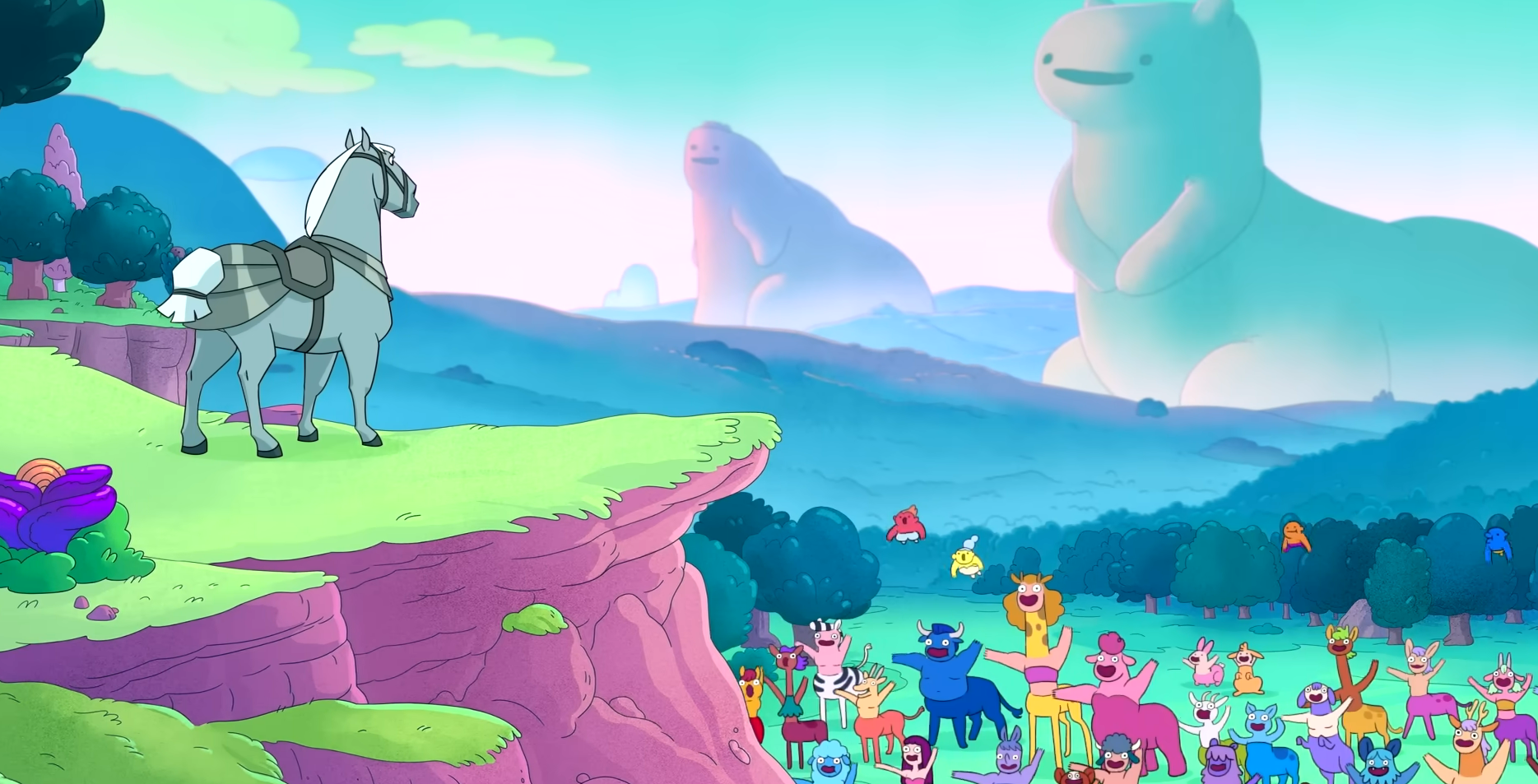
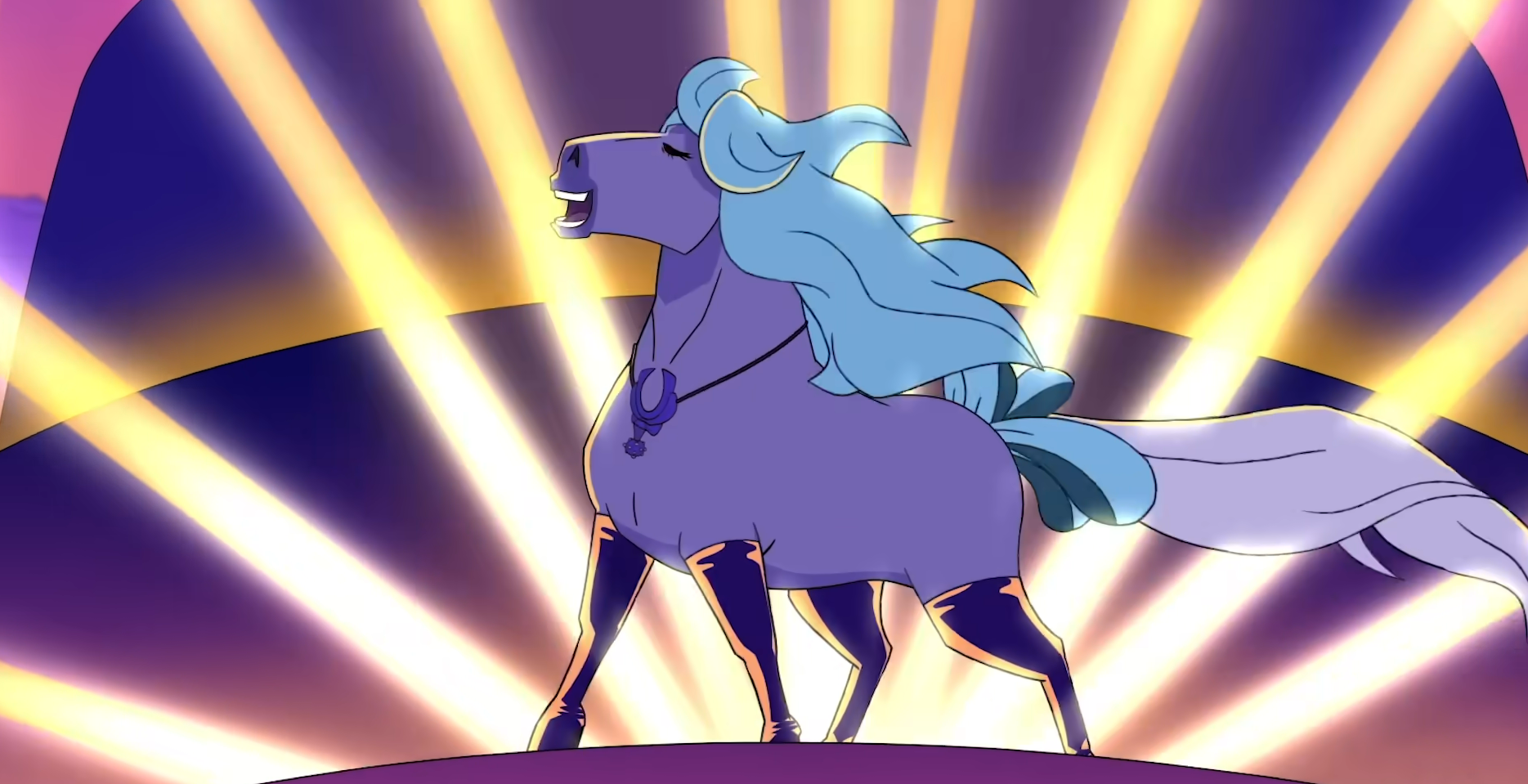
Gravity Falls and Avatar: The Last Airbender didn’t have any overt queer representation (Disney cut it out from the former and it was only present in the sequel to the latter), but their tone and style pointed the way for shows like Cartoon Network’s Steven Universe and Netflix’s She-Ra and the Princesses of Power, which caught on like wildfire in the larger ‘fandom’ community. Pretty soon most significant cartoons married the deep storytelling of Gravity Falls and Avatar: the Last Airbender with themes, such as queer representation, reflecting the adult-YA community: The Owl House, Centaurworld, Dogs in Space, Star vs. the Forces of Evil, Voltron: Legendary Defender, My Little Pony: Friendship is Magic, Amphibia, The Dragon Prince, Battle Kitty, Kipo and the Age of Wonderbeasts, Hilda, and the aforementioned Dead End Paranormal Park and Jurassic World: Camp Cretaceous. In a short time it became uncommon to have long-form narrative animation without at least one queer character. Sometimes the representation was subtle, as in Hilda where they were background characters. Several shows, like She-Ra and the Princesses of Power and The Owl House had queer main characters and their love stories were key plot points.
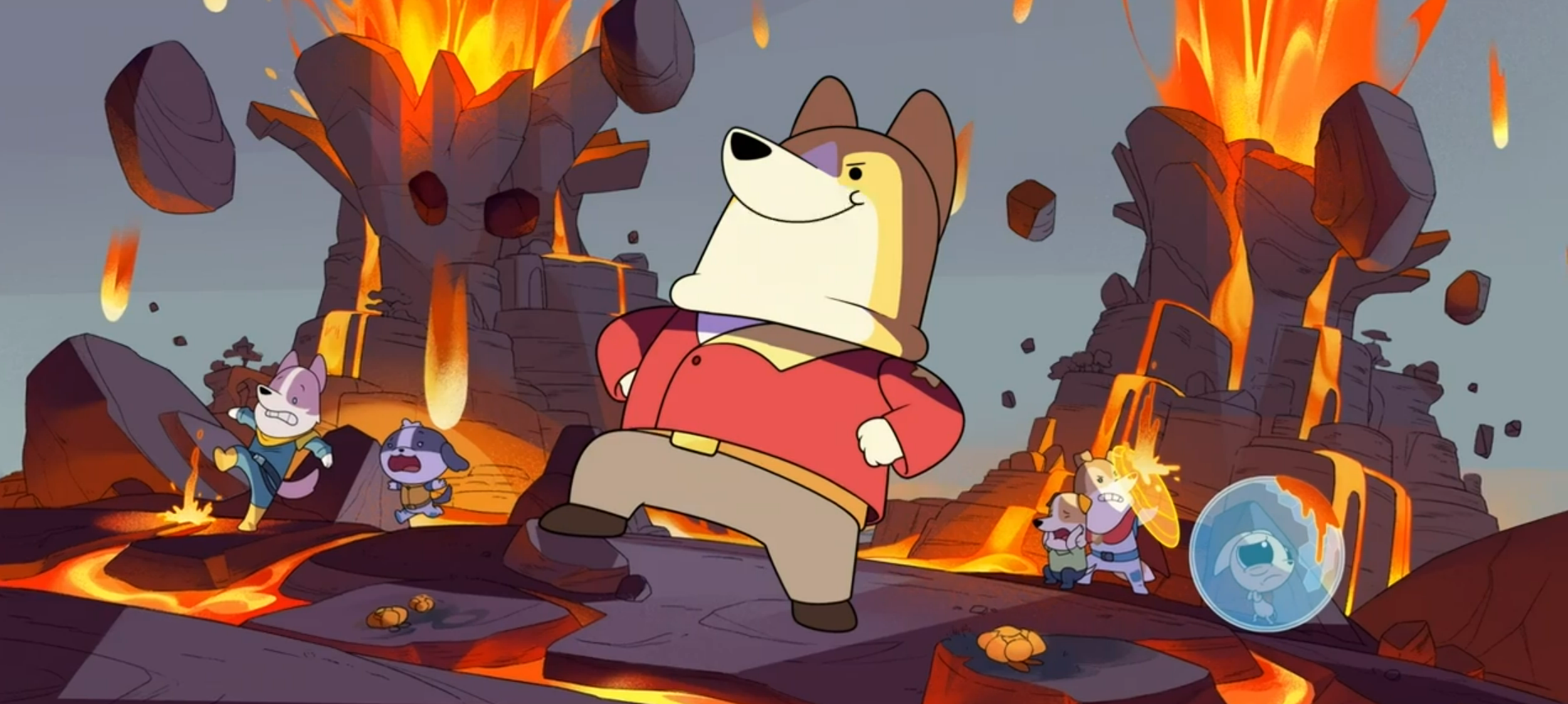
Jeremiah Cortez was showrunner on Netflix’s Dogs in Space during this period. He grew up loving animation, took every class he could take on it in college, and drew free-form stories about a Corgi named Garbage’s adventures in space while working at a factory job (he had no emotional connection to dogs and didn’t like sci-fi so it felt like something he could do for fun, with no emotional connection). His co-workers liked it, which led to him producing a rough short, and a chance meeting led to the opportunity to pitch Netflix.

“So I went to Netflix,” he told me, “pitched in person, and then left, and I just thought, like, yeah, they're not interested. It was nice that I got to go to the Netflix building and see inside, but I just took it as a nice opportunity, a nice experience. And I left, went back to my job. And then, yeah, about two weeks later, they called me again and said, hey, we want to buy the show.”
There was a good vibe at Netflix at the time: “Netflix was a great studio to work with when I was there. When I got there, that was the dream studio I wanted to go with. They really believed in what they were selling—Netflix was the place where the shows that other networks wouldn’t get picked up got picked up. They were the place where all the overlooked ideas can come and be a show.”
The studio was perfectly willing to take a chance on a first-time showrunner, and were collaborators with him rather than the cliche of out-of-touch studio executives handing down notes. The only major change they pushed for was casting Haley-Joel Osmet as Captain Garbage—Jeremiah would have preferred somebody with an older-sounding voice like Will Forte. When Osmet auditioned he nailed it and Jeremiah remains extremely happy with the performance.
Cuphead and Centaurworld were both being made in the same Burbank studio, and both shared Dogs’ adults-can-enjoy-it-too vibe. As Jeremiah tells it, this came from Netflix’s genuine desire to make the best shows possible, but there’s business logic there: children are a very small and very fickle demographic, but bringing in what would be traditionally regarded as more adult elements opens animated shows up to a larger audience that includes adults. We still see this today: Hazbin Hotel and Helluva Boss, both by Vivienne ‘VivziePop’ Medrano are definitely for adults in terms of swearing and sex references, but have the vibe of children’s cartoons in a way that other adult cartoons like Scavengers Reign and King of the Hill don’t. They seem made for the generation that was just the right age when Gravity Falls, Adventure Time and Avatar: The Last Airbender were at their peak and are now in their twenties and thirties.
These shows were being made during a major shift in the way that children consumed entertainment.
The second this golden age of animation became unprofitable it stopped. You can practically pin a date down to the very week this happened: on November 15th of 2024, ten days after Donald Trump’s second election, Disney removed an episode of Moon Girl and Devil Dinosaur that dealt with trans athletes. It wasn’t the first show that a network had censored —Cartoon Network even fired somebody over the ‘Bubbleine’ romance—but this time felt different. Disney wasn’t just giving notes to writers to keep things PG, they were actively removing a show that dealt with a very specific topic that conservatives are particularly focused on. That felt like the permissive, progressive attitude that had defined the late 2010s to early 2020s was officially over.
At nearly exactly the same time, the entire age of peak animation collapsed. There were 86 new children’s animated series orders on streaming platforms in 2022 and 113 overall. In 2025, that number dropped to 24 on streaming and 35 overall. The only major new animated show for middle-childhood and teen viewers that debuted on streaming platforms in 2025 was Netflix’s The Wolf King. My own son was growing up when these shows were airing, so I watched them with him. They were all genuinely good. The second Golden Age of animation was brief, but intense—Over the Garden Wall is, in my estimation, a classic; Dogs in Space and Centaurworld needed much bigger audiences than they got.
And that was the problem. These shows were being made during a major shift in the way that children consumed entertainment. A good portion of these shows were produced by Netflix, and the world’s largest streaming media company is notoriously bad at promoting its content. Why should it bother when, being a subscription service, it doesn’t need anyone to actually watch its shows, just keep up their monthly payments?
This goes double for children’s shows: it is very difficult to actually promote children’s content. In times past you could rely on children being around on Saturday mornings and after school, watching whatever was on. Saturday morning cartoons ended on October 4th of 2014, when the CW ended Vortexx, which had been holding out long after other networks had cancelled their Saturday morning shows, due largely to FCC regulations that mandated three hours of education programming a day on broadcast TV. Later, when viewers had to actively seek out shows on Netflix, and later Disney+, these companies didn’t have a marketing strategy beyond giving them prime spots on their own platforms and uploading trailers to YouTube. There was no place where you could put an advertisement for a relatively high-budget show like Kipo and the Age of Wonderbeasts that would establish ‘this is important’.
Obviously, some children’s content does break through. K-Pop Demon Hunters is a phenomenon, but Netflix’s efforts had little to do with that—marketing analysts might say that it ‘activated fandoms at scale’, but viral clips like Jay from ENHYPHEN dancing to ‘Soda Pop’ came after the film had become successful, not before. What really happened was that enthusiasm spread virally because the film was always going to ‘activate’ the kind of people who are going to spread things virally—K-pop stans, TikTokkers, cosplayers and so on. Importantly, that level of viral success just doesn’t seem to happen for serialised shows: Netflix’s Jentry Chau vs. The Underworld, which also features K-pop and the hunting of demons, isn’t anywhere near as successful.
Jeremiah explained that “We're still in this flux. In 2024 people would say: survive ‘til ‘25, when there's going to be all these new shows getting green lit, and everyone's going to be back. We’re already at the tail end of 2025 and it's stayed pretty flat. But Netflix has K-Pop Demon Hunters, and I think this will be the catalyst for a change.”
The difficulty of (reliably) marketing to young people today has meant that an entire section of the media has functionally disappeared in a very short time. Every one of the shows above is still on their respective streaming services (save for the deeply queer Battle Kitty, which was removed when Netflix stopped supporting interactive content), but new shows simply aren’t being commissioned. Of the shows mentioned above, only Jentry Chau has any possibility of getting another season as of time of writing.
The reasons are pretty obvious: Roblox is adding millions of players each year, Fortnite is a major force in popular culture and the first generation of ‘iPad kids’ are entering their mid teens. Demon Slayer: Kimetsu no Yaiba - The Movie: Mugen Train became the highest grossing Japanese film of all time, with $512.7 million in ticket sales on a budget of $15.7 million while Wish, a film that Disney promoted as the celebration of a century of filmmaking, made $237.9 million on an estimated $200 million budget. Anime and manga are handily beating western cultural products among young people: when the French government gave children €350 each to spend on culture they didn’t spend it on Proust and Balzac, but manga, starting a ‘manga rush’. The country’s most popular animated show is a magical girl anime. Netflix, Amazon Prime and Disney+ have little reason to chase an audience that shows little interest in western animation, so they have dramatically cut their output and bought up shows like Demon Slayer and Jujutsu Kaizen to fill the gaps (though a good portion of Netflix’s anime isn’t suitable for pre-teen kids). Within three years the entire format of long-form English-language children’s animation functionally disappeared.
Now that animators can no longer rely on networks and streaming platforms for employment, many are turning to independent animation.
Or evolved. If the second Golden Age is over on streaming platforms then it continues on YouTube. Prompted by the success of ViziePop’s shows, studios like Australia’s Glitch Productions were born online and are continuing the style of peak children’s animation in shows like Murder Drones, The Amazing Digital Circus, The Gaslight District and Knights of Guinevere (the latter two being more adult-orientated, but still fine for older kids if you don’t mind them hearing a couple of PG-13 swears). Success is no longer getting your show picked up by one of the major streaming platforms but building an entirely digital fanbase.
Knights of Guinevere is significant because it is being helmed by Dana Terrence, the showrunner of Disney’s The Owl House, and is a very clear indictment of Disney. Terrace is an interesting figure here as the only creator who has worked across the old and new children’s media. Beginning her career as a storyboard artist on Adventure Time, she became a director on Disney’s Ducktales reboot, then got to helm her own self-created show, The Owl House. There was, it seems, a falling out between her and Disney, hence the move to Glitch.
She explains in an interview that “I was pissed off one day and this became a cathartic release… I worked with big mainstream studios for about ten years and now I don’t and I’m enjoying myself quite a lot.” The experience of working with Disney left her quite willing to burn bridges: when the company started to use generative AI in their shows, she tweeted ‘Unsubscribe from Disney+. Pirate Owl House. I don’t care. Fuck gen AI.’
Collectively, these shows are chalking up hundreds of millions of views—The Amazing Digital Circus’s pilot has 398 million views as of time of writing, and though some will be repeats (about eight are mine) that’s an incredible viewership for a show with zero marketing budget beyond the Glitch brand name. These shows are also interesting for their business model. YouTube alone wouldn’t fund the large, professional operation that is currently producing three high-quality shows, so they supplement their funds with merchandising.
Glitch Productions’s output and other web series like Lackadaisy are syntheses of the two golden ages of animation: relatively sophisticated Young-Adult orientated stories supported by business models heavily reliant on merchandising (though unlike eighties Saturday morning cartoons, the stories far and away come first). Despite their success, they are a niche within the larger online world and, although some are now available on streaming services, are hamstrung by releasing episodes every few months and the fickle nature of virality. Now that animators can no longer rely on networks and streaming platforms for employment, many are turning to independent animation, and unfortunately few are breaking a million views.
The Amazing Digital Circus racks up hundreds of millions of views per episode, while The Gaslight District’s pilot has just broken twenty million views after six months. Non-Glitch indie animations exist, but none have broken through like Digital Circus, which has been snapped up by Netflix.) Independent animation can be successful on its own terms, but there are no points for indie cred in children’s animation, especially when you have something to say. This isn’t like the indie music boom of the 1980s, where the This Band Could Be Your Life generation were creating sounds that nobody could hear on commercial radio and MTV. Music would still exist if Steve Albini never sat behind a mixing deck–if these shows don’t fill the void left by major studios, then there will be no animated narrative fiction for children.
That matters. I can see what these shows meant for my son and how they benefited him. He is more emotionally intelligent than I was at his age and better able to understand complex narratives, and that isn’t just going to make him better at understanding fiction, but better at understanding people. Part of that is not having parents who were lead-poisoned in a decaying mining village then hammered into the rough shape of adults by the military like I did, but part of that is that he grew up watching stories about people with feelings instead of extended toy adverts. Kids younger than him are going to grow up watching other kids play videogames or whoever replaces Mr. Beast after his inevitable cancellation and/or arrest. That type of ‘content’ (because it is content, not art) is fine in moderation, but people need stories.
More than that, while children’s cartoons can’t undo centuries of systemic racism and sexism, representation does still matter. Fiction is inherently destabilising because it cannot help but force viewers to see things outside of their perspective. If a creator feels that a character should be black or queer, or if an artist draws a character wearing a hijab because that’s where their inspiration takes them, then that’s what viewers get. Because long-form narratives can put in the work to develop diverse characters,viewers can learn the most important lesson that stories can teach us: we are somehow both radically similar to and radically different from each other. There needs to be more than one production company making these shows or a whole way to communicate to kids is going to disappear.
It turned out that capitalism won the battle before reactionaries even knew that they were fighting.
Which brings us back to LibsofTikTok. Because of the way that conservative parents relate, or rather don’t relate to their children they will have little interest in what they are consuming. The number of conservative families who will genuinely raise their children fully outside of the mainstream is going to be very small. Living a trad lifestyle takes money that only a tiny percentage of people will have. Most conservative households are going to parent for the most part like more liberal households, by doing the best they can with limited resources, and part of that is allowing kids to have time in front of a TV or iPad.
The difference will be emotional coldness, indifference to suffering and a greater incidence of abuse. Starting after Brown vs. Board of Education, the Christian far-right in particular has developed a parallel theory of child-rearing as disciplines like attachment theory and critical pedagogy made most childhoods kinder and freer (with support from shows like Sesame Street and Mr. Rogers Neighborhood). Talia Lavin’s book Wild Faith details how this mirror-world came into being: home-schooling, religious schools and camps, and parenting manuals like James Dobson’s 1970 book Dare to Discipline. This instructed parents to ‘bring some pain to the child when it is necessary for his eventual good.’ One person who grew up in a conservative Christian household told Lavin that “almost every spanking I’ve ever received was a result of asking ‘why?’”. This is not a lesson that is compatible with the worldviews of the kind of people who want to make children happy by making fun shows for them. The long-term effects of this type of parenting are very well documented.
Not every conservative is Christian (Raichik is Jewish, Musk atheist), but every part of the authoritarian ecosystem puts their own spin on these ideas. For most it’s nothing as systematic as the dictates of a parenting manual—more likely its arbitrary punishment, inconsistent discipline and general disinterest in the emotional life of children. Plenty more are more like Finn from Adventure Time’s parents: kind of, sort of okay people, but so wrapped up in their own problems and so laden with their own baggage that they can’t really ‘parent’ as such. Nowhere in authoritarian (or simply shitty) parenting is there space to sit down with your kid and watch shows together.
We can see that in one of the largest and most successful authoritarian parents’ campaigns in recent years, Moms for Liberty: their target was books. Only one in three children enjoys reading and one in five actually reads every day, while they spend seven and a half hours each day in front of screens. However, parents can pick up books, flick through them and see horrors like the mouse penis in Maus, while they have to actually sit down and concentrate to find out that the protagonist of Dead End Paranormal Park isn’t just trans, they’re trying to save demons from an angel. Their lack of concern for their children as human beings meant that they never noticed the second golden age of cartoons, which let dozens of shows grow and a generation of artisans hone their craft.
So it turned out that capitalism won the battle before reactionaries even knew that they were fighting. If they were more invested in the lives of their children as children then they would have seen that animation has so fundamentally changed in the past two years that there is no need to #cancelnetflix. Netflix cancelled itself, or its animation arm at least, and with it an entire medium for communicating with children, one that I believe they benefitted from. Perhaps in 2028 LibsofTikTok will notice that Zooble from The Amazing Digital Circus is an allegory for trans experience and get all worked up about that, but until then the rest of us, and our children, are going to have to live in a media environment that is increasingly less human.


