

“Your life is going to be horrible, so that’s free money as far as I’m concerned,” streamer Northernlion said before setting a short position on a small alien baby made of molten igneous rock. He was playing Space Warlord Baby Trading Simulator, an absurdist stock market simulator that lets you speculate wildly on the lives of alien babies. Short, brutal and laugh out loud funny, it is a game that is only marginally more evil than the financial markets that rule our lives.
— Chris Person (@papapishu.bsky.social) 2026-02-07T01:45:21.507Z
Space Warlord Baby Trading Simulator starts on a positive note: in the year 3478, devices called FutureSee terminals have given the intergalactic masses limited insight into the long term consequences of the future of companies, conflicts and star systems. This was a massive boon for civilizations everywhere, as technology improved and most wars were now avoidable. But it also devastated all speculative financial markets, as now nothing could be speculated on. With no other options, the financial industry turned to the only speculative asset it had left: the lives of individual babies, which were too volatile and immediate for the terminals to see. That’s right, it’s time to get out there and speculate on the lives of babies.
The latest game from publisher Strange Scaffold, Space Warlord Baby Trading Simulator feels retro in a thoroughly specific way. It feels like a throwback to a game like Drug Wars, a game I spent endless hours playing on a TI-83 instead of getting work done in math class. Tonally and aesthetically it feels indebted to games like Dinopark Tycoon, Afterlife (a game I was obsessed with) and the masterpiece that is Star Control 2. It is absurd on its face, totally unsubtle with what it’s saying, and none the worse for it.
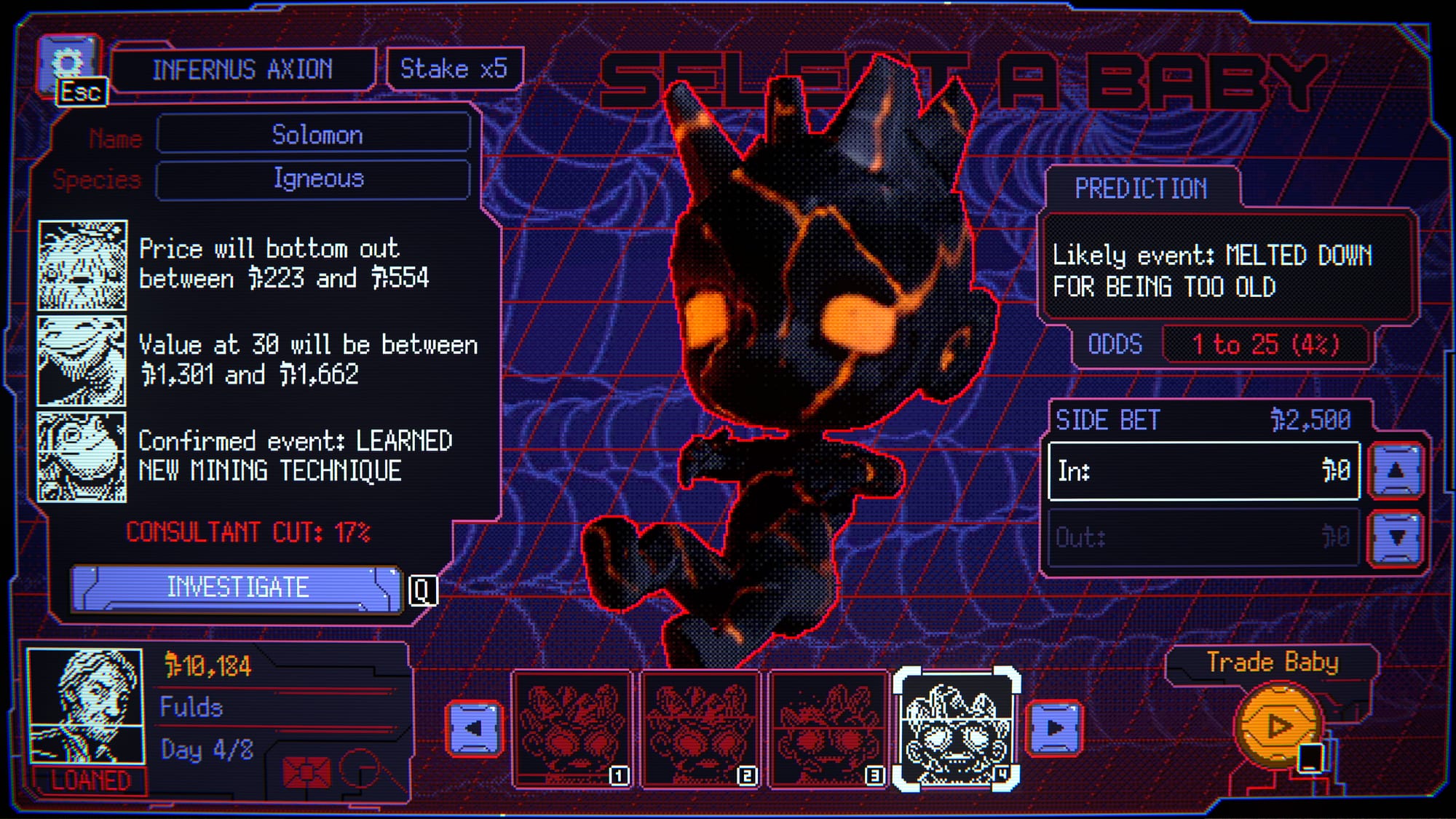
Like Drug Wars before it and the stock market generally, the goal is to buy low and sell high. You follow the lives of individual babies on a market-style ticker, buying stock in their lives at their worst and selling at their best. The baby’s overall health is indicated by a beating heart on the right side of the screen. The goal is to optimize your profit and make more than you started with plus the cost of the entry fee. The stock ticker will flash various events in the baby’s life from “covered in gleple poop” to “learned what reading is” (their value goes down after this event).
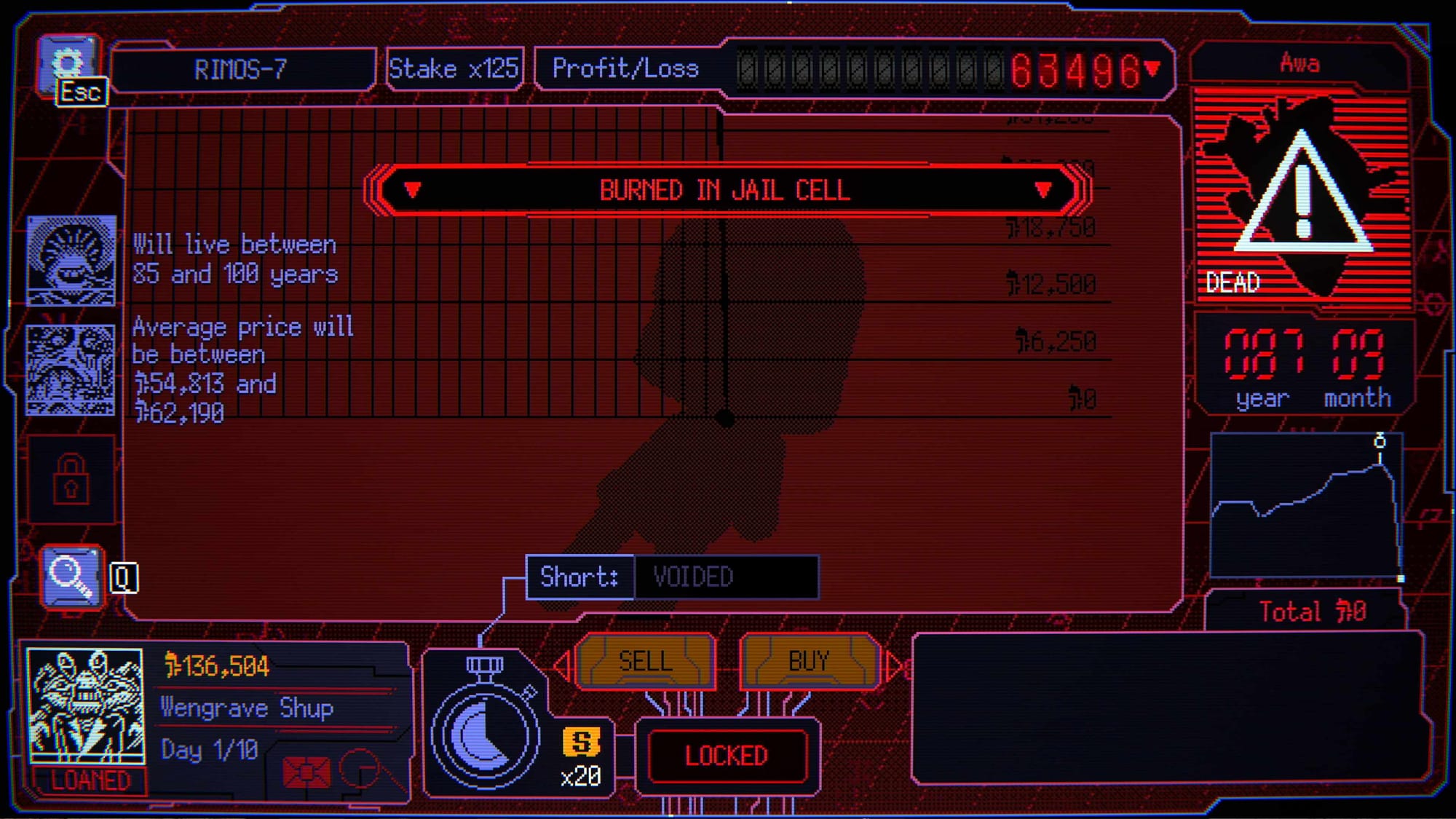
On top of simply buying stock, you can short a baby if you are confident their life will get measurably worse in the near future. However, this can backfire tremendously and potentially bankrupt you should you be wrong and they get a promotion or find love. If a baby dies in the span of the short, the short is voided. And though you can choose one of four potential babies every day, side bets can be placed on each of them for potential events, life span and overall value.
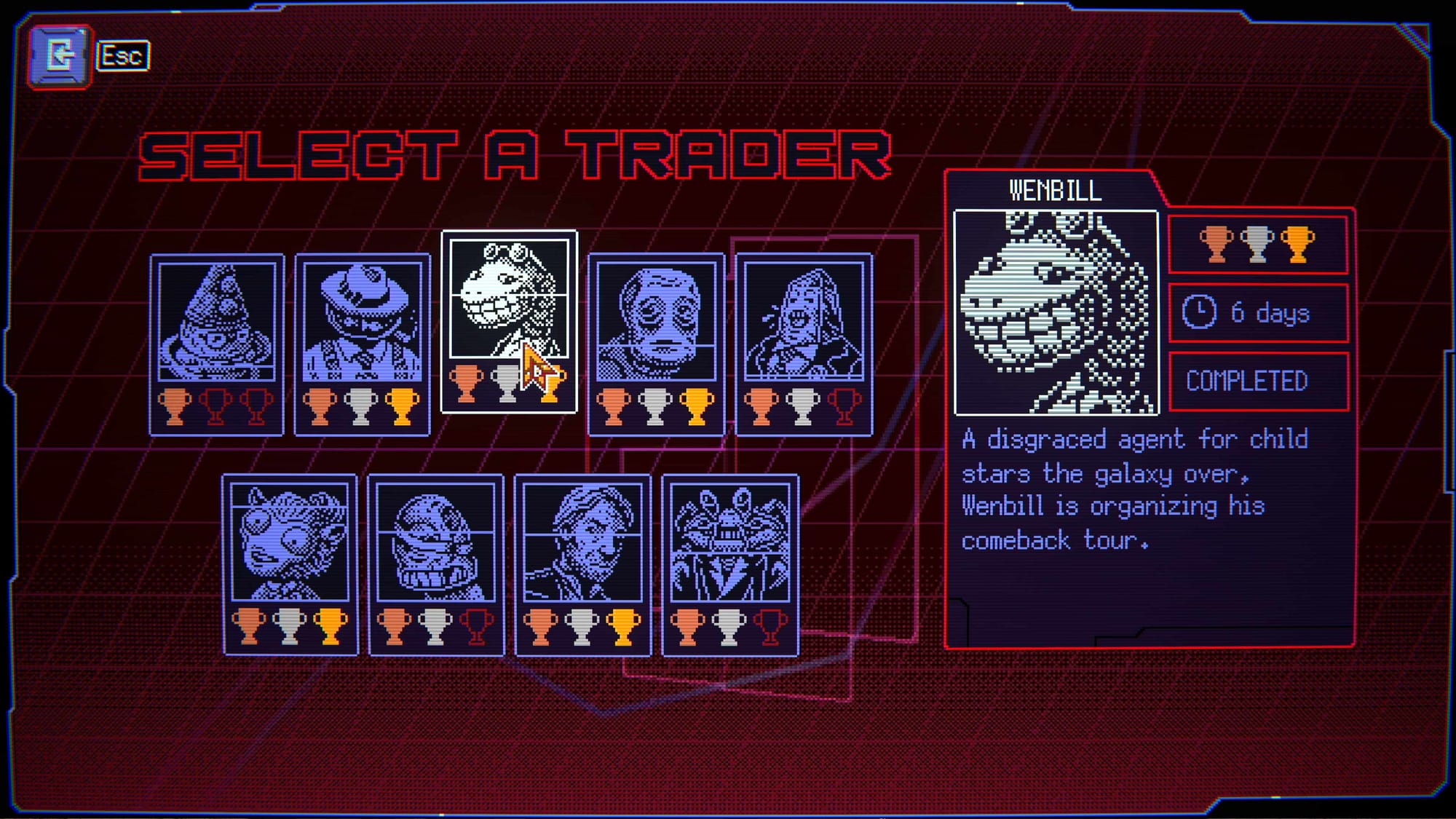
The campaign features nine distinct characters and scenarios representing different traders. The plot of each character adds a significant mechanical tweak to each trading period, with four distinct outcomes to each scenario: failure, bronze, silver or gold. For example, trader Holmit Miskie is a disgraced junior financial planner at Holmit & Spawns whose elderly clientele wishes to get in on the new baby trade, a market his bosses are not confident in and thus are setting him up for failure. He is a sad sack who looks like the alien equivalent of Jack Lemmon in Glengarry Glen Ross, and mechanically he is not allowed to take side bets. Nuria Voll is a retail trader who puts their rent and everything they have to get into the lucrative baby trading market. Mechanically, she is scammed every day by the lease on her “HiValue Guaranteed trade license” and enters the market just as the entire thing goes to shit in what’s known as “The Great Flip.” Mechanically, the market gets twice as expensive and half as profitable halfway through her run. Rep. Hoddle is a legislator who regulates the market, and thus is not allowed to interact with it, save through an intermediary named Willy “No Hands” Shig. Mechanically, this legal loophole of an unscrupulous proxy adds a significant delay to every purchase and sale, making it harder to trade on volatility.
In addition to this, there are seven different planets you can trade on, each of which have wildly different market tendencies for the babies on them. For example, Google Gibby is a “war world,” where half of the planet is permanently in conflict to benefit the arms industry. This constant state of war means that baby investments tend to trend steady upwards before the baby’s life turns reliably horrible, often for war-based reasons. Cantor Vantis, meanwhile, is a tropical reality tv show planet where galactic children are sent to compete on the show “Get Big or Die Trying,” and which can lead to sudden fortunes before sudden, comically
Real Housewives-themed deaths. Though the potential for wealth is high, you could lose everything if they die in a celebrity mishap while you’re holding the bag.
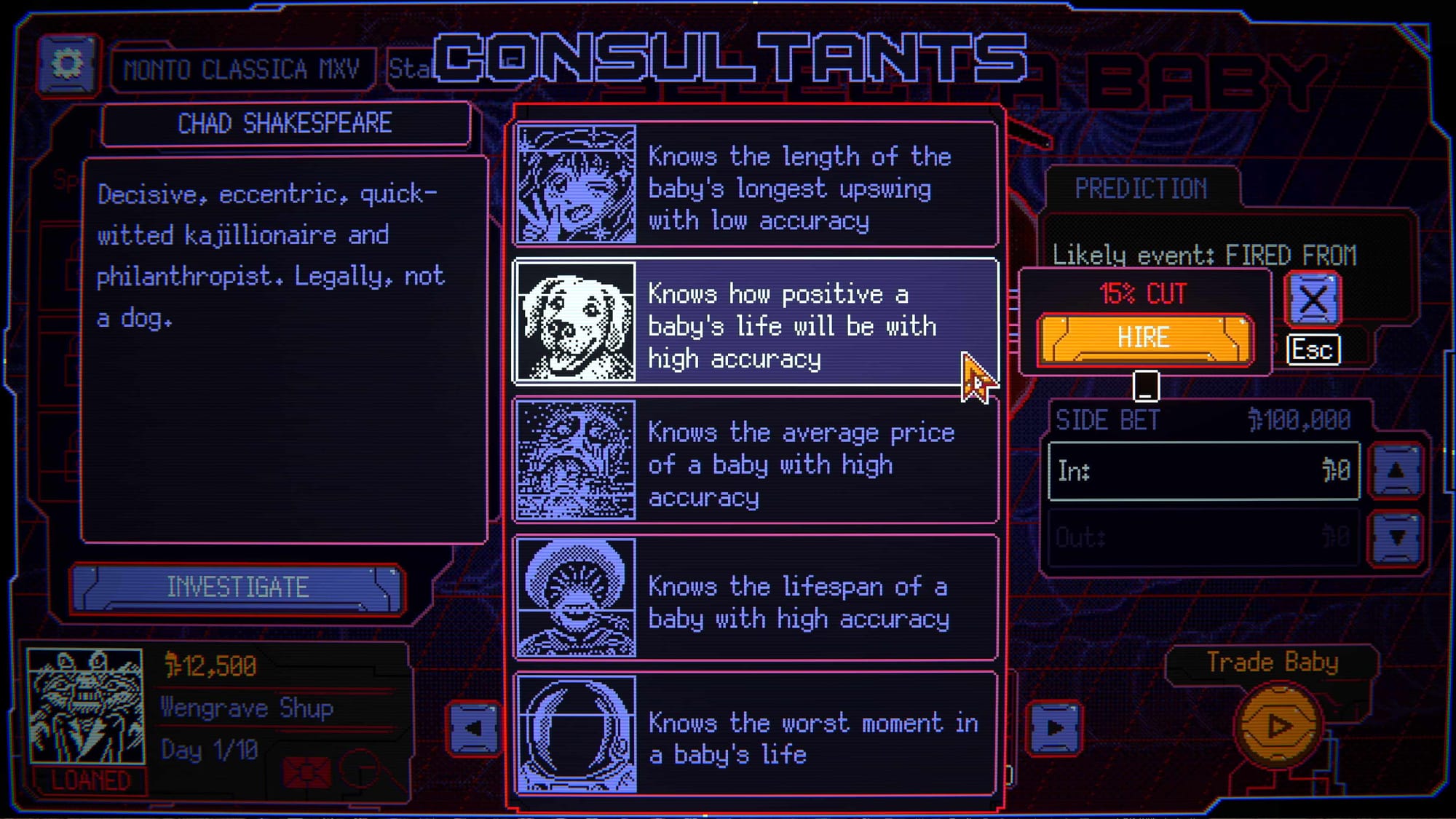
Assisting in your buying and selling are advisors, who can lend insight into the lives of each baby for a fee with varying degrees of accuracy. Details range from the average price of the baby, the value of the baby at age 30, the floor price of the baby, random events in the baby’s life, the longest duration of its positive upswing, and so on. Advisors are key to making money. For example, if you know the average price of a baby is about $3,000, and the baby has been trading below that for several decades, you know that it will have to swing upward above $3,000 for a specific period of time for the overall amount to average out. Occasionally, the knowledge of the advisors will sometimes intersect with the side bets, allowing you to make smarter calls on which baby will pay out aside from the general odds given by the bookies.
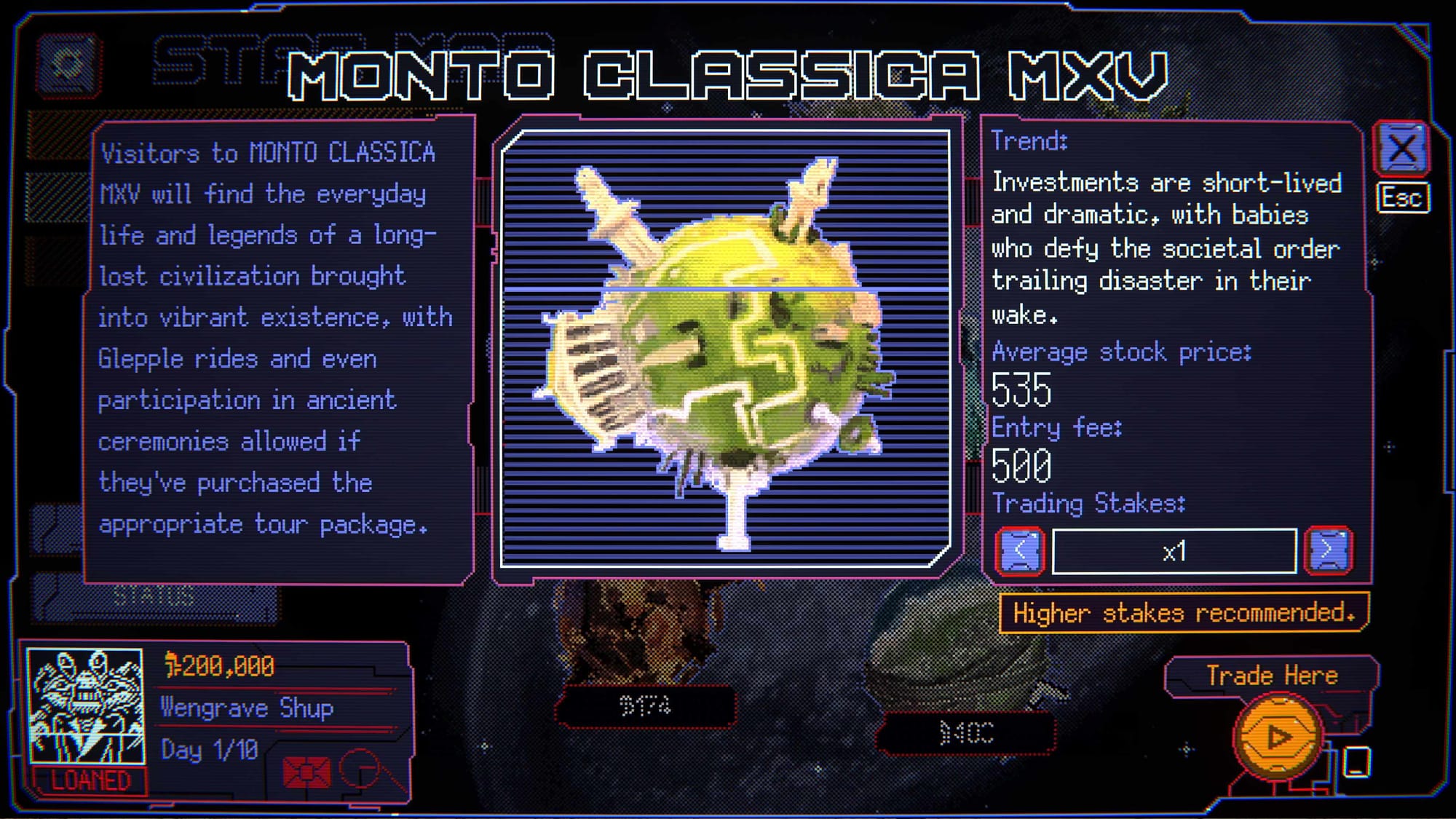
Space Warlord Baby Trading Simulator is exhilarating, absurd and compelling in the same ruinous way that day trading or speculative investment is. Like Q-UP, it is a game that takes the mechanical form of the thing it is lampooning, successfully having its cake and eating it too. It is the ideal game for someone like Northernlion to stream, and him screaming like a r/WallStreetBets guy is an incredible bit of comedy. It is not a game that overstays its welcome, and it leaves you wanting more to play (an endless mode would be nice, but maybe that defeats the purpose).
He really does sell it well.
Space Warlord Baby Trading Simulator is also a game that could not be more germane to the moment. The last six years have been maddening if you believe in anything resembling financial regulation. Gambling is functionally legal from your phone in most of the country, the market has never been less rational, insider trading is happening nakedly on a historic scale and the entire economy is held together by bubble gum, petty scams and investments that mathematically could never pay out. Every day you wake up, and every day you think “this will be the day that the bottom falls out,” and that sensation of freefalling you felt in 2008, if you were old enough to remember it, forms like a lead ball in your stomach.
This is not to say that there was some golden era in which the markets were ever ethical–the average 401k or pension quietly finances pure evil–but there was a degree of plausible deniability diffused in the market. Private equity, crypto, and the AI bubble have made those realities increasingly harder to ignore, and now everything is gambling to some degree. And now prediction markets like Kalshi and Polymarket let you bet on the outcomes of everything including war with little to no oversight. There’s literally a grotesque Kalshi ad with roughly the premise as this game made with enthusiastic generative AI slop aliens and zero self awareness. Given how supremely warped the world we live in is, how much worse is it, really, to short a baby?


