

Like many high effort yet questionable ideas, it started off as an idle thought. “Going for a nice walk and farming Citi Bike points. If I get 3000 I can buy a Switch 2 but that would take me ages,” I posted on Bluesky seven months ago. I followed this up with “ok but what if I did this.” Seven months and roughly 495 rides later, I have a Switch 2 in my hands that I bought entirely by moving bikes around.
Ok but what if I did this
— Chris Person (@papapishu.bsky.social) 2025-06-21T02:15:06.838Z
Citi Bike is New York City’s bike share program. The “points” are a reward for the Bike Angel program, a voluntary system that rewards riders for balancing the system as they ride by bringing bikes to docks that need them. If you are patient enough, Citi Bike points can have monetary value by way of gift cards.
As far as user incentivization systems go, the Bike Angels program is a marvelous little puzzle box. Citi Bike, and by extension the other bike share systems administered by Lyft subsidiary Motivate LLC, operate on a dock-based system. Barring some kind of emergency, bikes can only be picked up and dropped off at specific locations. This is objectively the correct move, as dockless systems like Lime scooters turn transit into messy sidewalk e-waste. Dock-based systems are more secure, easier to service, and feel more like an actual transit alternative instead of a startup leaving its garbage on the sidewalk. But dock-based systems have their downsides: They require actually building civic infrastructure out, and docks frequently have too many or too few bikes.
Instead of just paying technicians to move bikes around (which does happen, as most of the ebike fleet requires servicing and battery swaps), Bike Angels exists as an additional opt-in program for any member in a system. Enabling Bike Angels adds a hud over the maps on stations, assigning negative, neutral, or positive values ranging from ↘4 to ↗4. Upward facing arrows on a black background indicate a station with a glut of bikes, whereas downward facing arrows on a white backdrop indicate a station that needs bikes. Hot pink stations are given for the rarer, high point value stations, and neutral stations have no indicator.
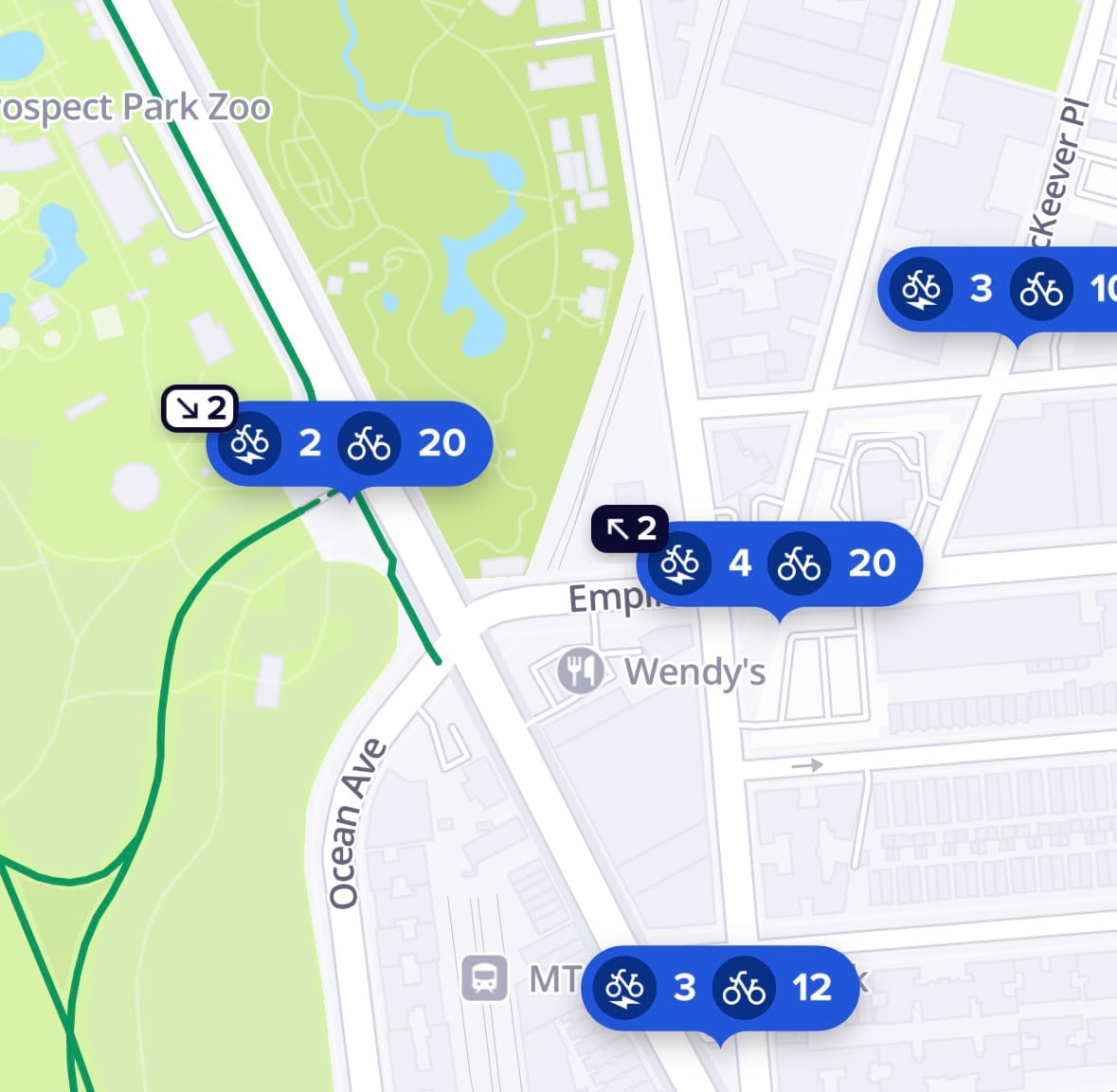
Going on one positive ride, which includes going from a positive to neutral, positive to negative, or neutral to negative station, starts a 2x multiplier for 24 hours. Three subsequent positive rides unlocks a 3x multiplier, and taking four more positive rides restarts the clock for a day. That streak can be broken by taking any negative ride, and rides between neutral stations are fine but unproductive to the streak. Points can be traded for membership extensions, ebike or Lyft credits, and eventually Amazon gift cards (although it used to be cash). From the perspective of game design, it’s a brilliant system, potentially turning each rider into a little baby gig economy worker, a purposeful conflation of exercise, labor, and gaming that can seamlessly fit into your commute.
Doing The Numbers
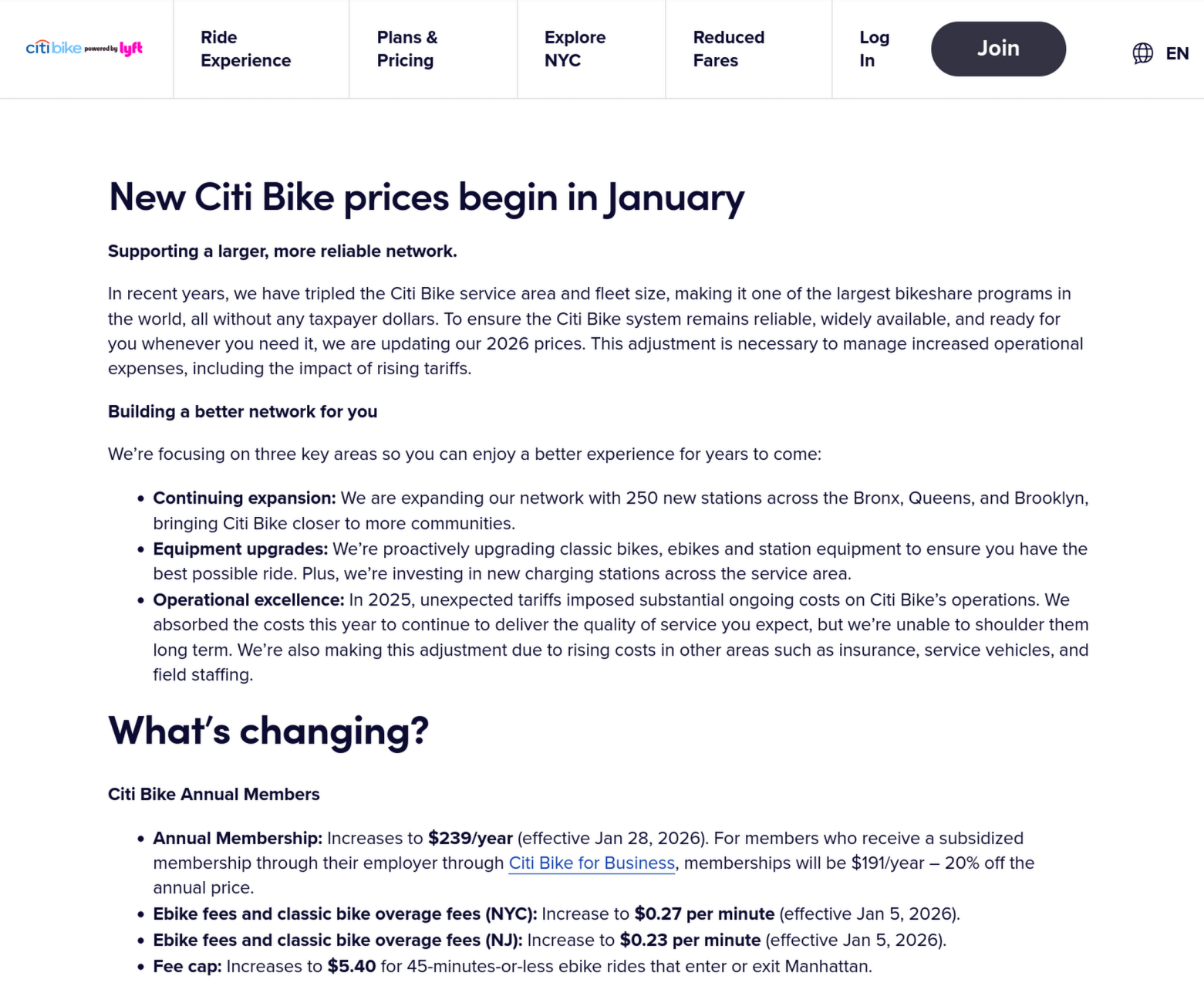
Whenever I have a spare moment or have to travel via bike, I grind for points. This is helped immensely by the fact that I have the cheapest deal possible, as I blogged about in The Definitive Citi Bike strategy guide. Without a membership, a Citi Bike ride can get shockingly expensive, which runs counter to their stated goal of reducing reliance on cars. Rides are $4.99 to unlock or free with a $25 dollar day pass for the first 30 minutes. Ebikes are $0.41 a minute for non-members and $0.27 for members. A membership is $239 a year effective January 28th, 2025 (previously $219.99) or $199 a year for Lyft Pink, a discount I find ethically dubious but expected as a component of a public-private partnership. There is also a Bike For Business plan that allows employers to offer a discounted membership for employees.
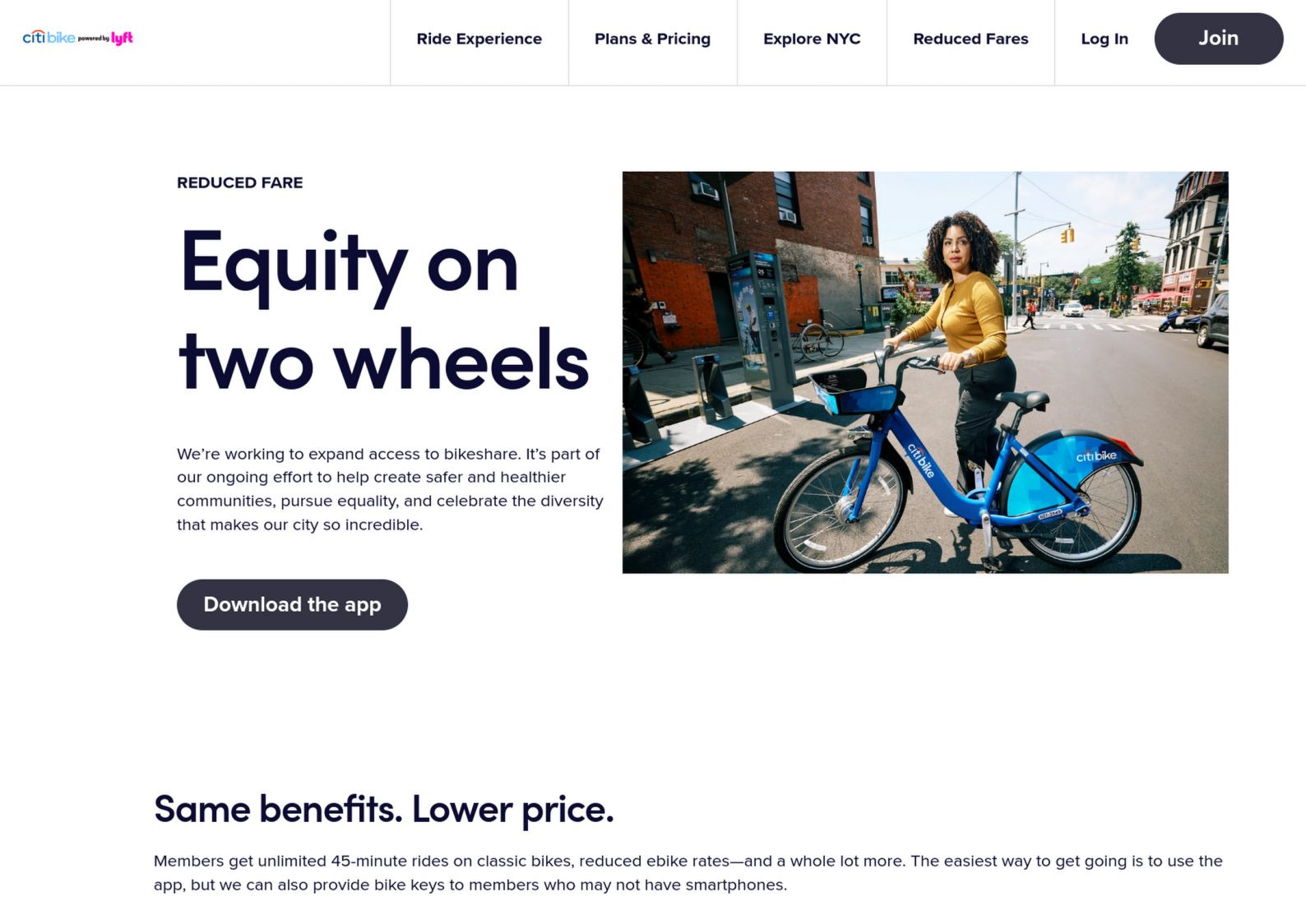
Aside from the deals that kinda suck, there are several actually cheap deals for SNAP recipients, residents of public housing (NYCHA, JCHA, and HHA) and active members of participating CDCU credit unions. This brings the cost of the membership down to $5 dollars a month (a $179 dollar discount) and reduces the cost of ebikes down to $0.14 a minute. If you can get this deal and are able to utilize bike transit, it is completely life changing, like getting the warp whistle between previously inaccessible parts of the city at a rate that is competitive with public transit. If every NYC resident who can ride a bike had easy access to this deal it would radically transform transit in the city, and considering Zohran Mamdani has posted higher Citi Bike numbers than me, I eagerly look forward to seeing what he does with bike shares in the next few years.
The Bike Angels system is presented like a big friendly community. There are five different levels of lifetime rewards for becoming a Bike Angel, from a permanent extension on ride times to a custom bag. Each level also comes with a custom lapel pin. The highest level of Bike Angel is Power Angel, for people who have collected 5,000 lifetime points. Over the course of my time farming for this, I finally achieved Power Angel status. There is also a monthly leaderboard where you can see the output of the highest Bike Angels, and on the very top tiers the highest earners (rider NS143 is the most noteworthy; as of the end of this year’s horribly cold January they have pulled down in excess of 7,300 points.) For some people this is not simply a rewards program, but something they take deathly seriously.
Like any incentivization system or game, you will always have people who will try to break or exploit that system, particularly when money is involved. I noticed this initially while cruising the subreddit and Bike Angels community board in August of 2024. Several people had discovered a loophole: If you got a bunch of people together, emptied out two adjacent docks and waited for the point values to reset, it would yield two extremely close docks with high point values. Once those values reset, the gang of riders could then run back the now full dock before the point values could reset, wait for the system to recalculate the points, rinse and repeat. It was a brilliant strategy, as it exploited the fact that the system adjusts point values at distinct, timed intervals rather than continuously.
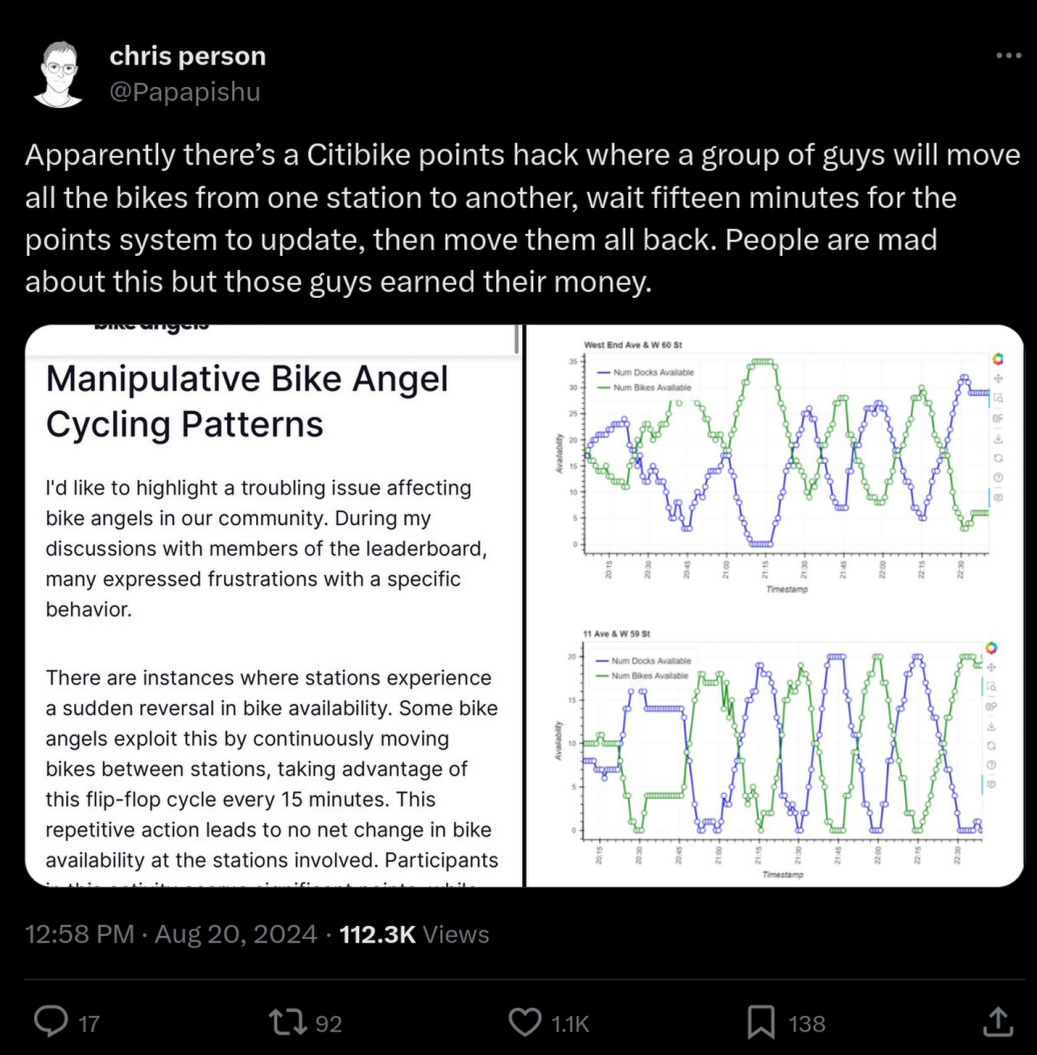
By using a group to generate ideal conditions, it made farming agnostic to supply and demand, which had the added benefit of allowing the people farming to select the two closest docks possible. It also completely bypassed the purpose of the program, and many people got mad at the farmers and claimed they were “cheating,” which is an interesting argument that gets at the heart of what makes the Bike Angel program complicated. Is Bike Angels a game? Is it a job? If Bike Angels is a game and a player follows an incentive structure to its logical conclusion, isn’t that the fault of the designer? And if Bike Angels is a gig economy job and you found a loophole to make a purported $6,000 a month running bikes back and forth, why wouldn’t you? Aren’t you simply following the cold naked logic and hustle culture mindset that companies like Lyft worship like a god?
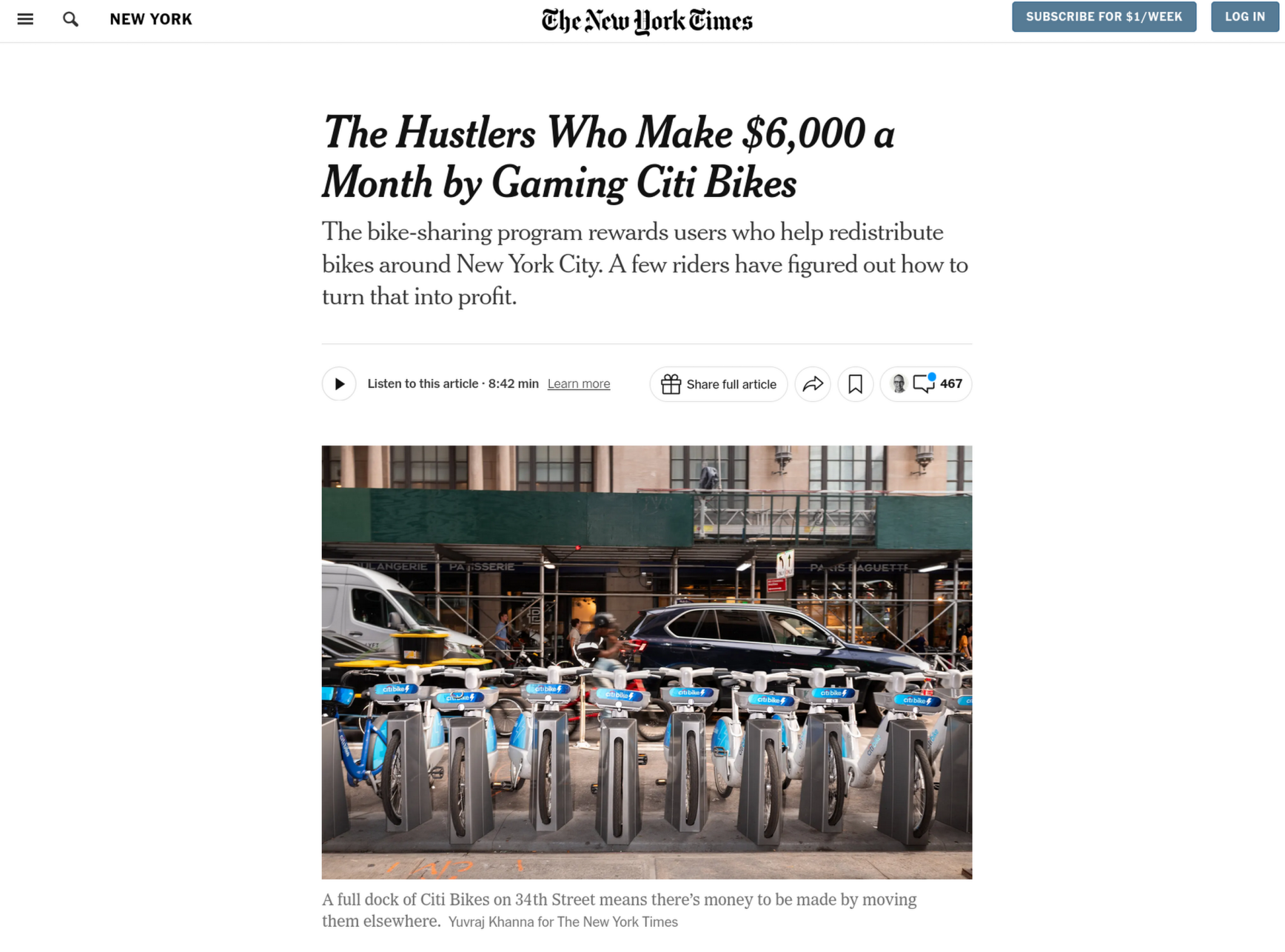
Eventually The New York Times got on the case and the party was over. To the extent that this was ever actually a problem, it was quickly solved by telling the people farming to knock it off. Motivate has since made changes to how the algorithm weighs certain stations, and now docks have a kind of weighted “memory” that accounts for not just the number of bikes present in the dock, but how many are historically there. This itself introduces quirks in the system, and certain docks will simply skew towards positive or negative values now relative to the number of bikes actually present. Two other changes were also made following the Times piece: the $200 trade-in value for 1000 points was knocked down to $150 dollars, and the cash payment was converted to a gift card. Capriciously giving everyone doing this halfway seriously a 25% pay cut was needless shrinkflation; the issue had already been solved with warnings and algorithm changes. But the shift to gift cards itself was interesting. If I was not getting paid in cash, was what I was doing work? Was bike rebalancing ever, really, work? Given that this program is administered by Lyft, an intentional murkiness between worker and community member is itself unsurprising.
On That Grind
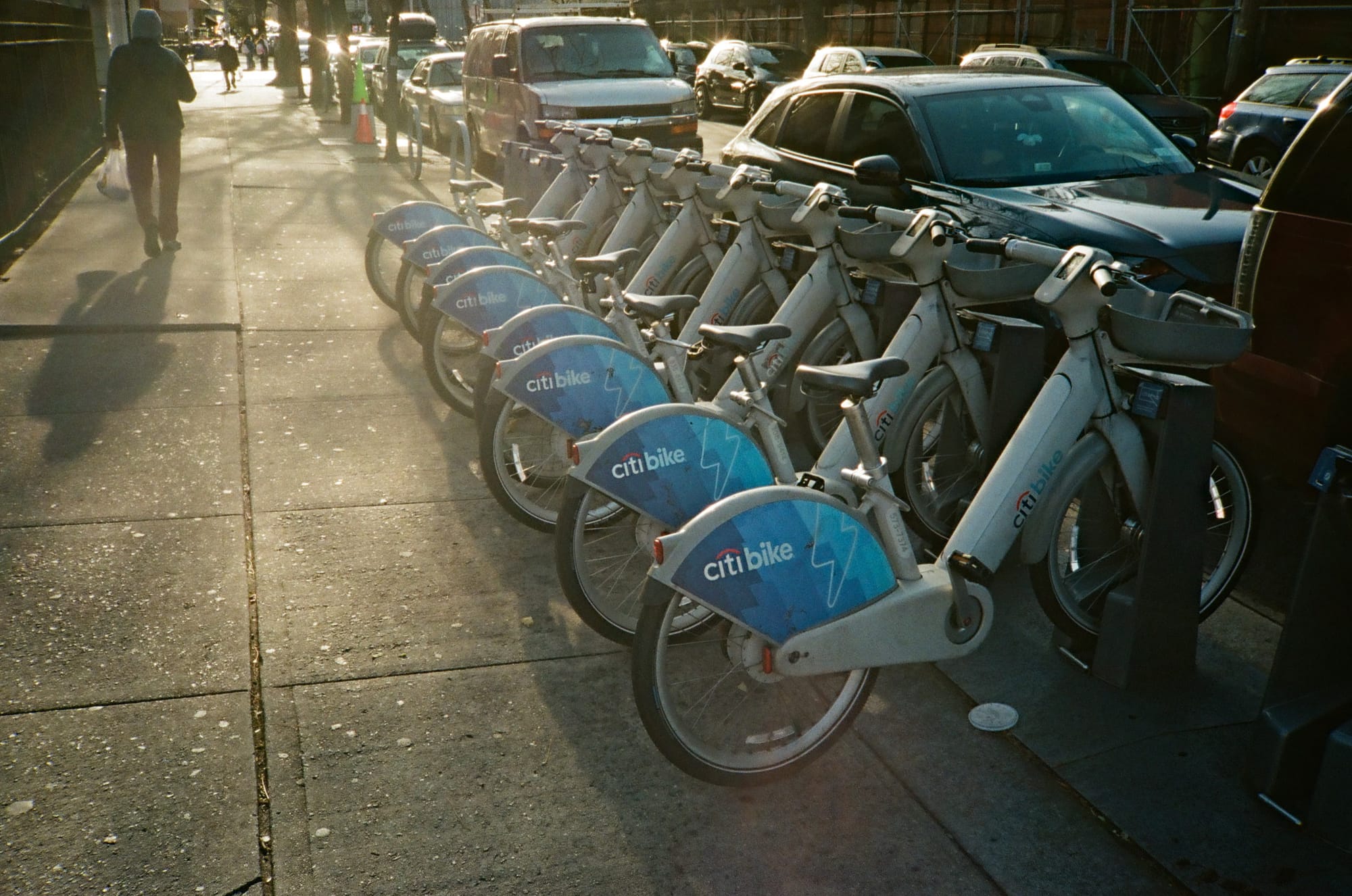
Before getting into the process of farming, it is worth discussing the various Bike Angel rewards relative to their dollar value if bought in cash. (Stop me if I start to sound like Adam Sandler in Punch Drunk Love.) The value changes wildly depending on both the cost of membership and the cost of ebikes, which is also slightly less in Jersey City than in New York City for some weird reason. (CitiBike operates across the state lines into New Jersey but does not operate in Staten Island anymore). CitiBike also raised their prices across the board in January, which they pegged to raising tariffs and expansion, although this is also the fifth straight year in a row they have done this so I’m personally less inclined to take their word for it.
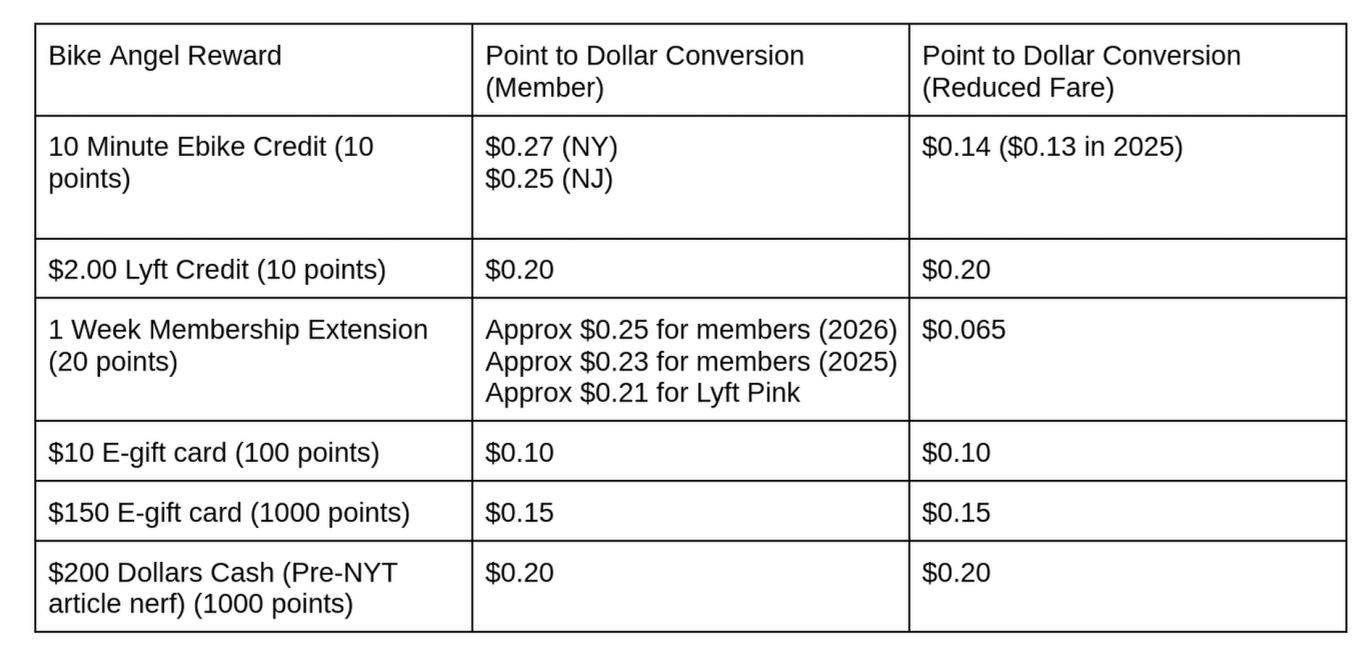
For non-reduced fare members, the best point to dollar value conversion is the ebike credit, followed by the one week extension. This has changed as the price of ebikes has gone up. However, the one week extension is probably the best deal for regular members, as it allows you to ambiently work off the cost of membership to basically nothing in an afternoon if you plan your trips correctly. Neither of these hold true for reduced fare members, as the cost of ebikes and memberships being lower throws off the math. This means that for me, the most points-efficient conversion was Lyft Credits (I don’t care about company scrip if I’m being honest), followed by the $150 e-gift card for 1000 points. Prior to the NYT piece, this used to shake out to the same point to dollar conversion as the Lyft credit in direct cash, and I find the fact that Lyft funny money is weighted higher than usable money to be fairly corrupt and gross.
I settled on the goal of getting a Nintendo Switch 2 for a few reasons. Basically none of the writers at Aftermath except Nicolle Carpenter have one; while we respect the hardware, none of us really cared enough to pay money for a console in its launch year with mostly middling releases. But as an arbitrary goal, the pre-tax base MSRP of the Switch 2 cost exactly 3000 Citi Bike points, three $150 gift cards cashing out to exactly $450 dollars (that would have been $600 in 2024). I had already banked 679 points by just ambiently riding places, 22% of the way to the goal. What if I just started doing it?
How To Do It
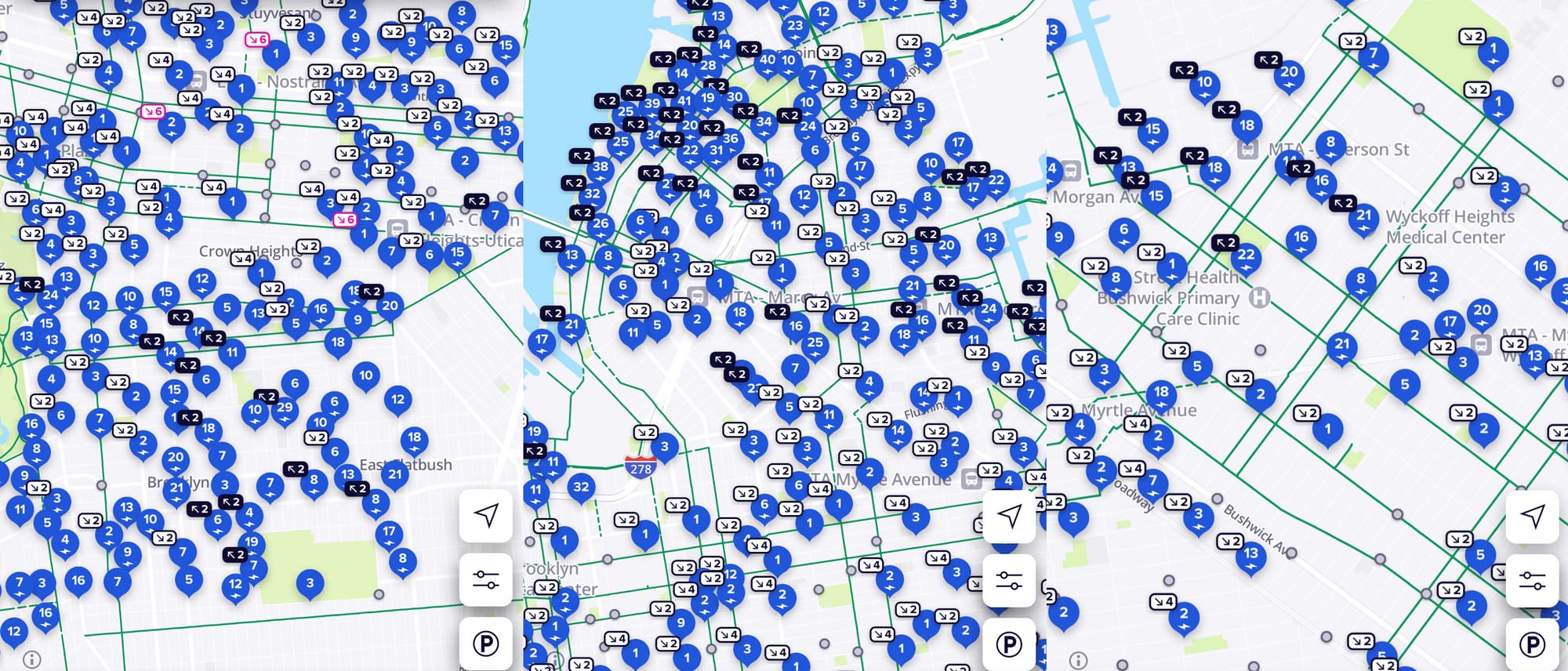
There is an art to farming points. Ambiently maintaining a multiplier if possible is a good idea, and you can make that easier by stopping at a neutral dock between a positive and negative dock to maximize the number of positive rides. You cannot force a run in an arbitrary location, as many parts of the city have a historically lopsided distribution of bikes. Not unlike farming materials in an RPG, you have to be aware of which locations are conducive to the spawns you want, and at what times. My strategy is to favor “edge zones,” places that exist in the fluctuating liminal space between areas of high and low demand. Look for these edges long enough and you begin to see patterns emerge: big parts of Queens and the Bronx are heterogeneous, shifting from positive to negative from block to block, rippling with the flow of public transit into private car ownership. Manhattan tends to fluctuate in big chunky blocks, although my understanding is that parts of midtown locations tend to be unreliable post farming nerf. BedStuy needs bikes constantly, and is adjacent to neighborhoods with a glut. The areas leading to East New York and Brownsville are often in a chaotic flux with high point value destinations as the Citi Bike coverage drops off right before it hits one of the poorest neighborhoods in the city.
When you find an edge zone, the goal is to find two stations as close as humanly possible with opposite values, preferably a single block. With a 3x multiplier, you want to seek out six points a run as your baseline, ↗3 to ↘3 or $0.90 per ride and walk back. Anything on top of that is gravy. This is not a bad ROI if you are doing it for exercise, killing 30 minutes before a movie, or on a lunch break, although you have to factor in travel to and from the location, the flow of traffic, and the relative complexity and danger of each route. Occasionally a ↗12 or ↗9 spot will materialize near a neutral or negative spot and I will squeeze every last drop out of that thing, but that’s not consistent enough to build a plan around.
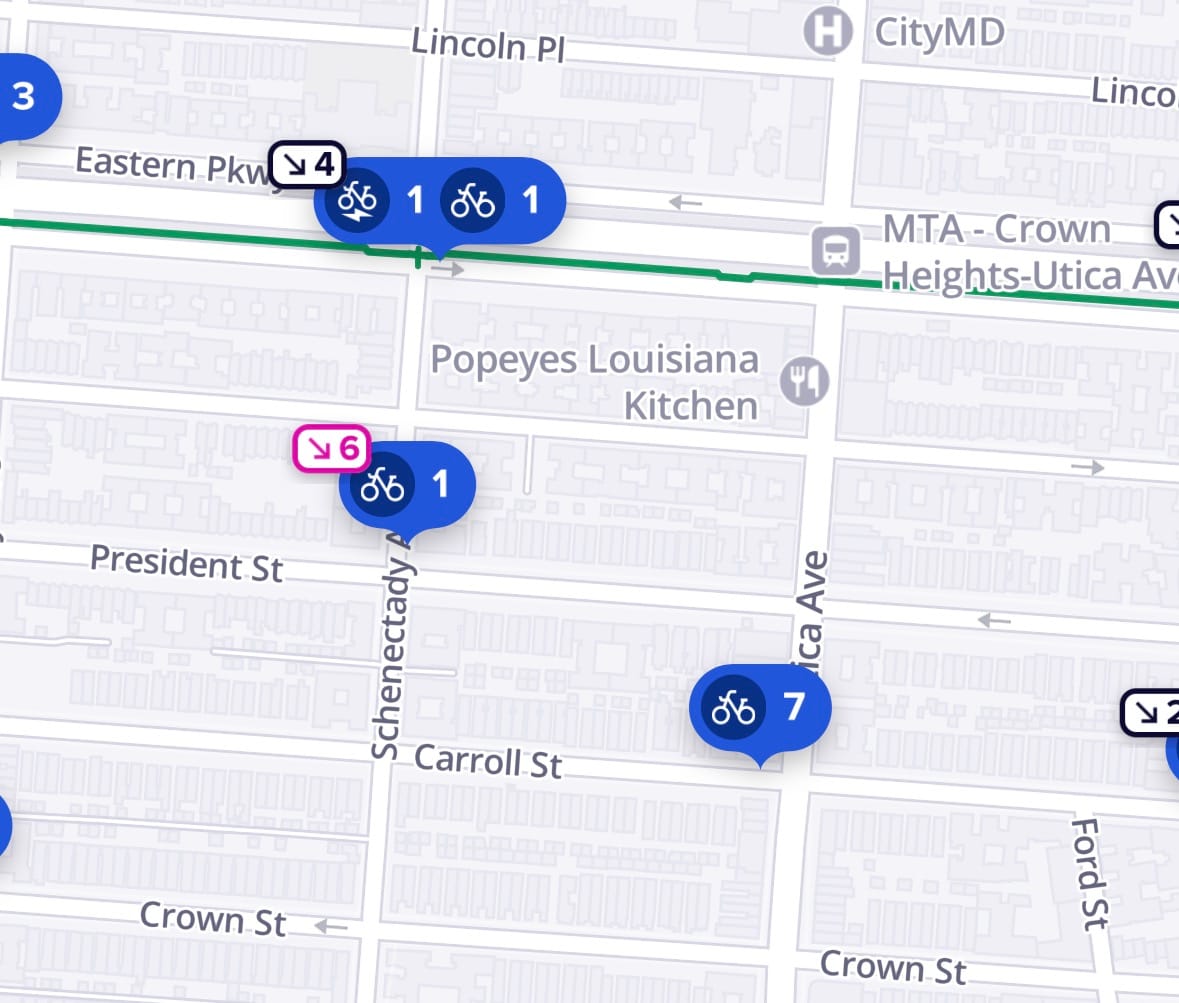
A farming spot can seem ideal until you attempt it and realize there is a busy and relatively dangerous intersection that completely screws up the flow of the run. Street direction should also be taken into account unless you are a huge dick and want to ride against the flow of traffic (there are times where this is extremely seductive, and where walking a bike back is a solid compromise). A helmet is a must if you are doing a halfway serious run – even though NYC has made huge strides with bike lane infrastructure, we do not live in Chairman Mamdani’s Titoist cycling utopia just yet. The people who voluntarily drive in New York City are often NY Post-addled reactionaries who treat driving like the movie Death Race 2000 and face no consequences for it because killing a cyclist is functionally legal if you say “I’m sowwyyyy.” On top of this, cops are huge babies who don’t wanna do traffic enforcement since COVID lockdown, which makes sense because they park sideways on the sidewalk and often commute in from Long Island and the really racist part of Staten Island that doesn’t have good Sri Lankan food. To put it more bluntly, watch your ass on the road.
Another consideration if you wish to do this profitability is the cost of riding the bike themselves. You generally want to keep your cost down unless you are traveling to and from a farming zone, which means that the hulking, heavy, non-electric bikes take priority over ebikes, as they are free for 45 minutes for members (this can be extended to 60 minutes if you do enough Bike Angeling, which I did several years ago). If a dock only has ebikes present, the app will give you an option to choose between a low-power mode for functionally the same cost as a classic bike or an ebike at the regular rate and power. They introduced this compromised mode a while back, and I generally find throttling electric bike speed to be means testing tech startup neoliberal bullshit. The low power mode, despite sucking a little bit more, is the ideal cost/benefit curve for farming short distances, so a high point dock full of mostly ebikes a block away from a hungry dock is a farming dinner bell.
It Begins
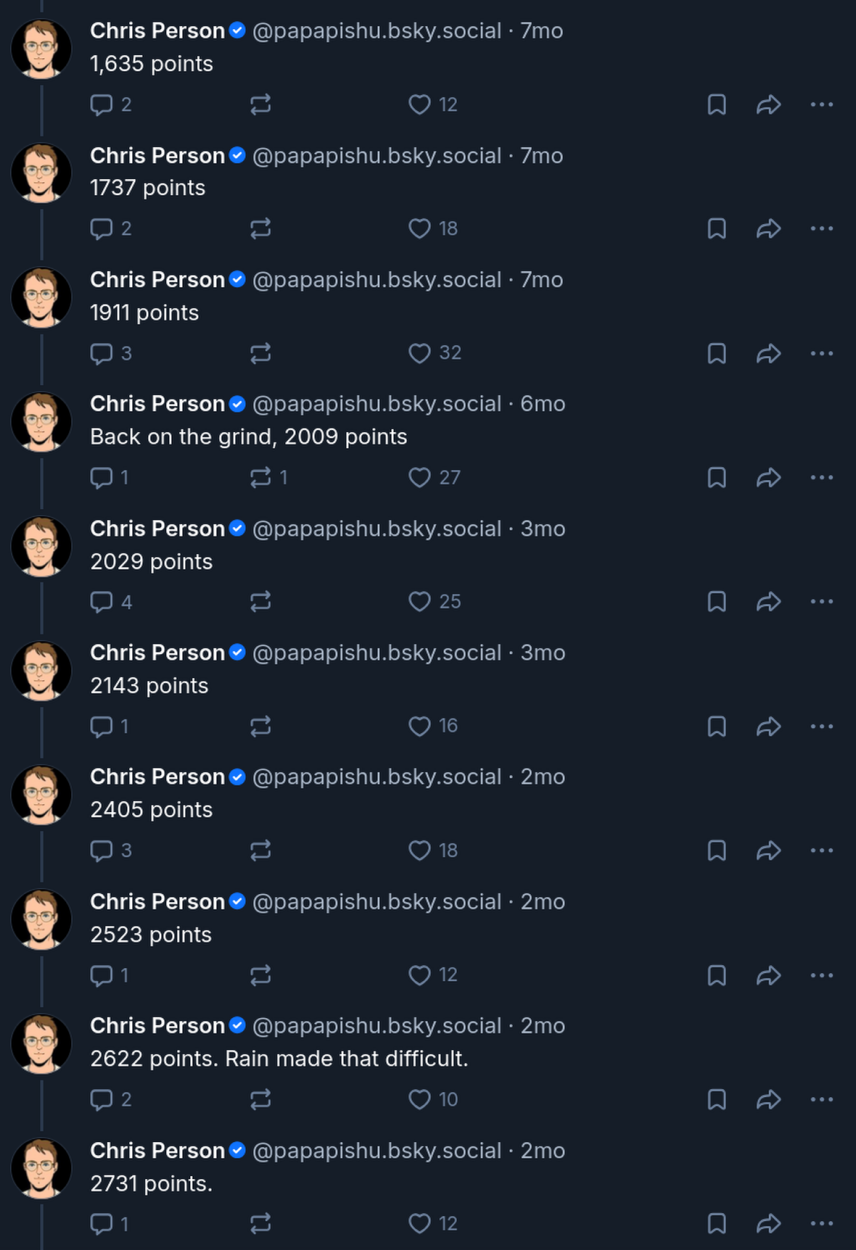
Starting to farm points in June in New York was perhaps inadvisable. If you have ever been to this city, you know that the humid subtropical climate coupled with the heat the city retains gives summer in New York a demonic armpit-like quality. If one wishes to take farming seriously for some dubious reason, it is best to go with the most temperate time of day. I began to favor evenings when it was convenient. But sometimes you check the app and the ideal farming cluster comes up in the middle of the day, with the sun beating down at you in dangerous 92 degree weather. At around 1000 points I got into the habit of posting my updated score online in a big thread, an ominous countdown every hundred or so points.
Aftermath is a worker-owned, reader-supported website about video games, the internet, and what comes after. An an independent outlet, everything we do is only possible thanks to our subscribers. If you want more stories like this, as well as access to our comments section, Discord, and more, check out our subscription tiers.
If farming points is work, and I’m unsure it is, it’s calm work that brings you all kinds of places if you allow it to. Like Pokémon GO before it, a computer algorithm points your body in capricious directions. Unlike Pokémon GO however, it forces you to consider the structure of the world rather than a fictional world laid over it. To farm points is to contemplate the structures that lead you down a single road again and again. Haul a cumbersome bike down a stretch of asphalt a hundred times and you begin to know its shapes better than the face of your first grade teacher. You stumble upon a hot dog vendor in the middle of an industrial zone, the vendor himself having long given up hot dogs for health reasons. You come to know a particularly confusing road where two one-way streets careen towards each other only to both feed into a third road in a y shape you’ve never seen anywhere else. You find a privately owned soccer field, hidden like an optical illusion in a nest of houses, with an absolutely perfect view of the New York City sky soaked with violet and crimson. For all its faults as a program, farming is cycling and cycling is beautiful and will teach you the pattern language of the hidden places in your city if you allow it to.
Hacks And Setbacks
Adding “electric scooter repair” to my professional accomplishments
— Chris Person (@papapishu.bsky.social) 2025-07-14T17:35:36.772Z
Let me stress something: do not do this. Like I am skeptical you should even own a scooter.
Though I was farming along at a decent clip, I cannot resist the gamer’s grotesque urge to ruin a nice bike ride by minmaxing. Farm for a long enough time and you will quickly realize that the longest part of any farming ride is the walk back to the previous station. If your goal is to maximize the number of points you collect, then reducing that return trip is the most efficient way to increase your points per hour. There are several ways to do this. You can run really, really fast, although this will tire you out very quickly. Alternatively, you can carry a return vehicle with you. Objectively the easiest one to carry with you is going to be a skateboard or electric longboard; it can snap on to the basket of a bike or fit easily into a backpack.
Unfortunately, I have always sucked at skating and every attempt has ended with me eating pavement. The other option, which I should stress is extremely inadvisable, is an electric folding scooter. I found a guy selling an extremely busted Ninebot ES2 on Facebook Marketplace for next to nothing, took it apart and got it working with some solder shrink and a replacement part. I then found the cheapest shoulder sling I could find on AliExpress, allowing me to carry it over my shoulder like a guitar. The workflow was fairly simple: find a cluster, scoot to it, collapse the scooter, ride, uncollapse scooter, ride to the previous dock, rinse and repeat. Because the trips are more frequent, I could fit more in before the point values recalibrated. And when the farming cluster finally did dry up, I would simply ride home.
I’m able to sling my electric scooter cross body so I can do return trips rapidly and isolate 6-12 point pockets before the values change. This is gaming.
— Chris Person (@papapishu.bsky.social) 2025-11-21T01:38:36.701Z
Again, I would like to stress not to do this. It's a very silly thing to do. But also, hell yeah.
The downside to this method is that I was carrying an additional 27 pounds on my back and the battery was anemic at best, but I taught myself how to service and repair a niche if inadvisable style of vehicle. I technically did also spend some of my own money to make farming points easier, but the same logic holds true of every “contractor” who delivers Seamless and drives for Lyft.
My summertime farming was put on a multi month long hiatus when my foot was shattered in several places, requiring it to be held together with external metal pins, and necessitating the need for an elaborate peg leg prosthetic. I was pissed off for several reasons, but a not insignificant one was that I wanted to see the project to its conclusion. It had never been about the Switch 2, I just wanted to say that I did this and as silly as it seems, I missed my little evening walks.
Over The Finish Line
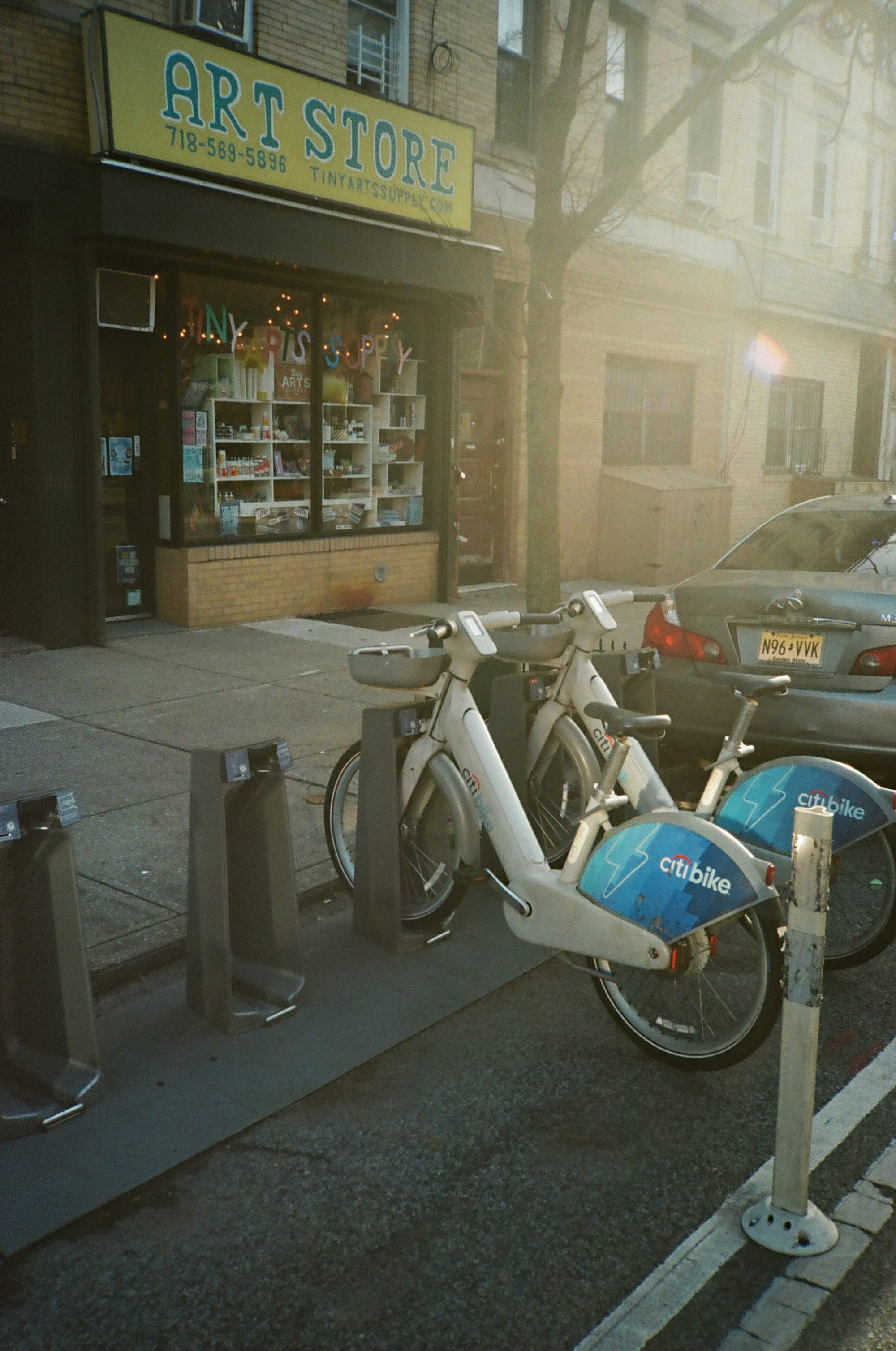
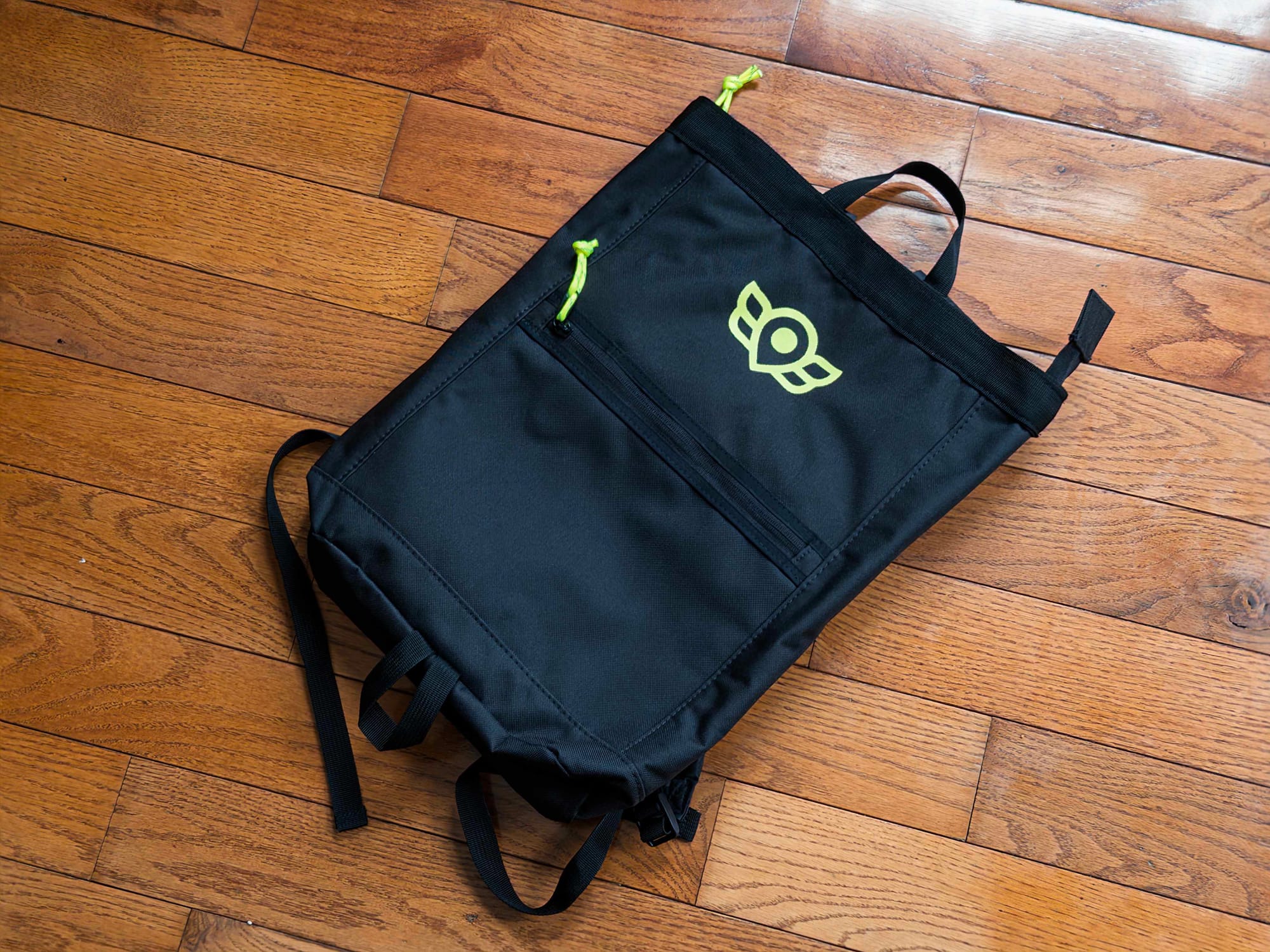
As soon as I could walk normally again I got back on the bike. It was late October, and I had missed the cusp of fall, perfect cycling weather. The weather was getting worse and I wanted to get this done before the dead of New York City winter made cycling miserable. During the process I had managed to get the backpack sent to me, a nice memento to remember the entire thing.
3001 points, I did it lads.
— Chris Person (@papapishu.bsky.social) 2025-12-01T19:47:20.302Z
Moment of truth.
On December 1st 2025 at 2:35pm I finally reached my goal. I redeemed my points immediately, but apparently they sent out the gift cards the following month, and so I was only able to buy my Switch 2 in the middle of January this year. When you actually get the gift card you are given the choice of exactly five vendors: Amazon, AirBNB, Disney, REI and Walmart, which constitute the totality of all possible American interests. After some debate in work Slack it was decided that spending more money on the Mario Kart bundle did not break the rules of the contract because it still covered the pre-tax MSRP.
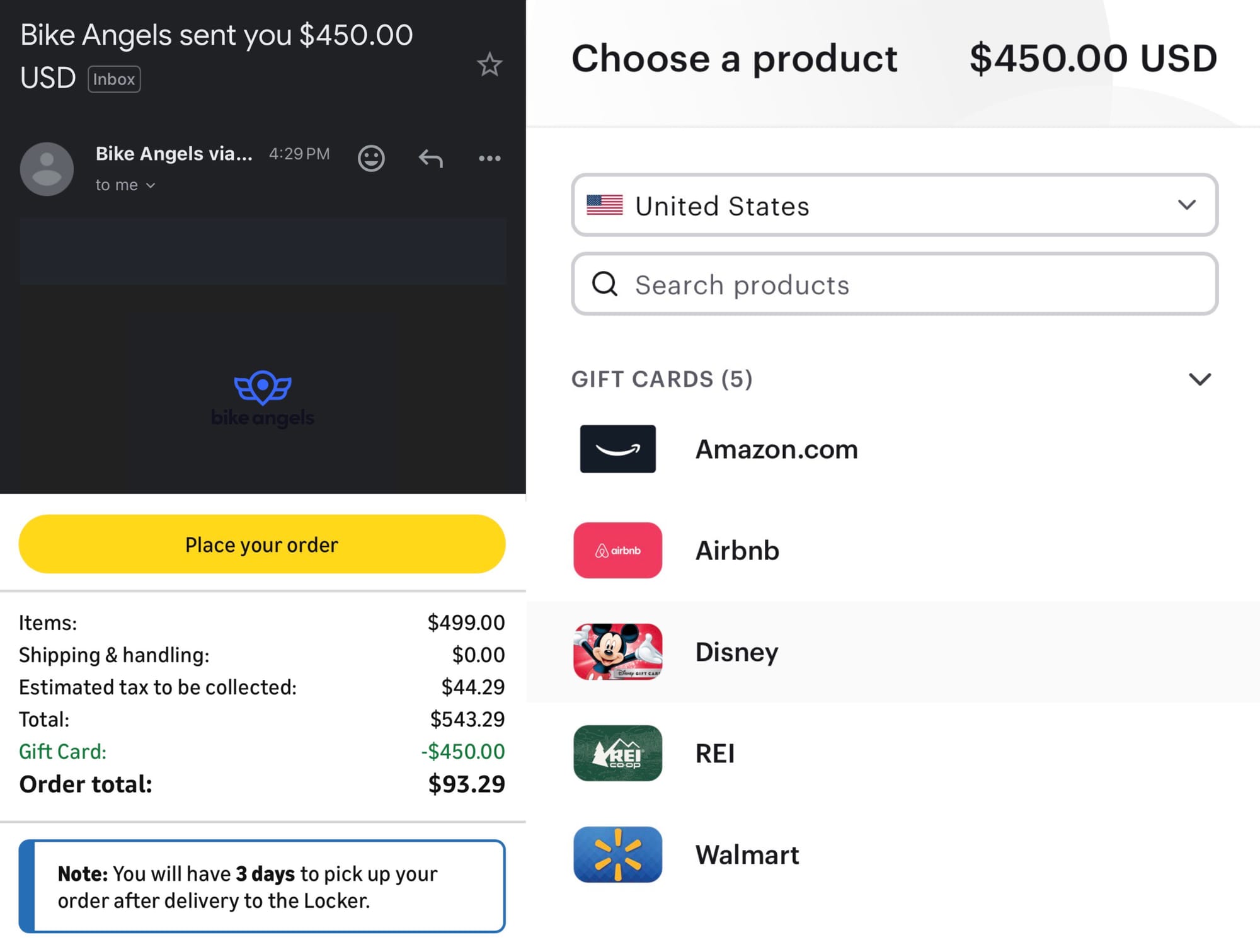
The next day, I picked up my Switch 2 from an Amazon locker. It's fine. We played a little Kirby Air Riders and purchased and returned a bowling game when we realized it was the worst possible version of the game. The Switch 2 was never really the point; I mostly still play my Steam Deck.

I have been asking myself if farming Bike Angel points constitutes “work” or “a job” for several months now. It is a strange thing to consider, and I don’t want to suggest that work itself is bad. Bike Angels is clearly labor or, bare minimum, laborious. If you see it as exercise, it’s exercise that pays you to clean up the gym. If it’s a video game, it’s a far more productive and enriching one than the literal months of playtime I spent grinding materials in WoW in college. If it is a gig economy job it is an oblique or poorly paid one. I could have easily gotten enough money for a Switch 2 doing Uber Eats in far less time, and unlike a gig economy worker I don’t really need to do this to live. I have talked to Bike Angel diehards who see it as simply a fun way to exercise that gives them a little spare cash (although far less these days). I have talked to countless friends who argued that this is clearly work, and one that argued that the strangely voluntary nature of it kind of invalidates it as a “real” job.
But the more I thought about it, the less important a firm answer either way became. The important element is how slippery the idea of work has become by design, how soft the boundaries between the personal and professional. Citi Bike as a service (when affordable) is a joy, one that makes it easier to access entire swaths of the city quickly. More bikers on the road incentivizes the creation of better bike infrastructure, and getting America off of cars is vital to the survival of the planet. But it is also a private public partnership that is owned and administered by a company that intentionally muddles the definition of an employee, and that murkiness pays the bills for Lyft. The Bike Angels program is a beautiful exercise in game design, but it is also one whose ideology radiates outward from its parent company. To live in America is to be drowning in a constant firehose of ideology: wellness, work optimization, hustle culture, and competitive gaming, all those tastes melting into each other, becoming as indistinct as an overly ambitious soda from a Coke Freestyle machine. There is power in the ambiguity between what is and is not work.
But there is one thing I am absolutely certain of: I worked my ass off for that Switch 2. I have never worked for something so hard. And regardless of how much I actually play that thing, if you’ve read this far to see exactly how I pulled it off, then this whole dumb stunt was worth every single mile.


