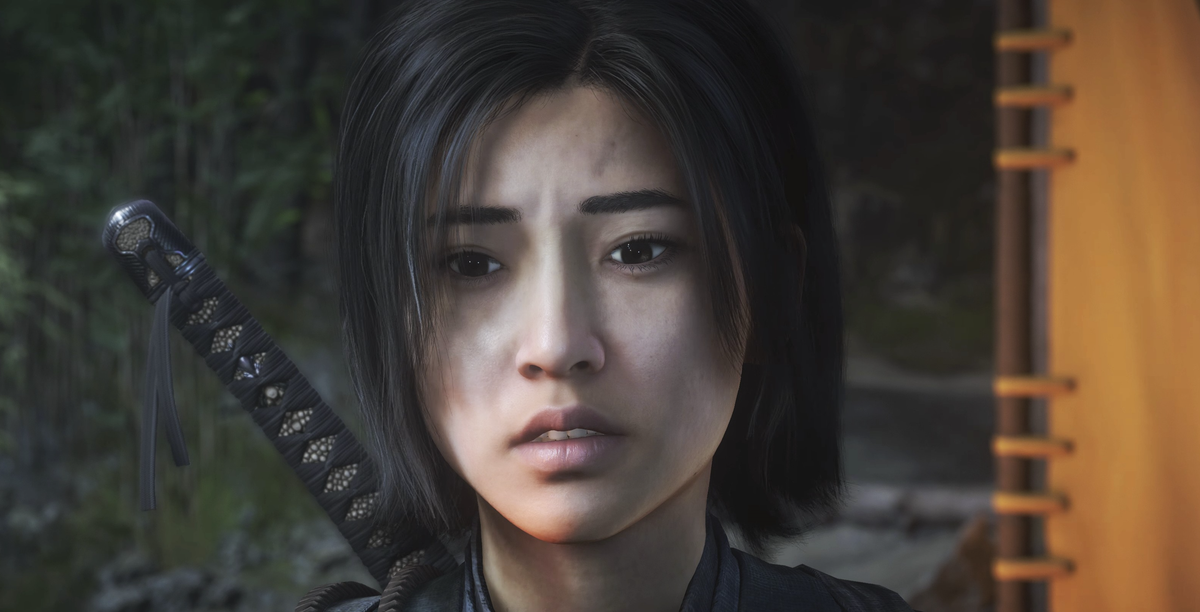

We’ve just crested the hill of 2026’s third week, and once again, it’s time for another helping of dire Ubisoft news. Making previous weeks’ layoffs look like mere throat clearing, the company today announced a “major organizational, operational and portfolio reset” that will result in more layoffs, as well as delays and cancellations – most prominently of the long-embattled Prince of Persia remake, which is now dust in the wind. But on the bright side, we’re also getting something no one asked for: a greater investment in "player-facing Generative AI.” Oh, and more live service swings from the publisher that has repeatedly failed to get out of its own way with games like XDefiant and Skull and Bones.
In a release published today, Ubisoft CEO Yves Guillemot – who remains in charge despite demonstrably no longer being the man for the job – announced the formation of five “creative houses” that will each focus on specific genres and series. These sound significantly more self-contained than the global, multi-studio efforts that defined Ubisoft’s previous era. They will break down as follows:
- CH1 (Vantage Studios), focused on scaling and extending Ubisoft’s largest and established franchises to turn them into annual billionaire brands; Brands: Assassin’s Creed, Far Cry, Rainbow Six
- CH2 dedicated to competitive and cooperative shooter experiences; Brands including The Division, Ghost Recon, Splinter Cell
- CH3 designed to operate a roster of select, sharp Live experiences; Brands including For Honor, The Crew, Riders Republic, Brawlhalla, Skull & Bones
- CH4 dedicated to immersive fantasy worlds and narrative-driven universes; Brands including Anno, Might & Magic, Rayman, Prince of Persia, Beyond Good & Evil
- CH5 focused on reclaiming position in casual and family-friendly games. Brands including Just Dance, Idle Miner Tycoon, Ketchapp, Hungry Shark, Invincible: Guarding the Globe, Uno, Hasbro
Each creative house will have “end-to-end responsibility for its portfolio, overseeing the full creative and brand scope from development to publishing (brand, marketing and sales go-to-market strategy)” and “will also be financially accountable, both in terms of [profit and loss] and cash generation.” Ubisoft believes this still-convoluted-sounding structure will “sharpen strategic focus, reinforce execution discipline, and ensure that investment decisions will be taken closer to where value is created.” I guess we’ll see!
Vantage, you’ll remember, was formed last year in conjunction with Tencent, from which Ubisoft received a $1.25 billion bailout. One of its co-CEOs is Guillemot’s son, who is definitely not a nepo baby. All of this reshuffling will come at a steep cost – to people who are not part of the Guillemot family, of course.
“To put the Creative Houses in the best conditions to succeed, we decided to refocus our portfolio with a meaningfully revised 3-year roadmap and accelerate our cost reductions initiatives to rightsize the organization,” Guillemot wrote. “We will discontinue several projects currently in development and provide additional time to certain games, to ensure enhanced quality and maximize long term value. We will also selectively close several studios and continue restructurings throughout the Group. While these decisions are difficult, they are necessary for us to build a more focused, efficient and sustainable organization over the long term.”
A total of six games have been canceled, including Prince of Persia and four unannounced games, three of which were new IP. Definitely a sign of a company with a bright, bold future ahead of it! Four new IPs remain in development, while seven games have been delayed.
It’s not clear yet how many people will be laid off – in addition to those who already lost their jobs earlier this month – but the damage will likely be significant. As Game File’s Stephen Totilo pointed out, a previous €300 million cost reduction plan has resulted in a total headcount decline of over 3,000 at Ubisoft. Now the company is planning for €200 million more in cuts by March 2028.
Employees who manage to dodge the scythe might still end up leaving of (what could charitably be called) their own accord, as Ubisoft is also largely putting an end to remote work.
“To support the effective implementation and operation of this new model, the Group also intends to return to five days per week on site for all teams, complemented by an annual allowance of working-from-home days,” Ubisoft wrote. “This evolution is intended to strengthen collaboration, including constant knowledge sharing, and the collective dynamic across teams.”
Game workers at other companies have referred to this approach as a form of “soft layoff” that disproportionately targets disabled and immunocompromised people, but maybe things will be different at Ubisoft, a company that has repeatedly stepped on rakes while trying to follow the rest of the industry. That in mind, I’d like to close out with a selection of recent headlines about Ubisoft. Feel free to form your own conclusions.
 Nathan Grayson
 Nicole Carpenter
 Luke Plunkett
 Luke Plunkett
 Luke Plunkett
 Nathan Grayson
 Nathan Grayson
 Nicole Carpenter
 Luke Plunkett