

In what's become a tradition around the holidays, Wake Up Dead Man, the third whodunnit murder mystery film in Rian Johnson's Knives Out world, is on Netflix after a short theatrical run. This time around, Daniel Craig's utterly charming Foghorn Leghorn private detective Benoit Blanc is tasked with solving an impossible crime where a priest was killed inside his church. The suspects: his congregation. Dun dun dun! However, what brings us here isn't the whodunnit of it all, but the how done it. More specifically, how the film handles religion. And what better way to do that than have Aftermath's resident expert, Riley, chat with Midnight Mass defender Isaiah about how the film handles theology.
Riley: Oh my gosh, we've never argued about Midnight Mass. For another blog!
Isaiah: We'll throw down in the free marketplace of ideas on that one! So, I threw down the gauntlet weeks ago after we had a bit of a side chat about Midnight Mass and how I think it holds up years later with my own curiosity for how you'd feel about Wake Up Dead Man after I came out of theaters to watch it. I guess to start off, with that as its premise, did you have any reservations about how the film would handle religion?
Riley: I did! I have a lot of very smart friends who were praising it ahead of it coming to Netflix, so I had high hopes. I think big picture I wasn't as "wow"ed by it as some of them, but I think a lot of that is that I like the Knives Out movies fine, but they never really blow me away. When Blanc first shows up at the church, I was worried the movie's big conflict was going to be "believer" versus "non-believer," which I personally find to be a bit of a tired topic in secular media about religion, even though I totally get that it's one that's surely on the minds of a lot of creators.
I think Wake Up Dead Man does use religion to provide an interesting twist on the standard whodunnit formula, where about halfway through it injects a bit of theology into things: is solving the murder "justice" from a theological perspective? How should we treat people who do harm? These are the sorts of questions that don't really come up when religion is just used as set dressing, so I really appreciated that.
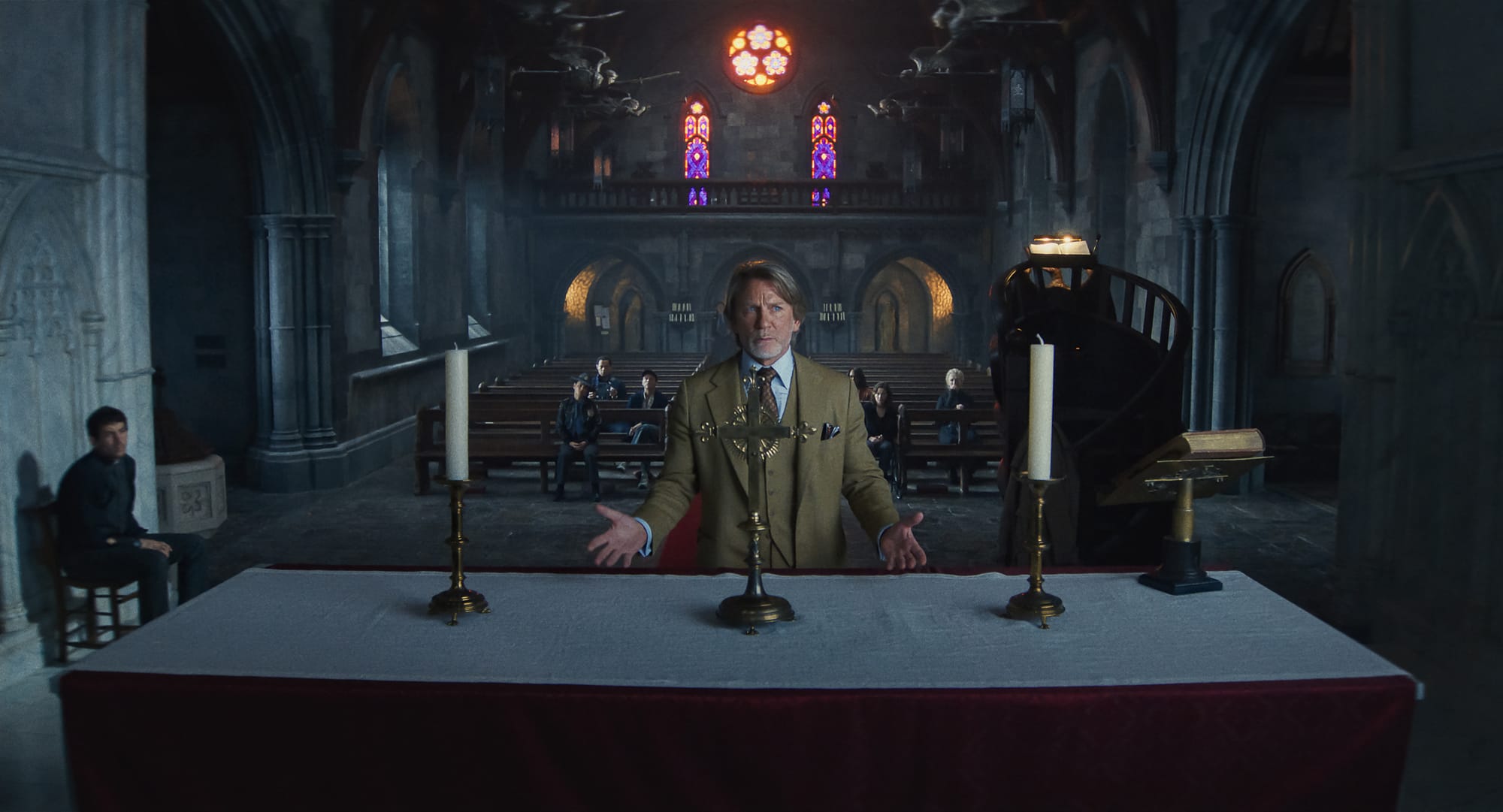
Isaiah: I feel you on that. When I first watched it, I was kind of bracing myself for Blanc, as a gay man with an unmistakable southern accent, to have a huge axe to grind about religion when he first hit the scene like Kermit the Frog in The Muppets. While sure, he definitely made his qualms about religion known, he didn't harp on them or let them guide the film's direction toward a tropey religion vs atheism diatribe. And because of that, I think the film stands out from the others as a more personable one where we're wrestling with themes of justice and grace, and where one might fall in a murder mystery like this one. In rewatching the movie yesterday, one scene that spoke out to me was when Josh Brolin's Monsignor Jefferson Wicks comes to blows (literally) with Josh O'Connor's Father Jud Duplenticy.
For context, Wicks is kind of an asshole pastor who weaponized religion as a means to bully new parishioners by calling out their insecurities in his sermons. He winds up dead in the movie, kicking everything off. Jud is a new pastor at his church charged with helping prevent its dwindling numbers. Anywho, they have a whole falling out when Jud calls out Wicks for his hateful hazing of everyone in his congregation and his galvanizing of himself as a warrior of Christ. Wicks, after punching Jud in the gut, says, "I'm the world. You're the church." When Jud instinctively recoils in a defensive boxer's stance (because he used to be one), Wicks applauds him. His overall point is that anger lets folks (i.e., the church) take back the ground they lost to protect themselves and that the world ultimately wants to destroy "us."
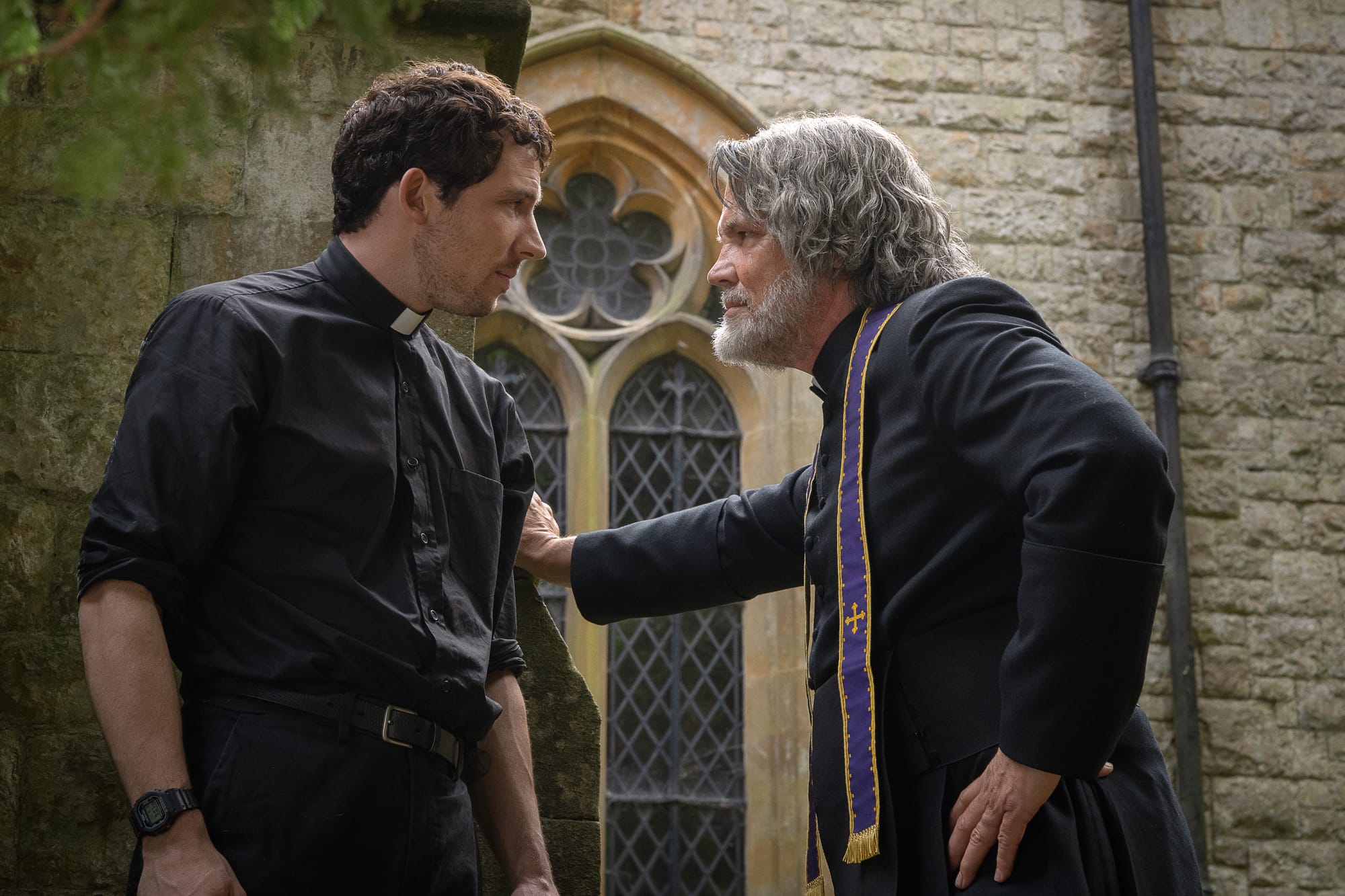
"Your version of love and forgiveness is a sop. It's going along to get along with modernity, not wanting to offend this garbage world. Meanwhile, they destroy us." Granted, he goes on to define those seeking to destroy them as "feminist Marxist whores," but his sentiment is that the kind of rage-baiting algorithmic outrage that we see in social media, reflected in his sermons, is the only way for the church to buck back. It's something the film spends the rest of its runtime wrestling with. But I wanted to ask, what did you think of that scene?
Riley: I think the movie touches on, if never fully dives into, a real tension we're seeing in a lot of denominations these days, or maybe accurately a tension we're seeing politics inject into denominations. As faith gets co-opted into our current American version of the Right, we're seeing a growing presence of a kind of aggressive, hateful, "crisis of masculinity" version of Catholicism through, say, JD Vance and co. And I'd argue we saw a similar thing in Protestantism with the Young, Restless, Reformed movement that gave us (and somehow keeps giving us) Mark Driscoll and his ilk. Wicks and his congregation touch on that: he feeds on insecurity and exclusion, and on this idea of Christian persecution that we're seeing Trump play into.
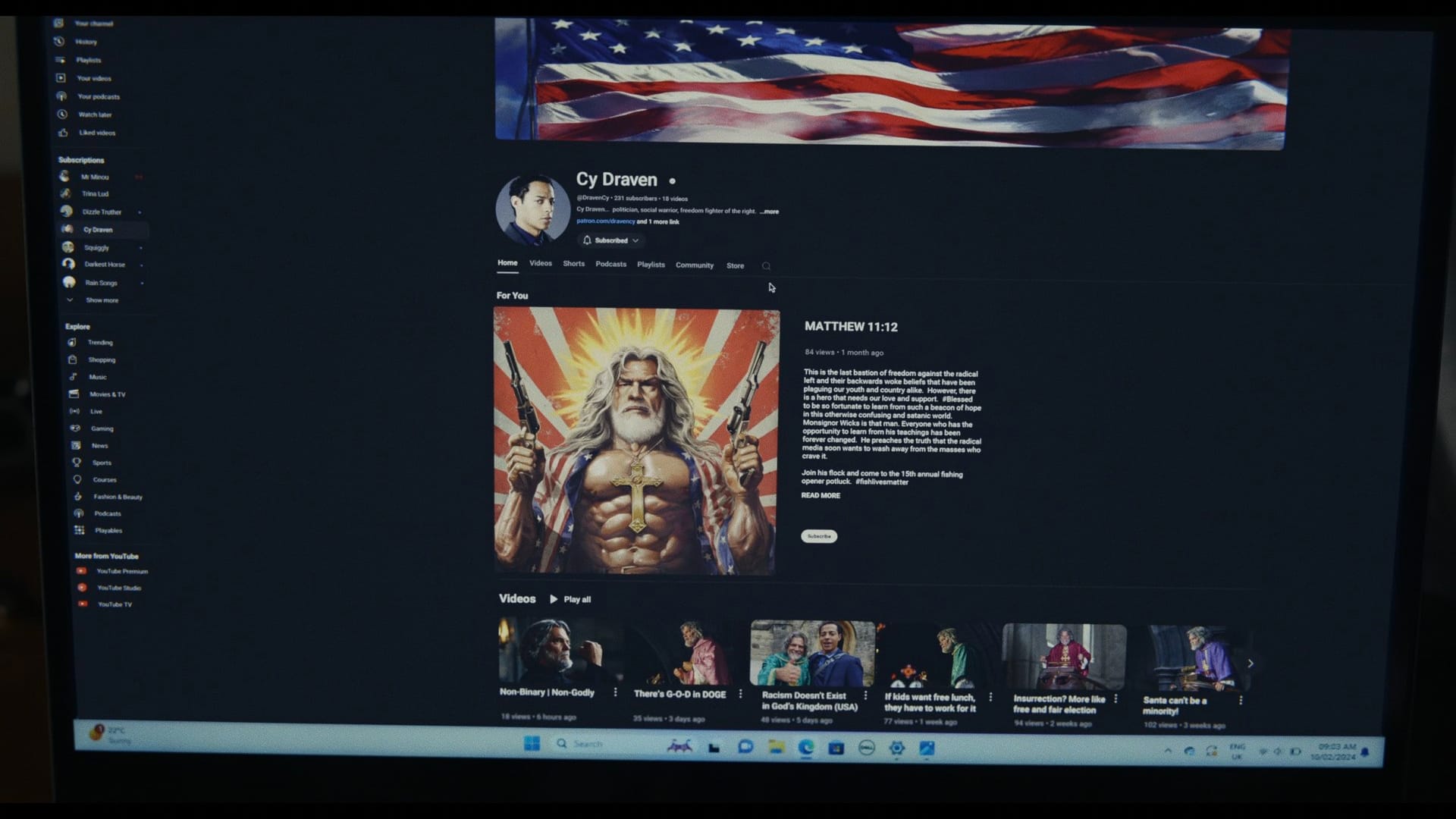
It's a powerful message for people, especially men, who feel done wrong by, and we see it resonate with Wicks' congregation even as it drives other people away. And I think it's interesting how Father Jud isn't simply the alternate view--he also struggles with violence and domination and a desire for conflict, and he works through that in the movie in an arc I don't think we see in a lot of movies about faith. When these ideas first came up I thought maybe the movie would get into, say, Christian nationalism or something, and I appreciate that it stays focused on its own little corner of the world, even as I think it had a chance to go bigger.
Isaiah: We've lightly touched on it earlier, but I wanted to ask when it comes to movies tackling theology, what are your icks? Or at least what are pitfalls you've seen countless times that turn you off to them?
Riley: I think way too often religion is just set dressing or a stand-in for "the bad guy," especially in video games. And here's where I have to throw my standard disclaimer: despite being a queer trans man, I have managed to live a life where religion has never had the power to hurt me; I've always been able to leave a faith space that felt unwelcoming or unsafe, and I always want to stay aware that that's a privilege a lot of people don't have, and I would never begrudge anyone having a hostile view of faith as a result.
But that kind of "outside looking in" view, I think, leaves a lot of really interesting stories about faith on the table, and simplifies into an institution something that is really complex and personal for people. I think stories about faith also often boil down to stories about blind adherence--this is one of the reasons I really didn't like Midnight Mass--and that too really misses space for complexity to me. By making Wake Up Dead Man's antagonist and protagonist both people of faith, it lets the movie wrangle with loftier, more interesting topics than just "is God real?" or "are religious people bad?" that I think we see in a lot of media.
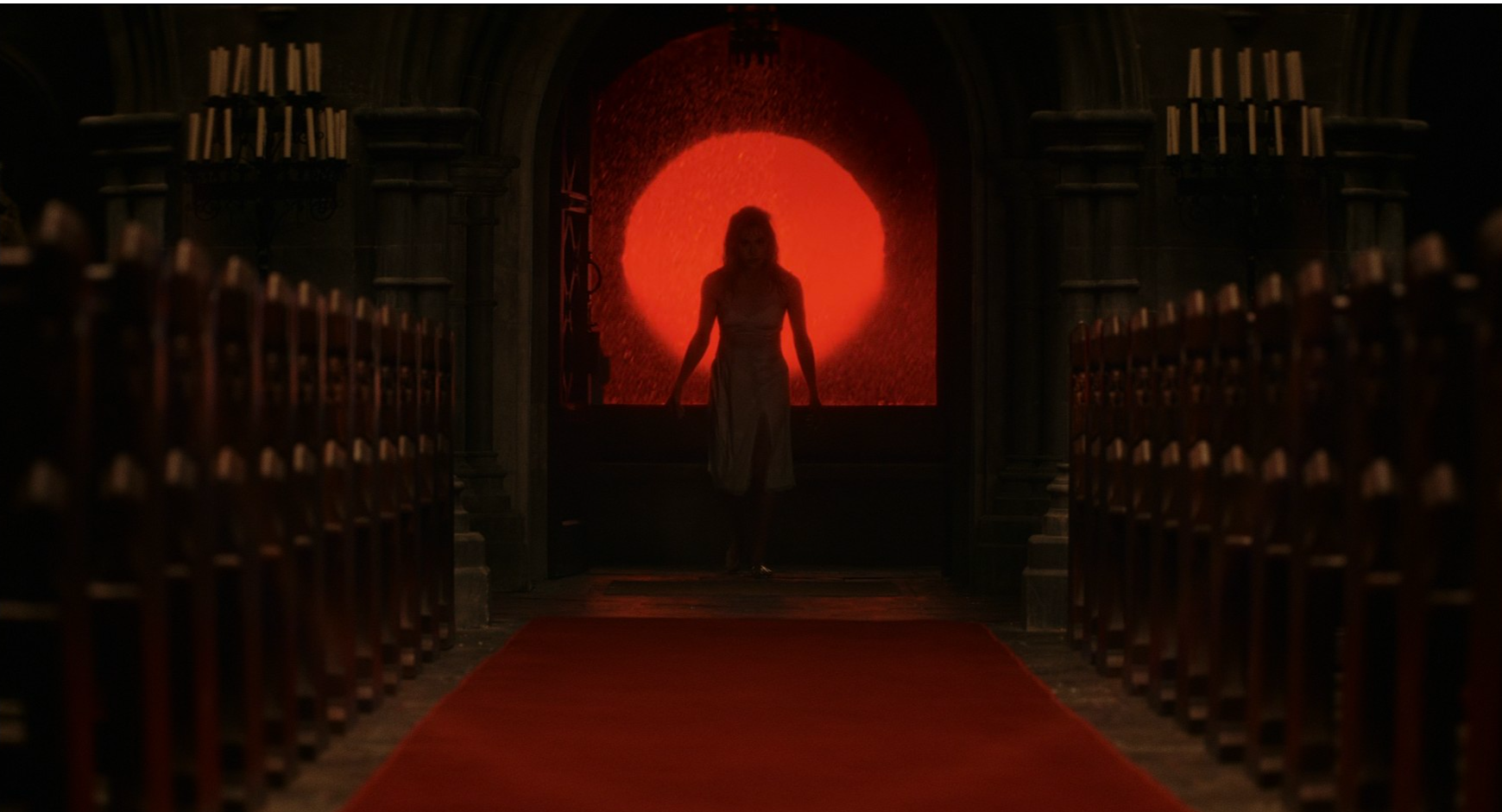
Isaiah: I think too, the film's showcasing of perspectives with memory—something that's become a signature of Johnson—where we see similar events play out from different points of view, depending on who tells it, sings better here than the other Knives Out movies. Thinking back on Grace's desecration of the church and how at first it had her looking like a primordial evil made flesh. A belief Wicks' church perpetuates with remembering her solely as the "harlot whore." I felt that the film bringing back that visual motif of events from different emotional memories played against Benoit's more concrete video evidence of events and recounting did a good enough job of hewing to what faith means to different people and how at times that can warp depending on how one can personally justify it to themselves.
Another scene I wanted to bring up, which is my favorite for how it derails the whole game of the murder mystery, is Jud's call with Louise. It's pretty much when the momentum of the film at its halfway point gets really close to stringing along a path to finding a culprit, but, to Benoit's chagrin, it's railroaded by Louise asking Jud to pray for her. More specifically, to pray for her and her mother, who is in hospice, and they had a falling out that she doesn't want to be the last thing she remembers. It's a pretty arresting scene because it goes from being played up with laughs with how you can call a business for pertinent information, and the person on the other end wants to shoot the breeze. But I felt that whiplash, and Jud's attentiveness to hear her story was something special.
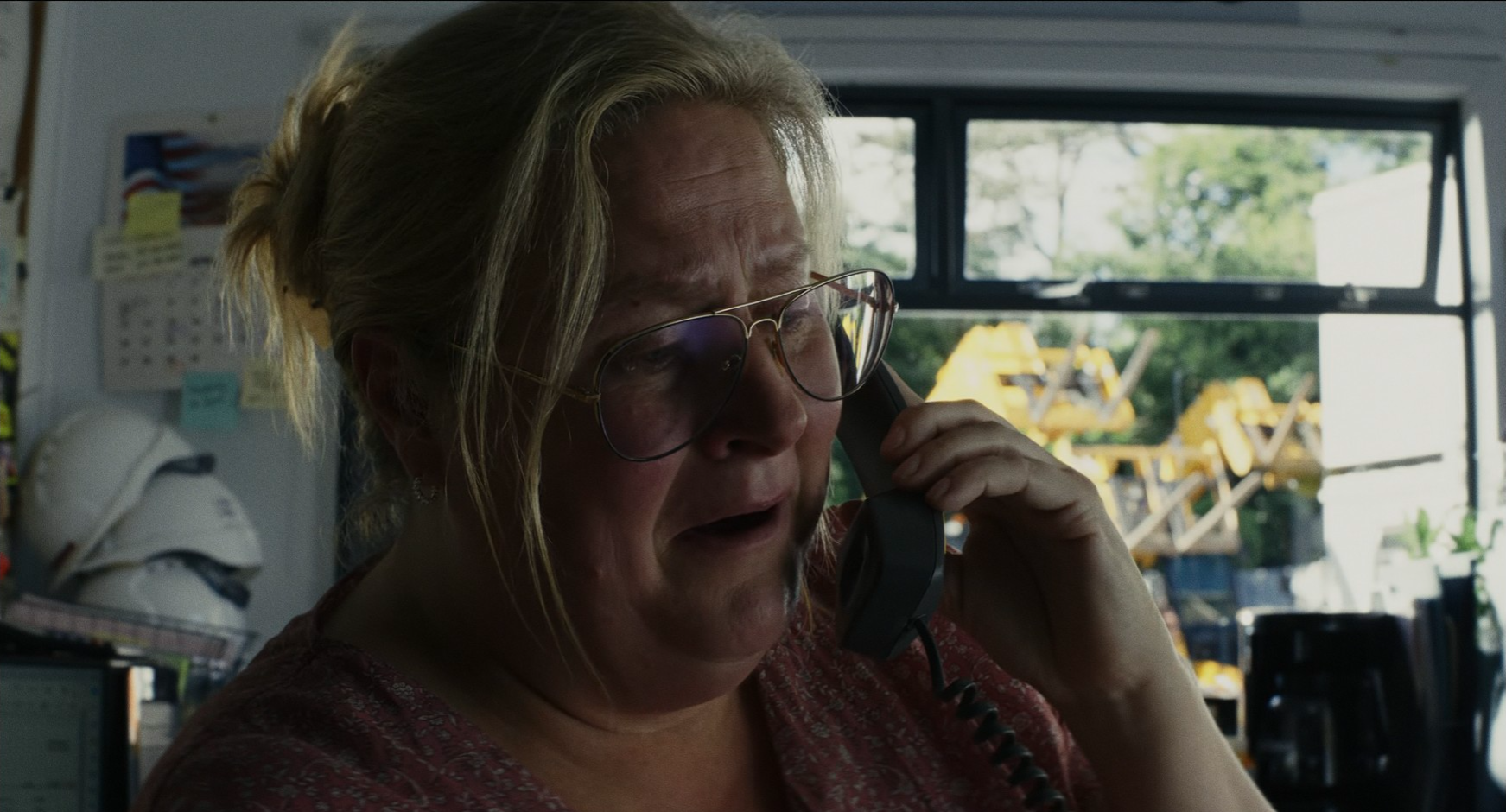
It felt especially targeted to me with the passing of my aunt recently, who was more about religion than I was, but I couldn't find the heart to tell her that. Still, it's a scene that felt so sincere in the rest of the film's kind of quick-wittedness, and it really spoke to how it wasn't taking religion simply as set dressing. That the whole having grace to meet people where they are with Louise and with how the film's climax doesn't do the routine reveal of the culprit was a neat way to take the murder mystery premise and flip it on its head by letting religion take the reins on how to approach this otherwise cliched story.
Riley: Yeah, I've seen a lot of talk about that scene. It's really startling; it stops the momentum of the murder mystery cold, and while it could have been played for laughs, instead it's really sincere and, to me, lovely. I have a friend who's a Unitarian minister, and when he first got ordained I remember us having a conversation about what he should do when people stop him in his clerical collar and ask for a blessing or something, especially when they think he's Catholic. And we both decided that in most cases it was just a lovely thing to do, and a good he could do in the world and for folks if the situation was appropriate. And I think that scene gets at this, a kind of nudge to remind us we're all capable of offering grace to each other, no matter what else is going on. And that theme of course bookends the movie too.
Isaiah: I think, in the grand scheme of things, it's pretty messed up that Wake Up Dead Man is yet another Netflix movie that was in theaters for a wink before being carted onto streaming with the added bonus of its subtitling not being entirely accurate. Being one of the fortunate few who braced the Chicago winter to go to the only theater that had the film, the whole experience seeing it (on a Sunday, no less) gave off the vibe of going to a church that might not have that many members but still felt like it had its own quirkiness in that it was at a mall with laser tag on the bottom level. But from my first watch, it gave me the impression that it wasn't gonna be looked on as fondly as the others since they felt like bigger, more extravagant films where its cast wasn't used as much as an afterthought. It also doesn't help that it feels like Johnson has had to do all the film's promotion single-handedly, adding to its more indie feel compared to the others.
lol the actual line he says is “telling the truth can be a bitter herb” but I love this so much I almost don’t want to tell Netflix (thanks @DrewMcWeeny for catching it) pic.twitter.com/SIjUhwzKmh
— Rian Johnson (@rianjohnson) December 13, 2025
However, upon rewatching it, I dig it more because it has that kind of spirit of grassroots, word-of-mouth praise that churches have had to bear in spreading the good word, regardless of the circumstances that limit them. As the godson of a pastor who got voluntold to help out with those sorts of things, its a kind of hustle that I can appreciate the film for more with it also handling religion in a more thoughtful way than it just being a blanket antagonist or something to feel you have to laugh at when folks like Jud act hard-headed and don't "play along" with the case the way we expect characters to.
While I don't see Netflix reversing course on how it handles its big movie releases in theaters, what with all its recent goings on, I hope that Wake Up Dead Man isn't going to be the last time cinema engages with religion in a way that's not tongue-in-cheek. We've seen with films like Conclave that there is genuine interest in this kind of film. Because honestly, it's not cool to be like "religion bad" when it's community building and wrestling with the meaning we take from the stories we tell as a point of value. Case in point: my mom named me after her favorite book in the Bible, which she always turned to when she fell on hard times. A book that was serendipitously read from at the top of my aunt's memorial service. Even as an agnostic person who was raised Lutheran, I still find that sense of kindness and grace that was engendered in me as a core value in my day-to-day.
Riley: Yeah, it's definitely not as showy a movie as some of the other Knives Out movies, and the interplay between the cast wasn't as fun. (I also have to say I think Andrew Scott got done wrong; why so little Andrew Scott?!) But also after two not-dissimilar movies, it was cool to see a Knives Out sort of try something else.
Isaiah: Yeah, all that's left for Rian to do now is not be a coward and commit to a Muppet Knives Out movie. Sesame Street half measures don't count. But for the time being, we'll take the pensive religious movie and like it.


