

Last June, a Warframe player, Yuri Hazumaki, died of a sudden, acute asthma attack. This occurred while she was playing, leaving her avatar standing in the hub city of Chrysalith, eerily still except for the odd idle animation. Not long after, her long-distance partner, Melliamber, relayed the somber news to the rest of the Warframe community. “This woman meant the world to me, to our friends, and our families,” Melliamber wrote on the Warframe subreddit. “She passed away while playing a game she loved with people who loved her.” Then they asked other players to stop by the in-game location where Hazumaki’s avatar continued to stand.
Over the course of the next 74 hours, a truly colossal number of players made the pilgrimage to Hazumaki’s location to pay their respects—so many that their combined presence at times threatened to blot out the screen with a fingerpaint-like blob of pastel-colored flesh mechs. But this, too, would eventually end. Warframe, a cooperative shooter that includes basically every genre of game but most closely resembles an MMO, is subject to regular hotfixes. These reset the game and log players out, meaning that Hazumaki’s avatar wasn’t long for the game world. This hotfix, however, was accompanied by a special message, which was broadcast to Warframe’s in-game chat:
“With this hotfix, we at DE want to express our condolences to the friends and family of fellow Tenno, Yuri Hazumaki. She will forever be a Tenno and a loved member of this community <3”
The Warframe team also later ended a developer stream with a card that read “In loving memory of Yuri Hazumaki.”
Melliamber was taken aback by the outpouring of support.
"A sincere thank you to each and every one of you who joined us for this and came to pay their respects,” they wrote in an update to the Reddit post. “We carry the memory of her, and all of you, forward. A very heartfelt thank you to the [Warframe developer Digital Extremes] team, who visited us, connected with us, grieved with us, and helped us lay her to rest. Your hotfix message has reached us, all of us, and we will never forget it. Thank you for building this lovely community."
Other players, even those who’d never interacted with Hazumaki, also took notice.
"I'm usually a grump, but man, this shit thawed tf out of my cold, deeply distrustful heart," wrote one. "It's refreshing tbh, and it feels good to be part of something like that—to offer comfort to strangers when they need it."
At the time, meeting players where they were at and, in some cases, joining the vigil was a no-brainer, according to senior community manager Danielle Sokolowski.
"We were watching that happen, and we just thought a little sentiment [would be nice],” she told Aftermath. “It was just something that came up organically. And obviously the community was showing up in droves, so what a beautiful moment to be able to say, 'Hey, we recognize that this person was important, and we're gonna miss them too. We're sad that they're gone.'"
Digital Extremes senior public relations manager Alex Munson, who took part in the in-game celebration of Hazumaki’s life, found himself moved by what he encountered.
"It was pretty emotional,” he told Aftermath. “Every second, a different Warframe was appearing, one after the other. Everybody was doing emote after emote after emote. Deep bow, deep bow, deep bow. Thank you, thank you. It was surreal—just crazy to see that the Warframe community cared that much to show up for this one individual that they didn't know in real life."
But while Warframe’s developers never could’ve predicted this exact outcome, moments like these are a byproduct of highly intentional design—both in terms of a cooperative spirit that pervades the game itself and a large, dedicated community team that touches nearly every aspect of development. What began with regular dev streams over a decade ago has evolved into a well-oiled community machine that puts those of larger studios to shame. Now there’s an annual convention, TennoCon, as well as in-person gatherings all around the world. Warframe’s current creative director, Rebb Ford, who took the reins from current CEO Steve Sinclair in 2022, made her name doing community-facing work.
“We receive graduation letters and wedding invites and everything [from dedicated players]."
Warframe and Digital Extremes have engendered a connection, among some players, that borders on parasocial.
"A lot of things that don't fit neatly in the box of another department just sort of land on our desk,” senior community manager Zach McKone told Aftermath. “We receive graduation letters and wedding invites and everything [from dedicated players]. I think that's definitely a pillar of what we want to ensure community is strong on: that every individual feels like they are heard. Especially if the community is like 'We want a memory in-game of this person,' we do what we can to immortalize them."
There are pros and cons to this approach: Warframe’s community is as dedicated as they come, an asset no amount of money or hubristic determination can bludgeon into existence, as the recent trend of live-service games dropping like flies has shown us. But try as they might, Warframe’s developers aren’t capable of satisfying everyone; you can only reply to so many letters, and you probably shouldn’t attend all that many players’ weddings (though it has happened on rare occasions). You can only be confronted by so much death. And if you give some people an inch—especially in spaces where they feel like they’re supposed to be catered to—they’ll do their damndest to take a mile.
Still, despite growing pains and a few truly harrowing encounters, Warframe’s developers are proud of the path they’ve picked.
"We don't claim to have some mission statement,” Ford told Aftermath. “We don't claim to have answers to everything. But it's like, yeah, it would be fine [for everyone] to be a little more human."
We All Lift Together
Many MMOs and MMO-shaped games have played host to vigils, funerals, and memorials. Funerals in games like World of Warcraft, Final Fantasy XIV, and EVE Online have drawn hundreds and, in rare cases, thousands. Destiny 2 played host to an especially high-profile instance of the latter in 2023, with players coming from all corners to pay tribute to Lance Reddick, the Hollywood actor who lent his voice to beloved character Commander Zavala. This tendency makes a degree of intuitive sense. The MMO genre, ever-expanding and built around the idea of socialization, lends itself to long-term play. With the day-to-day ravages of time naturally come births, weddings, and deaths.
But Taylor Cocke, games journalism’s foremost Warframe evangelist until he took jobs in the video game and anime industries, does think Warframe and its community are unique—one of a kind, even. Much of this he chalks up to the game’s structure: When players aren’t inhabiting their ships or hub areas, they’re typically embarking on instanced missions with up to three other players, automatically assigned by the game unless you’re already in a group. In other games, such a system would lead to—and indeed, has led to—squabbles at best and outright harassment at worst.
But Warframe is a cooperative game to its core; regardless of mission type, players are always leaping, spinning, shooting, and slashing their way toward a shared objective, and every second they spend in pursuit of that earns them some sort of resource—whether it’s experience for a weapon or frame, a crafting resource from a downed enemy (of which there are so, so many), or progress on the game’s battle pass equivalent. You’re constantly being bathed in stuff, which can admittedly be overwhelming, but also feels good. Sometimes, you’ll hop into a mission and find that another player’s farming build is so efficient that you barely have to do anything; glittering prizes just kind of fall into your pockets, which of course makes you like that player.
“The thing about [standard Warframe missions] is, there's not really a fail state, right?” Cocke told Aftermath. “It's not like in World of Warcraft Mythic Plus dungeons where if you fail, you don't get the item, and then you lose progress on your key. Or in Final Fantasy XIV, where if you're raiding and you fail to defeat the boss, you don't get the item for that run, [and] it's a waste of your time. Whereas in Warframe, you're always getting something. … There's never a moment where you lose progress in the game, which I think is pretty remarkable for a game like that. It's very conducive to building community and building friendly spaces."
This is not to say that Warframe is wholly bereft of toxicity. Players still disagree, pester each other in chat, and get frustrated when somebody who’s newer gets lost on their way to the exit from a mission everyone else has run a thousand times before. But even the latter scenario emerges from a uniquely cooperative system; newbies and longtime players can run missions together and both receive resources of value, despite the gulf in skill and playtime. The net result of all this is that Waframe’s common spaces—chat, subreddits, and so on—tend to be more chill than those of other games. This is not an ironclad guarantee, but it’s a relatively reliable rule of thumb.
The other ingredient in Warframe’s secret sauce is its community team, the members of which are well aware of the game’s unique community composition and who seek to ensure that players feel heard. Where other games—many of them bigger than Warframe in terms of budget and development team size—might employ a small handful of community managers, Warframe’s community team is 20-people strong. They are also heavily embedded in the game’s development, as opposed to being shunted into a daily routine of purely public-facing duties.
"I'm hoping that this is becoming more standardized or normal in other parts of the industry, but we have an interesting interdepartmental group within the community team that's QA, that's designers, or creator-focused individuals. We have live opps,” said Sokolowski. “So we have all these pockets that have different perspectives on different parts of the game that can all contribute. Obviously our designers are going to know some things that I'm not gonna know. What are the intricacies of the things that we've changed or that are coming out and why are [players] talking about it this way? How can we change or not change it? We have a lot of different perspectives within one single team, which makes us feel confident communicating as openly and transparently as we do."
While the community team has grown and evolved over time, it’s nearly as old as Warframe itself.
"It's been 12 years of making [the community team] this little hub where devs can rely on us; they'll come to us and be like 'What's the feedback? What are people asking for?'” said Sokolowski. “Or they'll come to us with things they haven't released yet and ask us if it's good or if players are gonna be upset with us. That came from a lot of work and making sure that we're collaborative at every opportunity—[for example] with the art department, programmers, environment, lighting. The full spectrum."
"I don't want to say we're the final check,” added McKone, “but we are included when everyone needs to sign off; community needs to be included in that conversation. Can we say confidently that something is gonna go well? And then if it doesn't or we missed it, we're gonna be the first people to be talking to the community."
“Warframe itself is a pretty fun game, but the community around it has a real sense of camaraderie—people working together and being noncompetitive."
Cocke observed that as far as live-service games go, Warframe has faced relatively few community rebellions in response to new updates or features, but that doesn’t mean they haven’t happened. Back in 2023, for example, players felt that Heirlooms, special deluxe skins, pushed monetization in an exploitative direction, which led Digital Extremes to offer additional purchase options and emphasize designs made by members of the community.
"We realized we missed the mark, and a lot of that was taking our medicine, reading posts, and leaning on the community to figure out what we wanted to do next—which ended up being leaning into the community artist aspect of it and changing the monetization," said McKone. "We've never said we're gonna be faultless at all. We definitely make mistakes. And the nice thing about our community is that they never hold it over us or meet us with such toxicity."
Diehard fans say that these factors—perhaps even more so than the game itself—are why they’ve stuck around for so long.
"[I appreciate the] open communication, making sure that everything is for players' benefit—not for greed, not for money, not changing the core principles of the game or anything,” Kyle “Prime Average” Gossett, who’s been playing Warframe for over ten years, told Aftermath. “Warframe itself is a pretty fun game, but the community around it has a real sense of camaraderie—people working together and being noncompetitive. The developers lean really heavily into the positivity of everything. It's just slowly rolled over time into something that is beyond your typical game community."
Here Comes The Groom(s)
Where most players see friendly faces keeping them abreast of their favorite game’s latest undulations, there’s always a small risk of a few growing too attached. But as with feedback, which can range from constructive to ban-worthy depending on whether or not players are bashing developers, there’s a spectrum of acceptability in the eyes of DE’s community team where these things are concerned. Graduation letters, wedding invites, baby pictures—among other things that might seem a little too personal when you consider that DE is a video game studio and not someone’s best friend—are fair game.
"So many people have been playing the game since day one,” said Sokolowski. “[Almost 13] years have gone by. That's their whole lives, or maybe now they're getting married or having babies. We get a lot of graduation letters of people being like 'I played Warframe all throughout my high school, all throughout my college degree, and you got me through it. I just want to send my thanks and show you guys that these are the fruits of my labor.'"
"These types of games become part of people's lives,” she added. “It's where they socialize, where they connect, where they feel at home. So I think being able to move through your own life and have a game like Warframe cheering you on, [that's really important to a lot of people]. ... For them to have their victories and for them to feel like they can share that with us is a victory of our own. So yeah, we get a lot of that, a lot of wedding invites, baby pictures—people being like 'I play Warframe with my partner, and we have a baby now.' They even name them after some of our characters."
Warframe community director Megan Everett explained that while developers cannot attend most events they’re invited to, Digital Extremes tries to at least make fans feel seen.
“A lot of them are, unfortunately, outside of Canada or outside the scope of where we can go,” she said. “We always try to send them a little gift or a note or something. We try to have that interaction.”
In one case, Ford and Everett actually attended two fans’ wedding, though it was the culmination of a much longer saga than a letter simply showing up on DE’s doorstep. Back in 2023, Ford and Everett met the couple, Bryan and Michael, during a trip to Las Vegas for the convention of an entirely different massively multiplayer online game, Final Fantasy XIV.
"It was Tuesday of the week of [Final Fantasy XIV Fan Fest], and we went to a show [unrelated to Fan Fest] in the evening, and Michael spotted Rebb and Megan from the crowd in the front," Bryan told Aftermath.
Ford made sure to specify that it was a Circus Circus burlesque show, where part of the appeal is that the MC would roast people: "It was because an MC picked on us at a burlesque show in Vegas ... so it happened as we were getting splashed with water from a bathtub with a guy doing an aerial dance in denim."
As people were leaving the venue, Bryan and Michael approached Ford and Everett and asked if they could take a picture with them. The two duos proceeded to talk for a bit and hit it off—coincidentally all being from Canada—at which point Ford and Everett invited Bryan and Michael to TennoCon, the annual Warframe convention in London, Ontario.
"And then at Fan Fest, we stuck together and just kind of formed an instant friendship," said Ford.
"We had hung out with them for a while, and inviting them to our wedding just felt natural."
Afterward, the group reunited at TennoCon, and they proceeded to hang out any time Ford and Everett were in Toronto, where Bryan and Michael resided.
"We made a WhatsApp group,” said Ford. “We would talk about TennoCon. Whenever I was in Toronto or whenever Megan was in Toronto, we grabbed dinner."
"I don't think of them as people who work on Warframe," said Bryan. "We think of them as friends. They're genuinely just very warm people."
After two years of long (and occasionally short) distance friendship, inviting Ford and Everett to the wedding was a no-brainer.
"We had hung out with them for a while, and inviting them to our wedding just felt natural," said Bryan. “Obviously if they couldn’t come, so be it. But they gladly accepted.”
"We had sustained a friendship for two years of these things,” said Ford. “So it wasn't like we met and never spoke again, and then got a random invite. We just kept in touch, and then we sat at the special interest table [at the wedding] and got them a box of Magic cards for their wedding gift."
This, obviously, is not something Warframe’s developers just do. Most wedding invitations Digital Extremes receives do not lead to this outcome. But you can get married in Warframe, and Ford officiated the first ceremony, an actual wedding between two players, nine years ago. The players, Eli and Niti, told Aftermath that they’re the ones who proposed the idea, which grew out of the sense of belonging Warframe’s community had given them.
“It’s the only game we’ve ever played where the divide between developers and players feels almost non-existent,” said Eli. “Digital Extremes don’t just make Warframe; they live it. You can see their passion in every devstream, every social post, every update. They listen because they are fans too, and that sincerity is why we kept coming back. ... But there was also a practical side too. Our families and friends are scattered across the world, and there was no realistic way to bring everyone to Northern Ireland. My grandmother was too ill to travel, and the cost alone would have been impossible.”
"DE never treated us like a marketing opportunity. They never asked for anything, never pushed, never made us feel used."
So Niti convinced Eli, who had just joined an in-game design council tasked with providing feedback to devs, to ask Ford if such a thing would even be possible. Surprising the couple, she near-instantaneously said yes. They proceeded to make just two requests: 1) They wanted Lotus, basically every Warframe player character’s mom, to officiate, and 2) they’d picked out a specific selection of music from the game’s soundtrack.
“What DE delivered went far beyond anything we could have imagined or hoped for,” said Eli. “They created a Lotus skin specifically for [Ford] to wear during the ceremony. They hosted the wedding on their official Twitch channel. They built a custom in‑game music box that plays our song—and even held a community art contest around it, all without us knowing. They sent us merch we never asked for, and we still have. They even wrote lore around the Nuptia [in-game term for wedding], something that still gives us warm, fuzzy feelings whenever it’s mentioned.”
It was a little janky—the in-game Dojo that served as the staging ground for the wedding crashed, at which point everyone played it off as lore-related sabotage—but it was theirs.
“What meant the most was that DE never treated us like a marketing opportunity,” said Eli. “They never asked for anything, never pushed, never made us feel used. … They’ve stayed in touch over the years, checking in from time to time, and proving time and again that their kindness wasn’t a one‑off gesture.”
Too Close For Comfort
Parasocial relationships are most commonly discussed in reference to influencers and celebrities, but when sinking among the waves of an online sea that often greets people with cold indifference, many will grab the first hand they see. Just like a famous content creator, a game development studio or prominent member of said studio cannot realistically be your friend. Concern that some people might stumble into that emotional pitfall, however, does not stop DE from being friendly.
"If someone feels like they can open up to you, and they feel like they know you, then I'm gonna meet them with that same energy,” said McKone. “Getting those letters is so fun because I like to then surprise them by sending back some DE swag and Warframe stuff and just give that passion right back to them. So parasociality, I think, is such an interesting topic in the gaming industry. We're on livestreams every week, and we see recurring names all the time, but I don't think once I've ever been like 'Oh, this crossed a line that I was not comfortable with.' I think there's bad actors and stuff like that, but I'm grateful that for all my years of TennoCon, I haven't run into any situations like that."
This is a precarious tightrope to walk. When you’re ultimately selling a product, at what point does parasociality become a marketing tool, a means of extracting profit? But in this regard, too, Warframe is less cynical than other operations, with the game itself rarely pressuring players to spend money. Updates and expansions are free. Nearly everything of consequence can be unlocked through pure play. Its most eyebrow-raising quality is that it often proposes that you could, if you’re feeling so inclined, trade money for time—to speed up the construction of that shiny new frame so you get it right now instead of tomorrow. But compared to some other live-service games, which drip with cynicism, Warframe is quite generous.
There’s also the fact that parasociality is a sword that cuts both ways, even though it tends to be sharper on one side than the other. While fans in Warframe’s community rarely cross lines, it does sometimes happen. That, said Sokolowski, is what moderation is for.
"Obviously, as much as the community is our priority, our own team is also very much our priority. We want to be able to make sure that we can make the game and ensure that people feel happy and safe and comfortable doing so,” she said. “[Inappropriate behavior] does happen, and that's why it's important for us to have moderation systems in place."
Still, riding the parasocial line can be a dangerous game in this day and age. As audiences have become more prone to lashing out—and the modern platform ecosystem has kept many communities coiled, viper-like, ready to strike—there is always a risk that putting yourself out there will provide bad actors with openings.
Video game companies, increasingly, have been forced to confront this reality. In 2023, Bungie won a $500,000 lawsuit against a Destiny 2 player who threatened and harassed the game’s community manager. In 2025, Ubisoft reportedly implemented an “anti-harassment harassment plan” for Assassin’s Creed Shadows developers that centered around not publicly acknowledging that they had worked on the game. Granted, bad-faith mobs turned that game into a lightning rod for ginned-up controversy before it ever came out, but as we’ve recently seen, they can do that to pretty much by game at this point. Where there’s a will (to get views), there’s a way.
In recent times, Warframe has largely avoided becoming a culture war battleground, and it owes that—in large part—to the community it has cultivated. Some of this is intentional; many Warframes’ designs gleefully play with ideas of gender, the recent 1999 expansion included gay romance options, and the developers make no secret of the causes they support. But Warframe also possesses a secret weapon: Many view the game—with its 13 years’ worth of systems and story—as impenetrable, making the prospect of parachuting in to harvest cheap engagement unappealing. There are much, much easier targets.
In some ways, Digital Extremes’ most visible developers—personalities like Ford, Everett, and Sinclair—have also made targets out of themselves, taking heat off those who might be less comfortable with the limelight, according to Cocke.
"I really do think that the fact that [Ford and Everett] are the main faces of the company—along with Steve—goes a really long way toward protecting a lot of the other lower-level developers,” he said. “[They function as] a shield."
Cocke has personal experience with how things turn out when leadership isn’t quite so willing to jump on potential grenades.
"This was over a decade ago, but if I would write something for [Riot's] website that the esports community wasn't stoked on, I would get a lot of shit,” he said. “And you would hope that as somebody who was making $40,000 a year, the higher ups would protect me. But they didn't, either because they didn't have the desire or didn't have the cache to do so."
“I'm fearless on the internet, and that definitely has more bad than good, but I also think it leads to more peaks and valleys—the types of experiences you get to have in life with people who are willing to just go and do things."
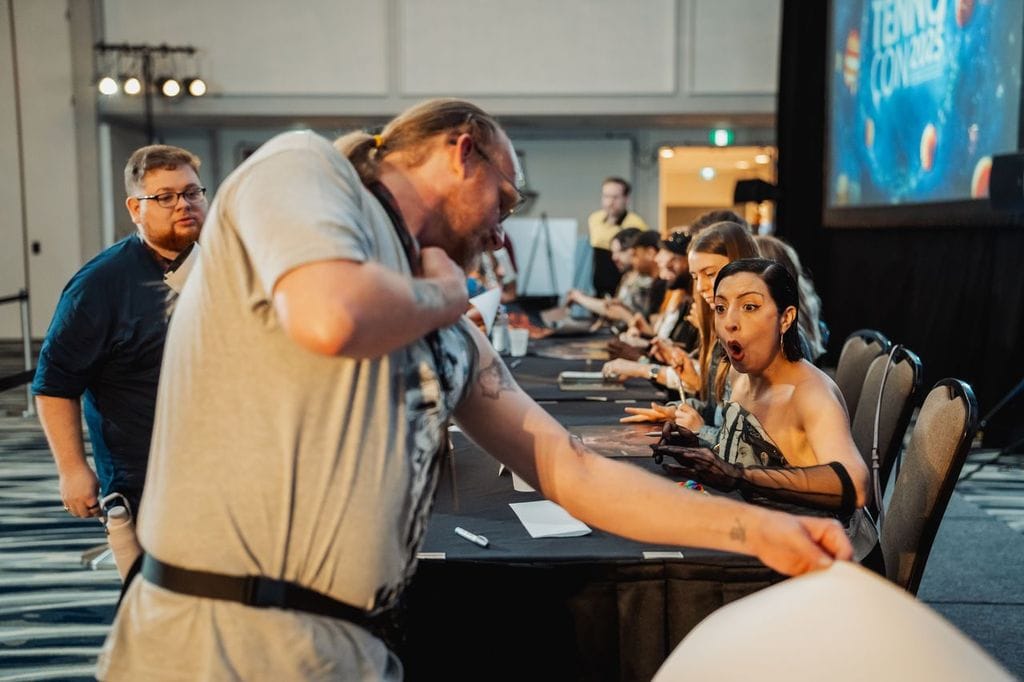
Digital Extremes adds an extra dimension of complexity to all of this by regularly hosting live events in the form of the aforementioned TennoCon, as well as smaller TennoVIP gatherings around the world. And sometimes Ford just throws them together because she can.
"Earlier in May [2025], I was in Hong Kong for work, and I just posted a photo of where I was, and someone slid into my DMs and was like 'Oh my god, I'm in Hong Kong, and I run a Tenno group. Can we do a meetup?' And I was like 'Sure,’” she said. “So we picked a spot that was pretty public and did an impromptu community hangout. About five or six people showed up, and we all just took photos and talked about the game."
Ford is not completely devil-may-care about these things, however. She rarely does them alone, for one, and she tries to pick busy areas where plenty of eyes are on her just in case. Still, she does not necessarily recommend her own approach.
"This is more a school of thought thing than a hard fact, but depending on how you were raised with the internet, you're either fearful or fearless, and both life choices are valid,” she said. “Unfortunately, with the way I was [raised], I'm fearless on the internet, and that definitely has more bad than good, but I also think it leads to more peaks and valleys—the types of experiences you get to have in life with people who are willing to just go and do things. So I would definitely not advise it to fledgling community teams or staff to do these things, because it's a high-risk, high-reward approach."
Everett is less willing to leap into the jaws of potential danger.
"I live a bit more of a paranoid lifestyle," she said. "When we plan our own events, I'm like 'What's our security? What's our this and that?' Especially for TennoVIPs, where we're all over the world. Safety is always the first thing."
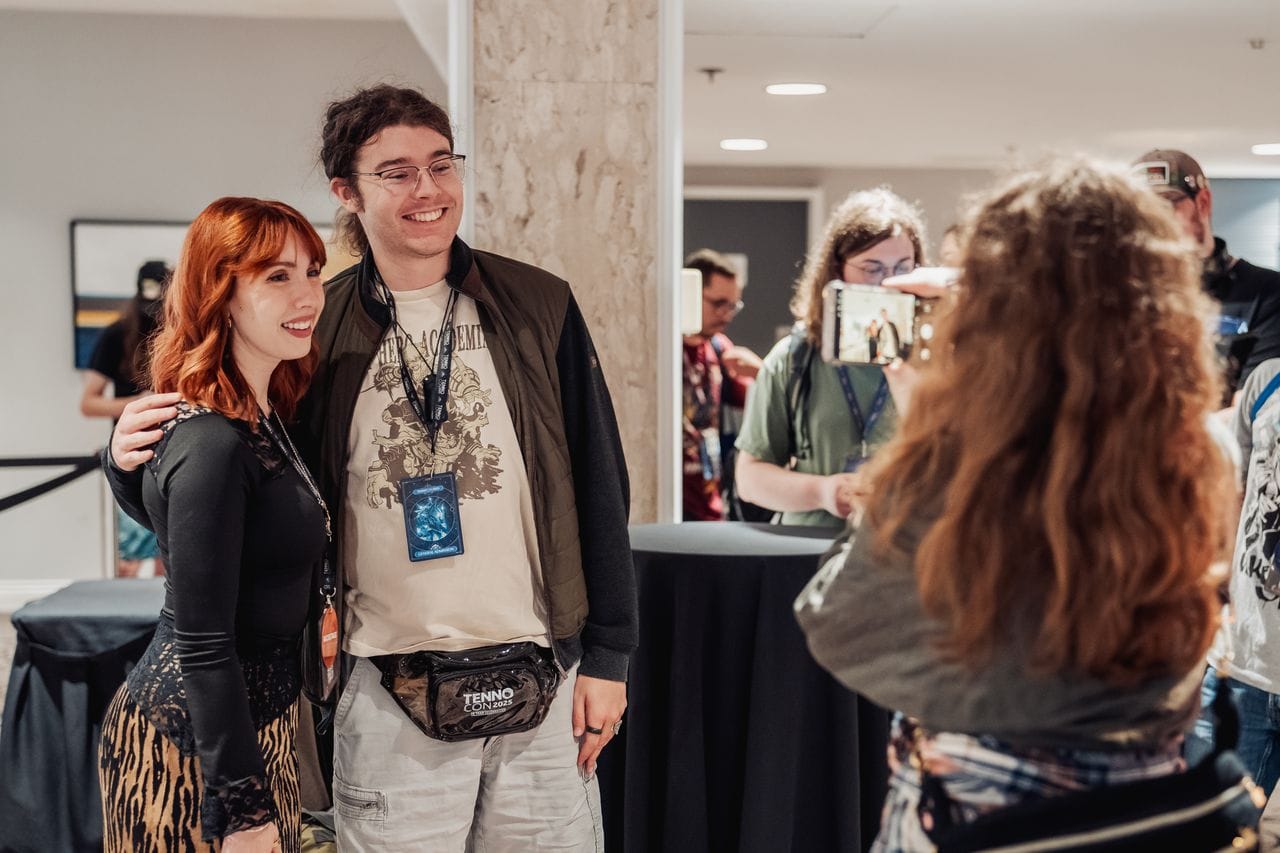
This means hired security, especially for front of house, and ID checks.
"When we used to do events, we would just rent a pub and say 'Whoever wants to come have a pint with the team, that's fine,'” said Ford. “But we have matured with the times, I think, in a very appropriate way."
"It's crazy to think that we've been doing events for 12 years, and with every place we've gone—Germany, Japan, China, Australia—it has been such a great time every single time,” said Everett. “Our players are respectful."
That’s not to say uncomfortable moments never happen.
"Especially when we do TennoVIPs and TennoCon, people are very excited and nervous to meet us, and that can sometimes lead to mistakes on their end with drinking too much or uncomfortable interactions,” said Everett. “And I think trying to really understand people in that maybe new-for-them scenario allows us to give grace even if the interaction isn't what I want it to be. Most people are trying their best."
"Obviously we do have lines,” she added. “I have my own personal line that I won't let people cross. Thankfully I've been doing this as long as I have, so I know how to step away from that or de-escalate that, and it hasn't gotten to a point where it's something I can't control or handle. ... We've, at least for our events, built it and structured it in a way where we feel safe, even being alone or if I get caught in a hallway and it becomes a line of people wanting to chat."
"I had to come to a coping mechanism where I was like 'OK, you're obviously a woman in this industry, and the majority of our player base is male. So what could happen here? What is my worst-case scenario?"
While neither Ford nor Everett have faced serious danger in person, Ford has, unfortunately, endured truly horrific threats.
"2019 was a watershed year for my tolerance, because I was brutally cyber-sexually assaulted for months leading up to TennoCon,” she said. “Someone got my number and would call me at 2 AM jacking off into the microphone [and] send me photos of them ejaculating all over photos of me. It was, like, a week before TennoCon, and they were like 'See you at TennoCon.' I was like 'What am I gonna do? Cancel the show?'"
Police were unhelpful, telling her she was “probably” safe because the caller seemed to reside in Australia. So she had to confront a frightening future herself.
"I had to come to a coping mechanism where I was like 'OK, you're obviously a woman in this industry, and the majority of our player base is male. So what could happen here? What is my worst-case scenario?’” she said. “I won't voice that, because imagination is a cruel thing. But so is reality. My reality was, do I stop using my phone? Do I change my number? The police aren't going to do anything, so is it just a game of whack-a-mole for the rest of time?"
Ultimately, she decided to delete, block, and move on.
“I was like 'If this slows me down even a minute, everything that I've worked for and everything that the team has put together is worth it,” she said. “So why lose what makes you happy? … I didn't want it to break me, and I didn't want it to win because it [TennoCon 2019] was such an important milestone."
Til Death Do Us Part
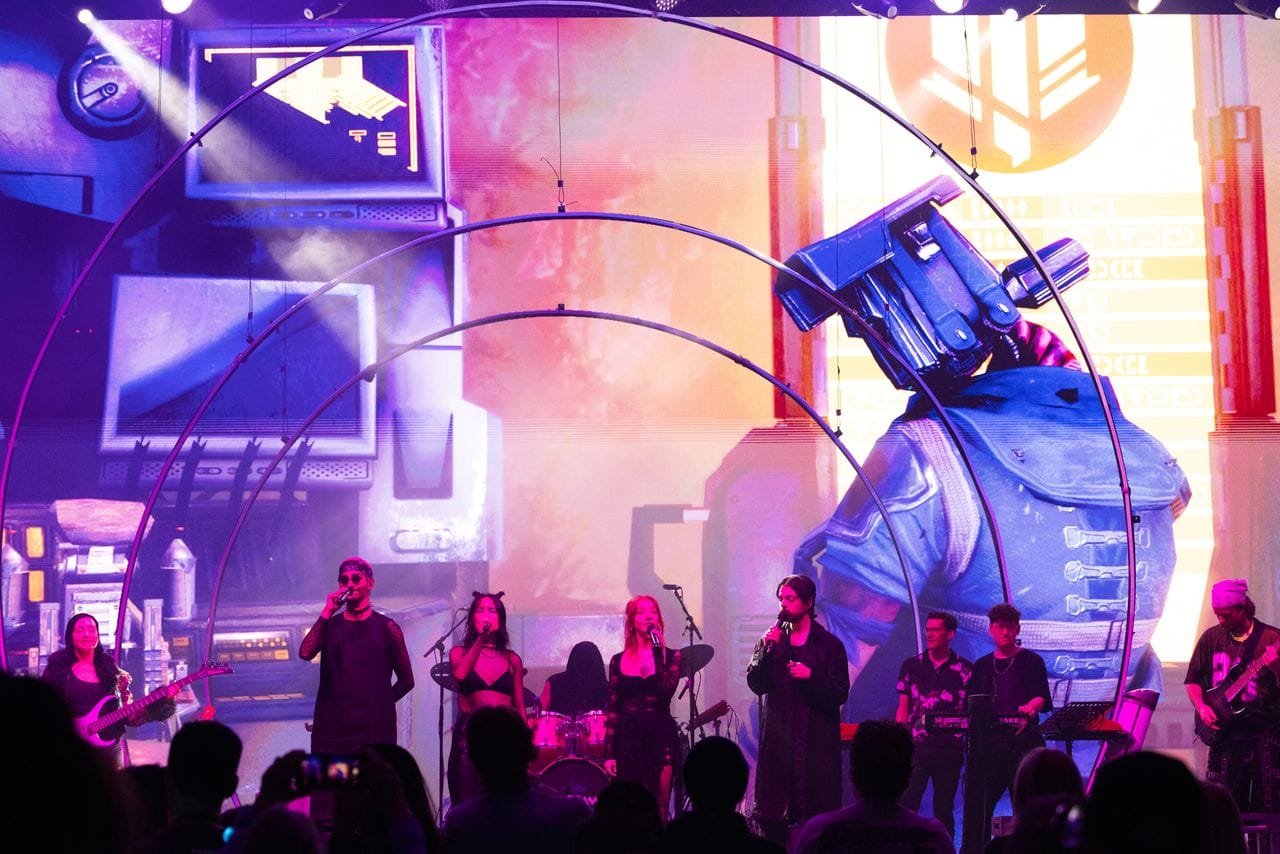
Much as Digital Extremes values the melting pot of players who have congregated around Warframe, no community is permanent. Yuri Hazumaki is far from the only person the studio has bid forlorn farewell to over the years. As far back as 2013, an artist on the development team died, which led to one of the first in-game tributes. In 2021, a community member who went by the handle Datareaper passed away. There’s now an in-game memorial next to Clem, a beloved character born of a meme he was responsible for. In October 2024, Michael "Mynki" Brennan, Warframe’s first art director, died of leukemia. These are just a small handful of the names that have passed through Warframe’s digital halls and then, ultimately, passed on.
"It gets harder every year, because it happens every year," said Ford. “In 13 years, you can only see so much tragedy. … I don't know how to describe it other than that it's fundamentally part of the experience. The humanity that forms around this game—any game, any entertainment product—has to connect you in every stage of life. If you're sick, if you're healthy, if you're going through something, Warframe or another IP is often what gets you through the darkest days.”
But developers at Digital Extremes have not allowed themselves to grow numb. On this front, especially, players appreciate the studio’s dedication to communication and outreach. Candace "Plexicosplay" Birger, a cosplayer who’s been a special guest at multiple TennoCons, said that a friend of hers who’d collaborated with Digital Extremes, Logan Brideau of Hacksmith Industries, was memorialized in the form of a plaque at the convention in 2025 after dying at a tragically young age.
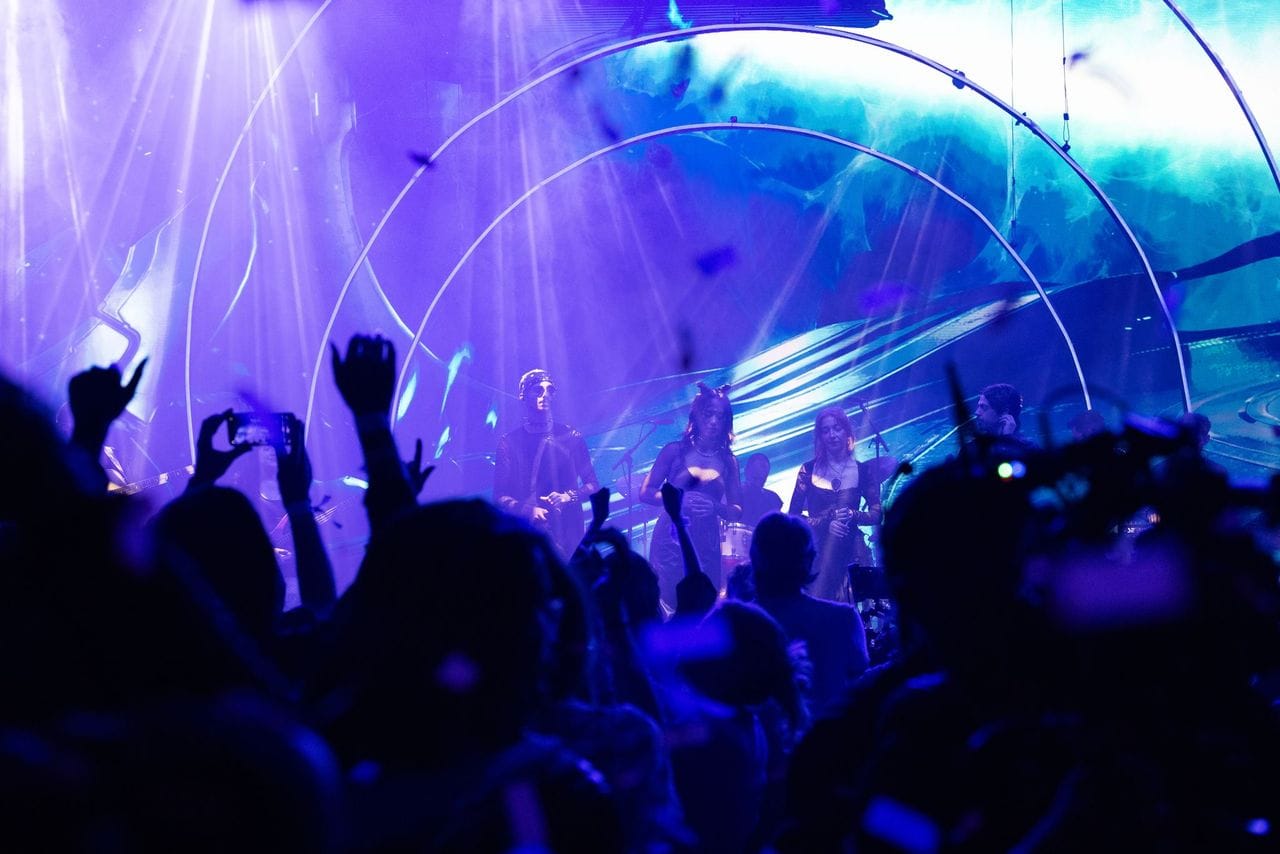
"I had [the Warframe] team coming around and supporting and showing that you're not alone—that we're all sad together,” Birger told Aftermath. “His family was [at TennoCon 2025]. They had his family come in, so his mother and his father and his two brothers got to meet [the development team] and got to see what he was a part of. Coming to TennoCon [2024] was one of the very last things he did before he passed away."
In ways both large and small, death continues to shape the game.
"Every single person goes through some sort of tragedy in their life. I think as developers of a video game, we know that people and ourselves look to video games for comfort, for joy, for filling a void,” said Everett. “We're getting messages of people being like 'My clanmate passed away. He was such a force and such a friend.' We actually added, in the Dojo, a tribunal statue, so anyone can put a statue in their Dojo that can represent a lost player or friend or animal."
“In 13 years, you can only see so much tragedy."
Digital Extremes has also taken to raising money with an annual Warframe event, Quest To Conquer Cancer, in hopes of eradicating a disease that’s impacted many on the development team in one way or another—including Everett, who lost her grandmother to cancer in 2018.
"In the first ten minutes [of the 2025 event], we hit $10,000,” she said. “[Players] just come out swinging. It makes me cry every single year that they do that for us. And we do it for them as much as they do it for us."
To a degree, this is simply the nature of the slowly dying beast that is life. Inhabit a space long enough—whether it’s physical or virtual—and eventually the reaper’s scythe will begin to swing more and more frequently, almost pendulum-like in its motion. But when you’re heading up a development team of hundreds that’s serving a player base of millions, it becomes a matter of scale. Most people will never experience so many births, graduations, weddings, and funerals firsthand, or even secondhand. Most people’s attention will never become, unto itself, a commodity. Is the pain and heartbreak of it all—not to mention the lack of privacy—worth it? In the broader games industry, it depends on who you ask. But Ford and Everett think so.
“At the end of the day, we're just human beings making a game that people like and love and want to connect with, and we want to connect with them,” Everett said. “Everyone has boundaries, but everyone is also not a robot, and we make mistakes and we learn, we have grace, and we just try to have a good time with the limited time we have and make a game that people want to play—and devs that people want to hang out with."
“Everyone has boundaries, but everyone is also not a robot, and we make mistakes and we learn, we have grace, and we just try to have a good time with the limited time we have."
Eli and Niti, still together after all these years, agree.
"We’re absolutely still together, and we very much still play Warframe regularly,” said Eli. “The community is still a big part of our lives too. Some friends have drifted away over the years, as folks tend to do, but most of the folks who attended our in‑game wedding are still around and still playing. It was a huge part of our lives before the Nuptia, but since then, every year has just felt like rediscovering it all over again."
Eli’s grandmother passed away last year, but the in-game wedding stuck with her to the very end.
"Even just days before she died, she was asking about the game and how we were getting on, whether we’d spoken to 'the nice ladies' from the wedding,” Eli said. “She was so taken with [Ford and Everett] and, indeed, the whole dev team. I think she and my mum watched the YouTube video of our ceremony more than we did, and we still watch it at least once a year."
This week on Aftermath, we’re celebrating Woke 2. What does that mean? Pieces that dig into the origins of woke—not the empty, sanitized version peddled by companies, but actual culture created by people—as well as communities that are already charting a course to a bolder, better future where we can all just be chill to one another.


