

Hey, quick: name a dad game.
Obviously, there’s The Last of Us, but that’s too easy. Try another. God of War (2018 version)? Pretty good, but also kind of a gimme. This year we have Pragmata, that’ll fit the bill. The Walking Dead (2012)? Yeah, that’s a good pick if you feel a little retro.
We could do this all day! We, the gaming audience, are positively spoiled for choice here. There are dozens of other titles we could put on this list, and dozens more that are close enough to have a fun little argument about. (The Witcher III? Sure. Mass Effect 2? No, that’s a daddy issues game — different beast entirely.)
This piece originally appeared 6/25/26 at Mothership, a worker-owned outlet providing gaming coverage for her, for them, and yes, for him. If you like what you see, consider subscribing!
Unfortunately, we cannot say the same for the genre of “mom game.” In fact, most of us probably cannot name a single mom game, for the simple reason that very few, if any, actually exist.
There stands a deep and abiding gulf: Dad games are one of the dominant genres of the century to date, commercial and critical darlings alike. They sell millions of copies and inspire award-winning prestige TV series. Mom games, on the other hand, are somewhere between absent and invisible.
As pleasant as it might be to lay the blame for this narrative disparity exclusively at the feet of game developers, the fault is hardly theirs alone. The reality is that we do not have mom games — by any meaningful metric we might use to define the genre — because neither the studios that publish games nor the American public who buy them actually consider mothers to be real people.
Universal child care(rs)
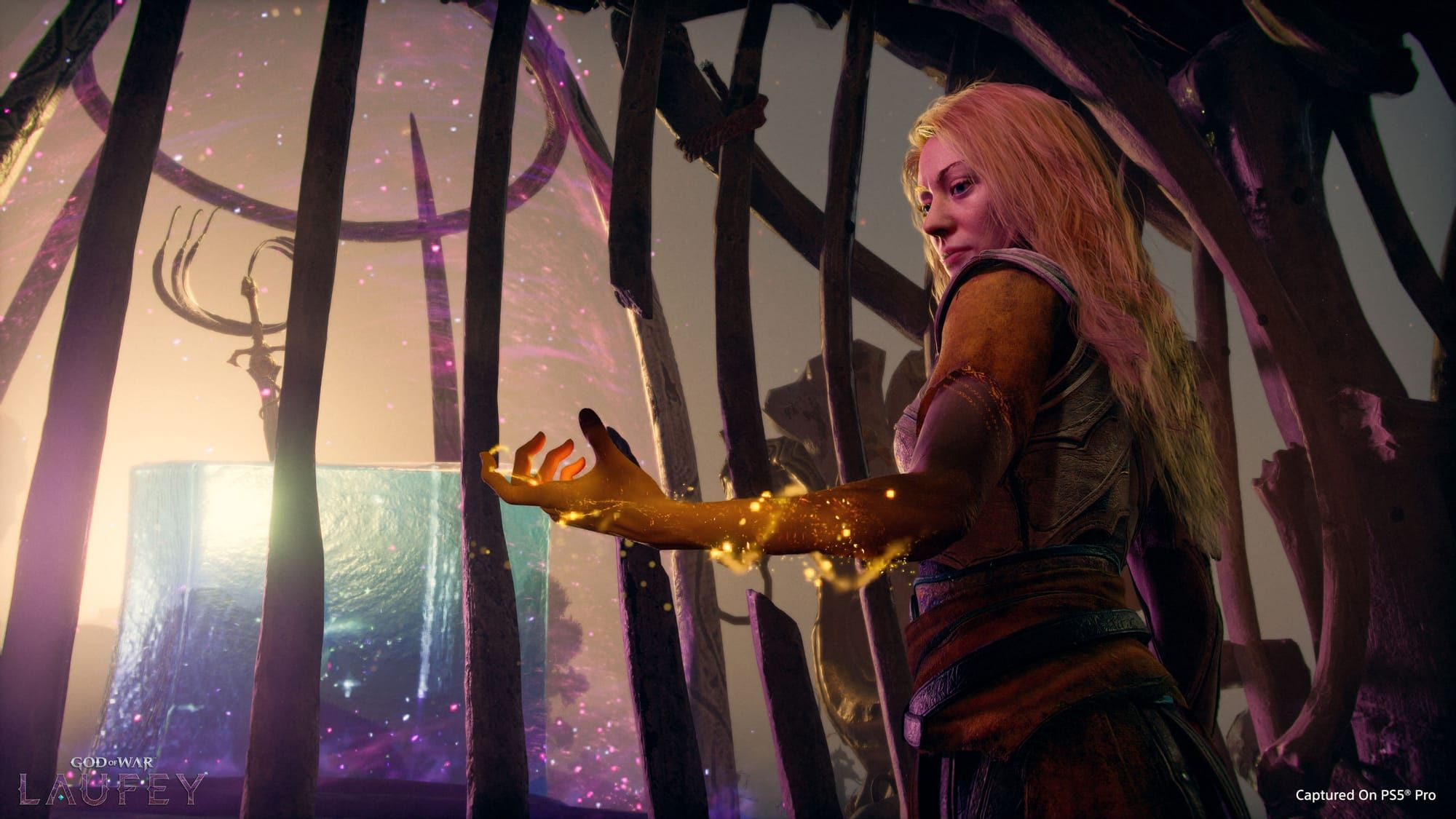
This is not a problem of conservative or liberal politics; misogyny is rampant on left and right alike, and the concept of motherhood — universal, as all of us must be born to be here — has always sat at its center.
The ultra-conservative, fascist-aligned leadership at the helm of the United States in 2026 is almost refreshingly honest about how much it hates women, and how much it wants women reduced to the status of mothers, and only mothers — not as people with careers or even interiority, but as neutral vessels to bear and raise (white) children, never to be heard from otherwise. The root of their obsession with gender lies here: In this world view, there is a natural order to things that must be rigidly, even violently, enforced, and those boundaries mean (white) men, and only (white) men, are people.
Denigration of mothers and the work of motherhood on the left, among supposed progressives and allies, is the harder to spot and the harder to combat, but no less prevalent. The rich vein of literature examining the role of motherhood in feminism and in society goes back decades and fills hundreds of books — but our shorthand for today is simple: We have the wine mom.
The wine mom may drink pinot grigio by the bottle or she may be a teetotaler. Perhaps she actually enjoys a pumpkin spice latte instead of a harder drink. It doesn’t really matter. As Jessica Winter argues in this excellent New Yorker article, the wine mom is just another name for the soccer mom, the Karen, and any other moniker we might care to fling at middle-aged white mothers who dare to be or to become politically activated.
Some wariness is both fair and earned: historically, many instances of white women rallying around motherhood as a political identifier have been, frankly, racist as hell, or their work has led to broadly negative unintended consequences. But the wide public derision is largely not coming from groups such as Black women, who are wholly justified in being skeptical of white feminism. It instead comes from white men and the power structure around them.
 Gita Jackson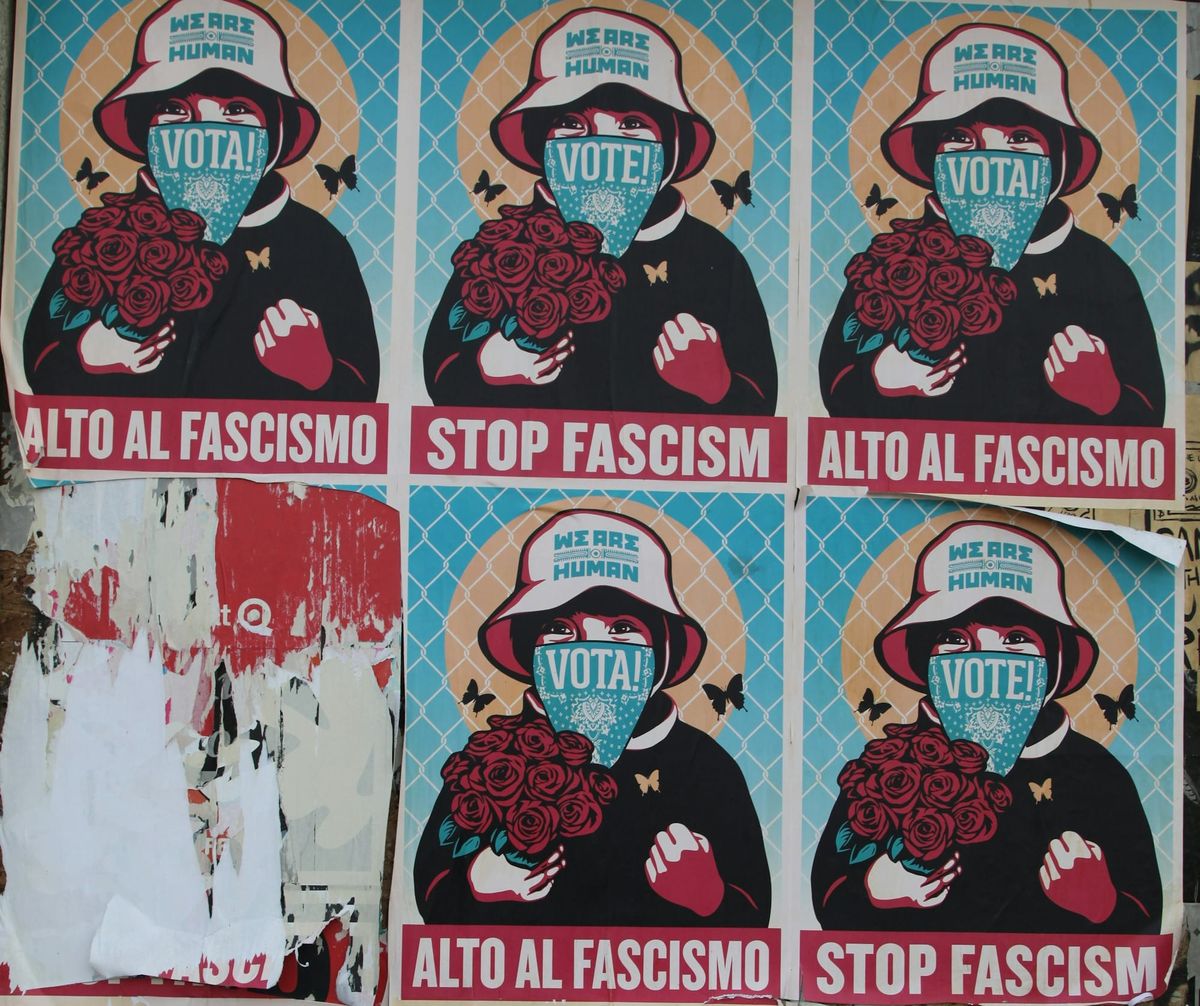
By the time we hit the 2020 election, the “resistance mom” was an entire trope unto herself — though her evolution and repackaging from the 1990s “soccer mom” was a long time coming, as Alexis Sobel Fitts wrote for Jezebel on the eve of that election. As Fitts painstakingly lays out, this categorization, which has become widespread shorthand, is really just campaign targeting, a slicing and dicing for messaging (e.g., advertising) purposes. And yet in 2020, the resistance mom, in all her many forms, was everywhere — and nowhere.
“While I still know almost nothing about her personal politics, or the specific details that lead to her supposed departure from Trump,” Fitts said, summarizing the media landscape of the time, “I do know quite a bit now about what she means to the media, for whom she serves as both a prize and a scapegoat. She is a woman-sized vessel into which dreams of an ideal voter can be placed and quickly morphed into a strawman if it all goes to hell. She is never particularly real.”
In the wake of Renée Good’s murder earlier this year, Amanda Marcotte revisited the idea of the “resistance mom” — this time, as a hero, grounded in the reality of one person, one body. Marcotte sorry-not-sorrys her “I told you so” on resistance moms, as she writes, “In the early days of the first Trump administration, the ‘resistance’ took on feminine identity that, as the years went by, became seen as increasingly uncool and embarrassing.”
She continues:
The one thing that centrists, MAGA types, and wannabe hipster leftists could agree on was that they hated the middle-aged wine moms in pink knitted pussy hats, with their earnest fears about the collapse of democracy, who watched MSNBC. This loathing of normie liberals was always rooted in misogyny, even when coming from other women, who were usually pulling a ‘I’m sexy and cool, not like those cat sweater ladies’ move, but making it political. And it came at the high cost of signaling to ordinary people that they’re being “hysterical” if they think either that Trump is a serious threat or that it’s important to put up a real resistance to Trumpism.
Marcotte writes, correctly, that it is “incredibly unfair that Renée Good is dead, that her wife is a widow and her son an orphan,” before she then describes Good as “a genuine martyr.”
It’s hard to disagree, but that narrative didn’t emerge in a vacuum. Self-sacrificing martyrdom is a well-trod story for mothers that we as a culture know what to do with; it’s a tale we know how to tell, a role we know how to assign. And once again, it valorizes a woman who isn’t actually there.
Between absent and invisible
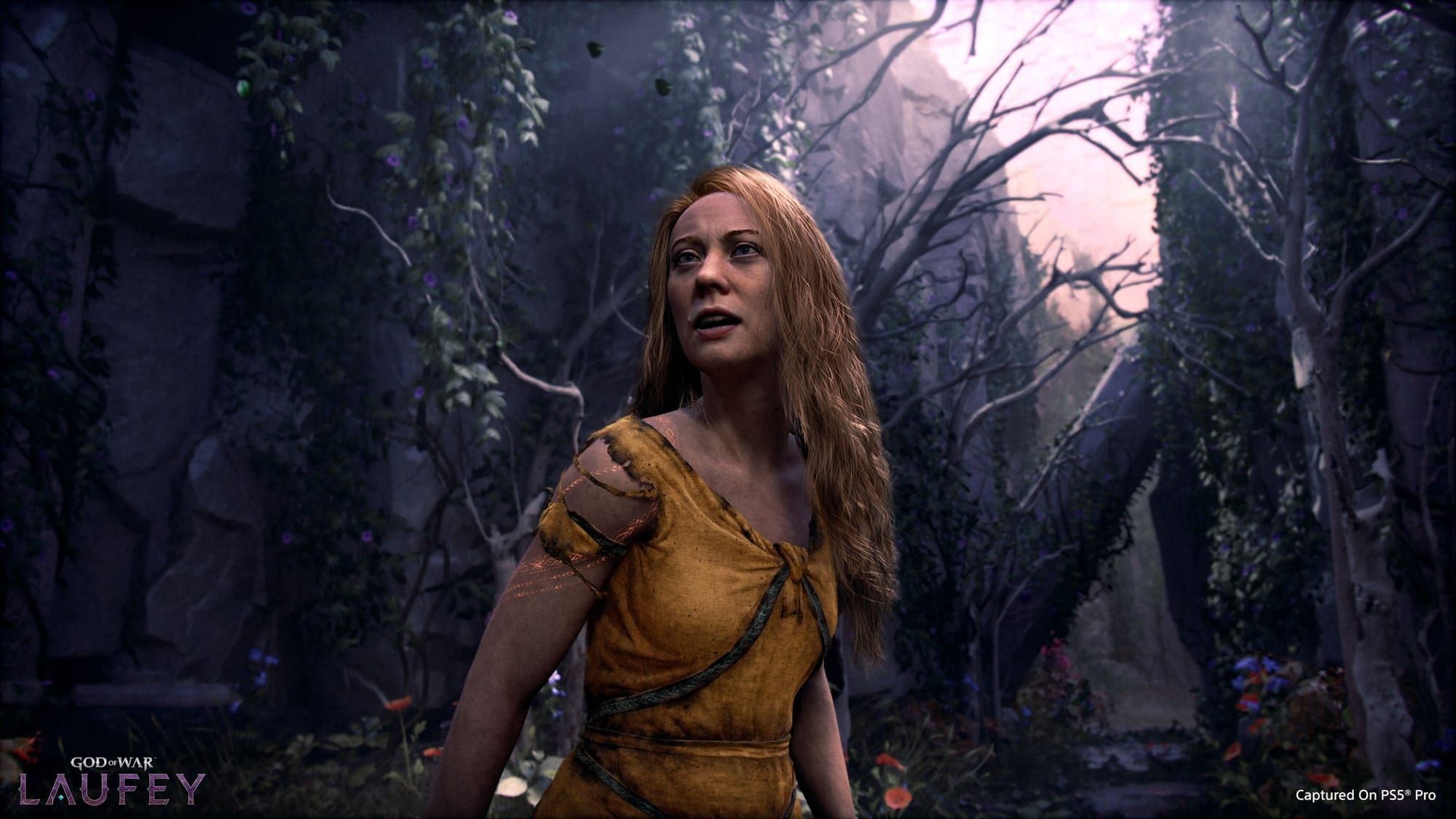
And then we have fiction.
Dad games are playing into some of the oldest storytelling tropes we know, albeit with modern conventions and expectations. Stories of fathers and sons permeate every inch of western culture, and have for thousands of years. Who among us did not read at least parts of The Odyssey or Hamlet in high school?
The progressive tweak of the 21st century’s dad game is to remember women exist by swapping in that son for a daughter. Although Kratos pursues his adventure with a boy (“Boy!”) at his side, many of our other game dads are walking the world with surrogate daughters — girls they often must masculinize, protect, hand weapons to, and to teach to live in a harsh man’s world. The implication is often that mothers would make these children too soft for whatever war-torn, post-apocalyptic, or monster-infected world they must face.
We most often perceive mothers in fiction through a long history of their conspicuous absence: mom is not here. Perhaps she died in childbirth, or took a mystery fever. Perhaps the zombies ate her or the nukes got her. Perhaps she simply does not get mentioned in the text at all. Her absence is why The Dad must step up and take on the child care role that would otherwise be delegated away from the masculine sphere. Her absence also allows the narrative to put her on a pedestal: if no real woman is here, then we can render the imaginary one ideal and untouchable.
The other way fiction presents mothers is as an obstacle. There is something she will not let us do, some way she is domineering, some way in which she needs to be taken down or rendered inert. Thus perhaps the single most common way to meet a mother throughout the canon of video games is: as a boss fight, on the other side of a battlefield. As the parent of an 8th grader, the symbolism is not lost on me. And yet, here in 2026 — is a teen, with youth’s manichean framing of the world, really the audience to aim for? Could our games not, perhaps, grow up a little?
Goddess of war
Video gaming has obviously had a girl problem for a very, very long time. In some ways, nothing has changed since I was elbowing third-grade boys out of the way to get my turn playing Super Mario Bros on my neighbor Tommy’s NES. And in other ways, everything has.
Women are already under-represented in game development; mothers, even more so. It is vanishingly rare to hear a developer describe the experience of motherhood, rather than to keep quiet and instead preserve the outer veneer of remaining in the boys’ club.
Outside of gaming, we’re still saying dumb shit about tech like, “it’s so simple, your mom can use it,” or writing off “grandmas” as a cohort who we’re surprised to find on the internet — even though an internet user who was 18 years old when she got AOL in 1994 is 50 years old today, and perfectly capable of using an iPhone.
And into this milieu, Sony has come and paradropped Laufey.
Approximately the entire internet perked up its collective ears at this surprise mic drop announcement, learning the God of War franchise — the daddest of Dad Games on offer in the 2020s — is going full mom.
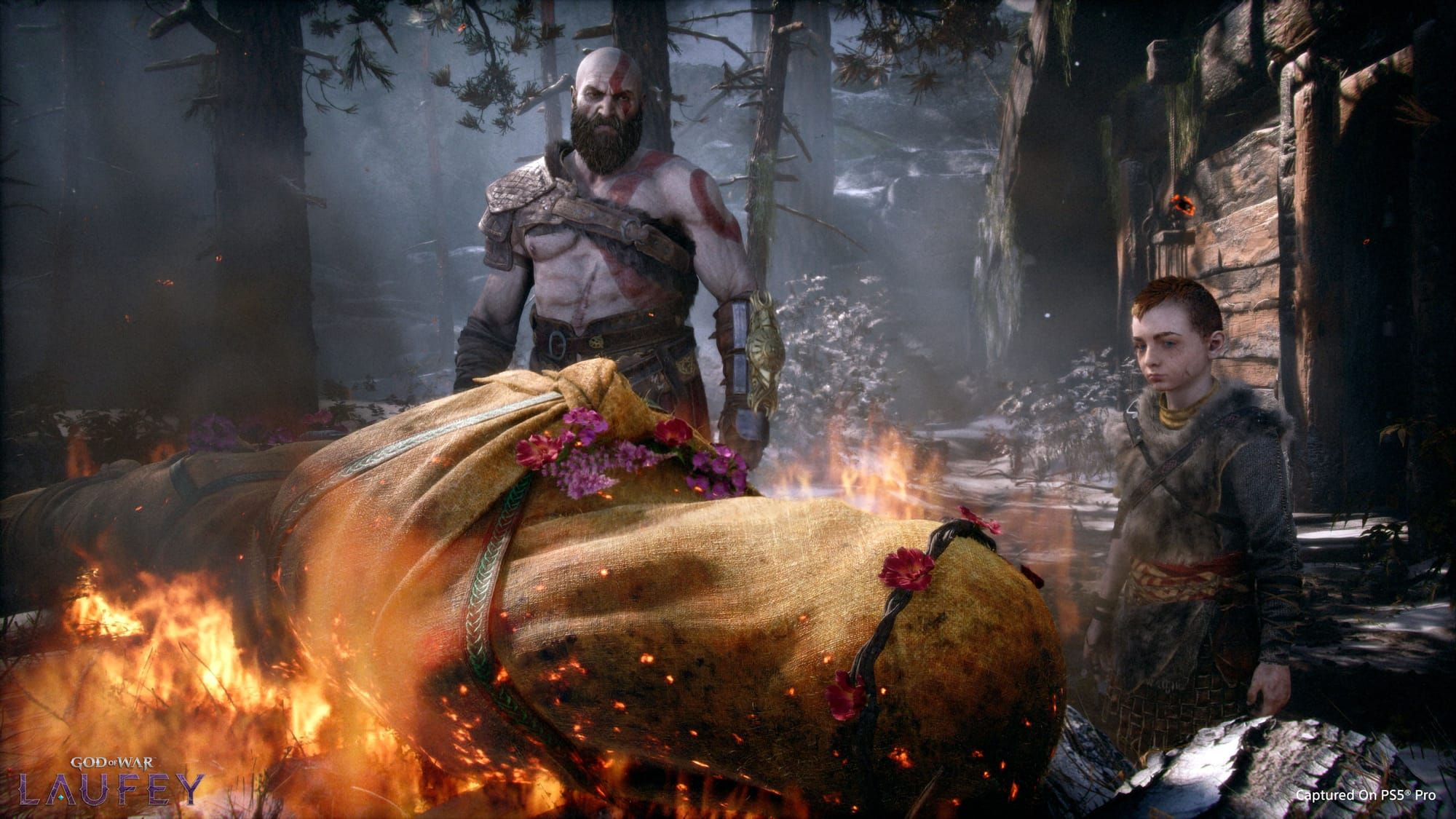
Faye was dead, to begin with. Her conspicuous absence loomed over God of War and its sequel. Her departure from the mortal coil spurred the events of the games, the motivating force that set Kratos and Atreus in motion.
Now, and unexpectedly, Faye — who we have known as a wife and mother — is being given a chance to be a person. She has an entire afterlife to fight her own way through, for her own reasons, and my former colleague Ash Parrish is absolutely right to hope the Boy and his father stay out of her way.
There is no genre of “mom games” for her to stand tall amid; if we are lucky, she will be the giant on whose shoulders future generations can stand. Until then, the attention on her will always be sharp and harsh — for going first, for daring.
The game will not be perfect, because nothing ever is. She will not be perfect, because no-one ever is. She carries the unfair burden of being a drop of water in the desert, something we are thirsty for no matter how meager the offering. She will face a difficult world, and she will do it alone, judged every step of the way.
No matter how God of War Laufey turns out on the merits, it really is a mom game: Like most American mothers, Faye is expected to carry the weight of the world on her shoulders without any institutional support at all.

Mothership is a website, a channel, and a community co-founded by Polygon veterans Maddy Myers and Zoë Hannah, where staff and freelancers cover how gender and identity relate to games.


