

Veritas Tales: Witch of the Dark Castle was primarily made by one guy, namely Yoshio Nishimura. This is both an objective fact of the game that you can feel every second that you can play it, and squarely a part of how the game pitches itself. Nishimura left Vanillaware during the COVID-19 pandemic, moving to a remote mountain village in Nara, and when the call came to return to the office he decided he’d rather stay. After six years, he released Veritas Tales, and much to the credit of the story the game tells about itself, you can feel the love of its creator in every moment.
Veritas Tales is a loving riff on physical media. The omniscient guide on your journey is an elderly wizard who looks as if an airbrushed Merlin from the side of a van glowed like Santa Claus in a Coke ad. He presents you with a book and a choice of two characters — a lady witch named Paneri and a male warrior named Havlock, each with unique ways of interacting with the world and the story.
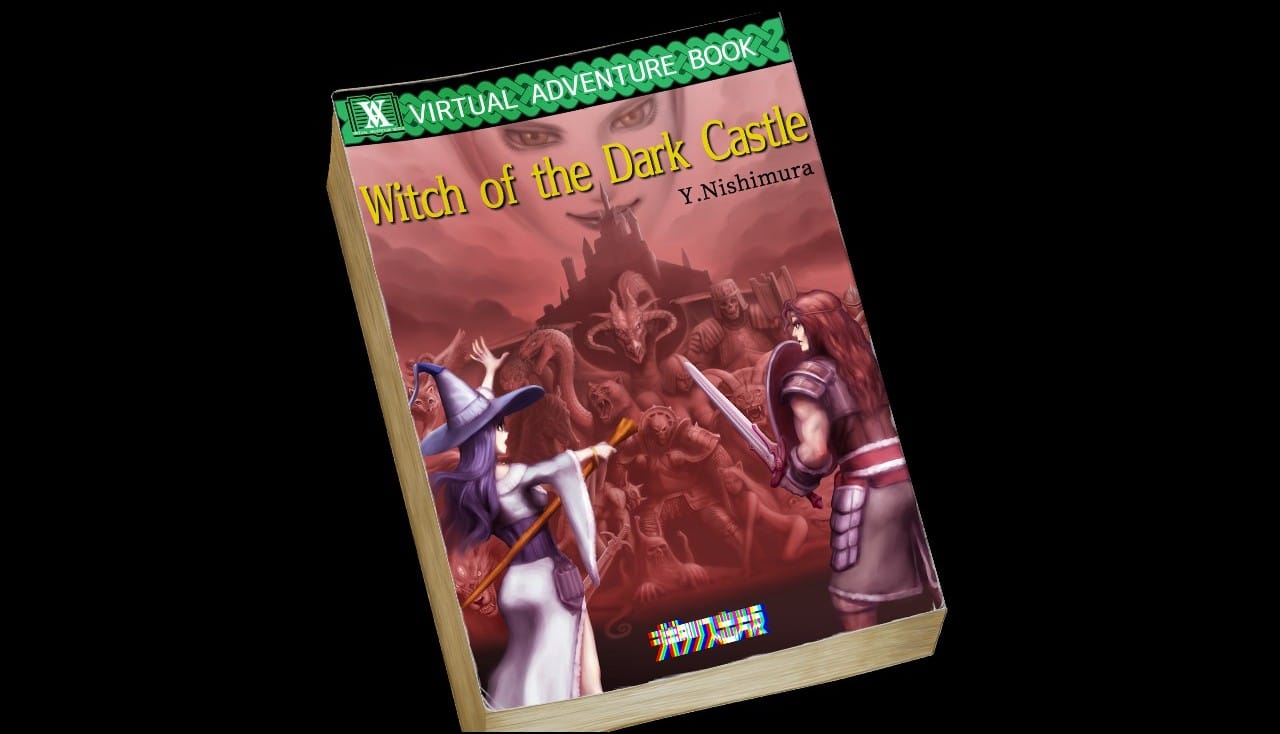
Veritas Tales is a magical choose your own adventure book, complete with individual page numbers that correlate with distinct plot points and location. Like many gamebooks, you often find yourself at a sudden dead end due to a wrong choice or a bad roll, forcing yourself to go back and try again. Early on in the game, for example, you are presented with a scenario where countless undead surround you and most of the choices will end in your grisly demise. This sequence serves as a lesson for how quickly things can go south. The game itself stems from a Dragon’s Crown pre-order DLC mini-game that never made it to the West, and the soundtrack was composed by Hitoshi Sakimoto who scored Tactics Ogre, Final Fantasy Tactics, Vagrant Story, and several Vanillaware titles.
Akuryōtō no Hihō, a pre-order bonus for Dragon’s Crown produced by Yoshio Nishimura before Veritas Tales.
Combat takes the form of faux pen and paper encounters. Without the context of the person who developed the game or what it is referencing, this may be seen as slightly cumbersome, but Vanillaware games often have a slightly charming clunkiness to the in-between moments that feels ornate and affectionate. And like tabletop gaming, there is something quite arresting about being forced to use your imagination, only occasionally interrupted with a visual or voice acting. In Veritas Tales, overt meta-gaminess sings in harmony with the loving illustrations and skeuomorphisms to create a game made with care.
Speaking of care, the illustrations here are all hand drawn with the same fondness for high fantasy that Vanillaware built its reputation on. The moment I knew this was uncut Vanillaware was when the game threw a giant golem at me, complete with Hebrew on its forehead, that was also in the shape of a giant muscular woman. There are monsters and ghouls and wizards, and all of them feel pulled from first edition Dungeons and Dragons or, perhaps more accurately, Sword World.
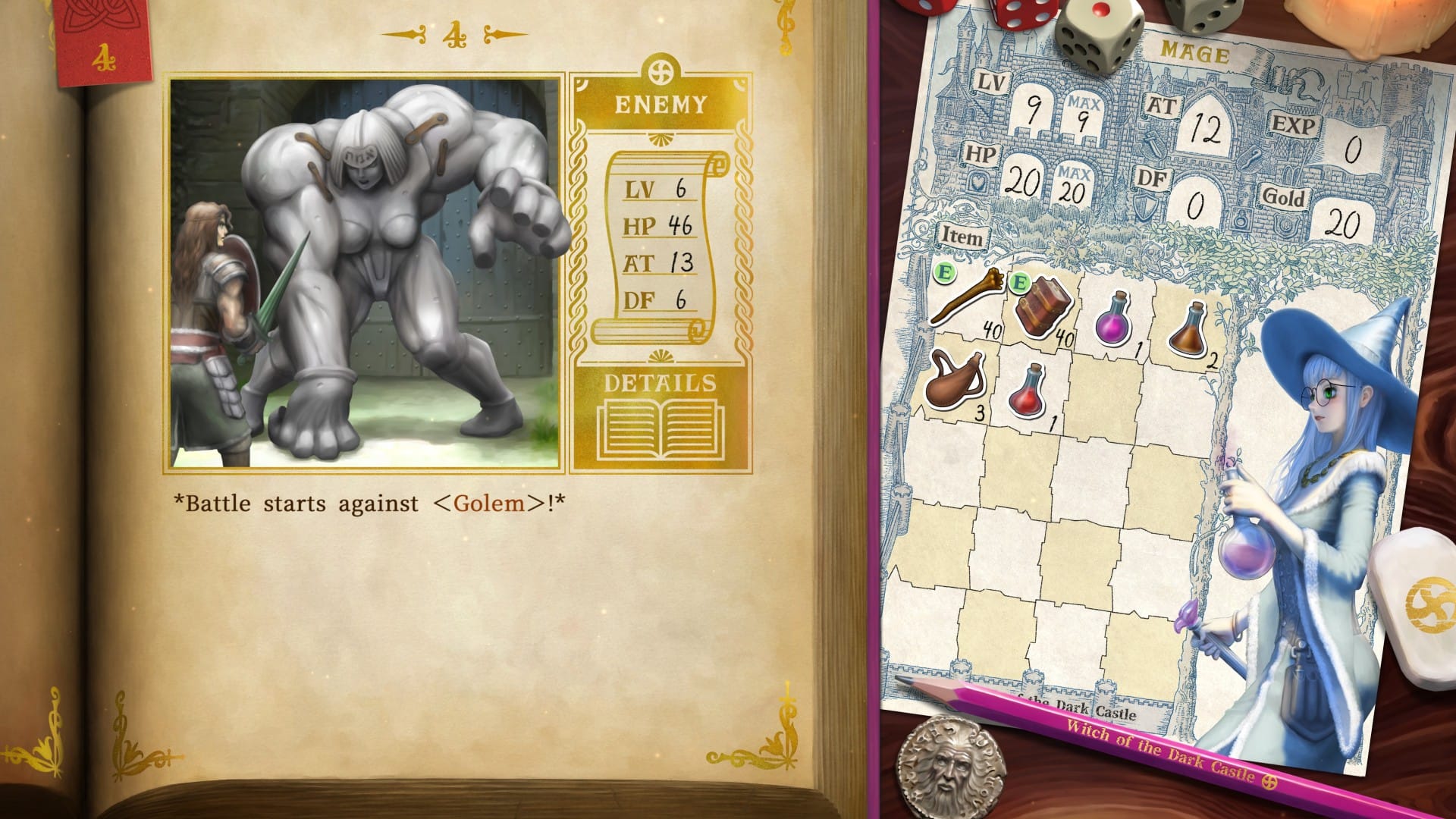
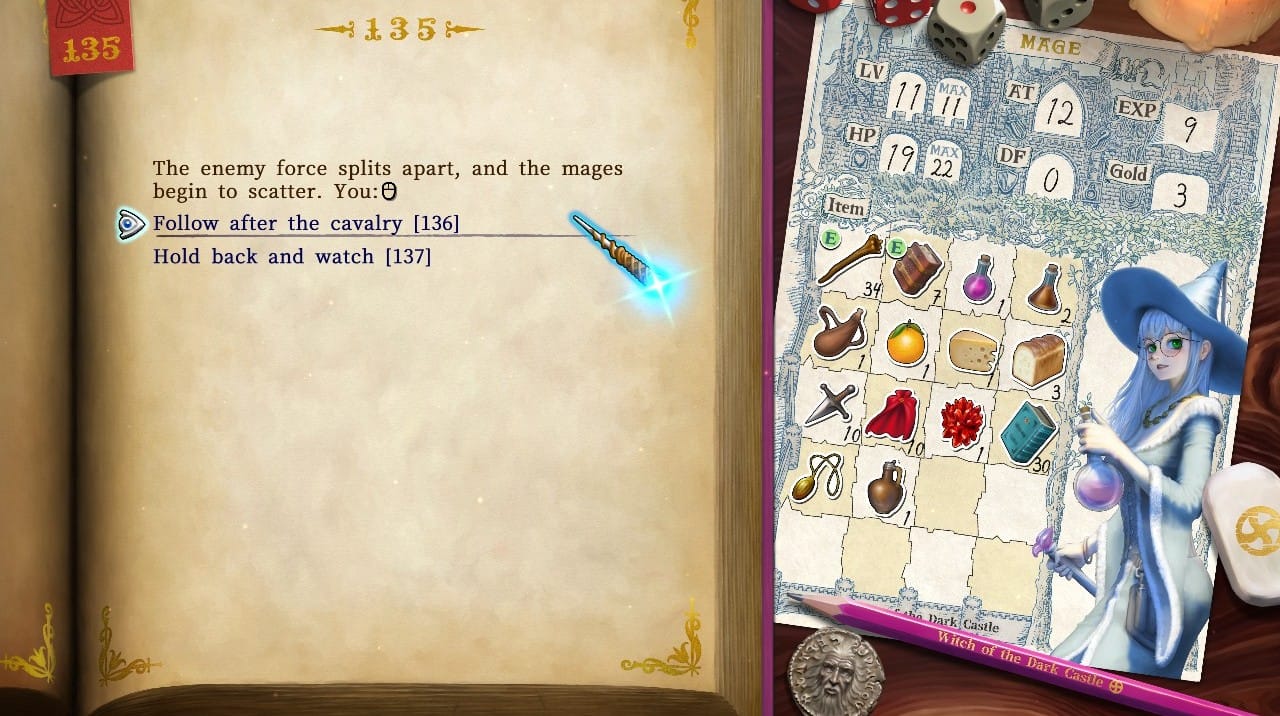
Oftentimes the plot will veer in directions like the campaign of a pen and paper game, with small, contained one-off encounters and vignettes and semi-visible checks. At times it can feel like you’ve been thrown directly into a new world feet first, but the game thankfully has tooltips over many proper nouns that will give you a refresher on the context, a la Avowed. Though I was technically able to play the game on a Steam Deck or Steam Controller specifically with the touchpads and touch screen, this is very much a game optimized for mouse and keyboard, and I’d love the game to be optimized for controllers better in the future.
Veritas Tales being primarily developed by a single person (the game also cites a couple programmers and a translator in its credits in addition to its composer) is not unique among indie gaming save for its execution. Like Sektori, it is the years-long passion project of a developer mostly flying solo after working on games I loved, and that history is painted on every page. But intentionally or not, Veritas Tales reads the current situation for filth simply in the nature of its existence. People yearn to see human hands in the art they interact with more than ever, to see the people inside it and be assured that they care even more than the player can about these worlds. Veritas Tales is that: a tiny bit clunky and limited by the nature of its conception, but overflowing with the love that one artist has for the art that inspired him.


