
!["I Do Not Feel Safe In The Country": International Developers Are Skipping GDC Because Of Trump's Border Chaos [Update]](/content/images/size/w1280/format/webp/2026/01/shutterstock_724396573.jpg)
The Game Developers Conference (GDC), once a seemingly compulsory event for anyone working internationally in the video game industry, has in recent years run into a succession of threats to its immediate future. Some have been of its own making, but others have come from forces outside the city (and country) it calls home.
Being based in San Francisco, which in a generation has transformed itself into a techbro’s utopia, has meant that the cost of attending GDC has skyrocketed, to the point where many developers and associated industry professionals based outside the US have found it difficult, if not impossible, to attend.
Then last year the conference revealed a controversial rebrand, pivoting into a ‘festival of gaming’ that has been criticised for spreading itself too thin, making its pricing even more impenetrable and for scattering key events out across the city, making them more difficult to attend.
Both of those factors, the first especially, have led to more and more developers from outside the US deciding to skip what was not long ago an unskippable event, but over the last twelve months the political climate in the United States has become so hostile that it isn’t just keeping international developers from attending this San Francisco show, it’s keeping them from entering the country at all.
As the Trump administration rages unchecked through what were once assumed to be a robust series of checks and balances, its disdain for the rights of anyone outside its lunatic base has left international workers, and even visitors, at the mercy of immigration agents and a border system that has detained journalists and tourists alike, while ICE agents lawlessly roam major cities kidnapping and murdering American citizens at will.
UPDATE January 29, 8pm ET: Two days after this story was published, GDC published the results of the show's annual survey, which polled 2300 games industry professionals and found that 31% of international developers (and 47% of LGBTQ+ workers) responding had cancelled their plans to travel to US, with another 33% considering it. When it comes to international "industry leaders and investors", 60% have said that "current immigration policies have impacted their ability or desire to do business with American companies". Original story follows.
Given that for many global developers GDC has escalated from being something that’s important but too expensive (which, incidentally, it still is) into an event that could lead to detention and deportation, I wanted to hear from international games workers and industry professionals about how this threat has impacted their plans to attend the revamped 2026 edition of the show.
 Nathan Grayson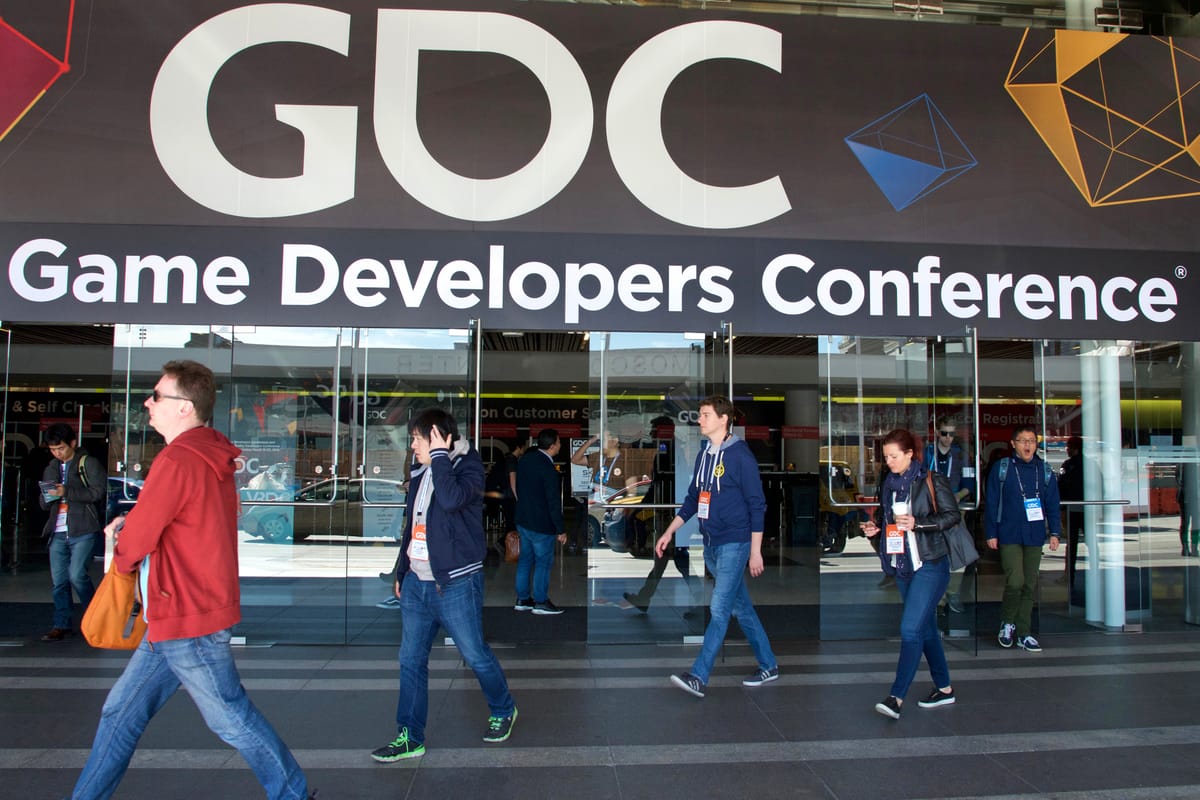
For this story I spoke with nine people, all of whom have attended GDC before, but who won’t be at this year’s show in March:
Vee Pendergrast is Industry Development Manager at the New Zealand Centre Of Digital Excellence, aka CODE NZ, which is the country’s national video games industry development body. She’s originally from Perth, Australia. (Note: Vee’s comments here are reflective of her personal opinions, and do not constitute those of CODE NZ.)
Mathew Kumar is a designer and writer who was born in Scotland and has lived in the US, but currently resides in Canada.
Neha Patel is a composer and sound designer for indie video games. She’s based in Quebec City.
Paul Dean is a freelance games writer–he was nominated for a Nebula for his work on Pacific Drive–but has also done everything from games criticism to consulting. Originally from the UK, he’s now a dual citizen living in Vancouver.
Cassandra (not her real name) is a past IGF winner, and is the co-founder of an indie games studio whose business is based in the United States, though she herself lives in Europe.
Harold (not their real name) is a developer and the founder of an independent games studio. Born in the United States, they later moved to Canada and have since renounced their US citizenship.
Will Overgard has done a bit of everything in games; he’s worked at Sega (Creative Assembly/Total War), been a community manager, done BizDev and B2B sales, and now streams about indie games on Twitch.
Chantal Ryan is from and currently lives in Adelaide, Australia. The founder and director of the game studio We Have Always Lived In The Forest and lead developer on the game darkwebSTREAMER, she also founded the Women Leaders In Games network.
Zane (not their real name) lives in Europe, working as an analyst and consultant on the business side of video games.
The reality is the US has become increasingly hostile to foreign nationals regardless of origin...
Luke Plunkett: You've all attended GDC at least once before, but just how many times have you previously visited the US for the event, and over what kind of timeframe?
Vee Pendergast: [I went] twice before the pandemic, then every year since 2023 with CODE.
Mathew Kumar: I've attended GDC close to every year since... 2006? There was a pandemic-based gap, but I was there last year.
Neha Patel: My first time was in 2018 as a student. From 2021-2024 I attended as a speaker, then most recently last year as an IGF jury member.
Paul Dean: My first GDC was in 2014 and I believe I’ve been to five, which means it became a regular part of my experience of the games industry for a while. I would often host/organise a panel called The State and Future of Board Games.
Cassandra: I’ve attended once, but also had a talk accepted for 2020 before that edition was cancelled.
Harold: I first attended GDC in I think 2007 or 2008 and went almost every year up to 2020. Of all the post-pandemic GDCs, I believe I attended every one except last year's.
Will Overgard: I've been going yearly since 2016.
Chantal Ryan: In my four years in the industry, I’ve attended GDC twice (2022-2023), in various speaking roles (I had to skip last year for personal reasons).
Zane: I've been twice. The last time was in 2023.
Every time I've been to the States in the past year, I've had some kind of discriminatory encounter...I do not feel safe in the country
Do you think you would have attended GDC this year if the political climate wasn't as hostile to international visitors?
Vee Pendergast: Inevitably. We work extensively with a company called "Representing Games" where we bring a cohort of developers to pitch to a room full of publisher and investor scouts. Last year's event (2025) was the most successful we have ever had, and led directly to several publishing agreements being signed. Of course, we have previously hosted NZ-lead networking functions and all sorts of other side business.
Mathew Kumar: It's difficult to say. I hate to miss it, but costs to attend have gotten absolutely absurd. I think originally I was considering attending to try and show face; the industry is completely brutal right now for hiring, and trying to remind people I'm still alive was probably a focus. But with costs being what they are, and the general climate, it just didn't make any sense.
Neha Patel: Absolutely. GDC isn't just about the professional opportunities, but it's one of the only ways for me to see my friends and colleagues from all over the globe.
Paul Dean: Quite possibly. I’m financially able to, and it would improve my employment prospects. It’s a relatively short trip from Vancouver to San Francisco and the reality of North America is that there is much more of a games industry in the US, not least because about nine times as many people live in the US as in Canada. The majority of the work that I’ve done in games the last five years has been for or with folks in the US, while even previous to that I was regularly visiting for all sorts of work-related events and opportunities. My experience of the Canada/US games industry is that there’s a fair amount of overlap and what I believe used to be at least a somewhat fluid movement of people between the two.
The US games industry can be quite inward-looking, and attending events in the US does a great deal to pierce that bubble, connect you with opportunities and show people that you’re much more than a two-page freelance resume.
Cassandra: We were intending to ship in Q3 last year and our publisher would have been showcasing the game; we would also have been hopeful to receive IGF nominations, so if that had transpired then ideally yes, I would have attended in 2026. Attending is made impossibly unsafe in the current climate. As it stands, we delayed [our game] substantially, and the reasons for that delay in itself are partially related to the existentially punishing impact of the current politics as well.
Harold: I have no reason to think I wouldn't. More broadly, I would of course be very much in favour of GDC relocating to a city that isn't as eye-wateringly expensive as San Francisco. But the event otherwise affords so many opportunities to reconnect with folks I rarely see or keep in touch with otherwise, it's normally worth paying the price, literally and proverbially.
Will Overgard: Honestly no. The political climate is extremely bad, like getting killed or shipped to a nightmare super prison bad, but there's nothing to be gained at this GDC. No one has money to make deals. Hell, it used to be that "You make the deal at GDC and you sign it at E3" but now it’s "You make the deal at DICE and you drink about it at GDC". Unlike the awful P2E swindlers, the AI tech scene has no money to throw at games, and everyone else has battened down their hatches. Outside of some outliers, I'd guess most indie publishers are already fully set for 2026 into 2027. Risking it all to go to an openly dangerous county could be worth it if there's a chance you could get your game fully funded, but that's not happening at this GDC.
Chantal Ryan: Yes, absolutely. While I think GDC as a convention is a bit of a hellscape, it’s indisputably one of the best places to network and scout investment. I also have many adored industry friends I only get to see there. As director of my studio, it’s my responsibility to attend these kinds of events to create professional opportunities for the team, so skipping out is a big deal.
Zane: Yes. Although, the conference's decision to increase ticket prices and open it up to the public was also a factor I should mention.
As far as the US is concerned, I have nothing to lose. I can't and won't be going back to the US without radical change.
Luke Plunkett: Regarding your decision not to attend, is it out of a personal concern, or just a broader case of not wanting to travel to/support anything taking place in the US at the moment?
Vee Pendergast: For me, there's the first and most obvious concern, I am an out transgender woman and I don't completely pass due to my voice. In early 2025, Trump signed an Executive Order that trans people can only enter into the US on a passport of their birth sex. Obviously for trans people living under their legal gender in their country of origin this creates an impossible situation, as someone would then have to go through the process of getting a passport under what may be a previous legal name and gender. Not to mention how uncomfortable that is for the person in question, and frankly the US is actively hostile to trans people in most states. San Francisco is notably queer friendly; however, given the aggressive paramilitary actions of ICE that have taken place in Californian cities, I have a record low confidence in the safety of any trans person in the country, let alone a foreign national. The US is not safe for trans people, which is the unassailable truth of the matter as we are already being disproportionately targeted by Trump's brazen thuggery.
Trump's reasoning for this ridiculous Executive Order was to "stop men competing in women's sports", which is so stupid as to simply be an obvious excuse to enact a law rooted in hate and prejudice. Which, let's face it, is his calling card anyway, so we're not that special.
Given I have heard from friends in the publishing fraternity at Gamescom last year that they were lukewarm at best about attending GDC 2026 due to the US' hostility to visitors, we decided to make the hard decision to pull back on our GDC intervention. We have reason to believe several of our staff would be turned around at the border at best and cannot guarantee the safety to a reasonable standard of any developer in our cohort. Which is disheartening given how good our outcomes were last year.
And then there's the next problem: Device searches on entry. We are bound by confidentiality agreements with our developers, partners and ultimately to the government of Aotearoa New Zealand. No, I will not be handing over my passcodes to my devices to have invasive personal searches done, much less submit my private social media logins, let alone handing over a DNA sample (those laws may not be affecting us yet, but it's coming). It is at a stage where I have heard people stopped for bringing in burner/clean phones and devices too. For a country of so-called "freedom of speech" this is an act of authoritarianism, to put it mildly.
Why am I being so candid as far as this interview is concerned? As far as the US is concerned, I have nothing to lose. I can't and won't be going back to the US without radical change, which is a prospect that saddens me, and I am not important enough to feel the weight of any ire that will hurt my career or personal life outside the US. I have been doxxed for being an out trans woman in games before who dared to have opinions, but it was mostly just annoying US-based trolls typing anti-trans abuse into their non-US made devices.
Aftermath is entirely reader-supported. If you enjoy the work we're doing, please consider subscribing!
Mathew Kumar: It's not so much about personal concern other than I'm aware that pretty much anyone can be disappeared for any reason now, and in the post-Gaza genocide, post-"rule based international order" there's a decent chance no one will do anything about it. Frankly, it's more in solidarity. I lived in the US, and honestly, I'd live there again, but I'm very clear-eyed about the place of the US in the world, and right now if I'm not hopping across the border to get Trader Joe's I'm not suddenly going to put thousands of dollars into the US economy so I can hand my resume to some poorly staffed booths in convention hall.
Neha Patel: GDC is long due an overhaul. I heard that in the past there were events like GDC Europe? Bring it back! My heart goes out to the industry professionals that work so hard on the advisory boards, but they have an impossible task in my opinion. Until the US economy completely collapses, GDC is here to stay.
Personally I'm wishing a non-US country would take up the torch, I just don't know if it'll happen.
Paul Dean: I have big feelings around this. First, my chief considerations around these things is always a personal concern rooted in previous experiences crossing the border.
In spring 2015, as I was attempting a pretty routine trip down to GDC, I was stopped at the US/Canada border and then held and questioned for about eight hours, before being walked back to Canadian customs. It’s still not entirely clear to me why or how this opaque decision was made, but it began with a border guard yelling at me, then placing his hand on his sidearm, then searching through all my possessions (even down to examining an old postcard being used as a bookmark) and moving me to a separate holding area. A lot more questions came from a supervisor and, for a while, I was sat next to someone’s lawyer who advised me that everything in the border crossing building was monitored and being recorded all the time.
I’ve experienced secondary inspection when crossing the border several times since, including a few times when border guards were sure I had a DUI (I don’t even have a driving license). These days I have a redress number and usually have a relatively okay time, but I’m left with the impression that US immigration (and indeed a lot of immigration) can be arbitrary, error-prone and liable to make rash, incorrect assessments that can be life-changing for the people affected (I had to appeal my first Canadian immigration rejection, which was found to be full of procedural errors). In the last ten years I’ve watched with alarm as the massive budget for the Department of Homeland Security has grown and grown, concerned at its broad range of powers, invasive searches, relative lack of oversight and increasing probing of things like people’s social media history or political positions.
Second, I don’t see travelling to the US, or visiting any event/person in the US, as implicit support of the US government and its choices. Indeed, I want to keep supporting events that are inclusive or queer and minority-led, as well as stay connected to the people doing that work, and there are still so many Americans working hard to make these things happen, as well as people who obviously don’t support the administration and who are suffering. Increasingly limiting my travel has been absolutely heartbreaking for me because I feel like I’m losing access not just to opportunities and interesting places, but to so many friends, including some of the most important people in my life. It’s absolutely true that those of us visiting the US should feel safe and deserve far fairer, far kinder treatment, but it’s also true that Americans themselves deserve so much better than what their country is currently giving them. I don’t see this as an “us and them” issue where a border delineated by other people who never knew and never cared about us is the chief divide.
Cassandra: My personal safety navigating both the ESTA and arrival/border control process would be extremely jeopardised by current US federal policy regarding trans people, as well as people who speak out politically on social media.
The Trump administration went out of their way to make it clear that they do not want transgender travellers from overseas, whether for tourism or business. I am a US taxpayer - a partner in a business headquartered in the United States - but as I understand it, the current orders for border checkpoints are that any instance where the sex marker on somebody's passport does not match their birth certificate should be considered an instance of fraud.
There are all kinds of jeopardy that could put me in when travelling for GDC, including potentially a ban from entering the country again in the future. Likewise the administration have indicated that they require people to submit their social media for scrutiny, tacitly for expressing sentiments in opposition to the US government's policies, which of course I have, quite openly and reasonably. Naturally the denial of entry on the basis of free expression is in my view clearly unconstitutional, as well as highly irregular when we look at the status quo of transatlantic relations over the last century.
Whether they would in fact follow through on these threats against me on the basis of immutable facts about my identity, as well as my political expression, remains something of an open question. However, the presence and force of the threats themselves make it impossible to justify taking a trip which is in itself already economically difficult to justify.
Harold: It's both. As mentioned, having renounced my US citizenship, it's impossible to know if that would suddenly be an issue with some random customs agent. With multiple instances of Canadians not just being denied entry to the US, but getting jailed by DHS without even the thinnest facsimile of due process, the rest is absolutely not worth it. But beyond the peril of getting disappeared into an ICE concentration camp, the grotesque and bellicose conduct of the current administration not just toward Canada but now also Denmark/Greenland is beyond tolerating in any form. I'm just one person, there ain't that much I can do, but refusing to engage with American entities as much as possible is within my power. And my heart breaks for all the Americans I know who are just as disgusted and enraged by what they're seeing and having to endure. But yeah, I ain't crossing the 49th parallel as long as this persists, that's for damn sure.
Will Overgard: It’s not just what's taking place right now. What else will be going down in a couple months’ time? There is no small chance that San Francisco could see a surge in ICE raids the same week we all fly out and at that point it doesn't matter if you have your passport on you or not, if you get stopped it could be all over. I'm not trying to be a fear-monger here, it’s just how insanely volatile the situation is.
Chantal Ryan: While I encourage everyone to take a stand against any sort of fiscal support toward the US, my decision is primarily based on personal safety. I’m a person of colour and have been detained by US immigration before on the grounds of racial profiling (I’m half-Indian, they assumed I was Middle Eastern). I’ve also been publicly outspoken against Trump’s fascism for over a decade now, and given the fact US immigration is searching social media for Trump criticism, I don’t want to travel 30+ hours to be turned around upon entry to the US, or worse. And even if I make it in, the idea that I might be stopped on the street, attacked, abducted because of the colour of my skin… well, the list goes on. We skipped our family US Christmas (my husband is American) because the risk seemed too big. This stuff is very real for some of us.
Zane: Personal concern is the main issue. Candidly, I am a white male who has hispanic grandparents, so I do not necessarily look white. Every time I've been to the States in the past year, I've had some kind of discriminatory encounter, including from airport staff and law enforcement. I do not feel safe in the country, and that's doubly so with everything happening with ICE.
...holy hell, I ain't going to the US any time soon.
Luke Plunkett: GDC has faced increasing criticism in recent years on stuff like cost, even before the current administration was sworn in. Do you see a way forward for GDC now that global politics are also playing a part in keeping international visitors away? Or would it be best if alternatives, like a different show in a different city, country or even continent, were explored?
Vee Pendergast: The reality is the US has become increasingly hostile to foreign nationals regardless of origin, so as a regular leader of a trade cohort, my suggestion is that the only viable pathway forward is to move the conference outside of the US if they care about international visitors. Previously, we have had Māori developers (the Indigenous people of Aotearoa New Zealand) stopped and aggressively questioned as to whether they are Mexican because they are "brown people" at US passport control despite NZ passports and names that are obviously not Hispanic, they're Māori in origin. This is completely unacceptable for any nation seeking inbound trade on a number of levels and speaks to a level of racism inherent in the system. For context, nearly 20% of NZ's population is Māori or Pasifika, and our cohort reflects that so it would inevitably happen again, with potentially worse outcomes than an unpleasant experience as it seems the US' rules change on an arbitrary and near-daily basis.
Mathew Kumar: I love GDC. I've covered GDC as a writer, attended as a speaker, worked with GDC; it has always been one of my absolute favourite events on the calendar, the only one I made the most effort to attend. And I also know there are plenty of people at GDC who are doing their absolute best to make the event still amazing, even with the rebrand (which, to be honest, I don't really grasp), but I do think GDC is in a really precarious position, because a lot of the value of the show was just hanging out and meeting people, and if people aren't going to be there, what's the point?
I mean, let's face facts: San Franscisco fuckin' sucks (Oakland is cool though). Every hotel rips your arse off during the GDC window. Is hanging out in a park really worth it considering you're not going to want to go anywhere else? In a different political climate, I'd probably say just move it to Vegas like DICE, because there's a billion hotels there and it's not like the city is any worse.
But it's a bit like E3. Is there still room for a single event that draws everyone now, with the industry spread across the world, talks easy to do online, and (frankly) all the big money having moved on? I'm not sure, and maybe it's just nostalgia talking, I wish there would be. I think other international events, MIGS for example, don't and can't have quite the same draw (plus it's in Montreal in November), but it's still possible GDC is diminished to a kind of an event for the US-based industry only.
That said, I think the existential crisis that's facing GDC is one that's facing the Western video game industry in general. It seems like it's becoming unfeasible to sustain a US-equivalent salary for video game development now. So it's not like purely a political climate issue. It's also an issue of the economy and the industry.
Neha Patel: All of the above. It's everything, there's no divide for me anymore. US fascism affects me on a personal level; hell, it should affect everyone.
Paul Dean: First, it sure has faced increased and repeated criticism and I’m not sure it’s really needed to address any of that, because it seems like it’s been able to continue doing business as usual. I don’t think any previous criticisms have had GDC feel compelled to significantly change anything, and I think the reality is that the current political situation may not, either.
Yes, I think GDC better acknowledging the current situation (or even any of the things I mentioned above) would be a start, for sure, but I also don’t think they necessarily need to, certainly not as long as enough people inside the US continue to attend. I don’t know what the full demographic breakdown of attendees is, but my experience of being at GDC was that of mostly meeting Americans, with a smattering of people from the rest of the world, which has also been my experience at PAX or GenCon or just about any other US expo/show since I first began attending events in the early 2010s. I’m not entirely sure what the impact of fewer international attendees or exhibitors will really be, and I think the decision internally may well be something like “Will we lose more money from dwindling international attendees, or will we lose more money if we make accommodations or relocate?” Many shows will address these things when or if they feel financially impacted.
Second, I think global politics was playing a part before even Trump’s first term. US immigration and the Department of Homeland Security has harboured all sorts of problems and biases for years, we’re just seeing an escalation of that these days and, unfortunately, these things tend to hit the news more once they increasingly affect middle-class white people. Or corporate profits.
So yes, I think it would be great to have alternative events that are global draws hosted elsewhere, but I also think this has been something we’ve needed for a long time now.
Cassandra: GDC has always been inaccessible. We were only economically able to attend previously as a wholly independent self-published studio because of our IGF nominations (which included some event tickets) and a fundraiser. Our win at the IGF helped cover some of the costs retroactively, but that obviously can't be relied upon. The IGF themselves have made some positive changes, including (I believe?) a stipend for all nominees, and a more equitable cash prize structure. However, this does not add up to making GDC itself a more accessible event in general.
The token stipend Informa offers for speakers doesn't cover travel nor accommodation, let alone both. It is also questionable whether it's a breach of the terms of the visa waiver (ESTA) to receive that payment as an individual whilst in the country.
The only way we could consider attending the event itself is by getting complimentary tickets via the IGF, or if our publisher covers that cost for us, which would still be a substantial outlay to add to our recoup.
Self-published international studios are essentially out of luck in most cases if they wish to attend off their own back.
We need more regional events, but equally, there are and have always been problems with the way that networking and knowledge-sharing is centralized at conferences like GDC, and the vault which is gated behind ticket prices.
Informa have become the de facto custodians of the collected knowledge of this industry, at least for one hemisphere. To me, the control of that information is perhaps the more egregious issue which warrants a more equitable access solution in the medium-term, whereas attending the conference itself may be becoming less and less desirable and useful over time. The decreasing prominence of GDC may be a positive thing for the health of the industry in the long-term.
Harold: It's really unclear what GDC this year is even going to be like with its... "pivot" or "reimaging" or whatever to be a "festival of games." It might be that even with a more sane US administration, GDC still would be changing in a way that lost some of its identity.
It's unfortunate because having a single event that was the industry-facing gathering (in contrast to something like Gamescom which obviously has an industry angle but is also very much a E3-of-years-past-esque audience-facing promotional event) was such a magnet for having so many people in the same place at the same time. It's really hard to imagine anything just fully replacing that. And a handful of inevitably smaller events in other countries almost by the definition won't create the "Wow, everyone really is here" feeling GDC had.
All of this remains incredibly rough, because I still remember what a sense of pride and accomplishment I felt the first time I spoke at GDC. It felt like I'd done something worth sharing with peers I respected tremendously and had moved the ball forward, just a little bit, in one aspect of games as a creative form. And being nominated for (and even winning a couple) of Game Developers Choice Awards remains an extremely profound and meaningful moment of recognition, that we'd made something that really resonated and touched people. The idea of that not really being possible any more, not in the same way at least, is certainly a bit of a bummer.
But also yeah, holy hell, I ain't going to the US any time soon.
Will Overgard: I don't see those people running GDC ever moving it, so it feels like fantasy to speculate. As the US games industry craters and the situation in the US gets worse, GDC's response has been to make it a big VIP deal and try to nickel and dime everyone else.
What really scares me is that there is one group with enough cash to supplant GDC with their own event and it’s the Saudi PIF (or to be more accurate, Savvy Games Group), but that's another topic.
Could GDC be moved to Canada? Sure, that would be the smart play but it won’t happen. They've painted themselves into a corner with the location and whatever deal they have with the Moscone, so that's really it.
Chantal Ryan: I honestly don’t think GDC has much life left in the contemporary climate. For years it’s already been receiving criticism for the eye-watering cost of attendance in what has become one of the most expensive cities in the world, despite the city being relatively unsafe and unscenic—and that’s prior to Trump’s regime. I’ve had an All Access pass both years I attended and never bothered to go into the convention area itself — most people are there for the people, and the people can easily travel elsewhere.
In normal times, I would have advocated for GDC being held in a different, more cost-effective state. Today, given how difficult visa acquisition is on top of the danger of being sent home upon arrival or being accosted or kidnapped on the street by ICE scum, I think a self-declared international industry conference has no place being held on US soil. The safety of attendees needs to be paramount, and industry professionals from all countries should have the right to equal opportunity, which means not disbarring them from attendance due to racist visa restrictions.
Zane: I think it'll be harder for GDC given the political environment and the event's operational changes. Gamescom and smaller events (like Pocket Gamer Connects London) are much safer ways to network and do deals these days.
In addition to those above, I also spoke briefly with a few other developers. One, an international employee at a Japanese company, said that, with previous customs encounters having already been an issue trying to enter the United States, this year--after attending the last few GDCs--they were staying at home. "I was born and raised in a not-so-safe part of the world, so being this fearful of the streets in the US is weird", they told me.
Indie developer and advisor Rami Ismail, meanwhile, says, "Unless you're white, and fit the racist, sexist, and supremacist ideal of Trump's US - or can pass as such–you already have reasons to be rejected. Even if you are 'perfectly' Trump-approved, you are at risk of being the next news story of a foreigner being rejected or detained at the border."
Ismail--who has been raising issues with travelling to the US for almost a decade now--posted on his Linkedin page last week that his advice for any prospective international visitor to GDC was to "Cancel. Genuinely. Cancel", before adding for anyone who insisted despite this some travel tips like "do not speak a single word to law enforcement outside of requesting your lawyer", and to "know your embassy or consulate details by heart", because you have to "assume your phone might be taken".
This story isn't a comprehensive survey of the thousands of international workers potentially affected by the United States' authoritarian turn; we won't get even a rough idea how many regular attendees opted not to show up until after GDC 2026 is over and the ticket sales can be counted (UPDATE: though we do now have survey results which indicate a lot of people are staying away). But as someone personally affected by this (as an Australian, I've had to skip Aftermath functions in New York because of border concerns), I didn't want to collect numbers, I wanted to hear people's thoughts and concerns.
Each one is telling a different side of the same story: Much of the games industry, much like the rest of the world, has spent decades centred around the United States of America, its people and its politics. To see that centre of gravity spun off its axis in a matter of months has been shocking, an upheaval few could have expected, and it's impacting games workers the same as it's hitting families, governments and companies the world over.
The world as GDC once knew it in 1988, when the show first began as the Computer Game Developers Conference and the video game industry revolved in large part around America, is gone. In 2026 the USA is not a safe nor welcoming place for international visitors, particularly marginalized ones, and so for these former attendees, neither is GDC.


