

In early September, Montreal game studio KO-OP announced it would be “saying goodbye” to 13 people, citing–like so many others–difficulty finding funding. But unlike other layoffs in the games industry, which tend to strike suddenly from on-high, those affected had been involved in the decision from the beginning, and had actively voted for the outcome.
“As with all our company's operational decisions, this one was made democratically,” KO-OP wrote in its announcement. “Our members are regularly updated on our cash flow situation, and were made aware of this upcoming shortfall well in advance. Membership then appointed a group to plan for this eventuality, and ratified their recommendations. Team leads and our elected executives will also be impacted by these reductions. We believe this level of transparency and accountability ought to be a minimum requirement for all organizations.”
An important update from KO_OP.
— KO_OP: 🪐 Wishlist Young Suns on Steam! (@ko-op.com) September 10, 2026 at 11:32 AM
[image or embed]
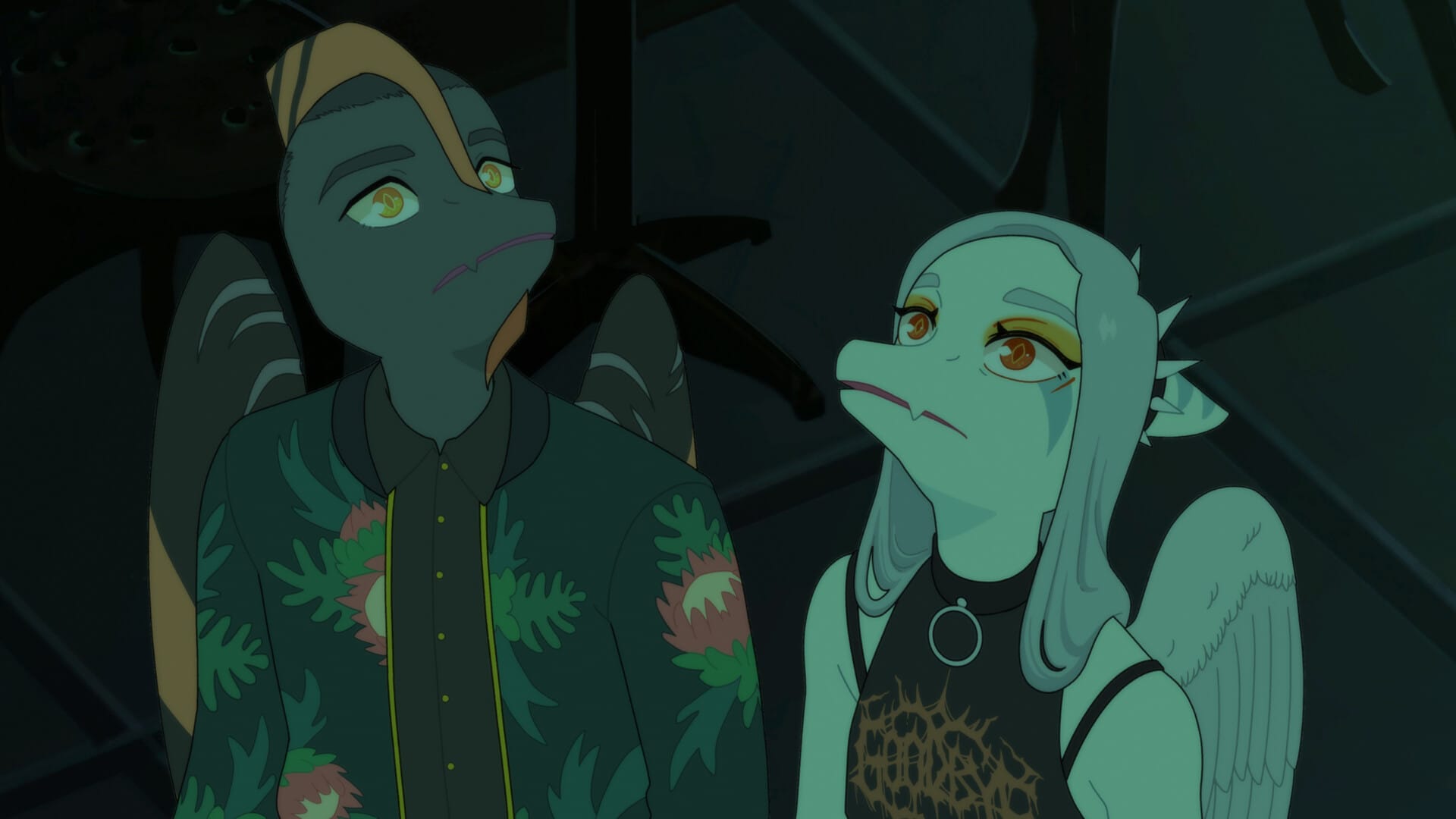
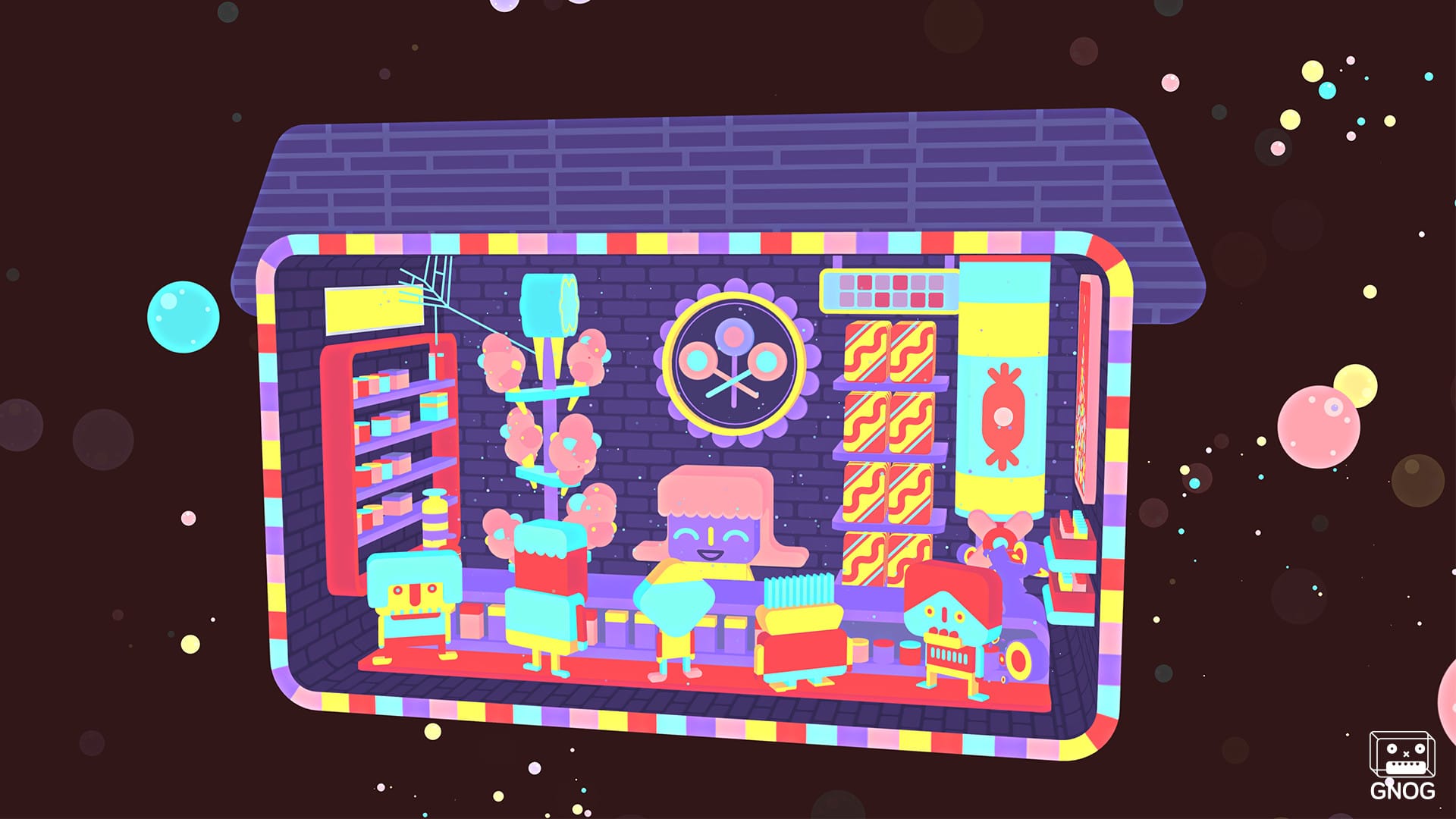
It’s an unusual process for any company, but not necessarily one for KO-OP: The studio–which was founded in 2012, and has made games including Gnog, Goodbye Volcano High, and its current project Young Suns–operates as a co-operative. Everyone at the studio, which was roughly 30 people prior to the cuts, makes the same amount of money, $90K CAD ($63K USD). In addition to members’ game development work, they’re required to help with administrative tasks by joining committees dedicated to topics like hiring and finance, and membership meets every other month to talk as a group about how things are going and to vote on proposals about the studio.
“We try to call ourselves ‘worker run,’ because all of our operations are democratically operated and managed,” co-founder and studio director Saleem Dabbous told Aftermath over a video call, noting that the studio is still working toward legally becoming a co-op.
As the studio has grown, especially during production of Young Suns, its structure and operations have had to grow with it. Prior to the cuts, membership had elected a six-person “executive committee,” and it was this committee that was tasked with coming up with proposals for how to deal with KO-OP’s financial problems and, ultimately, who to let go.
Dabbous and former narrative designer Jenna Yow, who lost their job, largely referred to the cuts as furloughs, since KO-OP hopes to hire affected workers back. Affected workers are still eligible to receive any profits from Young Suns, and they can still attend studio meetings and vote on company decisions. They “still have the ability and the choice to be involved with the operations of the co-op at large, because it's in their best interest to see how things are progressing in case we're able to rehire them,” said Dabbous.
“With [a] layoff, generally, it's like a handshake, like a goodbye, it's done… Our intent is essentially to try to do the best we can by everybody, within our means, and to try to keep that as transparent as possible.”
And while workers didn’t know ahead of time who would be affected, they knew the cuts were coming and had time to prepare. This proved valuable for Yow, who was hired four and half years ago to work on narrative for Goodbye Volcano High as their first full-time job in the games industry out of college. During the furlough discussions, they had been trying to move to KO-OP’s Montreal office from the Seattle area. Aware they might not have a job and subsequently a visa if they moved, they were able to instead plan a move to live near family on the East Coast.
“Really the biggest benefit of it [was] just having the time to prepare… and then just kind of make plans accordingly, which is not something a lot of other people at other studios get to do,” Yow told Aftermath in the video call.
“Even though this situation is not one I would wish on anybody, I do feel like it's probably the best way it could have happened for anyone.”
‘While we are a very political space, we're also existing under capitalism’
The need for cuts at KO-OP came about for the same reason they’ve been happening at so many other game studios these days: the funding dried up. Dabbous said KO-OP has been on shaky ground before–“KO-OP has never had a game that's been a hit and has brought sustainable revenue into the studio. By all means, KO-OP should not exist.”--but that in the past they’ve usually been able to get funding for their next project within six months of finishing the previous one.
“Ultimately, the way we've treated our position is that every game is our last game, and we always are treating it like that. And so we always also have a team that's trying to develop prototypes to figure out what the next thing is before the current game is even finished.”
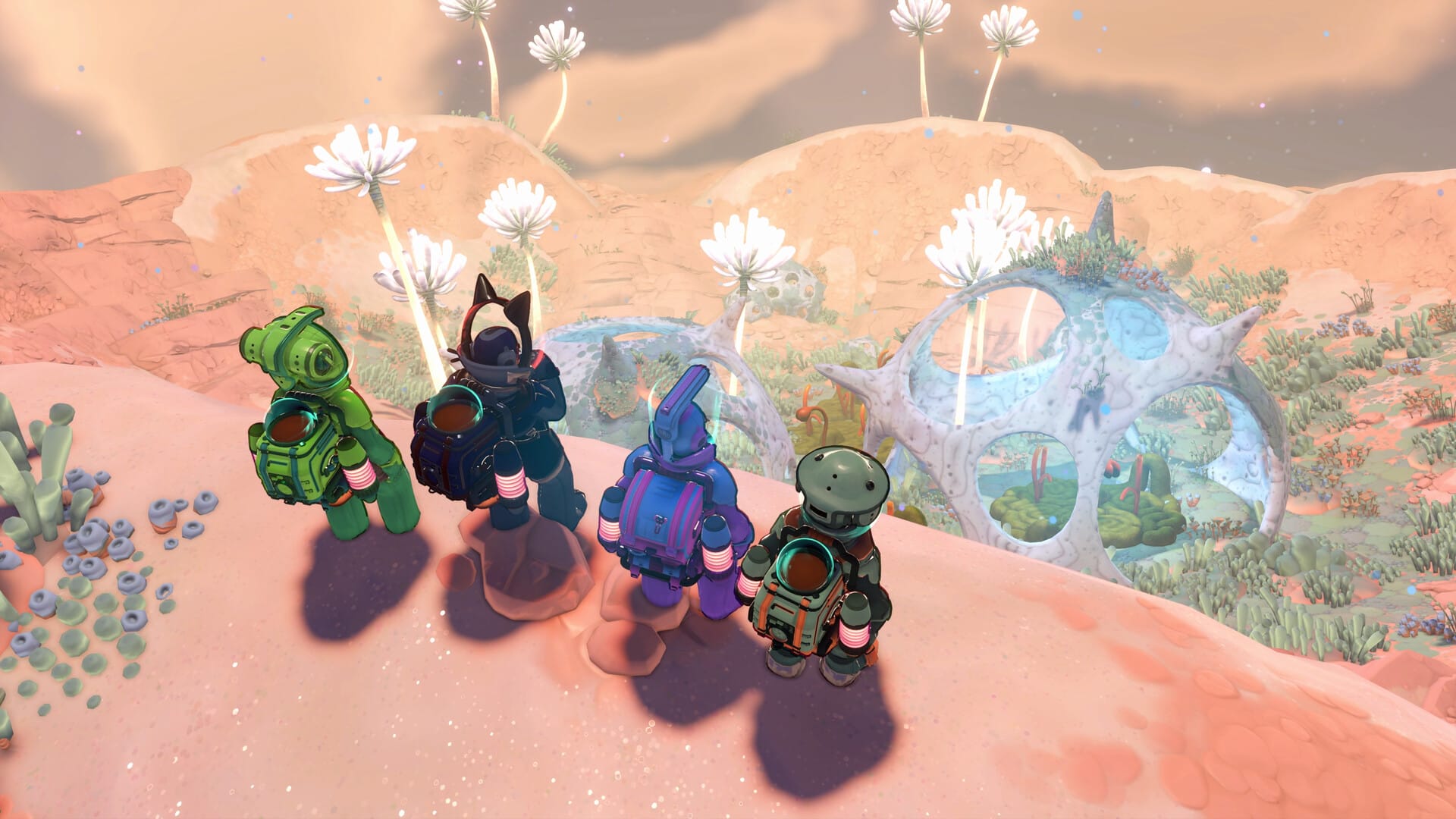
Young Suns, a life sim set in space, entered Xbox Game Preview in November 2025. (Xbox is the subject of a boycott by the BDS movement.) The studio was pitching new projects, but this time around, potential funders wanted “not only… a prototype, but it needs to be a very polished prototype,” said Dabbous. “The funding rates that we're looking at, that most of our previous conversations were around, have significantly gone down.”
KO-OP had grown during the production of Young Suns, and to get the kind of money that would let the studio continue at that size, potential funders wanted “a vertical slice or a year of full-time development on a project with the entire team, which is impossible, given that Young Suns is still in production.”
“I'd been at GDC this year and was in a lot of the pitch meetings for showing our decks to people,” said Yow, “and it seemed like it had gone really well, but then ultimately a lot of stuff never panned out.”
“There's just so much pessimism in the market around funding, and even in our conversations with funders and previous partners, there's a lot less opportunities for us,” said Dabbous. “It is feeling a bit more dire than it ever has.”
Following the lack of funding after GDC, the studio’s next best opportunity would have been being able to secure money from the Canadian Media Fund. But a response wouldn’t come until the end of the year, longer than KO-OP’s finance committee had projected the studio’s runway would last. Young Suns ultimately had a full release at the end of August, with a release on Steam still upcoming, but the studio didn’t think the game would provide the kind of revenue KO-OP would need to keep operating.
Workers were aware of the challenges KO-OP was facing. This wasn’t always easy–Yow, who chaired KO-OP’s hiring committee, said, “I don't want to know the realistic numbers, like I don't need to know exactly when the money runs out. I can be told that by someone else, but I don't need to have the exact digits in my brain because that'll, like, kill my sleep,” but also noted that, unlike other studios, it means “there's nothing guarded. The secrecy is at your own discretion, essentially, for most things.”
By the beginning of the summer, the committee projected the studio was approaching having only six months of runway left. “While we are a very political space, we're also existing under capitalism, and our survival is still at risk due to things outside of our control,” noted Dabbous.
The studio needed a plan for drastic action. Around June, Dabbous began drafting a proposal for the executive committee to present to the rest of membership. The plan was, if necessary, to basically halve the studio, shrinking the team still working on Young Suns to “a core group, and then everybody else [would be] developing projects for funding, which is something that we've struggled to do because we had all hands on deck on Young Suns for a long time.” Hopefully, this could buy the studio “ideally, a year, but buy us at least six to eight months to shift some people to develop some of these projects that we've been talking about for a long time and try to get funding for those, so that we can survive and bring back some folks, if possible.”
The executive committee brought the proposal to the rest of the studio for a vote in July. “The financials forecast was given to us pretty well in advance, like we didn't learn about this and then immediately have to vote on it,” Yow said. “So we knew it was coming. And then as [the financial situation] got more and more certain, it was like, ‘okay, we have to vote on it.’”
But cuts weren’t the only option on the table. “There’s an option where we just agree that we’re gonna ride it out together throughout the end of this year and call it quits and shut down,” Dabbous said. “If the team voted to just ride it out, ‘let's just all shut down the studio together,’ then that's what we would have done.”
Over a Zoom call, membership voted: Bar a few abstentions and one “no,” everyone voted for the furlough plan. “Overall, everyone was like, ‘I’d rather KO-OP try to survive, even if that potentially means I will be laid off,’” said Dabbous.
‘It's almost worse when it's everybody on an equal playing field’
Through the summer, the rest of KO-OP’s membership worked on Young Suns and potential projects, while the executive committee worked to determine who would be affected.
“We didn't want it to be a team-wide debate,” Dabbous said of the decision-making process. “We didn't want workers having to argue for their own comrades or their own jobs or anything. I think that there’s a lot of misconceptions with co-ops where it's like, ‘oh, if you're in a co-op and you have to fire someone, everyone has to agree on firing that one person.’ And it's like, no, you don't need to operate it that way. Actually, people don't like to fire people. It actually creates a lot of emotional turmoil, and you should actually elect a smaller group to make those decisions.”
Even though the wider membership of KO-OP wasn’t part of choosing who would go, they definitely felt that turmoil. “It was very stressful,” Yow described that time.“There's a lot of room for speculation in a way that isn't very fun. And sometimes it's almost worse when it's everybody on an equal playing field, compared to a more typical hierarchy of management and non-management.”
Dabbous said the executive committee asked themselves “what have the workers, the members, empowered us to do?” From there, they determined they’d “need a certain amount of people, and a certain amount of people with a certain type of skill set” to be able to continue working on current and future projects. “Then it was like, ‘okay, if those are the things that we're trying to do, who is in the position out of the team to achieve that?’ And that's how, essentially, we made the decision of who should get furloughed versus who should stay.” The committee “created that list, debated it, discussed it, talked about why, and justified it within the group,” Dabbous said.
For those not part of the decision-making, this time was “definitely a bit of a waiting game,” Yow said. “Like, oh god, is today going to be the day that they tell everyone? Is it going to be this week? It was very ominous.”
During this time, Yow was on their third attempt to get a Canadian visa. As the summer progressed, they said a member of the executive committee told them it might not be a good idea to move to Montreal. “It was pretty crushing to know that [being furloughed] was an imminent threat and a real enough possibility that it would not let me move to Montreal,” Yow said.
In August, individual calls were held with affected workers and one or two members of the executive committee. Dabbous was present on the majority of the calls.
“We didn't want six people delivering news to one person,” Dabbous said. “Originally we were going to…divvy it up, but then we decided to actually try to maintain continuity with all the calls, because it's just better if we're saying the same things, giving the same information, and that there's consistency.” Dabbous said he felt like it was his responsibility “to be there and share this very painful experience with everyone, because I was one of the people involved in making this decision, I was tasked with owning this process. So it feels important to be involved in the hardest part of it; I thought that was the responsible approach.”
Dabbous said he was “really taken aback at how generous people were when receiving the bad news, about both that they would love to return if given the opportunity, which I think is a really good sign, and also that we handled this specific process with a lot of care and consideration for people overall.”
Once all affected workers had been told, the committee posted the list publicly for the rest of membership.
Yow, who had already moved back East by this point, said that though they had “made my peace” with getting furloughed before it happened, “it was still very hard, because the state of the industry now is just so, so dire that I basically was like, if I'm not working at KO-OP, I'm probably not working in games.”
“So that was a lot of grieving, not only for my time at KO-OP but also, so to speak, my time in the industry,” they said. Ultimately, their time at KO-OP was extended through September to finish some narrative work on Young Suns, and they’ve lined up another contract in the games industry.
‘I'm angry because I care so much about the place and about the people’
Even though the process was done democratically, not all studio members were happy with how it went. During the day that studio members were told about being furloughed, they could give feedback in a Slack channel, either named or anonymously.
“I think we've built a culture where every milestone, we do a postmortem, and we talk about genuinely what sucked and what didn't suck,” Dabbous said. “And so I think we've started to build a culture where people know that if they give feedback, they're not going to be punished for feedback.”
Dabbous said that one piece of criticism the executive committee received was that workers wished they’d known the order they’d be having their calls in. Another was that some workers wished the furloughs had occurred on a Thursday, the end of KO-OP’s working week, rather than on a Monday.
Dabbous said Monday was chosen as the day to inform people because he felt that “now that we know what we're doing, we should give people as much lead time as humanly possible” before their last day. “Whereas I think other people felt like, ‘oh, now I kind of feel really emotionally distraught, and I don't really want to spend this week working.’”
KO-OP also held exit interviews with affected workers. “I learned a lot from the exit interviews and about how, actually, this job is really hard because of how much you care about everybody,” said Dabbous. “That is a burden that, I think, is intrinsic to this structure we’re trying to build and [what] this political project is trying to create for people.”
Yow was one of the people who provided negative feedback on the Monday timing, as well as being “definitely mad” about some of the decisions that had led up to furloughs being necessary in the first place.
“I was pretty pissed about some things because I, for all that we voted on these decisions, I did have very strong feelings about choosing to work on our pitch versus choosing to work on Young Suns until the last possible minute,” Yow said. “So there definitely is some anger. Like, I won't say this was all peaceful acceptance of fate.”
“But at the same time, I'm angry because I care so much about the place and about the people,” Yow said. “Knowing so much and caring so much about these people makes it hard to really be like, ‘oh, this person's an asshole and I hate them.’ It's like, ‘no, they're pissing me off, but I know where they're coming from.’ It's almost hard to really villainize anybody because we've gotten to know each other so well.”
Both Yow and Dabbous agreed that, while working cooperatively has benefits over traditional structures, it can also lead to unique types of conflict that the studio has to address. This can be especially true given the collective way KO-OOP handles money, where, Dabbous said, the studio has to deal with “how different people's relationships to class and money interface with the work of dealing with the money.”
“[You have to] discuss, first, generational wealth and privilege and things like that in terms of how they affect the decision-making and the policy and the conversations around money. That's work that we have to do regularly to manage conflict and mediate conflict, discussing those aspects as well as the actual work itself.”
Said Yow, “We all have different relationships to our material conditions, so that can be very hard to get other people to reconcile with when you're coming to a collective decision.”
“We [at KO-OP] talk about being an equitable place, but part of being an equitable place is acknowledging the power structures and the privileges and the different dynamics that come with your background, rather than behaving as if they don't exist,” Dabbous said. “And that can be a difficult thing to navigate at times, and also can be a really enriching thing to navigate at times.”
‘The games industry, or what remains of it, is a better place with KO-OP in it’
Currently, KO-OP’s ultimate fate is still up in the air, and those who remain are grappling with that uncertainty as well as adjusting to what it means to be a smaller team. Some workplace initiatives have been put on hold to focus on in-progress games and pitches, such as further iterations to the makeup of the executive committee.
“Coming off a much bigger project than we've done before and having to go back down to our previous size is very painful after several years of getting used to what the co-op had become, and all their relationships and expertise that had developed [in] that broader team,” said Dabbous. “So, it's just emotional, it’s gut-wrenching.”
Yow was grateful for the extra time to work on Young Suns, despite the turmoil around the furloughs, and even as they admitted not all of the work they had left to do was very glamorous. “By the end of it, I was very much kind of doing busy work that wasn't that exciting to me, but it was also work that I could reasonably expect to make it out the door in one piece,” they said.
This felt especially notable when compared to other people they know in the games industry, who have been laid off before their work has even seen the light of day. “At least [my games are] out, at least I have shipped titles for my time at KO-OP.”
And even when it was hard, they were glad for KO-OP’s worker-run structure. “I definitely like knowing how the sausage gets made, I like being able to participate in how the business runs… Because I'm so early in my career, especially compared to other people at KO-OP, I feel like I was afforded a lot of room to learn and grow that normally I'd have to be squabbling my way up the ladder for.”
This extended to the studio’s flat pay structure as well: Even though they made less money than other game workers they knew in the Seattle area, the openness around workers’ equal pay “kind of alleviates the pressure to feel like you have to keep climbing up the ladder to get the higher pay.”
Overall, they said, their experience at KO-OP “was worth it for me. I can't speak for everybody. ”
“You can't work somewhere for four and a half years and not have frustrations, but despite that, I think the games industry, or what remains of it, is a better place with KO-OP in it,” Yow said. “I do want to come back. I love the people and I love the work. I just want things to be easier if they can be.”

Welcome to Inside Baseball Week, our annual excuse to explore topics so niche and weeds-y that no other video game website would touch them.
We're also having a sale, so if you're yet to make the jump to helping support independent games media, there's never been a better time!


