Paralives, an indie life sim, came out in early access last week. It’s pretty much exactly like The Sims, except a little bit worse.
I will say it’s incredibly impressive that such a small team—according to the Paralives website, the team is just fifteen people, and the game was primarily funded through Patreon—was able to create a legible life simulator. It’s a task that all but defeated Paradox, which canceled Life By You in 2024. InZoi, developed by Korean video game publisher Krafton and also in early access, honestly isn’t very fun to play. The actual life simulation felt clunky and without much texture, and the build mode was so frustrating that I ended up not using it—not to mention that Krafton used generative AI during the development process.
In comparison, Paralives is an obvious success, despite being a little buggy given that it’s early access. I can happily build a house, create a character (or Para, in the parlance of the game), get a job, make friends, get married and explore a small town. The only problem is that it feels almost like a direct copy of The Sims, but without the depth of gameplay. I hope that this early access release can help the Paralives team free themselves from their obvious inspiration, because in its current state the things that are unique and interesting get buried by the stuff that clearly comes from The Sims.
When you start a game, you’re asked to pick a storyteller that will guide the narrative in your gameplay. What this amounts to is that, every night when your Para goes to sleep, the storyteller offers you a series of cards that add buffs, bonuses or events for the next day. This does give the player daily goals, but these cards aren’t all that impactful to gameplay, and the system feels shallow. Sure, getting four random wants for my Para does give me a concrete series of activities to pursue. But the range of those wants is limited to things like “flirt” or “get a snack” or “get a bonus at work,” and worst of all, they’re fairly repetitive. Also, “wants,” a series of randomly rolled things your character wants to do that day, are another system from The Sims, this one from The Sims 2.
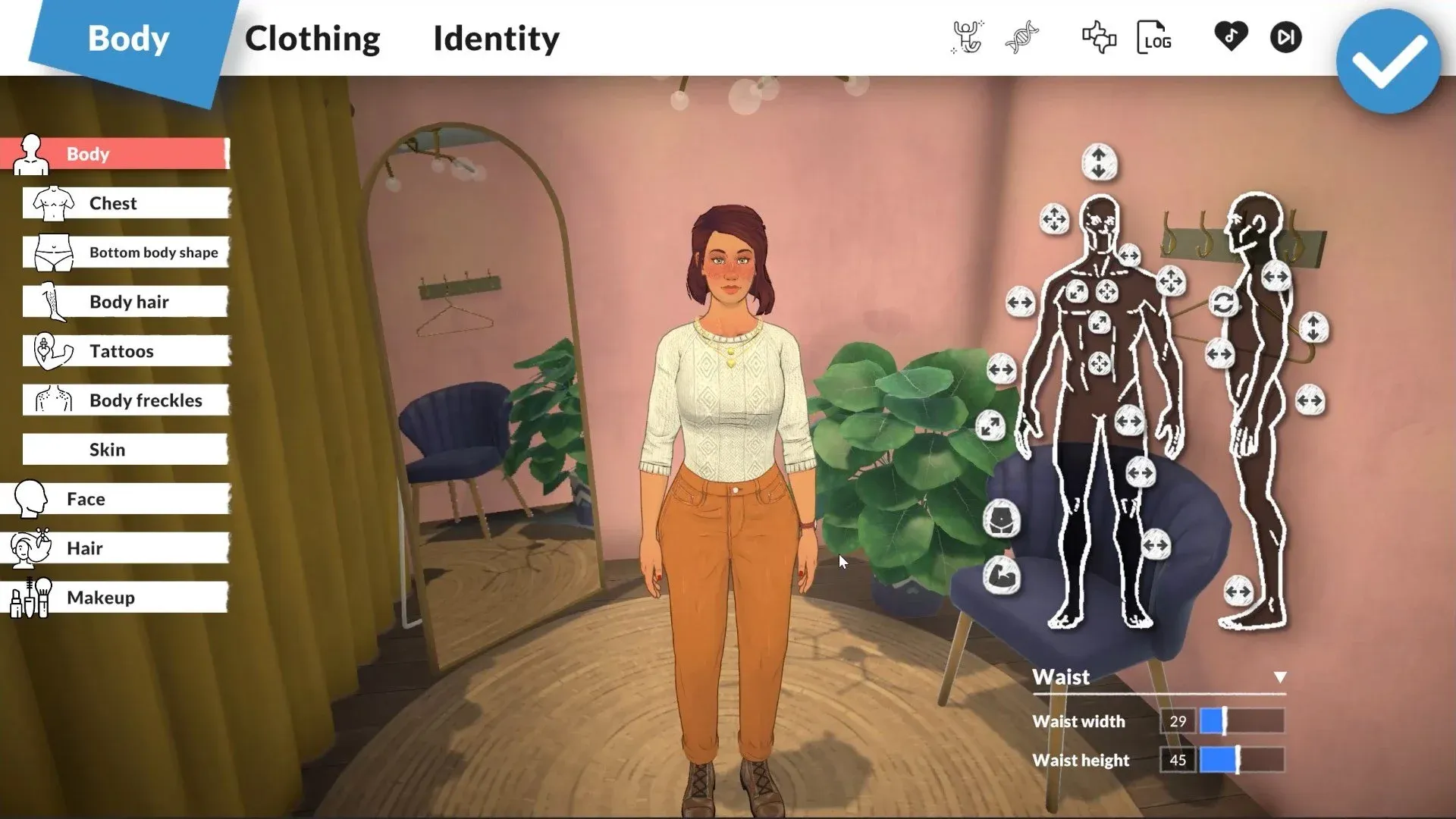
The game is kind of an open world, like The Sims 3, except when you want to enter a lot. Then the entire game grinds to a halt to load that location, which feels like a bad compromise between the discrete neighborhoods of The Sims 4 and the truly chuggy and badly optimized open world of 3. The build mode is a direct rip from The Sims 4, complete with walls you draw and then push and pull. The Paramaker is uncannily like Create-A-Sim in its presentation, though the game has sliders instead of allowing the player to directly grab parts of a Sim’s body and mold them. Paras also have meters for their needs which must be fulfilled and speak a gibberish language not unlike Simlish. The art style is different enough, pleasantly evoking illustrations from a storybook, but in practice it makes the game just feel like The Sims wearing a different skin.
The conversation system is where the game diverges the most, and it’s the system I like the most. Instead of selecting conversation topics from a radial wheel, Paras enter a conversation and when a meter fills up, the player can select a conversation topic from three or four random cards. It’s here that I finally feel like the Paras come alive a little. You’re not always going to get the conversation topics you want to raise the friendship or romantic relationships between Paras, and each card will contribute towards each Para’s current mood. It’s hard to make things flirty if you keep getting cards related to friendship—but that’s the kind of texture that makes a life sim interesting to play. The key to a good life sim isn’t just giving players everything they want, but introducing a little bit of chaos into their well-made plans.
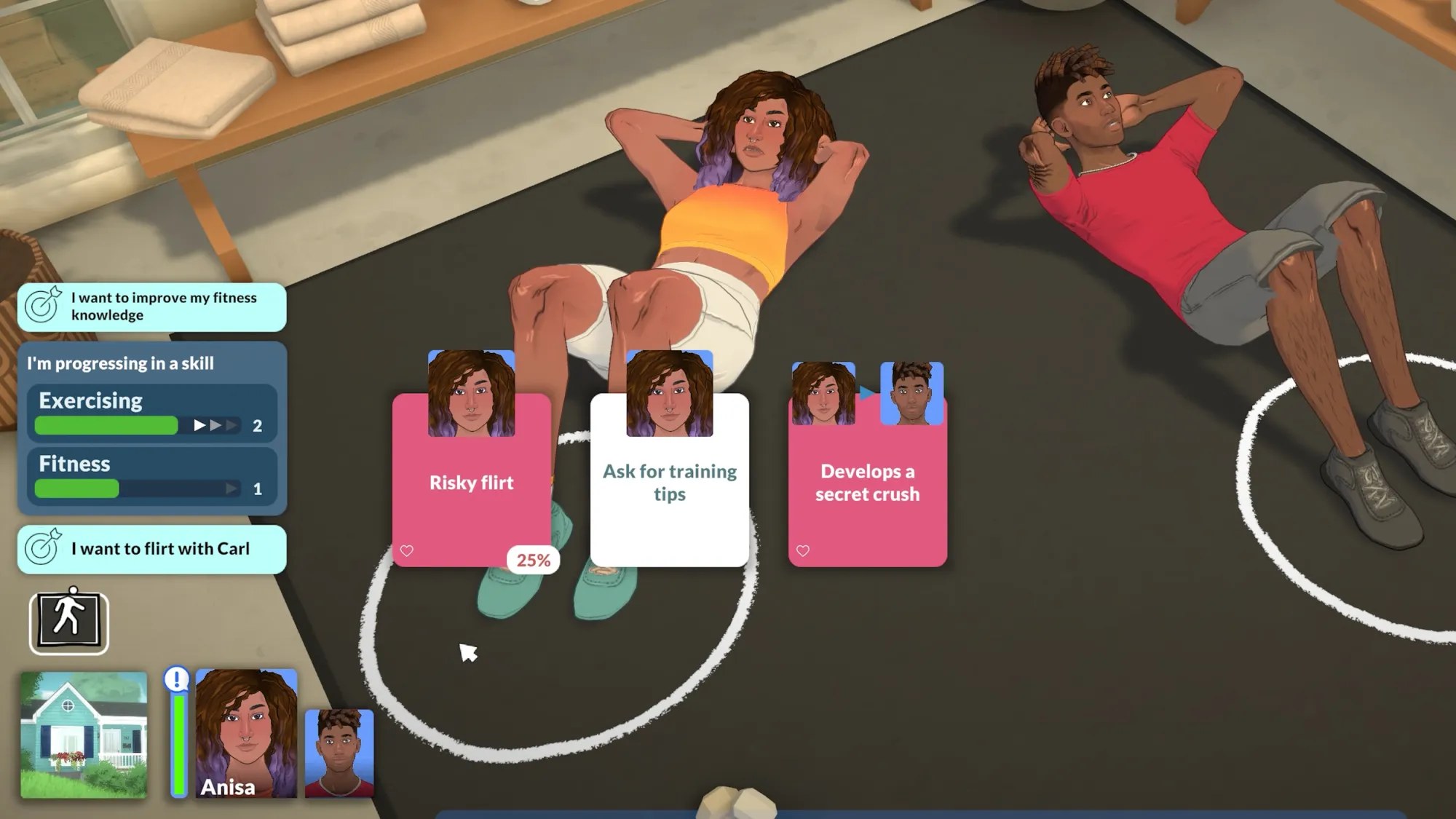
My Para, Cherry Palmer, has a Gloomy disposition, meaning she’s sad a lot of the time, but is also predisposed towards romantic interactions. When Paras flirt, players are shown the percentage chance of the action being successful, and my god does Cherry ever eat shit when she wants to flirt. After embarrassing herself dozens of times, she finally managed to flirt successfully with a townie named Vincent, and even asked him to move in. It was a truly engaging saga, for a moment. Then I went into build mode to make my house bigger, and I felt like I was playing an off brand The Sims again.
What a non-Sims life sim would look like is, right now, an unanswered question, so it's hard to fault Paralives for hewing closely to the most successful game in the genre. How else would you visualize the cleanliness of a Para other than a meter that fills up and then drains? It’s just that by cribbing so many features from The Sims, I cannot help but think of that game when I play Paralives, and lament the things Paralives does not yet have. (Just like The Sims 4 on launch, this early access version of Paralives doesn’t have pools or swimming, though the team says these features will come further along in early access.) I hope as they continue to add features, they lean into the things that are unique to Paralives and develop a language of life simulation that feels uniquely their own.
 Luke Plunkett