

By now you may have already seen the news; Ryu Ga Gotoku studio has decided that its upcoming century-spanning crime game Stranger Than Heaven will feature a cameo from Tupac Shakur.
 Nathan Grayson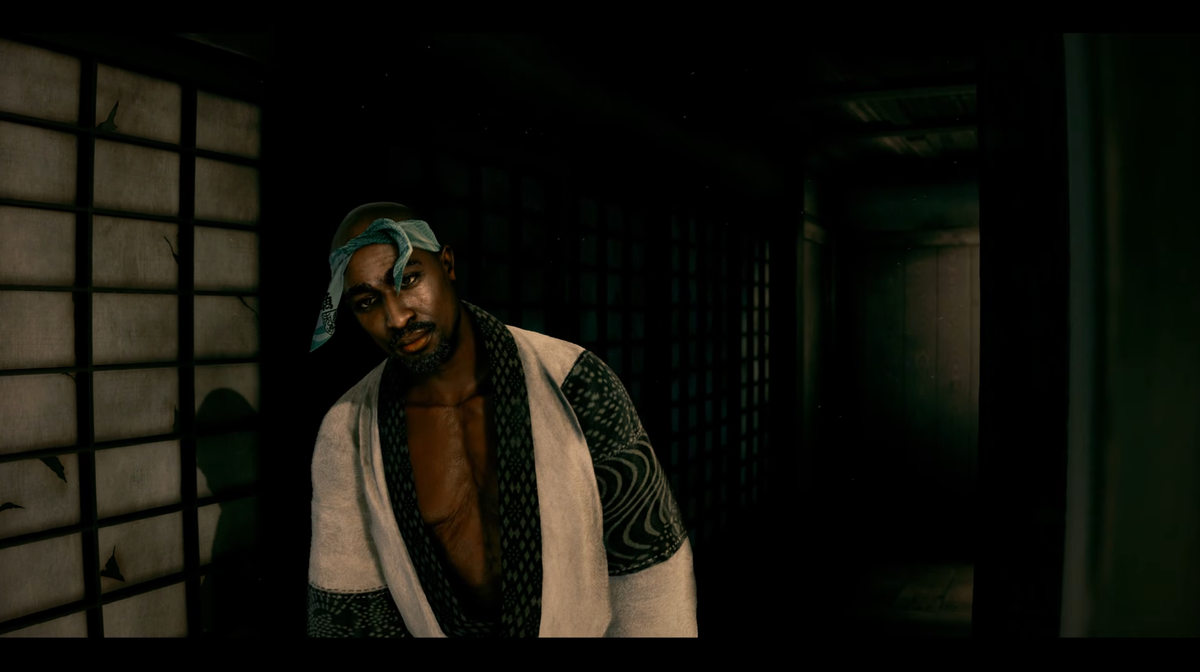
For many and obvious reasons, this isolated act of misguided marketing fucking sucks. But as I stare at that screenshot of a man murdered in 1996 starring in a 2026 video game, wondering if I've suffered a traumatic head injury, I can't help but experience even deeper misgivings about this studio and the games it has become famous for.
If there's one thing that could sum up the success of the Yakuza series more than their bombastic action sequences and granular depictions of Japanese streetscapes, it is the dependability of the games. From 0 through to 6, so long as the original creators and custodians of the series were responsible for it, you could count on a new Yakuza game being the same shape, the same heft and broadly of the same quality as its predecessors.
Just like the soap operas its storylines so readily emulated, that dependability was part of the appeal! Every time I saw a trailer for a new Yakuza game I'd get excited because I'd know it would be some good shit. In a world (and industry) full of uncertainty, where layoffs and studio closures dominate, and once-beloved franchises can now disappear for decades at a time, to be able to clock on and clock off with a Yakuza game every year or two, playing on the same streets in the same cities with the same characters was an immensely satisfying experience.
Like my former colleague Harper once said at Kotaku, “The Yakuza series has a few constants: burly men with tattoos, karaoke and cabaret, dramatic fist fights, and the city of Kamurocho”. Over the years the games could change a little every time, and the city would look a little different every time, but those felt like a natural evolution, like watching your family grow up alongside you.
Like family, you love some of them more than others. Few will prefer Yakuza 2 to Yakuza 0, for example, while Yakuza 6’s whiffed ending can’t compare to Yakuza 4’s sprawling, multi-character storyline and noodle joint shootouts. But I loved them all regardless. They are all Yakuza games, all share the same DNA and I could rely on all of them to provide exactly what I was looking for when I booted them up.
In recent years, though, that rock-solid foundation has started to feel a little shakier. When studio founder Toshihiro Nagoshi and some of his closest colleagues left Ryu Ga Gotoku in 2021 to form their own company (which has since disappeared off the face of the Earth), a new generation had to take over at the top, and while some of their earlier games were very well-received, over the past year or two, as time has crawled on, fans have noticed things have started to slip. To feel different.
Ryu Ga Gotoku has made some of the most refreshingly human and inspiring games I've ever played, and then about two years ago they went completely insane
— Ian Boudreau (@ianboudreau.com) June 6, 2026 at 2:41 PM
Majima's weird pirate spin-off was a very bad video game, just a complete miscalculation of what makes the character memorable, then a man very credibly accused of sexual assault was cast in the Yakuza 3 remake, which also cut a load of side missions present in the original, including a memorable one that featured a trans character. And now this.
It's enough to make long-time fans like me start to question where the studio is at, and whether we really can depend on these games and the people making them anymore. Has the increased fame and attention over the past few games got to them in a way where they're failing to grasp the reasons for that success? Is each passing year, and release, simply bringing RGG's current leadership further and further from the contributions of their predecessors? Are they just having a bad time at the moment?
Who knows; despite this digital necromancy, and other recent studio missteps, Stranger Than Heaven might turn out to be a masterpiece. But the doubt is there, and it never was before, and given our trust used to be such an important part of enjoying these games, that's enough to have me feeling extra bad about yesterday's news.


