

Yoshitaka Amano is a legendary creative who makes bespoke human art. So you might expect him to have strong feelings against AI, like Guillermo del Toro has expressed. In a recent conversation with him, I found him to be more centrist on AI than I anticipated.
Amano is a veteran on the shortlist of "your artist's favorite artist," so you'd think his stance on AI would be nothing short of "fuck AI" for anyone audacious enough to ask him his take on it. At Anime Expo in early July, I spoke with him about ZAN, an upcoming “completely hand-drawn” anime series based on his 2010 artbook from his U.S.-based studio, Yoshitaka Amano Inc. Also present were Yoshitaka Amano Inc. CEO Hiroaki Ikegami and secretary Shiho Kaneko.
After watching ZAN’s delightfully Toonami-ass trailer a day before our interview, I was struck by how it wasted absolutely no time establishing the project as a comfort to the afflicted and an affliction to those comfortable with AI in the arts by declaring it would take animation back to its roots through complete hand-drawn animation. So my penultimate question to the man many consider to be the quintessence of artistry—making awe-inspiring artwork for Angel’s Egg, Vampire Hunter D, and Final Fantasy—was to ask his thoughts on how AI has impacted his craft.
“If AI makes everything, then that’s fine. But it can’t make zero-to-one,” Amano said via a translator.
Pulling at the thread a little bit further, Ikegami added that, although ZAN’s pilot trailer prefaces its main creative overture as being completely hand-drawn, the company may search for ways it could add digital animation to its production pipeline.
“If we use digital or AI, and it becomes better than hand-drawing, then [Amano]’s yes to AI and digital. But he doesn’t think so. Hand-drawn comes first,” Ikegami added.
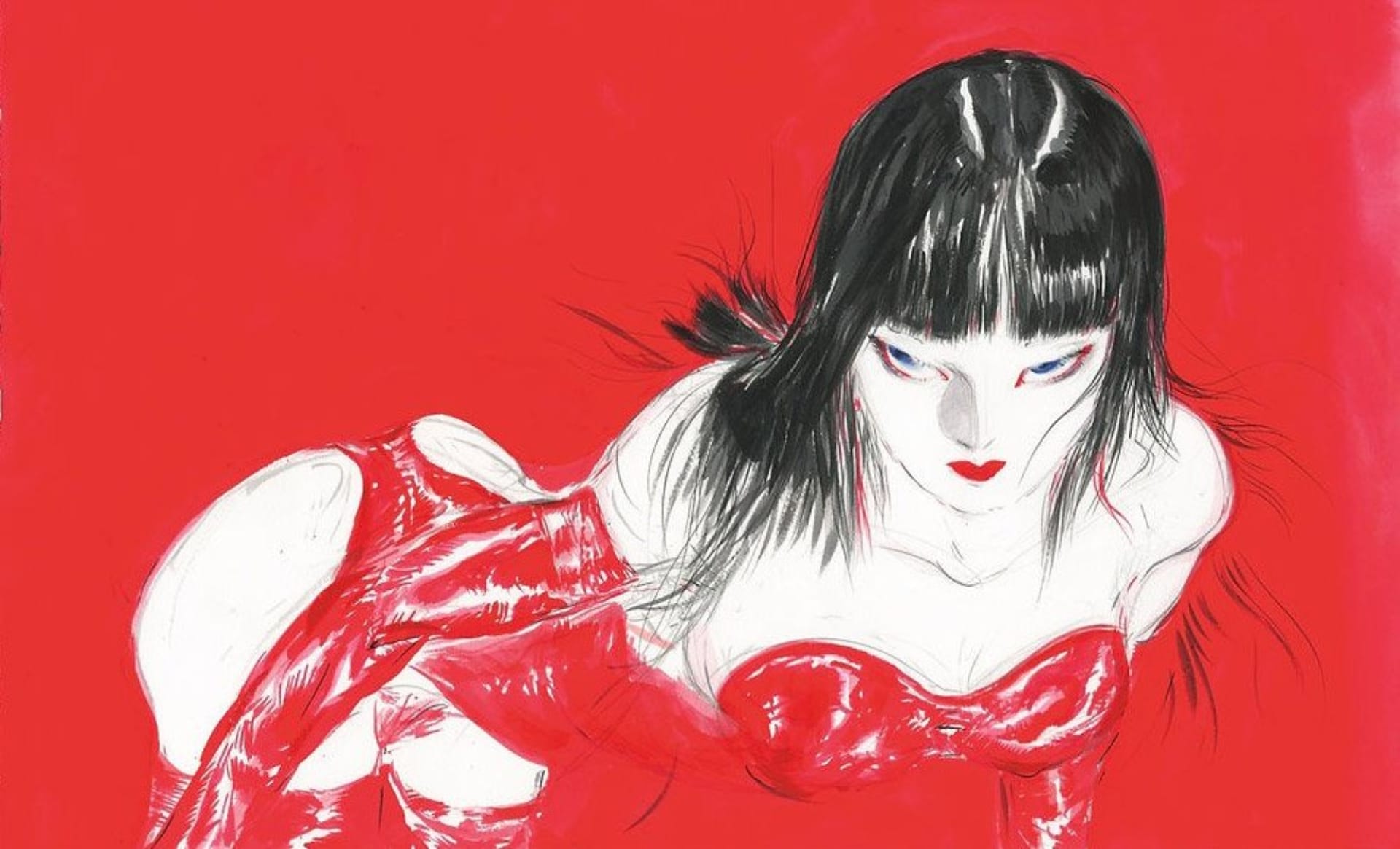
Amano expanded upon Ikegami’s point, drawing an analogy to Disney’s Snow White. In his analogy, he noted how Disney’s implementation of rotoscope animation to animate the titular princess and seven dwarfs yielded “realistic human movement,” thanks to its animators tracing live-action footage. For Amano, rotoscoping in the 1930s was not dissimilar to AI’s implementation as an artistic tool.
“At that time, that was the latest digital production process,” he said. “At this time too, the latest thing is AI and how we combine and deal with it.”
When I asked Amano how he reckons artists should “deal with it”—more specifically, if he views AI as a threat to human artists in animation or as a useful tool to bring animation to a new frontier as he inferred with the rotoscope as the digital art paradigm shift of the late 1930s—his response was a middle-of-the-road refrain on GenAI.
“AI is human-made, so we can deal with it. It depends on how you use it. All technology is made by humans. It becomes a weapon if you use it incorrectly; it becomes helpful if you use it correctly,” he said.
As a follow-up to that follow-up, I asked Amano if he’s used AI before and what concerns he has about artists using it as a tool.
“The big difference between AI and humans is that humans can create from scratch—zero to one—but AI, right now, can’t create from scratch. But in the future, if AI could make zero-to-one, that might be a threat,” he said, echoing his previous point. “Only two types of things exist in this world: human-made and nature-made. And in this space, these are all designed by humans.”
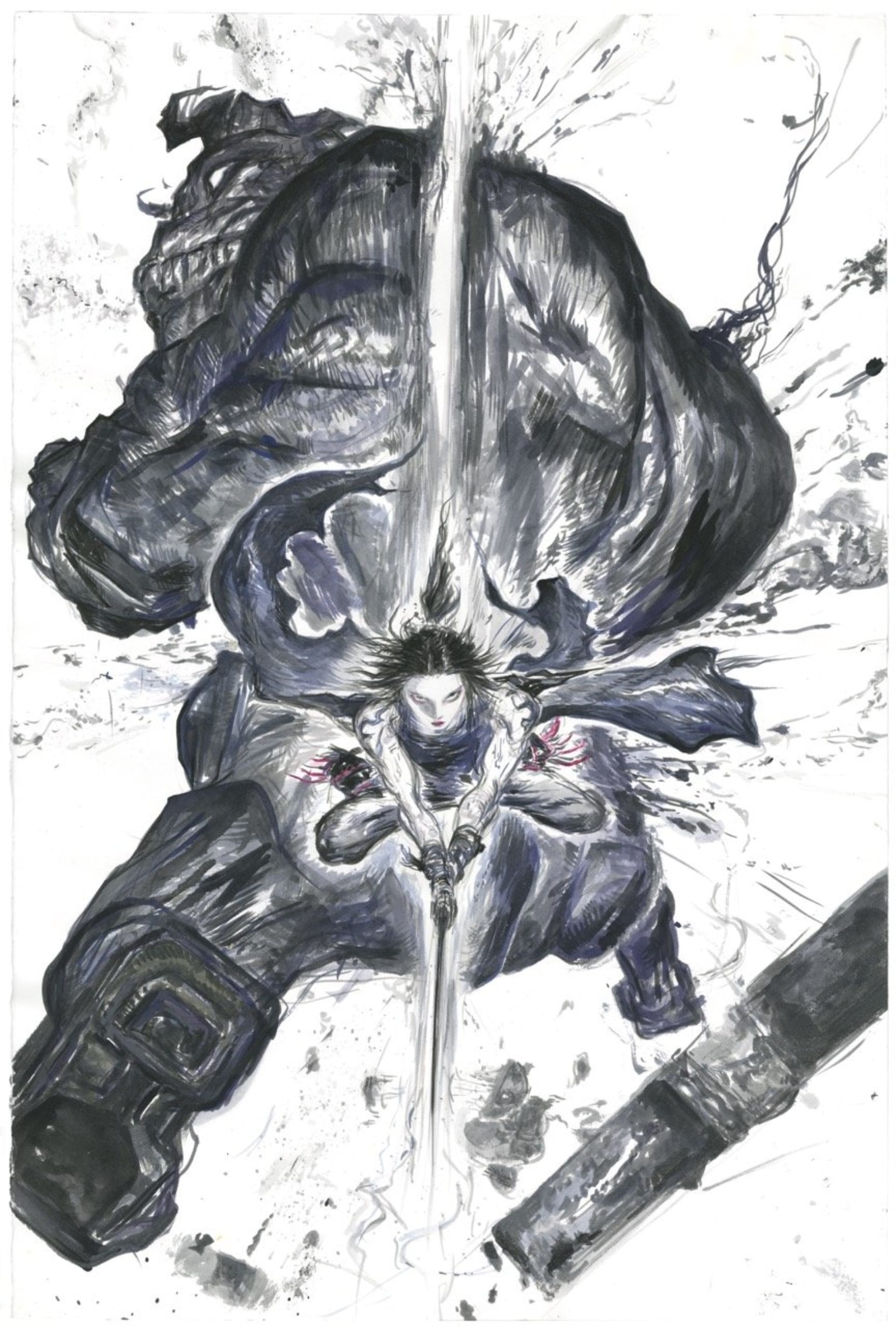
Amano assured me he isn’t ignorant of AI concerns, especially in the United States, where he remarked that use is surprisingly rampant. This prompted me to give him an example of how Ghibli-style art was being used to send political messages that its original creators didn’t endorse, and how Japanese organizations have called on Sam Altman’s OpenAI not to train its models on their artwork. Amano asked me, “Have you interviewed those creators?” Not sure if his question was posed as a gotcha or as a genuine inquiry, I responded that I had talked to people at Studio Ghibli about their work, but that my questions weren’t specifically relating to AI.
Although my interview with Ghibli vice president, Atsushi Okui, pertained to Princess Mononoke’s 40th anniversary, I told Amano I have interviewed many others who seem opposed to AI in the arts. Key among the folks I’ve spoken to are the Look Back director Kiyotaka Oshiyama, Adventure Time creator Pendleton Ward, Primal’s Genndy Tartakovsky, and The Ghost in the Shell director and character designer Mokochan and Shuhei Handa. Those conversations resulted in them largely saying AI acts as a threat to their craft more so than as a boon. Here’s exactly what they had to say:
Oshiyama described AI as kind of being like a washing machine.
“Back then, people washed their clothes by hand. Now that the washing machine exists, telling people to go back to hand washing their laundry is out of the question. I wasn't there at the time, but maybe some people complained about the jobs of hand-washing laundry being taken away by this machine. I completely agree that this AI technology, or this AI art, would take the jobs of people who work in the creative industry. I strongly believe it's something to be talked about,” he said.
But he, too, was a little less hostile to AI than some of his animator peers.
“On the other hand, as you said, the latter camp of people who say that creating AI art ‘democratizes,’ makes it more available to the common people who can't express their creativity through art—I don't want to take that away from them,” he continued. “When I made Look Back as a movie, the story itself is about the creative efforts of these artists and how their efforts bloom into creative art. It's a story that portrays and celebrates the growth of art. I didn't make this movie to deny the possibilities of people gaining creativity or the opinions of people who say that AI art enables them to grasp their creativity.”
Tartakovsky told me that the cure for AI, and the way to destroy it, was to keep creating unique art.
“AI can copy, but can it create something truly original?” he said. “We wanna push human creativity to a level where it can’t be copied. And that means doing original things, pushing boundaries, and trying different things.”
Mokochan and Shuhei didn’t take a moral stance, but made it clear that “human made” art was their preference.
“One of the concepts of the original [Ghost in the Shell] manga is about the mysterious part of the human being,” Mokochan said. “We wanted to follow the same concept using the same method to show humanity by using hand-drawn art. We prefer to just use our arms to draw all of the animation.”
“It’s because the main concept is about the human body, so that’s why we prefer hand-drawn art over AI,” Shuhei added.
Out of all the animators that I spoke to about AI, Ward was the most pessimistic about what AI is going to do to animation as an industry. While he sees it as inevitable, it’s also not a cheery prospect for him.
“It’s gonna be heinous in many, many ways, and it’s gonna destroy the industry—but I think people are gonna like it, ultimately,” he said. “Yeah, we’re cooked. AI will be implemented at some point because it saves studios money. It just has to happen at some point.”
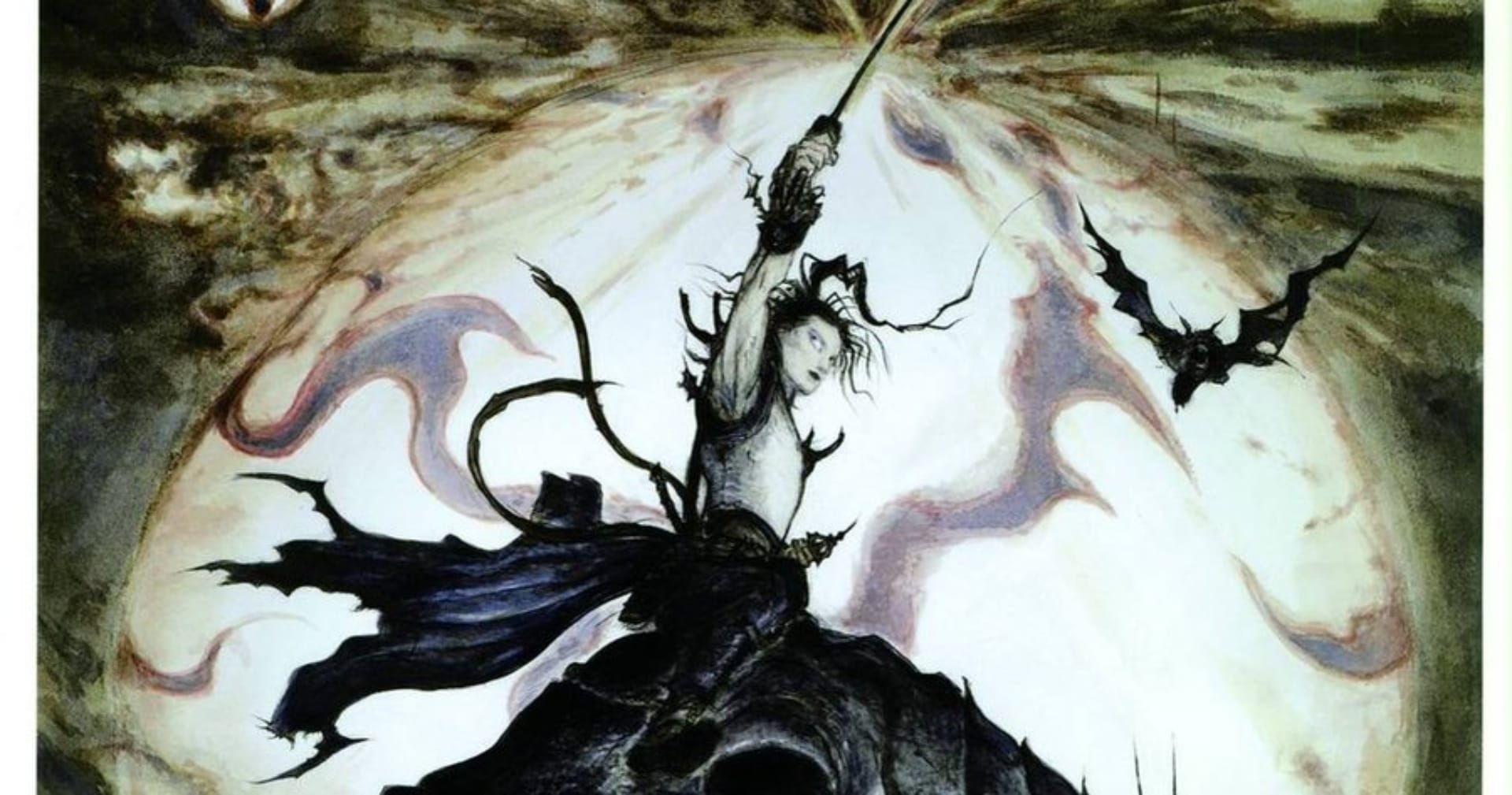
After highlighting Oshiyama’s take, I also noted to Amano how MAPPA had made a statement about AI use in Chainsaw Man —The Movie: Reze Arc’s post-credit scene, writing, “No part of this work may be used or reproduced for the purpose of training any artificial intelligence technologies or systems.” But AI is something Amano, as well as Yoshitaka Amano Inc., aren’t going to turn down the prospect of implementing.
“He’s really interested in making new stuff instead of past works,” Kaneko said. “So if AI can read his past work and then create Amano-style art, then that’s fine. He’s only focusing on the new stuff in the future.”


