

Welcome back to The Work, a column about resistance in fiction. This month: The Ultimates (2024), by Deniz Camp, Juan Frigeri, et al.
Is the superhero over, or are reports of their demise overstated? This summer has mounted arguments for both, as apathy over a sauceless Avengers: Doomsday trailer and Supergirl's box-office bomb suggest that cape comics' Hollywood reign is over, while Spider-Man: Brand New Day's astonishing, ongoing success might prove the doomsayers (ha) premature. There's a lot of money at stake, and no one wants to leave any on the table.
Like a lot of issues facing superhero movies, comic books had this problem first. For as long as there have been superhero comics, the people in charge of making them have been anxious about them falling out of fashion. They frequently deal with this by: commissioning bold new reinventions of their biggest characters, finding a way to retrofit post-war or Atomic Age anxieties into more contemporary concerns. But there are limits – as 20th century creations, superheroes depend on a 20th century framework, a faith in institutions that have now failed, a civic-mindedness that is currently in short supply, a government that has decided to abandon all semblance of propriety.
While modern takes on superheroes acknowledge the shortcomings of institutions — Batman and Daredevil stories revolve around the failures of law enforcement and the United States criminal justice system, Iron Man stories are predicated on the evils of the military industrial complex — even these broken systems are only recognizable to those who lived through a time where they appeared to function, when it was important for the United States government to at least pretend it had a duty to represent its citizens' interest, to protect the environment, or to regulate big business. We now live in a time disinterested in such performance. One where young people, after a decade of Donald Trump's MAGA movement, have not known anything different.
So what does heroism look like in this world? How do heroes define themselves in a world where acting in the public interest is branded as terrorism? Where do the lines lie? How should violence be applied? Deniz Camp and Juan Frigeri's recently-concluded run on The Ultimates (2024) offers one answer.
The setup is a little involved. The comic takes place in an alternate Marvel Universe, one where a mad genius called The Maker has manipulated events so that Marvel heroes are either corrupted or kept from their superhero origins, while the world is carved up and controlled by supervillains under The Maker's rule. The public is unaware of these machinations, but thanks to the efforts of Howard Stark/Iron Man, The Maker is trapped in time for two years, and Howard's son, Tony, learns the truth of the world. The young Tony decides he's going to "fix the world," repopulate it with superheroes and build a team that will be ready to fight The Maker when his two-year imprisonment is up.
From here, Camp, Frigeri, and a handful of guest artists do something unexpected: They have Tony fail. Constantly. He fails because he's trying to build a superhero team modeled after decades of Marvel Comics, where heroes band together and fight bad guys, and violence is the beginning and end of the conversation. This doesn't work — can't work — because it doesn't involve the people they're fighting for. Even superheroes can't topple evil alone. He learns from this mistake quickly, and The Ultimates becomes a survey of the ways in which people struggle against and resist the new world order designed by The Maker. His team becomes a network of solidarity and support.
The result is dazzling, each issue both a thrilling comic book yarn and punchy agitprop. The eponymous Ultimates are not superheroes but revolutionaries, and the revolution has many fronts. In one issue, the team visits an island poisoned by the fallout of the radioactive explosion that created the Hulk (in this version of the story, he is a cruel dictator and martial arts master working under The Maker). They hope to find someone just as strong, and they do – but Lejori Joena Zakaria, the She-Hulk, is the proud protector of an indigenous people that has long suffered under corporate experiments that poisoned her land and mutated its populace. She will not join a cause unless that cause is undoing the devastation of her land.
Elsewhere, Luke Cage, wrongfully incarcerated in his youth, reads works like Soledad Brother and is radicalized without the superpowers that give him unbreakable skin and incredible strength, laboring to educate and inspire his fellow inmates. When Tony offers him the powers he should have had to join his team, Luke takes them but refuses to fight in his battles – choosing instead to continue his work of abolition, leading revolts in private prisons, restoring power to the people.
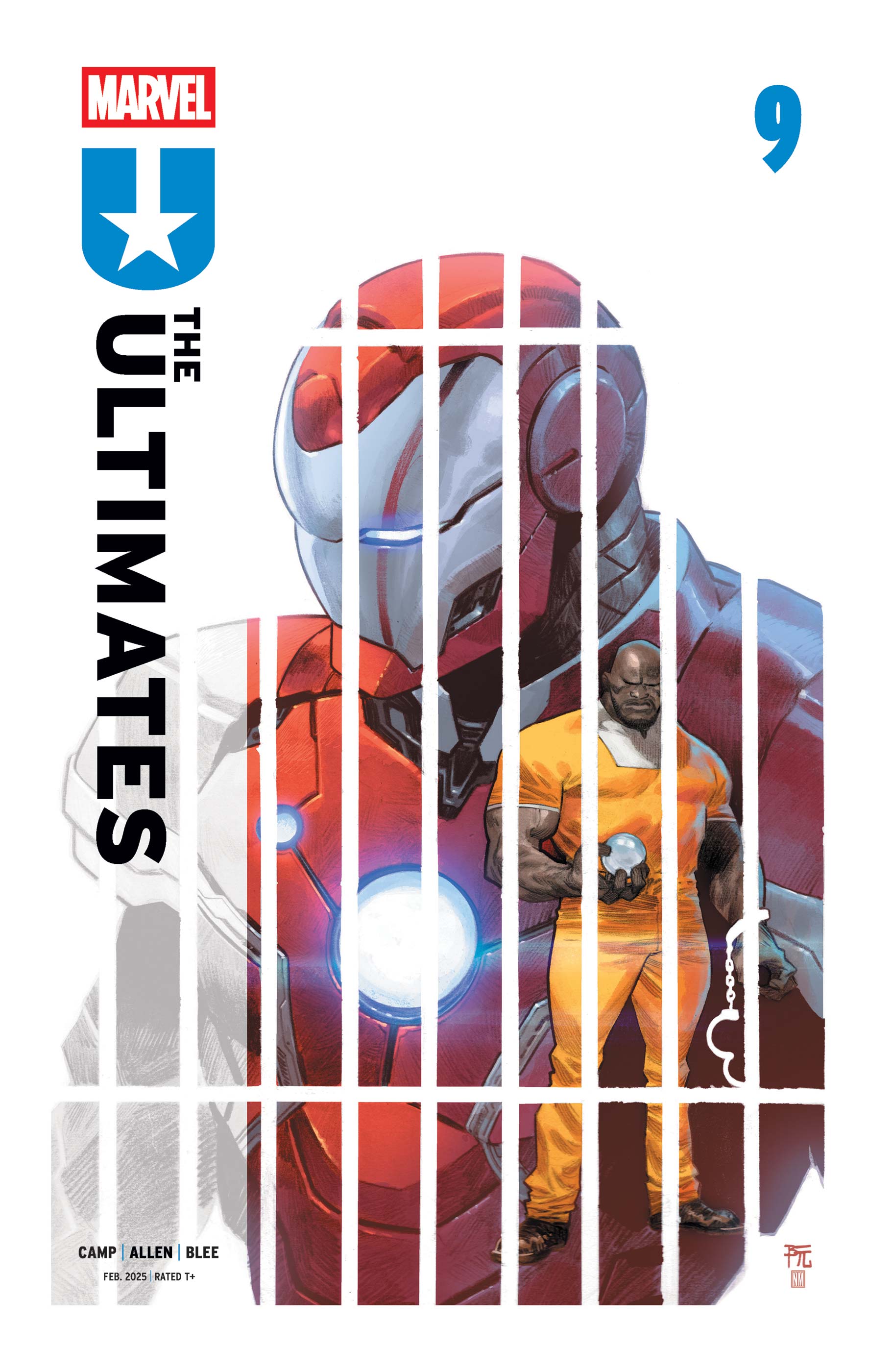
In another adventure, Clint Barton, the man who was supposed to be Hawkeye, rejects Stark's offer to embrace his heroic destiny, leaving his sci-fi archery set in a dumpster. It's picked up by Lakota activist Charli Ramsey, who uses it to engage in a campaign of sabotage against the energy companies that have run amok and ruined the land. Captain America goes with the intent of stopping them, and the two have an issue-length brawl while debating about America and who it belongs to. Cap lets them keep the bow.
And so it goes, for issue after issue. The frame narrative of The Maker's two-year imprisonment unfolded in real time, meaning each monthly issue of The Ultimates counted down to a final confrontation, giving the series an incredible momentum. It also meant that the stories had to sacrifice depth for breadth, a shame given how strong Camp and Frigeri's vision of a revolutionary take on The Avengers is.
The Ultimates isn't the "right" way to do superheroes, and like all art produced by a massive corporation like the Disney-owned Marvel, it's a compromised work, subsuming the aesthetics of resistance into its output. But it's still effective as a call made from inside the house, arguing that these stories are focusing on the wrong things, that people who want to inspire a generation — maybe even with superheroes — ought to start coming up with new ideas and urgently address problems that exist right now. The Ultimates is a story that dares us to go bigger even in our most commercial art.
"Heroes aren't born or made," Camp writes in his closing argument for the series. "They rise up from the people, from the struggle."
Is the superhero over? Maybe in its most commercial, cinematic form, they are. But they still can be useful, relevant in the way The Ultimates is, which argues that while superheroes can inspire, the real burden lies with everyday people resisting in whatever mundane way they can. That's what it's going to take, if we're ever going to fix the world.


