


The following is an excerpt from CTRL: Essays on Video Games, a book published by The Lilliput Press and edited by Dean Fee.
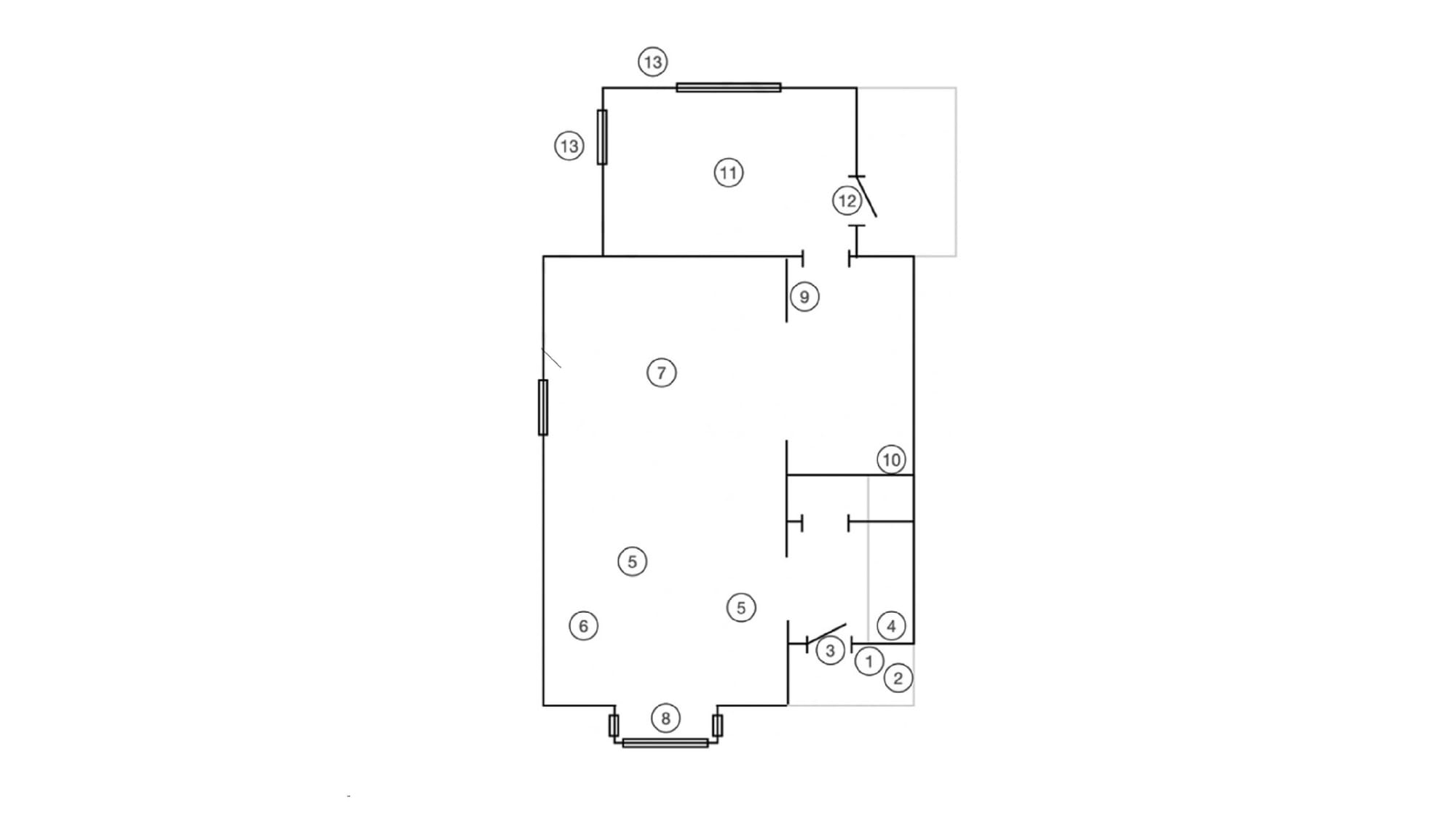
Chasing Lilacs, by Brenda Romero, is a personal history told through the lens of gaming.
1) House number. The number 722 marks the address of the house on Montgomery Street.
2) Front porch steps. Ted sits here and practises his guitar for hours a day. If he makes a mistake, he tilts his head and says, ‘Ah,’ as if he’s offended both Segovia and himself, and then he starts to play again.
a) If you are four, you sit and watch him play. He stops playing Segovia and starts to play ‘Salty Dog’, one of your favourites.
b) If you are ten, he asks you to sit as you walk up the stairs in front of him. He implores you: ‘Listen, little sister. Listen.’ You sit. The music of Segovia is the background music of your life, on the porch, in the living room, in his bedroom upstairs. You ask if he can play ‘Bennie and the Jets’, but he tells you that Elton John plays the piano and that song isn’t really meant for guitar.
c) If you are fifteen, you sometimes decide to skip the steps and walk around on the other side of the car towards the back of the house so you don’t have to listen to Segovia or whatever he’s playing. Shouldn’t he have mastered it by now?
d) If you are twenty, you are visiting home. You think of your brother, moved to Hawaii, and hear his music, even if he is no longer there.
3) Front door. The space inside the front door can be called an entryway or foyer, but these words seem bigger than the space, so it is called ‘the front door’.
a) If you are two, your father greets your older sister’s date at the door. He hands him a lead pipe and says, ‘Bend this, and you can take my daughter out’. The young man struggles with the pipe, fails to bend it, and hands it back to your father saying, ‘I don’t think it can be done, sir.’ Your father takes the pipe, bends it in a U with his powerful arms, muscles worked hard by a lifetime of labour, and hands it back to the young man. Closing the door, he walks back to the living room and sits down in front of the TV. Your sister, mortified, races out the front door trying to explain her father’s odd sense of humour.
b) If you are four, you walk out the door holding the index finger of your father’s right hand. He is six feet four inches tall, so you stretch to reach it. Sometimes, he takes your whole hand and swings you back and forth on your walks to Swann’s Grocery to get penny candy from shelves behind the glass counter.
c) If you are fifteen, you welcome your friends in to play board games. Tonight, it will be Monopoly with David, Kathy, Danny and Deb. At other times it has been Julie, Andy, Maureen, Patti, Mike and Chuck. Lisa and Lori, Carrie, Paul, Kathy and Karen. Deanna, Gokey, Sam, Tammy.
d) If you are seventeen, you wake to a bang and your mother yelling, ‘Get out of here!’ You rush down the stairs to the front door to see her standing in her nightgown and robe, her hair dishevelled from sleep. She is scared, breathless, and tells you to call the police.
4) Stairs up. The stairs are to your right as you walk in the front door. At the base of the stairs, there is a mirror.
a) If you are three, you hear your father walk up the stairs, home from the night shift at the St Lawrence Psychiatric Centre, where he works in the powerhouse. He calls, ‘Who’s that sleeping in my bed!’ You throw yourself under the covers and hide behind your mother, but your laughter betrays your location. He scoops you up into his arms and cradles you into your own bed.
b) If you are thirteen, you bound up and down the stairs spelling out the name of your first boyfriend, one letter per step. You think this brings you good luck.
c) If you are sixteen, you kick a hole in the plaster of the wall. Your mother gets you up at 5 the following morning to replaster the wall. ‘You can have coffee when you’re done.’
5) Living room recliners. There are two recliners in the living room, one green and the other rust.
a) If you are not yet born, your father sits in the living room chair in the dark. The front door is unlocked, and the windows are too. A string of break-ins have occurred, and he waits for the burglar to come in. What the police cannot solve, he plans to solve himself.
b) If you are fifteen, your mother turns the channel to Johnny Carson at precisely 11 pm. She watches the monologue while drinking half a Genesee beer. When Carson is done, she caps the beer with plastic wrap and a rubber band and heads upstairs to bed. ‘C’mon Brenda,’ she says.
6) Couch. Your mother upholsters and reupholsters the living room couch so many times that you no longer have a clear vision of it in your head. The colours of autumn seem the most common palette: rusts, mustards and burgundies. It has two throw pillows on it and an afghan, which your mother also crocheted.
a) If you are three, your father lies on the couch, home from the hospital having had surgery on the varicose veins in his legs. He brought you a bag of goodies which you now bring back to him one goodie at a time: packets of jelly, salt, pepper and sugar, a plastic jug for water, spare bandages left over from the bandage rolls for his legs. You pretend to be a doctor and ask him, ‘How are you, Daddy? Are you OK?’ You put your hand on his forehead to take his temperature and wrap his arms in bandage rolls. ‘Don’t go anywhere,’ you tell him. ‘I will be right back’.
b) If you are four, your father lies on the couch, tired and feeling out of sorts from shovelling snow off Mrs Santy’s roof. He falls from the couch to the floor.
c) If you are fifteen, you sit on the floor between the couch and the coffee table to do your homework while watching MTV. Your brother, home for a visit, shakes his head and complains that music is for the ears and not the eyes.
d) If you are seventeen, you sit on the floor between the couch and the coffee table and flip open a Playgirl magazine purchased from the corner deli. Your mother comes in, stops walking past, and gasps. She confiscates the magazine and tells you never to bring anything like that home again, how dare you.
e) If you are eighteen, you are away at college and do not see your mother as she sleeps on the couch listening for someone trying to break in through the front door.
7) Dining room table. A mahogany table and chairs are in the centre of the dining room. The table is usually bare, with occasional holiday displays for Easter, Thanksgiving and Christmas. In the spring, it becomes an altar for a procession of lilac bouquets.
a) If it is fifty years before you are born, the table is in another home. Dr and Mrs Redmond sit in its carved mahogany chairs enjoying their evening meal. They discuss getting a new dining set, having grown tired of this one and its matching mahogany sideboard. ‘What will we do with this one, then?’ Dr Redmond says. ‘Give it to the gardener?’ Mrs Redmond suggests. ‘He’s been good to us, and I am sure his wife would appreciate it.’
b) If it is forty-seven years before you were born, the table moves to your grandmother’s house. She polishes the mahogany tabletop before setting the table for Sunday dinner. She takes the Spode plates, also donated by the Redmonds, from the mahogany sideboard and sets the table for four.
c) If you are ten, your grandmother asks you to polish the mahogany tabletop and set the table for eight.
d) If you are fifteen, your grandmother has passed and the table is in your dining room. You play games here, Monopoly, Dungeons & Dragons, Trivial Pursuit, Kismet, and games you’ve made up. On New Year’s Eve, you polish the mahogany tabletop and set the table for two.
e) If you are fifty-five, the table is in your home office in Ireland. On weekends, you polish the table and set it for one.
8) Front window seat. Four windows – two up front and one to each side – surround a window seat that no one ever sits in. It is home to Christmas trees, televisions or plants.
a) If you are not yet born, your father walks to the window and stands there in the dark, looking out at the empty street, hoping for the burglar to show himself.
b) If you are four, you crawl under the window seat and hide. You leave the doors open, though, because you don’t want to hide in the dark. You fall asleep as you hold your Drowsy doll. Sometimes, you arrange pillows in there and pretend it’s a fort.
c) If you are fifteen, the area under the window seat is stuffed with board games, some store-bought, some homemade. You pull them out on weekends to play with your friends.
9) Phone. Similar to the front door (3), the phone room is named for the object in it that has the most utility, a beige phone with a ten-foot-long spiral cord.
a) If you are three, your brother moves a piano, guitars, amps and a reel-to-reel stereo system into the room. He poses for a photo in front of the piano while holding a guitar. His hair is long and curly.
b) If you are four, your mother calls an ambulance and then the Seymours, where you’re playing with Julie, your best friend. Mary Ellen, Julie’s mom, answers. ‘Keep Brenda over there,’ your mother says. ‘Something’s happened.’ Mary Ellen replies, ‘Jean?’ but by then your mother is off the phone.
c) If you are fifteen, you spend night after night talking with friends, one friend after another. You still remember their numbers by heart.
d) If you are seventeen, you call the police to report an attempted break-in. ‘He had a knife,’ you say. ‘He was trying to get in.’ The police ask if everyone is OK. ‘Yes,’ you say. ‘It’s just me and my mom here.’ The police are on their way to investigate.
e) If you are twenty, you call the police to report an actual break-in. ‘No, no one was here. My mom is visiting my brother in Hawaii.’ The police are on their way to investigate. You look around and see evidence – drawers open, candles broken, papers on the floor.
f ) If you are twenty-one, your mother calls a real estate agent to sell the house. She no longer feels safe alone here.
10) Stairs down. The treads on the stairs leading down into the cellar are old, worn and uneven. They reveal the age of the house no matter how carefully your mother hides it under coats of paint and wallpaper.
a) If you are ten, your mother sends you to the cellar to get her a can of beans from a wall shelf hallway down the stairs. Ascending, you must juggle the need to turn the light off – the cord is hallway down the stairs, too – with the need to climb the rest of the stairs. Ahead of you, there is light in the phone room (9). Below you and behind you, there is dark. You know nothing is actually in the cellar, no monsters, no apparitions, but the fear always gets you, and you race up the remaining stairs towards the light.
b) If you are twelve, you stop to admire a nail in the stairs, a flat-hammered nail, from when the house was built. The official date given for the construction of the house is 1910. ‘It might be earlier than that,’ your mom tells you. ‘That’s the year the city gave all the houses if they were old.’
c) If you are eighteen, your mother sends you to get a vase for the spring lilacs. You walk halfway down the stairs, turn on the light, find a big vase, turn off the light, and try to walk up the remaining stairs. You imagine something grabbing your leg – nothing is going to grab your leg; there is nothing in the cellar – but you race up the remaining stairs.
11) Kitchen. The kitchen juts out into the garden. To your left, the appliances for storing, cooking, washing, preparing and cleaning form an L shape along the southern and western walls. A small maple table is in the centre of the room.
a) If you are four, your mother is cooking when she hears a cascade of thuds – boom-ba-boom – what she thinks is snow sliding from the kitchen’s metal roof onto the ground below. There’s another sound, though – a voice? ‘George?’ She hears a sound, low and guttural. ‘George!’ Your mother runs in from the kitchen to the living room couch (6) to find your father in front of it on the floor clutching his chest. ‘George! George!’ She kneels beside him. ‘Oh my god!’ He can’t talk and moans in pain. She races for the phone and dials the ambulance. Hands tearing at his white undershirt, he grips his chest and arches his neck as he tries to pull air into his lungs. She cradles his head in her hands. ‘They’re coming, oh god, they’re coming. Oh, George. It will be… they’re coming. Honey, god no, please don’t, my god George, no.’ The police arrive first and wait for the volunteer ambulance, whose members must come first from their homes to the station and then from the station out to your father.
b) If it is the following day, the table is full of casserole dishes covered in aluminium foil, each carried to the back door by sad-looking people. Some give you a dish and leave. Others touch you on the arm or caress your face with their gloved fingers. One after another, you carry the gifts of food to the table, some still warm. You don’t understand why people are giving food.
c) If you are six, your brother makes candles in the kitchen. To thin the wax and make more candles, he adds water to the pot. Within minutes the water turns to steam, sending hot wax popping, lava-like, out of the pot and onto the stove, counter, walls and ceiling. You run for cover under the maple table and scramble out towards the phone. Your brother braves the wax, shuts off the gas, and searches for a lid. You laugh until you cry, and your brother does too.
d) If you are twenty, you walk in the back door to check on the house to find the microwave on the kitchen table. ‘Why,’ you think, ‘is the microwave on the kitchen table?’ Then you see the Christmas candles broken in half, doors left open, their contents rifled. Room after room, drawer after drawer, it’s the same. Someone has broken in.
e) If you are twenty-two, you find red wax under the cupboard closest to the stove. You leave the wax and hope it will still be there when you are old.
12) Back door. Unlike the front door, which has become the name for an entire room, the back door is simply itself, a passage between the kitchen and the back porch.
a) If you are three and it is the beginning of autumn, you open the door to see a deer gutted and hanging by its hindquarters.
b) If you are four, you open the back door to see a woman holding a casserole dish. Pursing her lips, she hands it to you and says, ‘Give this to your mother, OK?’ You’re puzzled by this request, but agree, and bring the dish inside and set it on the kitchen table.
c) If you are twenty, you open the back door to search the porch where the burglar broke in. There, you find a receipt with Paul B’s name on it, someone you know. You give it to the police, but they never make an arrest. Later, Paul B will be charged for a series of break-ins and attempted break-ins around town, all of them using a knife.
d) If you are thirty, you think of that receipt when you see Paul B at an AA meeting. ‘Faith without works is dead,’ the Big Book says. You work it.
13) Lilacs. In late March, the lilacs bud on two big trees whose leaves are visible from the northern and western windows. By April, the purple, lavender and white flowers cover the trees, and even the slightest breeze fills the house with their scent.
a) If you are fifteen, you wash dishes after dinner, study in the evening, sleep on the couch after school, all of it while breathing lilacs.
b) If you are thirty-five, you get a cutting of those lilacs from your sister, Mary Ann, who took a cutting herself when she moved away years ago. She brings it to you in Springfield, Massachusetts, and you plant it in your backyard, watering and willing it to grow and survive. In the spring, it rewards you with two leaves. When you move to Savannah, Georgia, a climate too warm, you leave the plant in Springfield to grow. You hope it makes it.
c) If you are forty, you beg your sister to send you some lilacs to Savannah. You just need to smell them. You offer to pay for overnight delivery. She thinks it’s a ridiculous request, and it is, so she never sends them.
d) If you are forty-five, you ask a jewellery artist you admire to make you a lilac necklace with one flower darker than the others so that you might remember your mom, your home, and the scent of lilacs that filled the house on a spring day.
e) If you are forty-seven, you purchase four lilac trees to grow in your garden in the mountains near Santa Cruz, California. You get a few branches every year, never enough for a bouquet, but enough to tide you over year to year. A gardener asks if you are willing to take a large lilac tree from another client. ‘Yes,’ you exclaim. ‘Yes, of course.’ You hope for bushels of lilacs in your future.
f ) If you are forty-eight, you stand in the garden taking a last look at your lilac trees. In the driveway, movers place boxes in a shipping container bound for Ireland. You cannot take the trees with you.
g) If you are fifty-two, you back out of the driveway of your new house in Ireland and are surprised to see a single large lilac bloom on a low bush. You stop your car in the centre of the street, park it sideways there. You rush to the bush, cup the lilac in your hands, and breathe deep.


