

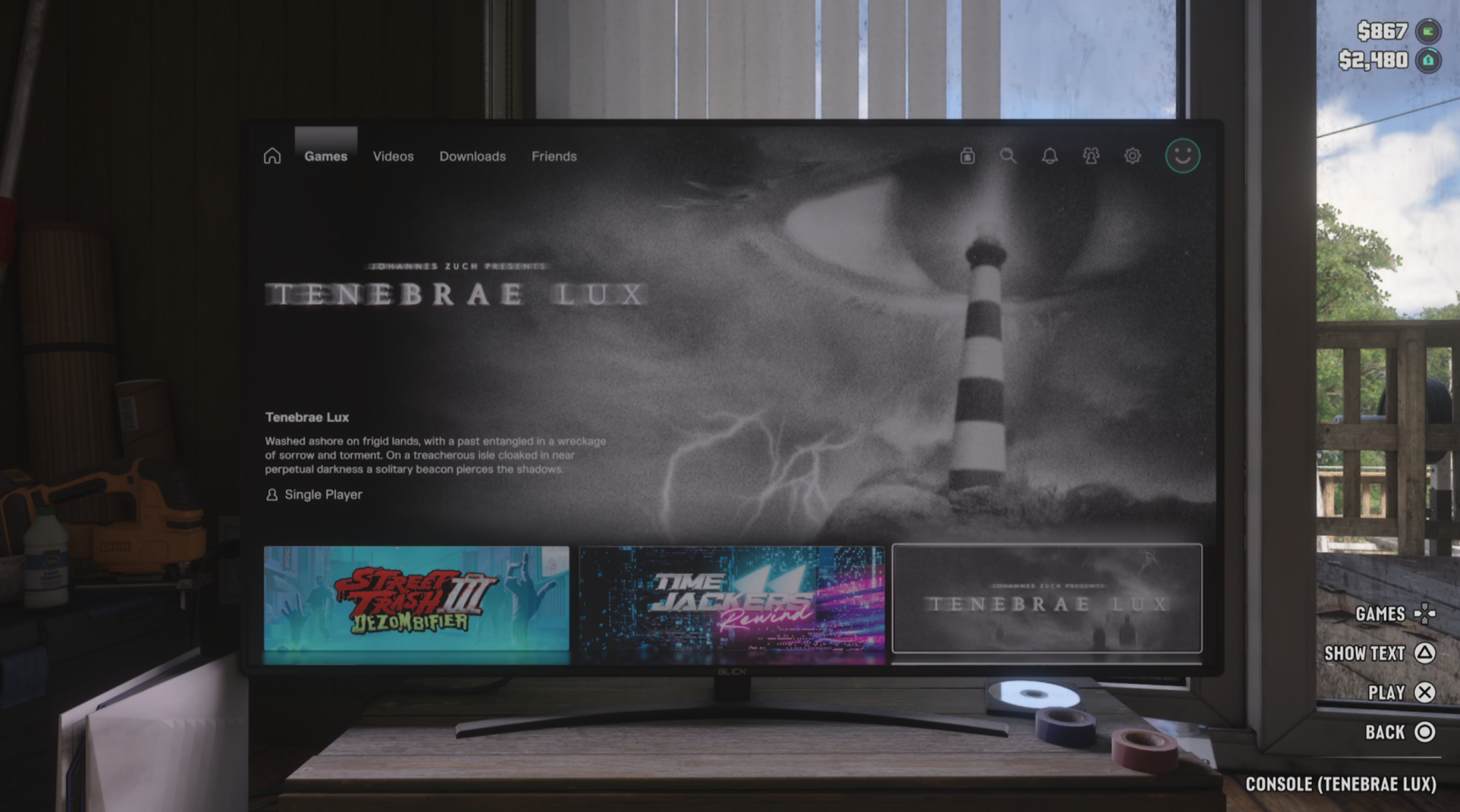
In one early mission in GTA VI Jason’s friend Cal Hampton, played incredibly by Bobby Moynihan, comes over to his house to set up a gaming console, help him rearrange his furniture, and generally get drunk and high while they game. As a mission, it’s distinctly un-GTA, a tiny yet high effort piece of character building that has no crimes and no stakes. There are a handful of games on the system that are fully playable, and the first one Cal introduces with reverence is an indie game named Tenebrae Lux made by a solo developer in Liberty State named Johannes Zuch.

A flicker of light lies yonder.
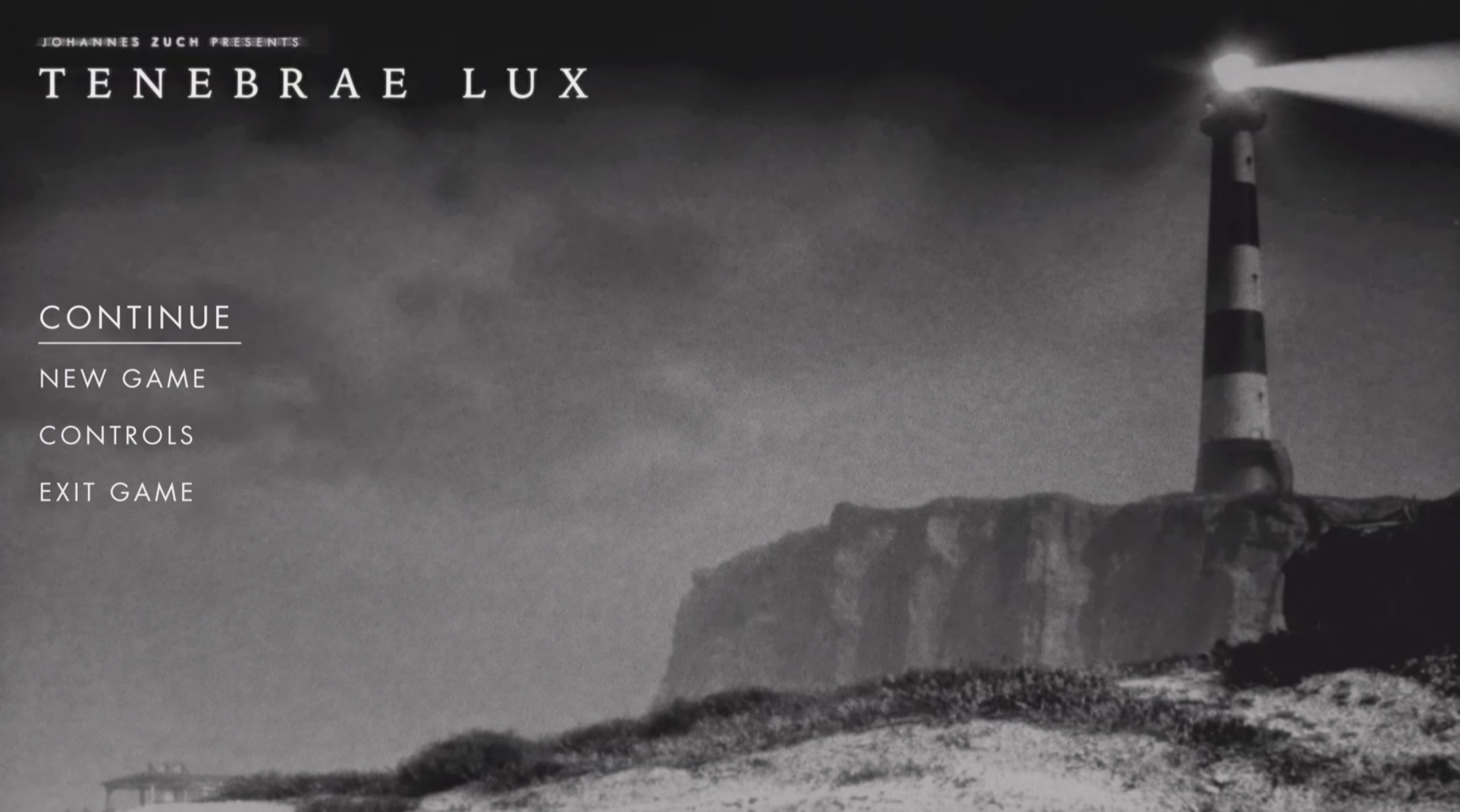
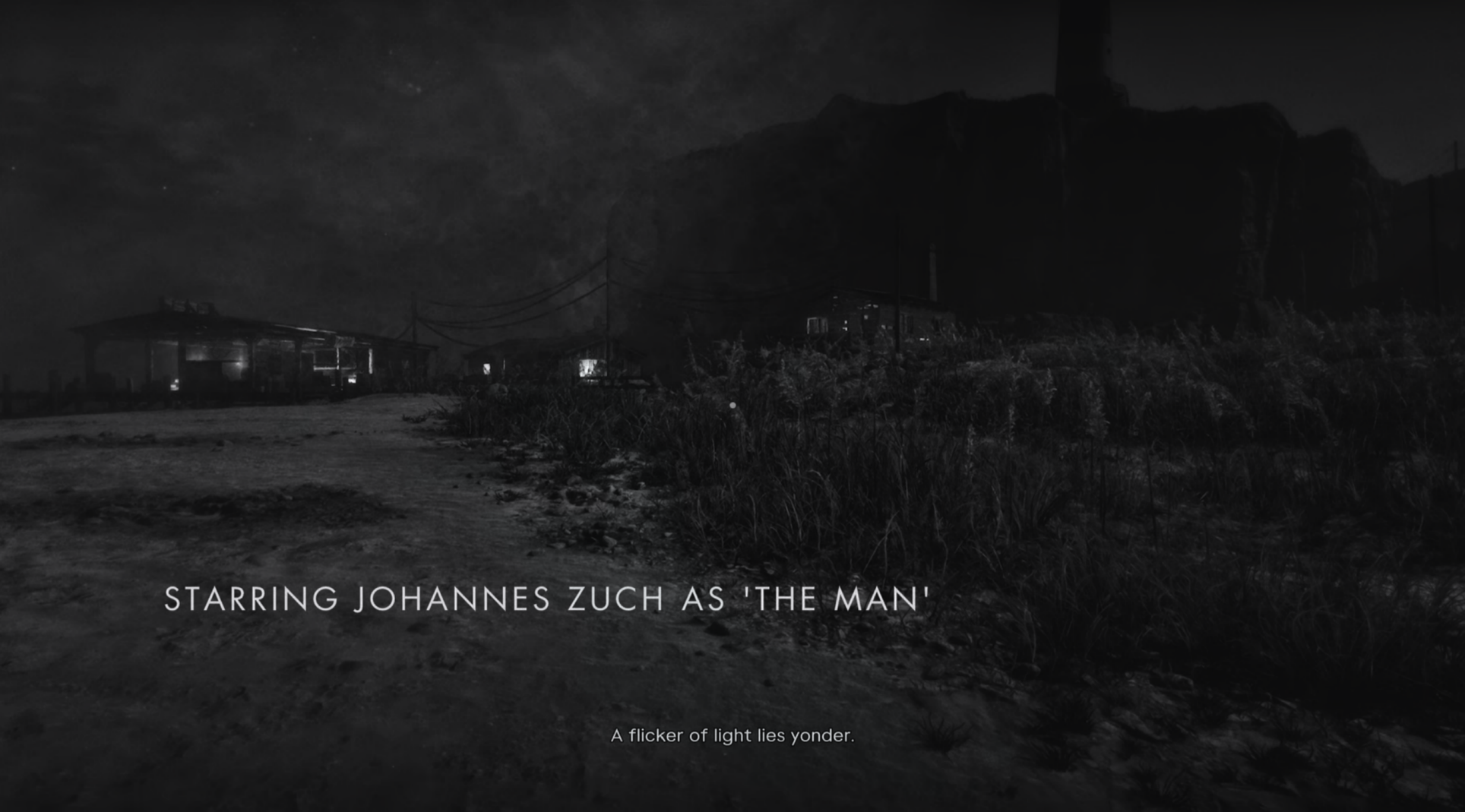
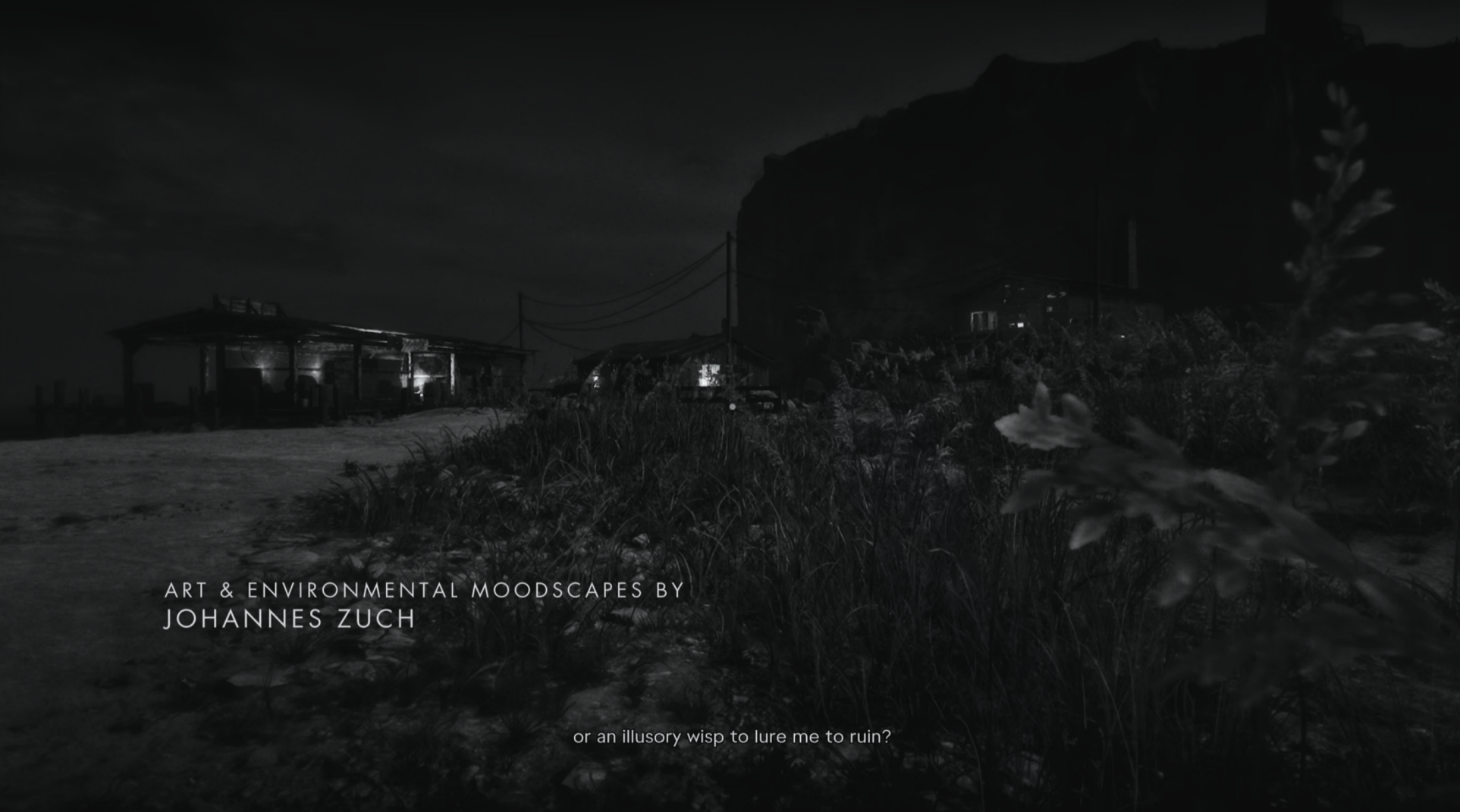
As a game, Tenebrae Lux is exceedingly pretentious and tedious on purpose. It takes place on a lone island with a lighthouse in grainy black and white in a manner not dissimilar to Robert Eggers’ The Lighthouse. As in Hellblade: Senua’s Sacrifice, the game tells you to wear headphones for full immersion. The credits to the game go on interminably and organically into your entire playthrough, and Johannes Zuch is credited for almost everything. His monotone and pretentious prose is not dissimilar to Garth Marenghi’s Darkplace, and the entire vibe of the game evokes the unearned pretension of Jonathan Blow’s The Witness, which is good because I hate The Witness. Initially you solve a handful of sliding block puzzles that are fairly straightforward, but eventually Jason breaks the immersion by asking Cal if they can play a real game. Eventually they move on to a twinstick zombie shooter.
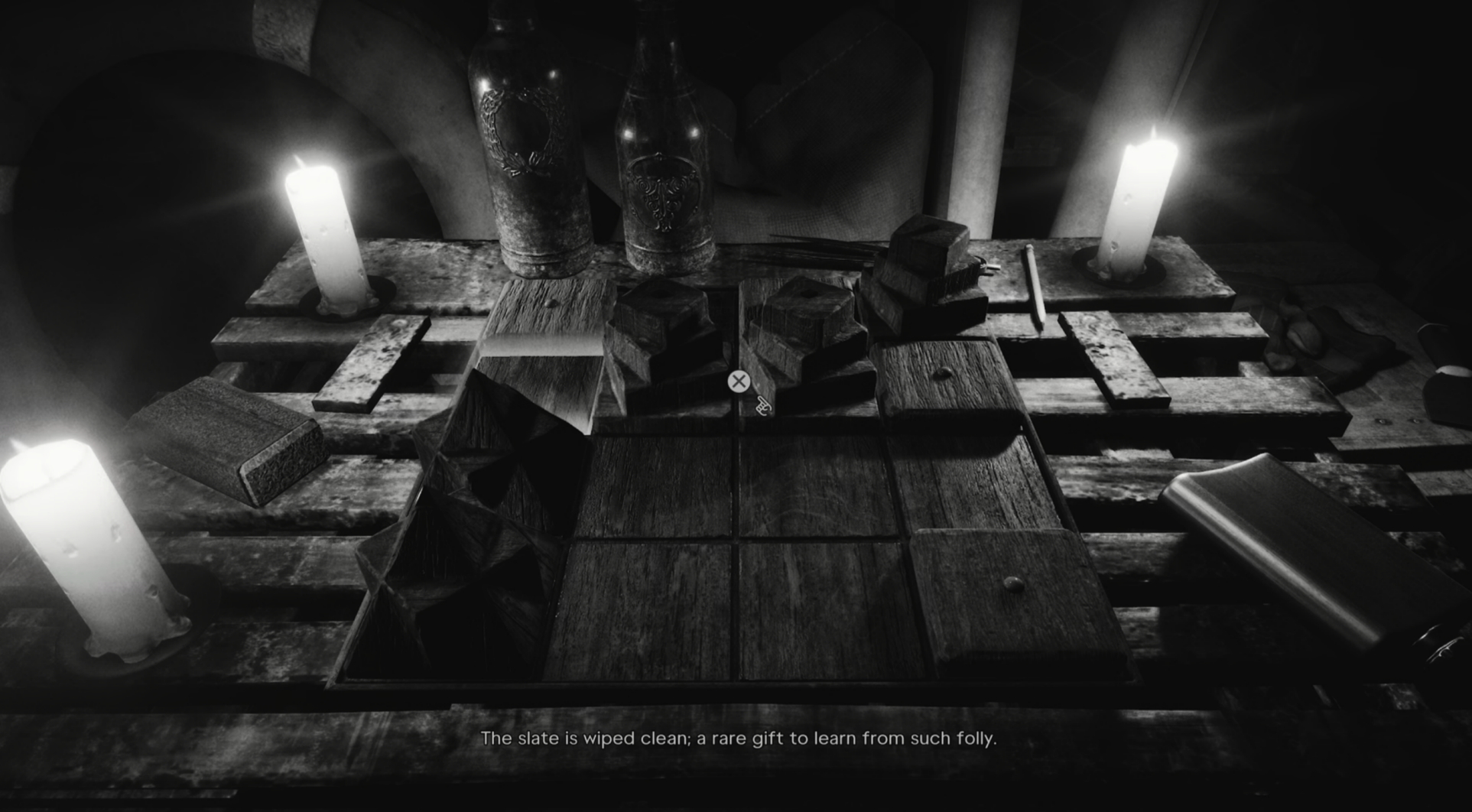
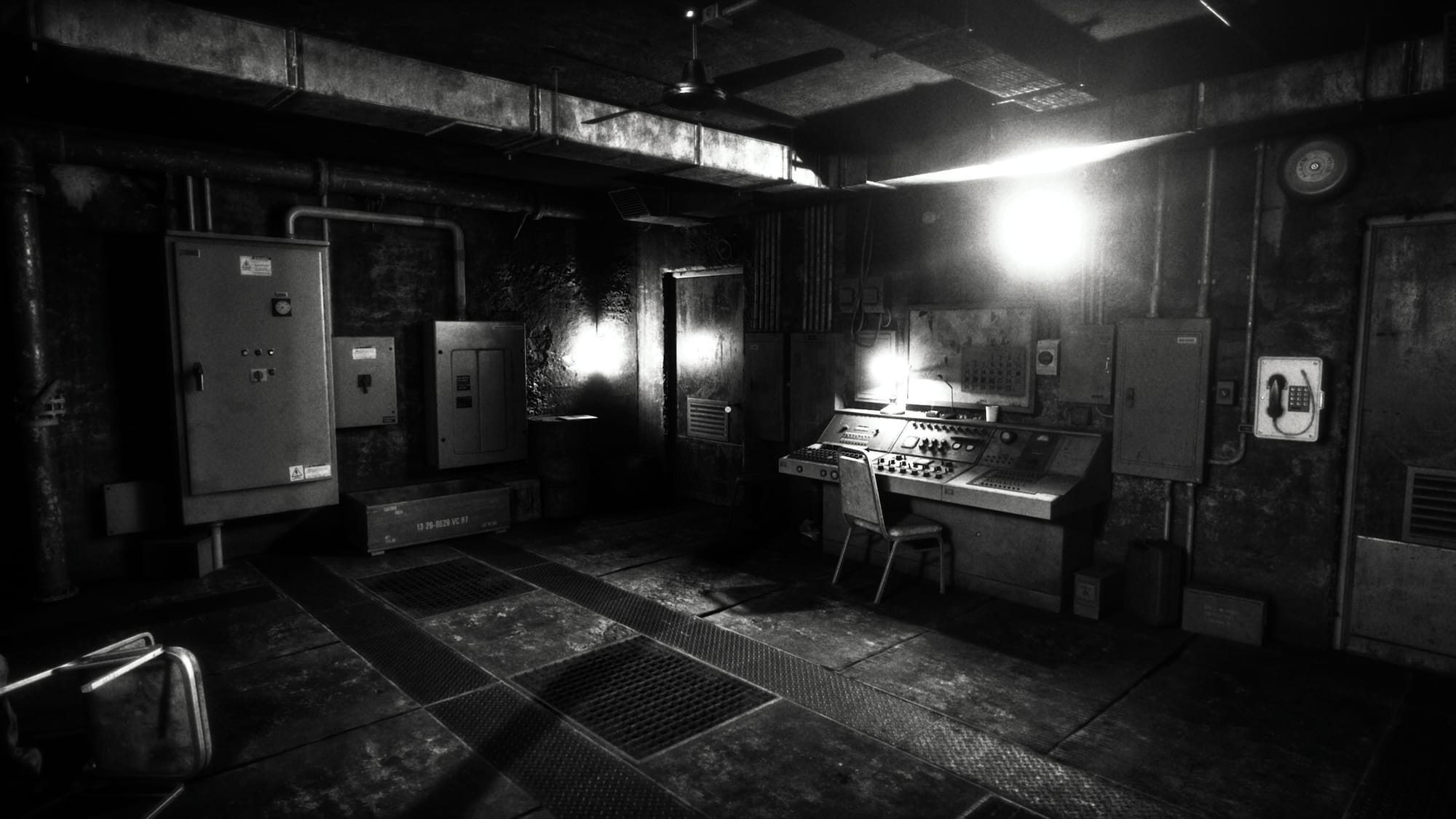
If Tenebrae Lux had ended as a limited joke it would have been novel, but you can go back in there and play the full game. The commitment to this bit and the level of detail is the thing that elevates it as a joke, particularly in its central puzzle. After unlocking three of the moving block board puzzles, a vault door opens at the base of the hillside. Inside is what appears to be a shelter with disused army crates, a radio console and several scrawled notes. You hear a phone ring. If you attempt to continue past it, the stairway loops you back into the shelter. In order to leave, you have to solve this puzzle.
Spoiler warning: the following discusses how to beat the shelter puzzle in Tenebrae Lux.
The shelter puzzle is, to put it bluntly, really fucking hard. It is an anomaly-spotting puzzle in the vein of P.T. and The Exit 8, and is both a tiny bit cruel and legitimately impressive. On the desk you find a document titled “Watcher Contingency Cascade File No. REDACTED”. The memo is long, but the main bullet points read as follows:
- REMEMBER YOUR TRAINING
- BECOME FAMILIAR WITH YOUR SURROUNDINGS
- ALL ANOMALIES MUST BE NOTED
- ANOMALIES HOLD THE KEY
- EVERYTHING MUST BE IN ORDER
- PHONE TO INITIATE EXTRACTION, DIAL COMPLETE NUMBER FOLLOWED BY #
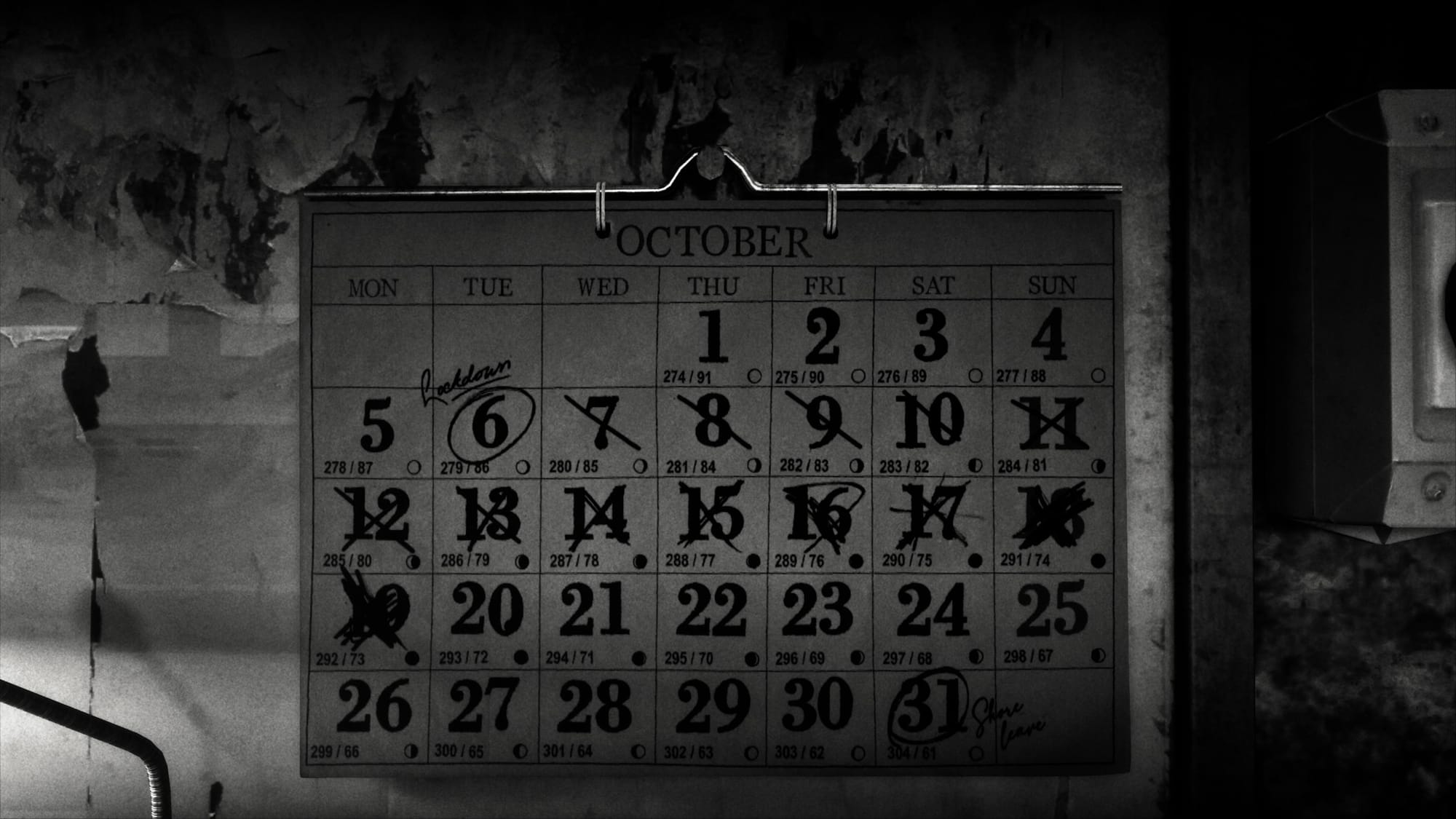
In addition to this memo there is a calendar on the wall that shows you the current date. The goal is to spot anomalies, make note of them, then turn those anomalies into a single digit via addition of integers and then sequentially lock those in chronologically. This is made harder by the fact that the high contrast black and white styling of the game makes it hard to properly see anything and the space is full of red herrings, intentionally obtuse strings of numbers that amount to nothing. In fact, despite it looping, you can technically go back to the room at the base, which is locked, and which held no significance for the puzzle in my game. The loop is also not chronological; moving between rooms will sometimes jump all over the place on the calendar, meaning you have to note which date each anomaly appears on and then assemble them in order after the fact.
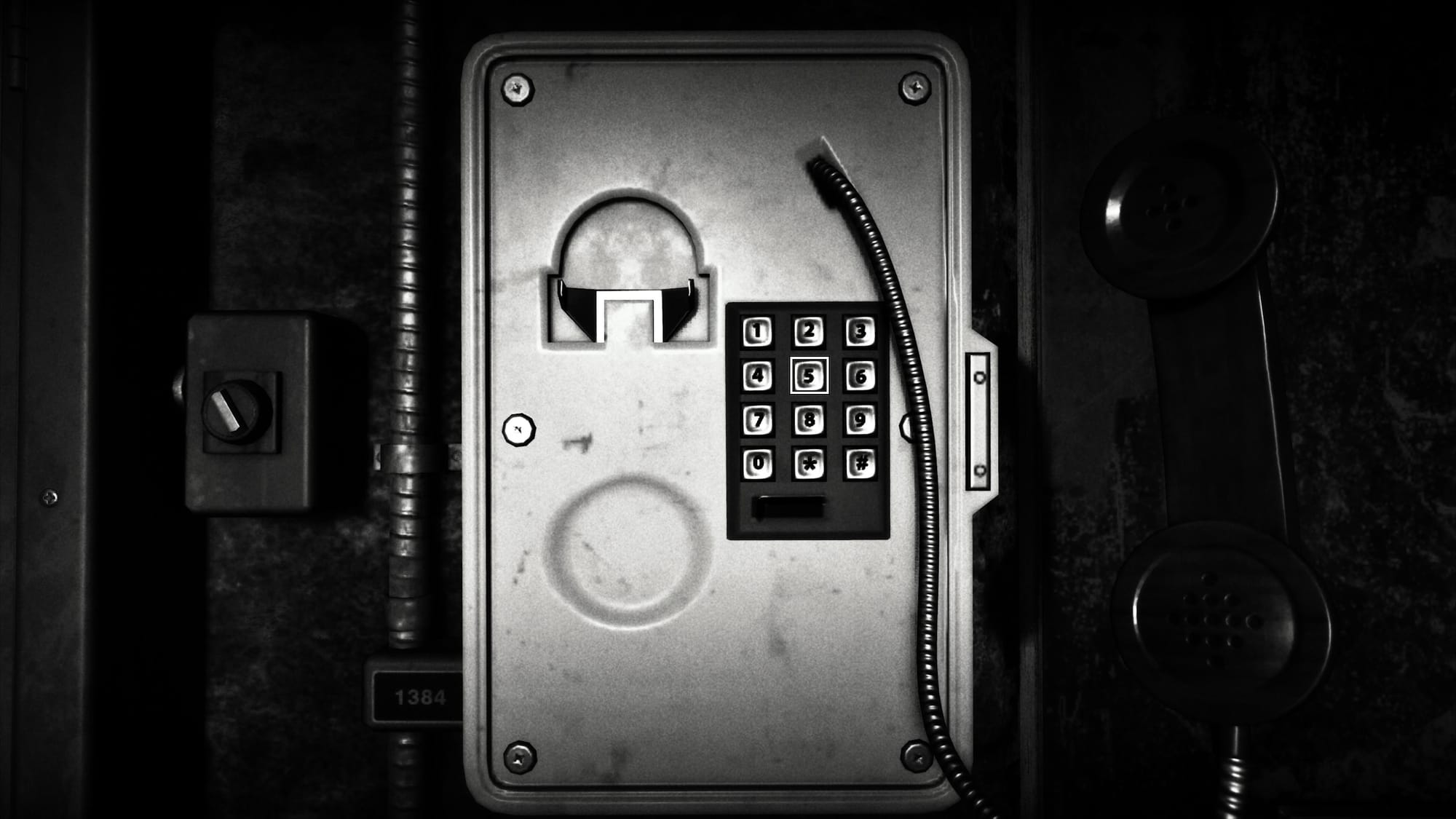
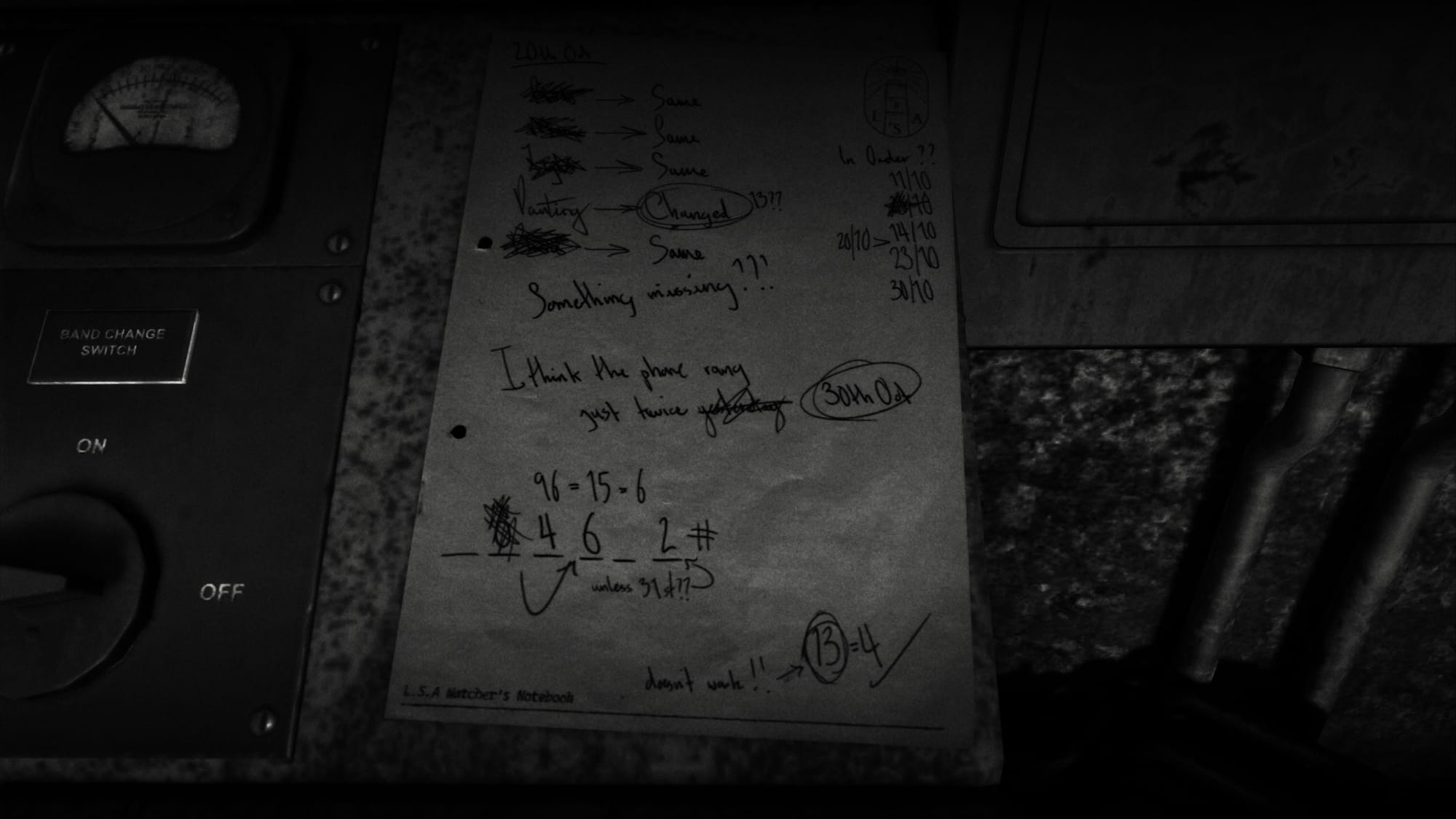
What’s more, there’s a piece of paper with only partially relevant information, and a locked door with a whispering man who tells you oblique things that turn out to not be relevant. For example, he said one line of dialogue that was like “you can’t leave the circle if you are IN the circle” which fucked with me severely because I assumed it was related to phases of the moon when in fact it was meaningless. After two hours and multiple trial and error guesses, I inputted 533649# and left. But what elevates the puzzle room to being legitimately impressive is that if you typed that into your game, it will probably not work. This is because, as far as I can tell, the code as well as the anomalies vary between everyone’s game.
Here is how I worked through my process:
October 11th – 5. The record on a side table cost 50 cents instead of 85. 5 + 0 equals 5.
October 14th – 3. The credit for the engine that Tenebrae Lux runs on, the Zuchworks Engine ε, changed to the Zuchworks Engine γ. This threw me off for the better part of an hour because I had mistaken γ (lower case gamma) with Y (upper case upsilon). Had it been upsilon, the 20th letter of the Greek alphabet, the answer would have been 2. But γ is the third letter of the Greek alphabet.
October 20th – 3. The phone rang 3 times instead of 4.
October 23rd – 6. The document was unredacted this day and the number was 42. 4+2 equals 6.
October 27th — 4. This day there were four guys in a framed photo instead of 3. I also overthought this because the face of one of the men is scratched out, so organically I assumed “oh he doesn’t count,” but that’s me being too clever and it added additional time.
October 30th — 9. There’s a pad indicating numerical Morse code. The lamp that day was blinking but for some reason I did not get this right, either I should have counted the light being on instead of the light being off or vice versa.
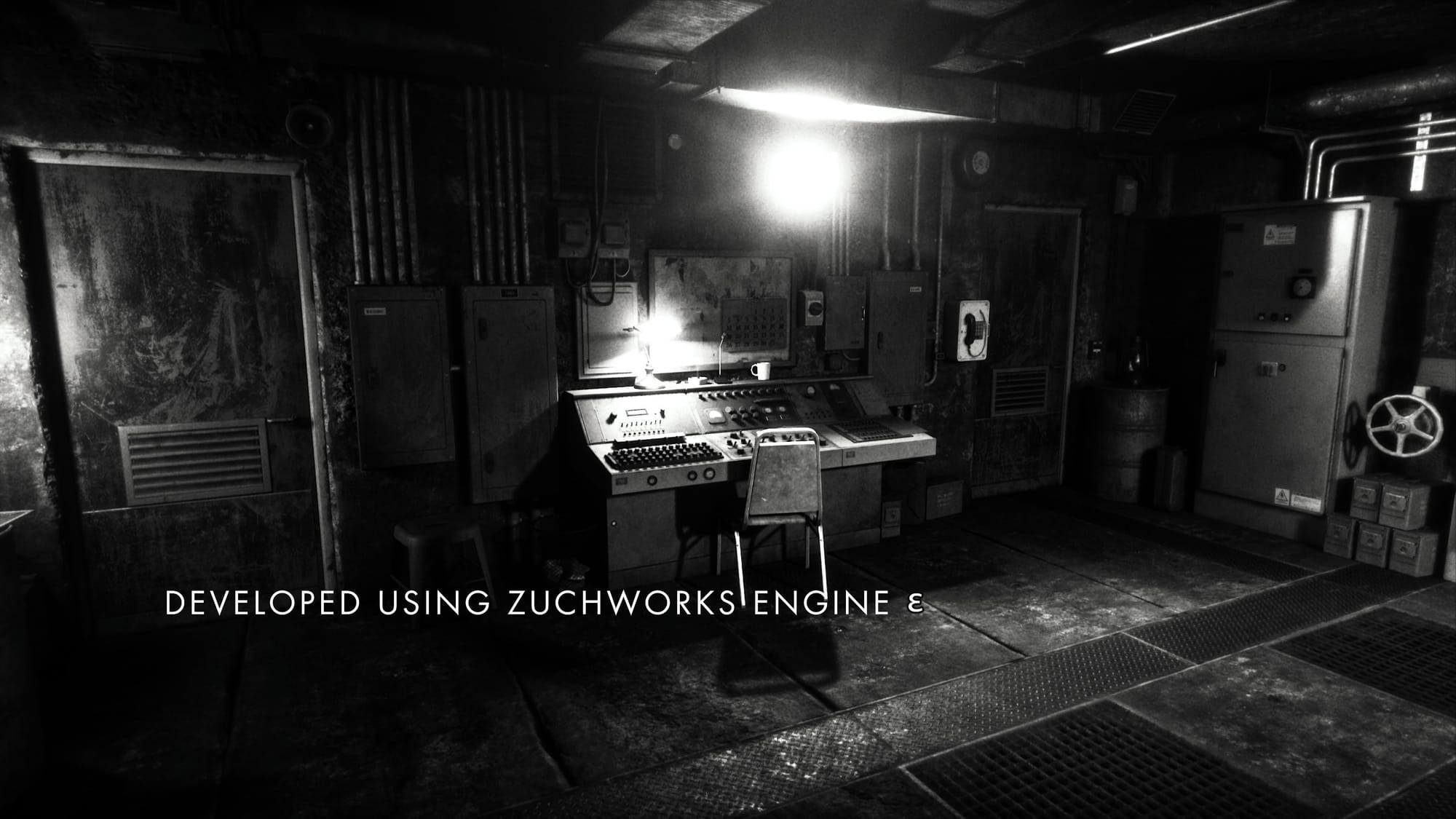
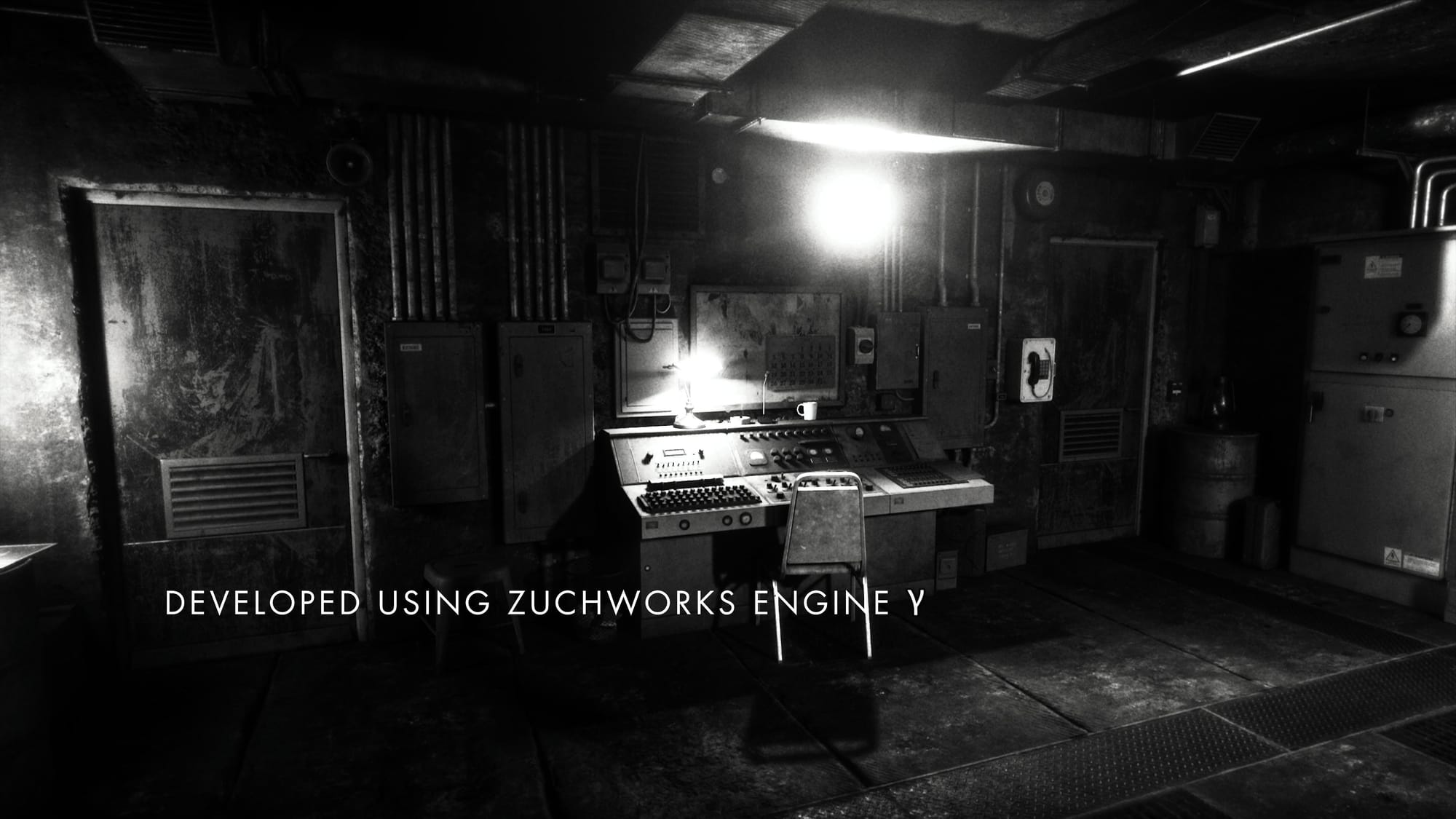
One anomaly.
What’s nuts is if you visit the Reddit thread about this it’s clear that anomalies in everyone’s games can appear very differently. Many people mention items that were not in my game or just never factored into it. Some people have a painting, or a clock, have a recording they listen to, or mention roman numerals. Some days the sea shanty is slower, and on those days the solution is 6, due to the rpm being (implicitly) 33 (3+3) instead of 45. This entire puzzle was torture, and I have the utmost respect for the game for it.
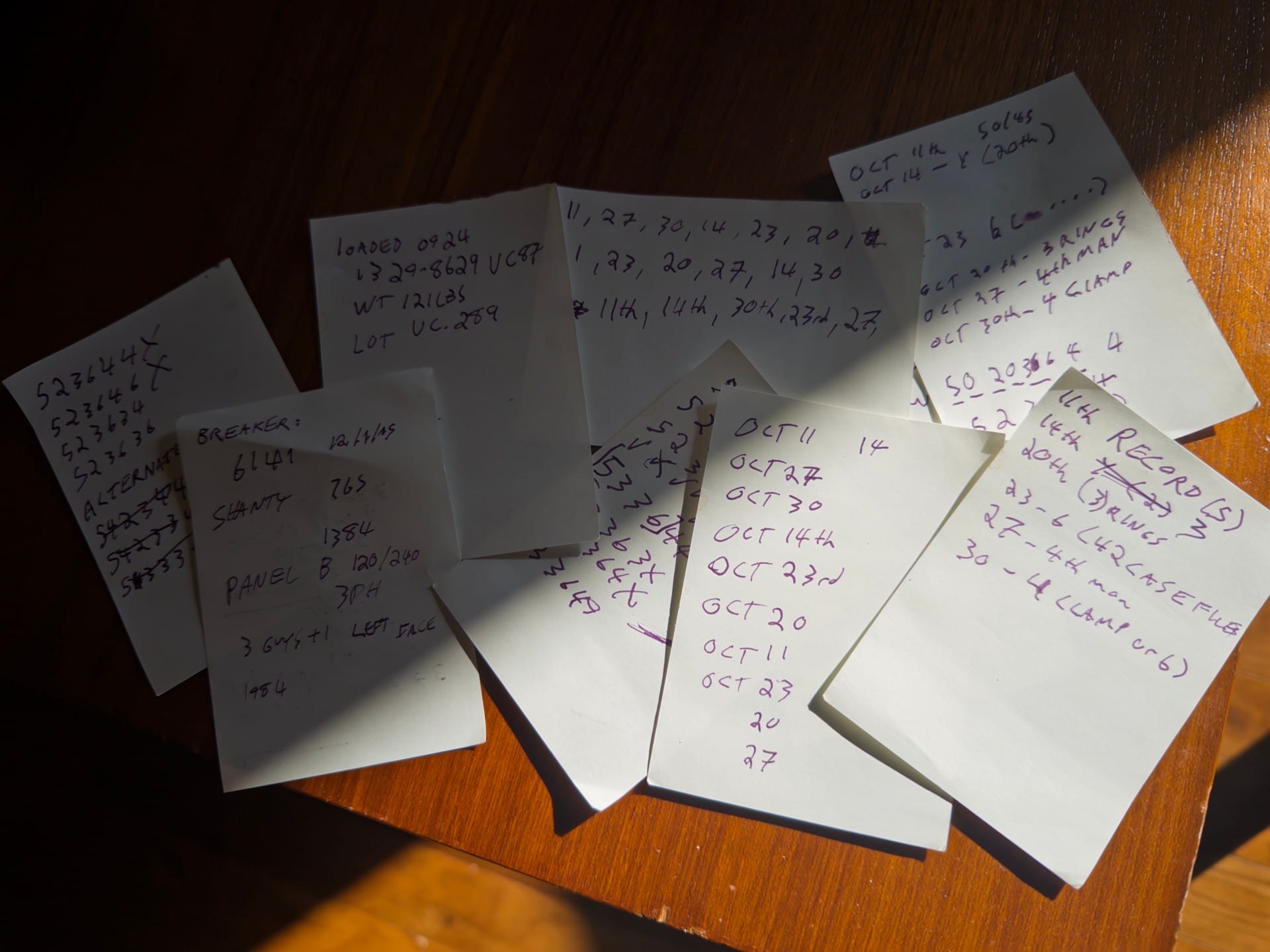
The rest of the game is fairly straightforward and forgiving. There’s a simple bridge puzzle that involves a poem and matching symbols. When you finally get into the lighthouse, the final puzzle involves shadowy men walking into doors and, childishly, the answer is just to do the urinal math that every cis guy has to do where you try to get as far away as you can from the other guy. The end credits of the game are fantastic, a testament to the hubris of fictional game developer Johannes Zuch. In addition to that, Tenebrae Lux has pages scattered through the game that appear to be connected to a secret ending, although I’m tapped out for now.
Rockstar went above and beyond here, and the games in here were actually made by a “dev team within a dev team” according to Zack at Kotaku. Either way, I’m blown away and respect that we can all now admit, as a culture, that The Witness was just a little bit up its own ass.


