

The Ocarina of Time remake is primarily for two groups: people too young to have played the game when it came out, and people who played the game when it came out but have largely not touched it since. As a work for those audiences it largely succeeds. I am, however, in a slightly different audience, as someone who replayed the original N64 game many times, most recently a few months back. Playing both in close proximity, particularly if you know the original inside and out, is a disorienting experience. The remake of Ocarina of Time, like the original, is a bizarre game and one whose choices are defined by what its platform allows. It looks a little fucked up, which is fine; often the ways in which it is fucked up feel honest and interesting. This is perhaps a professional problem, but I cannot stop dissecting it as I play it.
The original Ocarina of Time was a strange game, a fact that I feel gets passed over a little when Majora’s Mask has the reputation as the “weird one.” The original game worked within the hardware constraints of the N64, a factor that bled into the character design. Characters have faces that are cartoonish, goofy, easily recognizable and can be handled by the system. Let’s just list a few freaky guys in case you forgot them: the ReDeads, the Happy Mask Salesman, King Zora, the scarecrows, Kotake and Koume (two old women who turn collectively into one young, hot woman), the Fabulous Five Froggish Tenors, the Deku tree sprout, Granny, Lake Scientist, Bean Seller, and a good percentage of Hylians. The game is fantastic at using the limited resources of a console to convey a garish and toony little freak whose whole deal can be parsed in fuzzy 240p on a CRT.
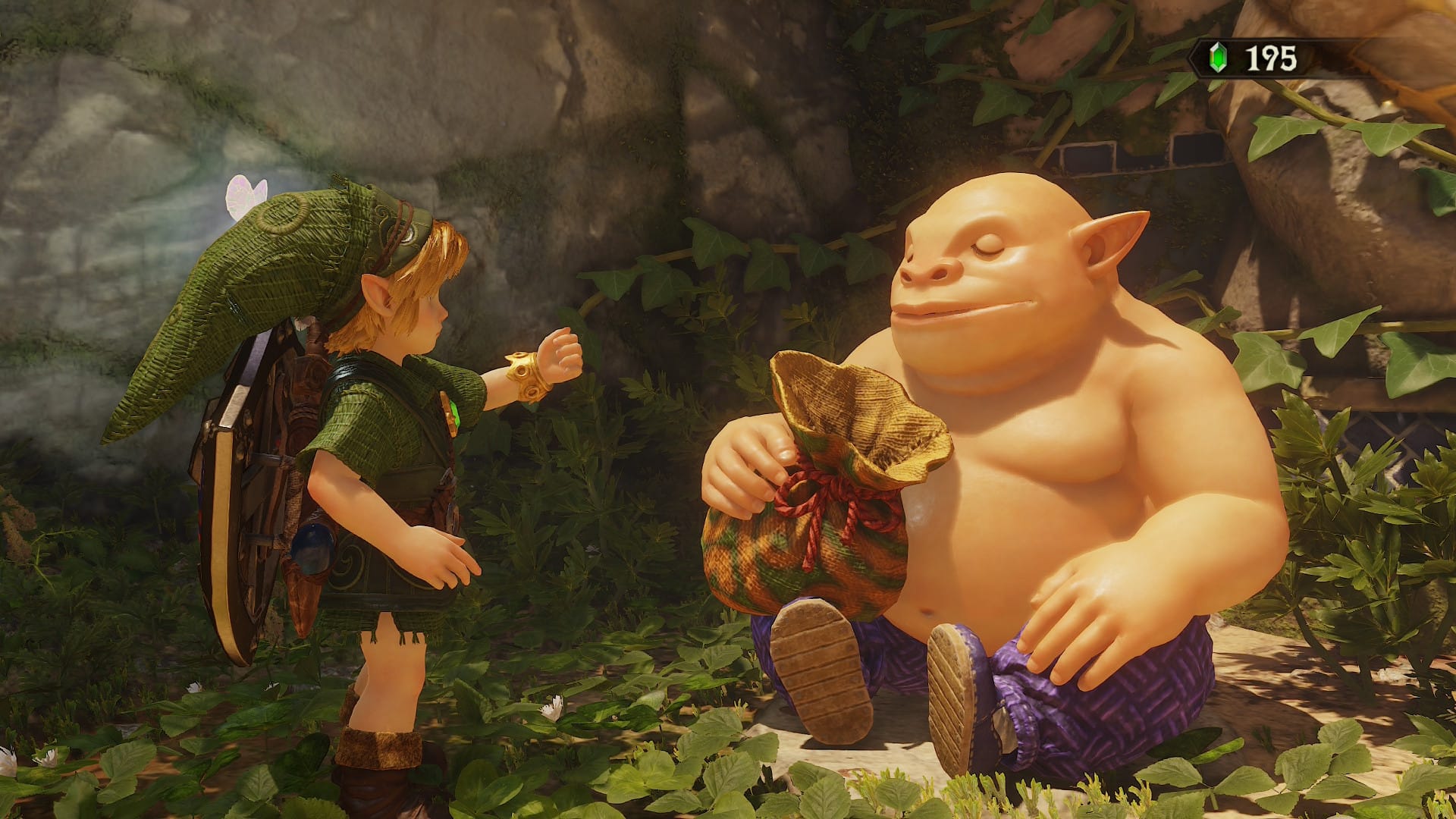
Whereas the original game was defined by constraints, 2026’s remake is defined by a lack of them, luxuriating in the small space defined by its predecessor. Many of the characters retain that simple profile but with stark lighting and high fidelity details. Often this works well and faithfully transmutes the original into a similar form: the Bean Seller still looks like a guy who sells you beans only to turn into an evil small business owner. Internally the team used the phrase “a puppet-show feel,” and that feeling is true with characters like Granny. Other times the clash between older styling and newer rendering creates an eeriness unique to the game. The Happy Mask Salesman is back, but the way that his golden neck piece catches the light centers your attention on it to the detriment of his expressions.
The game’s focus on cinematic presentation often works to its benefit, infilling what was normally imagined. Infilling is itself a transactional act, collapsing what was personal and imagined into the explicit. That said, Ocarina of Time is wonderfully voice acted, Darunia is a gregarious homie and Princess Ruto is as haughty as I’d expect. The soundtrack is gorgeous and orchestral, unsurprising as Nintendo is generally the best at creatively reinterpreting its own music (a quality I was floored by with Mario Kart World). Like in Breath of the Wild, the game features day and night variations of themes, and the transition between the daytime Flamenco-inspired version of the Gerudo Valley theme to a somber, downtempo variant is gorgeous to hear. Ocarina of Time’s seven year jump, which always felt abrupt in the original, is given proper weight, gravity and space to breathe. The art direction in this new scene is iconic, beautiful, and unique to this version of the game. The increased fidelity also allows the game to fill in details in the world, and things like what happens to the Zora in the future are given a terrifying new dimension.
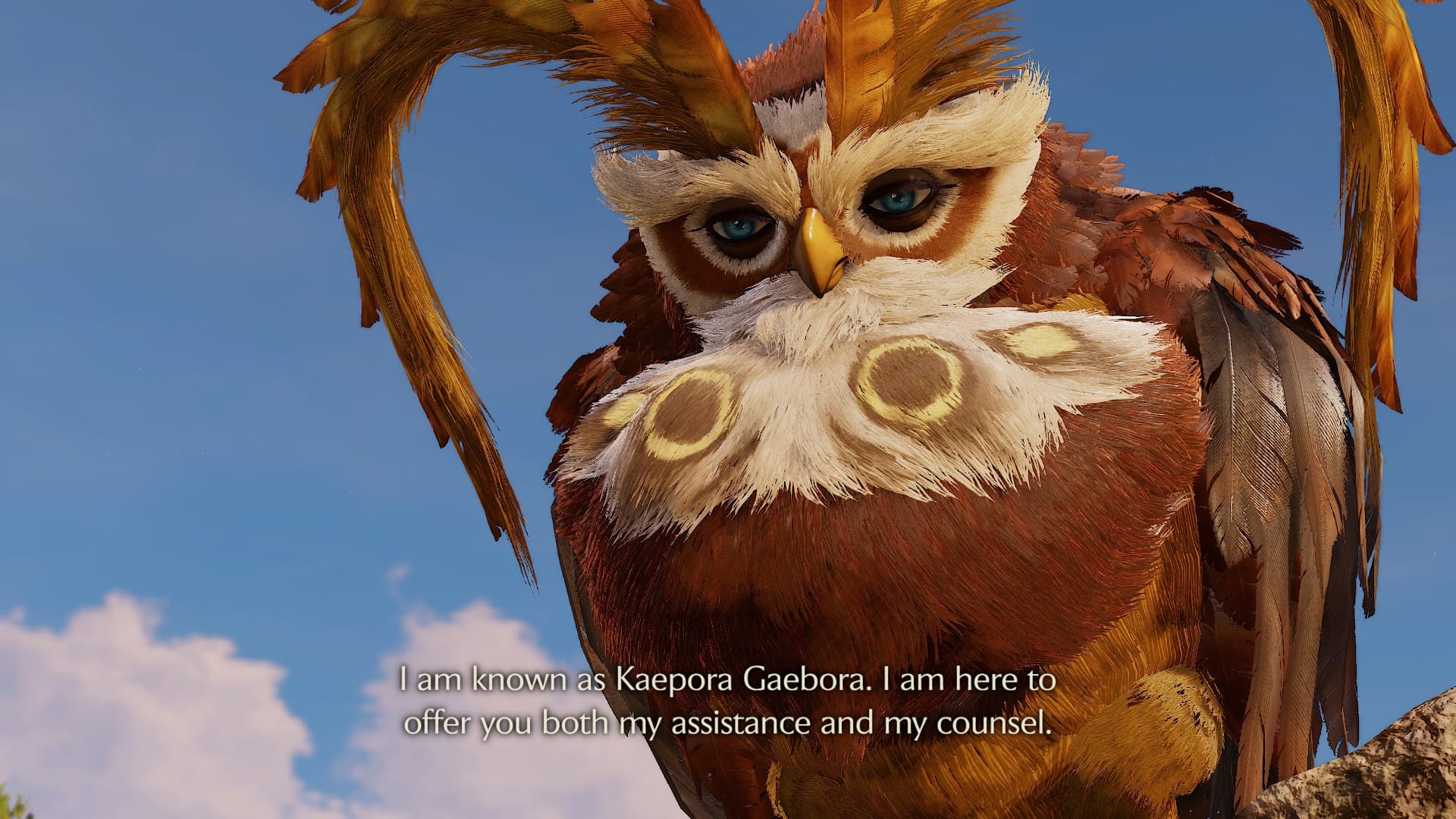
The places where the game does not work or are offputting are also fairly subjective, a litmus test that forces you to interrogate your feelings about how a character should and should not look. What might not bother you might be a dealbreaker for another person. Kid Link looking kinda like a haunted doll you’d find in an attic has been the obvious one for a while, but the owl Kaepora Gaebora has fucked up sleepy people eyes and it makes my body react with visceral revulsion every time. Perhaps this is explained a bit by the owl canonically being the animal form of Rauru, the sage of light, but the effect is terrifying in practice because his eyes are calm, narrowed and self assured, qualities you would not describe as strigine. Epona similarly has strangely human eyes, but I’ll also concede that perhaps that only bothers me. In the remake, the Tektites, the spiderlike jumping creatures in the series, have little smiley mouths and squeak excitedly, so when they jump at you it feels more like an excited cat than a monster. I don’t want to kill these guys; I want to feed them a carrot. The ReDeads have a gaze that binds Link with visible chains, and now go from moving slowly to flopping around in a surprisingly fast shuffle, although I do miss the terrifying simplicity of the original.
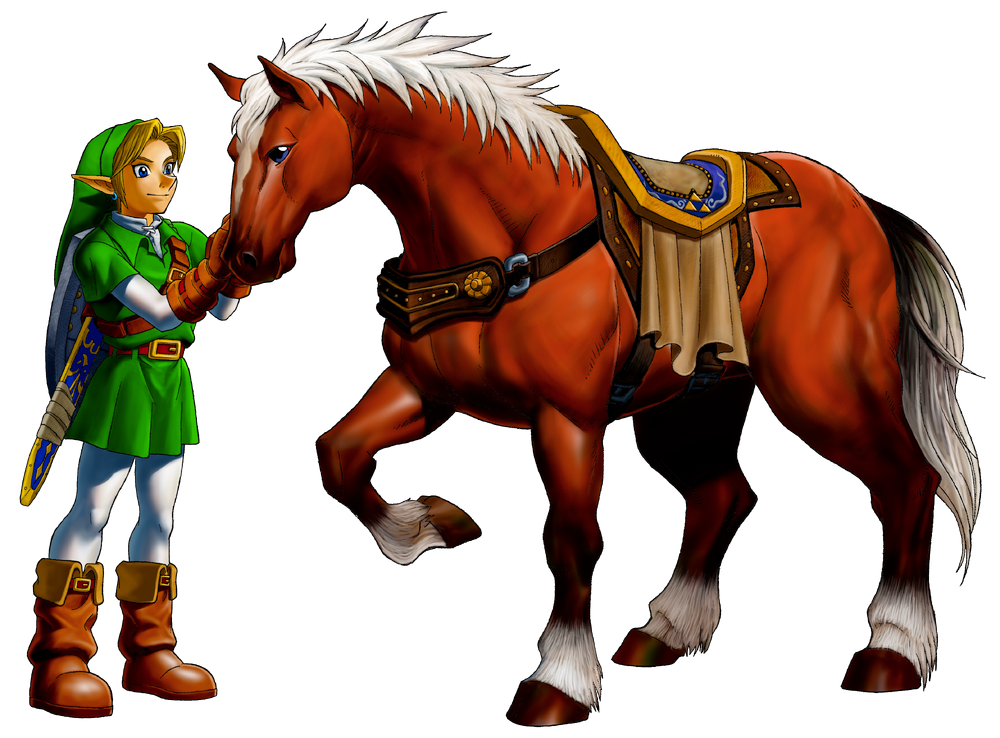
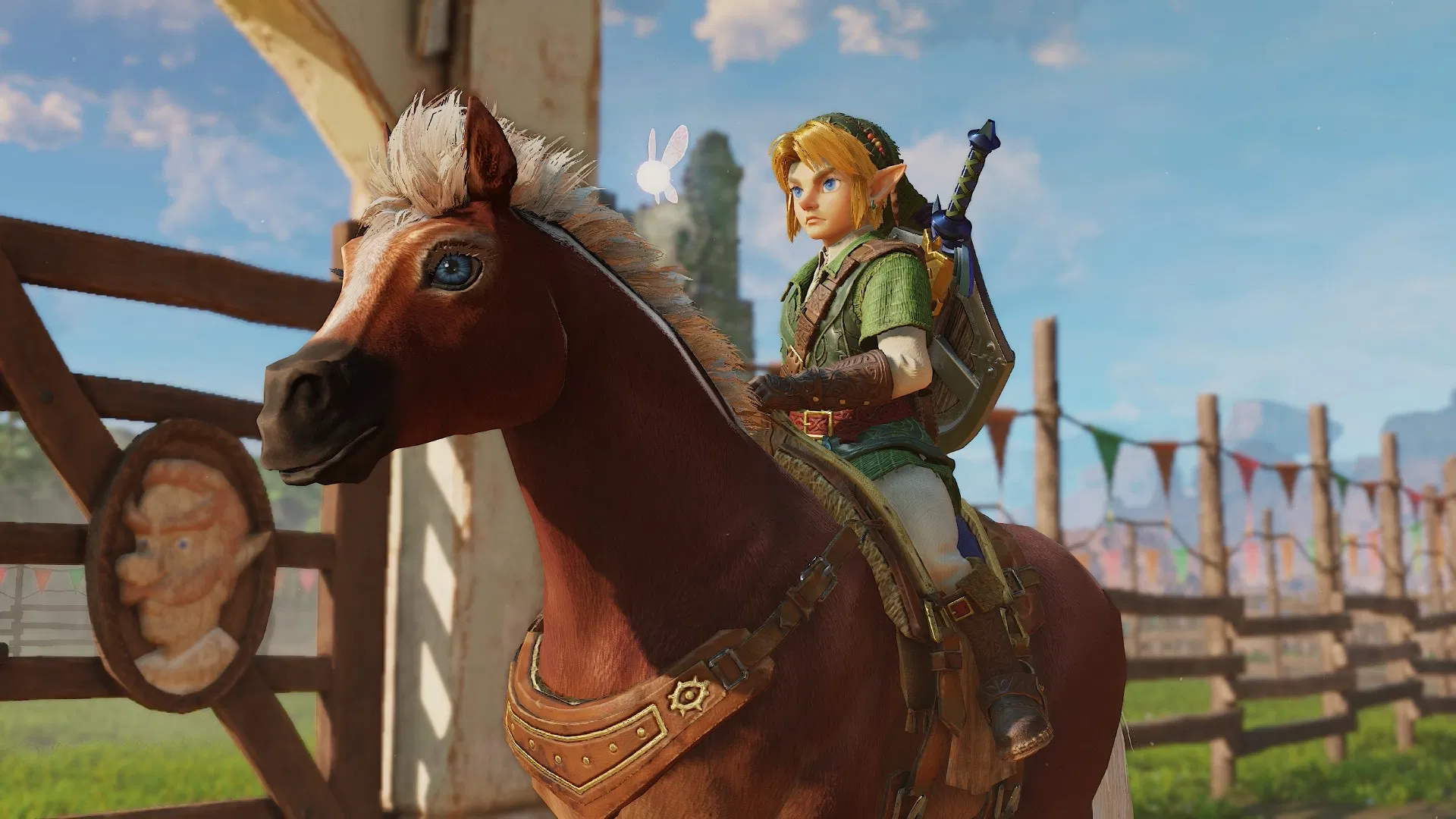
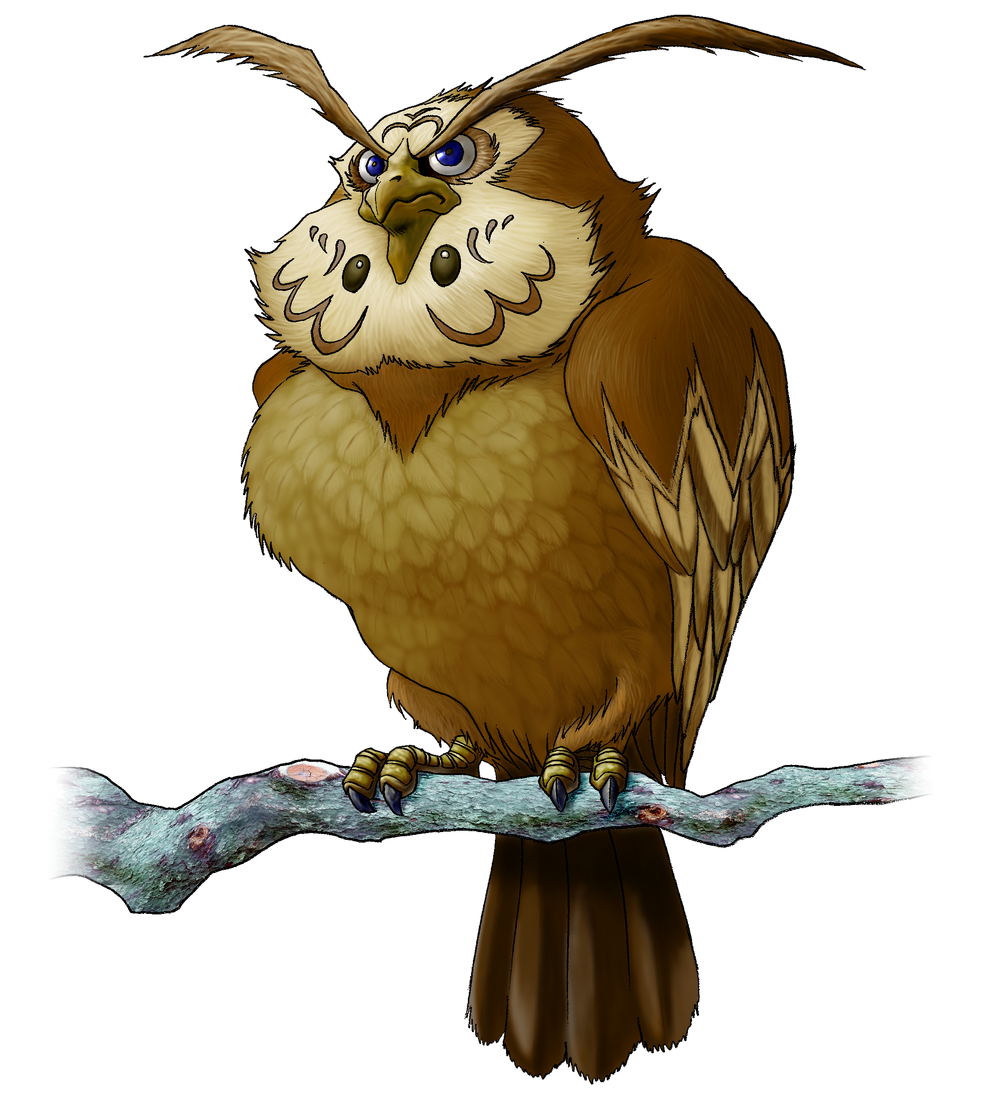
Look how they yassified my boy. Credit: Nintendo
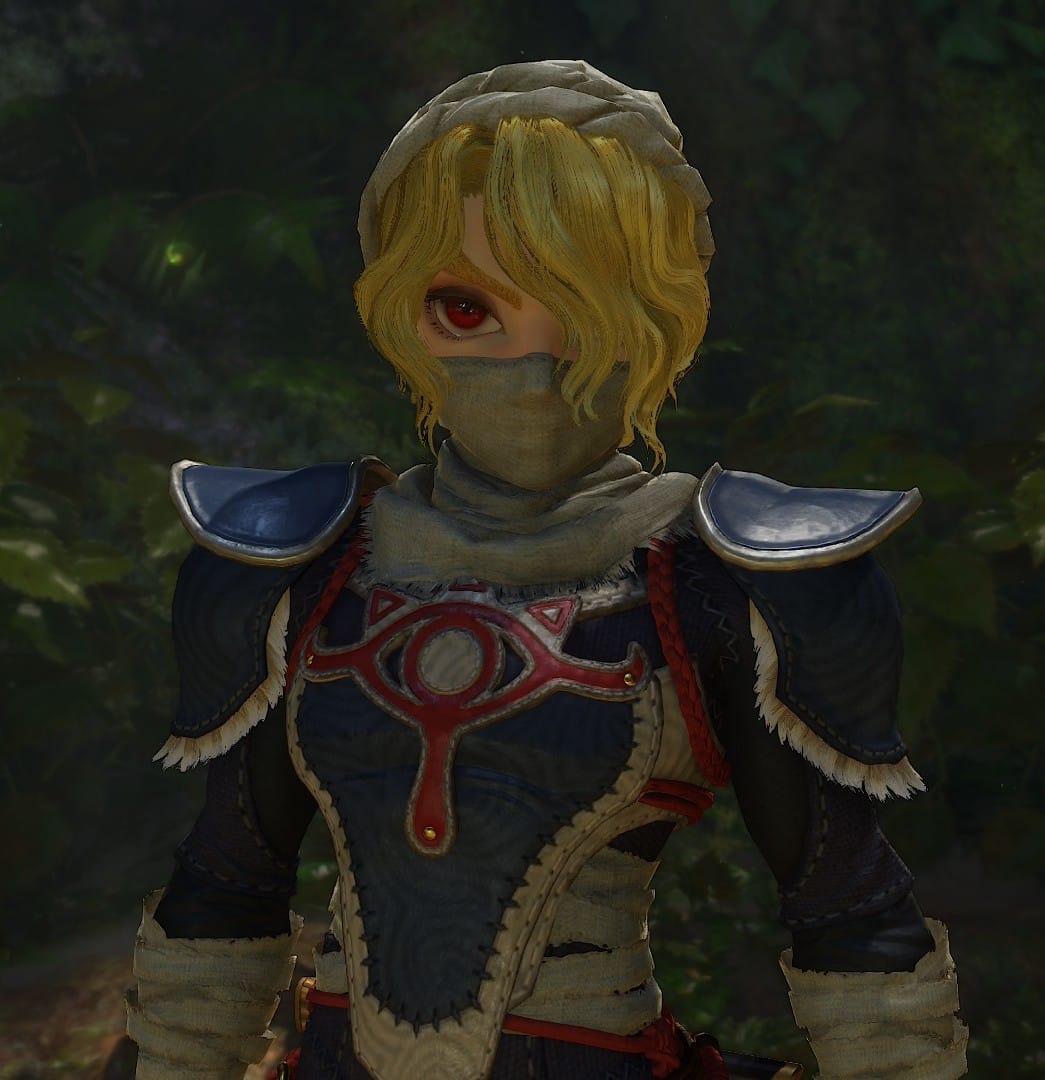
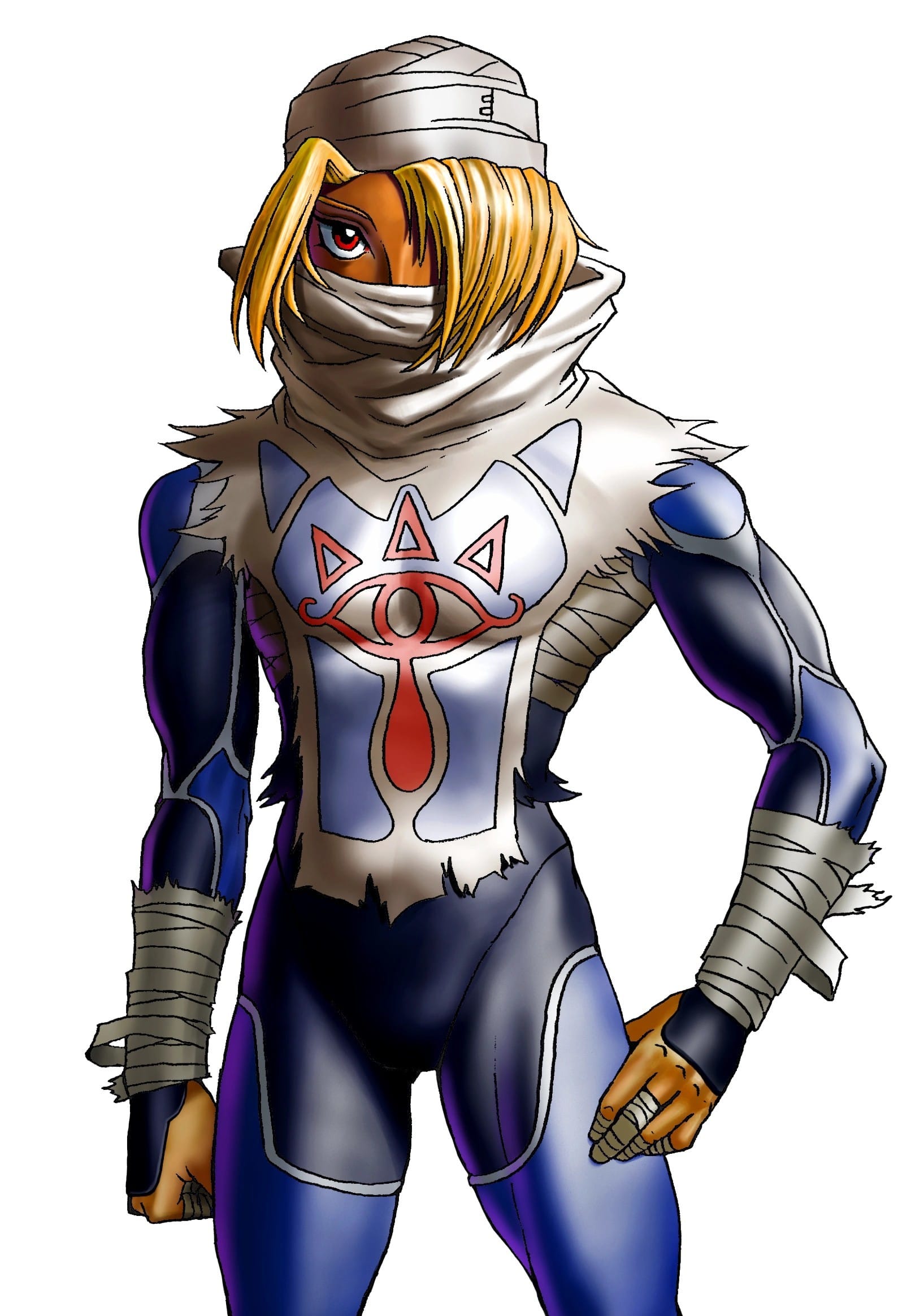
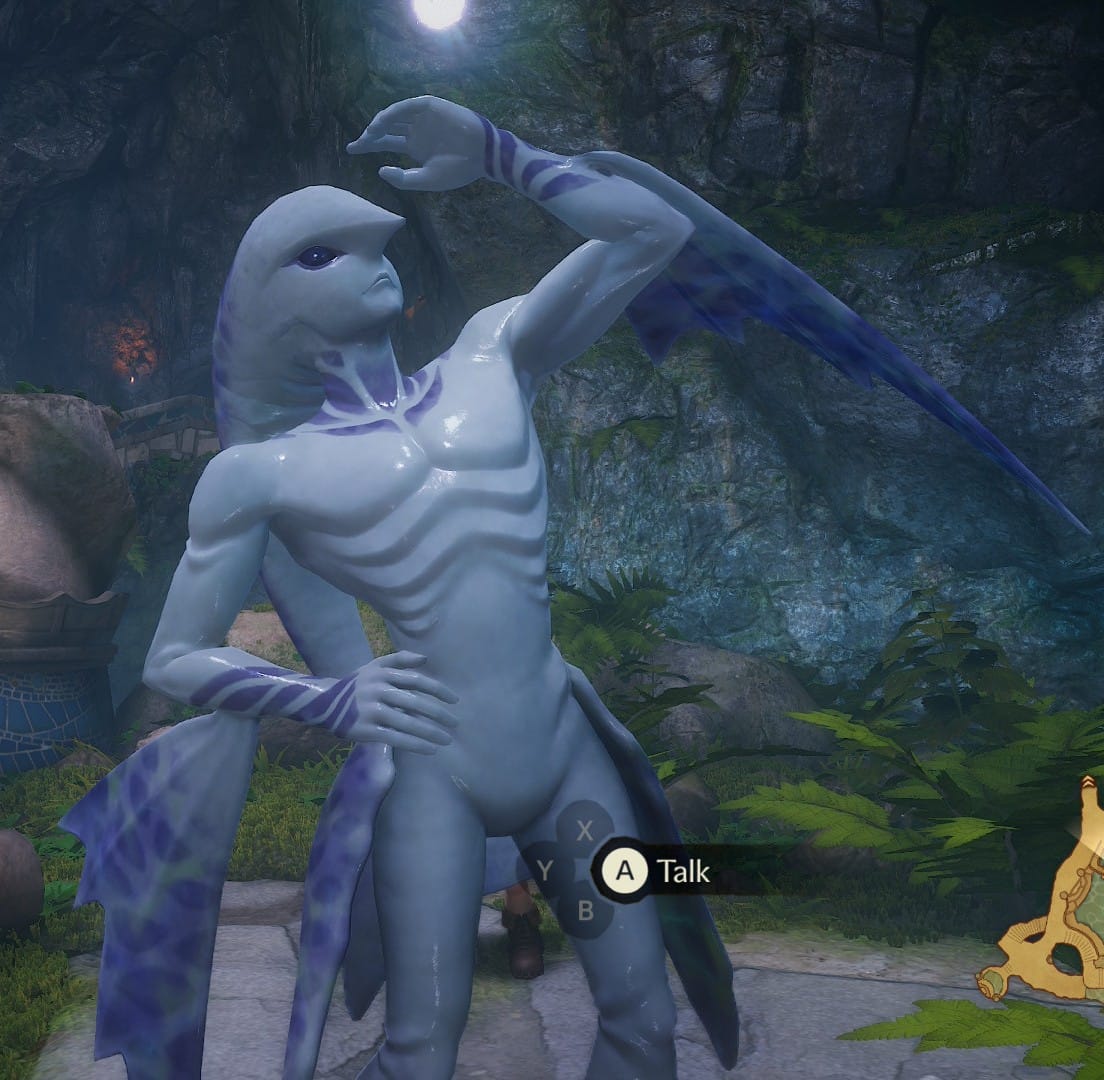
Many characters feel oddly more horny just by virtue of the fact that they’re more defined and better lit. The Zora men are moist, which is to be expected of fish men, but I find that the way they glisten and their added muscular definition has a Doug Jones in The Shape of Water quality. Designs like Darunia the Goron leader and the Moblin are shockingly defined, caked up and have their asses out, but I would also urge you to look at the original concept art for both because they are, in a single word, “vascular.” Impa and the Gerudo are straight up shredded, which I cannot begrudge as that’s just red meat for the fandom. Sheik’s design reads as more overtly feminine, which again is a deeply personal preference. I’ve seen people read the slight design changes as leaning more into Bishonen, which I respect but I disagree with in this context. I feel something is traded in these very slight changes, a transaction that trans writer Evan Urquhart articulated better than I could.
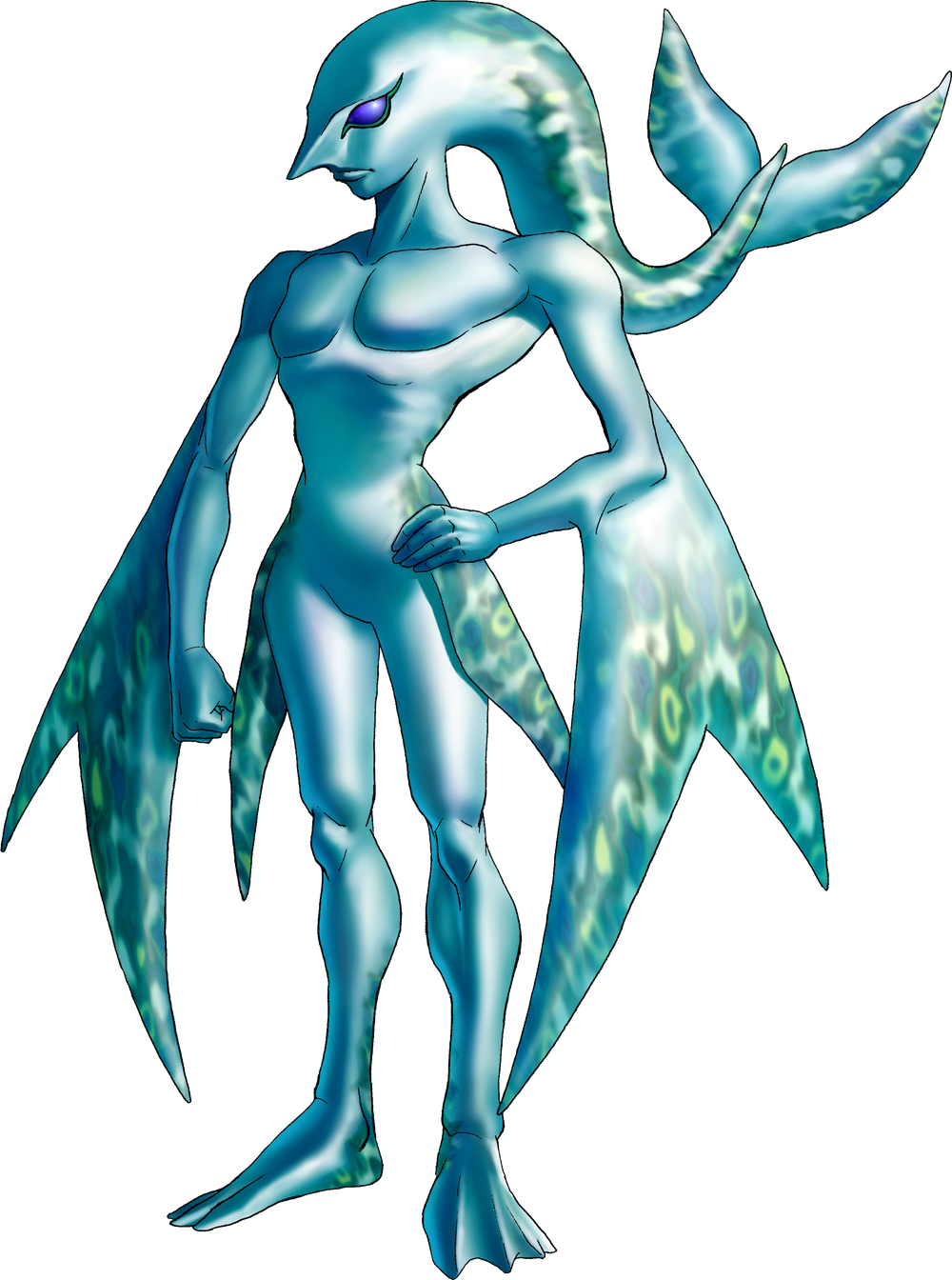
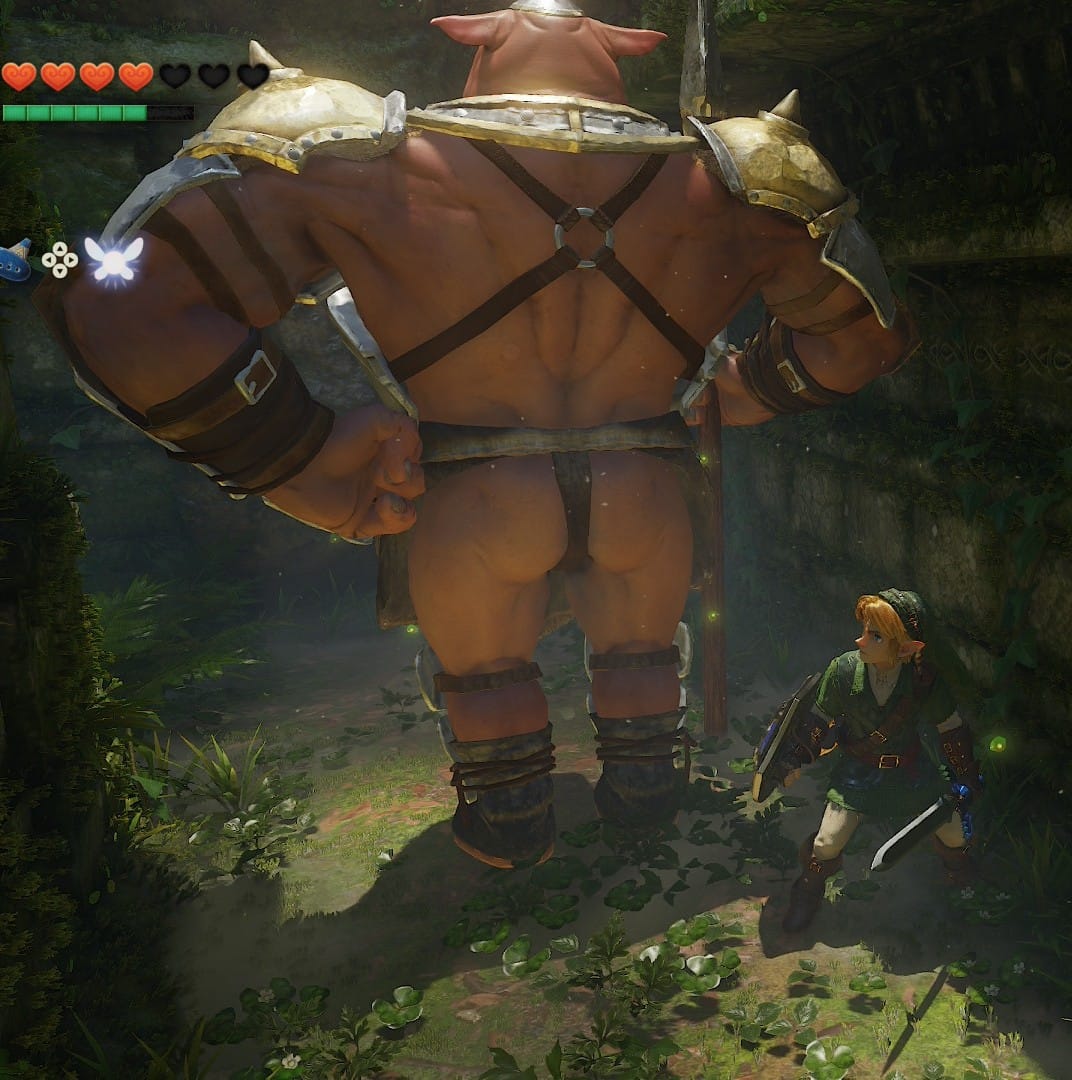
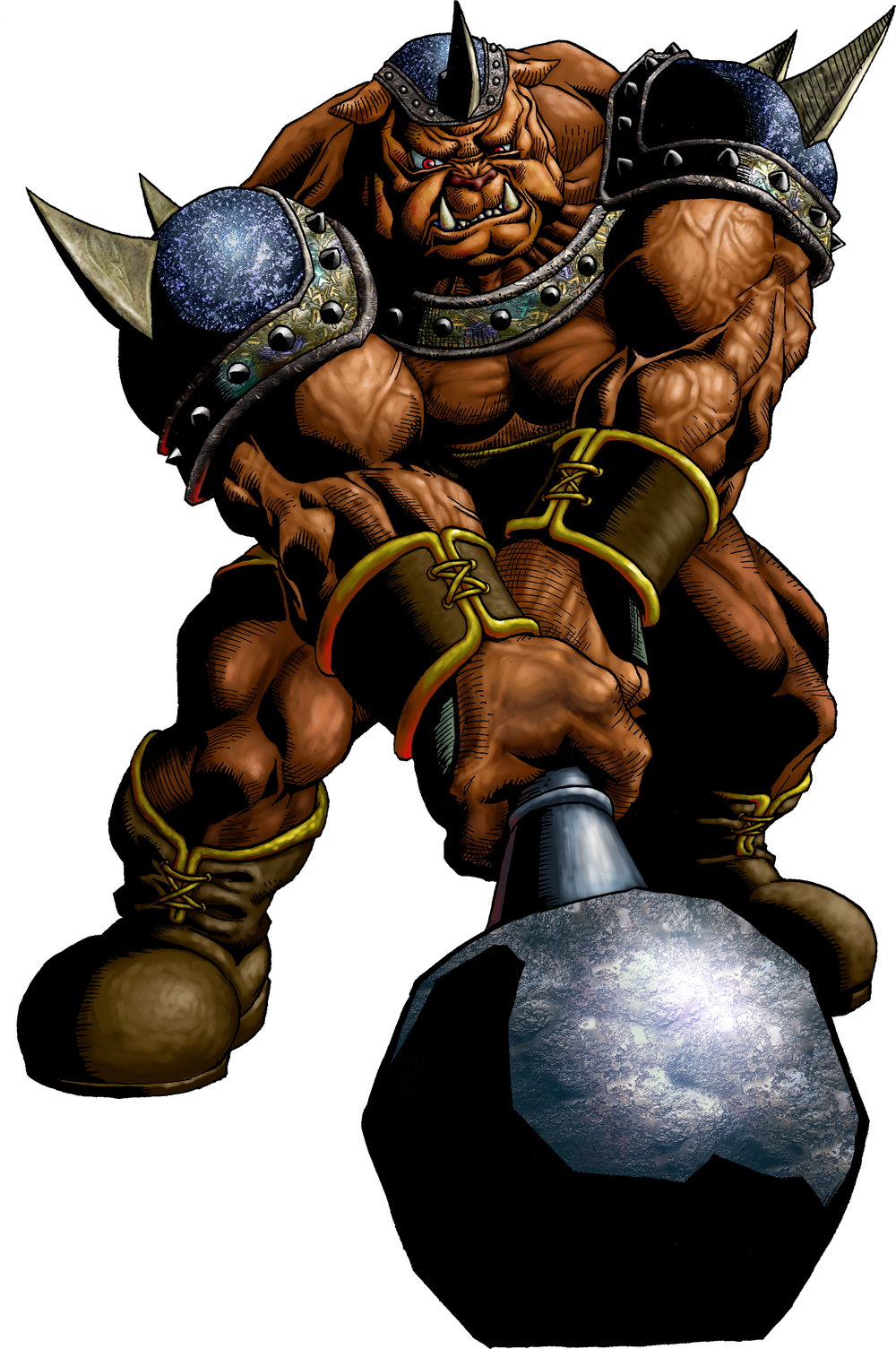
I cannot stress enough that Nintendo knows its audience. Credit: Nintendo
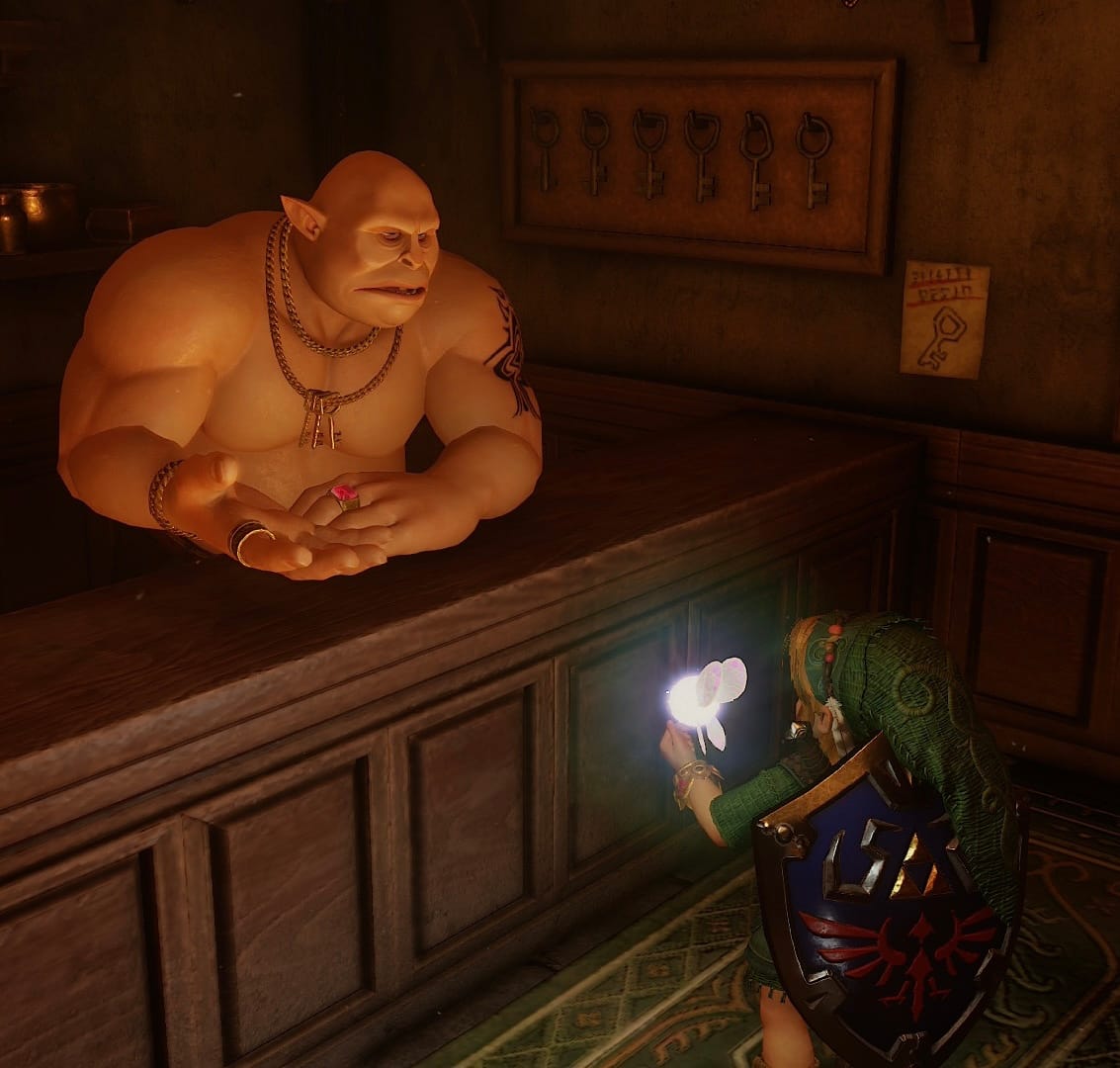
There are still other times when changes in some characters are often aggressively playful. The Treasure-Chest Shopkeeper, normally a bald man with a single tattoo, is given several pieces of jewelry and a necklace of keys. Link’s green outfits are no longer cloth but replaced with sinewy organic plant matter, a detail I found offputting at first but have grown to appreciate in its intentionality. The red tunic used to survive heat is studded and leather, giving it a slight Scorpio Rising vibe, and the Lens of Truth is no longer a magnifying glass but an easily equipped pair of sunglasses that make Link look like a quirky rich aunt who lives on the Upper East Side. These details make sense given the presence of Art Director Aya Shida, who previously worked as a lead character designer on Tears of the Kingdom, a game whose character design choices I found to be refreshingly textured. “If the fabric looked too neat, as though it had been machine-woven, it wouldn't look like something the children living in the forest had made themselves,” Shida said in a recent Nintendo-run Q&A when speaking about Kid Link’s new outfit. “It just wouldn't feel believable.” Every choice in a high fidelity remake is a statement of purpose, either to clarify what was originally meant or to reinterpret something in a new way, and though these choices may seem small they are significant given the definitive nature of the original game culturally.
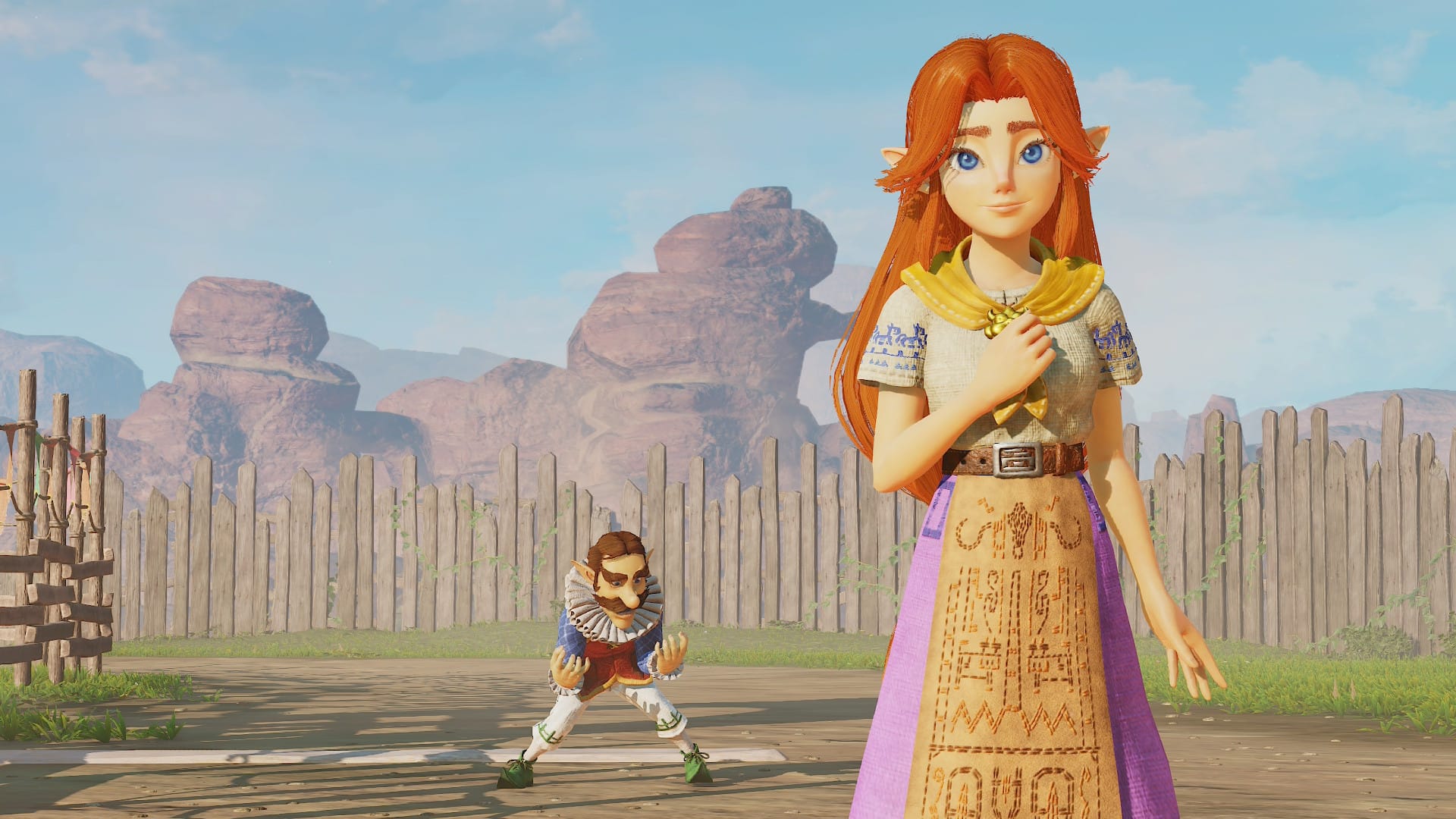
Outside of the characters, the world itself is busy. This is a logical move, as even the Switch 2 has the processing power to make the relatively small map of the original look lush. This is most noticeable in the areas of the game that originally featured garbage pre-rendered backgrounds: the shops, the exterior of the Temple of Time and Hyrule Castle Town, the latter of which has more or less been rebuilt from the ground up in a way I find quite charming. It’s fun that you can go into the buildings and see that Mamamu Yan (The Pooch Lady) has an opulent rich lady room covered in paintings of her dog Richard instead of living in a barren void with what looks like a shipping pallet, several pieces of cheap unfinished Ikea furniture, and a crate. Similarly, Goron Village feels more like a developed culture instead of a cave that some guys are hanging out in. The approach to Zora’s Domain features architecture that blends more organically into the town, and Lon-Lon Ranch feels like Malon, Talon, and/or Ingo actually live there instead of like a barn they’re sleeping in. Part of me had imagined the lives on Lon-Lon to be a little more rustic, but I guess I should not begrudge them their creature comforts.
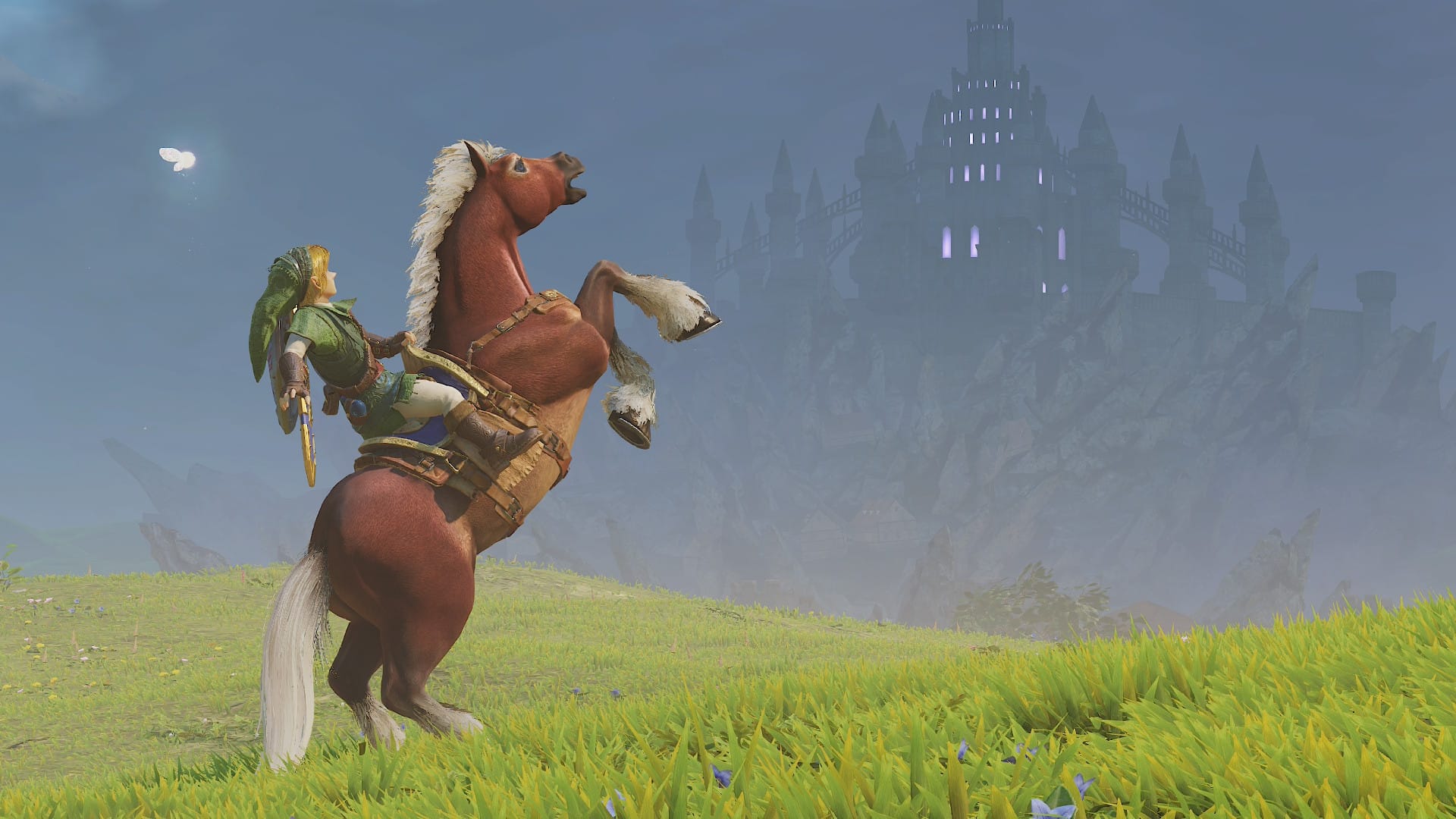
There are also times when the increased fidelity makes the world feel less easily parsed and smaller. Hyrule Field has always been comically small in reality, and that’s accentuated here. Kokiri Forest is verdant now; at times this effect is overwhelming and beautiful, whereas other times it’s claustrophobic and harder to read the dimensions of the space. The new game replaces Navi’s opening PoV flythrough, a camera angle that served to establish the basic dimensions of the space in the original, with a more cinematic, world building cutscene that ultimately does not. What it loses in function it gains in presentation, a tradeoff rather than a pure loss, although I’m happy that Navi still slams headfirst into a fence at full speed.
There’s also times when the spaces are straight up different in a way that will mess with you if you play this game fairly regularly. The lack of loading times between shops is obviously correct, but the reptile part of my brain that says “this is when the shop loads” parses the change as magic even though the rational part of my brain is like “yeah, why would it load?” The learned behavior of countless playthroughs is constantly wrestling with this new information, and the net result is feeling like gremlins have moved my furniture a few inches in every direction to mess with me. It feels strange and somehow smaller to just walk into Lon-Lon Ranch without the screen fading to white, but there’s no rational reason why Nintendo would do that. Other times they include loading between zones, and it feels like spatial breathing room rather than a necessity. They moved the entrance to Goron Village to be more convenient, which is probably a good move for new players but throws me off every time. Thankfully they kept the nearby cow that lives in a hole in the ground; if they’d changed that I would have been pissed.
The original Kakariko Village was defined by right angles, and the new one is redesigned with organic curves. This throws off my internal compass of where things should be. I don’t expect everything to be as cubic as the original, but one of the few changes where I could not see eye to eye with the remake is that they moved the cow that lives in a bizarre cage inside a guy’s house outside to a stable. On paper this makes sound sense–why the hell would a man keep a cow trapped in a cage in his house that is only accessible in a specific manner, like if a giant owl drops you from the sky or if you jump from a tall building holding a chicken? But the counterpoint is that the cow living in the guy’s house was part of the defining strangeness of the original, and if he’s just a guy who owns a cow it ceases to be noteworthy.
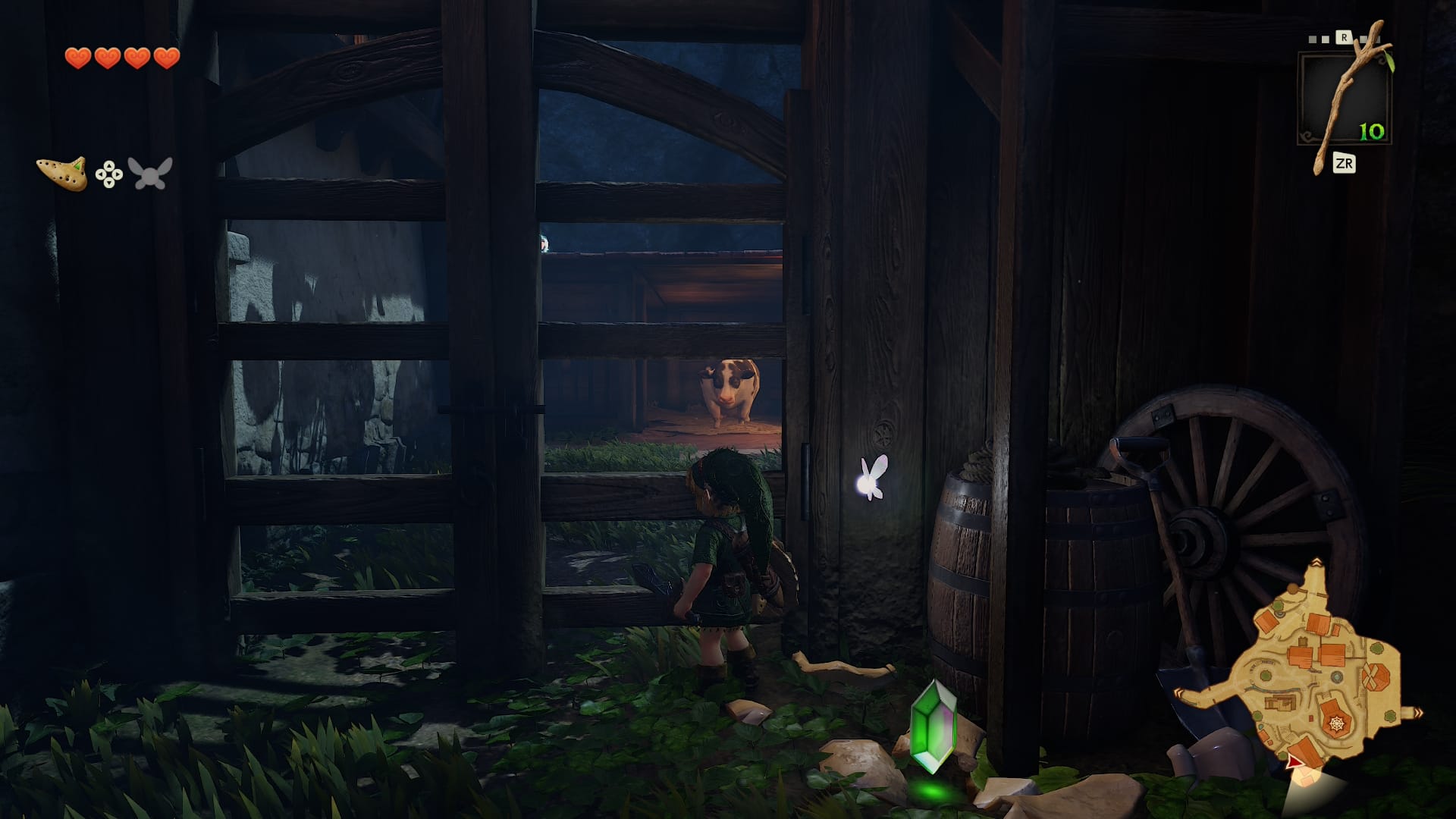
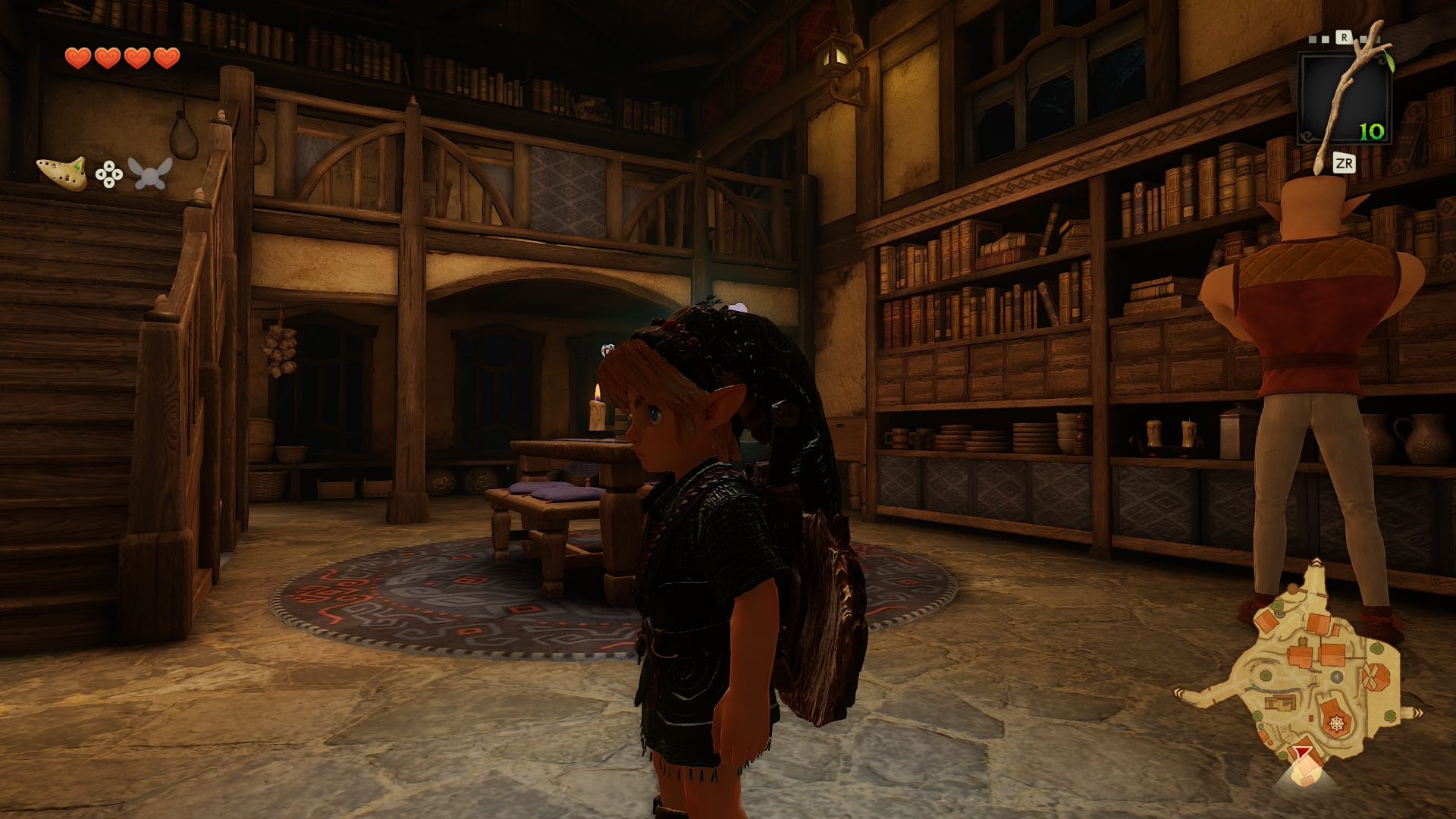
The cow should be in this guy's house. I very much disagree with this decision.Thi
Nintendo added a jump button to the game, which is a nontrivial change, a concession to modernity like the removal of tank controls in the Resident Evil remakes. In the original game Link would just kinda automatically jump from space to space, but now it’s a conscious act and mapped to the X button up top. This is honestly a weird place to put a jump button; the game gives you a more modern, alternate placement that makes more sense, but this too throws off your muscle memory a bit. Adding jump means that certain spaces and puzzles need to be tweaked and redesigned. None of these are bad things on their face–logically it makes more sense that Link should be able to run instead of rolling and side hopping everywhere–but it’s also a reminder that this is not the same game even though it follows the same form and function.
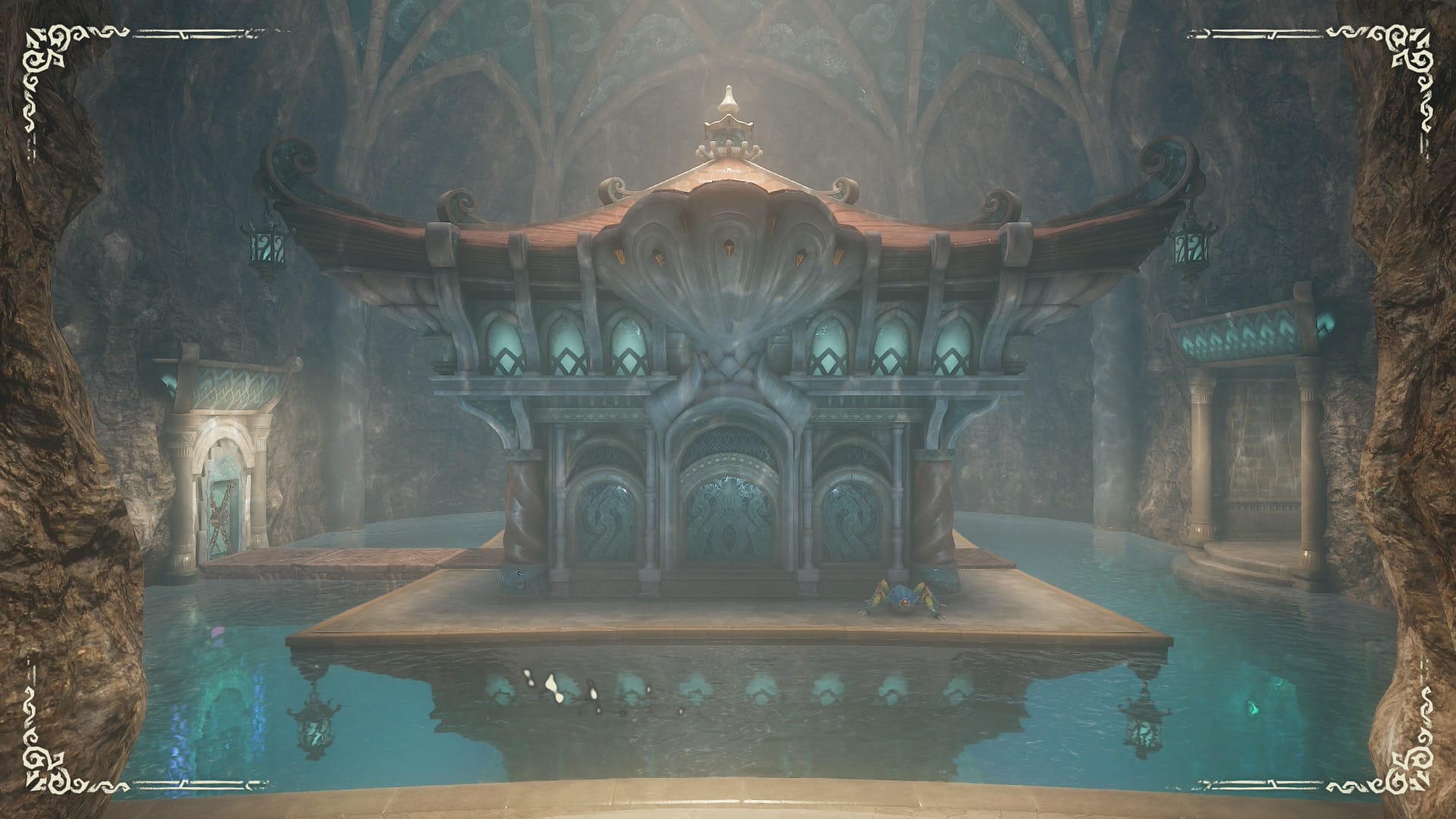
There is tweaking and streamlining to some of the puzzles and enemies. The terrifying floormasters, the hands that grab you and yank you to the start of the dungeon, now put a big spotlight on you beforehand as if to say “HEY, A BIG HAND IS ABOUT TO GRAB YOU.” I have mixed feelings about this, but I appreciate that the choice is slightly ostentatious and campy. The Water Temple, which basically everyone hates, has been streamlined in the remake. This is notably the second time this has happened, as the 3DS version thankfully added the ability to quickly take off the metal boots on the alternate touch screen, but the Switch 2 version completely streamlines many of the puzzles, including an obtuse block you had to remember to push. Everybody agrees this block sucks, and their solution is elegant, but I must wrestle with the mixed emotions of saying “hey, that sucked, put it back!”, the concession that it is the right call viewed in a vacuum, and the sensation that altering it is altering history in a way that feels consequential. I often return to a truism coined by YouTuber Iron Pineapple: “a good game can turn into a great game if it sucks a little bit in an interesting way.” Ultimately, however, producer Eiji Aonuma made the Water Temple, and its reputation clearly weighed on him. “I wanted to do something about the Water Temple I created 28 years ago,” he said in a recent interview, laughing.
The game also has a slew of new features like the ability to hum or play an instrument into the controller, which is fun, entirely optional and pure Nintendo. In my personal experience the humming feature will bend over backwards to try to get your inputs to work, which has led a lot of people to discover that saying “Peter, the horse is here” in the exact same tone as that one clip of Lois from Family Guy will cause the game to play Epona’s Song and summon your horse. I can confirm that this not only works consistently, but that I’m no longer allowed to do it because “it’s no longer funny” according to my girlfriend. They added gyroscopic aiming, which can be disabled, yet I’m ultimately in favor of this because Nintendo loves gyroscopic aiming more than any other major company and I respect and agree with the vision. The hookshot’s aiming dot is now a fully fledged laser pointer, one that changes and subtly vibrates when you are able to attach to something you’re pointing at. There’s also an app with easy ways to track quests and Skullatas.
I have enjoyed Digital Foundry's analysis and agree on a lot of points.
The basic quality of how objects are lit and rendered is perhaps the part that feels the strangest. Nintendo has always been good at thriving within meager hardware using style, and this game has style in spades, although the nature of their styling is unlike much of what they have done in the past. Gone is what my colleague Dia Lacina has referred to as Nintendo’s “Marimekko boldness,” replaced instead by a slightly more realistic, occasionally garish and often uncanny rendering style. Wet bodies reflect in a way that feels oily, and there is a strange sharpness to the game perhaps accentuated by the fact that it uses FSR1 like Breath of the Wild instead of other upscaling technologies like DLSS. It can be initially easy to dismiss the overall quality of the game as feeling “hire this man” adjacent, but that undersells both the sheer talent of the developers and the boldness of many of the choices made.
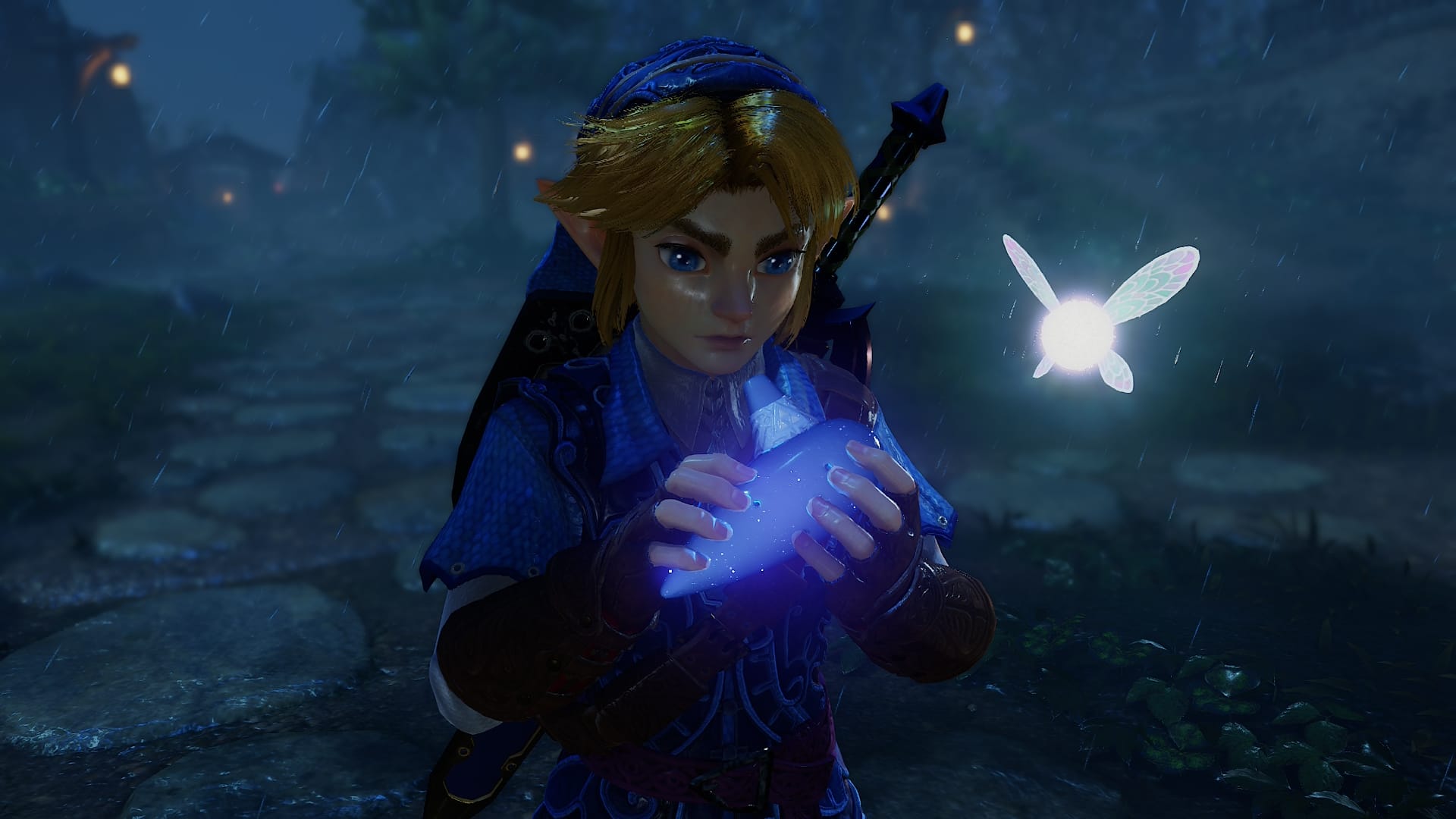
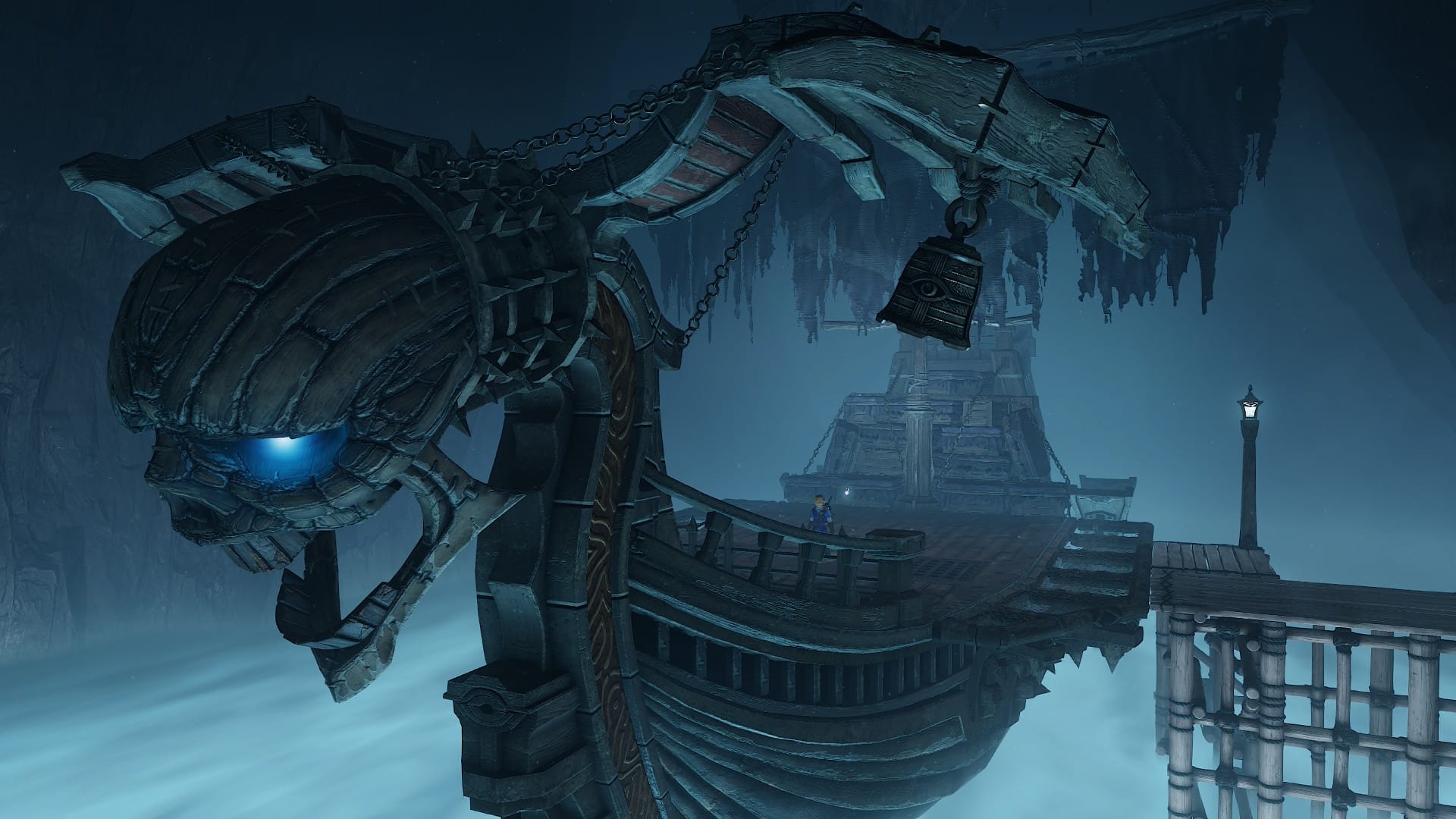
The entire game has a sumptuous quality in its design that I’m constantly both impressed with and thrown off by. Metal gleams as though freshly polished; gems and jewels announce themselves with a particular style of 80s star filter, a decadent twinkle that’s rarely seen in other games. Golden Skullatas explode in an almost fluid mist of opulent gold dust, and their medallions sparkle. The chests that contain the boss key in dungeons are decorated in a blue opalescent inlay that would beguile Kevin Garnett in Uncut Gems. How the game handles reactive smoke on the ground is both simple and effective, the game equivalent of putting a fog machine in a haunted house or a rave for ambiance. All of these qualities are fully on display in the Forest Temple, which now takes on qualities halfway between Luigi’s Mansion and The Masque of the Red Death. I find this tone oddly refreshing; the space is now filled with giant stained glass windows and stately woodwork. Similarly, the Shadow Temple is much more explicit and gothic, ultimately leaning on an appropriately gothic side. Ocarina of Time’s purposeful decadence is unique even among Nintendo titles, and when it works it recreates the sensation of childhood wonder that people felt in the original and that a simple replication could not accomplish.
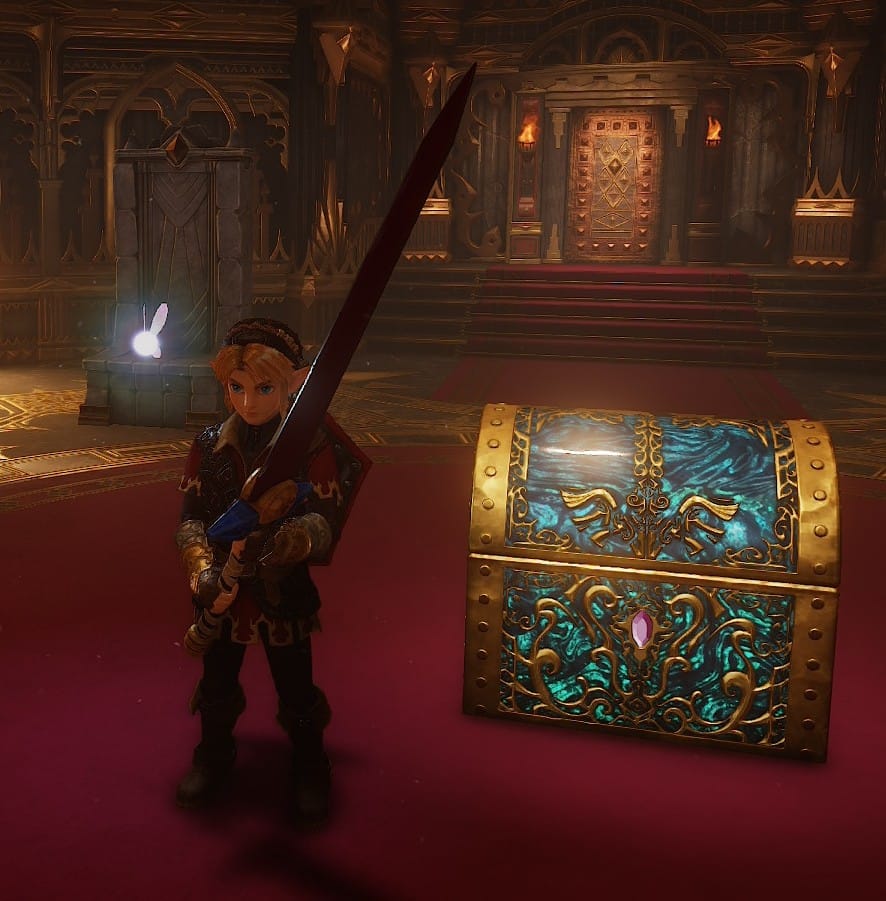
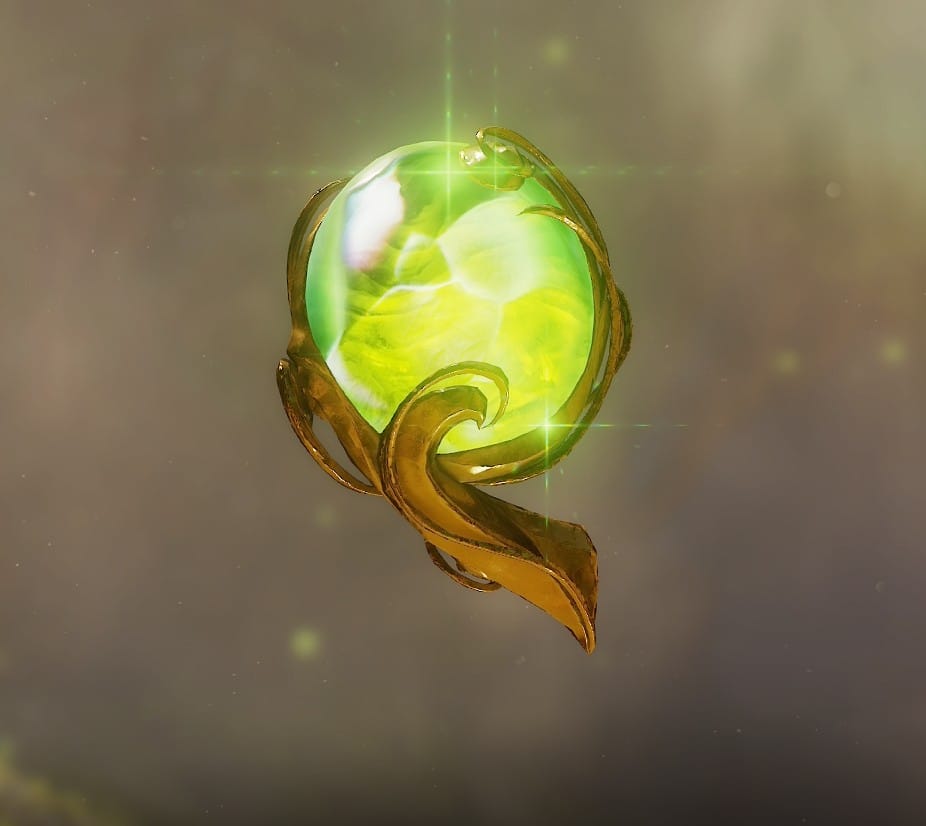
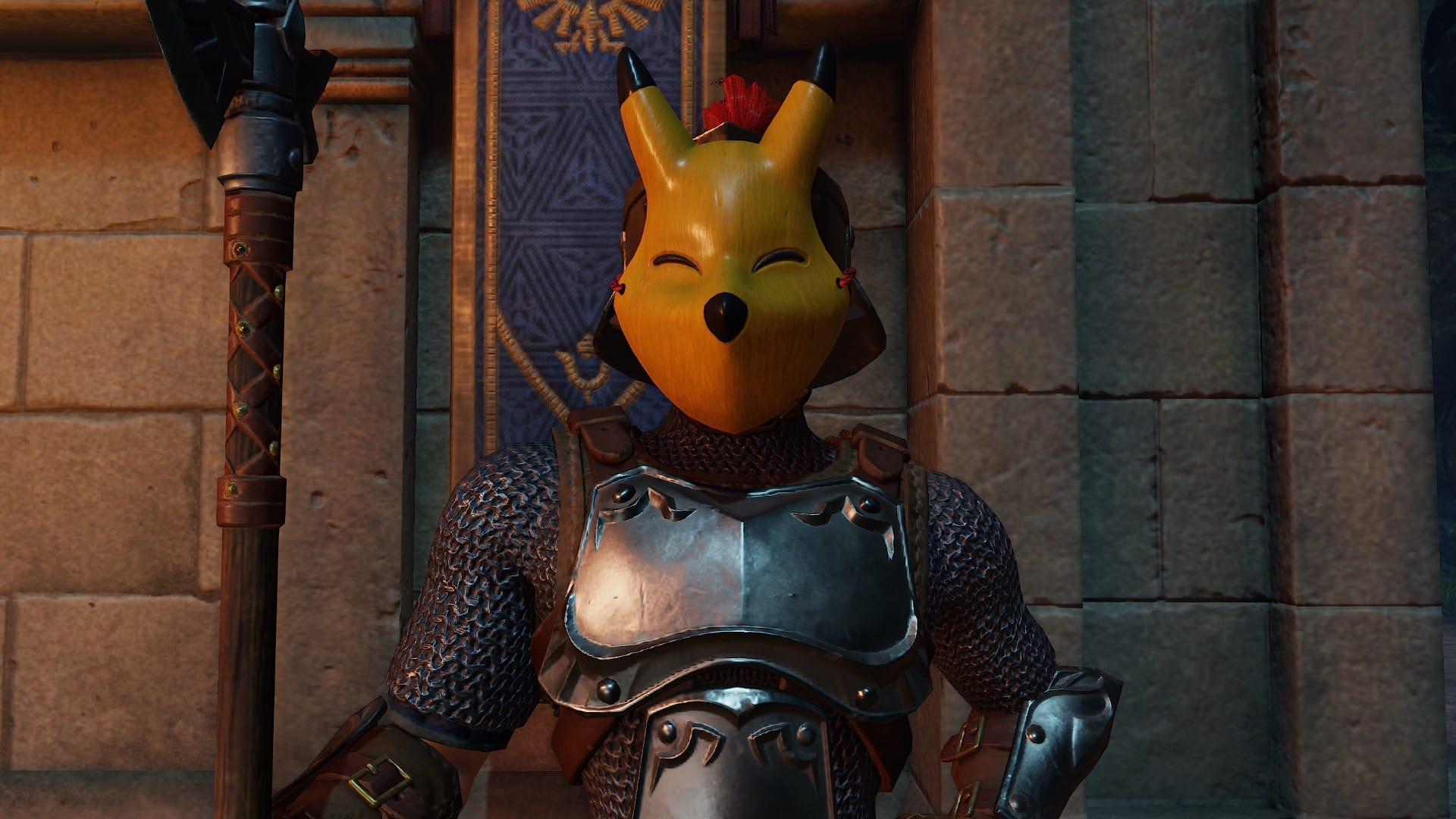
There is an opulence to the game that is hard to articulate.
And yet I am never filled with either pure melancholy nor pure joy with this game, though I experience both of those in small bursts. My internal monologue is a torrent of small reactions: “Was that always there?”, “Oh that’s quite clever,” “They moved the cow, that's bullshit,” “They shortened the butt scoot by 12 seconds,” and “What did they do to the gate to Lake Hylia?” This process itself is a form of joy, an interrogation of what a game means to me, what parts of the experience I consider “correct,” how attachment can be noxious to both the player and the game maker, and how this new game strives to exist in the original’s legacy while trying to impart lessons going forward.
Though it may leave a distorted version of what the original game represented to new players and those who have not played it in decades, it must be stressed that it is coherent when viewed as its own game in conversation with the N64 original. There are no shortages of ways to play the original Ocarina of Time, and its team is free to reinterpret their own history in that context, as they did with on 3DS before. As Zelda producer Eiji Aonuma noted in the recent Ask The Developer interview published by Nintendo, the development experience was about interrogating what this game means to a new generation of younger developers who did not grow up with this game at the forefront.
Many of the team members who work alongside me on Legend of Zelda games today have only experienced developing the more recent titles. That led me to wonder, “Do they truly understand just how significant The Legend of Zelda: Ocarina of Time was to the series as a whole?” Of course, there are team members who vaguely know the game, and those who played it in their childhood days. But I started to wonder how they'd interpret The Legend of Zelda: Ocarina of Time as they go about developing future Legend of Zelda games. By learning the game structure and development style behind the original The Legend of Zelda: Ocarina of Time, and by actually rebuilding it as a full remake, it may trigger new insights that they can carry forward into future development.
This inter-generational quality is the part of the game I find most refreshing. Remakes often feel either outsourced and cheap or so alien as to be functionally unrecognizable, like the sprawling Final Fantasy VII trilogy that actively rewrites the game’s own history. As a critic or a fan, you worry that these projects represent a death creatively, that they cynically take up resources meant for newer projects. None of those things feel true here. It is clear the team considered every choice sincerely, even when I disagree strongly with some of those choices. If we are to have remakes, they should at least exist to interrogate the legacy of a game, to cautiously question what worked and what did not, and to communicate a legacy between the original developers and younger developers and audiences. It should be an excuse to see these games with new eyes, and despite my inability to do that, I am happy it made me interrogate the things I find holy about the experience.
“More than anything,” director HokWai Ng said in the recent Nintendo QA, “I personally would be happy if it became a conversation starter that encourages players of different generations to share memories with each other. ‘You know, your Dad got stuck in the Water Temple plenty of times back in the day.’”
Aonuma agreed, “Then kids playing this version might say, ‘Come on, it’s not that hard.’ Poor old Dad might end up feeling deflated,” followed by the laughter of everyone in the interview.


