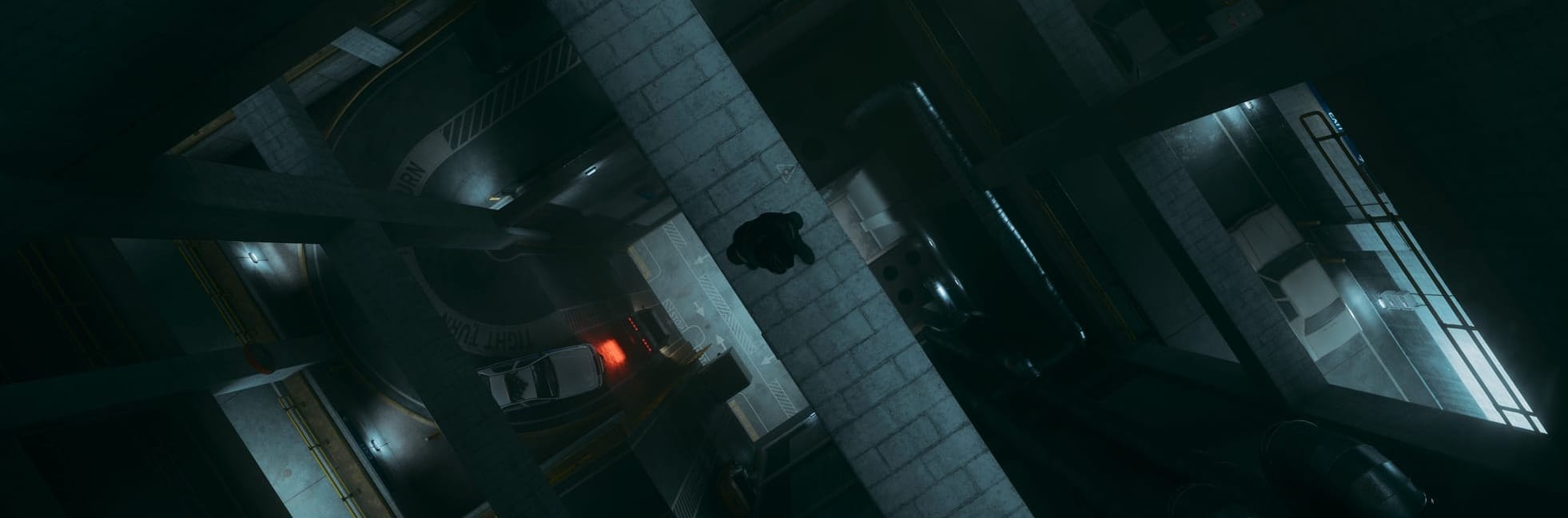
I have a confession to make: despite loving the first Control with all my heart, every time I saw a trailer for its sequel Resonant I was left a little disappointed. While appreciating that Remedy were trying something different--a new character in a new setting with a new combat system is a rarity in these risk-averse days--by moving the game out of The Oldest House and onto the streets of New York, I thought I would be losing the thing I loved most about the original.
That thing was, of course, Control's most defining visual trait and the visual language through which the entire game was expressed: its highly detailed and meticulous use of corporate Brutalism. It wasn't just packed with thick concrete walls and staircases, but other hallmarks of the style's 20th-century heyday as well, like its deep red carpets and wooden workstations. If you've ever worked or studied or even lived in a building like this, Control did it so well that you could smell The Oldest House.
I played all the way through the first game using its famous "one shot one kill" mode because I did not care one bit about the challenges of shooting at monsters. As someone with a huge passion for architecture--and Brutalism especially, since I grew up around it--I was there for the building, and I spent the majority of my time in Control walking around poking my head into every corner of every room just admiring the craft that went into designing and building the place.
How was Resonant going to compare, then, if it left The Oldest House behind? How could Manhattan's streets, so familiar to all of us whether we've lived there, visited, seen it on TV or played through in a video game, hope to capture the same singular, focused sense of architectural awe? Turns out the answer was "really easy, you idiot".
It turns out New York City in Resonant is for the most part just a hub, a little open world experiment that's there to provide some flavour and give you a chance to frustratingly backtrack its confusing corridors over and over on your way to the game's version of "dungeons", and while there's some interesting stuff going on above ground (one area covered entirely in a strangely beautiful mould is lovely, for example), those dungeons contain some of the most awe-inspiring video game environment design I have ever seen.
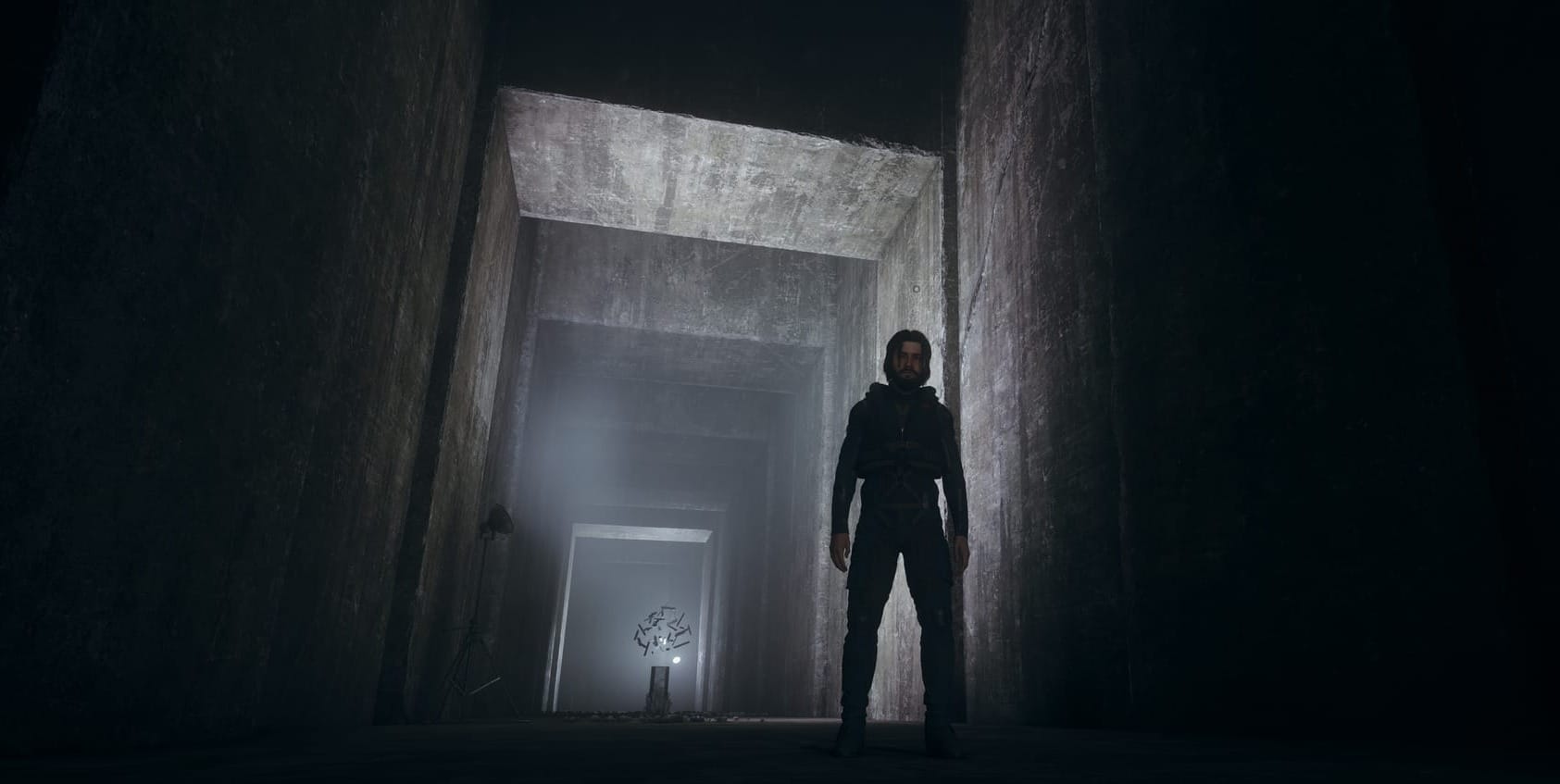
Isolated as separate entities, rather than being shackled to the open world map, these dungeons are free to go absolutely wild with their design and more importantly their scale, creating some mind-blowingly complex and visually interesting environments. The Factory is a nightmarish vision of a Victorian megastructure. The Sinkhole is an Interstellar-like mindfuck. The Underpass made me think, for a few precious moments, that I was playing a video game set in the Blame! universe.
Some of these levels hark back to Control's penchant for Brutalism, whether by directly referencing The Oldest House or simply by going to town on their use of hulking concrete slabs, yet the aim here is different. Resonant is less interested in paying direct homage to a single kind of architecture as it's simply showing a love and appreciation for the scale and possibilities of architecture itself.
The red carpets and 70s furniture may be (mostly) gone in Resonant, but the feeling The Oldest House invoked remains. Brutalism is so beloved (and derided) not because of its materials and angles specifically, but because of the emotions involved. For some Brutalism can be oppressive, cold and bereft of detail and craft. For others it’s an expression of the beauty of form, and inspires a sense of awe at its depth, weight and scale. Resonant's distorted dungeons still manage to make you feel all of this, the same way you felt in The Oldest House, even if they've technically left a specific architectural moniker behind.
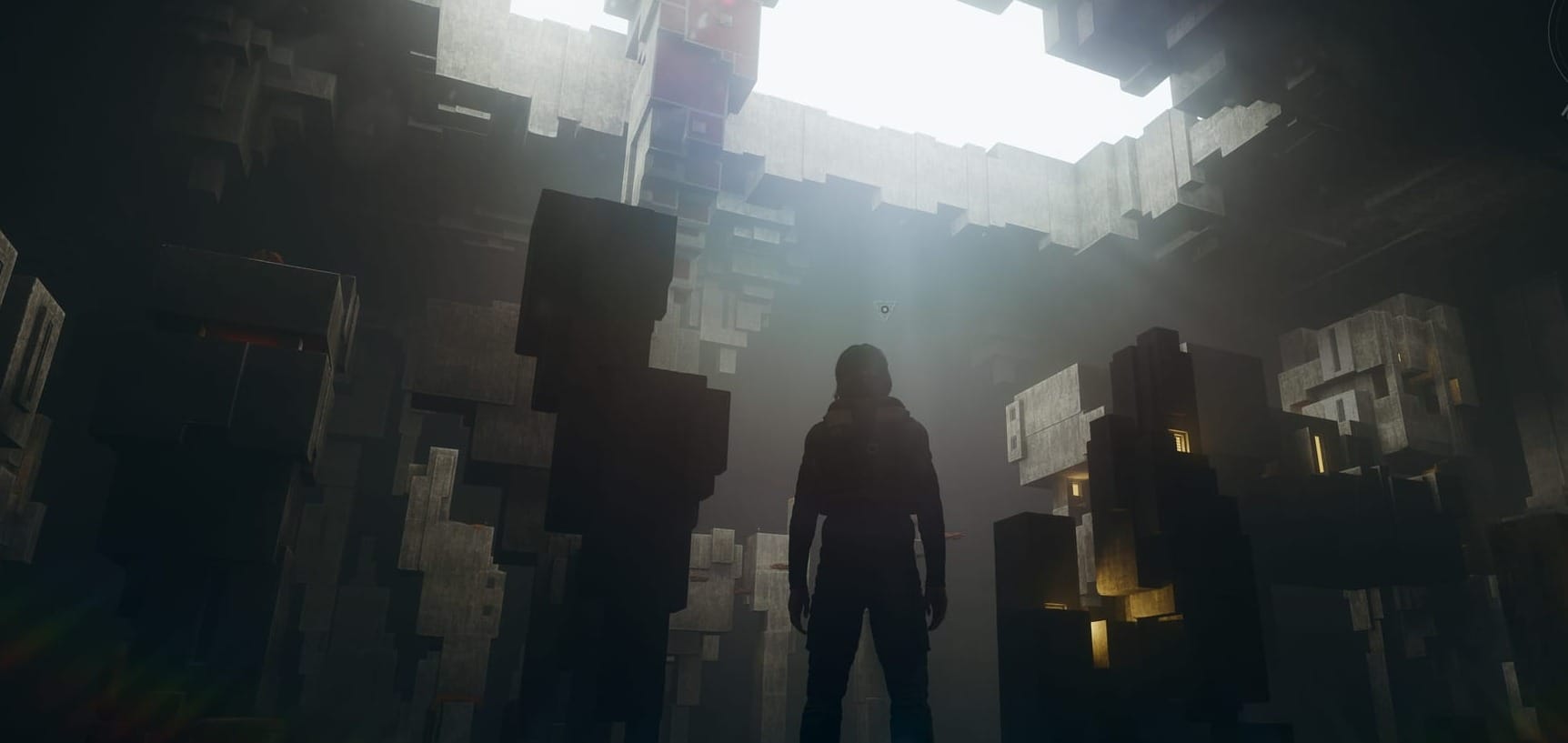
These dungeons can be so disorienting, and so vast, that they can sometimes feel overwhelming. There are points throughout Resonant, whether it be the first time I encountered a "patterned" street, leapt over a seemingly bottomless chasm or surveyed an endless array of Escher-like subway lines, where what I was seeing and what I was doing within that setting (mostly some extremely cool platforming) made me sit back in my chair and just exhale at the wonder of it all. The Sinkhole in particular deserves its own feature, it's such a staggering piece of self-contained video game.
Resonant is a game that knocks you on your ass with architecture, and specifically, the ways that can be expressed through the medium of video games. Remedy have been able to build whatever they want here, and more than most games they've taken advantage of that opportunity, crafting levels and structures that warp gravity and perspective around you, buildings that loop back into buildings and atop other buildings to create something else entirely.
I am not for a second taking anything away from the rest of the experience by saying this, rather just trying to explain the lengths to which the game's buildings and rooms and streets are so good that for me they've once again defined the experience, in the same way The Oldest House's pillars and staircases defined Control's.
I think one of the most important things a video game can do, through what we're able to play but also play through, is inspire a sense of wonder, and Resonant's strong focus on its buildings and platforms has kept me smiling the whole time I've been playing it. Long after the credits have rolled, long after I've moved onto 117 other video games, I'll be thinking of its cascading parking garages and recursive apartment buildings.