Not exactly with a whimper but perhaps with less of a bang than people were expecting, Destiny 2 is done and dusted. The game will remain playable for the foreseeable future, but with one final update out of the way, its live service days are abruptly over. And yet, despite the narratively unsatisfying conclusion, Destiny 2 had a hell of a run—paving the way for a generation of online shooters while also outlasting many.
Numerous updates and iterations of the game have come and gone; somewhat infamously, Bungie took to “vaulting” substantial chunks of content, making missions and locations inaccessible to prioritize the game’s then-ceaseless march into an unknown future. So too have countless hands touched Destiny 2 over the years, pouring blood, sweat, and tears into stories, characters, and weapons—some of which got their day in the sun while others faded into obscurity or were removed from the game entirely.
During those times, Bungie was also far from a perfect place to work. There is a sense among many Destiny 2 developers that they came together to build something special despite toxic old guard leadership and a boys club mentality—certainly not because of those things. But that does not diminish the value of the work itself, nor the impact it had on players. And so, in their own words, here are Destiny 2 developers on their favorite things they contributed to the game:
Andrew Weldon (former staff systems/technical designer, 2013-2023):
Mine is the “I Made This For You” medal in the Crucible. I made hundreds of Crucible medals for Destiny from D1 launch through when I moved off D2 as Beyond Light was wrapping up, but "I Made This For You" is a highlight not only of my time at Bungie, but of my entire game dev career.
The medals were a great space to have a little more fun even in D1's more self-serious tone. I had already gotten goofy with "We Ran Out Of Medals" as the max kill streak medal in D1, which carried over to the D2 Crucible. I was still a little surprised I had gotten away with that one not only in name, but also the text that displays in the game feed in the lower left: "Someone should do something about [Player Name]..."
I don't remember when I decided I wanted to add a new streak level after "We Ran Out of Medals," but that name was the perfect setup. "I Made This For You" is actually two medals: the first "[Insert Name Here]" displays a blank medal outline, followed a few seconds later by the true "I Made This For You" medal. I knew the icon had to be some kind of scribbled, child-like art. I went to UI artist Ryan Klaverweide with the idea, which was very much an "OK, hear me out..." conversation. It's a weird request to make of such an incredibly talented visual designer, but thankfully he was up to it.
It's such a fun character moment for Shaxx, too, as written by writer Jon To. Shaxx starts yelling like he would for your other streak medals, then suddenly stops as he realizes, "I don't have a medal for this!" He's a resourceful fellow, so after a few seconds, he presents you with a hand-made original. "I'm so proud of you, Guardian, and I want you to have... this."
"That's one of my all-time favorite moments as a game developer."
When we went into the recording session with Lennie James, we'd told our VO director Kevin that Shaxx was really earnestly giving this to you, expecting a very Shaxx-like read. Lennie's read, though, has this incredible pause toward the end and this tinge of uncertainty, as if he's unsure and maybe a little embarrassed. Kevin told Lennie to hang on, and called back to Jon and me on our remote audio to the session, telling us he was going to have him re-record it. Meanwhile, Jon and I are doubled over gasping for air and/or in tears laughing so hard we could barely buzz back in to tell him, "NO, NO KEEP IT!" That's one of my all-time favorite moments as a game developer.
It's an extremely rare medal, but the goal was to make something really fun and memorable that folks would earn and then share, and then other people would see and enjoy and just be glad it was there, even if they might not earn one themselves. And it really worked perfectly. People who knew they'd probably never get one themselves still used the icon as their social media profile pictures. CM Dylan Gafner actually got the icon tattooed on himself as part of a D2 community charity fundraiser drive. I would be surprised if he's the only one, given how many Destiny tattoos are out there. I commissioned one of my best friends to make a silver version of the badge so I could have a tangible version of it. It's one of my most prized possessions.
Looking back at it now, it really captures how I feel about every contribution I made to Destiny, and a feeling I imagine is shared by everyone who worked on it: "I made this for you."
John Ryan (editor, 2015):
I worked on Taken King and beyond as an editor. Did a bit with brainstorming cinematics, but the one thing I chuckle about is adding into lore that the inside of the Traveller smelled faintly of vanilla.
No, [there wasn’t any pushback]. The senior story editor at the time thought it was great. He signed off on it.
Michael Zenke (writer/lead narrative designer, 2015-2017):
My favorite things I contributed to, partially by proxy, were definitely the strikes and the amazing characters in the open world content. I got to work with the incredible likes of Zee, Jonathan To, Jill Scharr, and Grant Roberts to get that work out the door.
The strikes were a hoot, mostly because nobody cared much about the VO, so we were able to really create some incredible and sometimes iterative/different experiences. ("Operation Babydog," as an example, if you remember that. Which I'm pretty sure was a late-evening collab between Jon and Grant.)
"Working at Bungie was the most toxic, dysfunctional experience of my professional life. But the incredible people that I got the chance to work with were some of the best in the world at what they do, and I consider all of them friends to this day."
And the open world characters, which in D1 releases would have been little more than kiosks for vendor stuff, we got to spend some time fleshing out and really engaging with both as people and as characters with cool backstories. Of those I still remember very fondly the work Jon and Zee did on Failsafe, the weird split personality AI character we had out on Nessus.
In general what I enjoyed about our work on the open world content was that we were able to do weird stuff and take character-motivated swings. Devrim Kay, Failsafe, Sloan, and Asher Mir are a pretty wild lineup. And it was great being able to explore very different aspects of the world than you could see through the eyes of Zavala / Cayde / Ikora.
Working at Bungie was the most toxic, dysfunctional experience of my professional life. But the incredible people that I got the chance to work with were some of the best in the world at what they do, and I consider all of them friends to this day.
Grant K. Roberts (senior writer, 2015-2019):
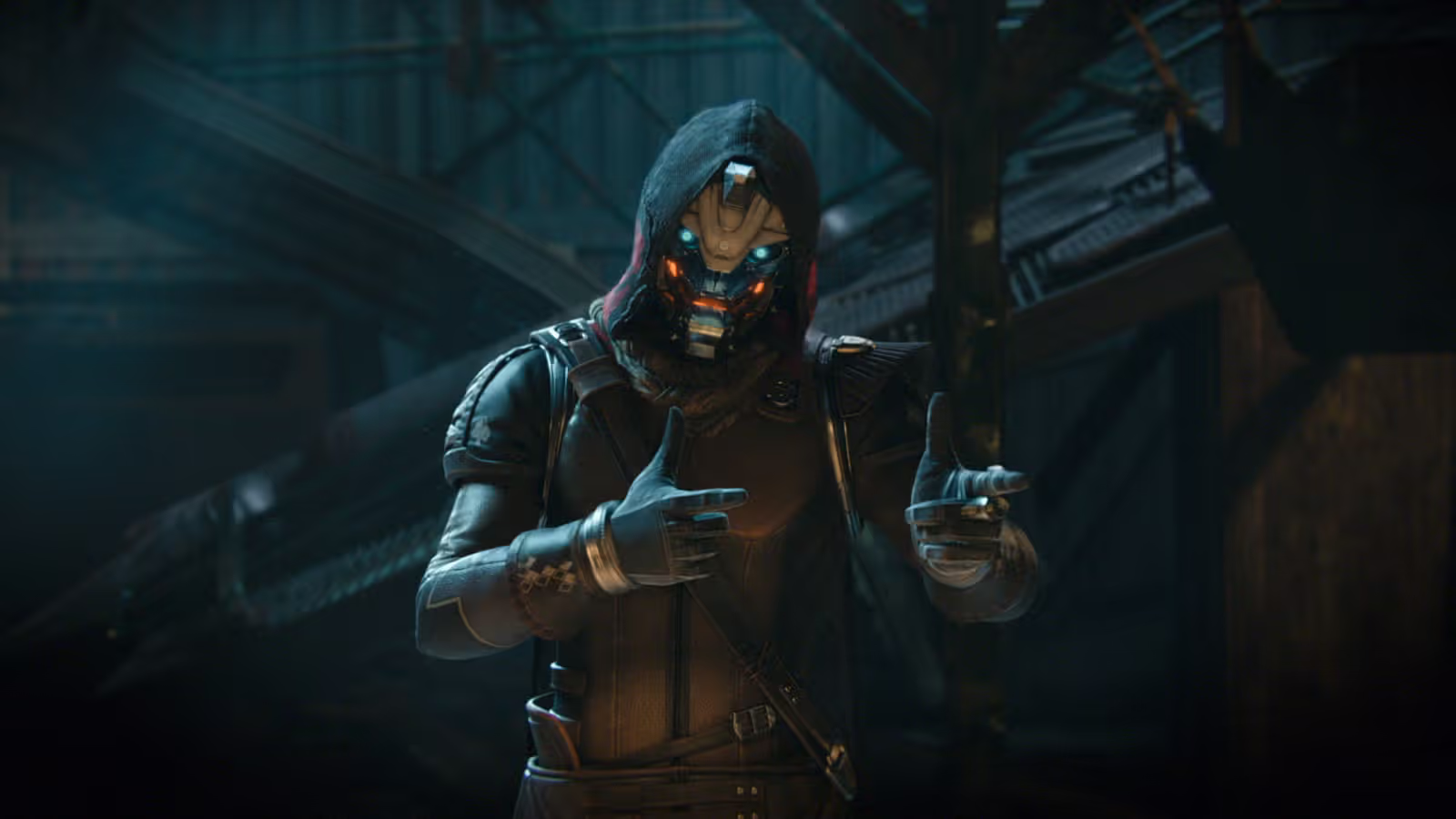
My favorite comedy thing was the Cayde-6 Grimoire Card from the Rise of Iron era. My favorite serious thing was the Lore Tabs for the "Rekindled" gear for Solstice of Heroes '18. Honorable mention to the lore tabs I wrote for Sparrow racers Marcus Ren and Enoch Bast; a queer fan in the deep South emailed me about how they were moved to tears by seeing same-gender relationships in the lore.
What made those things stand out to me? For the Cayde Grimoire card, my pitch was "Cayde Googles himself" plus "tease the upcoming destinations for Destiny 2.” I'm a strong believer in constraints breeding creativity, so the challenge of making something funny that hit those goals, in the very strict character limit for Grimoire cards? That's the good stuff.
For the Rekindled gear, I had a similar goal: tell the stories of what happened to the Vanguard before we meet back up with them, and try and retcon some of the choppy storytelling from the main game. I'm not usually interested in flashback stories or "ever wonder how this character got that way???" fill-ins—the characters should be able to stand on their own without that!—but starting from a positive place made it a really rewarding experience.
I know neither of these are Book of Sorrows or Dreaming City level things, but I always tried to focus on the more grounded elements of the universe.
As for placing things off the beaten path, most of the time that wasn't a decision made by the writing team. The Destiny 2 dev team was big enough that someone else was responsible for that kind of placement.
"I've always been of the opinion that if you've got Lance Fucking Reddick in your cast, you need to let him cook. RIP."
However, once I started leading the Seasons team after coming back from parental leave, all bets were off. One fun initiative was adding extremely rare and hard to find audio logs from Zavala to pair with new seasonal content. (This was back during the early days of Seasons, where most of Bungie was focused on the main expansions, so it was up to us on the Seasons team to figure out the stories we wanted to tell.) The original design was for them to have a 1 in 1,000 chance of appearing at the end of a Strike and ideally feel like the old playground talk "Did you know this could happen?" days. Plus, I've always been of the opinion that if you've got Lance Fucking Reddick in your cast, you need to let him cook. RIP.
Anyway, the engineer I was working with on the feature was in a separate building, while the Seasons team was mainly one block away—not a particularly subtle metaphor. So we weren't able to work synchronously as often as we could. As a result, the actual implementation made the spawn rate much lower than .01%, to the degree that I'm not sure anybody actually found them organically in the game! They were eventually found by dataminers.
The narrative org was pretty fraught while I was there, but I made some lifelong friends. It was quite a ride. How did we approach the job to do good work in spite of that? You can probably already guess, but it's because we had each other to rely on and confide in. That's not to say that the writing team didn't work well and play well with other disciplines, but just like Guardians, we had to stick together against the forces of Darkness.
Jill Scharr (writer, 2015-2019):
The thing I'm most proud of is the Ace of Spades quest from Forsaken. Me and a designer got tasked with designing a quest that would grant Cayde-6's gun, and I pitched the designer the idea that Cayde would have left his gun to whoever killed him. He liked it so we ran it by the leads and got it approved, and had a lot of fun making it. We got a lot of positive feedback from the dialogue in that quest, which was really nice. In his Kotaku review of Forsaken, Kirk Hamilton called it "unusually well-written," which is the funniest backhanded compliment I've ever gotten.
"I didn't realize at the time that he would be Bungie's first canonically gay character, so that was cool."
I also wrote the "Oryx the Nightmare Daddy" lore tab in an exhausted fugue state just a day before writing lock because we needed more lore tabs, and the lead writer told me to "Write something funny" and I was like "You're going to regret asking me that." More than once a person has learned I worked on Destiny 2, immediately asked me if I knew who wrote that entry, and then got very excited when I confessed to the deed.
I'm also the one who pitched Devrim having a husband. I didn't realize at the time that he would be Bungie's first canonically gay character, so that was cool.
Andrew Elmore (studio visual designer, 2019-2023):
I think the projects I'll remember most fondly are the spontaneous charity fundraisers that we did with the consumer products team and inclusion clubs. Especially with the Black Lives Matter pin and emblem in 2020, that project moved so fast. I don't remember how much money we raised with that, but I was floored. I felt really encouraged by the fact that I didn't run into any kind of resistance or opposition on that, because I've definitely worked at companies that would have fought it. Took a little sting off of getting clobbered by some Titan dork's shotgun in the Crucible when they were using an emblem I made, that they only could have gotten from a social justice fundraiser.
It was a reminder that my work had been used to make a tangible positive impact somewhere—and infinitely more so than I could have ever done on my own and without a hugely popular IP and a socially conscious community, obviously. But I worked with a phenomenal team of brilliant, wonderful people who could move fast on these things, so now I have a handful of projects I can look back on and remember the janky Adobe Illustrator file it began as. Something good I can feel somewhat responsible for, and think wistfully, "Maybe graphic design isn't ontologically evil after all.”
Uriah Belletto (QA test lead, 2017-2024):
For silly things, probably working on the Grasp of Avarice Dungeon and coming up with ideas for the Wish Wall for Last Wish. For serious, probably the Vault of Glass Redux.
For Vault of Glass Redux, it was releasing content that players already knew and had super high expectations of, without any real blockers on launch. There was something about having such intense pressure on us and me to release something that lived up to expectations. It's a difficult line to toe between updating something while making it feel like the classic. A lot of players didn't even realize that we had made some of the changes we did to fights. One of those sorta "I remembered it looking better" moments. Being part of that was really neat.
For Grasp of Avarice and Wish Wall, I always thought Destiny was too serious most of the time and players needed just... more fun, y'know? The Wish Wall was definitely that, and Grasp of Avarice had so many silly things and nods to players' behaviors. We found ways to subvert them, like with the Engrams that exploded, or the traps that the artist/level designer made.
"As sad as it is to say, it felt like at some point the people in charge forgot that people play games for fun. They didn't understand that people would play Destiny just to dress up their character, more or less."
For the Wish Wall specifically, we all got to pitch ideas, QA included. Grunt Birthday Party was one of the ones I pushed for hard, and it was a fantastic effort by multiple teams to make it a reality. Some of the team wanted the Paul McCartney song as sort of a nod to the meme and same thing, effort by a lot of people to get it done, but they did. Players loved it. Honestly it's a shame that stuff like that really got clamped down on for the sake of "Player Value." If it didn't keep them engaged, it was hard to get it done. [Sparrow Racing League] is probably the best example of this.
As sad as it is to say, it felt like at some point the people in charge forgot that people play games for fun. They didn't understand that people would play Destiny just to dress up their character, more or less. So of course silly/fun things were still enjoyed. Working on the [raid and dungeons] team was great too because it was the one place that you could really push for breaking bones.
Michael Hogan (UI/systems engineer, 2016-2019):
There's like a million little things I worked on, but one of the big ones for me was chat. It came in really late due to some of my own time management mistakes, but we got a very early version in for the D2 PC reveal and subsequent alpha. It was a long road to get full locale support in for the full release, but I think I brought a fairly full-featured version for launch (and then I jumped on local and clan chat right after that, if I remember correctly).
"Even once the studio had moved away from Destiny, I would think of my own code every time a text chat bug occurred."
The Tiger engine hadn't needed text input or a text field with a cursor, having only used keyboard input for a debug console. The engine itself was fairly bespoke, so it wasn't trivial to port editable text into the engine. There was also the launch platform shakeup, where we went from planning to ship on Steam to instead working with Battle.net. So I had to rework how whispers/direct messages worked. All of that coming in late meant that things like profanity and support for Input Method Editors (like Chinese, Japanese, and Korean text input) came in extra late.
Even once the studio had moved away from Destiny, I would think of my own code every time a text chat bug occurred.
Christopher Davis (raid and dungeon QA, 2021-2024):
I specifically worked on Vow of the Disciple for my first project with the team, and I worked on The Caretaker encounter. Caretaker was something I was really worried about specifically around tuning (kind of a trend on our team for a while), and I was worried that players would find the encounter too easy, especially on Contest mode.
A big concern not just for Caretaker, but for all of Vow, was cognitive load with symbols. We were asking players to remember 26 symbols, and we tuned combat lighter than we usually would due to that. We shoved the difficulty more towards maximizing boss damage, and we were just worried that we had made the rest of the encounter too easy.
We knew we had gotten it right when we were watching streamers during the world first race, and seeing them scramble with ammo economy and start talking about how much health the boss had during contest mode. I believe Datto and his clan said, "We need the Math Class Special!" talking about Outbreak Perfected.
Turned out to be a super memorable encounter for a lot of players on Contest day. Very tight, smart ammo encounter that required fun communications. Honestly a lot of Vow was pretty great, and the team we had working on it were always trying to do something new in the space.
Hazel Monforton (senior narrative designer, 2021-2024):
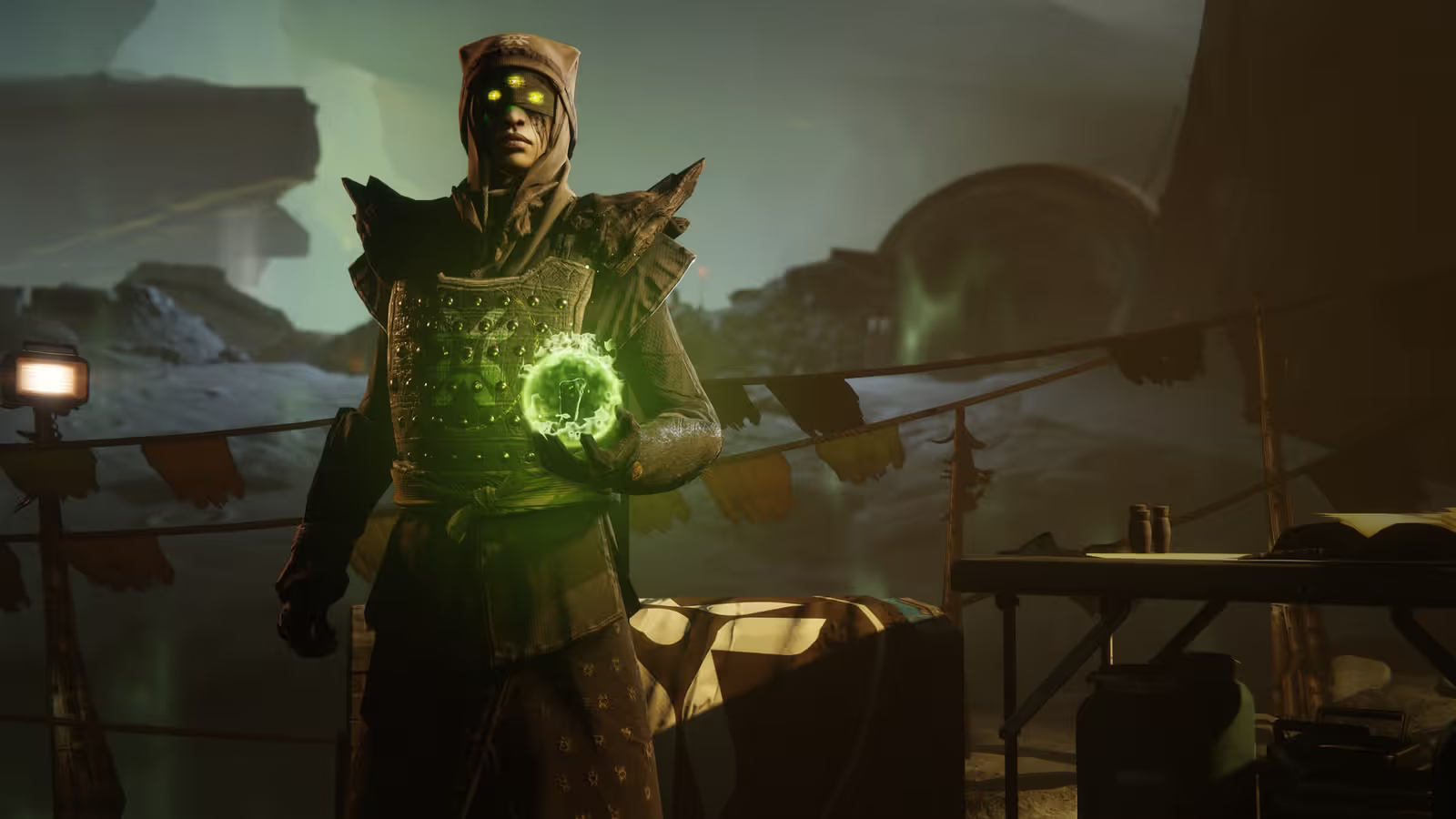
[My favorite] is Sororicide, the lorebook for Season of the Witch. It's a collection of monologues from Eris Morn, Savathûn, and Xivu Arath, detailing their relationship to themselves, to their place in the story, and to each other. I was given a lot of creative freedom and trust, and I was able to explore some aspects of the characters that resonated with my own experiences with loss, grief, family, and dysmorphia.
It was my most personal piece of writing for Destiny, and I was honored to contribute to the story of the Hive and to Eris Morn's development.
Ash Flanagan (Destiny historian, 2021-2024):
I'm most proud of pushing to bring some of our lore-only characters more to the forefront—especially Micah-10, our first canonically trans Guardian.
Destiny has a lot of queer characters and, for that reason, a lot of queer fans, and that was important to me, so I always tried to keep an eye on how those characters were portrayed. Micah was particularly special to me both because she's our first canon trans Guardian (though not our first trans character; that's Oryx) and also because my Hunter wore the Legend of Six Coyotes cloak long before I ever worked at Bungie, the Six Coyotes being Micah's fireteam.
"Destiny has a lot of queer characters and, for that reason, a lot of queer fans, and that was important to me, so I always tried to keep an eye on how those characters were portrayed."
At the time I came on Micah had appeared in text lore but never in the actual game. So I brought up Micah and how we should do more with her a lot, whenever I was asked about lore hooks we could do more with, and I started doing it more as we got closer to Final Shape, because the expansion needed to be a love letter to our fans and I knew doing something with Micah would be special for our queer fanbase.
When I had a Historian intern, Chayo Urrea, I assigned her to document the lore on Micah and the other Coyotes, which she did great with. We got writer Robert Brookes on board, and he pushed for Micah to get a character model and wrote all her dialogue. Robert and I worked together to insist on casting a trans woman to voice Micah. I was super pleased with how she came out, and I know she meant a lot to a lot of our players.
Stas Silva (QA tester, 2022-2023):
For me, I'd have to say it was working on the Deep Dives activity for Season of the Deep. We didn't have much precedent for testing that sort of quasi-randomized, dungeon crawler framework. I ended up studying how games like Diablo work under the hood to manage game events. (Demon Souls' world tendency system was actually the basis for how I charted run permutations based on server time in my test documentation.)
Ethan (activity designer, 2022-present):
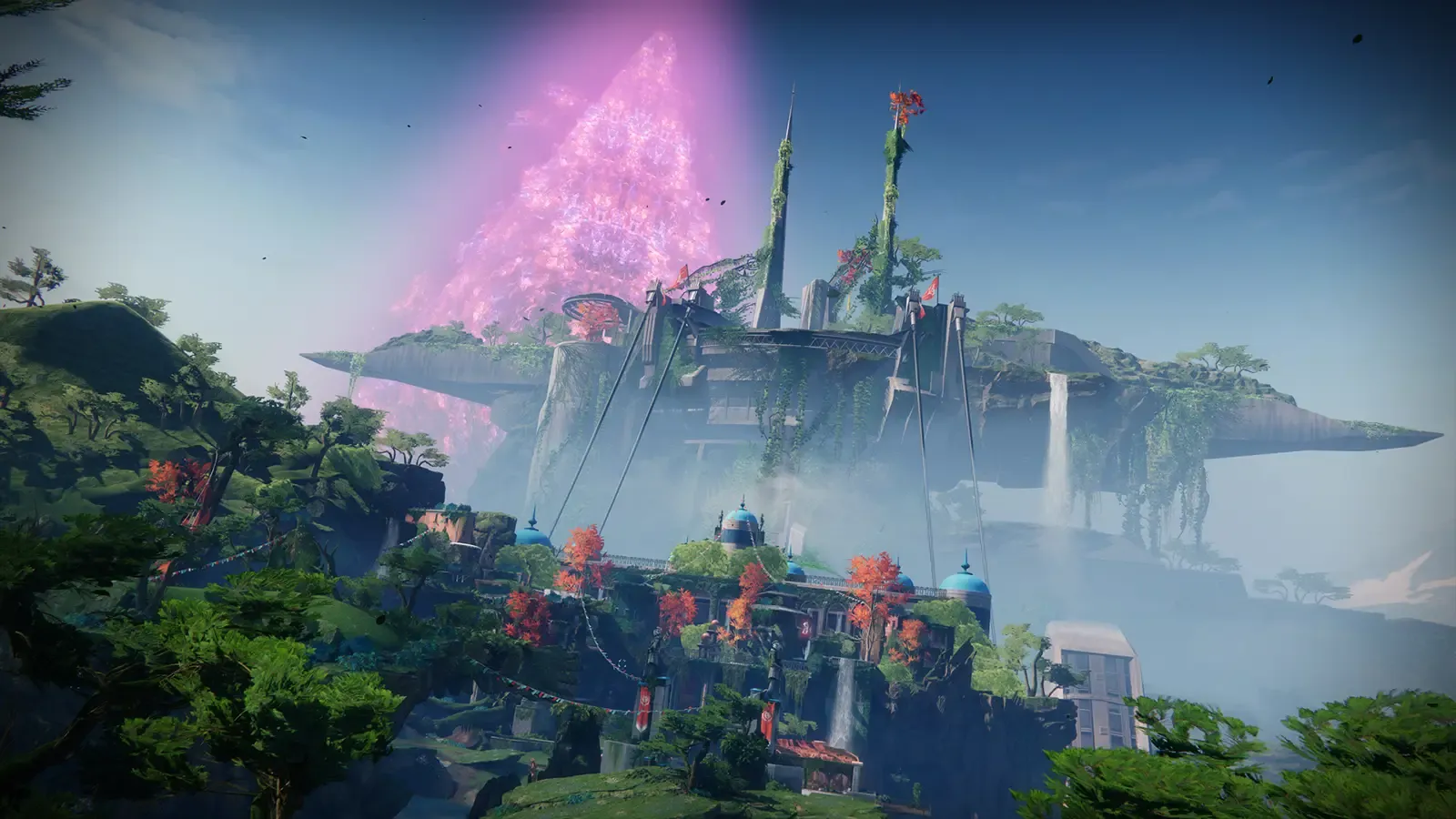
[My] favorite was the work we collaboratively did as the Worlds team on Final Shape. All the overthrow encounters, adding the six post-campaign adventures and all the secret puzzles in The Pale Heart were like a little mini-game design jam within the wider game.
Basically the idea for the main activity of the destination for that expansion was the bunch of little mini-objectives that increased in difficulty up to the big final encounter for the area.
"All the overthrow encounters, adding the six post-campaign adventures and all the secret puzzles in The Pale Heart were like a little mini-game design jam within the wider game."
Since The Pale Heart was already effectively a mashup of the past up to that point, the Worlds team designers all kinda jammed various mechanics and assets from other parts of the game into those little bite-sized activities and would playtest them with each other and the QA team regularly to find what was working, what wasn't, which ones might be able to be combined to become more interesting, etc.
I believe each of the post-game puzzles that unlocked the full subclass options were the baby of a different activity designer as well, some leaning more into combat, others more into puzzles.
[It] was just a good time filling the destination with variety and finding ways to make everyone's different approaches feel part of a harmonious whole.
Ash Poprik (senior narrative designer, 2025-2026):
My favorite thing I contributed to the game was actually pretty recent and it was this lore tab. I had been writing dialogue there and had a bunch of experience before Destiny writing dialogue, but had not written really any prose before then. I felt incredibly out of my element, to be honest. I dreaded the moment I was assigned to lore, as it really wasn't a muscle that I had worked out and just wanted to do what I was comfortable with.
"I am very sad at how Destiny 2 was cut short, but I am so incredibly grateful and proud that my time there was useful and valuable, both to players and to myself."
Something that I really appreciated about working here was that our narrative director, Alison, would be very meticulous about what we were assigned, either because she wanted us to shine with our talents or to challenge us to be better and push ourselves. That's a very rare thing to happen in games when everyone is just focusing on shipping something as fast as possible. This lore tab got really great reception, but more importantly it was the first time that I felt like I mastered writing prose. I am very sad at how Destiny 2 was cut short, but I am so incredibly grateful and proud that my time there was useful and valuable, both to players and to myself.
This team was really special. I feel like everyone I worked with was not only talented, but unbelievably compassionate. I really hope I cross paths with those devs more during my career because they were a breath of fresh air.
Recommended
 Gita Jackson