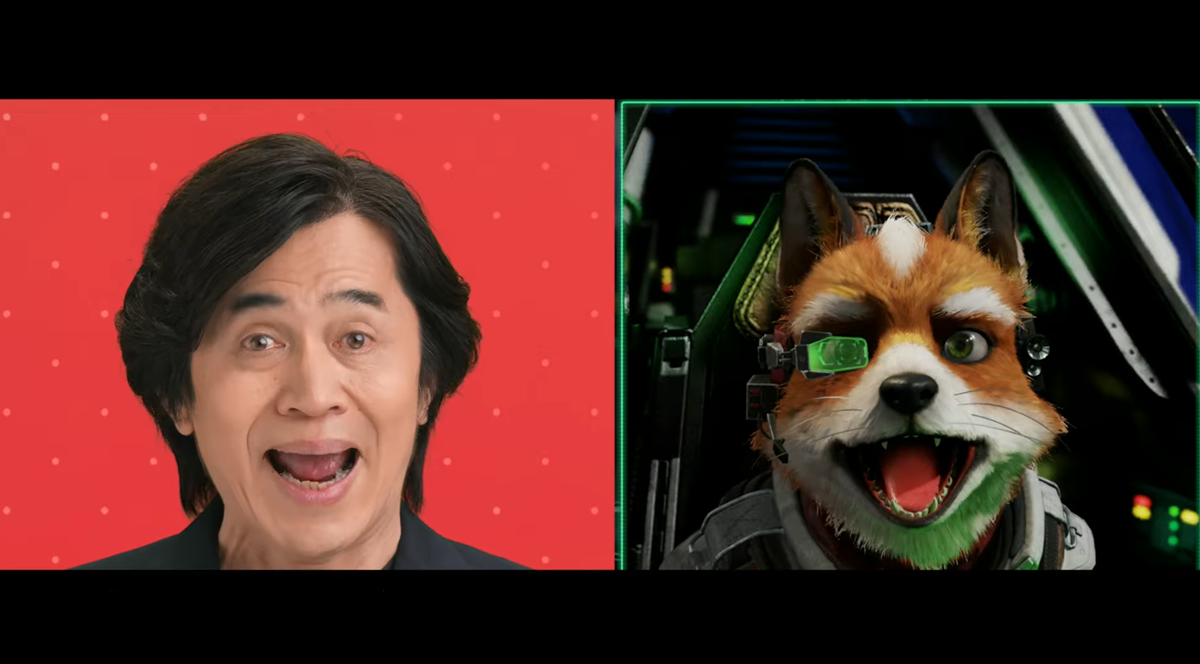
We’re finally getting a new Star Fox. Kinda! Say what you will about the graphical style and character designs, but it definitely looks new. However, depending on how you count these things, Star Fox (2026) is either the fifth iteration of the original Star Fox or the third iteration of Star Fox 64. It’s a particularly egregious example of a tried-and-true Nintendo tactic: dust off a game aging millennials are nostalgic for and charge full price. But Nintendo is far from the only offender in this regard. On the latest Aftermath Hours, we talk about the well—or perhaps last ditch—companies can’t stop going back to.
This time around, I’m outnumbered by Australians when Alanah Pearce—games writer, voice actor, YouTuber, and filmmaker extraordinaire—joins the show (and also Luke is there). We discuss Alanah’s new production company, Charred Pictures, and its goal of involving indie developers in the process of adapting games into movies and TV shows. We also talk about the overall state of video game adaptations and the glut of tales that have already been told. Then we dig into the controversial (at least, in Hollywood) element of Alanah’s operation: She’s working with YouTubers to secure funding, which she believes makes perfect sense when they’re fans of the games being adapted. What, in this day and age of content creators being everywhere, still causes film execs to balk at the idea?
After that, we move on to an arguably even more consequential discussion: Star Fox looks fucked up now. But maybe that’s not such a bad thing? Lastly, we throw up our hands at Xbox’s inconsistent (to say the least) approach to AI and then come to the only remaining logical conclusion: Aftermath should be put in charge of Xbox.
You can find this week's episode below and on Spotify, Apple, or wherever else you prefer to listen to podcasts. If you like what you hear, make sure to leave a review so that some algorithm or another will eventually surface the show to the wealthy benefactor who’ll spot us millions or billions to buy Xbox from Microsoft.
Or, for a limited time, you can support us by subscribing to Aftermath AND three other great independent sites—Rascal, Rogue, and Never Post—at a 50% discount. Check it out!
Here’s an excerpt from our conversation (edited for length and clarity):
Alanah: What I think Nintendo actually deserves more criticism for, constantly, is that they are once again releasing a game—again—that they will sell at full price and never have on sale. I just think that Nintendo knows that millennials are all just so in their nostalgia, and we will spend money on this stuff. The amount of times I’ve bought Legend of Zelda: Wind Waker… and I’ll do it again! If they want to re-release it on Switch 2 again, I’ll buy it again. That’s the worst part. And they just keep doing it. I’m part of the problem.
We keep letting them get away with it, and it sucks. I feel like it’s just so wildly anti-consumer. None of this stuff ever goes on sale. You rarely get a discount because you bought it before—like the PS4-to-PS5 tiny upgrade thing that they do. Nintendo’s just like “You’ll buy it again, you son of a bitch.” And we will, and it sucks.
Nathan: I saw somebody yesterday say that the real story here is Nintendo’s 30-year quest to not make a new Star Fox at all costs, and it really does feel that way.
Alanah: When was the last Star Fox?
Nathan: 2016, and even then, it wasn’t Star Fox 3 or whatever.
It is worth pointing out that the first time people heard of the new Star Fox game was via a leak, and that same leak also said that Legend of Zelda: Ocarina of Time is getting a remake.
Alanah: Like, in the Breath of the Wild engine? Can you imagine?
Nathan: That I’m not sure about. It’d be interesting! But that engine is so tailor-made for a massive world, and Ocarina is comparatively a much smaller game—at least in terms of geography and real estate. I’m curious about it, but at the same time, there have already been many re-releases of Ocarina.
Luke: Wow, it’s almost as if Ocarina was made at a certain time for a certain platform, and that that’s where it should’ve stayed—and we don’t need it to be remade. Wow.
Alanah: I… disagree. However, there’s this thing I always think about with Ocarina of Time; [Double Fine head] Tim Schafer said this to me, and I always think about how interesting it is. He wanted to see what games look like for the next generation of game directors who haven’t all played Ocarina of Time. You’d be hard pressed right now to find a game director who has not played Ocarina of Time. The game is so, so, so influential. I wonder, what is the Fortnite generation of game directors? What are they making?
Nathan: They’re making stuff in Roblox. I think those directors already exist. They’re making a wildly different kind of game; it’s just a game where you hang out in Discord. I’m sure some of them have played Ocarina, but there is a generation gap there. I think that a lot of younger people haven’t played Ocarina of Time and probably won’t unless this remake really drives them to do that. But even then, I do not think this remake—hypothetical remake—will be for younger people. It’s for aging millennials.
Luke: I work part time at a video game school, and as a direct sort of example, I was talking to a guy last year. It was me, another guy in his late 30s, and then there was this guy who was in his early 20s; he was a recently graduated student. I was like “What is the oldest game you’ve played?” And he sat there and he thought “Hmmm, World of Warcraft. That game’s pretty old.” And I said “My man, that came out in 2004,” and he said, “I was born in 2002.”
Nathan: Yep, 2004 is 22 years ago.
Alanah: He’s never played Pong?
Luke: That’s what I said: “You’ve never played the original Mario?” He went “Nope.” To him, World of Warcraft was what Pong is to someone my age. And that made me sit down and exhale really deeply.
Alanah: That is awful. I wish you hadn’t said that. But I would say, find me a first-person shooter director who hasn’t played Half-Life 2. I don’t think that person exists.
Nathan: But I feel like that kind of shooter has become increasingly less prominent to the point where almost no big companies are making those now. Most shooters are multiplayer or co-op driven; we’re seeing games imitate Helldivers now. I think there is a growing distance from the things we consider classics by virtue of age and the sheer number of games coming out now. There are so many different entry points, whereas back then there was more of a monoculture, so we all had the same on-ramp. But that’s no longer the case.
Alanah: To full circle this, what has Star Fox influenced? Where does its influence go? Who knows. But I do feel like this, like you said, is specifically for our generation of olds who are nostalgia mining. I mean, it all comes back to Ronald Reagan at the end of the day, when you really think about it.
Nathan: His input on the original Star Fox was crucial. He was like “What if, instead of making them people flying the space ships, there was a fox and a toad? And I want the toad to look really wet. Can we make him look super wet?”
Alanah: Yeah, a really wet toad. But no, I mean, [Reagan] legalized advertising to children, right? That was a new thing that came with Reagan, so that’s how we got the Teenage Mutant Ninja Turtles show, and that’s how Pokemon came about. It’s this whole generation of advertising to children. We were kind of the first wave of that, so we’re still just children being advertised to, and it’s very difficult to switch that off in our brains. So I think making money off millennials’ nostalgia—considering they were advertised to from a very young age for all of these franchises—[is especially appealing to companies]. It’s very hard for us not to be like “Oh, I do want to relive my childhood.” Thanks, Reagan. You got me again.
Luke: I think there’s a strategic misstep there in that it’s following the playbook already put down by Gen X nostalgia, which was heavily weaponized. Gen X nostalgia was a billion-dollar industry. All those Transformers movies. Those so many remakes and pivots to ‘80s popular culture that printed money for so long.
Millennial pandering is not gonna be anywhere near as successful because we don’t have any money. We don’t have the money that those Gen X people had in their 30s and 40s. We don’t have those jobs. We don’t have that economy. We can’t go out and spend hundreds of dollars on remakes and reboots and tributes to the things we grew up with, because we don’t have that money. Me and Nathan work full time for a video game website, and we don’t own Switch 2s. That’s where we’re at at the moment in terms of how much disposable income the average millennial has to buy this nostalgia stuff. I think it’s a really bad idea to rely on that like you did the Gen X stuff. The amount of money on hand is just not there like it was 10 or 15 years ago.
Recommended
 Nathan Grayson