

When Dark Souls II came out in 2014, I previewed and reviewed it for Kotaku. After I played the Looking Glass Knight demo at E3, I gushed to a friend that they had not fucked it up. This had been a going concern at the time, with many fans and press expressing valid concerns with the direction envisioned in the first trailer and comments from the first director about making the game more accessible to players. I played the game in the partial vacuum of review, and minus the windmill puzzle in Earthen Peak I loved it then, as did many reviewers at the time.
But the fan outcry stemming from the final game looking much simpler primed the fanbase to think of it as a lesser game. In the intervening 12 years, the most YouTube-ass contingent of near sighted pedants have come to paint this game as a flawed tragedy, a diminished step backwards when compared to its predecessor. And while I will fully admit that Dark Souls II does things that are counterintuitive, bizarre, and abrasive, it is also the game in the trilogy I am most likely to replay and the one nearest to my heart. Haters be damned, I love Dark Souls II.
This is all front of mind for me as I started several FromSoft games for my most recent piece on the best farming locations in the company’s modern offerings. Inexorably, I was drawn to replay Dark Souls II. Of the series, it is the game that gives me the most comfort, the one I find the most beautiful and that works in the most bizarrely specific way. It is painterly and open-ended, less forgiving in some ways and more easily broken in others. Dark Souls II was also laying the groundwork for some of the company’s most significant work, and the choices that it made are proof that sometimes you just need to trust people to swing for the fences and see what works.
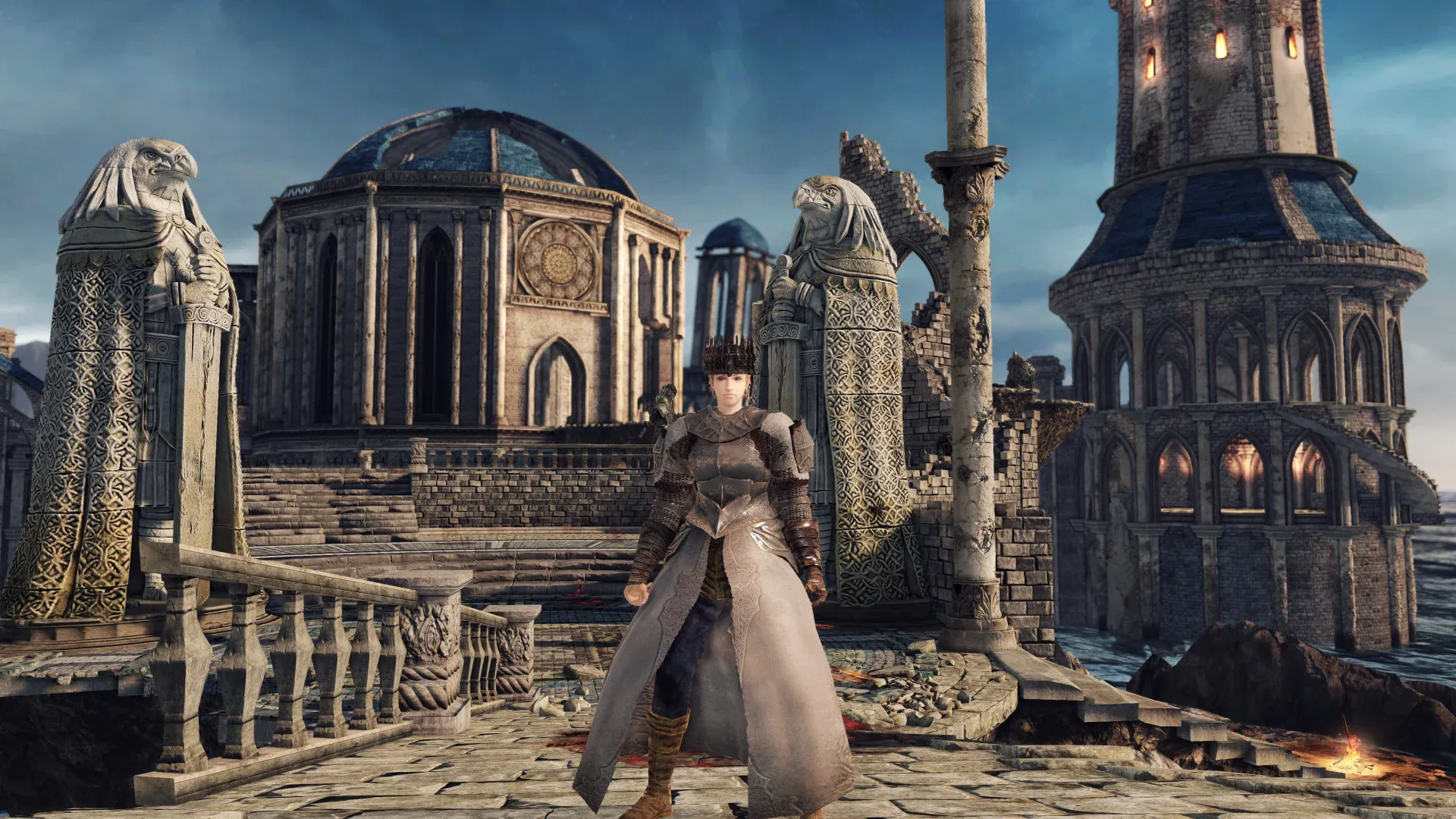
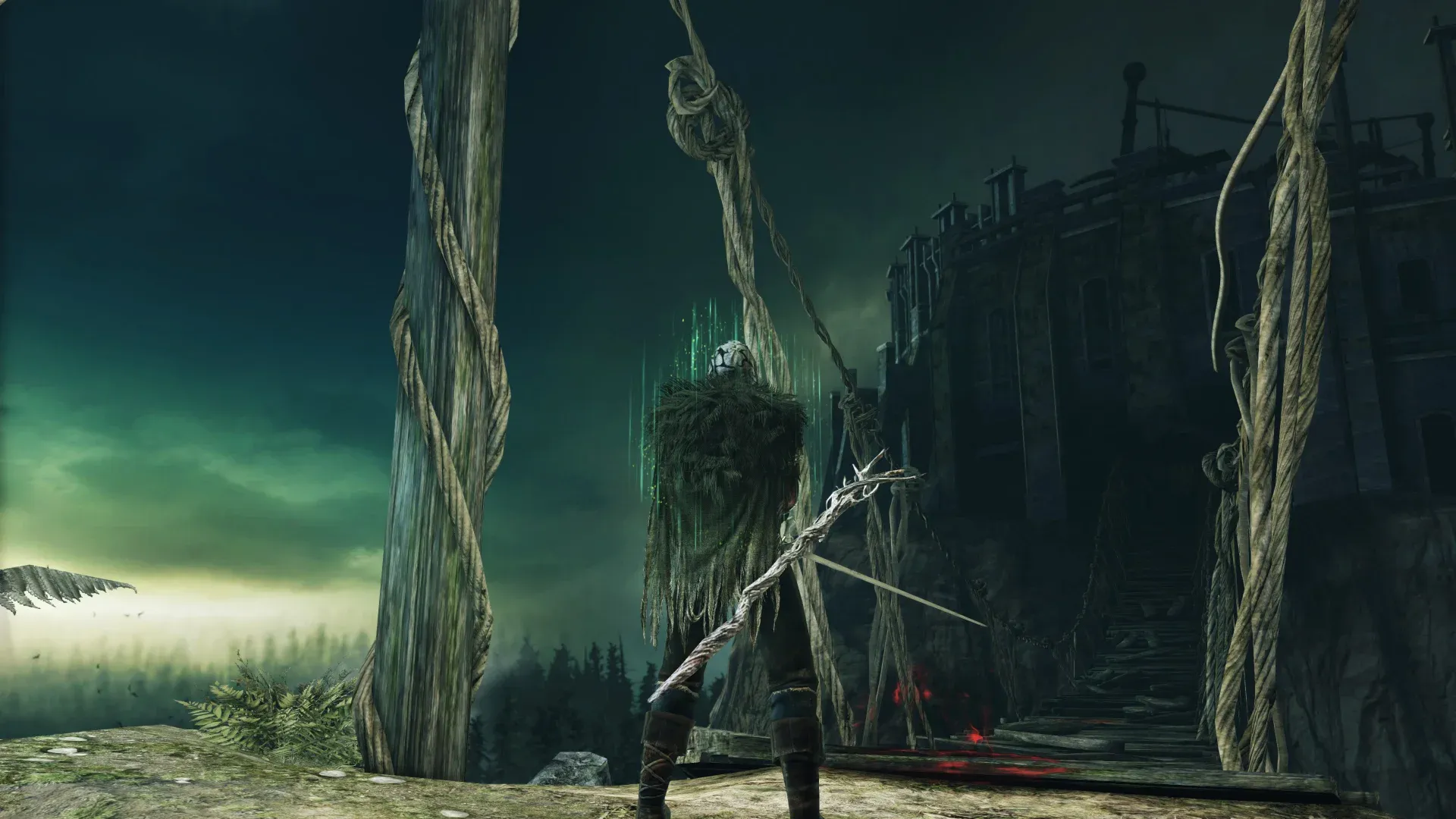
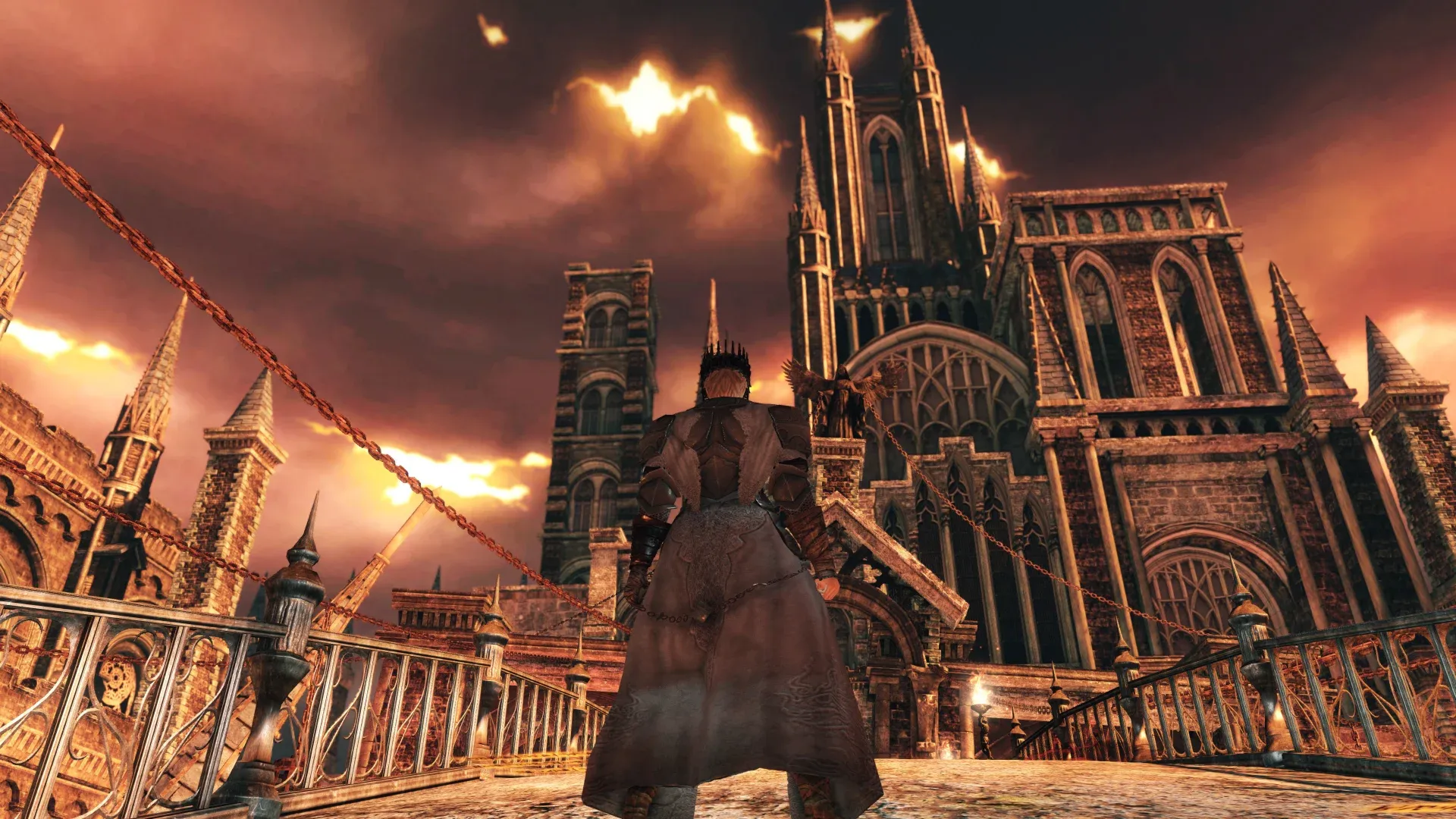
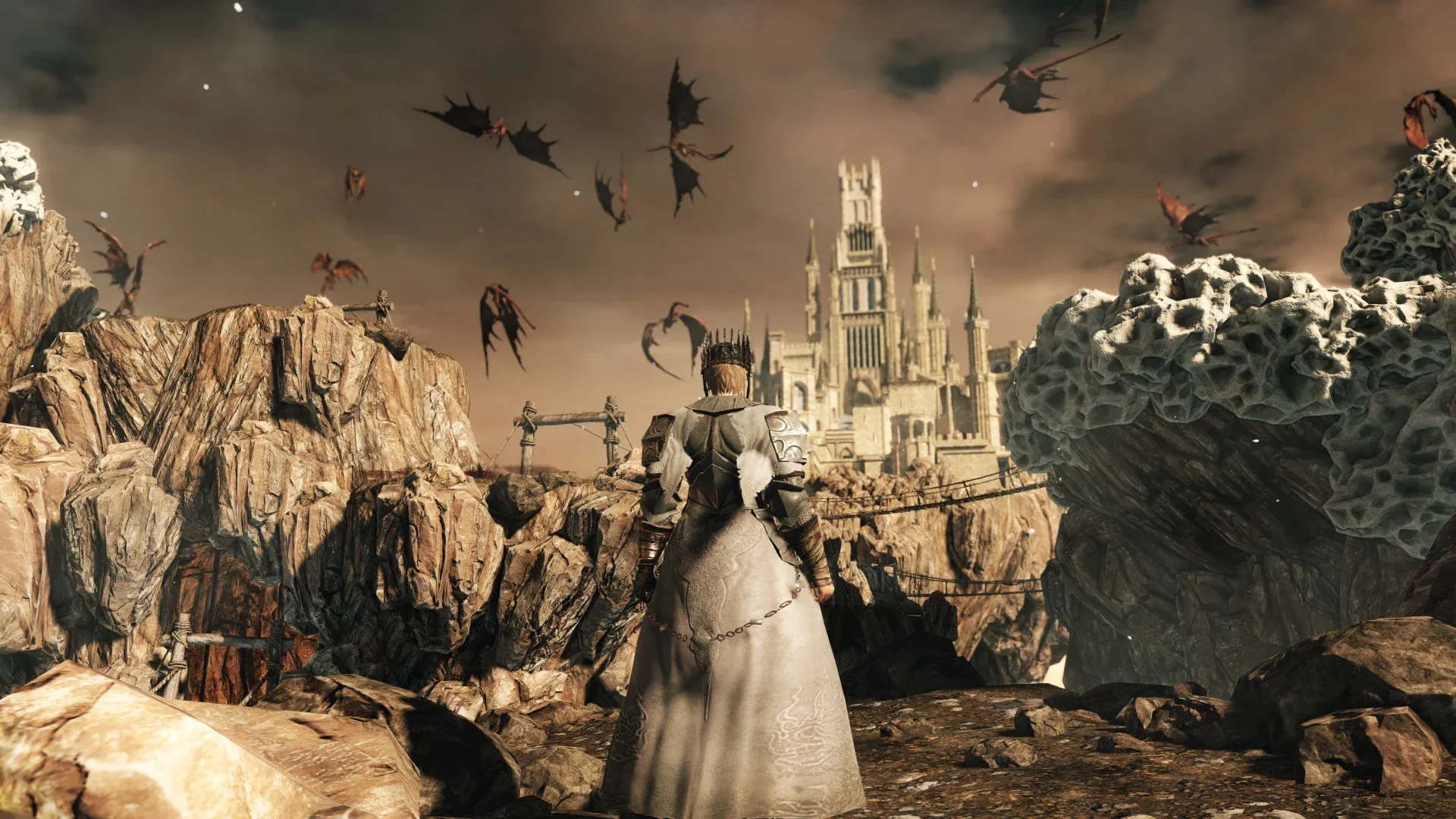
Some of the sickest locations in any game.
Impossibly beautiful vistas
When you first emerge from the starting zone of Things Betwixt, you enter into the hub world of Majula. It is a ramshackle seaside town perpetually at dusk, with cooing music playing in the background. While Souls and Souls-adjacent games would have hub worlds before and after (The Nexus, Firelink Shrine, Hunter’s Dream, The Roundtable Hold) there is simply no better hub world than Majula, and no better fire maiden than the Emerald Herald. She is constantly looking off into the distance, full of heartbreak and grief. As the town slowly populates with cursed people like yourself, it begins to feel lived in but no less hollow. I will think of the empty stone huts and perpetual twilight of Majula in my dying days.
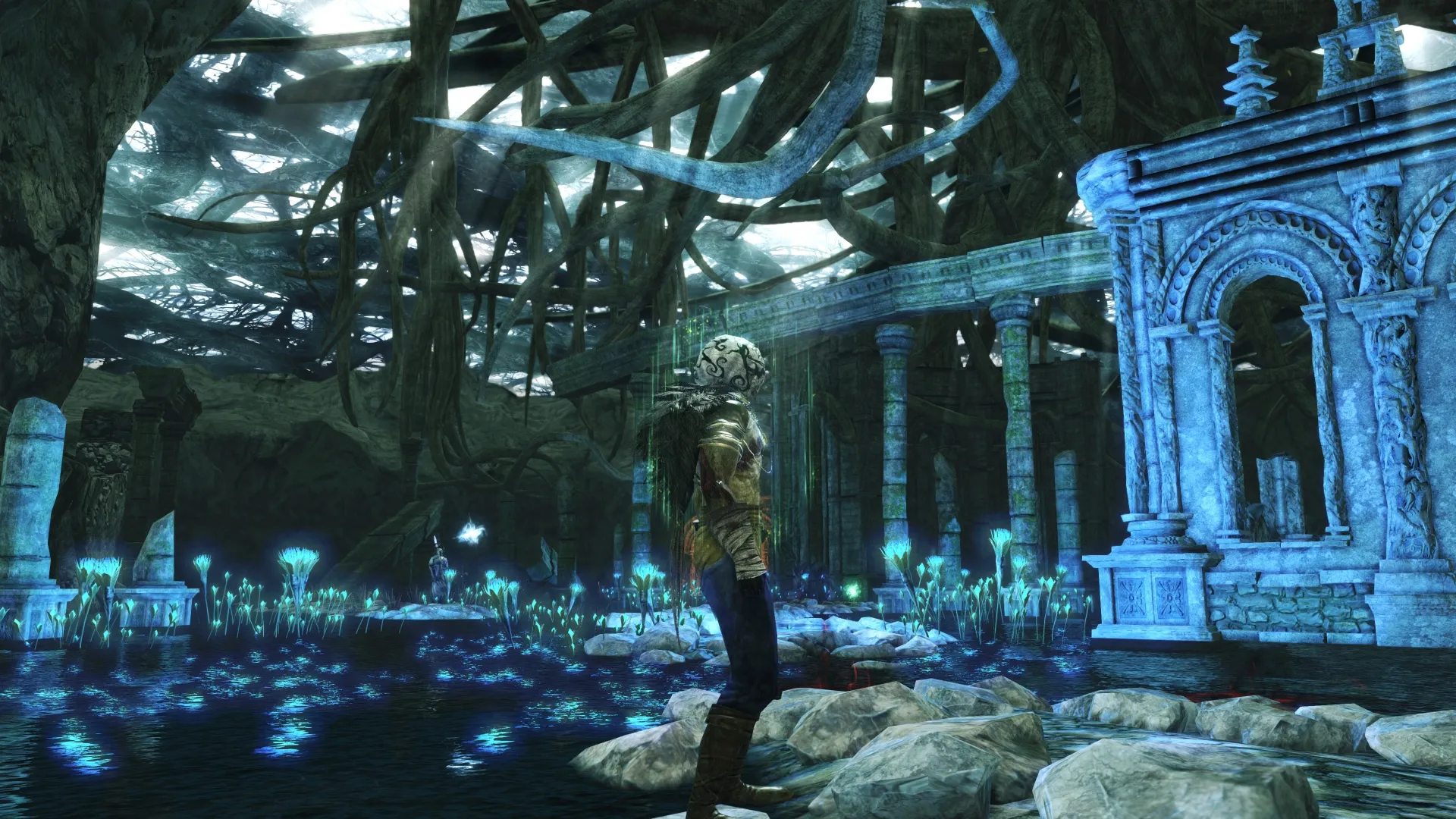
Even the haters will concede that Majula is iconic, but Dark Souls II contains many locations that are among the series’ best. The starting area, Things Betwixt, is a subterranean cave area illuminated with a stunning crack of sunlight to the outside world. Heide’s Tower of Flame is right next door from Majula, flooded stone architecture erupting from almost mercurial waves. Huntsman’s Copse is a nasty cliff face with a gargantuan ramshackle bridge leading to the Undead Purgatory, a colosseum-like structure. In the background you see a distant forest with tiny visible birds, and the sun occluded by the clouds into an unearthly yellow green light. The Iron Keep is a castle submerged in lava, and both that and the attached Belfry Sol are among the best locations to PvP in I’ve ever experienced. Dragon Aerie and the attached Dragon Shrine are a shocking surprise reveal, a roost of busy and impossible dragons in the sky that would rhyme with later locations in From’s catalogue like Archdragon Peak and Crumbling Farum Azula. This is to say nothing of Dark Souls II’s DLC, where the palaces of Shulva, the Old Iron King's realm and Frozen Eleum Loyce look like high fantasy art rendered accurately.
History has vindicated Yui Tanimura
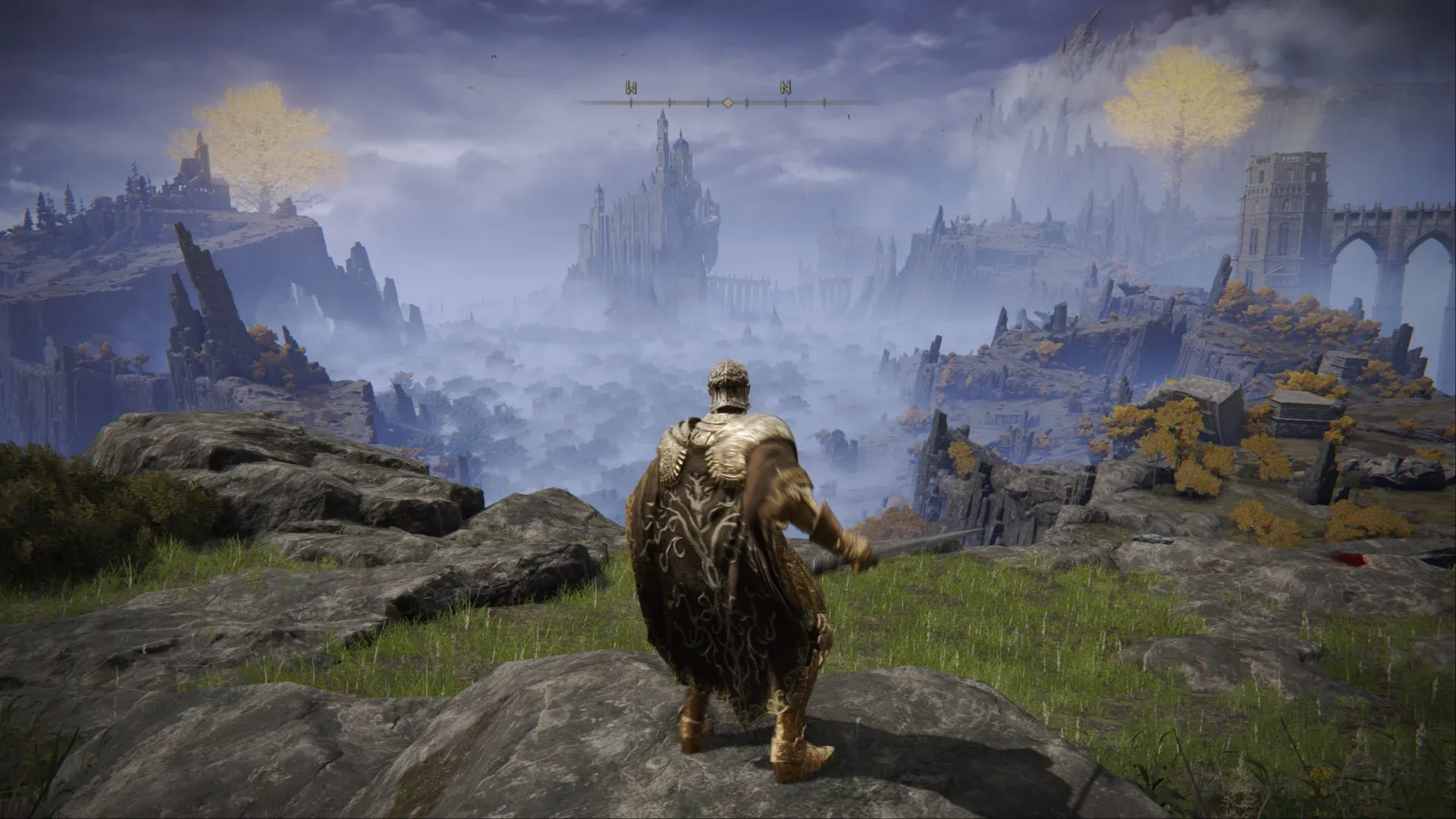
Dark Souls II is noteworthy for being supervised but not directed by Miyazaki while he went to work on Bloodborne, something that was used as a point of derision among fans. But while the development itself had a lot of ups and downs, including an initial trailer that was not indicative of the final product and an initial worry that the game was being made too easy, trust that was put on that team bore fruit. It is particularly noteworthy that director Yui Tanimura, who took over Dark Souls II development from director Tomohiro Shibuya, would go on to helm not only the best DLC of Dark Souls II and the best DLC of Dark Souls III (The Ringed City) but also co-direct Elden Ring itself. Both Tanimura and Shibuya were not new; both had worked on several FromSoftware projects like the Another Century’s Episode series. But Dark Souls II was a pivotal release in the company’s history. A game company is not one person, it is the collective talents of a group, and thankfully nobody seems more aware of that than Hidetaka Miyazaki, the person who helped shepherd the company into being a powerhouse.
“Without [Dark Souls II], we wouldn’t have had a lot of the connections and a lot of the ideas that went forward and carried the rest of the series,” Miyazaki told IGN in an interview last year, where he also stressed the importance of trusting new directors with projects going forward. “We were able to have that different impetus and have those different ideas and make those different connections that we otherwise might not have had….there’s really no way of telling how or if the series would have continued the way it did without Dark Souls 2.”
Shoutout to Otogi 2.
Much of what works about Elden Ring, from the breathtaking vistas to the breakable nature of the world, feels directly indebted to this game. While Dark Souls and Dark Souls III are dank and dark, Dark Souls II and Elden Ring are much more varied. Dark Souls II is far more open-ended and able to be done out of order than the first game, something that Elden Ring enabled to an absurd degree through both sheer open-ended scale and shortcuts. Elden Ring is a synthesis of the games that preceded it, to the point where the joystick dead zone in the game is a happy medium between Dark Souls/Sekiro and Dark Souls II/Otogi 2. Though games must be judged on their own merits, the work of a company, and From’s work specifically, should ideally be seen as a continuity. And seen from that perspective, Dark Souls II is the point at which much of the boldest work was done at a point in time when the company’s future was not a sure bet.
People who complain about the Dark Souls II map need to calm down just a little bit
A beloved element of Dark Souls is that the map all fits together perfectly. If you see something in the distance, it is very likely there in some capacity. The Dark Souls map is a marvel, a maze of circuitous and beautiful shortcuts. Most of these work, and a few of them (like Blighttown, as Hbomberguy pointed out in his Dark Souls II video years ago) do not. Fast travel does not exist for the majority of your Dark Souls playthrough, and so you are hoofing it for the most part.
Dark Souls II does not do this. If looked at in a strictly top-down, literal way, the world fits together in bizarre and nonsensical ways with many areas overlapping. I will admit that this complaint is not entirely meritless. Dark Souls II seemed to change quite a bit throughout the development process and earlier cut versions of several locations can be found in the code. The Gutter, which in the final game is a series of ramshackle huts floating in a cave, originally was a gargantuan space with an entire town underneath it. How Grave of the Saints was conceptualized and placed originally changed dramatically, and YouTuber Illusory Wall has a fantastic breakdown of those prototypes. There are also places like Forest of the Fallen Giants that feature interactive memories, and incredible care was taken into where those memories fit spatially into the world.
But people have taken this quirk of the game as some unforgivable betrayal, and I’m sorry but that’s the most pedantic, CinemaSins ass complaint I have ever heard in my life. For starters, video games are creative artifice and often employ tricks and illusions to achieve that impact. Complaining that a game makes use of fantastical and nonsensical space is sorta like complaining that a magician did not actually saw a woman in half. And while it would be nice to achieve that same degree of interconnectedness that is in Dark Souls, you sometimes just have to ship the game you have. The surreal nature of the space in Dark Souls II is sometimes additive and thematically resonant.
As many have pointed out before, a key theme of Dark Souls II is the loss of memory, something that the game directly tells you in the opening cinematic. Before the events of the game, the main character, the Bearer of the Curse, had a family that we see melting away like wax. Other NPCs slowly lose all sense of self. As an example, the merchant Maughlin the Armourer starts off by telling you that he came to this land because his home was bustling but competitive, and he traveled here in the hope that he would strike it rich. As the game progresses, the details of why he was there fade away. “I’m rich, I’m rich!” he cheers once he’s made a sufficient amount of money. “I don’t need to go home any more…home…home? Where…where is home?” This theme is by design. “As we move to the end of the game the characters all begin to lose their memory, they remember their ultimate goal but they can’t remember why they’re working towards it,” Dark Souls II artist Kota Tonaki said in an interview. “It’s quite sad.”
Dark Souls II is a game about not having firm ground under you, even if you assume you know better. It is a game about questioning your world down to the very geometry. This may not have been the reason for why the creators decided upon their locations, but it does function narratively.
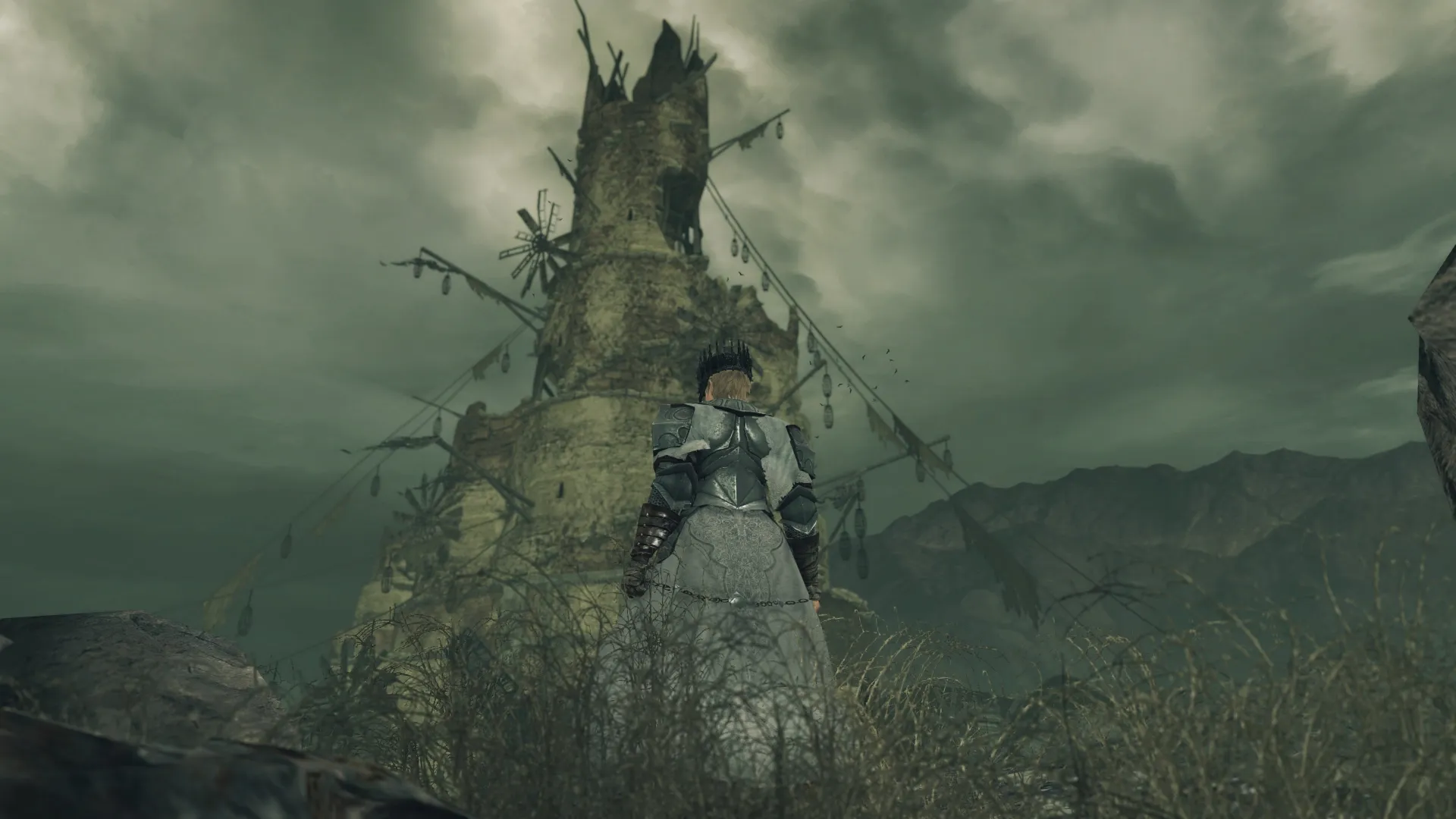
The most infamous example of how the world does not fit together is Earthen Peak. Earthen Peak is a quarry with a disgusting windmill in it. At the very top there is an elevator which goes upward to what appears to be a lava level known as Iron Keep. Many players found this confusing, assuming that Iron Keep was deep in the earth’s crust, but the creators have stated that they indeed did intend to place Iron Keep above the windmill.
 Peter
Peter
“The idea is that the lake of magma is actually on the upper strata, like a caldera lake on a plateau,” director Yui Tanimura stated in an interview. You see a similar idea executed better in the Volcano Manor in Elden Ring, the closest clear successor to Iron Keep. However, even Tanimura will cede the haters a little ground. “However, looking down from the top it was far too wide, that and the fact that there isn’t an adequate transition between locations meant we didn’t really communicate the idea as well as we could have.”
Making something counterintuitive and abrasive is often a path to growth
I remember Demon’s Souls coming out, which many younger fans of the genre never got to experience. I still have my copy. It was a baffling and unique game, one full of tiny eccentric and counter-intuitive choices that was constantly screwing with you. Unless you played a lot of King’s Field, you probably had no idea what to expect. Some of the mechanics were so deeply obtuse that they required access to the game guide. There was no assurance of a million YouTube guides filling in the void, and you were often just relying on GameFAQs and the many contextual, in-game messages.
 Chris Person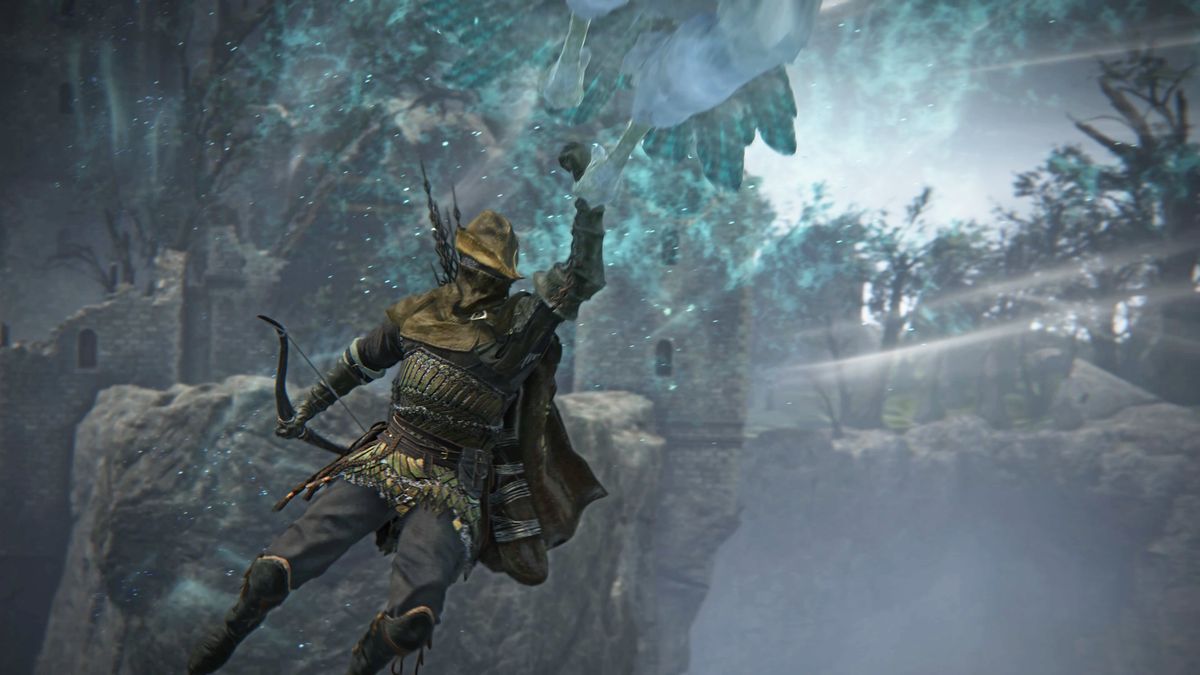
Dark Souls would go on to expand and refine on what Demon’s Souls laid down, and FromSoft could have simply made a conservative but improved version of that game. Instead, they took a lot of swings. Going from Dark Souls to Dark Souls II will completely fuck with you. Though many of the items and stats are similar, how they function on a basic level feels designed specifically to mess with fans of the first game. Whereas Dark Souls lets you load up on armor and tank mega bosses, its successor nerfs that immensely. The entire Havel Set of armor, which in the first game makes you a living mech, will not save you, and you can gain the same amount of damage reduction from the Ring Of Steel Protection +2, which can be obtained by beating the Looking Glass Knight twice. Poise, the stat that dictates if a character is staggered, is significantly reduced, with many bosses in the game being able to vaporize it in one hit. This makes it far easier to be overwhelmed and ganked by many enemies, and while many see this as a bad thing I do not. The inability to tank through encounters forces you to carefully consider each enemy tactically and also contributes to Dark Souls II having some of the best PvP in the series. It also makes light armor much more viable, which is fantastic because that’s where all the cool outfits are.
Fashion Souls forever.
Another addition people whine about is the adaptability stat. Adaptability dictates many tiny elements of the character – it contributes to elemental resistances, poise and poison values, is semi-mandatory and useful across build types, and is the stat that adds the most (in conjunction with Attunement) to Agility. Agility is a secondary stat that dictates not just the speed at which you chug your Estus flask, use items, switch weapons, and raise your shield, but also the duration of frames you are invincible for during a roll (known as I-frames). Making Agility a combination of Adaptability and Attunement (which dictates the number of spells able to be held) actually increases build variability. You also don’t need that much Agility to meet the number of I-frames you had in Dark Souls.
This mechanic is also offset by the fact that leveling in Dark Souls II is not that difficult, but the simple fact that players have their precious fast roll taken away from them made a lot of them steaming mad. It’s the most “shut up and eat your vegetables” move I’ve ever seen in the series, and I have nothing but respect for it. It forces you to consider spacing in the early game much more intentionally, favoring slowly drawing enemies out into one-on-one encounters.
Metalhead, along with some documents from the Dark Souls 2 subreddit, do a way better job at explaining how the game actually works.
An additional departure from the previous game is that weapon infusions are way more powerful. Most enemies have fairly low elemental defense and so much of the game can be demolished by infusing a weapon with lightning. In addition to this, spells like Dark Weapon or Sunlight Blade work better on infused weapons due to the way that damage is calculated. This also means that the base AR (Attack Rating) of the weapon matters a lot more, and rings like Flynn’s Ring or Ring of Blades are actually a lot more useful than you would think.
A complaint I heard early on is that enemies in the game will eventually despawn if killed a sufficient number of times. Though this can be offset by joining the Company of Champions covenant (which also makes the enemies harder, makes you less powerful, and disables co-op all without telling you), I have always respected this move immensely. One of the biggest issues with Souls games is getting stuck at choke points. Elden Ring, to its benefit and subsequent success, solves this by allowing for a more open-ended experience that does not trap the player. The seeds of this are in Dark Souls II to some extent. Not only is the game more open-ended than the previous one, if a player is constantly getting their ass beaten, then reducing the severity of the runback by despawning enemies gives them an inch more wiggle room. It also discourages endless farming by pushing the player forward, while the Covenant of Champions and bonfire aesthetics can be used as a fallback for farming items and souls.
There are so many little quirks that I love about how Dark Souls II works. Jumping in the game just straight up improved from the first game, you now can jump by clicking the left stick while running. They added a mechanic called “powerstancing,” which allows you to pair two similar weapons into a new and unique moveset. Powerstancing is beautiful in PvP, and there are few moves quite as fun as pancaking an invader with two gargantuan Flintstones-style clubs. Eventually, powerstancing would be brought back in (of course) Elden Ring, although in a much more limited and organic way.
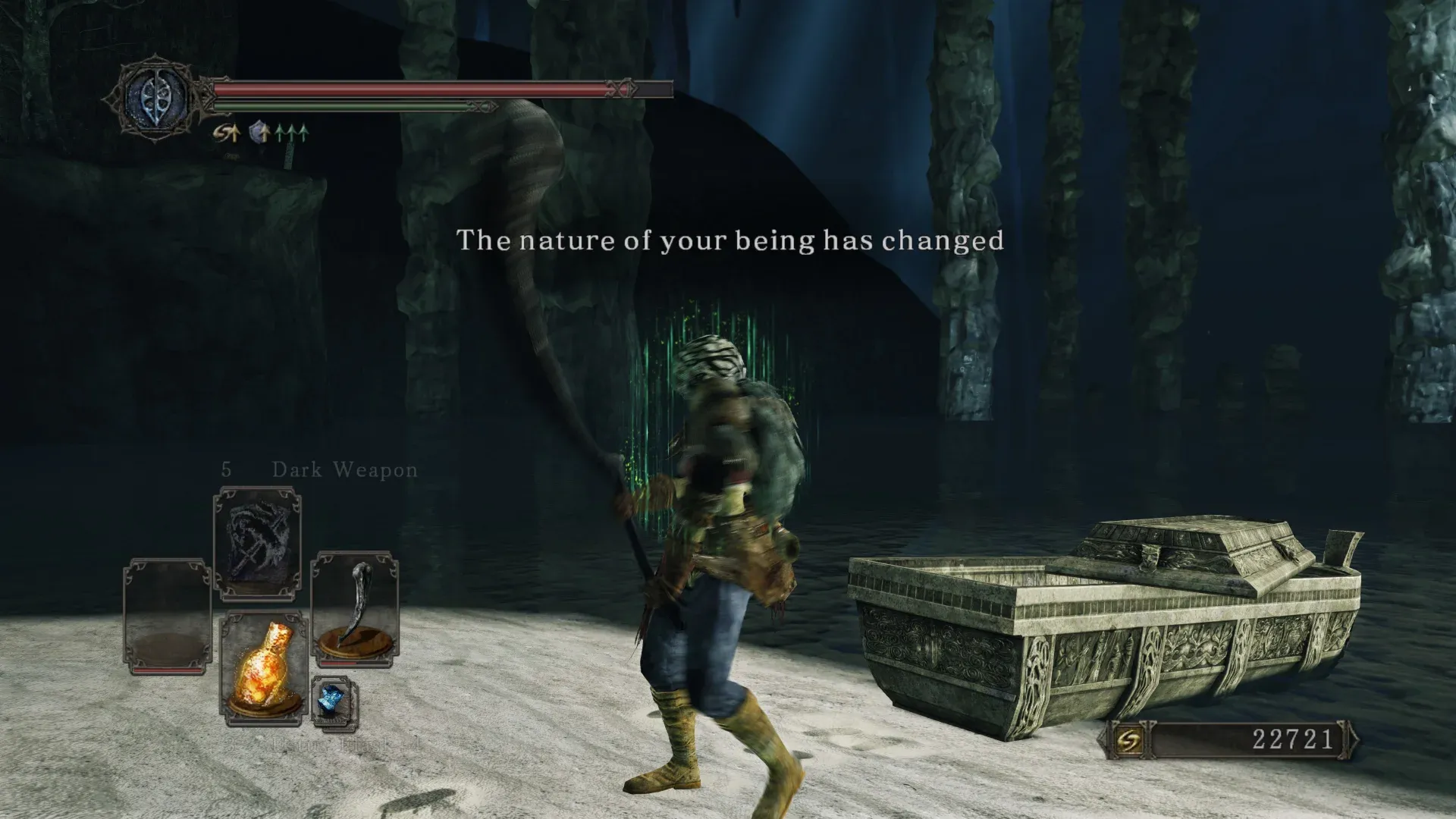
There’s also an invisible statistic called “sin” which has complex PvP implications, the mechanic itself being a holdover from the previous game. Sin carries over between playthroughs, a detail with amusing theological implications. There’s an NPC in a church attic full of spiders named Cromwell the Pardoner who claims to absolve you, the game’s version of Oswald of Carim from Dark Souls. At launch, he actually did not pardon your sins but simply their consequences, but following a glitch in the DLC that caused accidental sin buildup they patched it so that he pardoned your sins exactly once, which is a hilarious hotfix to solve that problem. Similarly, it is speculated that the beloved coffin in Things Betwixt that changes your sex when you enter it may have started its life as a hotfix for a glitch where female characters became male when entering New Game+.
Zullie the Witch is one of my favorite YouTubers period.
Some of these mechanics were never fully baked. The torch mechanic used to be way more important in earlier versions of the game and the entire game had a pitch black contrast meant to be offset by carrying a flame. The torch mechanic still exists in the game but at launch was a bit confusing, although its utility eventually improved in Scholar. But even though some parts of it do not work as envisioned, these mechanics taken as an aggregate lead to a game with a ton of texture that encourages build variability, decreases the reliance on maxing out poise and armor, teaches you proper positioning and spacing, and completely fucks with people who have learned to break Dark Souls. Stats have real tradeoffs, and like in Armored Core there are real, concrete pros and cons to certain builds.
Dark Souls as a series is ultimately about, as my colleague Austin Walker pointed out, “hunting down and beating a bunch of stupid people who think they've cracked the code on Dark Souls but have only just gotten themselves stuck as shitty knockoffs of older, actually important beings.” There is nothing more Dark Souls than being forced out of your comfort zone. Everyone who pursues this goal is eventually owned. Dark Souls II is still the closest I’ve ever felt From has gotten to the baffling, abrasive confusion of the original Demon’s Souls, and that’s why I’ll still play it to this day.
Demon of Song rocks
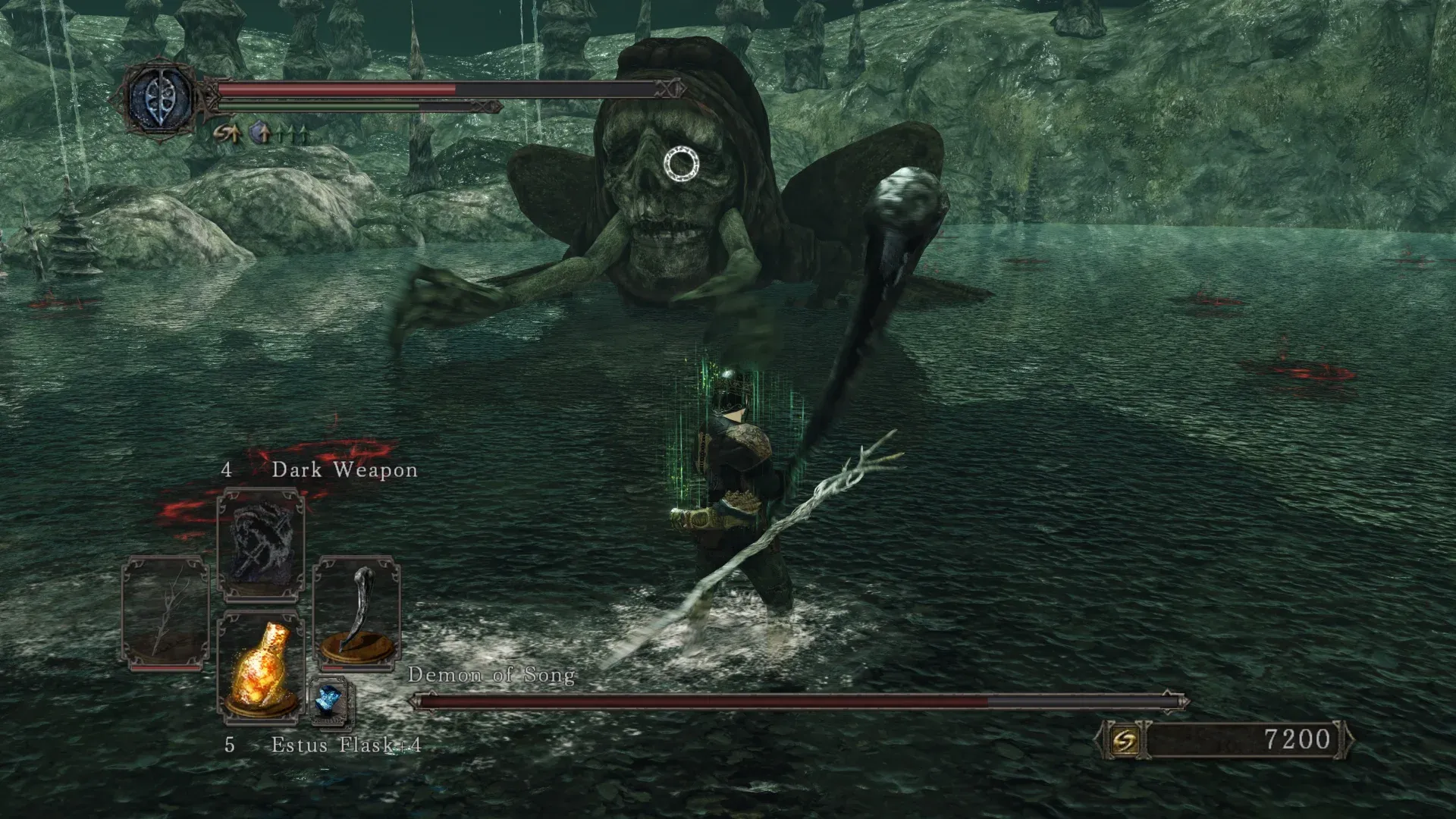
I just need to state for the record that I love the Demon of Song boss. He's a big frog with a giant skull inside his mouth. I don’t care if he’s too easy, I love that guy.
Vendrick is the emotional peak of the series
While the plot of all the games in the trilogy concern endless cycles of flame and darkness, stemming from countless champions rekindling a force known as “The First Flame,” Dark Souls II’s plot feels slightly more intimate and a little bit more explicit. The backstory of Dark Souls II concerns Vendrick and his mysterious wife from a far away land named Nashandra. The so-called king traveled to a far-off land and returned with a mysterious power that he turned towards the creation of mighty golems. Angered by his theft, giants waged war with Vendrick, a war that Vendrick ultimately won. From that victory, a kingdom was born.
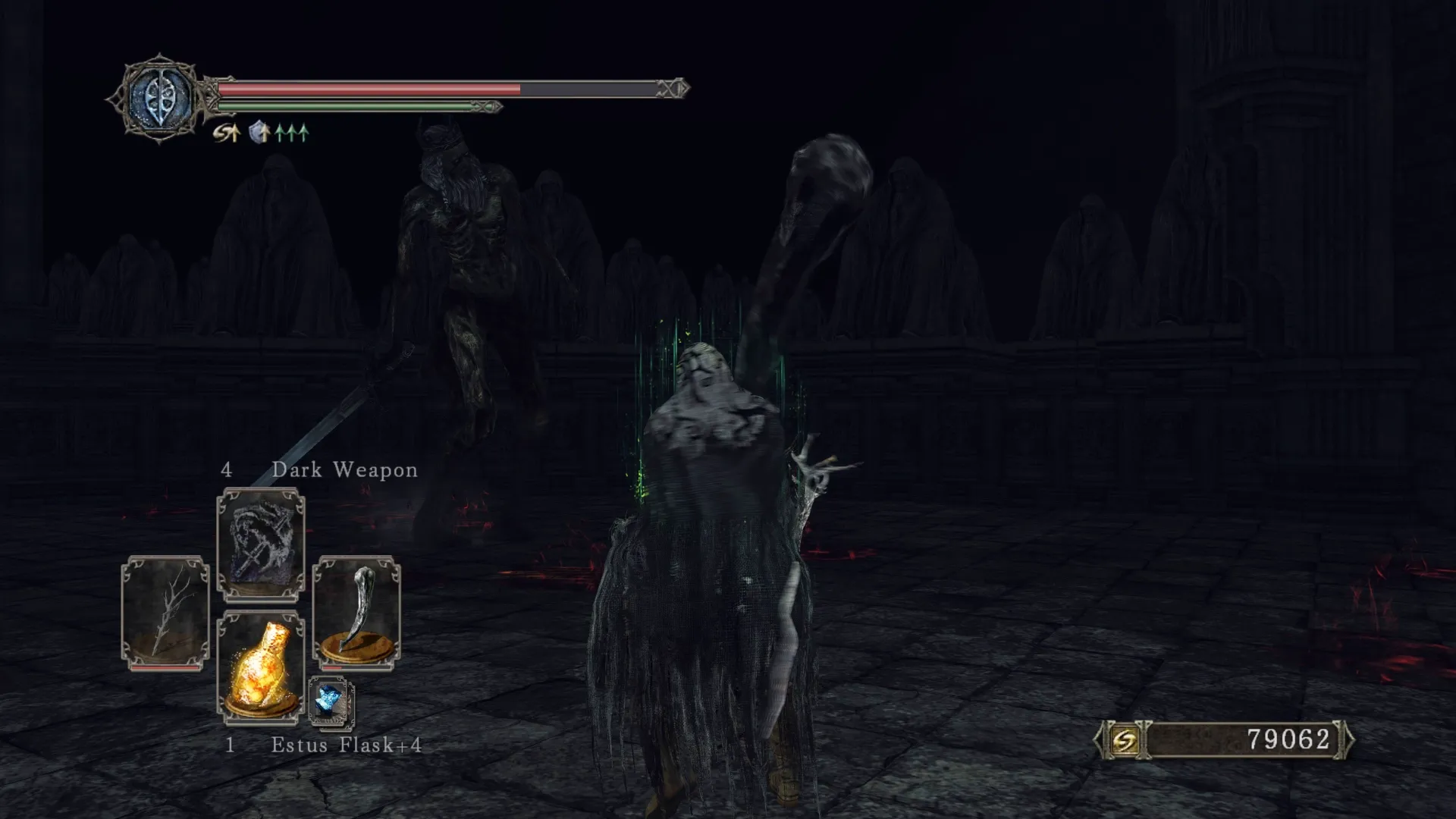
But while the kingly confrontation in the first game was an epic confrontation with Gwynn, Vendrick’s fate is far more tragic. When you reach the castle, the king is not on his throne. Queen Nashandra is present, but her words about him are full of venom. You fight your way deeper into the bowls of the castle, into the Undead Crypt and past the king’s champion Velstadt. When you finally confront him, Vendrick is a husk. Once a proud and towering ruler, he is mostly naked save for a crown, his sword, and some rags covering his shame. His armor is on the ground, and his limp body drags his weapon as he paces in circles. This feels like a refinement of the true fate of King Allant in Demon’s Souls, a monarch disgraced and turned into a pitiable form.
Vendrick's memory may be entered through his armor. His words are those of a broken and sad man.
The reveal of Vendrick’s fate is the most devastating in the entire series. Attempting to fight him initially does not work, as he has an incredibly high defense stat. You can defeat him by gaining the souls of giants by going in their memories, but even if you do the boss fight against him is rote, mechanical, optional and sad. Killing him yields no soul, because he hid his soul away from the scheming queen Nashandra in the one place she could never enter. The true identity of Nashandra is also masterfully executed, a fragment of lore that is elaborated on in the DLC. Vendrick’s fate is the emotional core of the series, a reminder of the true cost of power.
Aldia, Scholar of the First Sin, is the hardest motherfucker who has ever lived
Aldia as a tangible character was added in a later patch along with the Scholar of the First Sin edition. The king's older brother, his current form is misshapen and warped. He appears sporadically, exploding out of bonfires in the late game and scaring the living shit out of you. He speaks in cryptic, evil riddles which actor David Gant delivers the ever-loving shit out of. The effects work they do on his voice is so wild that it would not be fully understandable if not for subtitles.
His presence actively improves the pacing and plot of the game, adding an emotional resonance that was lacking with the game at launch, while perfectly dovetailing with the DLC. No character in any FromSoft game has gone as hard as Aldia. He perfectly sums up the inescapable futility of the choices you have, and his theme is debatably the best single composition in any From game aside from Gwen, Lord of Cinder.
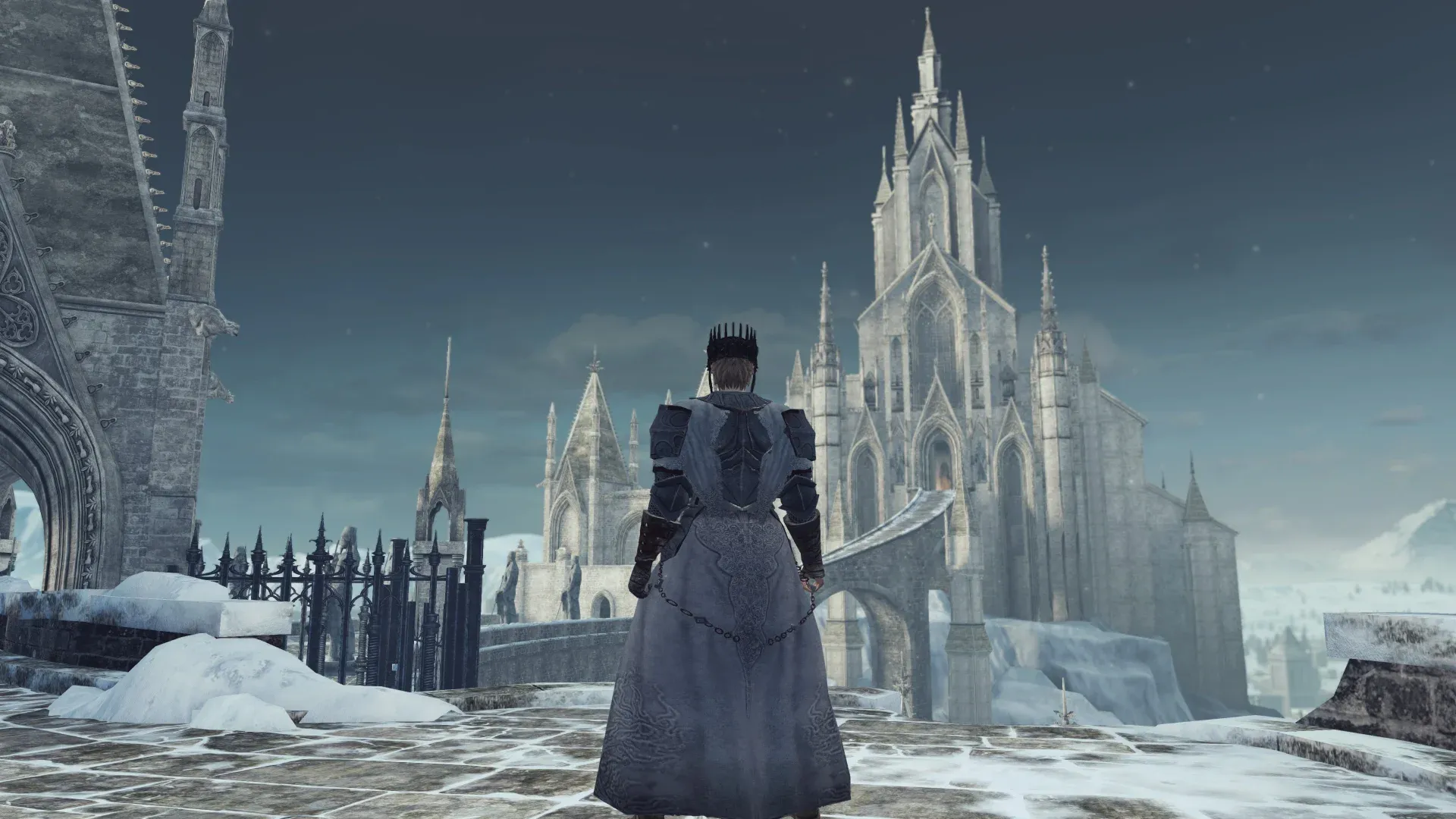
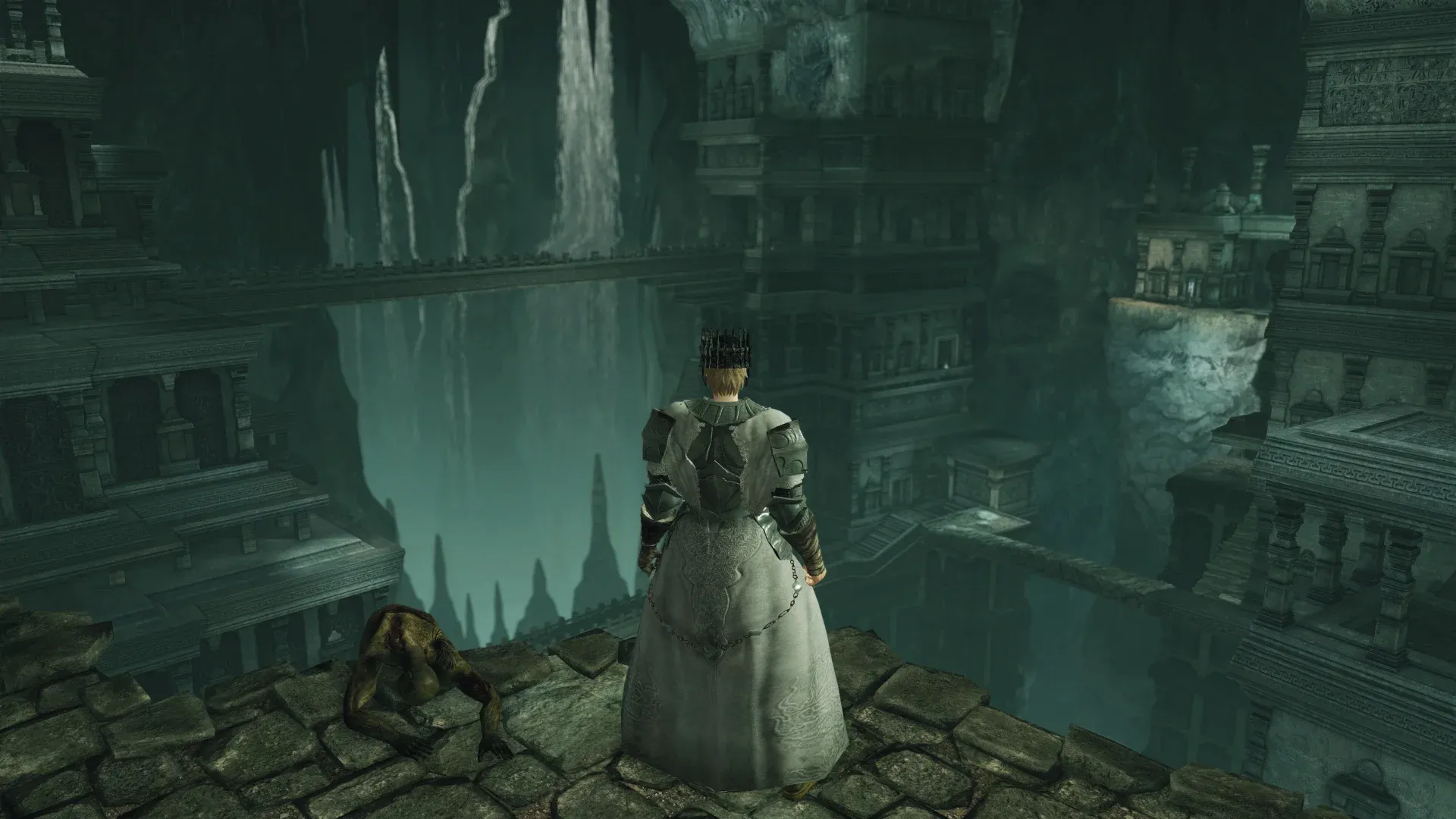
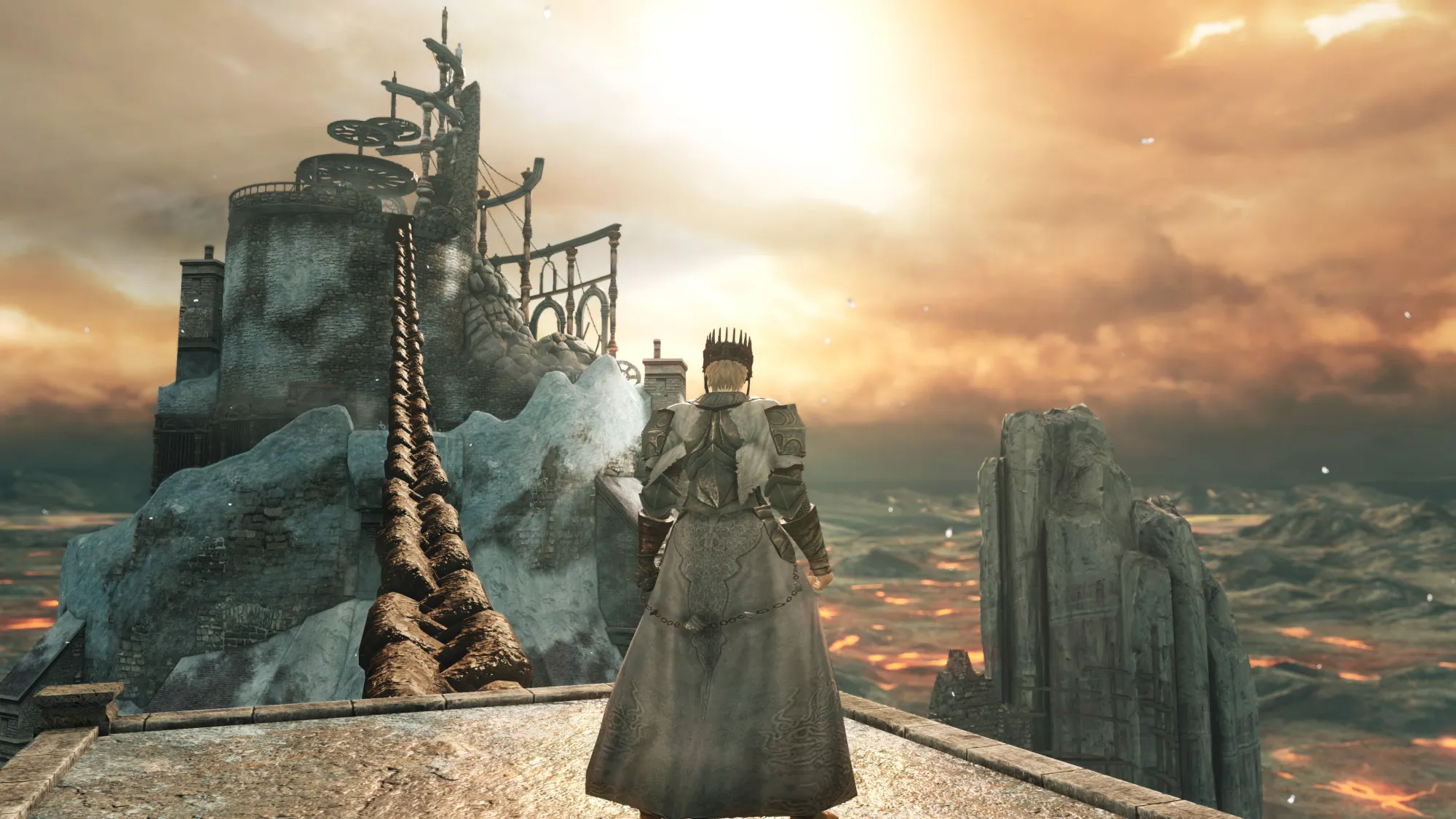
The DLC is so good.
The DLC is some of the sickest shit FromSoftware has ever produced
On the whole, FromSoft has a tremendously good track record for DLC. But the three expansions that were put out for Dark Souls II — Crown Of The Old Ivory King, Crown of the Sunken King and Crown of the Old Iron King – are peak. Each is stylistically gorgeous and expands upon the lore in the game immensely. All three of them contain fairly complex geometry and mechanics that gatekeep you in certain areas. Sunken King has ghost enemies that suck to fight unless you find their corpse statues and complex elevator puzzles. Old Iron King contains Fume Knight and Sir Alonne, two incredible fights, as well as a great mechanic involving idols. Ivory King is probably my favorite and also has entire areas that are initially frozen and inaccessible, only to thaw out later on, forcing the player to mentally note and return to parts of the level they’d missed.
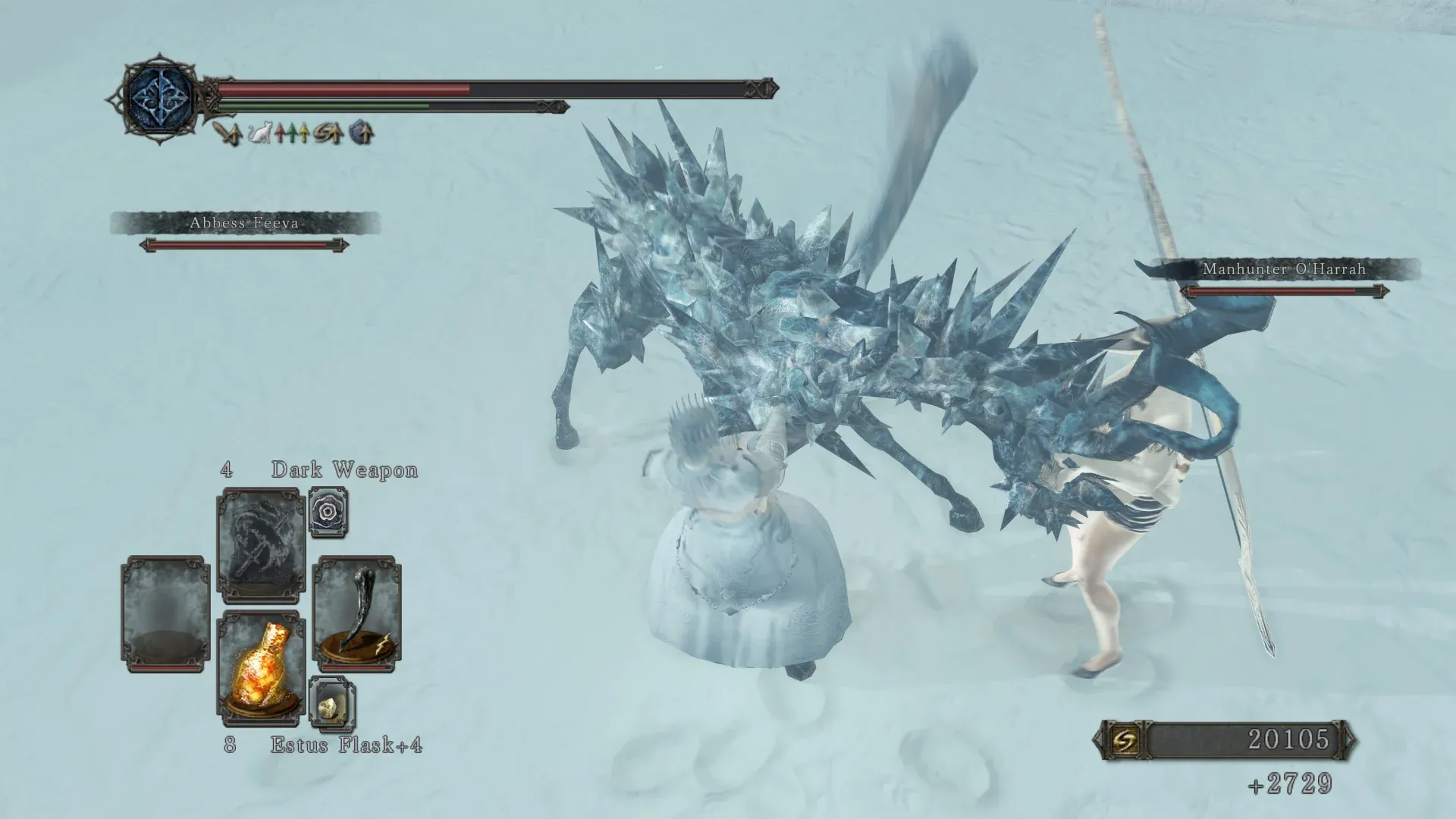
Ivory King also contains, without question, the single meanest section FromSoft has put in any single Souls game, worse than any poison swamp: Frigid Outskirts. This is an optional part of the DLC that is difficult to access unless you find an obscure key hidden in a secret cave that you open by lighting four torches. This unlocks a bonfire next to a coffin. When you enter the coffin, it slides out of the tower and into a snowy tundra. There are three NPCs that you can summon near the beginning of this stage, and you will absolutely want to do that. From there, the game will intermittently snow blind you for huge spans of time. In order to beat the level you have to point your character at a building you see in the distance and run until you approach it. While you are doing this, the game throws gargantuan, evil, miniboss-level reindeer at you that shoot lightning. These things suck so bad and you have to fight them and some bizarrely difficult enemies for the entire duration of your trip across the snowy wastes. There are no bonfires in the entire area, and exactly one area where your NPC phantoms can heal. If you manage to make it to the end you have to fight a boss fight that’s two giant dogs, and while individually they are not that difficult, if you fuck the fight up you have to do the entire thing over again. Frigid Outskirts is the ultimate “well, you asked for it” challenge, I loathe that snowy field so much, but also they have nothing but my undying respect for putting it in the game.
Dark Souls II has the best PvP
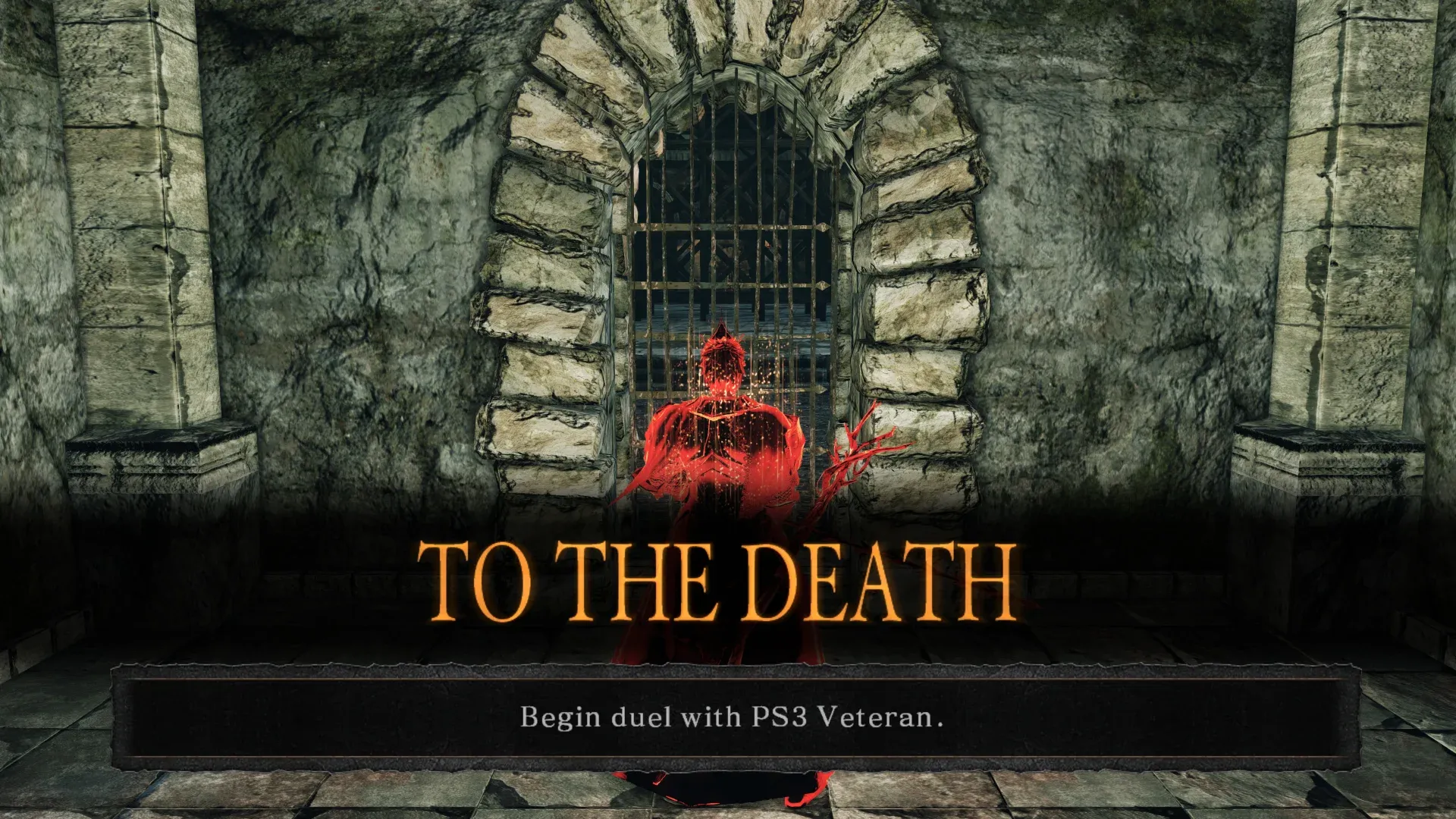
More than any game until Elden Ring, Dark Souls II is the one with the PvP I’ve enjoyed the most. Individual duels, the covenant system, how character builds function, and the dueling locations in the game all contribute to a system that was rarely matched before and after. Unlike the previous game, you can invade people even when you are hollowed. Covenants like the Bell Keepers and Brotherhood of Blood, along with locations like Belfry Luna, Iron Keep Bridge and the Undead Purgatory arena, are all-timers. And while Soul Memory, the complex and poorly-explained matchmaking system, is annoying and has real flaws, it was still a massive improvement on how matchmaking had worked previously and solved a lot of problems. Perhaps this is arbitrary, but something about how PvP in Dark Souls II feels was singular and special.
Soul memory could have been implemented better and clearer, but it solved some real issues with Dark Souls.
You know what? Scholar Of The First Sin is fine
Dark Souls II’s mechanics being baffling and abrasive to people is one thing, but there’s an additional layer to this, which is the remastered version of the game known as Dark Souls II: Scholar of the First Sin. Scholar not only revamps the graphics a bit, but radically changes enemy placement, adds more invaders and increases the number of statues/fragrant branches of yore. Some people dislike Scholar tremendously and take issue with the new placements, but I think a ton of them make sense. The addition of a Wyvern before the Dragon Rider in Heide’s Tower of Flame scans narratively, that’s his ride. It also serves as a check to prevent players from accessing that boss too early unless they are ready. Many of the new enemy placements are also easier to take one-on-one, and the balance is not as unforgiving as people make it out to be.
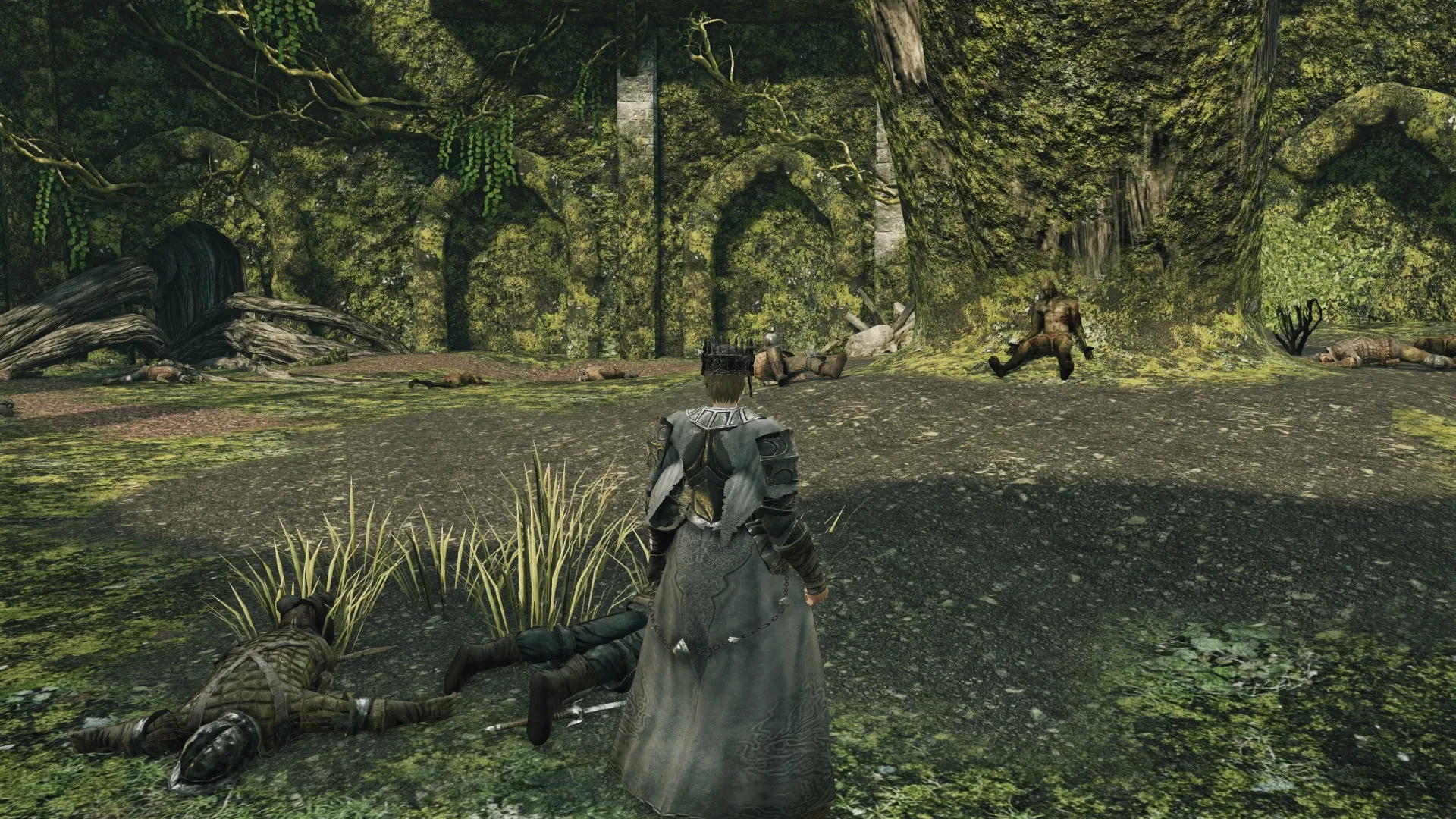
They add the Pursuer boss a bunch as a field encounter, which is pretty funny to me. It can seem annoying, but his actual aggro range is fairly narrow, and if you run past him ten feet he will melt into the ground. The one thing I’m only slightly sentimental about is that they moved the lost, tired Heide knights back to Heide’s Tower of Flame. That also makes sense narratively, but there was one tired knight in Forest of the Giants under a tree that people really loved, myself included. If any of this actually bothers you, they still sell the original game online, but if I’m being perfectly frank I think people have overreacted to Scholar just as much as they did to the original game, and, like the original game, a lot of that is overblown.
Never let them make you doubt yourself
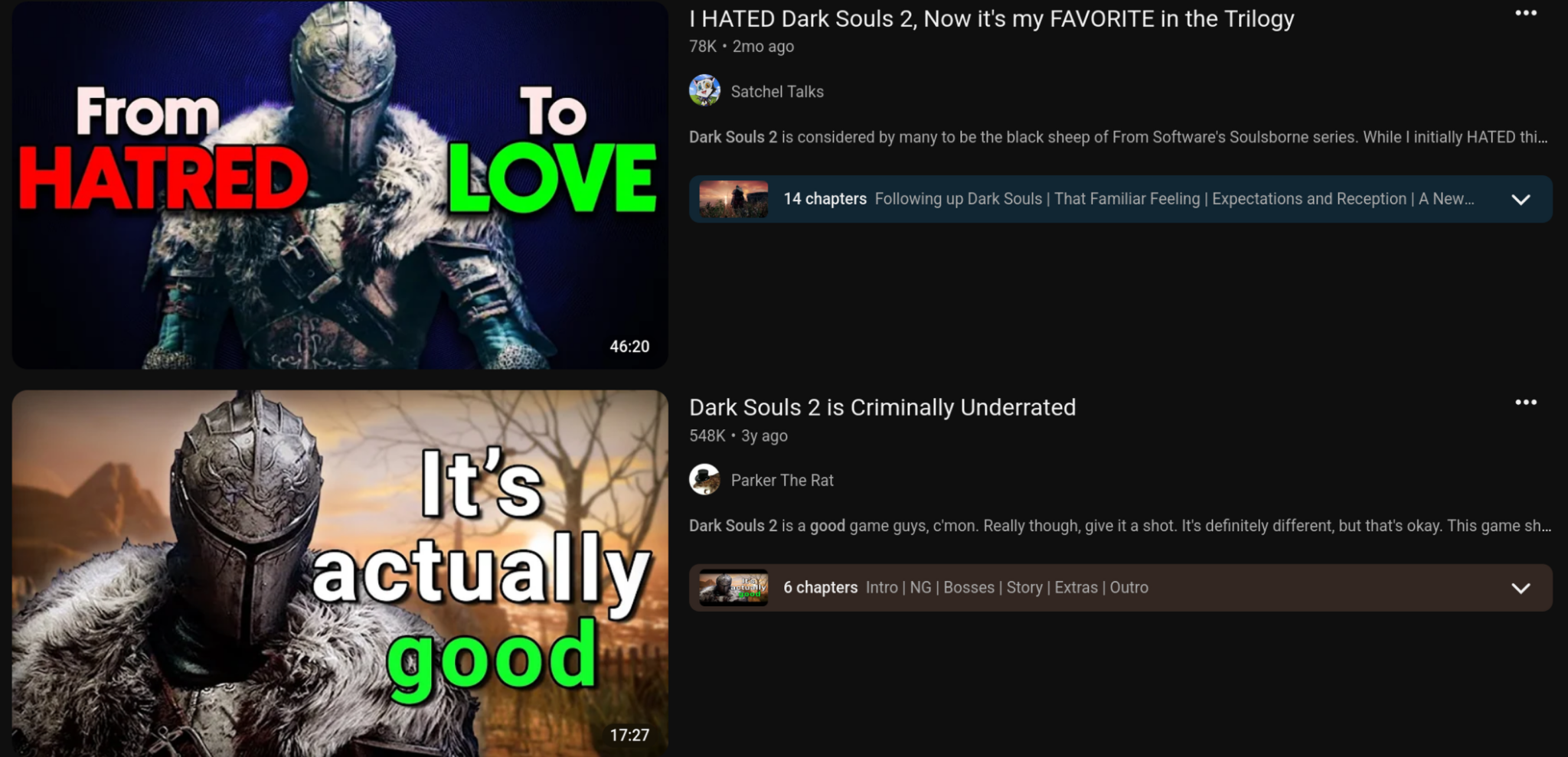
In the last few years, it feels like Dark Souls II’s reputation has been rehabilitated a little bit. Aside from Hbomberguy’s “In Defense Of Dark Souls 2” video published nine years ago, there’s an entire generation of players now who came to the Souls series via Elden Ring and did not live through the drama and aftermath of the game’s release. Dark Souls II will always have haters, but Elden Ring’s success and distance from its development have come to vindicate the people who hold it closest in their heart. And in those intervening years, I never gave up on it. Fuck the haters, I was right. Dark Souls II rules.


