

For a few years the Mac Mini was the single best deal in computing. Not only was it shockingly quiet, powerful and energy efficient, but you could often get a deal on it. I picked my M4 Mini up for $449 dollars at Micro Center and it has served me well since as a tiny, quiet computing node.
Then AI hit personal computing like a GMC Sierra and the party was over. Not only has flash memory and RAM gotten more expensive, but every idiot started buying Mac Minis up to run agents instead of anything remotely fun. What was once a killer deal now costs $899, which is atrocious for a computer with no keyboard or monitor and a paltry hard drive.
Despite being a powerhouse, the Mac Mini is kind of a bad deal now, like most computers on earth. In addition to this, people online have discovered that Apple has quietly rolled back one of the only good, albeit unofficial, changes to repairability they had made in years: the M4 Mac Mini had a removable NAND module instead of soldering the flash memory directly to the board. In prior Mac Mini models, the main way to upgrade your storage was to buy a new computer or, if you were adventurous, desolder the NAND chip from board and resolder a new one on, an almost impossible upgrade for normal people. We previously covered YouTuber DosDude2 who made a name for himself attempting such aftermarket mods. From a basic repairability perspective, making the Mac Mini something akin to a normal computer was a step in the right direction for Apple.
This does not mean you could just put any M.2 2230 drive in the M4 Mac Mini, Apple silicon works in a specific way that makes them incompatible with normal SSDs. It did, however, open up the market to a series of aftermarket upgrades that ran just as well as, if not better than, the stock drive. These SSD modules were easy for the user to install, and allowed you to expand the meager storage of the base model. After reporting on Mac mini upgrades, I ended up ordering an aftermarket drive and performing the mod myself, and my loyal M4 has been working flawlessly ever since with 1TB of storage instead of the stock 256 GB.
 Chris Person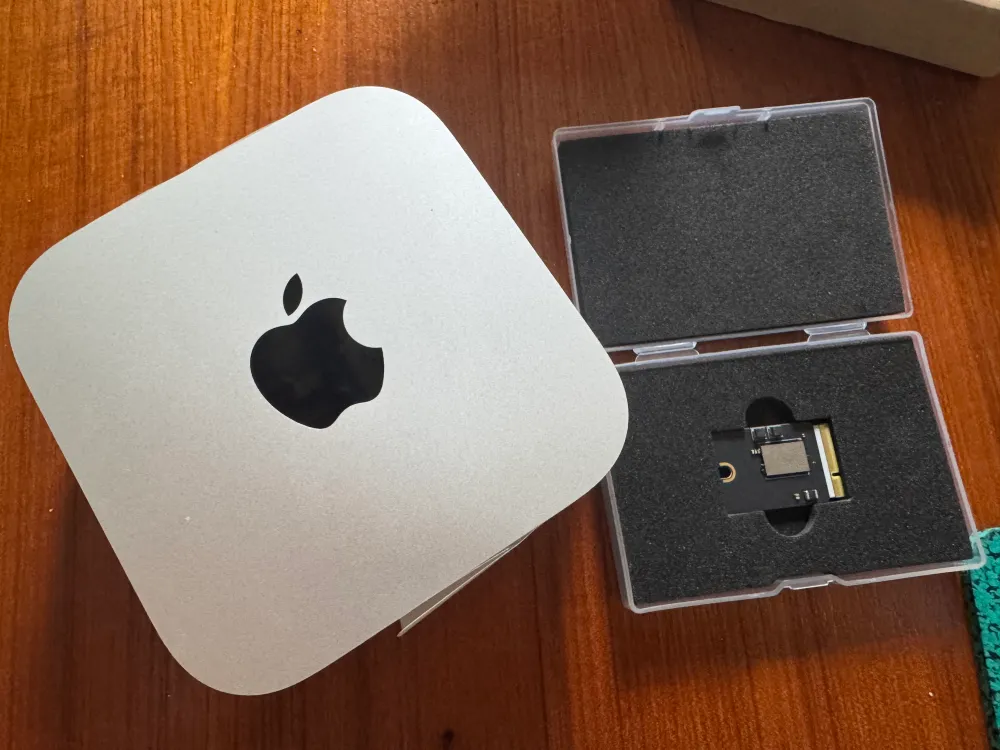
Apparently Tim Ternus can though.
With the new M6 Mac Mini and the M5 Pro Mac Studio, that option is now gone. Apple quietly reverted back to soldering the flash memory onto the boards, a subtle little snub to everyone who enjoyed customizing their affordable baby computer on top of the somewhat understandable price hike caused by a cartel of AI shitheads. You could perhaps fairly say that this upgrade path was never an above board option to begin with, and that Apple is simply protecting its racket. But the entire back and forth reinforces a larger point about Apple: you have never really had agency over your computer to begin with.
Apple has been egregiously and willfully bad with repairability for years despite their constant attempts to greenwash their products. They want you to come to them exclusively for upgrades, repairs, and basically every facet of your computing. While aspects like RAM are a bit more understandably locked down due to how ARM SoCs work, making the hard drive replaceable on the Mac Mini was always technically doable for them. This has always been a solved problem, and that they ever let the mask slip for even a moment was itself surprising. Continuing to make storage non-upgradable in the middle of a memory crisis is an additional cruelty.
While I’m willing to concede the basic realities of the cost of components, despite Apple not being a neutral party in the underlying AI industry responsible, the locked down nature of Apple’s personal computers has to be stopped eventually. This is both an environmental issue and a matter of basic computational autonomy. Not everything with a processor is a cellphone, and users have a basic right to something as basic as expanding the storage on a desktop computer. The party might be over for the Mac Mini for a while, and I am not convinced that they will not do anything remotely consumer oriented again unless they are legally coerced into doing so.


