

Solitaire isn't terribly sexy as far as video games go. You play by yourself, usually when you're waiting for something else to happen. It's meant to be meditative, soothing even. But what if there was a solitaire video game so cursed that it drove its developers and players mad and became an urban legend lost to time, one that might actually be real because you just found a copy in a thrift shop?
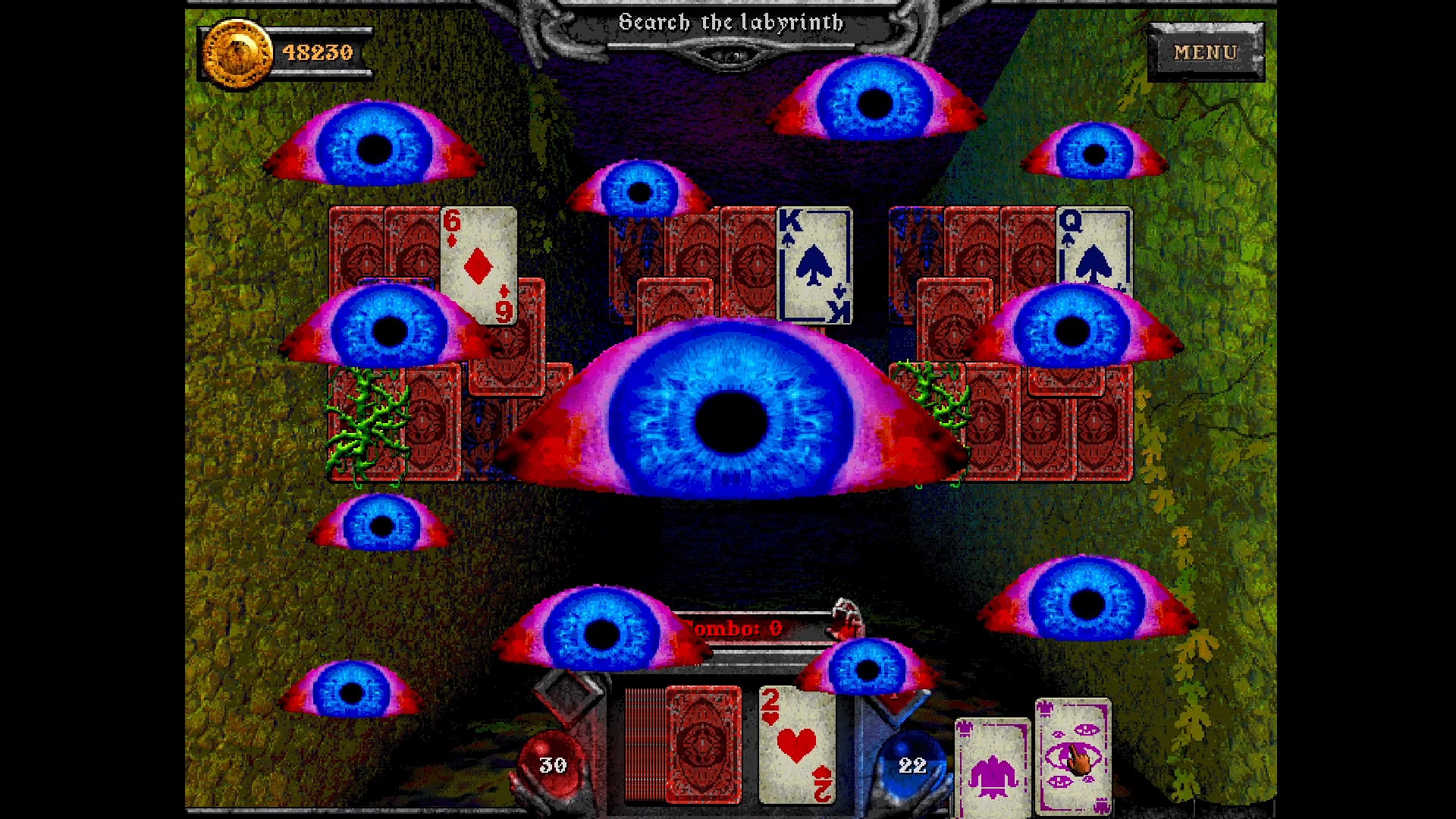
That's the premise of Forbidden Solitaire, the latest twist on solitaire from Grey Alien Games and Night Signal Entertainment. The former studio is a longtime expert at coming up with deviously compelling riffs on solitaire, like its cheeky Jane Austen-inflected Regency Solitaire and Regency Solitaire 2. The latter is a newer shop establishing itself as purveyor of kitschy narrative horror games, exemplified by its cult hit Home Safety Hotline. Their collaboration is a lot of things – primarily successful, as Forbidden Solitaire has easily exceeded their very modest goals, enough to seriously consider a sequel, both studios told Aftermath in interviews. But it's also an experiment in sustainable game development, and the long payoff to one really mean sort-of joke that Grey Alien's Jake Birkett told a room full of indie developers ten years ago.
At the 2016 Game Developers Conference, Birkett – soft-spoken, a little nervous, long hair tied back in a ponytail – got behind the podium to deliver his talk, which he called "The No-Hit Wonder – 11 Years and Still Going. How?" and delivered the toughest of tough love openers.
"You're not special, nor is your game, and you'll never ship a hit," Birkett told the room, which takes a beat to register what he's saying before laughter and applause greet his gambit. "The sooner you come to terms with that, the sooner you can start figuring out how to survive as an indie."
Birkett's talk now lives online via the GDC Vault, the conference's repository for its many lectures and resources on the craft of game design. It's here that Nick Lives of Night Signal Entertainment saw it, many years later, and took it to heart. Night Signal's Home Safety Hotline, a horror game that casts players as phone operators answering increasingly eerie calls from customers, was born from Lives' adoption of Birkett’s no-hit wonder mentality.
Inspired by Birkett's talk, and the success of similarly-scoped studios like Strange Scaffold (its creative director, Xalavier Nelson, appears in Forbidden Solitaire), Lives and his co-founder David Johnsen deliberately formed Night Signal in an effort to make games affordably and at a regular cadence. One way they wanted to attempt that was by pitching other small indie studios on collaborating – like Grey Alien, if they were even interested in making another solitaire game.
A husband-and-wife team, Grey Alien's Jake Birkett and Helen Carmichael didn't set out to be known for making solitaire games – their gameography is dotted with standout experiments like the time-crunch city builder T-Minus 30 or the match-3 game Spooky Bonus. But in the high-risk, slim-rewards stakes of the modern games industry, they found specializing to be the most sensible path to sustainability.
"[All the solitaire] is us reusing our engine 'cause it's expedient – and we were really learning how to make good solitaire better and better, probably more than almost anyone in the world, if that doesn't sound too grandiose," Birkett says, with a bit of self-effacing laughter. "Because we've done it so many times for so long, we've got good at it. We can save money and time. We've got fans we can deliver to. But there is that sort of thing of also being trapped in solitaire, and I want to be honest about that. There are plenty of other indie games that if a patron had popped up and said, 'here's a couple hundred thousand dollars, go!' I would've made them instead."
Night Signal, however, made the decision to create Forbidden Solitaire easy, reaching out to Grey Alien with a one-page pitch conveying the tone and pitching a clear division of labor: Night Signal would handle all the art, sound, video, and narrative, and leave the game design to Birkett and Carmichael. Also, their pitch was funny.
"It immediately appealed to our sense of humor. I'm not sure if everybody always realizes it, but definitely in the [games] I wrote, the stories are subtly poking fun at their genre," Carmichael says. "And [Night Signal] were totally doing the same kind of thing [in their pitch], although in a much more, sort of crazy jacked-up way, but about the nineties and and nineties gaming culture."
"What Nick had, apart from this cool idea, was this previously successful game and an audience and was offering to make the art and audio, which was a big draw for us because we were always on a tight budget," Birkett says. "This is the whole point of my sustainability thing: one of the reasons we didn't break out of our solitaire stuff was, we had an audience that was gonna buy that stuff regularly each time, and it was never gonna make us rich, but it would keep us going."
Night Signal came by their efficiency the hard way, via heartbreak. Nick Lives and David Johnsen's two-man operation came out of the collapse of another, slightly larger studio they had co-founded, Deli Interactive. They had a strong debut title in the multiplayer roguelike We Need to Go Deeper, but then spent five years developing their next game, the ambitious Animal Crossing-esque Camp Canyonwood, which flopped immediately.
"I think it's one of the lowest-performing games that we've made. We were in trouble very fast," Lives says. "David and I were kinda like, 'well, we should probably try this, like the Grey Alien Games way.'"
Thus, Night Signal Entertainment, named after Lives and Johnsen's first collaboration under their smaller, more modest aegis. Forbidden Solitaire is their third game, and for all of its charming quirks, both Night Signal and Grey Alien are, by necessity, remarkably unromantic and clinical about why it took the shape it did. For Birkett and Carmichael, a desire to break away from their established lane could not risk alienating their reliable audience, but Night Signal's penchant for analog horror kitsch could widen that audience considerably. For Lives and Johnsen, Forbidden Solitaire helps them establish what Night Signal's brand will be as they continue to move forward with smaller games.
"If we have to pigeonhole ourselves," Lives says, "then I want to be happy in that pigeonhole."
Here is the irony of sustainable game design the Grey Alien way: For the no-hit wonders of the games industry, a hit can derail you almost as much as a flop. While they've not shared specific numbers, Forbidden Solitaire has been a big enough hit to make both its development studios very happy, and immediately consider a sequel, which once again exacerbates the indie developer's plight of choosing between artistic fulfillment and commercial viability.
"Previously we've had to iterate on what we've done before because that's all we've had the scope or the budget to do, or that's been the more sensible choice from a business point of view, rather than taking a really big risk," Carmichael says. "Ironically, the fact that Forbidden Solitaire has done so much better means that we might have the funds to take a bigger risk. But perhaps people want more [Forbidden Solitaire] from us. That's the choice we've got to make, right?"
Yet, as Lives notes, there's still a part of you that might always want the big hit.
"That's the real hope, the one big hit that's so big that now you don't care whether the next thing you make makes money at all," he says. "It's a freeing idea. Almost like you've unlocked the secret to universal basic income and now you get to just be an artist."
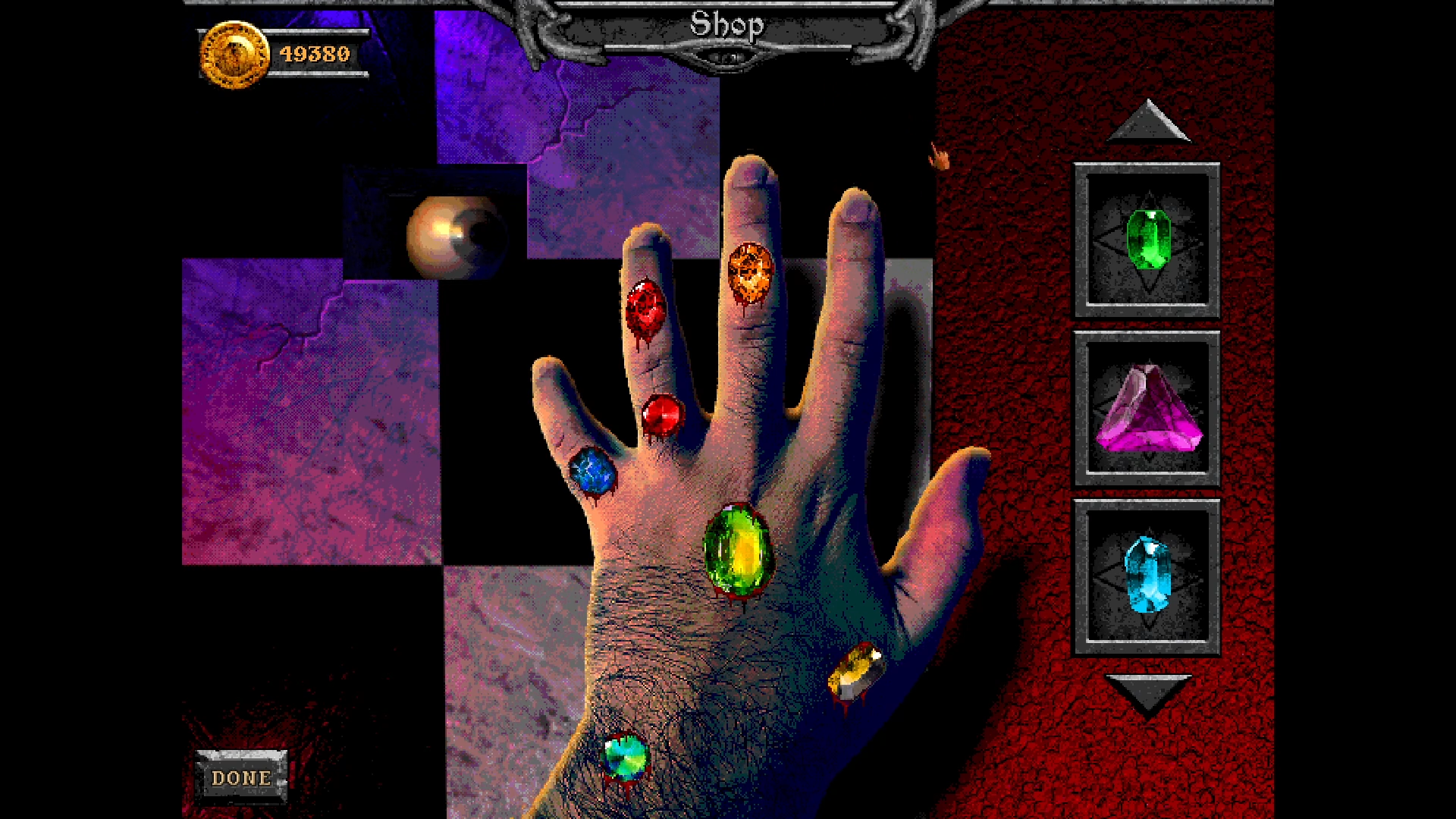
But again: Perspective. Grey Alien built a sustainable path through video games by building a steady business around a kind of game that, for what it's worth, they actually like, and have managed to find all manner of ways to innovate and iterate on, be it through Shadow Hand's combat and RPG-esque inventory or Regency Solitaire's estate management. In between the safe bets, they jam and freelance, to change up the pace and keep themselves feeling creatively fulfilled, even if there are still things that are a little too irresponsible to really go all-in on. Birkett, for example, really loves platformers, but thinks it’s foolish for an indie dev to make a platformer.
For their part, Night Signal has the implosion of Deli Interactive keeping them focused.
"We can't afford to, like, put our whole soul in the thing," Lives says. "In a small game, you only have time to put one little feeling that you have about something in it." Lives contrasts Night Signal's output to Camp Canyonwood, which was full of deeply felt ideas and personal history painstakingly coded into their humble life sim. "Five years of feelings went into this and, and so that hurts five times as much. Something that took one year, you have one year's worth of feelings. It's less heartbreaking, I think, to work in this way. I hope."


