

I highly recommend becoming best friends with someone more versed than you in a shared hobby, as I have with a bosom buddy who works at a bookstore. Out of the blue, they recommended I read Franz Kafka’s The Metamorphosis after recounting, for the umpteenth time, how much of an extinction event the thankless job of journalism and the landscape I cover have become since we last spoke. “I think you’d like it,” they said. Little did I know their recommendation was a gentle call-out.
7/15/26 4:28PM: The original version of this article misstated Kafka’s nationality.
I was vaguely aware of the Czech author before my friend’s recommendation. At least enough to include the clever allusion to the phrase “Kafka-esque” in an anime review of Kaiju No. 8. But after finally reading The Metamorphosis, I understand why my friend called this story the opposite of Peter Parker.
The Metamorphosis follows Gregor Samsa, a weary salesman serving as the sole support for his family, comprising his portly, sunsetting father, his asthmatic mother, and his musically inclined 17-year-old little sister. His job is a suck. So much so that being late to work prompts a representative to take a trip to his doorstep, inquire about his tardiness, and snitch on him to the higher-ups. After suffering a night terror, Gregor’s tardiness is one he can’t wordsmith his way out of: He’s woken up as a giant bug.
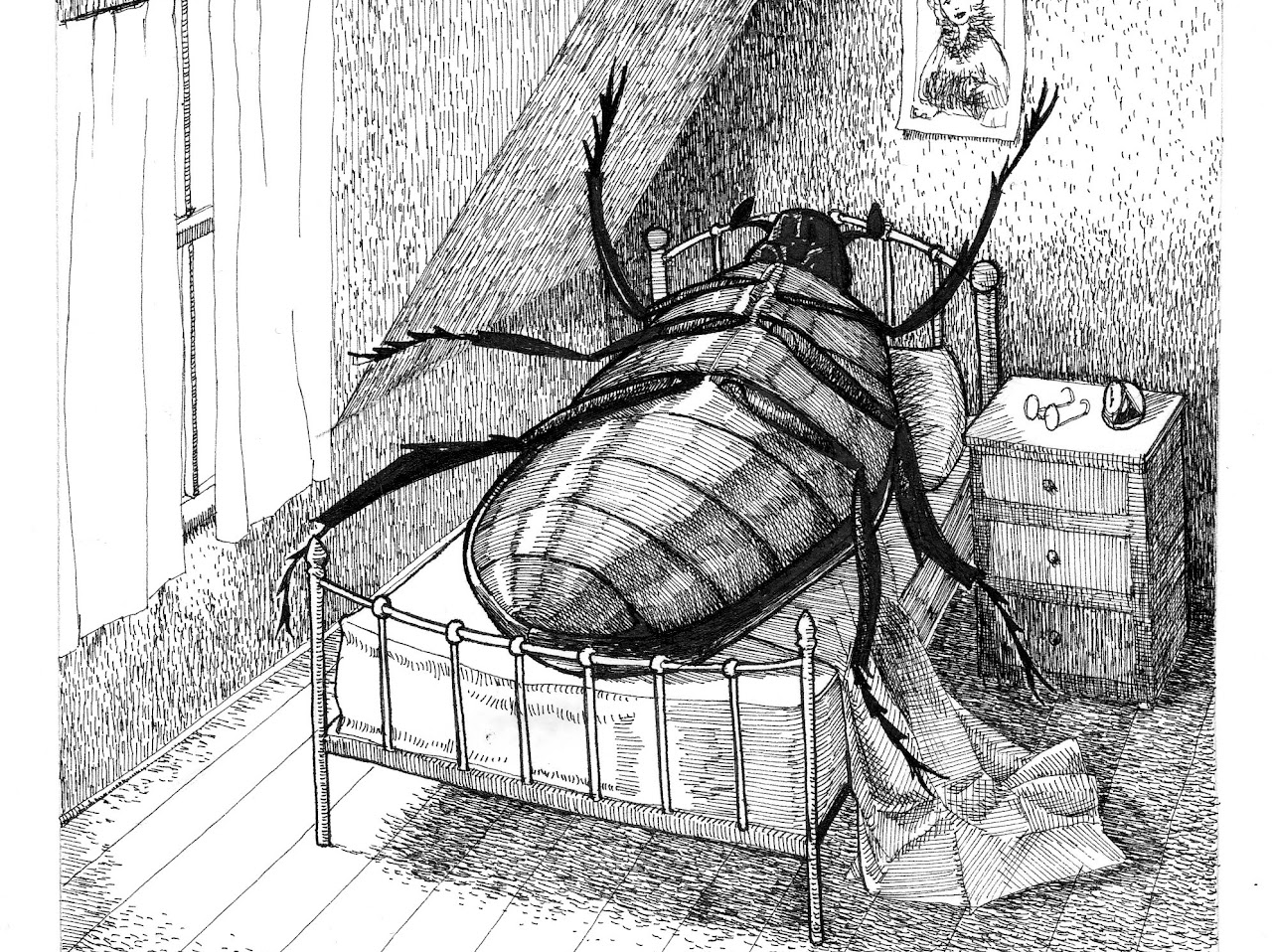
Although waking up with a platelike back, an extra row of legs, and the proportional strength of a beetle can sometimes be a superhero origin story, Gregor’s absurdist predicament is the stuff of nightmares. Gregor’s unexplained transformation isn’t one that improves his life; it makes it worse by highlighting that his sacrifices were more of an appendage in other people’s lives than a mainstay. The discovery of his insectoid transformation repulses his own mother, provokes his father into defensive violence, and corrodes his empathetic sister—who, of the bunch, takes things the most in stride by visiting him and leaving meals in the prison that is his bedroom—into begrudging exasperation.
But what twists the knife of the otherwise perfect three-chapter story is the private, unspoken embarrassment Gregor faced when a liaison from his work visited his home to see what all the fuss was about.
Despite being the literary precursor to the meme “If I turned into a bug, would you still love me?” Gregor still has the mental faculties to understand English. Meaning, counter to his family’s quick consensus that he’s just a dumb beast who they can’t communicate with, he can perfectly understand everything they’re saying about him, especially the hurtful things they’re muttering under their breath. Their most pressing concern, heightened by the rousing visit of a rep from his work, is how the bills are to be paid in his absence.
To his family, Gregor was just a bug with beady, insect eyes and no real thoughts behind them or their pending plight. To Gregor, this single concern was the only matter of utmost importance. No matter what, he had to get to work.
That lone obligation drove him so feverishly that, instead of rightfully panicking over the waking horror of becoming a giant insect, he spent his entire morning locked in his bedroom, straining to lift himself upright and get out the door. It didn’t matter how futile the effort was—making it to work on time was impossible, and showing up tardy as a giant bug would’ve been worse. And he fails.
Instead of being granted even an iota of empathy or grace by work, the man from work sent to fetch Gregor puts his sacrifice into perspective in the harshest way possible. Unbeknownst to his family, Gregor’s years grinding away at a respectable job, keeping their world turning through sheer effort and exhaustion, didn’t earn him tenure and respect at work. To his employer, he was less than dirt—he was the bugs beneath it.
His inevitable tardiness, after days, months, and years of showing up and working himself raw to earn enough for his family to live comfortably while his sacrifices went unnoticed, was all the excuse his job needed to be rid of him.
Gregor’s metamorphosis is a curse that forces him to silently confront the reality of his existence. Instead of gaining sympathy from those he had courteously given handouts to until his bag was empty, his new form further alienated him from them, highlighting the monstrous weight of societal and family pressure.
His grappling with the inner conflict and guilt of wanting to fulfill his responsibility as a worker and provider is dragged across the coals of the truth: his struggle to maintain a sense of humanity in a truly insane bottlenecked scenario was as goofy as looking at an oversized bug struggling to get out of bed. In a way, Kafka’s three-chapter shower thought of a novel reaches through time and touches on the profoundly relatable toll that relentless labor and emotional sacrifice can take on an individual.
Long story short, I enjoyed my bookish friend’s thinly veiled literary call-out recommending I read The Metamorphosis. I look forward to getting my lick back by having them read Kate Chopin’s The Awakening.
Recommend:
 Isaiah Colbert

![EGM 'Compendium' Kickstarter Raises $1.8 Million, Has Yet To Actually Deliver The Book [Update]](https://storage.ghost.io/c/30/f5/30f5b1bb-84ee-4c26-b446-fb9a5e512994/content/images/size/w960/format/webp/2026/09/6fc2de39ce1e1d36c577aad8a158e5cb_original.png)


