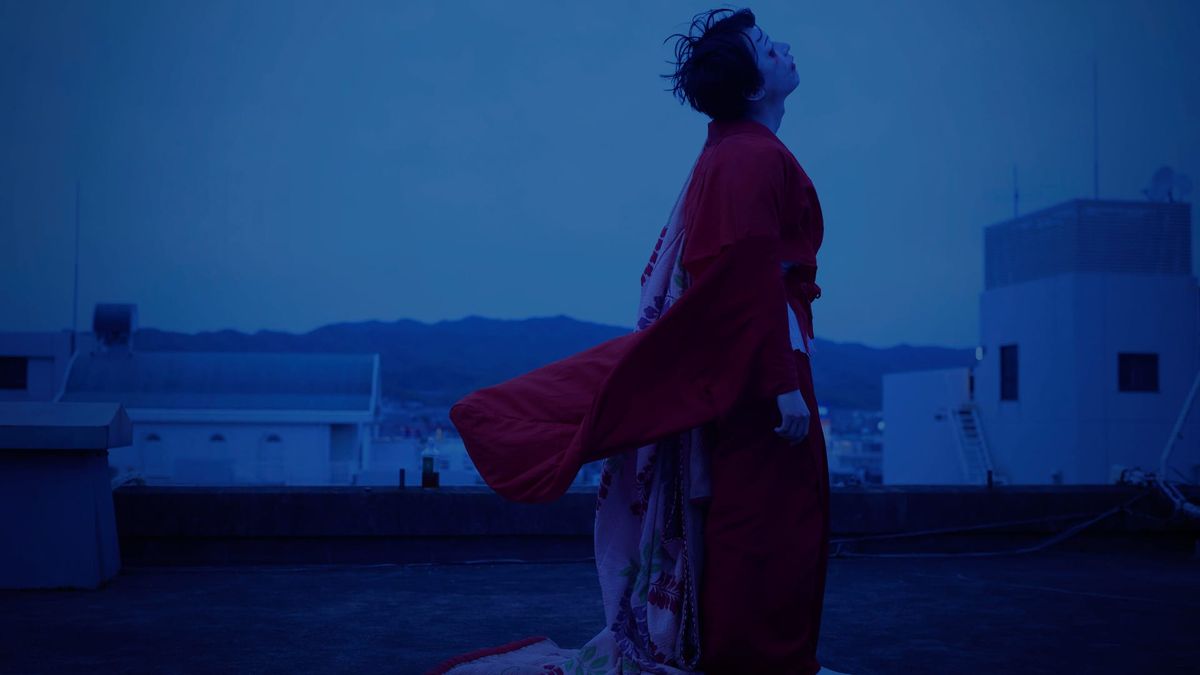
When The Samurai And The Prisoner was first revealed, I was tentatively sold when writer-director Kiyoshi Kurosawa’s name popped up in its official trailer, with all the pageantry of Moses descending Mt. Sinai to bring the good word. Why? Its feudal premise struck me as a bit more buttoned-up than the spectral wonders I’ve grown accustomed to from the acclaimed director. After watching the film, I’ve never been more delighted to have been proven wrong. Unc’s still got it.
For longer than I’ve been alive, Kurosawa has built a career directing iconoclastic films. From a frustrated detective solving a mystifying string of murders in 1997’s Cure, to a detective playing Lorax with a vampiric tree in 1999’s Charisma, to spectral oddities invading the human world via the internet in 2001’s Pulse, to a scalper fucking around and finding out the folly of reselling at folks’ expense in 2024’s Cloud, Kurosawa’s propensity to imbue mesmeric stories with hypnotic, existential dread behind the lens of a camera never fails to stand and deliver “last of a dying breed” worth acclaim. The Samurai And The Prisoner is the latest testament to Kurosawa’s gift to astound.
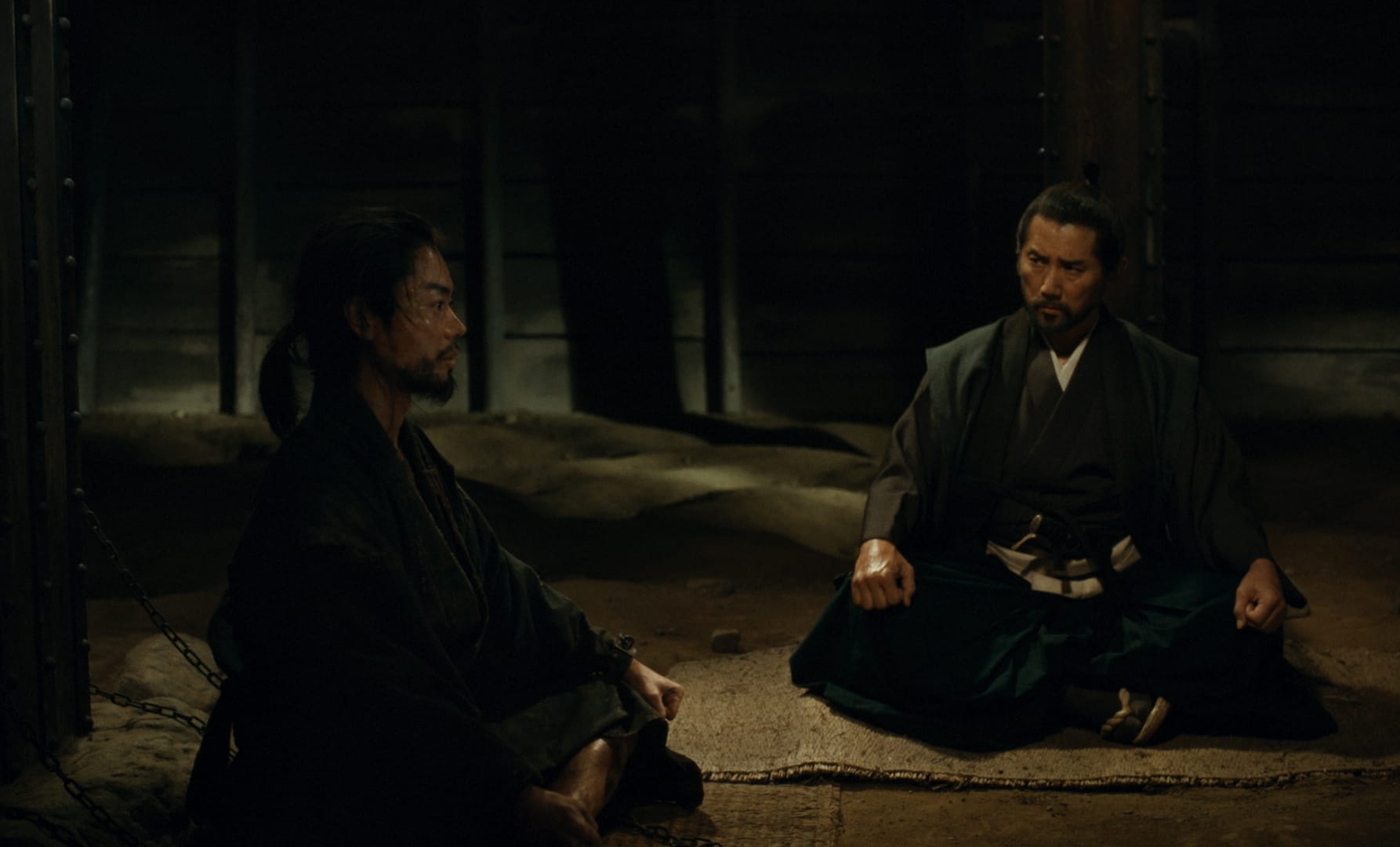
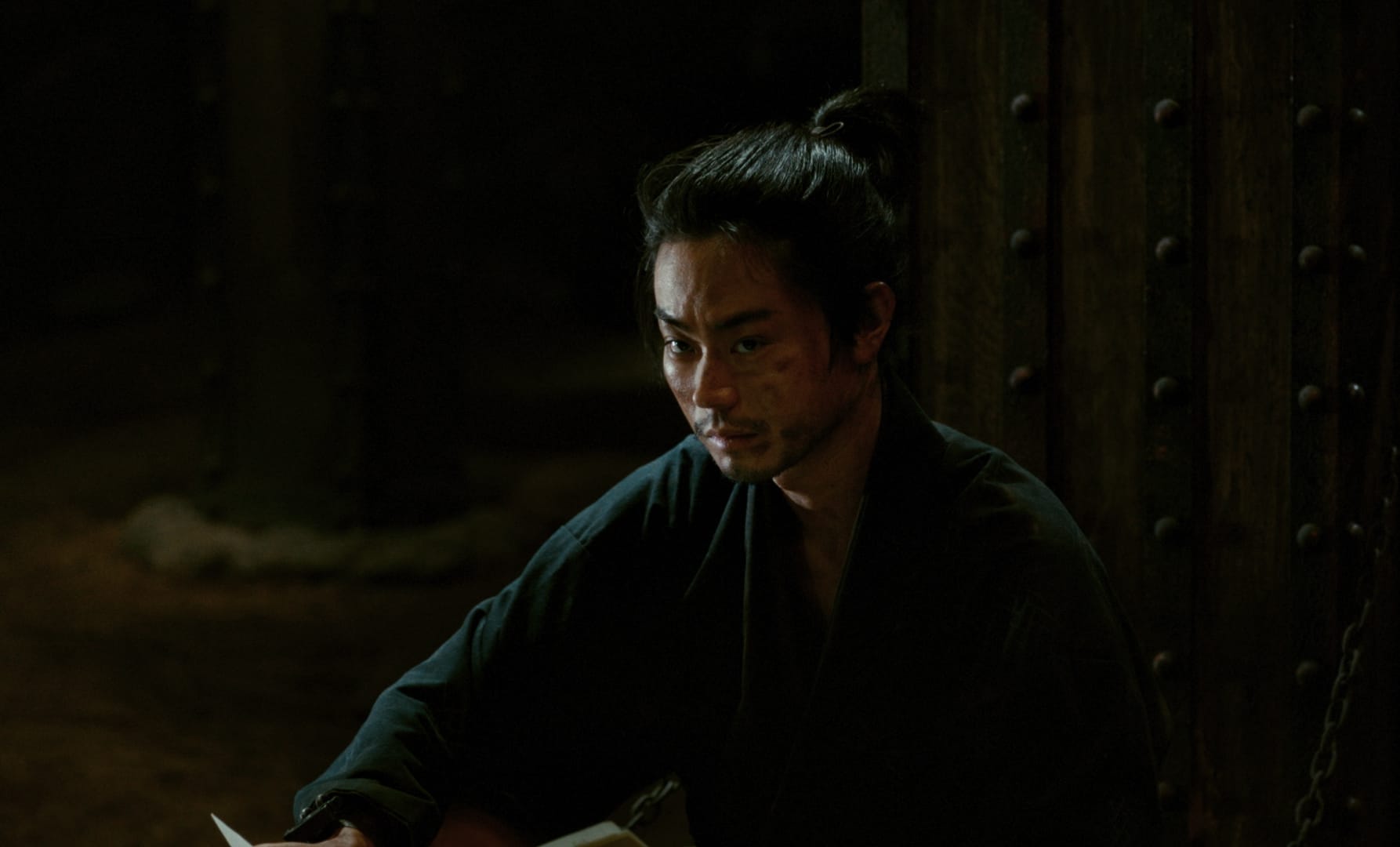
Based on writer Honobu Yonezawa’s 2021 novel Kokurojo: The Samurai and the Prisoner, Kurosawa’s adaptation breathes new life into a chimeric tale born of historical events and a festering mystery within long-held, academically opposed affairs. Set against the backdrop of Nobunaga Oda’s ambitious and tyrannical plot to unify Japan, which serves as the film’s ever-present ticking time bomb, Lord Murashige Araki (Masahiro Motoki) faces a scourge within his castle walls. After holding a wise strategist from Nobunaga’s rank, Kanbei Kuroda (Masaki Suda), prisoner in a dungeon and denying him the Samurai-coded death before dishonor custom—be it out of pacifism or feigned benevolence—a domino effect of mysterious murders shakes the fabric of order in his court, plunging it into chaos.
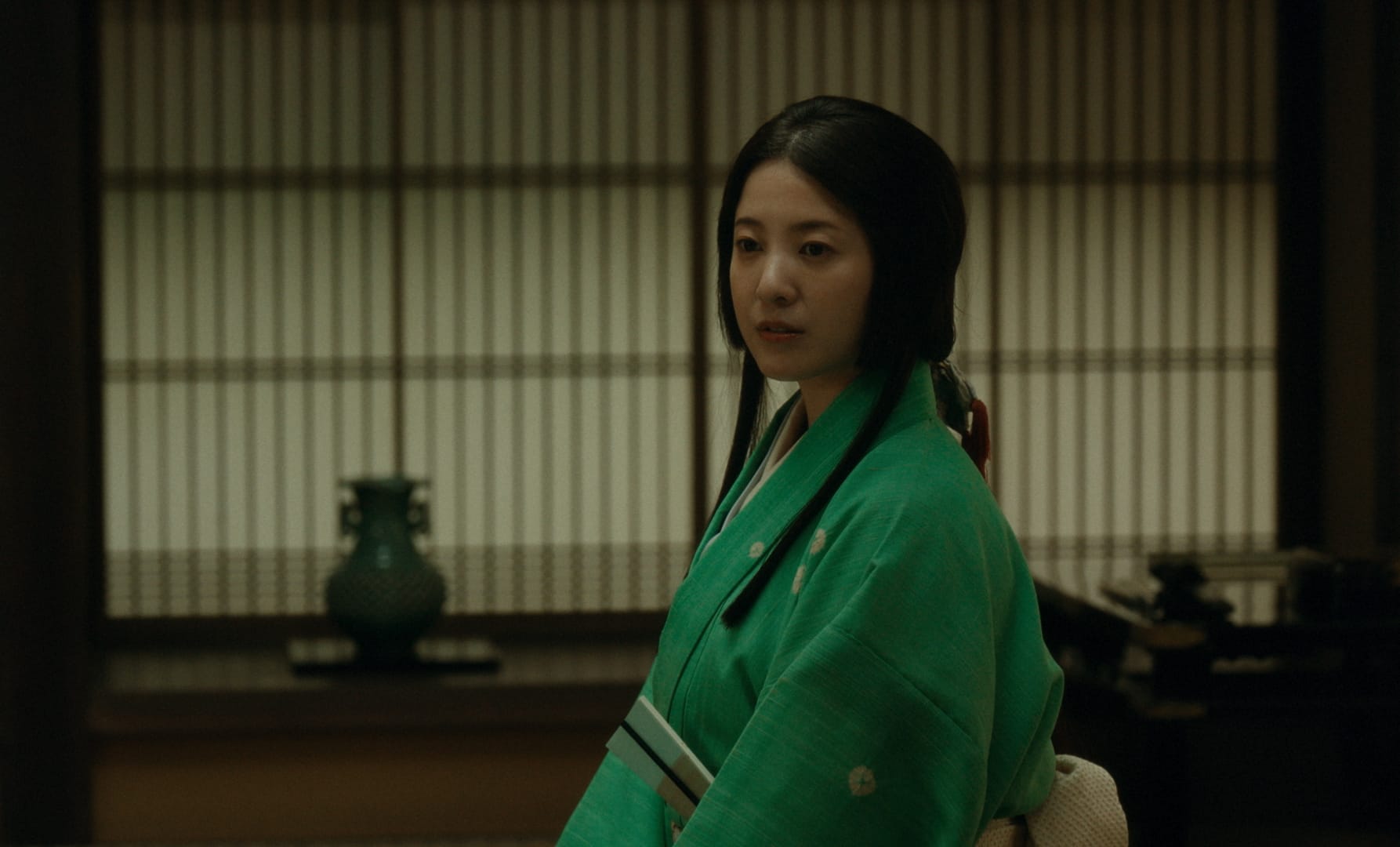
With a newer string of unexplainable murders occurring—each more bizarre than the last—the story unfolds as a feudal procedural in which Murashige attempts to illuminate the inexplicable with the help of Kanbei, his forlorn wife Chiyoho (Yuriko Yoshitaka), and his dwindling circle of loyal generals. Eventually, suspicion over these strange occurrences overtakes him, threatening to bring a premature end to his reign as castle lord long before Nobunaga ever invades his castle.
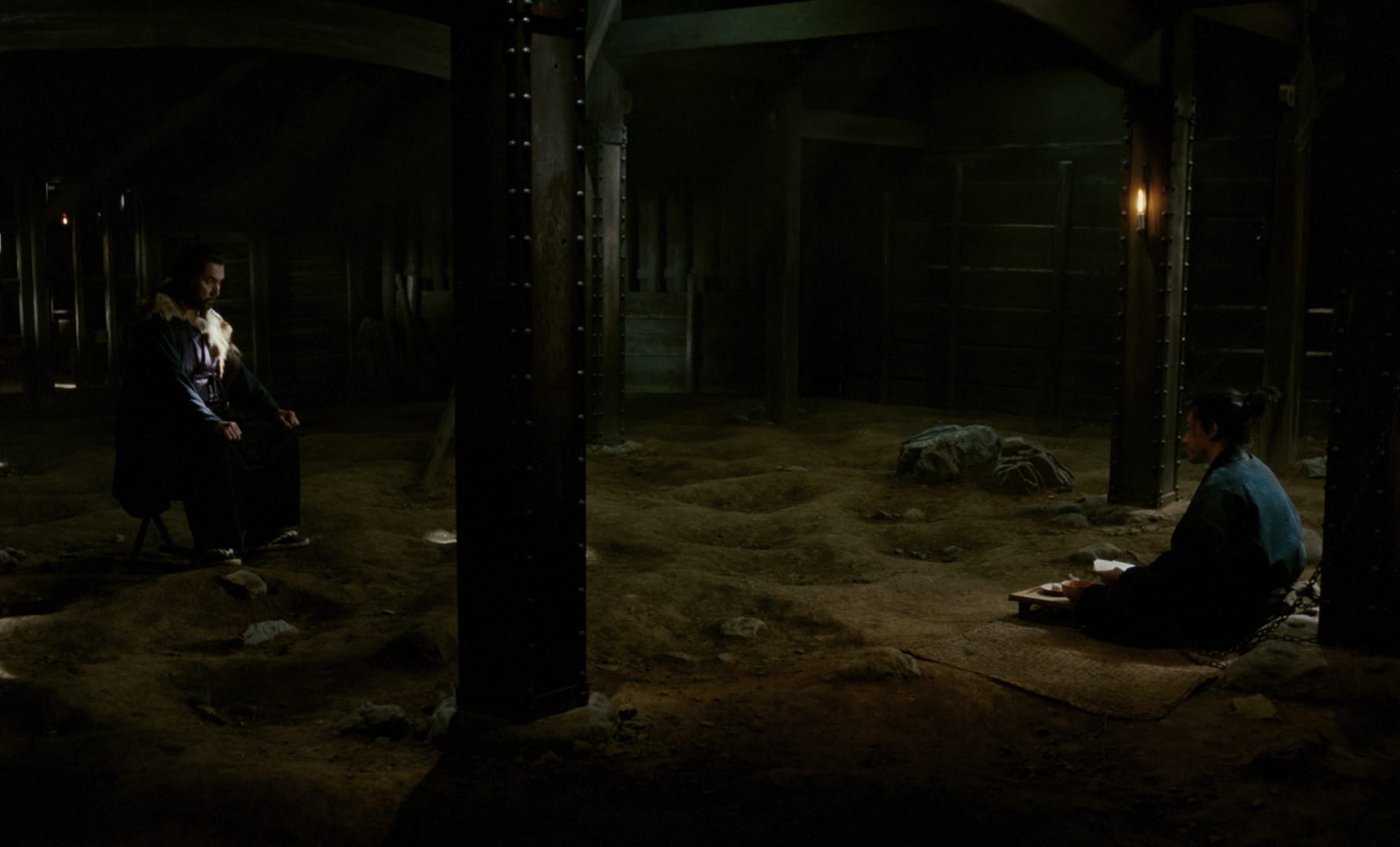
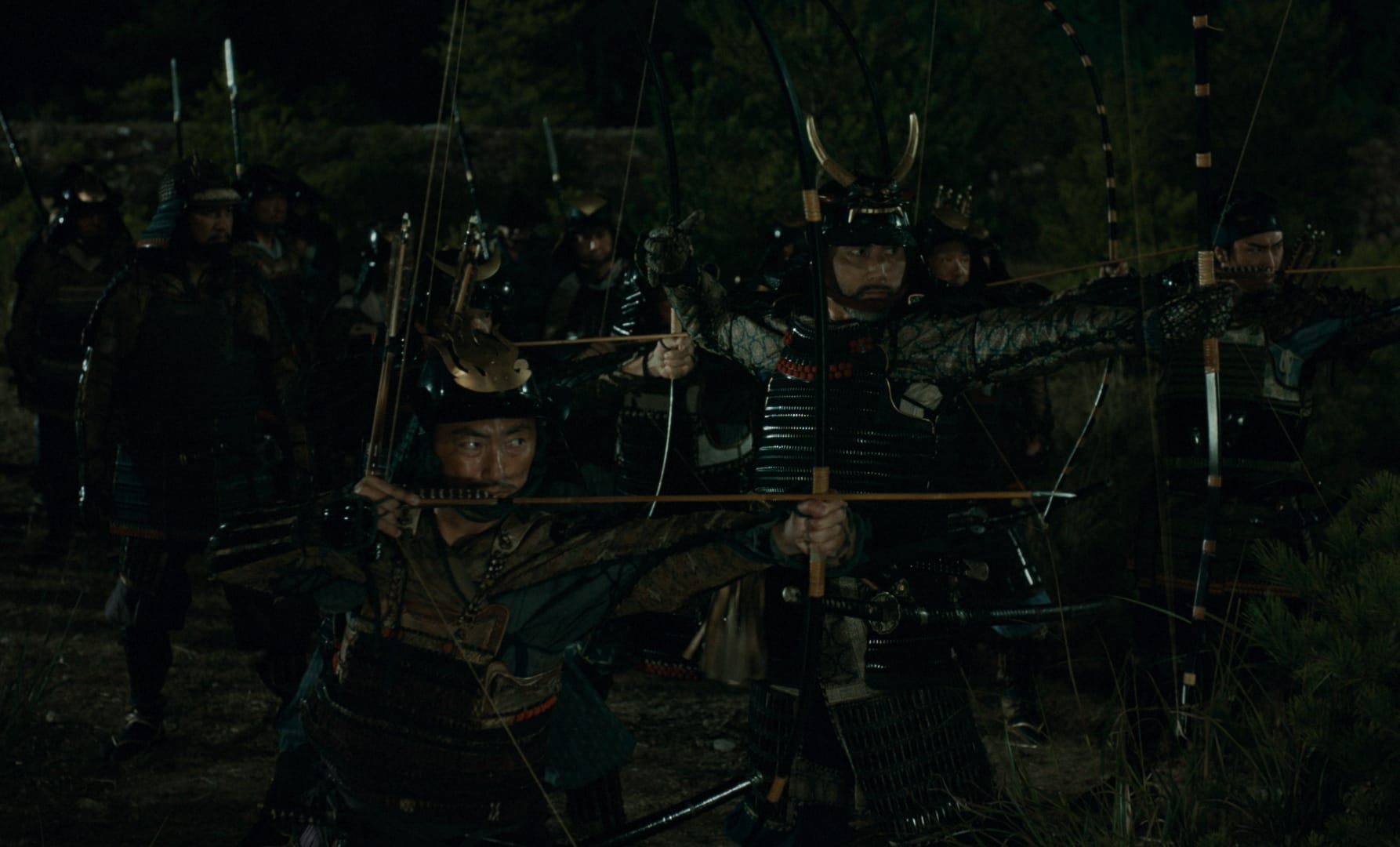
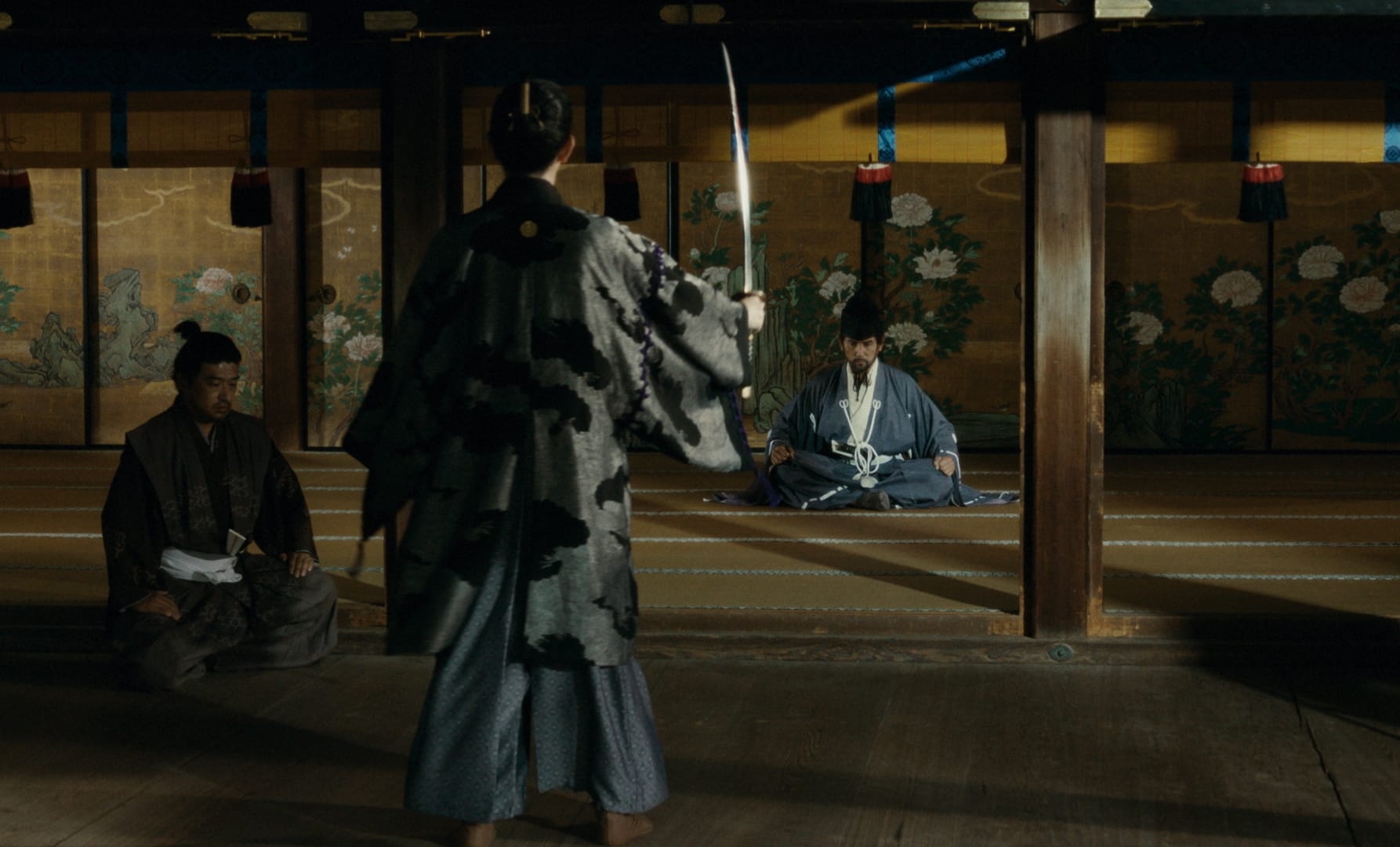
Living off the promise of its premise, The Samurai And The Prisoner is nothing short of a pristine period-piece drama, shot with blocking rivaling that of Akira Kurosawa’s, and featuring serene cinematography, letting its actors chew scenery in wide shots that invite viewers to deduce its stranger mysteries alongside Murashige and company. But what’s immediately striking about the film is how it gives all the esteem of a period drama without glorifying the past in the ways moviegoers have grown accustomed to.
Throughout the film’s methodically paced runtime, The Samurai And The Prisoner establishes a rhythm across its four acts: Murashige encounters an abnormal murder within his fortified castle, then goes feudal CSI, reconstructing the events, interrogates potential culprits in court Columbo-style, and—with the boom of his phone-a-friend life hack for his imprisoned trump card—delivers a logical conclusion; they aren’t divine intervention or wrath, but the folly of wounded human pride. The whole spectacle is lean-forward-in-your-chair viewing so enveloping you don’t feel the film’s runtime.
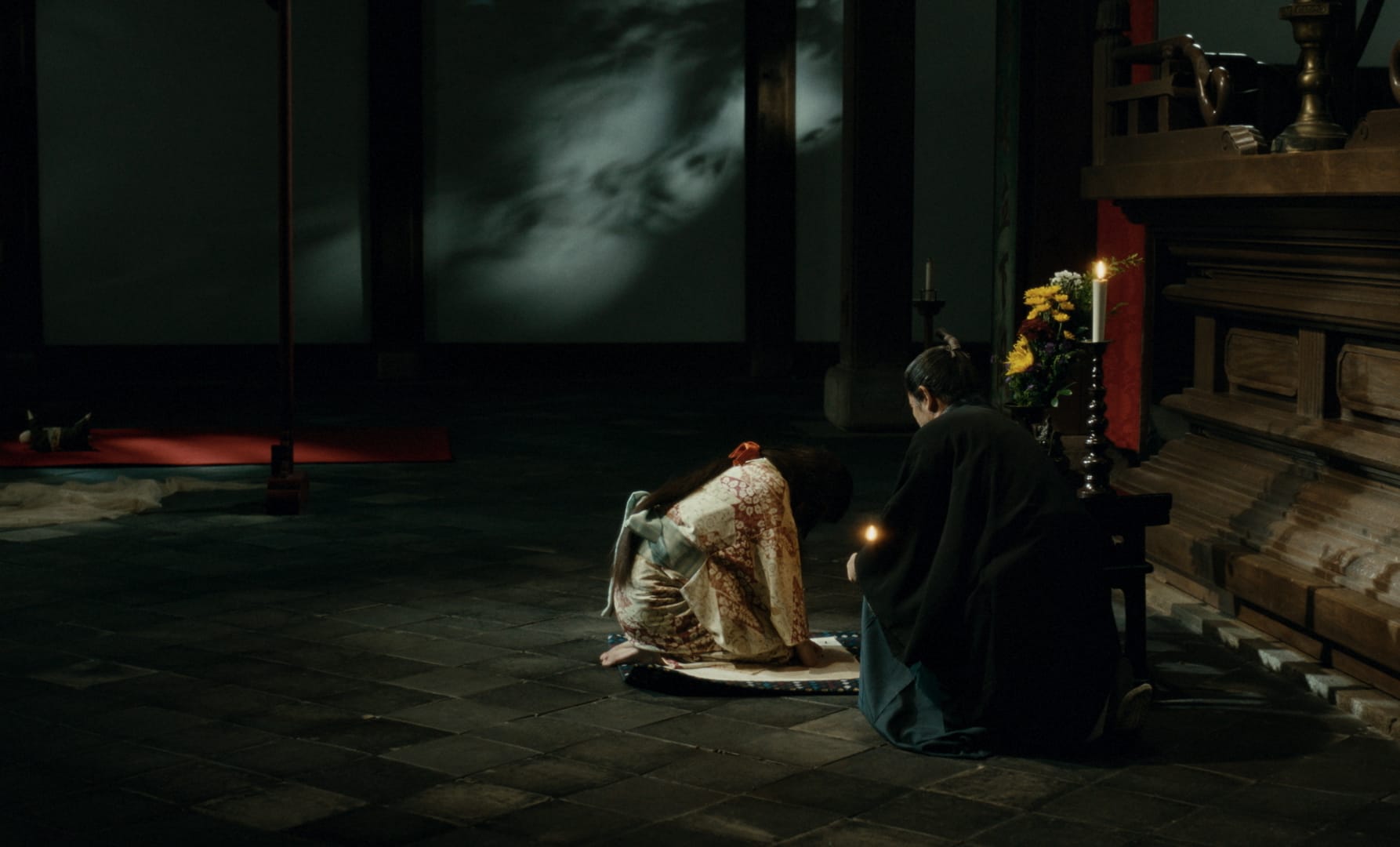
But after a while, Murashige descends from a wiser-than-thou lord to a man completely out of sorts, leaving his demystified court to throw logic out the window for the easier truth that the dude might actually be cursed. Despite how clinically and logically he investigates, the movie’s otherwise rigorously historically accurate cinematography gives way to the spooky cinematic mysticism Kurasawa is known for, to the point where you’re left believing something more cosmic is at play off the muscle of the cast’s larger-than-life performances and the film’s bespoke cinematography.
© TBS Pictures / Shochiku Film Studio / Janus Films
When the action picks up in the nearly 2-hour-30-minute feature, it's handled remarkably matter-of-factly. That’s not to say it’s half-assed. The staging and blocking of the film are executed with near-theatrical stage-play precision, with masses of armies fighting in static, far-away shots, allowing one’s eye to dart around the screen and soak in every delicious detail. What’s more, Motoki, Suda, and Yoshitaka are an absolute tour de force, stealing the scene in every moment of screen time with powerful performances that make “characters talking in a room” scenes more exciting and moving than any action scene another director would’ve highlighted as the film’s pièce de résistance.
The universal quality of all its battles is that they’re quicker than a hiccup and never embellish or glorify decisive sword slashes with dramatic close-ups or erupting sprays of blood, as we’ve grown accustomed to in any tale depicting men with swords, let alone one set during one of the bloodiest periods of Japan’s war-torn Sengoku period. I found this deliberate choice distracting at first, until Kurosawa folded it into Murashige's warring ideology as a stubbornly pacifist ruler in a time of war, unwilling to commit murders in his name to ruin his reputation, regardless of how the war shakes out, as an impossible gambit liable to turn his castle into sand. It also doesn’t hurt that the film strikes a chord with Macbethian levels of reality-bending mysticism, putting Murikage’s convictions and the waning faith of his subjects into question, transforming the film from a buttoned-up period-piece drama into arguably the most mesmerizing and prescient epics to come out this year.
While the culprit behind the string of murder mysteries plaguing Murashige’s castle may sit comfortably in your top three suspects—as it did for me in the film’s opening 40 minutes—the philosophical tension between The Samurai And The Prisoner in the third act thunders into a resounding crescendo, paying off those four‑season‑spanning incidents in ways my brain is still buzzing over long after the credits roll. The film carries unassuming yet arresting multitudes, delivering the finest cinematography from a director with nothing left to prove and everything left to impress, crafting a truly remarkable epic.
The Samurai And The Prisoner is playing in select theaters.
Recommended:
 Isaiah Colbert