

In the age of streaming, only a handful of series have managed to break Hollywood’s habit of flattening autism and neurodivergency into a pastiche of clichés—and The Pitt sits at the frontlines of that shift. Fresh off a knockout season 2 finale, the medical drama series continues to earn critical acclaim with its portrayal of neurodivergency, thanks in no small part the lived-in authenticity of Melissa and Becca King (played by Taylor Dearden and Tal Anderson), whose dynamic presents one of television’s most refreshing and earnest portrayals of autism.
Aftermath spoke with Anderson over email about what sets The Pitt’s neurodivergent representation apart and how far Hollywood still has to go. Anderson is an actor on the autism spectrum, and on The Pitt, she plays an autistic character with high needs. Her new children’s book, Oh Tal! Not Like That, aims to push that conversation further by teaching kids and parents alike that there’s more than one way to get things done.
The Pitt has always excelled at showing its doctors as brilliant, flawed, and compassionate human beings first. The HBO show also doubles as a kind of narrative compendium of modern medicine. It offers viewers glimpses into perspectives and walks of life they might never encounter unless they were to sit for hours in a real emergency room—along with insight into medical services folks might not be privy to that can improve their quality of life in the hellscape we live in.
The show’s second season sharpens one of its most honest through lines with the sweet, very stressed and autistic Dr. Mel coming to grips with the fact that she’s not her sister’s keeper, even if she is her sister’s primary caregiver. Mel is her sister Becca’s shared decision maker, and she has to allow her sister to make her own choices. No amount of time spent watching Elf will change the fact that Becca isn’t a dependent orbiting her life; she’s an adult woman with her own identity, agency, and HIPAA rights.
Long before this became a plot point for Becca, Anderson says it was that very same distinction, planted way back in the script for the show’s second season, that signaled to her that the character’s portrayal of autism was different from the media she grew up watching.
“Although Becca has very high support needs, her relationship with her sister wasn’t written as a burden, or something that kept her caregiver, her twin sister, from achieving her own personal goals,” Anderson said. “Becca was written to be a very important part of Mel’s life, not just because they are related, but because they both provide support to each other in their own way. They both need each other.”
For decades, autistic characters have been slotted into the same limited archetypes: the prodigy, the robot, the quirky sidekick, or the infantilized innocent—sometimes all at once, reinforcing the myth that all autistic people fit a single mold. Hollywood’s portrayal of autism has rarely ventured beyond a narrow set of stereotypes, ranging from Rain Man-style savants, The Good Doctor’s hypercompetent freaks to gawk at, or whatever The Predator thought it was cooking when it treated autism like a genetic superpower worth hunting. Anderson wishes writers in Hollywood understood that autism simply doesn’t work that way.
“I wish they would understand that you don’t need to write and include every possible stereotypical behavior or circumstance associated with autism into one character,” she said. “It’s okay to have a character just represent themselves, instead of taking on the burden of representing an entire community. Not every autistic person has a special interest, or has terrible eye contact, or rocks and stims, and there are varying levels of support needs, verbal communication, and physical abilities. We don’t need to see all of that in one character. In fact, to be authentic, we shouldn’t see that.”
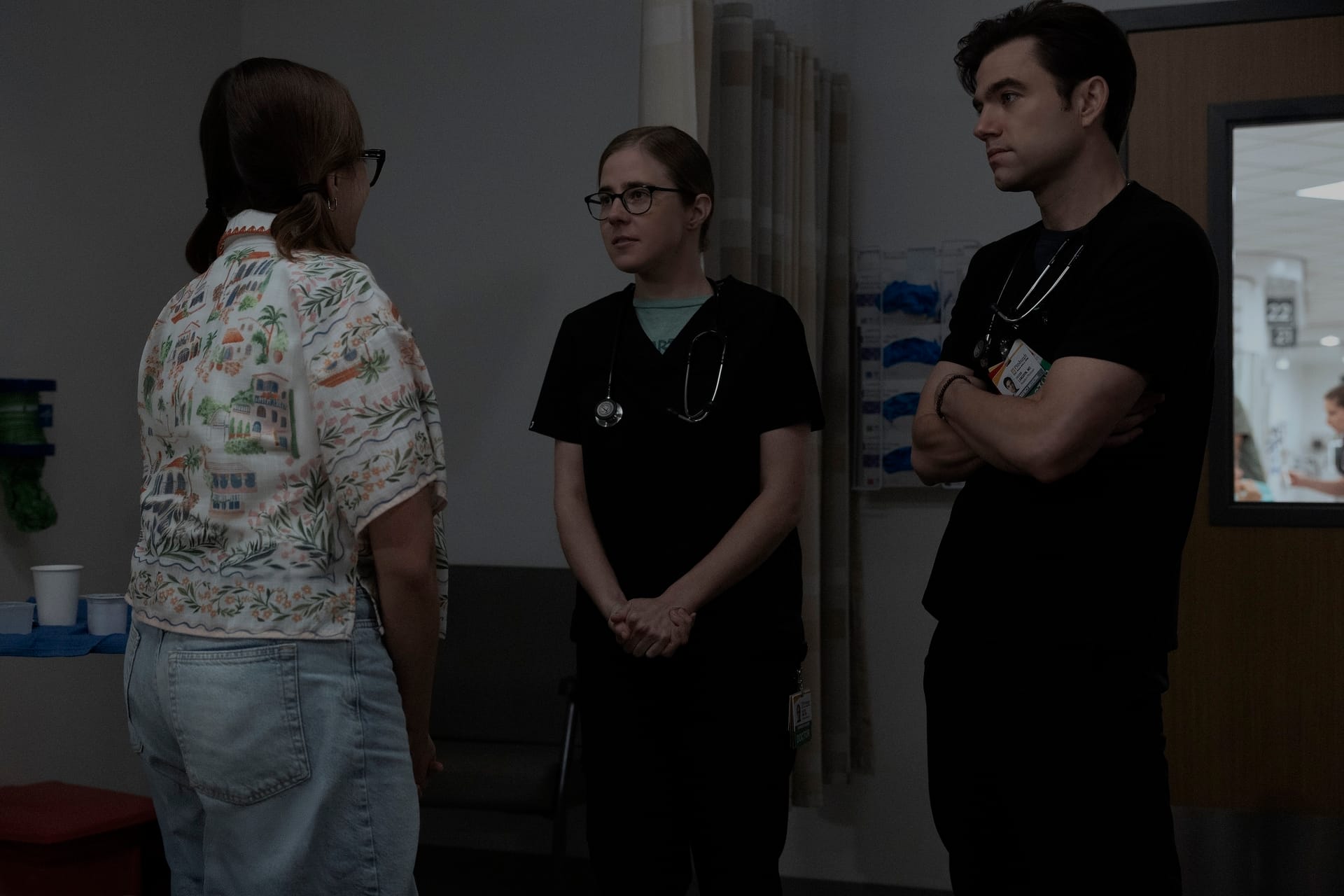
To keep Becca authentic rather than trope-driven, Anderson says her biggest priority was avoiding the visual stereotypes that television relies on with the accuracy of a shotgun spread. For Anderson, that meant her performance as Becca meant “no rocking or flapping or tip-toeing.”
“Not because those can’t be authentic behaviors for autistic people,” she said, “but because I wanted Becca’s behaviors to be shaped by her story and not the stereotypes and tired narrative we see all of the time on screen.”
As an actor who’s portrayed autistic characters before—including Sid on Netflix’s Atypical—Anderson says she’s been continuously impressed by how thoughtfully The Pitt writes Becca. The respect and nuance on the page were what drew her to the role in the first place, a sharp contrast to the portrayals she grew up seeing.
“I had a couple of questions about a scene at one point, and just wanted to be sure I could play it the way I wanted to without changing the writer’s intention, but I never needed to, or wanted to change the script,” she said. “I’ve been continuously impressed with how authentic the writing is, and proud to be able to give Becca life to tell her story in that way.”
One aspect of that authenticity is that Anderson and Dearden are bringing their own lived experience to these roles. Dearden has ADHD, which is a type of neurodivergence, but she isn’t on the autism spectrum like Anderson. Both actors bring these two unique flavors of neurodivergence into their performances especially when the characters clash, as they do in Season 2 when Dr. Mel learns that Becca has a boyfriend. On a performance level, Anderson tells me the ease herself and Dearden worked as scene partners wasn’t something they had to engineer.
“We clicked, and it just worked,” she said.
Their shared neurodivergent lived experience made the twin dynamic feel instinctive, and it also meant they were quick to recognize when the other needed clarity, calm, or a moment to get grounded on set.
“[Dearden] seems to know ahead of time when something might be confusing, or if I could use some advice,” Anderson said. “For instance, my first time on set for season 2, she asked me if I wanted to see the set, because I wasn’t filming on the soundstage. I was shooting on location for episode seven, but while I was at the studio, she knew that I was dying to see the set, and ultimately that helped me in later episodes, because I was prepared in advance for how shockingly amazing the set is. I could focus on my work and not be as overwhelmed by the set.”
“I also, at one point, had a question about the script, and she helped me get in touch with the writer in the production office so I could get clarification before I had to shoot my scene,” Anderson continued “She knew that my anxiety over questioning anything would take over my brain, and that helping me get an answer would immediately settle me down. I’m sure there are many other examples, but the strongest ones involve Taylor’s support.”
Hollywood still has a long way to go before representation on screen and advocacy behind the scenes move beyond platitudes. Thankfully, Anderson has a few structural fixes that could make the industry genuinely accessible rather than symbolically inclusive behind the screen, starting with mentorship and internship programs for disabled creatives at both the studio level and within unions.
“Success in this industry relies a lot on networking, and the biggest problem for disabled creatives is getting access to the places where networking is possible,” Anderson said. “I’m an editor, and I’m also a writer, but I’m working on knocking down barriers in my acting career, and have no idea where to start in my editing or writing career. Having access to an [America Cinema Editors] mentor, or a [Writers Guild of America] mentor to help me find my way into those rooms would make a huge difference.”
Oh Tal! is for the children (and adults like you)
Anderson’s upcoming children’s book expresses the same kind of advocacy for representation that her portrayal of Becca does, in a way that’s appropriate for a parent to share with their child
Oh Tal! Not Like That is the second book in the autobiographical series penned by Anderson. Not dissimilar to how The Pitt showcases a day in the life of Pittsburgh's hardest-working teaching hospital, Oh Tal illustrates the first, exciting day of school, showing how classroom rules and conduct are treated as the norm from the eyes of a child. More specifically, Anderson says the book tells the story of the shared childhood experiences she and illustrator Michael Richey White had as creative, autistic kids, despite being 25 years apart.
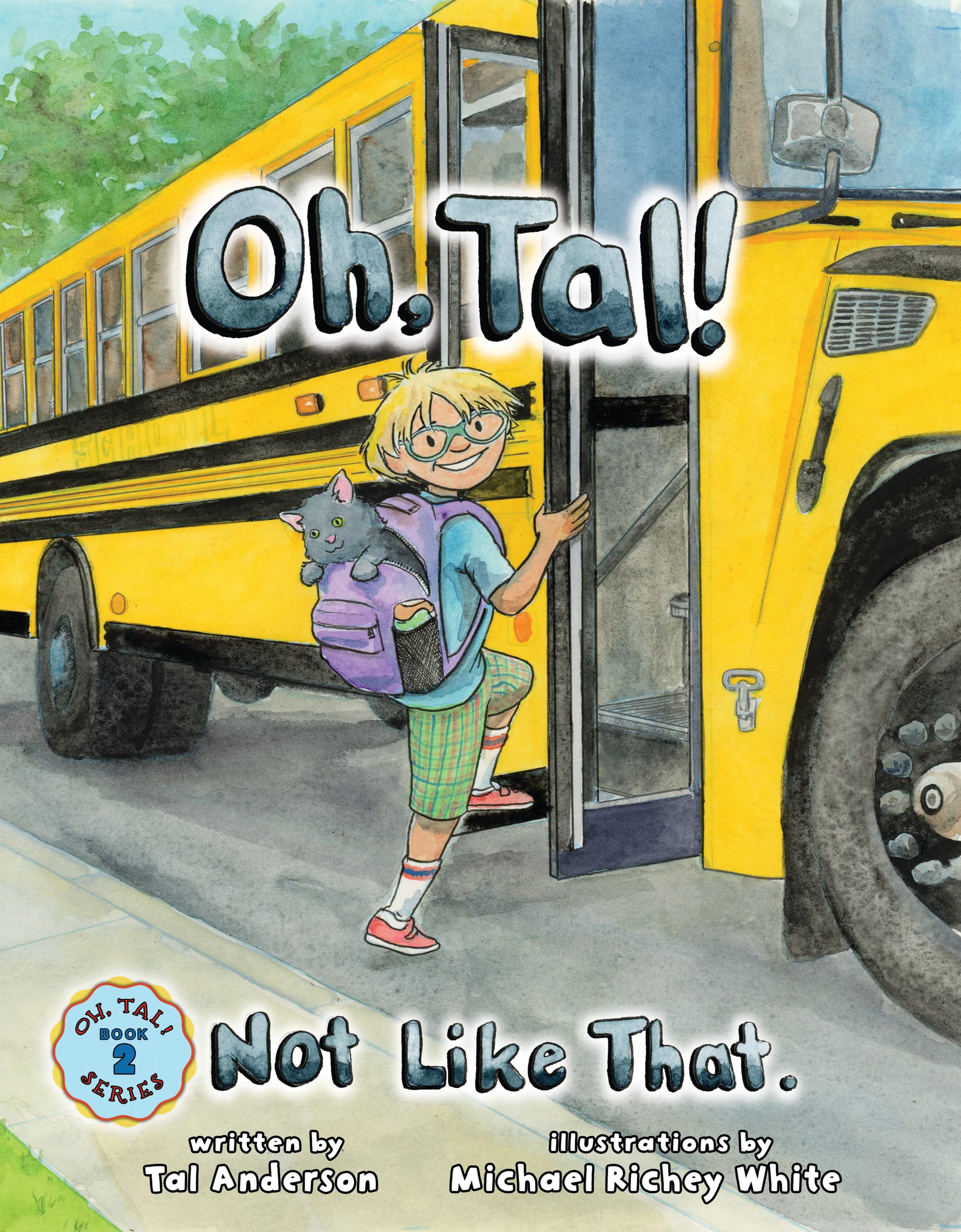
“Being able to see a character who is like you in a book at a very young age who models behavior that encourages being yourself instead of being another voice telling you to just behave and fall in line, is important for kids like Michael and I were,” Anderson said. “We both felt squashed, misunderstood, and pushed down.”
“For me, it was especially hard, because I didn’t speak until I was almost four years old,” she continued, “so I couldn’t even verbally explain why I was doing something differently, and because I didn’t speak, a lot of my decisions were made for me, and a lot of times, especially at school, people felt the need to speak on my behalf, and they were usually not expressing what I would have said, had I been speaking at that time.”
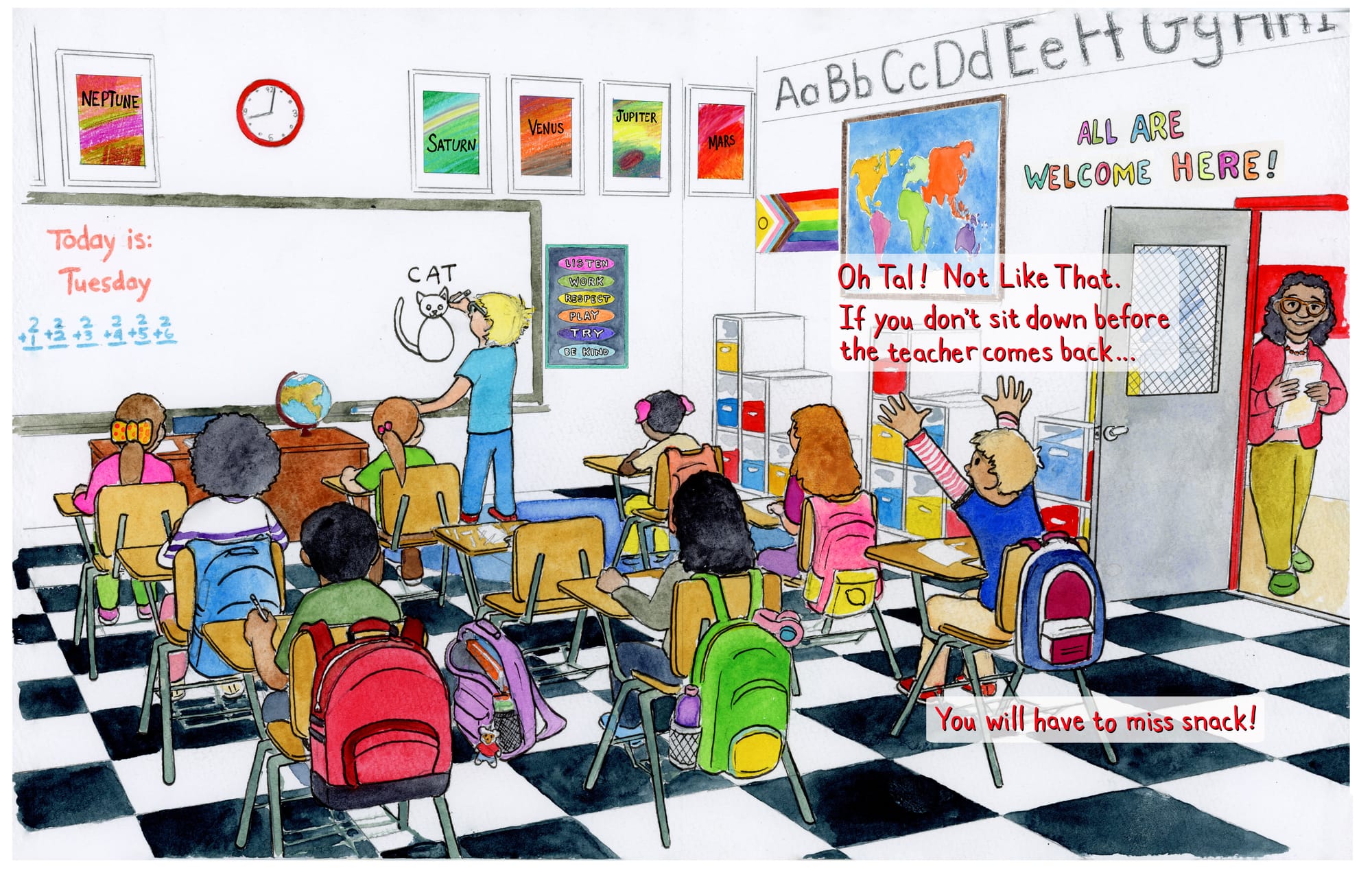
One of the core themes of Anderson's books is the idea that “there’s more than one way to get things done,” a message she says captures the frustration she and White struggled with growing up. Anderson hopes this book also sheds light on the lived experiences of autistic people for neurotypical people, helping them empathize with and understand those experiences.
“These books encourage parents to foster those differences, and praise the creative solutions their kids have to make them feel like thinking differently should be treated as something to be celebrated, instead of something that sends you to [a] time out,” she said.


