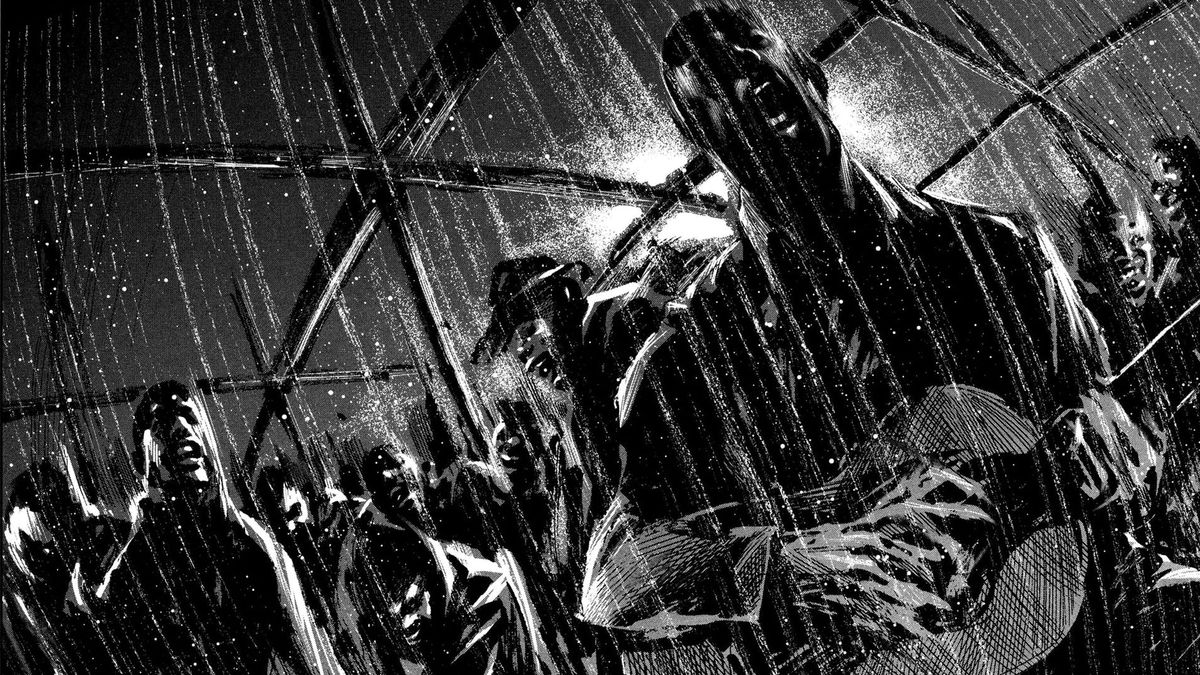
Half Is More is a manga that exists to confront racist behavior, only to have its announcement treated like a Klan rally in the comments and quote‑retweets of its English localization on Twitter. Having read the manga myself after receiving a review copy from Viz Media, I’m moved by how its first volume completely drowns out the tired, white noise that tried to define it. What emerges instead is required reading about identity, prejudice, the long journey toward coexistence, and radical empathy.
Announcement: Being mixed-race in Japan like Kazumi means facing daily trials of racism, microaggressions, and otherness. This is a journey of resilience, hope, and the search for coexistence. Half Is More, Vol. 1, by Yoiko Fujimi, releases Summer 2026. pic.twitter.com/a3YeAHpJf9
— VIZ Media (@VIZMedia) October 17, 2025
Half Is More, created by half-Spanish, half-Japanese mangaka Yoiko Fujimi (and translated by the homie, David Evelyn), follows a woman named Kazumi Mandanda Yoneyama and her close-knit group of mixed-race friends. Kazumi and her gal-pals would be known in Japan as “haafu,” but Fujimi prefaces the manga by acknowledging her omission of the term because of how it has harmed many people on the receiving end of it. For that reason, Fujimi intentionally swaps it out with “half” throughout the manga to “reexamine the implications the term carries,” to consider how the term is still used today, and to implore readers to reflect on their own feelings as they read the manga.
“A temporary stint abroad as a foreigner just doesn’t compare to being treated as an outsider in the country you were born and raised in.”
As someone who often scuffs my feet to announce my presence when passing white people on the sidewalk, raises my voice a couple of octaves while speaking to strangers to seem less imposing, and defaults to making jokes as the class clown—like Kazumi—to make my otherness a positive signifier to those around me, reading the first volume of Half Is More was a visceral wake-up call.
Oddly enough, flipping through Half Is More’s pages reminded me of that SpongeBob SquarePants episode “Tea at the Treedome,” where SpongeBob visits Sandy Cheeks’ house for the first time. Throughout the episode, SpongeBob struggles to remain polite in Sandy’s dome devoid of seawater—despite his politeness in not asking for a glass of water literally harming him because he doesn’t want to come off as rude. It’s an all-timer episode (Kotaku be damned) for the hilarity that ensues as well as the life lesson it imparts, teaching kids that it’s okay to ask to be accommodated. Half Is More takes that same concept and prompts readers to exercise radical empathy to understand the struggle of feeling like an outsider in their own country.
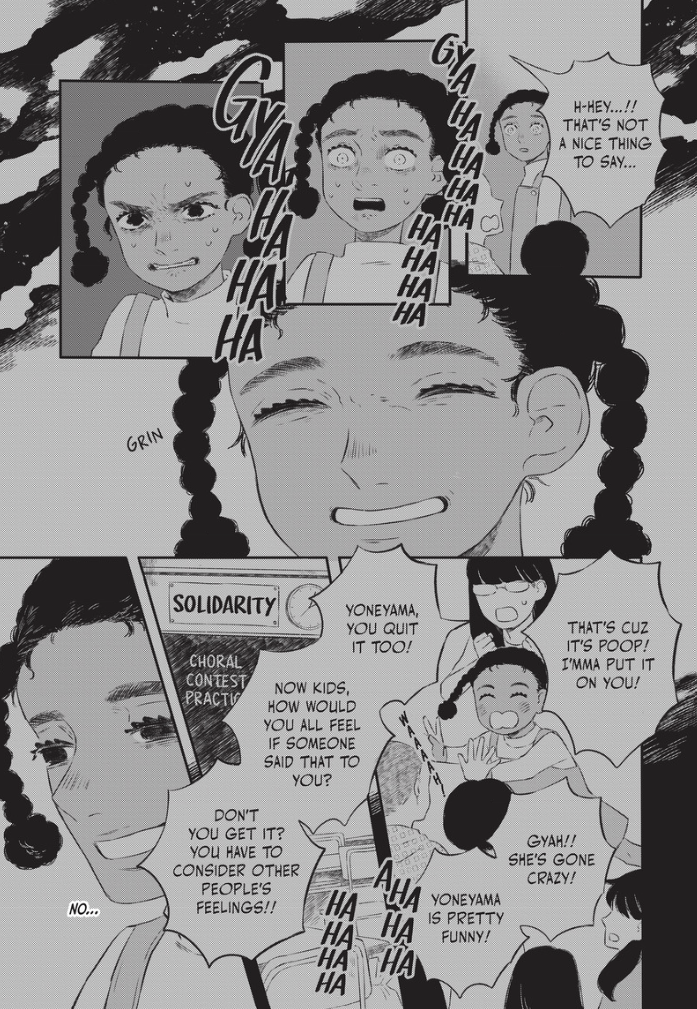
Similarly to how Keito Gaku’s 2020 manga Boys Run The Riot paved the way toward understanding of trans existence, gender dysphoria, and affirmation through fashion, Half Is More serves as a meditative mirror, providing a space that highlights how a group of mixed-race friends strive to achieve self-acceptance in their identities while contending with misunderstandings, microaggressions, and (way too comfortable) bouts of racism. The hard answer for many of its main cast, whom the manga focuses on in alternating chapters, is to passively acquiesce to outside forces that make them feel like shit. Whether it be enduring backhanded compliments about “speaking well,” going by a different name for others’ comfort, or unprompted inquiries about where they’re really from—and whether their mixed-race existence has the ‘exoticism’ of being “mixed white” or the ‘denigration’ of being a mixed person of color—Half Is More doesn’t pull its punches in depicting the harsh truths of being mixed.
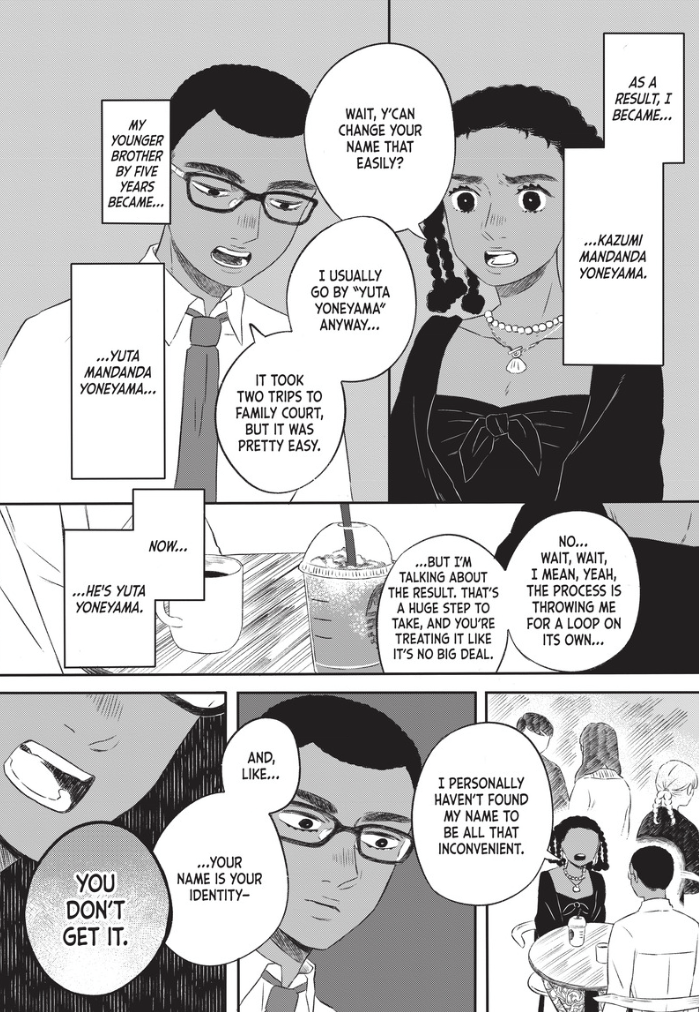
In tandem with its sharp sense of humor, Half Is More is rich with an honest quality of storytelling that can only be realized through the lived experiences of its mangaka and the friends she interviewed, who offer diverse viewpoints on the disparate yet similar trials and tribulations of being mixed-race. That’s not to say the whole volume is bogged down with brow-beating or reliving past trauma for Black readership in the same fashion as Oscar-bait movies released in February.
 藤見よいこ🍣🥘『半分姉弟』1巻出たよ!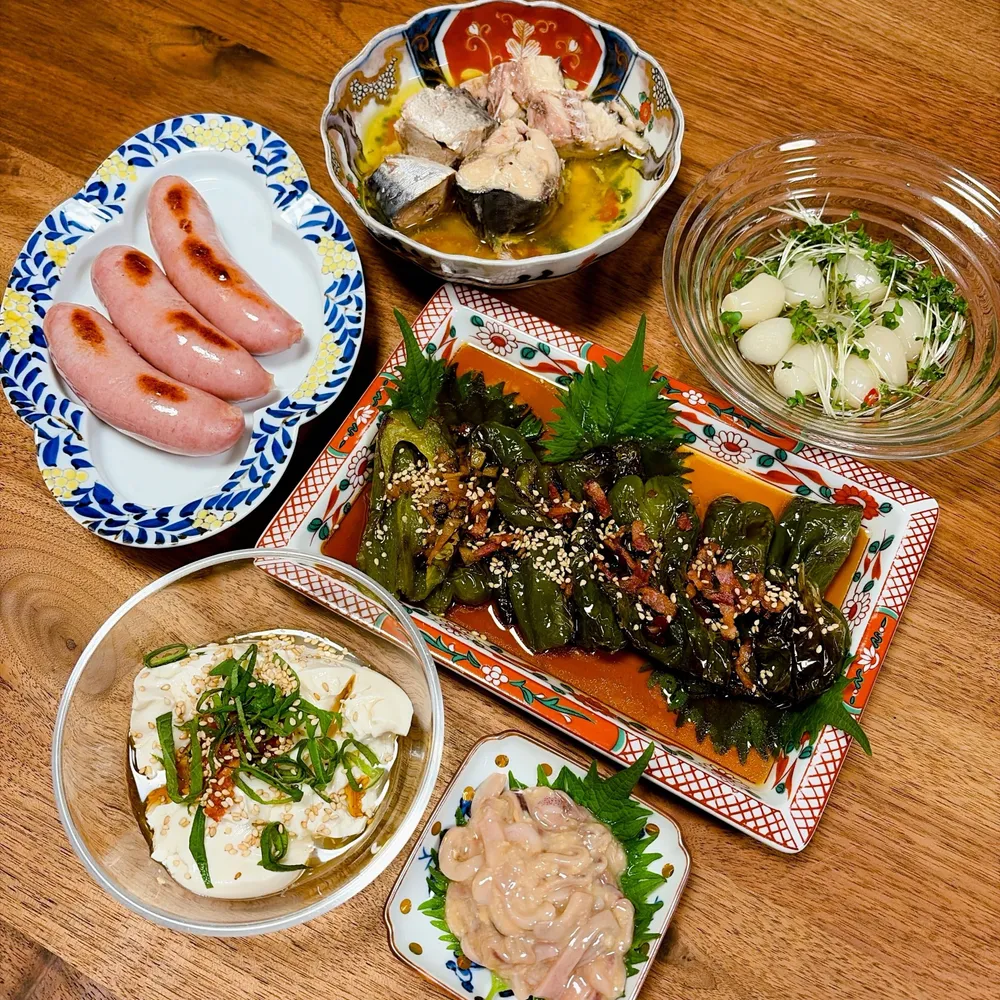
Fujimi is also a mangaka’s mangaka in how she injects levity, humor, and camaraderie amongst the girlies while they commiserate over meals. Meals, I’m delighted to mention, allow Fujimi’s “foodie otaku” predilections to shine through, with plenty of asides putting readers onto the exact names of their mouthwatering foods and libations they’re partaking in to add to your food journal. That’s to say, Half Is More is a good read that feeds the appetite for good eats and encourages more empathetic humans in a time when it's become far too easy to be a fucking chud.
 藤見よいこ🍣🥘『半分姉弟』1巻出たよ!
While being online comes with the territory of becoming a cynic, witnessing folks fail to meet Half Is More’s announcement as a moment of empathy because Twitter be like that, I’m still a huge proponent of solutions journalism. As opposed to news cycles that only emphasize the many ways the world we live in sucks, solutions journalism highlights the reasons why societal issues persist and explains why responses do and don’t work. Granted, it doesn’t offer a catch-all explanation for why the world is a fuck, but it strives to hold people in power accountable and highlight those in the community working towards solutions by offering a well-rounded perspective beyond the half-reported reminders inundating your timeline. Half Is More is solutions journalism distilled in manga form, reminding readers that life is full of teachable moments, should you have the temerity to empathize beyond what’s within arm's reach.
 Gigi Murakami 🔪 Queen of Horror Manga
Despite the medium’s often narrow framework and representation flattened by stereotypes and caricatures, manga publishers like Viz Media have been making strides to include more diverse voices en masse, addressing systemic shortcomings in media. One solution to the manga’s rampant racism problem was Viz Media’s introduction of Viz Originals One-Shots program, allowing aspiring mangaka outside of Japan to submit their stories with the chance of getting picked up as an official series. When I interviewed editor-at-large Hisashi Sasaki for io9 about the program in 2024, noting its influx of aspiring mangaka of color and from different cultures of Japanese descent, Sasaki revealed that a goal of the program was to tell stories rooted in the experiences of creators from different cultures that are often reduced to stereotypes.
“That was a big reason I wanted to work with English-speaking mangaka, and produce original manga in English in the first place. The goal is to help expand the manga market as a whole, by publishing stories that reflect the unique cultural backgrounds of different countries—stories that Japanese creators might not be able to tell in the same way,” Sasaki told io9. “In this way, I hope we can make manga accessible to a broader group, both creators and readers, that we may not have been able to reach before.”
That being said, the anime and manga community has a longstanding racism problem that can be summarized by white people denigrating Black people any time they’re seen having fun with cosplay, fan art, or crumbs of representation on the screen and inside voice acting booths. The discourse usually ends in a tired refrain telling Black people we should make our own stuff instead of celebrating or criticizing Black representation in anime and manga. Being the minority is an ever-shifting set of goalposts on the journey to cultivate your own space.
 藤見よいこ🍣🥘『半分姉弟』1巻出たよ!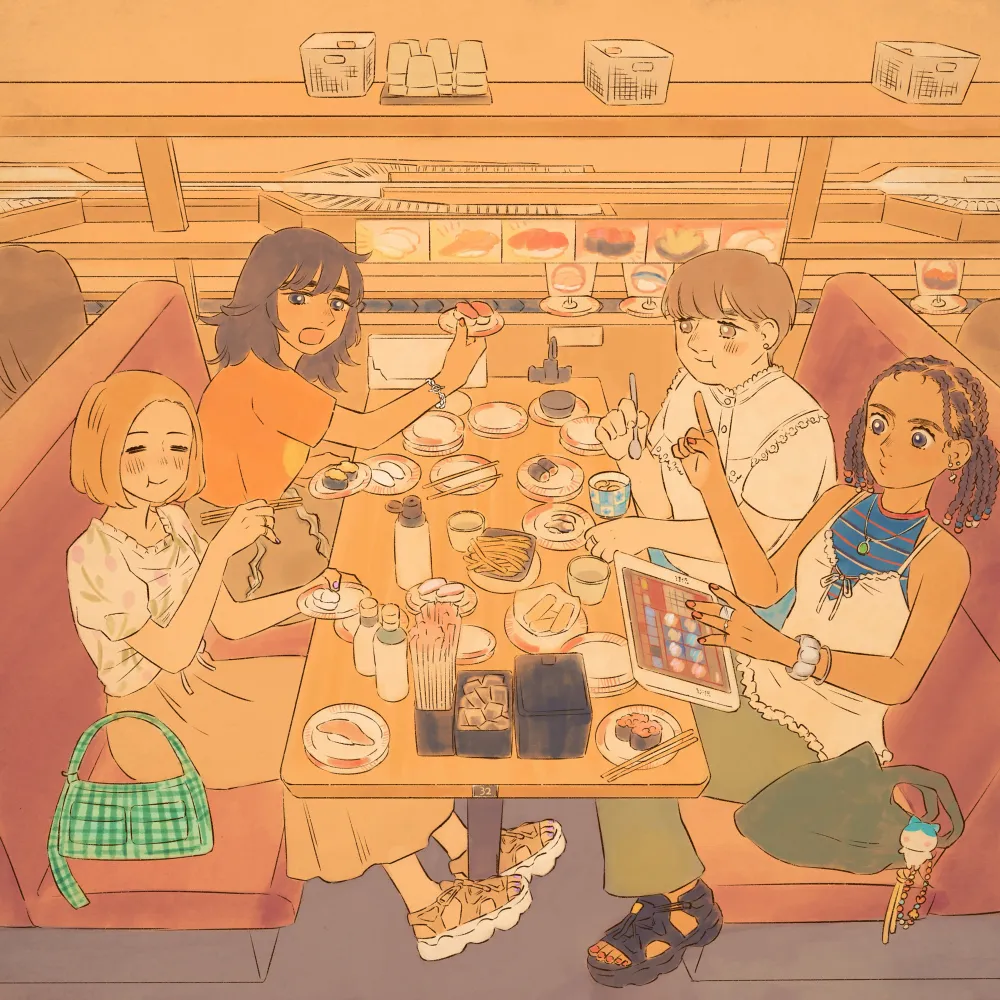
Despite its announcement being used as an avenue for racist tweets, Half Is More drowns out the noise and sets the stage for a manga series with a life-affirming message worth reading.
Recommended:
 Isaiah Colbert