When I first took a gander at the upcoming slate of manga announcements this fall, Sound Of A Blink caught my eye. It was in the macro overlaying sketches gracing its cover, its provocative title, and the eyebrow raising prospect of it being a semi-autobiographical work by the author who penned one of my favorite psychological drama manga, The Flowers of Evil. What I didn’t expect, after reading an early copy provided by Viz Media ahead of its September 15th release, was for the manga to unearth my own recent loss of a loved one in such a transparent, matter-of-fact way.
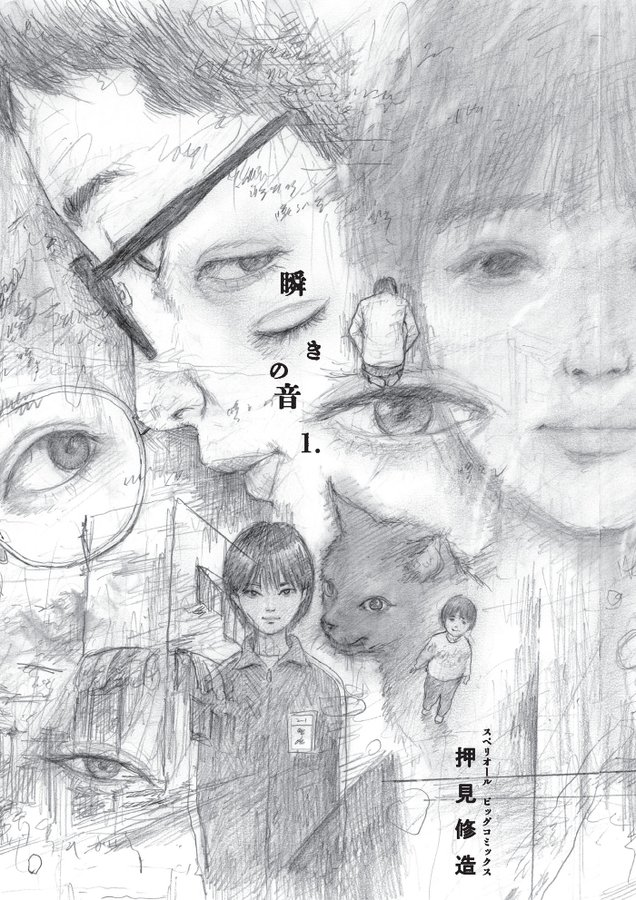
Sound Of A Blink, by Shuzo Oshimi, follows the mangaka early in his career. In any other tale, Oshimi’s life up to this point would be a triumphant falling action to a long road of sacrifice finally rewarded. He’s in a decent college, he’s got a girlfriend, a roof over his head; what more can he ask for? Although Oshimi is on the up and up, having recently won an award meant to propel the future class of mangaka into the mainstream, you wouldn’t know it. He’s been dealing with a lot of unaddressed family baggage, all of which is starkly brought to light after a bombshell of a cold call from his father, revealing that his fifteen-year-old little brother is in the hospital with a brain tumor. Now, he’s gotta address all his damage, which he does in the only way he knows how: his art.
If you’re a fan of manga about art a la Look Back and Blue Period, Sound Of A Blink resonates in a similar register. However, instead of staying strictly in the lane of celebrating art and the human artists behind it, Sound Of A Blink narrows its focus to the unglamorous life of artists through its own artwork. Namely, how tumultuous life experiences can shape one's art like a muse, and how they can also act as an anchor that keeps an artist grounded when they’re at their most rudderless.
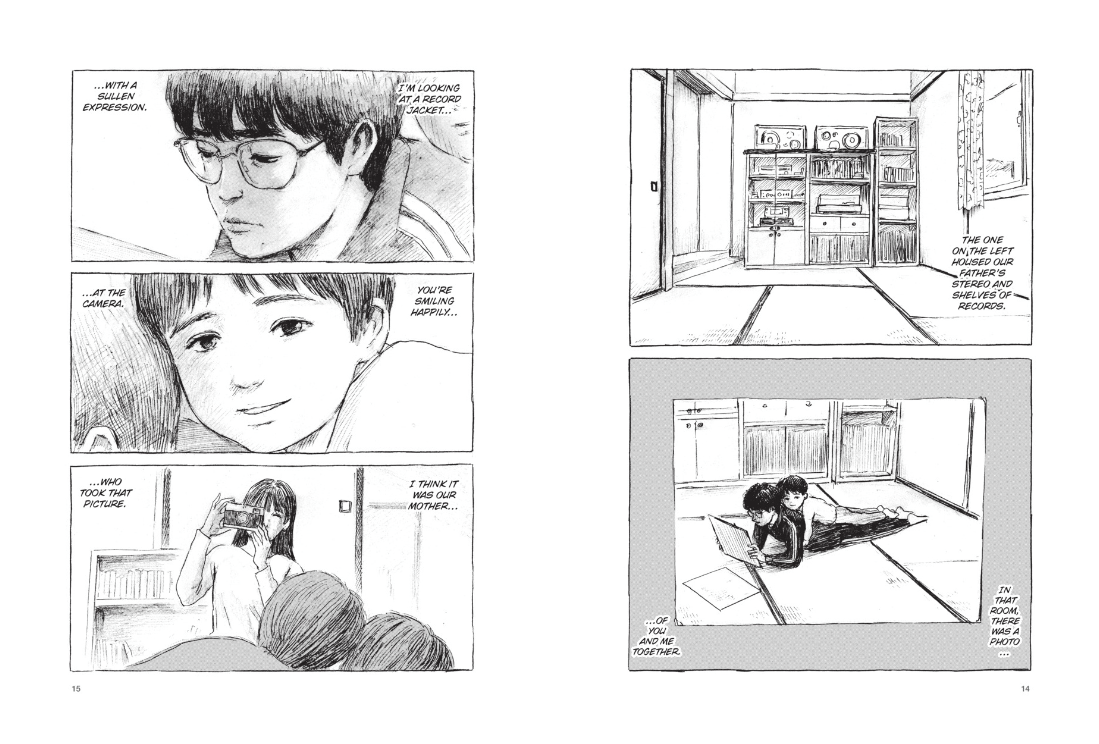
Like many an artist, Oshimi’s affinity for art started at home. While his love of art reached new heights after his father showed him “realistic” artwork from Odilon Redon, he really found his love of drawing when his little brother practically beamed after he drew Detective Conan fan art for him. After a while, though, art became a kind of prison for Oshimi. Instead of veering into overly familiar, verging-on-nihilistic exploration of art as a laborious act of love that hurts to give yourself to, the manga acts as a heavy reminder of why we do it.
Memory is a funny thing. Whenever I remember something, I’m reminded that the act is less about remembering something exactly as it happened than recreating a scenario based on fragments of how it made me feel. Objectivity be damned. Throughout Sound Of A Blink, Oshimi taps into that phenomenon through his fine-line artwork. Here, he accentuates the ephemeral nature of memory with frustrated scribbles and opaque details of things he held dear coming into focus in a stream-of-consciousness manner. At the forefront of his mind is the fear that the sight of his gaunt brother laid up in the hospital will forever tarnish his once-beaming smile as his last living memory of him.
This sends Oshimi into a heavy whirlwind of an inward journey, tracing the somewhat pyrrhic path he endured to become a mangaka. His tale is rife with malignant interpersonal turmoil and resentment toward his well-meaning parents, fear of past relationships repeating in newfound loves, and doing art as a job without the passion he once had. Shuzu’s pens his baggage with such nonchalance that can only come from years of looking inward and finding hard truths about yourself. As a reader, what rises to the top is the necessary discomfort of thinking and talking about yourself while sitting bedside to a loved one: a phenomenon I also experienced with the passing of my aunt earlier this year.
No matter how many times I pushed back on making time to see my aunt, I always assumed I’d have time to get around to it in earnest. Outside of the morbid hi-bye of meeting at the wake of a former church congregation member’s funeral, I hadn’t seen her in a real way in shy of a decade since I moved back to Chicago. That sting hurts all the more whenever I reflect on the whole fact that we lived a neighborhood over from each other for five years.
Still, every Mother’s Day, I floated the idea that my cousin, my mom, and I would get together like the good old days, this time with their children treating them to a post-church meal out like they treated us to a meal growing up. After years of fancying the scenario with the same fervor of a high school classmate ambivalently writing H.A.G.S (Have a great summer) in a yearbook, I resolved this year would be when I finally got to it. Maybe she’d pinch my cheeks and smile to hear that her nephew, who’d fold computer paper to make my own manga stories, was interviewing creators they admired as their job, which they fought hard as hell to do after nearly giving up. It never came to pass. Like Oshimi, I got a cold call from my mom that my aunt’s cancer got really bad, and that she was in hospice.
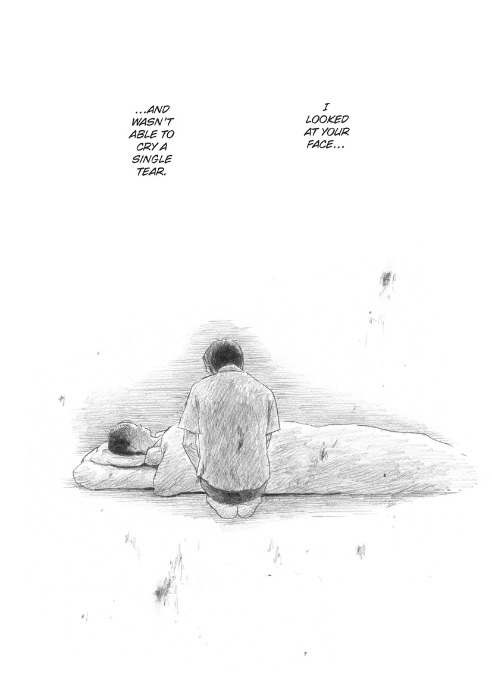
Ahead of my pilgrimage, I ran through a litany of lost-time conversations we’d have: What I’ve made of myself in the years since we last spoke and whether she’d praise me for it or push me to keep trucking. With everything feeling on the precipice of being worth reporting back on, I kind of dreaded talking about my perceived “making it” feeling perpetually on layaway. But when I saw her, she was most of the way gone. Like Oshimi, I stuttered, not really knowing what was appropriate to say other than falling to my knees, holding her hand in mine, and saying “I’m here” repeatedly.
A handful of tissues later, my mom arrived, and we got a vastly different version of how I’d imagined our reunion to be. We talked almost as if nothing had happened. At first I wondered if it was even “okay” to talk so candidly while my aunt was transitioning, and if the shoes were on the other foot, how I’d feel if I were my aunt in this situation. How scary it’d be to struggle to turn someone I knew into a character that’d exist forever in my own mind, and whether I’d be able to do them justice. Summarizing an entire person into a memory is a lot of responsibility to live up to.
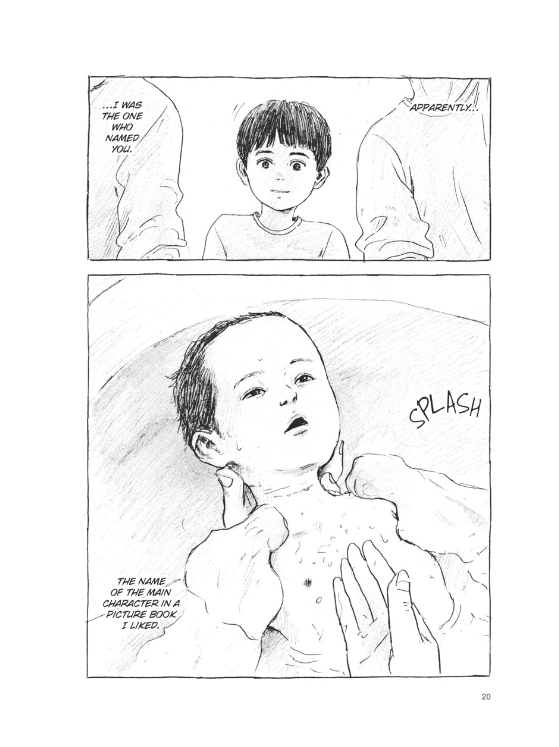
As someone who finds comfort drifting to sleep listening to spirited conversations, Sound Of A Blink helped me through my mourning by positing that hearing loved ones chat while you drift to the big sleep being the best comfort you can give them.
Sound Of A Blink rides the line of ending on a comforting and afflicting note, it being the first volume of however many to come left me with a promising feeling that it might help me through my own mourning and steps toward my own refired convictions with my own “art” like Shuzu. To this day, I swear I saw a single tear roll down my aunt’s cheek when I held her hand in mine. It may have been involuntary, but I choose to believe otherwise.
Recommended:
 Isaiah Colbert