

I've been making ceramics in my microwave. I wrote about it last month, and have made an unreasonable amount of miniature ceramics since then. I use my Small Ceramics miniature pottery wheel to throw tiny pots, cups, and vases, before glazing and firing them—in the microwave. Crucially, this is not the microwave I use for food, because who knows what sorts of weird things are being emitted. (I use it in the open garage.) I get a real delight out of hearing the ceramics jingle around; it's a much more satisfying sound than the things I make out of polymer clay. However, I have run into some problems.
The microwave kiln I've been using is the large size, so I thought I'd give the small one a go. The large one holds more stuff, but it also takes much longer to heat up. When the small kiln showed up in the mail, I immediately put it to use. I put my best new pieces in there (a mistake) and put it into the microwave to start an abbreviated schedule—the small one needed much less time. As it turns out, it needed much, much less time than I had figured. When I pulled the kiln out of the microwave after it cooled, it was stuck shut. I could not open the microwave kiln.
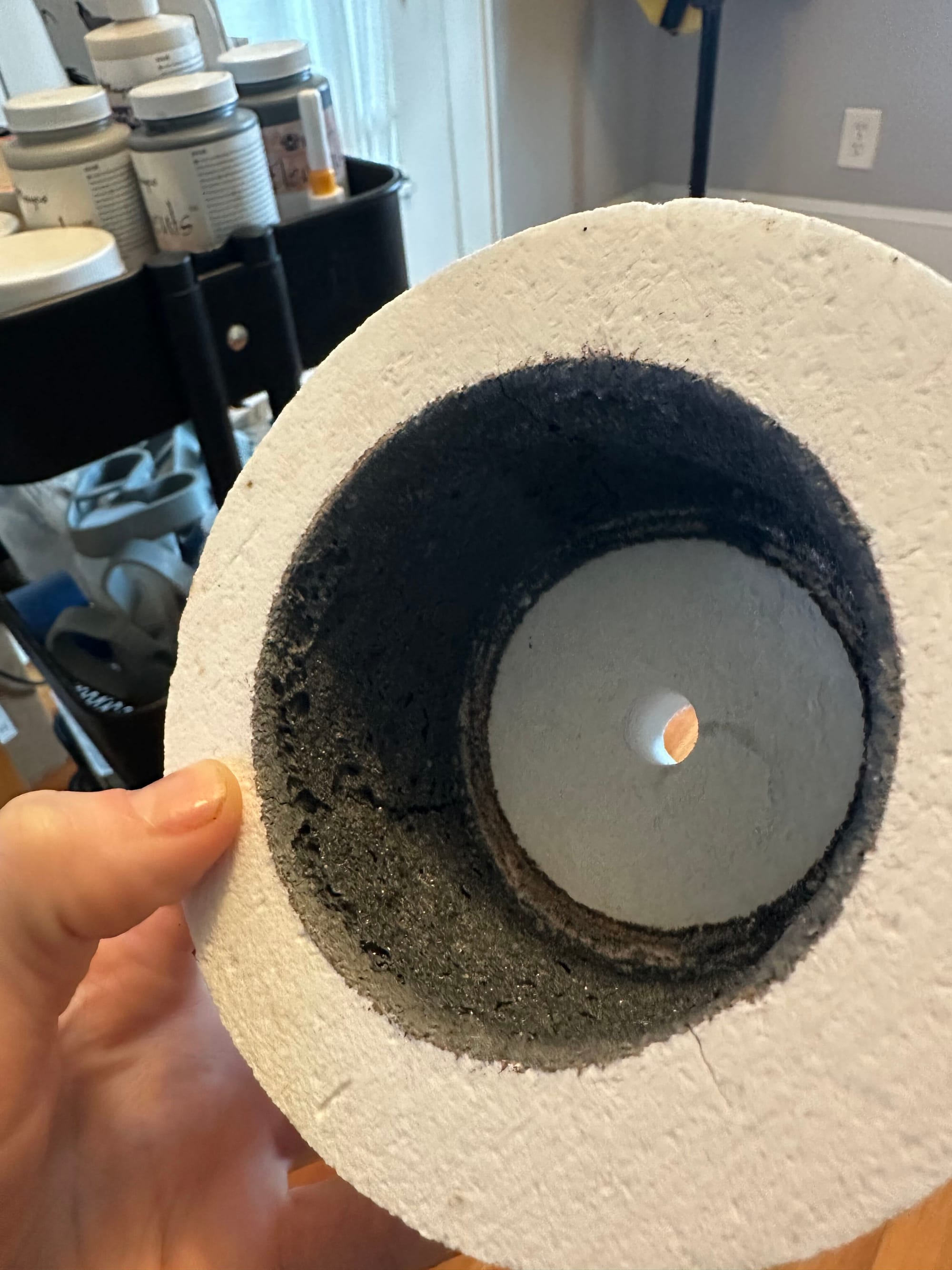
I thought that, perhaps, the glazes I used had run so much that the kiln got glued shut by them. I was wrong. I eventually wiggled the microwave kiln open to see that I had absolutely obliterated the inside of the microwave kiln. The black stuff on the inside that lines the ceramic fiber structure was bubbled and melted. Like, totally melted.
That black stuff is apparently silicon carbide, which absorbs microwave energy and how the microwave kiln gets so hot, like upwards of 1,500°F. I can’t be certain how hot the kiln got; my only indication that the microwave kiln is hot enough to melt and solidify the glazes is a red glow from the little hole at the top. But, uh, it clearly got too hot. I had a second small microwave kiln so I tried again, for less time, and that microwave kiln also melted, but only a little. (I just tested whether or not it's still usable and the results are in: It's not usable. I will never learn my lesson about putting nice pieces into the kiln for a test.)
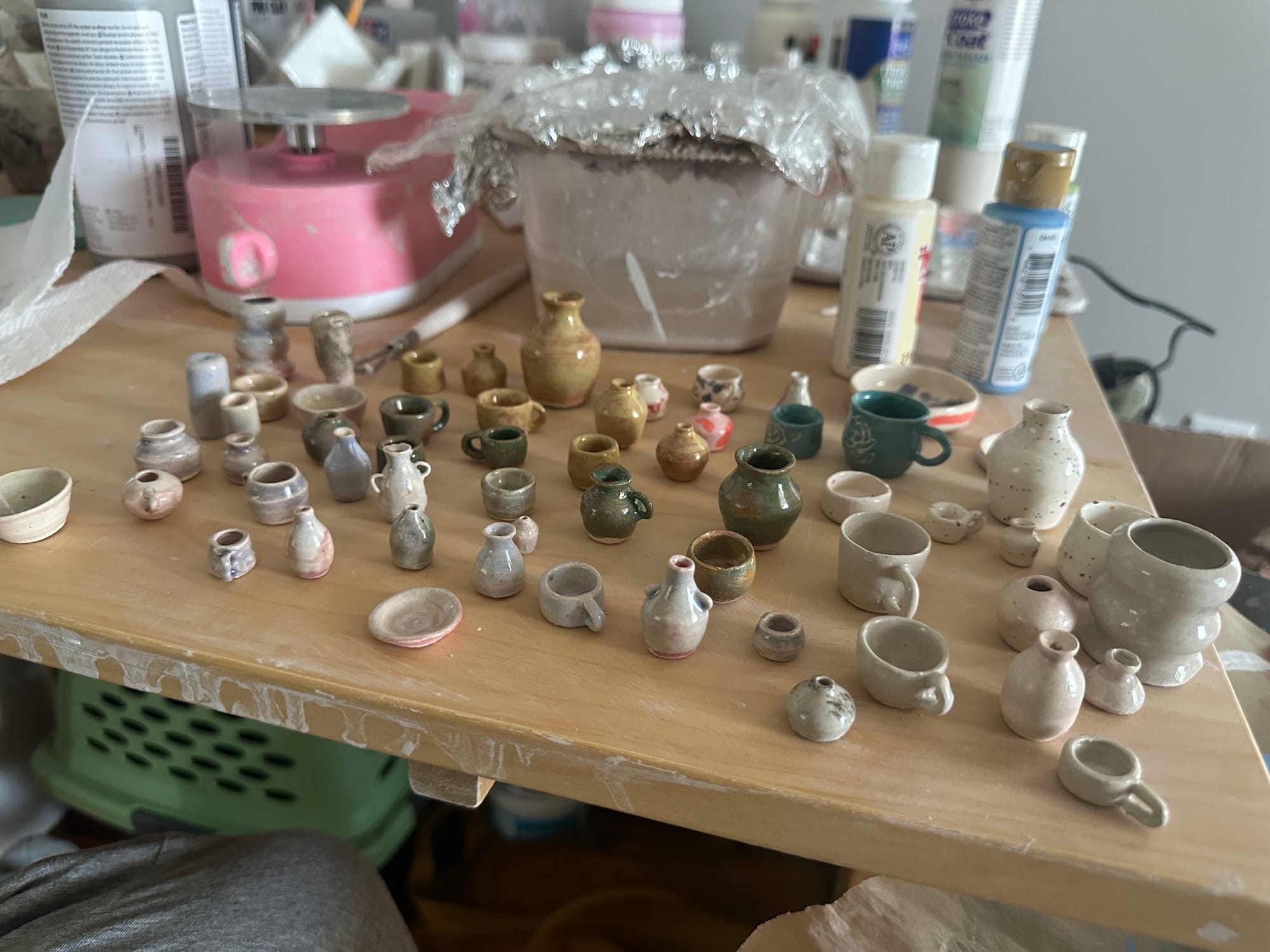
I do not fully understand why I am incapable of using the small kiln in a responsible way, but I also don't want to buy any more to potentially ruin immediately. The upside to the small kiln—and why I wanted one to work—is because it's much faster. It heats up way quicker, as I have learned. But maybe too quick. Back to my large microwave kiln.
Against my chaotic nature, I have started documenting the process of what works and what doesn't in the large microwave kiln. I'm testing different firing schedules to play with what I can skip. I've learned today, while writing this story, that the heat up period is, indeed, important. Several of the pots I fired this morning are heavily cratered, and my theory is that they got too hot too quick and the gas bubbles were too big. Not all of them are equally catered, but each one has at least some pinholes.
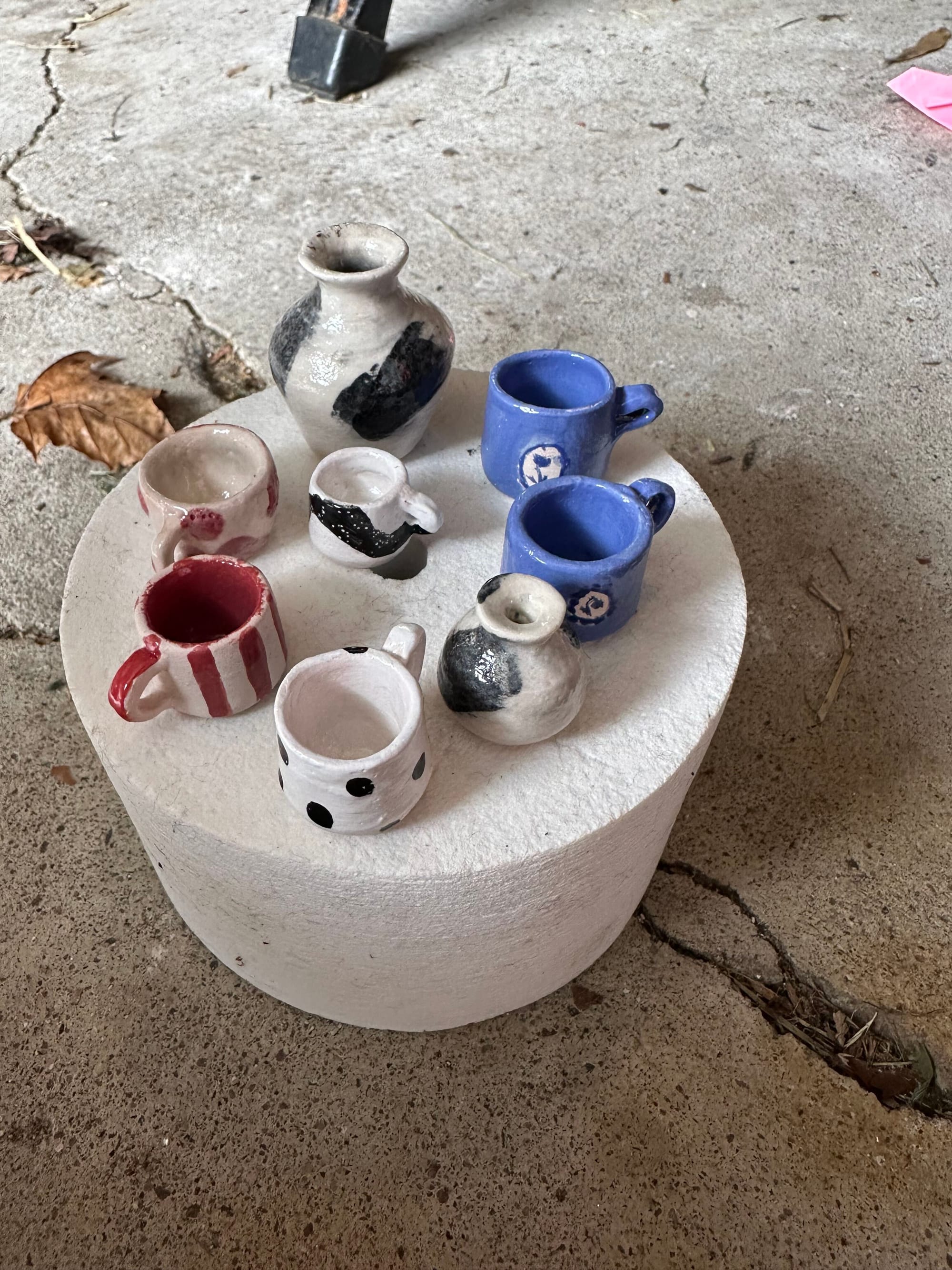
I've learned a lot in the few months that I've been playing with clay and putting it in the microwave. Mostly, I've learned that I can't really be precious with anything. Once the glaze goes on and it goes into the microwave kiln, anything can happen. This is true with regular kiln firings, but even more so with the microwave kiln. You can't control or even tell the temperature. You've just got to throw it in there and hope for the best.


