

I have been both a Christopher Nolan hater and a Christopher Nolan lover throughout the years. Seeing Memento as a teenager was part of the spark for my love of cinema; I also think that his Batman films are regressive, jingoistic garbage that manufacture consent for some of the worst war on terror-era political ideas. I think I would have given up on Nolan as a filmmaker entirely if it weren’t for Tenet.
I am convinced that if Tenet had come out in theaters and hadn’t had its theatrical run interrupted by COVID-19, it would have been a phenomenon. While the movie has gotten a lot of flack for being difficult to understand and kind of stupid, to me these are part of its charm. I am one of the most irritating kinds of movie lovers—a formalist. And like Memento, Tenet is more an experiment in form than it is a movie to be understood.
That said, Tenet is an absolute thrill from front to back. I initially watched it at home, because of the ongoing pandemic, but this weekend I had the chance to see the movie in 70MM, and it’s just a feast on the big screen. The audience broke into applause at least three times, and frankly some sequences left me breathless. In particular, bungie jumping up the side of a skyscraper, and a later scene that involves crashing a 747 into a building, made me gasp with delight.
Tenet is based on a simple principle: shit looks really cool when you run the tape backwards. In the world of the film, there’s a technique for time travel that involves inverting the entropy of objects and people. Inverting a gun, for example, causes a gun to “catch” bullets, essentially firing them in reverse. Inverting a person causes that person to experience time backwards as well. The inversion of all entropy, causing a backwards timeline to overwrite the forward march of time we all experience, is the goal of the film’s villains. Thus, it falls to the Protagonist, played by John David Washington, and the mysterious Tenet organization to stop them.
If none of this makes sense to you, don’t worry; the film hands you an instruction manual for how to watch it early on. When the Protagonist meets a scientist who first explains the concept of inversion to him, she says, “Don’t try to understand it. Feel it.” It is, certainly, a film that relies on one’s innate ability to read the visual image superseding one’s personal desire to understand the images on the screen. It’s always been fascinating to me that viewers of the moving image understand how to read images on a screen before they understand the phenomena that makes those images move. When Nolan is really cooking, he uses that instinctual understanding of the moving image to novel effect.
When inverted and un-inverted characters interact with each other, the simplicity of seeing a gun reassemble itself and devour bullets is so much more interesting than knowing who is fighting and why. While Nolan has gotten much better at fight choreography over the years—his Batman films are full of sauceless, unclear action scenes—more than the spectacle of a fight, what he really nails is capturing a single image or action in a deeply unique way. An inverted mook crabwalking forwards like a jerky puppet while Ludwig Gorranson’s booming score thuds through my body is something I’ll never forget.
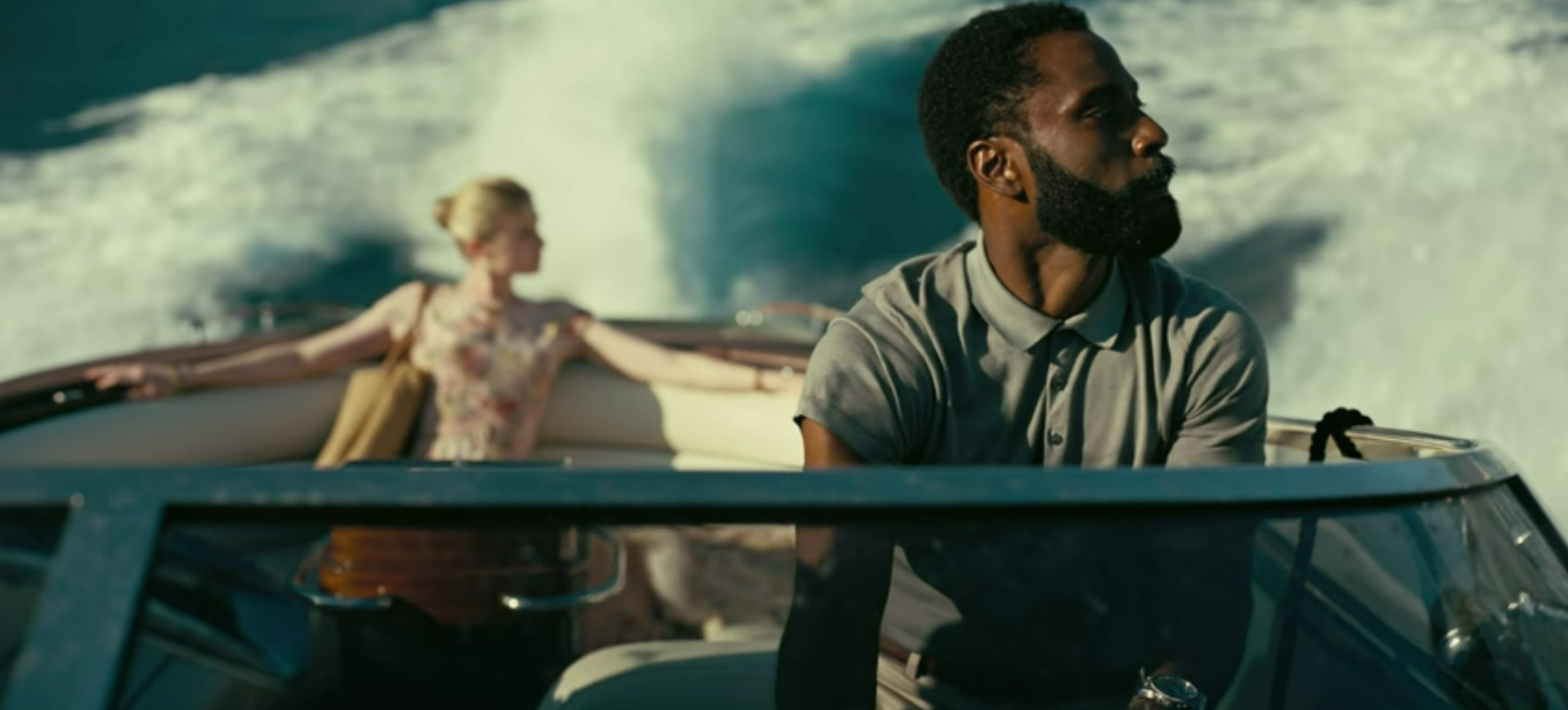
While the movie is pretty dumb—it’s shamelessly stupid, the main character is named the Protagonist and the plot is mostly connective tissue between bigger and bigger fight scenes—I love that it embraces its own nonsense. I think Nolan has for too long held a reputation as a thinking man’s director, mostly because he is interested in making movies that fuck with the viewer’s perception of images moving over time. Memento takes time-based media and asks the audience to piece things together from snippets, experiencing time like the film’s main character, who has retrograde amnesia. The Prestige gives the entire movie the structure of a magic trick, performing sleight of hand so that the audience does not see the obvious clues in front of their eyes. I don’t think these movies possess big ideas—mostly they rehash tired ideas about lonely men. In fact, up until his World War II film Dunkirk, Nolan was narratively obsessed with sad men plagued by dead wives or aloof daughters, some of the most tired story beats you can throw on the screen. But Memento and The Prestige don’t really need the viewer to think too hard about them. The moving image is felt before it’s understood. The plot is a contrivance to get the viewer to the next cool thing Nolan wants you to see.
That said, there are actually some ideas in Tenet that I’ve been chewing on over my many, many viewings of the film. Eventually, it’s revealed that the future is irradiated and has been devastated by ecological collapse, and that’s what the people who are trying to invert all of time are trying to escape. They want to colonize the past, erase human history so that they can experience Earth as a place meant for life to grow. Their herald in the current day is a Russian oligarch billionaire named Sator, played by Kenneth Branagh. He’s dying of cancer, and he loves the feeling of having a gun to the head of the entire world. His wife, Kat, played by a wonderful Elizabeth Debicki, understands his desire to destroy what he cannot own innately. It’s how he treats her and their son.
I do feel like I am living under the rule of a group of billionaires who have a gun held to the head of the entire world. In Tenet, Kat gets to have her revenge on her husband, and the film treats it as both just and liberatory. If there’s any emotional throughline of this film, it’s Kat’s journey from terrified captive to utterly free of both danger and fear. I think she’s one of Nolan’s best characters, and she clears all of his other women characters by a mile. Notably, Kat is the only character who has a child—her stake in the future is personal. In this most recent viewing, I thought a lot about the rights of those colonizers of the past versus Kat’s desire to raise her child. Sure, the villains of the film didn’t create the dead world they live in. Of course they’d make this one, last, desperate grasp for survival. But who has the right to say who lives or dies? The ones with the most money and firepower? The Protagonist has hope that the future can be changed with foreknowledge. I think that’s the ultimate desire of any parent, really. We can do better next time, now that we know.


